
Best Cat Toys: 20 Types Every Cat Owner Should Know About
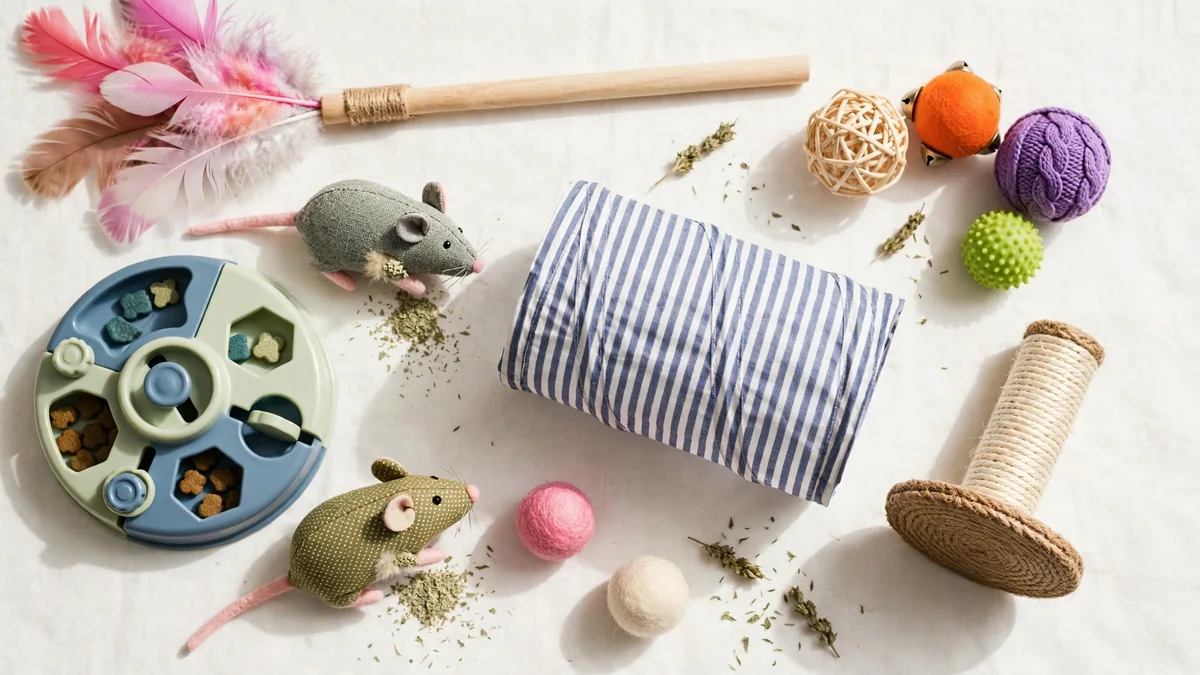
Play is an important part of a cat's daily life. It gives indoor cats opportunities to stalk, chase, pounce, and explore — behaviors rooted in their natural instincts. With so many toy designs available, knowing the main types helps you choose toys that match your cat's play style and your home.
This guide covers 20 types of cat toys, explaining what each one is, how it is typically used, and what to look for when comparing designs, materials, and features.
Interactive Toys: Play Together
Interactive toys are designed for play sessions between you and your cat. They encourage movement, bonding, and shared fun.
1. Feather Wand Toys

Feather wand toys consist of a stick or rod with feathers, ribbons, or fabric strips attached by a string. Moving the wand mimics the motion of birds or insects, triggering a cat's chase instinct. Look for sturdy rods, securely attached feathers, and replaceable lure heads. These are among the most popular interactive toys for energetic play sessions.
2. Ribbon and String Teasers
Similar to feather wands, ribbon teasers use flowing ribbons or fabric strips instead of feathers. The unpredictable fluttering motion appeals to cats that enjoy visual stimulation. Choose designs with firmly anchored ribbons and always store string toys out of reach when playtime ends.
3. Laser Pointers
Laser pointers project a small moving dot of light that many cats love to chase. They provide excellent exercise, but because the cat can never "catch" the light, it is a good idea to end sessions by redirecting your cat to a tangible toy it can pounce on. Never shine a laser directly into a cat's eyes.
4. Fishing Rod Toys
Fishing rod toys resemble miniature fishing poles with a flexible rod and a dangling lure. The longer reach lets you create wide, sweeping movements that encourage running and leaping. Look for flexible, break-resistant rods and lures made from pet-safe materials.
Solo Play Toys: Independent Fun
Solo toys keep cats entertained when you are busy. They are designed for batting, carrying, and independent exploration.
5. Plush Mice
Small plush mice are classic cat toys. Cats bat them around, carry them, and "bunny kick" them during play. They come in various sizes, fabrics, and fillings — some contain catnip or crinkle material inside. Choose tightly stitched designs without small detachable parts.
6. Crinkle Balls
Crinkle balls are lightweight balls made from crinkly material, often mylar or tissue-like fabric. The crackling sound they make when batted adds an auditory element that many cats find irresistible. Their light weight means they roll easily across hard floors.
7. Jingle Balls
Jingle balls contain a small bell inside a plastic or metal cage ball. The ringing sound rewards batting and chasing. They are simple, durable toys suited to cats that enjoy noisy play. Check that the bell is securely enclosed.
8. Catnip Toys
Catnip toys are plush or fabric toys filled with dried catnip. Many cats respond to catnip with rolling, rubbing, and playful behavior, though sensitivity varies from cat to cat. Look for toys with tightly sealed seams and quality filling. Catnip potency fades over time, so these toys are often replaced periodically.
9. Silvervine Toys
Silvervine toys are filled with silvervine powder or sticks, a plant material some cats respond to even when they show little interest in catnip. They come in plush toys, sticks, and powder sachets. As with catnip toys, choose well-constructed designs with secure seams.
10. Springs and Coils
Colorful plastic springs bounce unpredictably when batted, making them entertaining solo toys for active cats. Their light weight and springy action encourage chasing across smooth floors. They are inexpensive and easy to replace.
Puzzle and Enrichment Toys: Mental Stimulation
Puzzle toys challenge cats to think and problem-solve, adding mental enrichment to physical play.
11. Treat Puzzle Toys
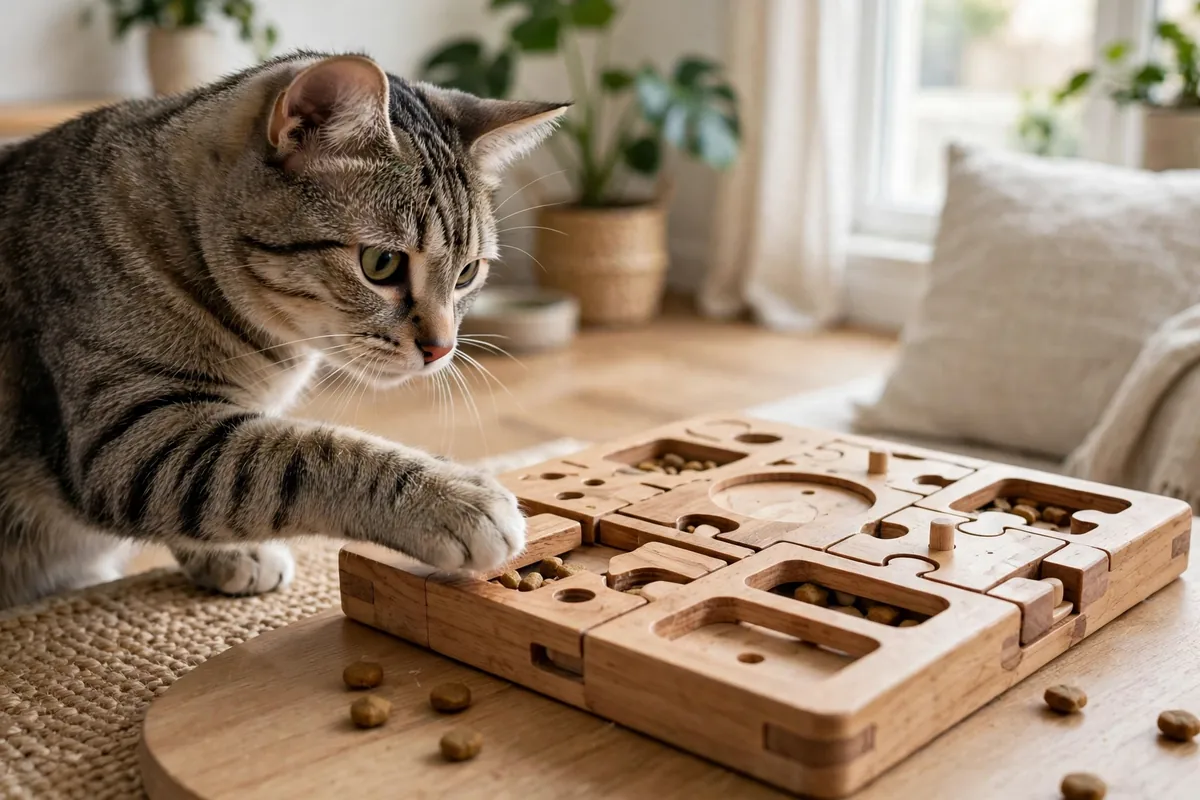
Treat puzzles have compartments, sliding covers, or spinning layers that cats must manipulate to reach hidden treats. They range from simple single-chamber designs to multi-level puzzles. Start with easier puzzles and progress to more complex ones as your cat learns. Choose food-safe materials and designs that are easy to clean.
12. Puzzle Feeders
Puzzle feeders dispense dry treats or kibble as the cat bats, rolls, or nudges them. Ball-shaped and tumbler designs are common. They slow down fast eaters and turn mealtime into an activity. Look for adjustable difficulty settings and dishwasher-safe materials where possible.
13. Electronic Motion Toys
Battery-operated toys move, wiggle, or spin on their own to attract a cat's attention. Some activate on timers or motion sensors. They can entertain cats independently, but always supervise play with electronic toys and check battery compartments for secure closures.
Tunnels, Hideouts, and Climbing Toys
These toys tap into a cat's love of hiding, ambushing, and vertical exploration.
14. Collapsible Cat Tunnels

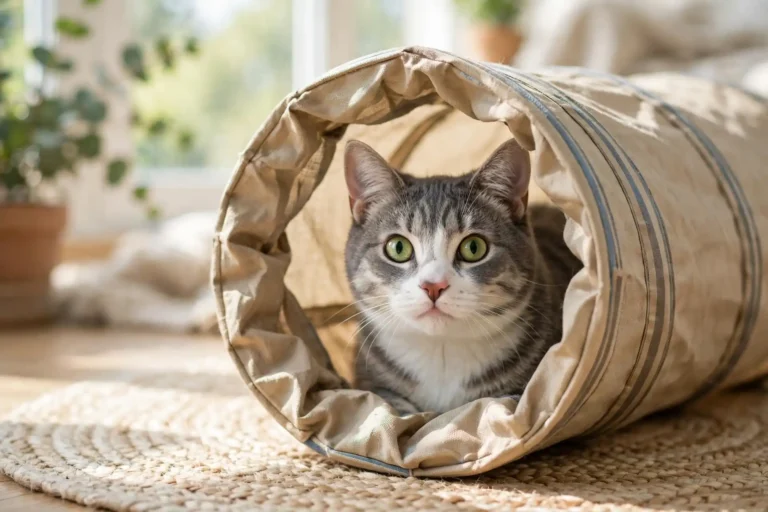
Fabric tunnels give cats a place to hide, dash through, and launch ambush attacks during play. Most are collapsible for easy storage and come in straight, curved, or multi-way designs. Look for sturdy wire frames, tear-resistant fabric, and washable materials.
15. Cat Tents and Cubes
Pop-up tents and fabric cubes create cozy hiding spots that double as play spaces. Many include hanging toys or peek holes. They are lightweight, portable, and useful for cats that enjoy enclosed spaces.
16. Cat Trees with Built-In Toys
Cat trees combine scratching posts, perches, and hideaways, often with dangling toys attached. They satisfy climbing instincts while providing play opportunities. When comparing cat trees, consider height, base stability, materials (such as sisal for scratching surfaces), and the number of levels.
Grooming-Adjacent and Sensory Toys
17. Grooming Glove Toys
Some textured gloves marketed as grooming tools double as interactive toys — cats enjoy the stroking sensation while loose fur is collected. They suit cats that like being petted and can make grooming feel like play. Choose soft, flexible materials with gentle nubs.
18. Cat Grass Growing Kits
Cat grass kits let owners grow fresh grass indoors for cats to nibble and rub against. While not a toy in the traditional sense, they provide sensory enrichment. Kits typically include seeds, soil medium, and a container. Follow the included growing instructions.
DIY and Budget-Friendly Options
19. DIY Cardboard Toys
Cardboard boxes, paper bags (with handles removed), and toilet paper rolls can become engaging toys. Cats love the texture and the hiding opportunities cardboard provides. DIY options are free and easily replaced, though they wear out quickly and should be checked for staples or tape.
20. Homemade Fabric Toys
Simple sewn toys made from felt or old t-shirts stuffed with crinkle paper offer a budget-friendly alternative to store-bought toys. Homemade toys let owners control the materials used. Ensure all stitching is secure and avoid buttons, beads, or other small parts that could detach.
How to Choose the Right Cat Toys
With so many options, a few practical criteria help narrow the choice:
- Your cat's play style: Does your cat prefer chasing, pouncing, batting, or puzzle-solving? Match toy types to observed preferences.
- Age and energy level: Kittens often enjoy fast-moving interactive toys, while older cats may prefer gentler batting toys.
- Safety: Check for small detachable parts, loose strings, and sharp edges. Supervise play with string, ribbon, and electronic toys.
- Materials: Look for non-toxic, pet-safe materials and sturdy construction. Avoid toys with a strong chemical smell.
- Size: Toys should be large enough not to be swallowed but small enough for your cat to bat and carry comfortably.
- Variety and rotation: Rotating toys every week or two keeps playtime interesting, since cats can lose interest in toys that are always available.
Related Reading on MyPetsMyLove
- Interactive Cat Toys: How to Choose the Right Playtime Accessories
- Best Wand Toys for Cats: Styles, Materials and Features
- Automatic Cat Toys vs Manual Toys: Which Is Better for Playtime?
- Pet Products hub page
- Cats & Kittens hub page
- MyPetsMyLove homepage
References
- The Humane Society of the United States — cat enrichment resources
- American Association of Feline Practitioners (AAFP) — feline environmental needs guidelines
Frequently Asked Questions
How many toys does a cat need?
There is no fixed number. A small rotation of different toy types — for example, an interactive wand, a solo batting toy, and a puzzle toy — covers the main play styles for most cats.
What type of toy do cats like most?
Preferences vary by individual cat. Many cats enjoy wand toys for interactive play and crinkle or plush toys for solo batting, but observing your own cat's play style is the best guide.
Are catnip toys safe for kittens?
Catnip sensitivity typically develops as kittens mature. Simple plush and crinkle toys without catnip are widely chosen for very young kittens.
How often should I replace cat toys?
Replace toys when they show wear such as loose stitching, torn fabric, or exposed filling. Rotating toys regularly also keeps them interesting.
Should I supervise my cat with string toys?
Yes. String, ribbon, and similar toys are best used during supervised interactive play and stored away afterward.
What is the difference between a puzzle toy and a puzzle feeder?
Puzzle toys challenge cats through manipulation and play, while puzzle feeders specifically dispense treats or food as the cat interacts with them.
Conclusion
From feather wands to puzzle feeders and tunnels, the world of cat toys offers something for every play style. Choosing a variety of safe, well-made toys — and rotating them regularly — keeps indoor life engaging for your cat and strengthens the bond you share through play.
Discover more buying guides in our Pet Products section and explore playtime ideas in our Cats & Kittens guides.
Disclaimer
Disclaimer
MyPetsMyLove dot com is an independent informational website covering pet species breeds characteristics activities positive training bonding grooming and responsible ownership
We are not a veterinary clinic medical provider pet food provider or veterinary nutrition service
We do not provide veterinary diagnosis medical advice treatment food recommendations or nutritional guidance
For pet health medical or food related concerns consult a qualified veterinarian or appropriate professional directly
Independent clinics listed on this website are not owned or operated by MyPetsMyLove unless explicitly stated
Verify third party credentials services fees and availability independently
We do not guarantee third party services or outcomes
To the extent permitted by applicable law we disclaim responsibility for independent third party services
Nothing in this notice excludes liability that cannot legally be excluded
The disclaimer does not make prohibited content acceptable

15 Comments