
Budgerigar Care Guide: Everything About Your Budgie
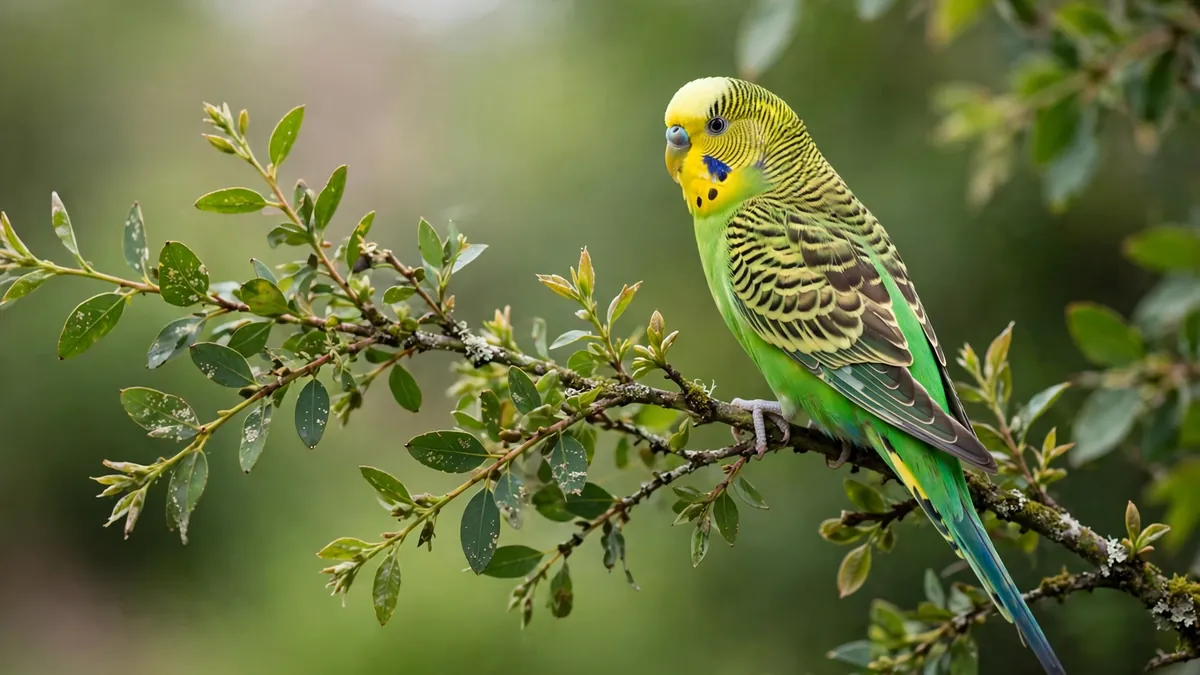
Picture a small green bird the size of your hand, chattering in a cheerful stream of chirps, bobbing its head, and then suddenly repeating a word you said yesterday. That is a budgerigar, better known as a budgie, and it is one of the most popular pet birds in the world. Behind that tiny frame is a bright, social, and surprisingly talkative companion that can learn words, play games, and form a real bond with its owner. This guide covers its origin, looks, behaviour, home setup, and daily happiness.
The History and Origin of the Budgerigar
The budgerigar comes from Australia, where wild budgies still fly in large, noisy flocks across the dry grasslands and open scrub of the interior. In the wild, budgies are almost always green and yellow, the colours that blend best with sunlit grass and dusty ground.
The bird’s scientific name is Melopsittacus undulatus, and the word budgerigar is believed to come from an Aboriginal Australian name for the bird. The English naturalist John Gould studied budgies in Australia and brought live birds to England in 1840. From there, the little parakeet spread quickly through Europe as a cage bird, prized for its bright colours, small size, and lively nature. Breeders later selected for new colours, and the blue, white, yellow, and patterned varieties in pet shops today descend from those early birds.
Appearance and Colours of the Budgerigar
A budgerigar is a small parakeet, usually around 18 centimetres long from beak to tail tip, with a slender body, a rounded head, and a long, tapered tail. Its beak is short and curved, with a fleshy band above it called the cere, and its dark eyes are bright and alert. Young budgies often show faint bars across the forehead that fade as they mature.
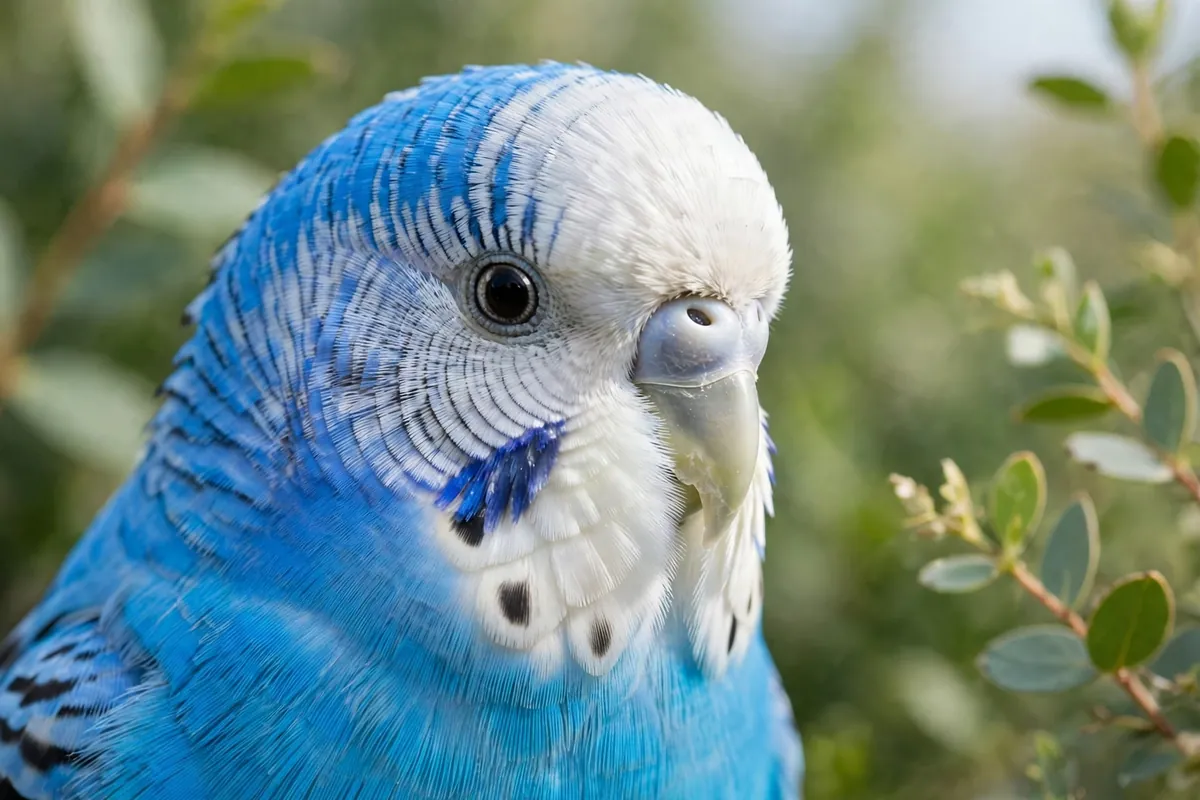
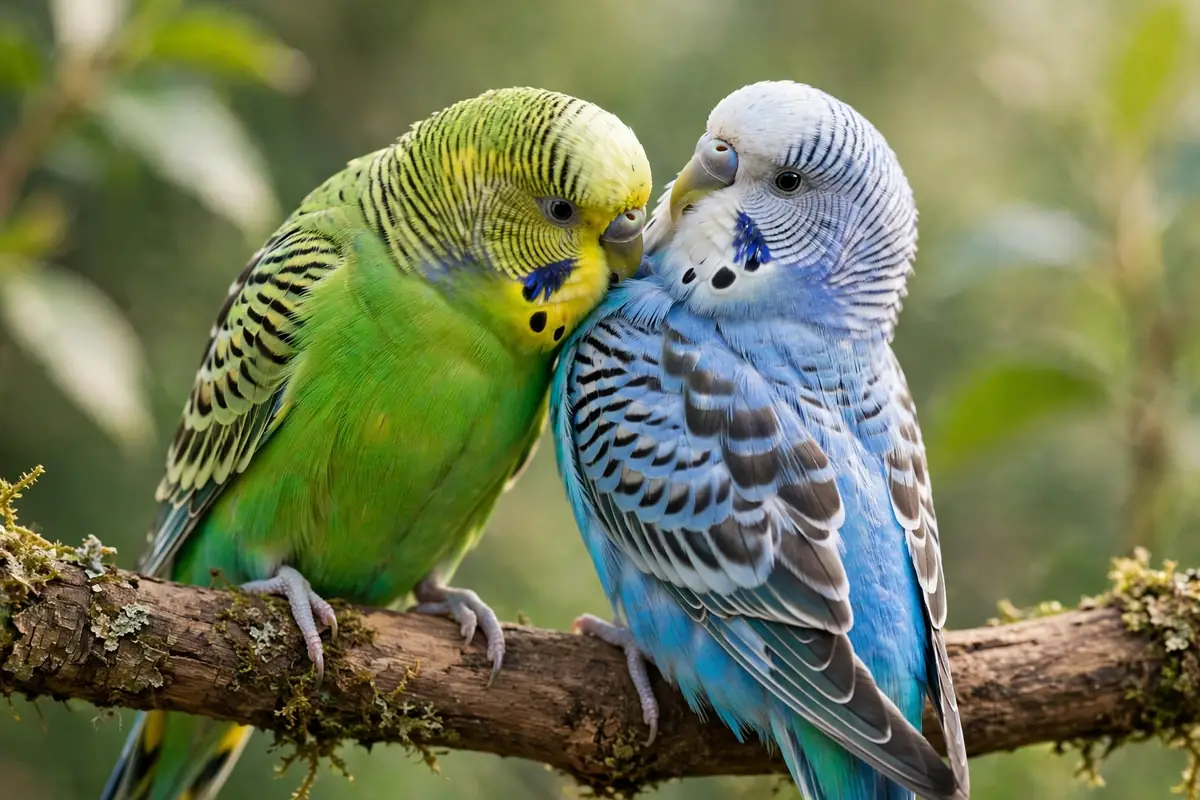
The wild colour, light green with a yellow face and black wavy markings on the wings and back, is still the classic budgie look. Pet breeding has produced a wide palette since then. Blue budgies, with white faces and blue bodies, are among the most popular. Lutino budgies are clear yellow with red eyes, albino budgies are pure white, and pied budgies mix patches of colour and white in patterns that are different on every bird.
The cere above the beak is one of the easiest ways to tell males and females apart in adult birds. In most varieties, an adult male has a blue cere, while an adult female has a brown or tan cere that can change with the seasons.
Personality and Sounds
A budgerigar is a cheerful, curious, and deeply social bird. In the wild, budgies spend their lives in flocks, and that flock instinct shapes everything about a pet budgie’s personality. A tame budgie wants company, and it will treat its owner as part of its flock, following movement around the room, chattering to get attention, and settling happily on a shoulder or a finger once trust is built.
Budgies are daytime birds, most active in the morning and again in the late afternoon, with a quieter rest in the middle of the day. They love to explore, to climb, to swing, and to investigate anything new. A budgie’s natural voice is a stream of chirps, trills, warbles, and chatter, often loudest in the morning when the household wakes up.
Each budgie has its own character. What they share is a need for attention and stimulation. A budgie left alone in silence for long hours is a bored budgie, and boredom is the enemy of a happy pet bird. Time, talk, and play are not extras in budgerigar care; they are the core of it.
Cage Setup and Placement
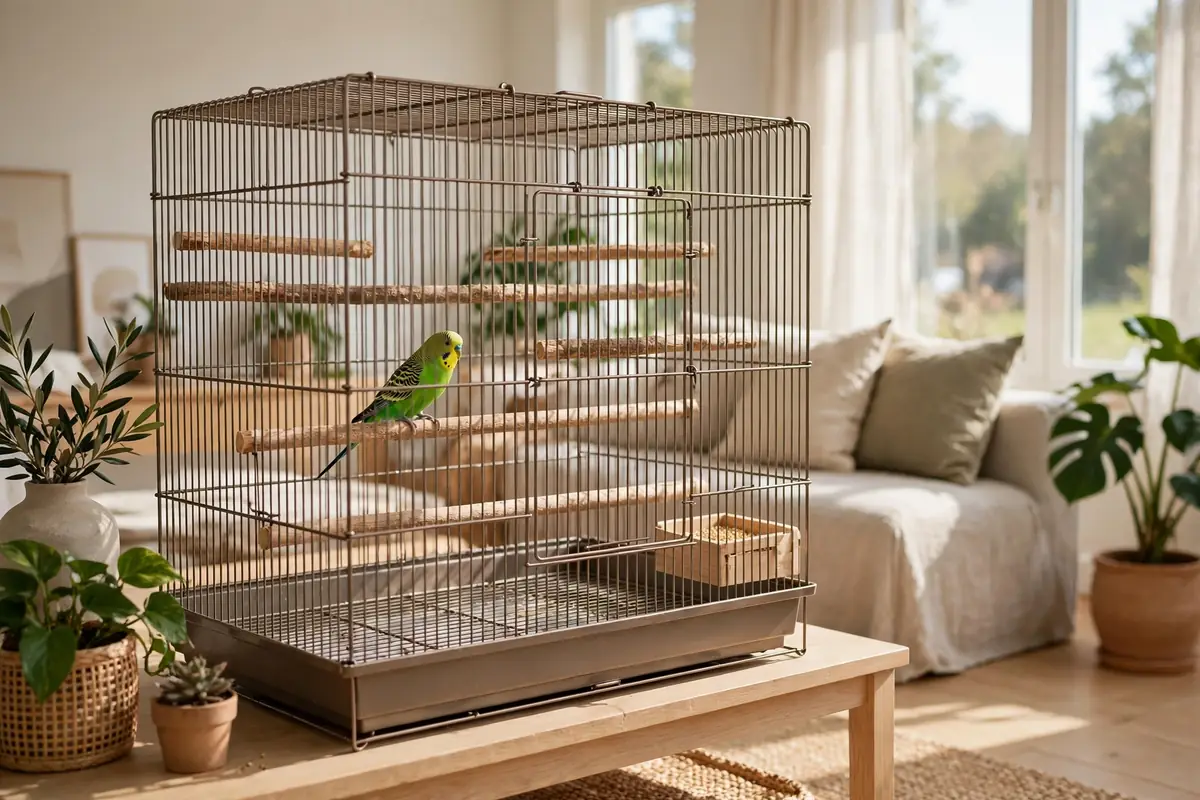
A budgie’s cage is its home, its dining room, and its playground, so getting the setup right matters more than almost anything else in this guide. Bigger is always better. A single budgie needs a cage wide enough to stretch its wings and hop between perches, and a pair needs more room still. Look for a rectangular cage rather than a round one, because corners give a small bird a sense of shelter, and choose bar spacing narrow enough that the bird cannot squeeze its head through.
Perches are where a budgie spends most of its day, so offer several at different heights and thicknesses. Natural wood branches of varying widths are ideal, because they exercise the feet better than identical smooth dowels. A swing is a favourite with most budgies.
Place the cage in a bright, busy room, such as a living room, where the budgie can see people coming and going. Avoid kitchens, where cooking fumes and sudden temperature changes are a risk, and avoid draughty windows and doors. At night, covering part of the cage with a light cloth helps the bird settle, but always leave good airflow. Change the floor paper regularly and wash the water and seed containers daily.
Daily Care Routine
Budgies thrive on routine, and a simple daily rhythm keeps both bird and owner relaxed. Start the morning by uncovering the cage, greeting the bird, and changing its water. Fresh water every day is essential, and the container should be washed rather than simply topped up. Clear away empty seed husks and tidy the cage floor.
Let the bird out of the cage for supervised time outside it whenever the room is safe and the household is calm. A budgie that can fly around a room and explore from above is happier than one that never leaves its cage. Keep windows and doors closed, cover mirrors if the bird flies into them, and keep other pets out of the room. Even a friendly cat or dog should never share unsupervised space with a small bird, as our guide to the most popular cat breeds in the USA shows.
In the evening, dim the household gradually, offer a last bit of gentle talk, and cover the cage. Budgies need around ten to twelve hours of darkness and quiet to rest properly, so a regular bedtime matters as much as a regular morning. Notice what is normal for your bird, so you can spot when something is different.
Playtime and Toys
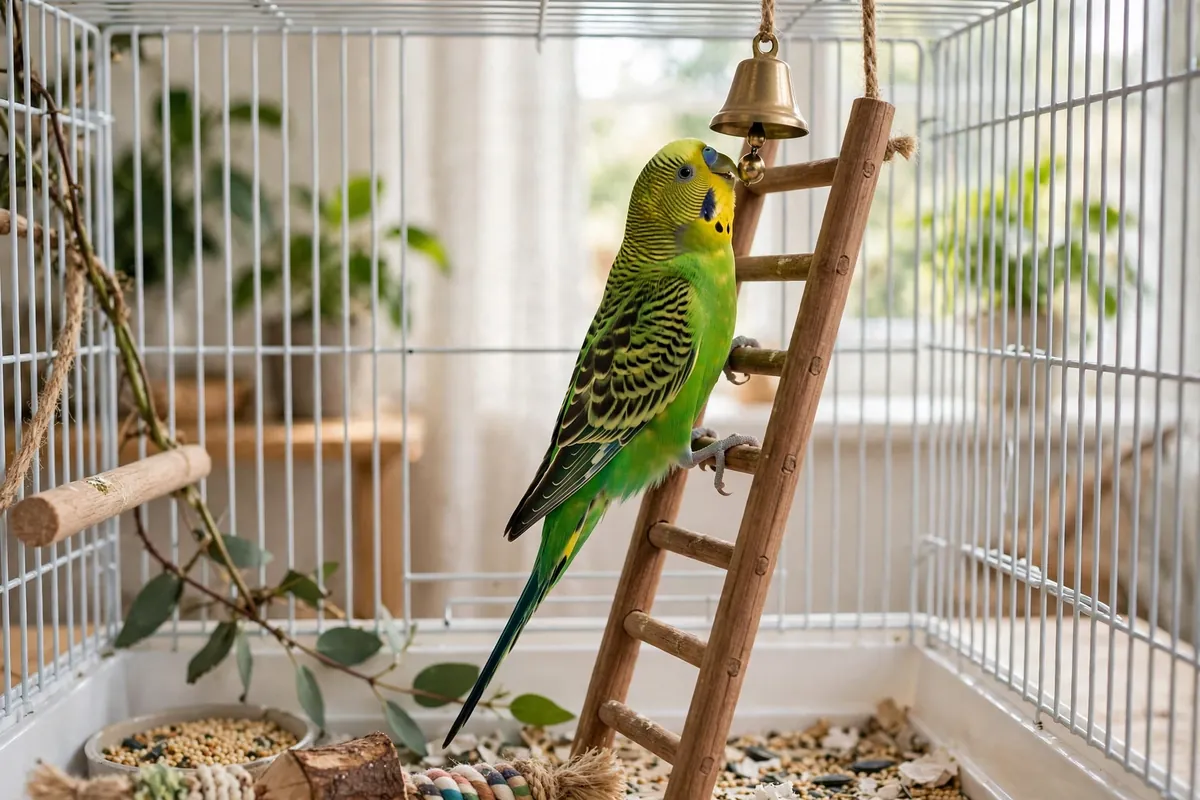
Play is how a budgie learns, exercises, and stays cheerful, and a good toy collection is one of the simplest gifts an owner can give. Budgies love toys they can chew, climb, ring, and pull apart. Shredded paper toys, wooden blocks, rope perches, ladders, and small bells are all popular, and many budgies spend long, contented minutes working at a toy with beak and feet. Rotate the toys every week or two, so the cage always holds something new.
Foraging toys, where the bird has to work a little to reach a hidden object, suit the budgie’s natural curiosity. Mirrors deserve a note of caution: many budgies adore their reflection and will chatter to it for hours, but a bird that spends all its time with a mirror may bond with the reflection instead of its owner.
Out-of-cage playtime matters just as much as cage toys. A play stand with perches, ladders, and hanging toys gives the bird a place to land and explore outside the cage, and a short training game or a gentle head scratch builds trust. Cats have their own favourite playthings, covered in our guide to the best cat toys, and budgies are no different.
Talking and Training Basics
Few things delight a budgie owner more than the first clear word from a tiny beak, and budgerigars are among the best talking birds for their size. Males are often the quickest learners, but females can learn words too, and every bird learns at its own pace. The secret is short, regular, and cheerful repetition. Choose one simple word, such as the bird’s name or “hello”, and repeat it clearly several times a day when the bird is calm.
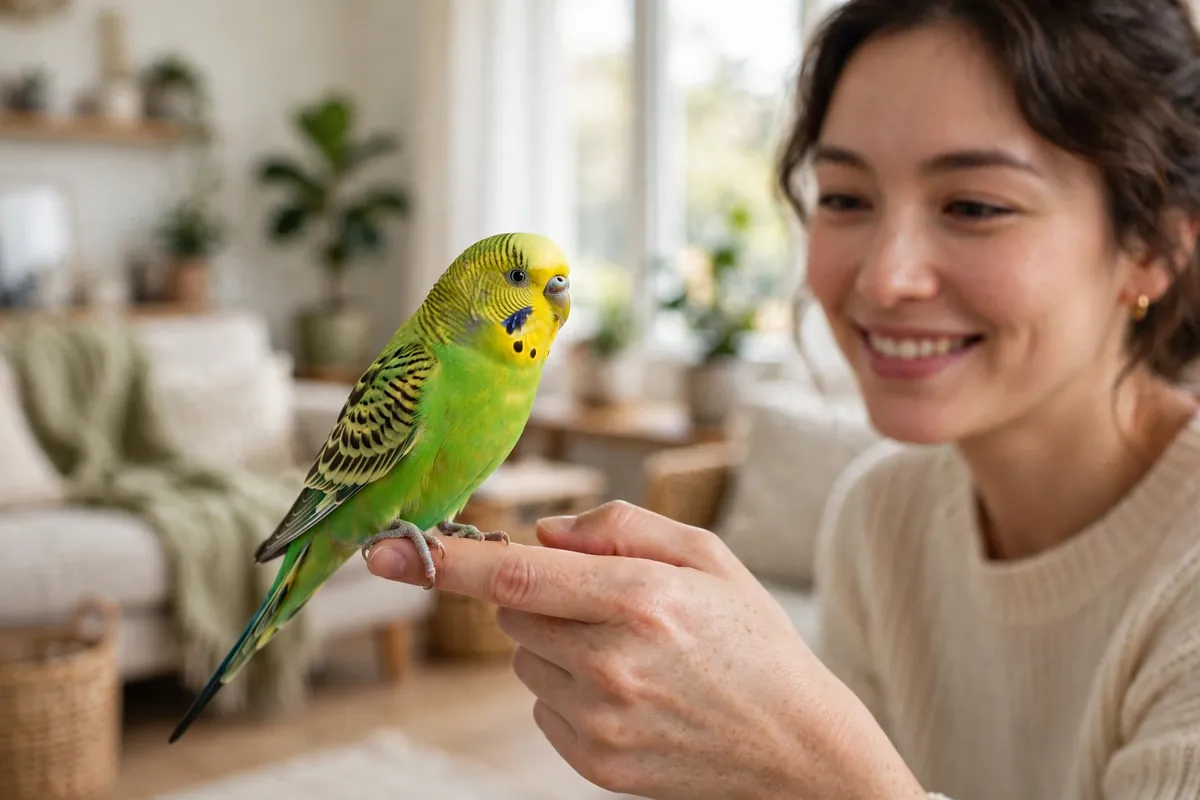
Training starts with trust, not words. Sit near the cage and talk softly until the bird is relaxed in your presence, then offer a fingertip as a perch inside the cage, moving slowly and letting the bird come to you. The step-up command, where the bird steps onto a finger on request, is the foundation of all later training. Keep sessions short, around five to ten minutes, and end while the bird is still enjoying itself. Never chase a budgie or grab at it, because fear undoes trust fast.
Positive reinforcement is the only approach that works well with budgies. Praise the bird in a bright voice when it steps up or attempts a sound. If the bird flies off or loses interest, simply let it be and try again later. A few minutes every day will teach a budgie far more than one long weekend session. With patience, many budgies learn a handful of words.
Keeping a Budgie Happy
A happy budgie is an active, vocal, and curious bird, and happiness comes from company, stimulation, and routine. The single most important decision after choosing a budgie is how much company it will have. A lone budgie can be very happy if its owner spends plenty of time with it, talks to it, and lets it out daily. A pair of budgies will keep each other company when the household is busy. Either way, company is not optional.
Sound and scenery matter too. Budgies enjoy gentle background music, the murmur of a household, and a view of the room from their cage. A quiet, empty house all day is a lonely place for a flock bird. Some owners leave a radio on softly during the day, and many budgies sing along. Fresh air from an open window is welcome, as long as the cage is not in a draught.
Variety keeps life interesting. Move a perch, add a new toy, or change the cage layout now and then to give the bird something new to investigate. Dogs share the same need for variety and company, as our guide to the most popular dog breeds in America shows.
Budgerigar vs Other Small Pet Birds
| Bird | Size | Talking ability | Noise level | Best for |
|---|---|---|---|---|
| Budgerigar | Small, around 18 cm | Very good, can learn many words | Moderate, cheerful chatter | First-time bird owners |
| Cockatiel | Medium-small, larger than a budgie | Good, often whistles tunes | Moderate, whistles and calls | Owners who enjoy whistling birds |
| Lovebird | Small, stocky | Limited, rarely talks clearly | Moderate to loud | Owners wanting a bold, playful bird |
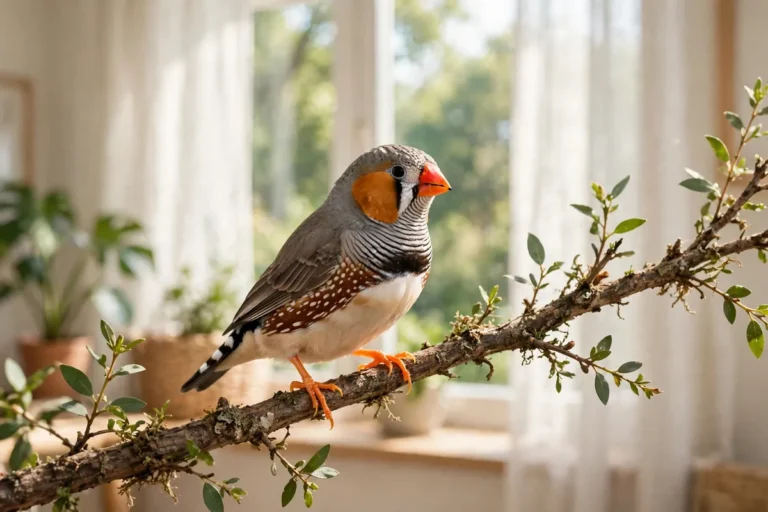
| Finch | Very small | Does not talk, sings instead | Quiet, soft songs | Owners who prefer watching to handling |
The budgerigar is a popular first bird for good reason: small and easy to house, yet it talks, plays, and bonds in a way finches do not.
Interesting Facts About Budgerigars
- A flock of thousands: Wild budgies gather in flocks that can number in the thousands when water and seeding grasses are plentiful.
- Record talkers: Some budgies have learned remarkably large vocabularies.
- Fast fliers: Wild budgies are strong fliers that travel long distances in search of water.
- A name from Australia: The word budgerigar is believed to come from an Aboriginal Australian name for the bird.
- Colourful cousins: The blue, white, yellow, and pied pet budgies all descend from the wild green-and-yellow bird.
- Head bobbing: A budgie that bobs its head and warbles is usually a happy, excited bird.
- Gould’s journey: John Gould brought the first live budgies to England in 1840, starting the bird’s life as a popular pet.
Related Reading on MyPetsMyLove
- Most popular cat breeds in the USA
- Most popular dog breeds in America
- Best cat toys guide
- Best dog toys guide
- MyPetsMyLove homepage
- About Us page
References
- Encyclopaedia Britannica — budgerigar
- National Audubon Society — bird guides and resources
- The Humane Society of the United States — pet care and enrichment resources
- Smithsonian’s National Zoo & Conservation Biology Institute — budgerigar
Frequently Asked Questions
What is a budgerigar?
A budgerigar, usually called a budgie, is a small parakeet from Australia. It is one of the most popular pet birds in the world, known for its bright colours, cheerful chatter, and ability to learn words.
How long do budgerigars live?
Budgerigars are long-lived for such a small bird, and a well-cared-for pet budgie often lives for many years. The exact lifespan varies with the individual bird and the care it receives, so a steady routine and a clean, stimulating home matter throughout its life.
Can budgerigars learn to talk?
Yes. Budgerigars are among the best talking birds for their size, and many learn words and short phrases with regular, patient repetition. Males often learn fastest, but females can learn words too, and every bird learns at its own pace.
What colours do budgerigars come in?
Wild budgies are green and yellow, and pet breeding has produced blue, white, yellow, and many patterned varieties. Blue budgies with white faces, lutino yellow budgies, and pied budgies with mixed patches are all popular pet colours.
Are budgerigars good pets for beginners?
Yes. Budgies are small, gentle, and social, and they are one of the best first birds for a new owner. They need daily attention, playtime, and a roomy cage, but their care is simpler than that of larger parrots.
Do budgerigars need company?
Yes. Budgies are flock birds and need company every day, either from an owner who spends time with them or from another budgie. A lone budgie can be very happy with a devoted owner, while a pair keeps each other company when the household is busy.
How can I tell a male budgerigar from a female?
In most adult varieties, the cere above the beak is blue in males and brown or tan in females. In young birds and in some colour varieties the cere looks different, so colour alone is not always a certain guide.
Conclusion
The budgerigar packs a remarkable amount of personality into a very small bird: the colours of the Australian grasslands, a voice full of chatter and song, a talent for learning words, and a social nature that turns an owner into a flockmate. With a roomy cage, a daily routine, plenty of play, and patient, gentle training, a budgie becomes a cheerful companion that brightens the whole household.
Start with the basics in this guide, then explore more companions on MyPetsMyLove — browse the Cats & Kittens and Dogs & Puppies sections, compare breeds in our most popular cat breeds guide, and return to the MyPetsMyLove homepage to meet more pets worth knowing.
Disclaimer
Disclaimer
MyPetsMyLove dot com is an independent informational website covering pet species breeds characteristics activities positive training bonding grooming and responsible ownership
We are not a veterinary clinic medical provider pet food provider or veterinary nutrition service
We do not provide veterinary diagnosis medical advice treatment food recommendations or nutritional guidance
For pet health medical or food related concerns consult a qualified veterinarian or appropriate professional directly
Independent clinics listed on this website are not owned or operated by MyPetsMyLove unless explicitly stated
Verify third party credentials services fees and availability independently
We do not guarantee third party services or outcomes
To the extent permitted by applicable law we disclaim responsibility for independent third party services
Nothing in this notice excludes liability that cannot legally be excluded
The disclaimer does not make prohibited content acceptable
3 Comments