African Grey Parrot: The Complete Care Guide

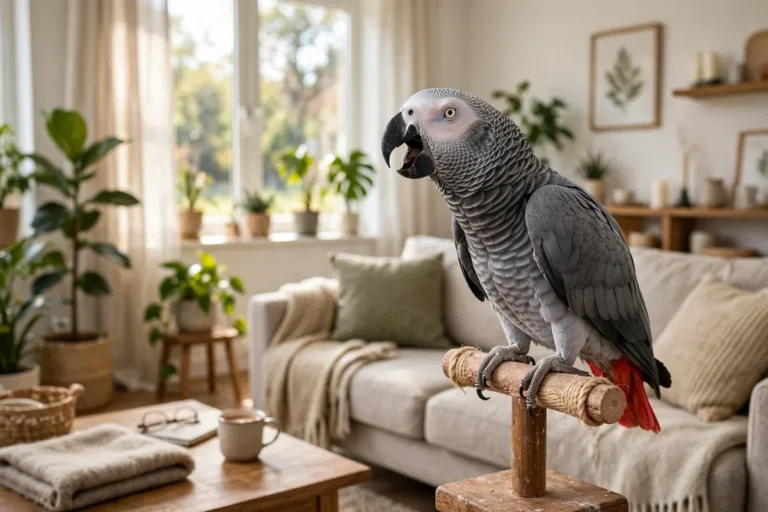
It is a quiet evening, and from across the room comes a clear little voice: “Hello!” You look up, and the grey parrot on its perch is watching you, head tilted, waiting for an answer. That is the African Grey. This guide covers where these clever birds come from, how to choose one, how to set up its cage, and how to keep it happy and talking for years to come.
Why African Greys Are So Special
Ask any parrot lover to name the cleverest talking bird, and the African Grey will be the first name they mention. These parrots are famous for learning words and using them in ways that seem almost conversational — greeting you when you come home, for example. That reputation is well earned, but it is only part of the story.
African Greys are also gentle, thoughtful birds. They watch everything, learn routines quickly, and often choose one favourite person in the household.
Where African Grey Parrots Come From
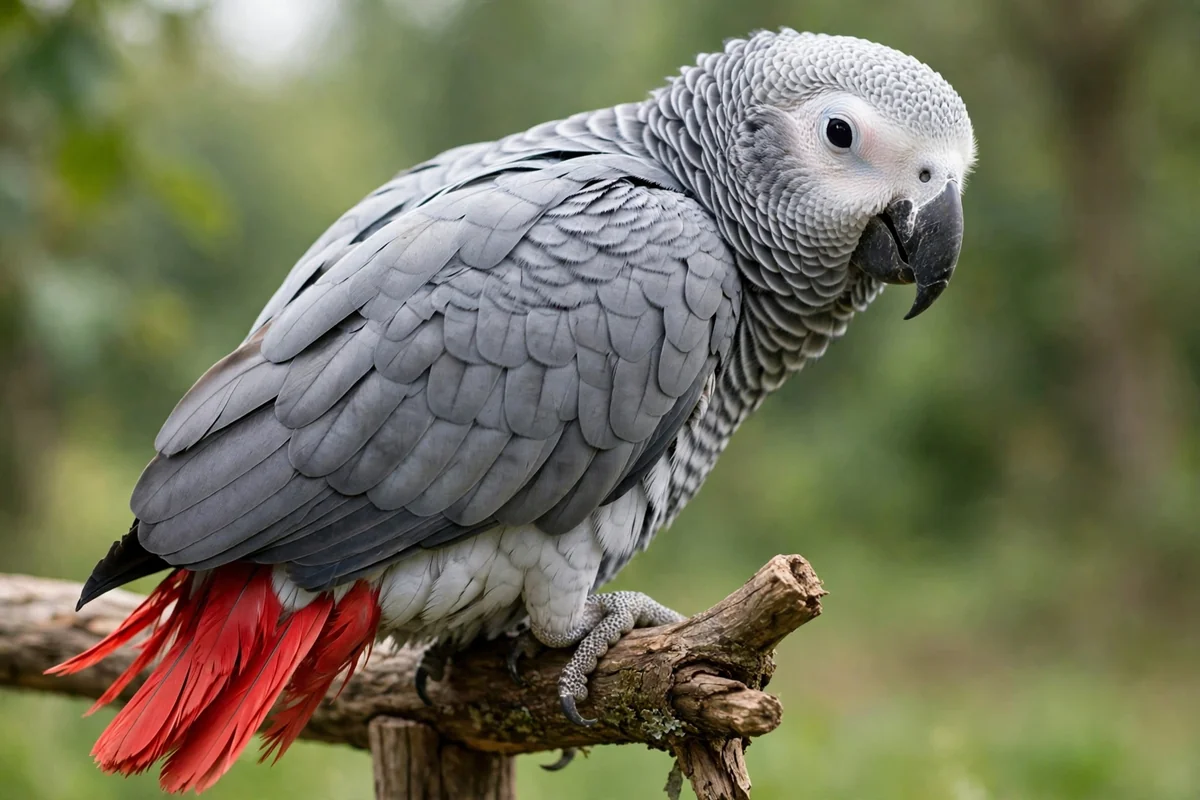
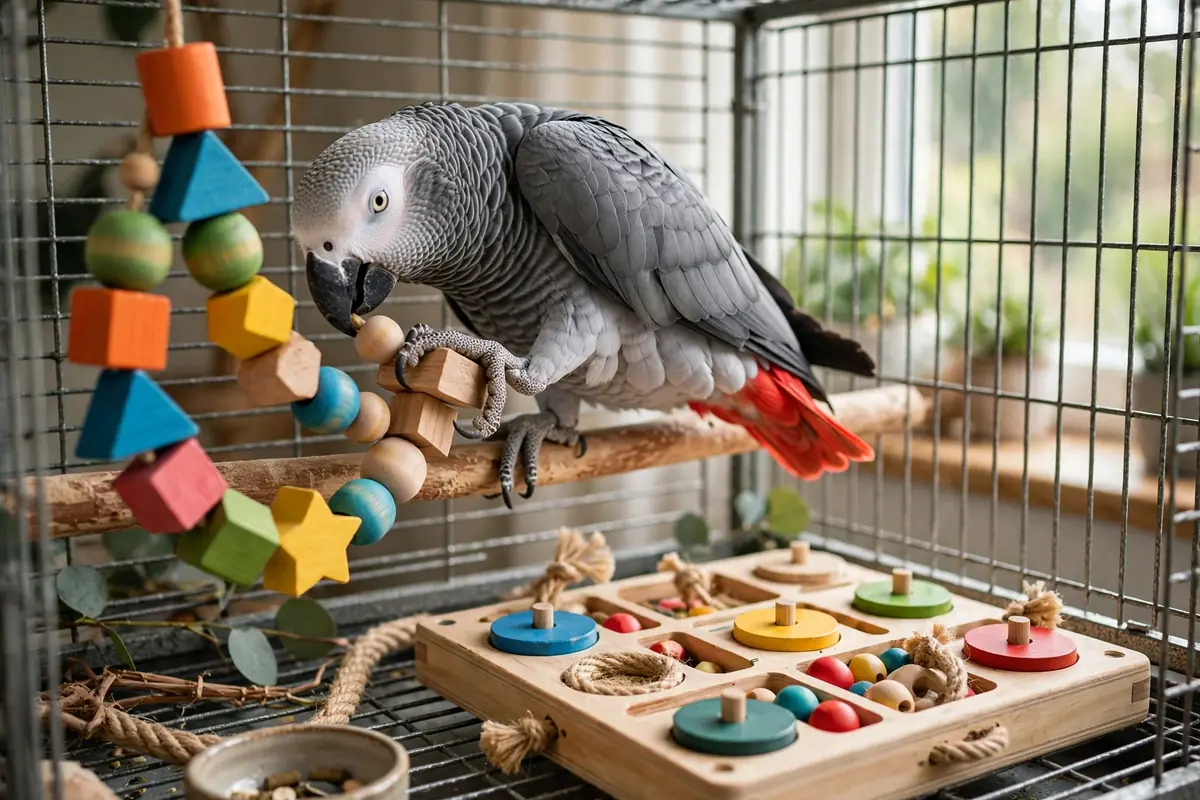
The African Grey comes from the rainforests of central and western Africa, where wild flocks live high in the trees. Two types are recognised by bird keepers: the Congo African Grey, the larger and better-known of the two, with a bright red tail and a pale face, and the Timneh African Grey, a slightly smaller bird from the western part of the range, with a darker maroon tail and a horn-coloured upper beak.
In the wild, African Greys live in large, noisy flocks, flying between trees and roosting together at night — which is why the pet African Grey is such a social bird, needing company, conversation, and things to do.
What an African Grey Looks Like
The African Grey is not a flashy bird at first glance, and that is part of its charm. Its body is covered in soft, scalloped grey feathers. The face is pale and bare around the eyes, which are a striking pale yellow in adults, and the beak is strong and black. The one splash of colour is the tail: bright red in the Congo, deep maroon in the Timneh.
Size-wise, the African Grey is a medium parrot, around 12 to 14 inches long from beak to tail tip, with Congos the larger of the two.
Intelligence and Talking Ability
The African Grey’s mind is its most remarkable feature. These parrots can learn dozens of words and phrases. What surprises new owners most is not just the size of the vocabulary, but the timing: many African Greys learn to say the right thing at the right moment, greeting you with “hello” when you walk in.
Talking is not automatic, though. Not every African Grey talks, and some prefer whistles, clicks, and household sounds instead. A parrot that never says a word can still be a wonderful companion — choose the bird for its company first, and see any talking as a bonus.
You can encourage talking by speaking to your bird every day in a clear, cheerful voice and repeating short words and phrases during calm moments, such as greetings at the same time each morning. Short, patient sessions work better than long ones. Our guide on how to train a parrot to talk covers the basics step by step.
Choosing Your African Grey
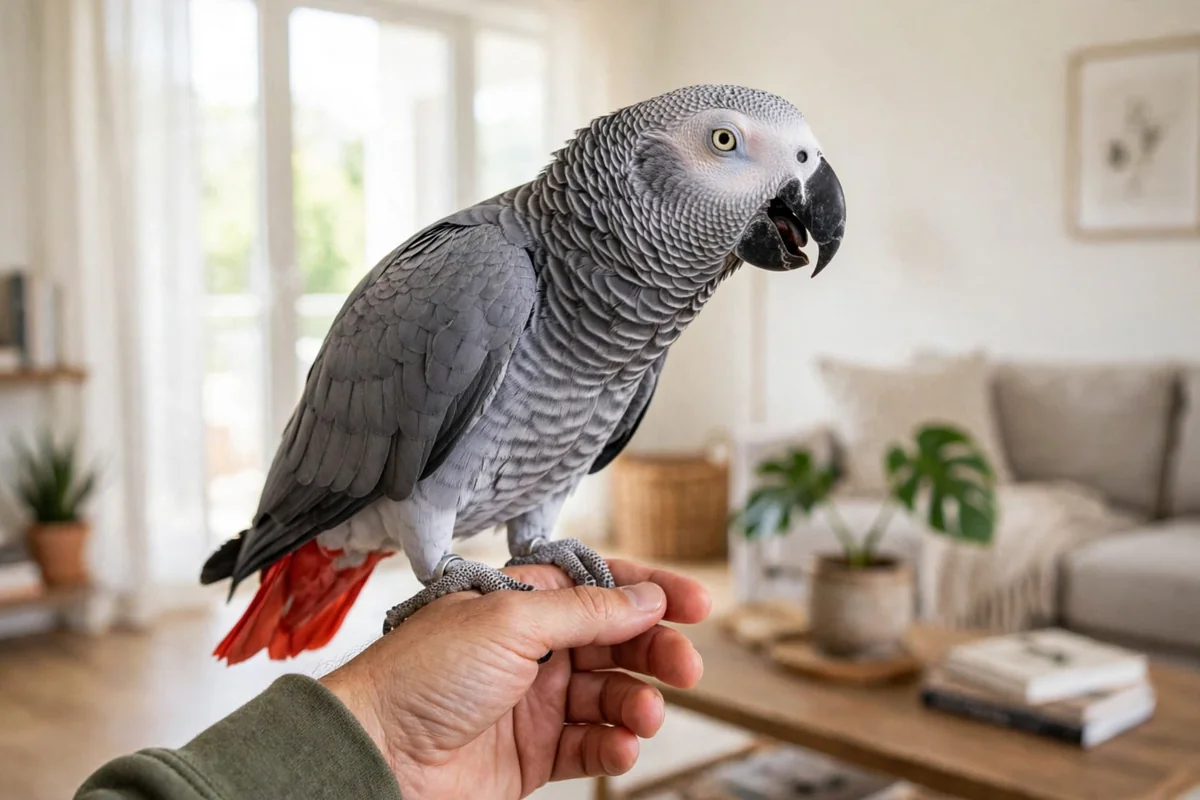
The Congo is the more common pet — larger, with a bright red tail and widely available from breeders. The Timneh is a little smaller and often described as slightly more easy-going, a good choice if you like a calmer companion. Look for a reputable breeder who hand-raises the birds and lets you visit and handle them before you decide. A young, hand-raised African Grey is usually the best choice for a first-time owner, because it is already used to people and ready to bond. When you visit, take your time. A healthy African Grey is alert and curious, with bright eyes, smooth feathers lying flat, and clean feet. Watch how it moves: it should climb confidently, grip its perch firmly, and show interest in you. A bird sitting fluffed up and still in a corner is not the one to take home.
If a large, long-lived parrot feels like too much, our finch care guide covers a smaller, cheerful alternative. Before you bring your bird home, read our guide on 10 things to know before getting a pet to check that a parrot fits your home, your schedule, and your long-term plans.
The Right Cage
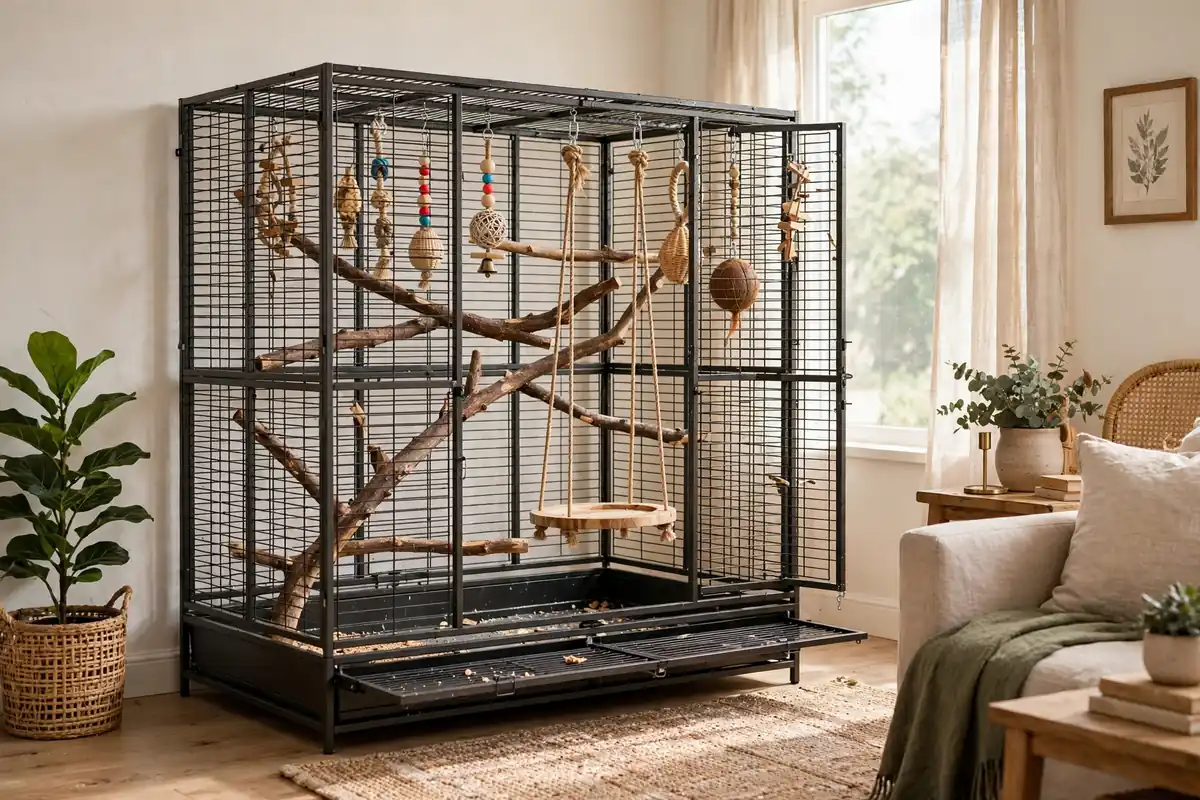
The cage is your African Grey’s home base, and it should be as large as you can manage. These are active, intelligent birds that need room to climb, stretch their wings, and play. A cage around 36 inches wide, 24 inches deep, and 48 inches tall is a good starting point for one bird, and bigger is always better.
Bar spacing matters: bars should be about three-quarters of an inch to one inch apart, so the bird cannot get its head stuck, and the bars themselves should be sturdy enough to resist a strong beak. Choose a powder-coated or stainless steel cage with a secure latch — African Greys are clever enough to work out a simple catch.
Inside, keep the layout open: a few perches at different heights, a swing, a shallow water bowl for bathing, and a couple of toys. Place the cage on a sturdy stand at about chest height, where the bird can see the room and feel part of the household.
Where to Place the Cage
Cage placement shapes how settled your African Grey feels. Choose a bright spot in a room where the family spends time, so the bird is part of daily life — a living room or home office is ideal. African Greys are social birds, and a cage tucked away in a quiet spare room leaves them bored and lonely.
Place the cage against a wall rather than in the middle of the room, so the bird is not exposed from every side. Keep it away from draughts, slamming doors, and the kitchen, where fumes and sudden temperature changes can be a problem.
Perches, Toys, and Enrichment
African Greys spend most of their lives on their feet, so perches deserve attention. Offer several of different thicknesses and materials, placed at different heights and angles. Natural wood branches are best — their varying thickness keeps the bird’s feet exercised and gives the beak something to chew. A rope perch adds a soft, comfortable option for resting.
A swing is almost essential: many African Greys love to sit on a gently rocking swing, and you will often find your bird dozing there. Hang it where it can move without bumping the cage bars.
Toys and enrichment are not optional extras for an African Grey — they are how a clever bird stays busy. Offer wooden toys to chew, puzzle toys that hide a favourite toy inside, bells, and shreddable toys made from natural materials. Like the budgerigar, another small social pet bird, an African Grey with plenty to do is a contented bird.
Your Daily Routine
African Grey care fits into a normal day once the routine is set, and a steady rhythm keeps the bird calm and confident. Start the morning by uncovering the cage, greeting your bird, and checking that the water bowl is clean and full.
Let your parrot out of its cage for supervised time in a bird-safe room each day, if you can. Out-of-cage time is when an African Grey stretches, explores, and spends time with you. A few hours spread through the day is ideal, and even an hour makes a real difference.
Spend a few minutes talking and playing with your bird each day, and in the evening tidy the perches and cover the cage at a regular time. If you travel, our guide to the best pet carriers and travel gear covers safe transport for small pets.
Social Needs and Bonding
If there is one thing to remember about African Grey care, it is this: these birds need people. In the wild they live in large flocks, and that social nature does not disappear in a cage. An African Grey left alone for long hours every day will often become quiet, bored, and withdrawn, even in a perfect cage.
African Greys usually bond most closely with one person, though they can learn to enjoy the whole household. Build the bond slowly: talk to your bird every day, offer a favourite toy during playtime, and let it come to you rather than grabbing at it.
Watch your bird’s body language as the bond grows: a relaxed African Grey fluffs its feathers softly and leans toward you. Trust grows on the bird’s schedule, not yours.
Bathing: African Greys Love Water
One of the great joys of keeping an African Grey is watching it bathe: most love water and will splash happily in a shallow bowl, shaking droplets everywhere.
Offer a shallow bowl of clean, lukewarm water in the morning, just deep enough to stand in, and remove it after a couple of hours so the bird can dry off during the warm part of the day. Never force a parrot into the water, and never bathe a bird late in the evening.

Sleep and Rest
Sleep is a bigger part of African Grey care than many new owners expect. These birds need about ten to twelve hours of quiet, dark rest each night, and a regular bedtime keeps them calm and balanced during the day.
Cover the cage at the same time each evening with a light, breathable cover, and keep the room quiet and dim afterwards.
Lifespan: A Long Commitment
An African Grey is one of the longest-lived pet birds you can bring home. With good care, these parrots commonly live for 40 to 60 years, and some live even longer. That is a lifetime commitment, closer to adopting a child than buying a pet, and it is the single most important thing to understand before you decide.
Think ahead about who would care for the bird if your circumstances changed — many African Greys outlive their first owners.
Do This, Not That
| Do this | Not that |
|---|---|
| Choose a large, sturdy cage | A small cage with no room to climb |
| Spend time with your parrot daily | Leaving the bird alone for long hours |
| Offer toys and rotate them often | The same single toy for months |
| Talk to your bird in short daily sessions | Expecting it to talk without practice |
| Offer a shallow bath in the morning | Bathing a parrot late in the evening |
| Keep a regular bedtime of 10–12 hours | Keeping the bird up late with bright lights |
| Plan for a 40–60 year commitment | Seeing the parrot as a short-term pet |
Things to Remember
- African Greys are clever: Keep their minds busy with words, sounds, and games.
- Company matters most: Flock birds need daily time with their people.
- A big cage is home base: Room to climb, sturdy perches, and a secure latch.
- Talking is a bonus: Not every African Grey talks, and a quiet bird is still wonderful.
- Routine is comfort: Regular light, rest, and bedtime keep an African Grey calm.
- Think in decades: With good care, an African Grey can share your life for 40 to 60 years.
Related Reading on MyPetsMyLove
- Budgerigar care guide
- Finch care guide
- How to train a parrot to talk
- MyPetsMyLove homepage
- About Us page
References
- The Humane Society of the United States — pet bird care resources
- National Audubon Society — African Grey and wild bird information
- American Federation of Aviculture — pet bird care and education
- Encyclopaedia Britannica — African Grey parrot reference
Frequently Asked Questions
Do African Grey parrots talk?
Many African Grey parrots learn to talk, and they are famous for it — some learn dozens of words and phrases and use them at the right moment. But not every African Grey talks, and some prefer whistles and household sounds instead. Choose the bird for its company first, and see any talking as a bonus.
How long do African Grey parrots live?
African Grey parrots are long-lived birds, commonly living for 40 to 60 years with good care, and some live even longer. Bringing one home is a commitment measured in decades, so it is worth planning for the bird’s future care from the start.
What is the difference between a Congo and a Timneh African Grey?
The Congo African Grey is larger, with a bright red tail and a pale face, and is the more common pet. The Timneh African Grey is slightly smaller, with a deep maroon tail and a horn-coloured upper beak, and owners often describe it as a little more easy-going. Both make wonderful companions.
How big should an African Grey cage be?
Choose the largest cage you can manage — around 36 inches wide, 24 inches deep, and 48 inches tall is a good starting point for one bird. Bar spacing should be about three-quarters of an inch to one inch apart, and the door should have a secure latch your clever parrot cannot open.
Do African Grey parrots like to bathe?
Yes, most African Greys love to bathe. Offer a shallow bowl of clean, lukewarm water in the morning and let them splash for a couple of hours, then remove the bowl. Some prefer a gentle misting from a spray bottle instead, so try both to see what your bird likes.
How much time should I spend with my African Grey each day?
African Greys need daily company. Aim for a few hours of interaction spread through the day, including supervised out-of-cage time, talking, and play. Even an hour of focused time makes a real difference, but a bird left alone for long hours every day will become bored and withdrawn.
Do African Grey parrots need toys?
Yes, toys are essential for an African Grey. Wooden chew toys, puzzle toys, bells, and shreddable toys made from natural materials keep a clever bird busy and curious. Rotate the toys every couple of weeks and watch which ones your bird loves most.
Conclusion
African Grey parrot care is a rewarding mix of simple routines and a remarkable friendship. Give your bird a large cage in a bright corner of your home, spend time talking and playing with it every day, keep its toys fresh and its bedtime regular, and it will fill your home with words, whistles, and companionship for decades.
Start today: visit a reputable breeder, meet a young hand-raised African Grey, and set up its cage before it comes home. Then explore more pet bird guides, starting with our finch care guide if you are curious about a smaller pet bird, and learn more about us on the About Us page. Your African Grey is already listening — all it needs is a good home.
Disclaimer
Disclaimer
MyPetsMyLove dot com is an independent informational website covering pet species breeds characteristics activities positive training bonding grooming and responsible ownership
We are not a veterinary clinic medical provider pet food provider or veterinary nutrition service
We do not provide veterinary diagnosis medical advice treatment food recommendations or nutritional guidance
For pet health medical or food related concerns consult a qualified veterinarian or appropriate professional directly
Independent clinics listed on this website are not owned or operated by MyPetsMyLove unless explicitly stated
Verify third party credentials services fees and availability independently
We do not guarantee third party services or outcomes
To the extent permitted by applicable law we disclaim responsibility for independent third party services
Nothing in this notice excludes liability that cannot legally be excluded
The disclaimer does not make prohibited content acceptable