Savannah Cats: The Exotic-Looking Domestic Cat Breed
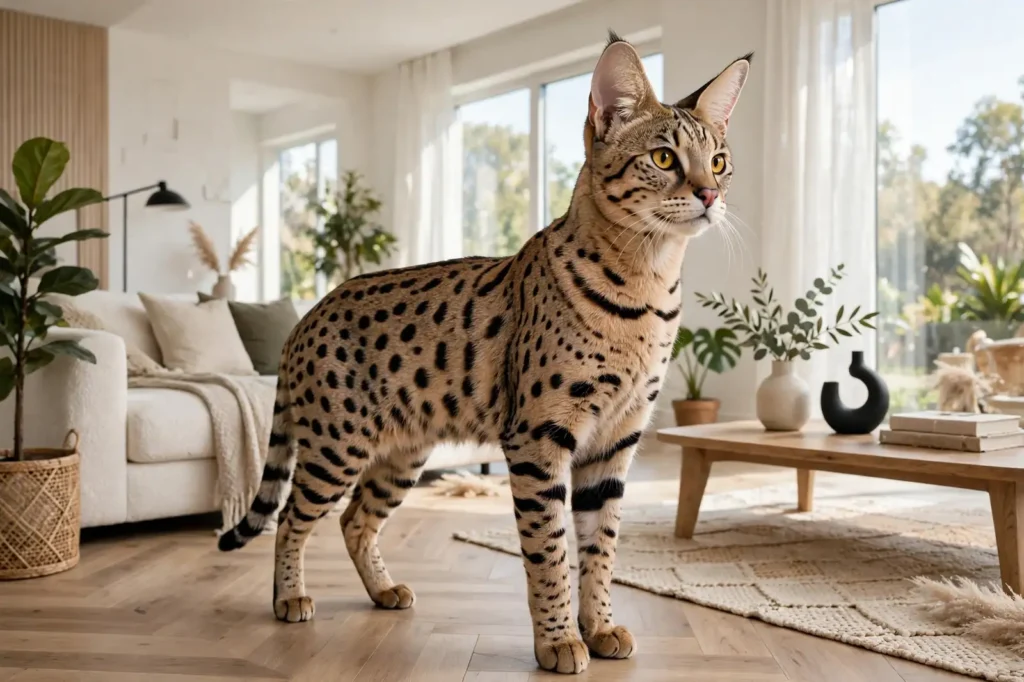
Some cats blend into the sofa. A Savannah cat never does. Tall on long legs, covered in bold spots, with ears that seem almost too large for its head, the Savannah looks as if it has just stepped off the African plains — yet it is a domestic breed, developed in the United States and devoted to its people. How did a cat that looks this wild end up following its owner from room to room and learning to walk on a harness? This guide covers the Savannah’s unusual origin, its spotted coat, the famous F generations, its loyal personality, and what daily life with one of the most striking domestic cat breeds is actually like.
Origin: A Serval Cross With a Domestic Heart
The Savannah is one of the youngest breeds in the cat world, and its story is fully documented. In 1986, American breeder Judee Frank produced the first Savannah kitten by crossing a domestic cat with an African serval, a medium-sized wild cat known for its long legs, large ears, and spotted coat. That first kitten carried the look of the serval in a smaller, domestic frame, and she was named Savannah — after the grasslands her wild ancestor calls home.
Breeders Patrick Kelley and Joyce Sroufe took up the new breed in the following years, wrote its first standard, and presented the Savannah to The International Cat Association in the 1990s. TICA went on to recognize the breed, awarding it championship status in 2012, and the Savannah has since become the best known of the serval-cross breeds. Unlike older breeds wrapped in legend, everything about the Savannah’s beginning is recent, recorded, and American — a planned breed built by crossing, then carefully developed over generations toward a consistent look and temperament.
Appearance of the Savannah
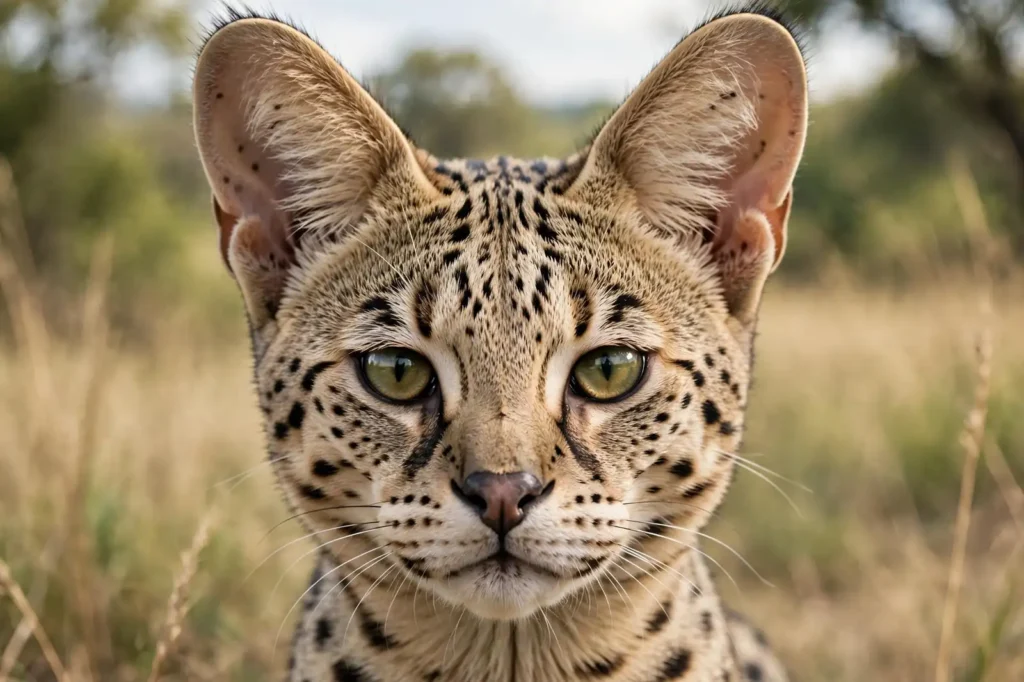
The Savannah gives an immediate impression of height. The body is long and lean, the legs are long, and the neck is long and thick, so the cat stands taller than almost any other domestic breed. The head is small in proportion — a neat triangle, longer than it is wide — which makes the ears look even more dramatic. Those ears are a signature feature: very large, rounded at the tips, set high and upright on the head, and often marked on the back with a pale central spot edged in dark color, a marking called ocelli that the breed inherited from the serval.
The eyes are slightly hooded and almond-shaped, in gold, green, or brown tones, often with dark “tear lines” running from the inner corners down the sides of the nose, echoing the markings of a cheetah. The tail is of medium length with dark rings and a dark tip. Weight varies widely with generation, from figures similar to a large domestic cat in later generations to considerably more in the early ones, but height is the constant: measured at the shoulder, a Savannah stands taller than its weight alone would ever suggest. Altogether, the Savannah’s outline is closer to a small wild cat than to the rounded shapes of most popular cats — one reason it turns heads in any list of the main cat breeds.
Coat, Colors, and Patterns
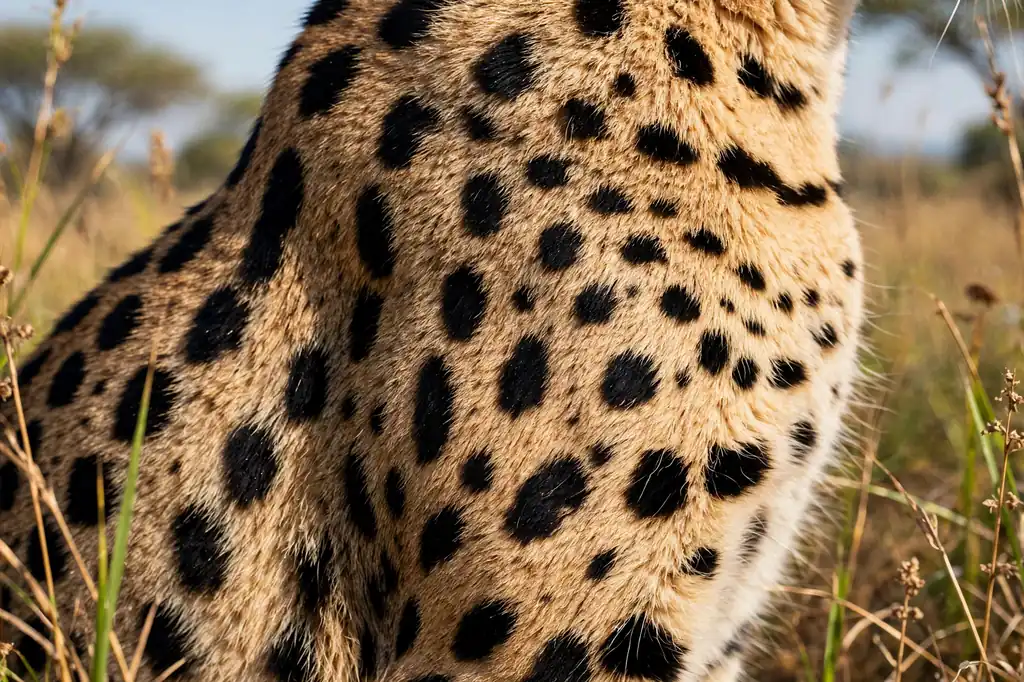
The Savannah coat is short, dense, and slightly coarse to the touch, lying close to the body so the cat’s athletic outline stays visible. The pattern is what defines the breed: bold, solid spots in black or dark brown, round to oval in shape, scattered across the body in rows that follow the line of the spine. Unlike the rosettes of the Bengal cat, Savannah spots are solid rather than outlined, and they sit on a background that ranges from warm gold and orange to cool cream.
The most familiar Savannah color is brown spotted tabby, the golden cat with black spots that resembles a miniature serval. Silver spotted tabby is also popular, with black spots on a pale silvery ground. The breed also appears in black, where the spots show as faint ghost markings in the dark coat, and in smoke, a silvery-black variation. Whatever the color, the pattern should stay bold and clear, because that spotted wild look is the whole point of the breed.
Coat care is simple. The short fur needs only a light weekly brush to lift loose hair, and most Savannahs treat the session as extra attention from their favorite person rather than a chore.
Savannah Generations Explained
No part of the breed confuses newcomers more than the letter F. Savannah generations are counted in filial generations — steps away from the serval ancestor. An F1 Savannah has a serval as one parent. An F2 has a serval grandparent, an F3 a serval great-grandparent, and so on down to F5 and beyond. The further the generation, the smaller the percentage of serval ancestry the cat carries.
In general terms, the early generations are the largest and the most striking in appearance, standing tallest and keeping the strongest wild look. Later generations are closer in size to a large domestic cat and are usually described as the most settled in everyday temperament, while still keeping the spots, ears, and athletic build. Every generation is a fully domestic pet cat in daily life, but the labels help owners understand why two Savannahs can differ so much in size and presence.
| Generation | Serval ancestor | Typical impression |
|---|---|---|
| F1 | Parent | Largest, strongest wild look |
| F2 | Grandparent | Very tall, boldly spotted |
| F3 | Great-grandparent | Large and athletic |
| F4–F5 | More distant | Closer to a large domestic cat in size |
Temperament and Personality
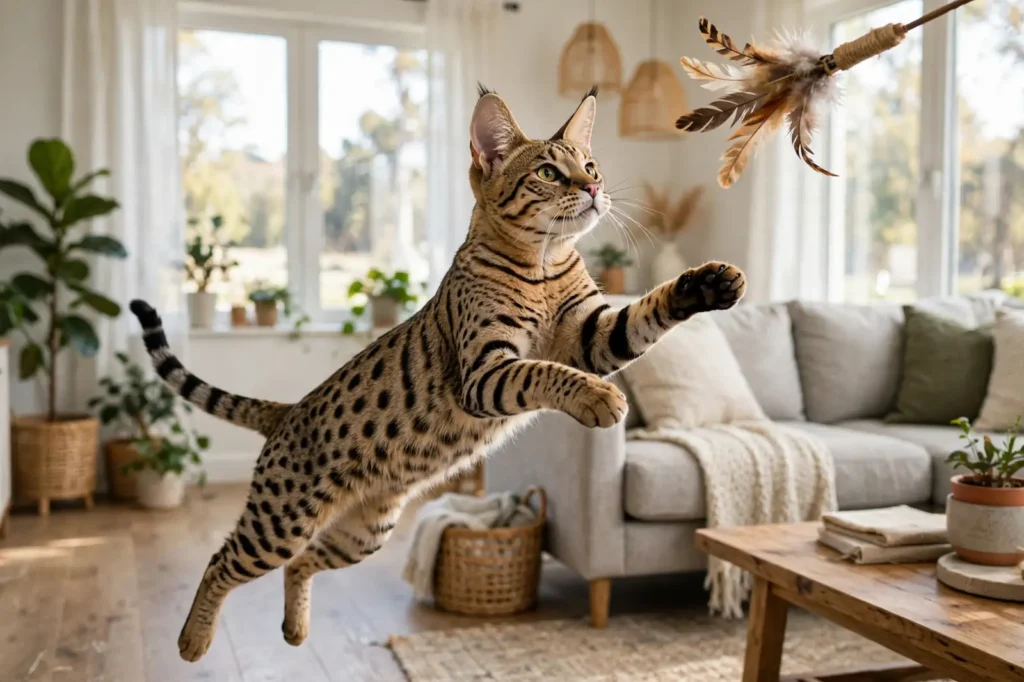
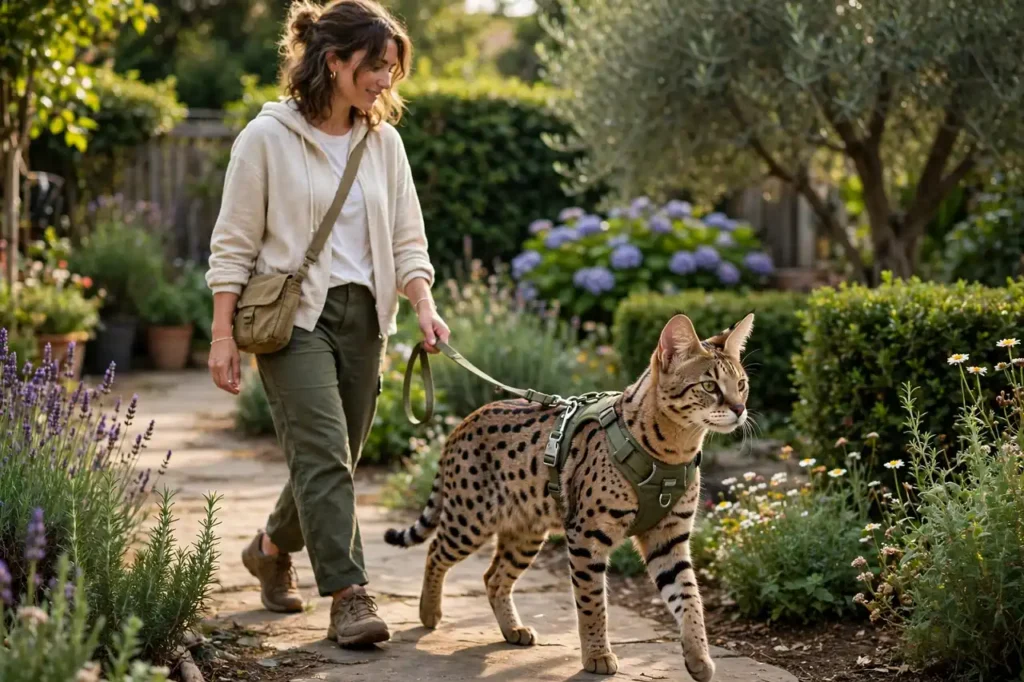
For all its wild looks, the Savannah’s personality is the real surprise. This is a loyal, people-focused breed that bonds closely with its family and often chooses a favorite person to follow around the house. Owners compare the Savannah to a dog more than to a typical cat: many learn to play fetch, walk happily on a harness and leash, and greet their people at the door. Some even enjoy water, splashing in a shallow bowl or joining a shower uninvited.
The Savannah is also intelligent, curious, and athletic. These cats investigate cupboards, learn how doors and faucets work, and can leap impressively high from a standing start, so a Savannah home needs secure latches and sturdy, tall furniture it is allowed to climb. Energy is part of the package: a Savannah wants interactive play every day and mental challenges to match, and a bored Savannah will invent its own entertainment. With its own family the breed is affectionate and playful, though many Savannahs stay politely reserved with strangers until properly introduced.
Savannah Kittens
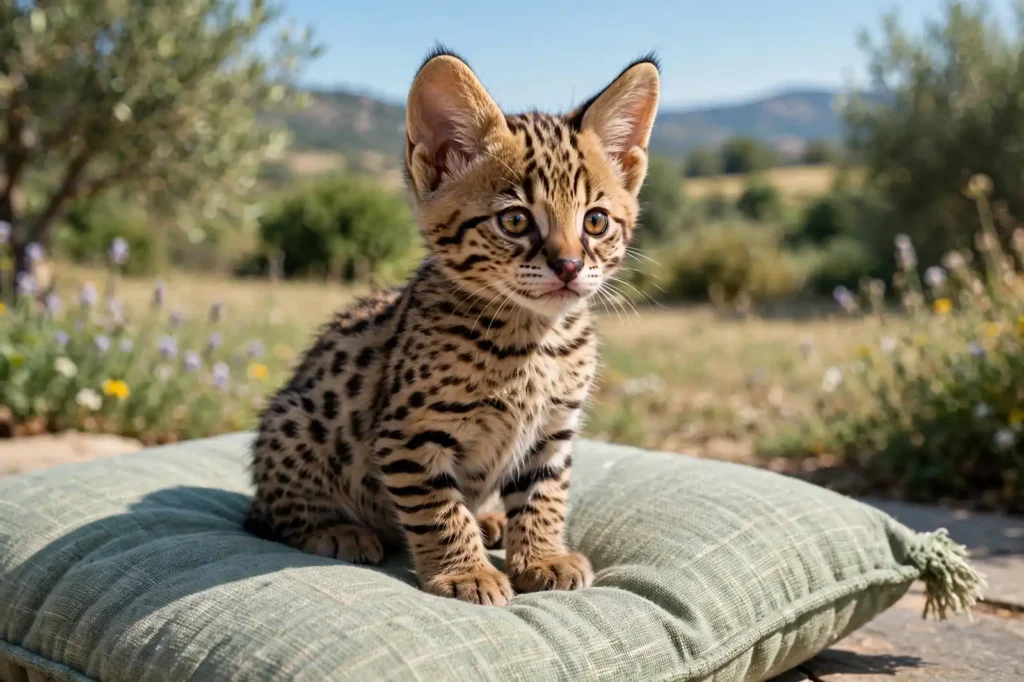
Savannah kittens arrive already spotted, with the bold markings visible from their first weeks, though the coat often looks softer and fuzzier than the sleek adult version. The ears start large and only grow more impressive, and the long legs that make the adult so tall appear early — kittens can look delightfully leggy and oversized-eared for months. Growth is gradual, and a young Savannah may keep filling out and maturing well into its second or third year.
Early weeks matter for this breed. Kittens raised with gentle handling, everyday household sounds, and plenty of play grow into the confident, bonded adults the breed is known for. Young Savannahs are busy and inquisitive, so kitten-proofing — secure cabinets, safe climbing spots, and toys in every room — helps channel that energy in the right direction from the start.
Living With a Savannah
Daily life with a Savannah is active and involved. This breed does best in a home with space to move, vertical territory to climb, and people who genuinely enjoy an interactive pet. Tall cat trees, wall shelves, and daily play sessions with wand toys are close to essentials; our guide to the best cat toys is a good place to find games that suit an athletic hunter. Many Savannahs also take to harness training, which opens up safe garden exploring alongside their owners. Grooming, by contrast, could hardly be easier: the short coat needs a quick weekly brush, and most of the breed’s daily routine revolves around play, company, and finding the highest comfortable lookout in the house. Expect a cat that wants to be involved in everything, from unpacking shopping to supervising bath time.
Honesty matters here: the Savannah is an advanced breed to live with, and it does not appear on lists of the best cat breeds for first-time owners for good reason. Its size, energy, and intelligence reward experienced owners who want a highly engaged companion. One practical point deserves a mention in any guide: ownership rules for hybrid cats vary by country, state, and even city, and some places restrict or prohibit Savannahs, particularly the early generations. Anyone considering the breed should check their local rules first, before falling for those ears.
Savannah vs Other Striking Breeds
| Breed | Coat pattern | Build | Temperament |
|---|---|---|---|
| Savannah | Bold solid spots | Very tall, long-legged | Loyal, active, doglike |
| Bengal | Rosettes and marbling | Athletic, medium-large | Energetic, vocal, playful |
| Maine Coon | Long, shaggy, many colors | Very large, sturdy | Gentle, friendly, relaxed |
The Bengal is the Savannah’s closest rival in the exotic-looking stakes, and the two are compared constantly. The Bengal’s rosettes give it a leopard look, while the Savannah’s height and ears give it a serval silhouette. The Maine Coon cat matches the Savannah for size among most popular cats but brings a gentle, shaggy, laid-back character instead of the Savannah’s intensity. Readers weighing up striking breeds can see the wider field in our guide to the most popular cat breeds in the USA.
Interesting Facts About Savannah Cats
- A named beginning: The whole breed traces back to one kitten, born in 1986 and named Savannah after the serval’s grassland home.
- Ears with eyespots: Many Savannahs carry ocelli — pale spots on the backs of the ears that, in wild cats, may help kittens follow their mother.
- A tall record holder: Savannahs are widely described as the tallest domestic cat breed, thanks to those long serval legs.
- Generation sizes: An F1 can tower over an F5, even though both are the same breed — the F label explains the difference.
- Water fans: Unusually for cats, many Savannahs enjoy playing in water and some will happily splash in a bowl or tub.
- Leash learners: With patient, positive training, many Savannahs walk on a harness as confidently as a small dog.
- Young breed, fast rise: Developed only in the 1980s, the Savannah reached TICA championship status in 2012.
Related Reading on MyPetsMyLove
- Bengal cats guide
- Maine Coon cats guide
- Most popular cat breeds in the USA
- Cats & Kittens hub page
- MyPetsMyLove homepage
- About Us page
References
- The International Cat Association (TICA) — Savannah breed profile
- Encyclopaedia Britannica — serval reference
- The Humane Society of the United States — pet care and enrichment resources
- Cat Fanciers’ Association (CFA) — cat breed resources
Frequently Asked Questions
What is a Savannah cat?
A Savannah cat is a domestic breed developed in the United States by crossing a domestic cat with an African serval, then breeding later generations of those cats. The result is a tall, spotted, large-eared cat with a loyal, active personality and a fully domestic daily life.
How big do Savannah cats get?
Size depends heavily on generation. Early generations, closest to the serval, are the tallest and heaviest, while later generations are closer to a large domestic cat. All Savannahs share the same long-legged, lean build that makes them look bigger than their weight suggests.
What do F1, F2, and F3 mean in Savannah cats?
The F number counts generations away from the serval ancestor. An F1 has a serval parent, an F2 has a serval grandparent, and an F3 has a serval great-grandparent. Later generations carry a smaller percentage of serval ancestry and are generally closer to ordinary domestic size.
What colors and patterns do Savannah cats have?
Every Savannah is spotted. The best-known color is brown spotted tabby — black or dark brown spots on a golden ground — followed by silver spotted tabby. Black Savannahs show faint ghost spots in their dark coats, and smoke is a silvery-black variation.
Are Savannah cats good family companions?
Savannahs bond closely with their families and are affectionate, playful, and loyal with their own people. They are high-energy and intelligent, so they suit households that want an interactive pet and can offer daily play, climbing space, and company.
Do Savannah cats need a lot of activity?
Yes. Savannahs are athletic cats that enjoy interactive play every day, plus vertical territory such as tall cat trees and shelves. Many also learn to walk on a harness, which gives them safe outdoor exploring time with their owners.
Are Savannah cats legal to own everywhere?
No. Rules for hybrid cats vary by country, state, and city, and some places restrict or prohibit Savannahs, especially the early generations. Check your local ownership rules before deciding on this breed.
Conclusion
The Savannah cat is a study in contrasts: a serval’s spotted silhouette wrapped around a devoted, playful, thoroughly domestic companion. Its generations explain its size, its ears explain its fame, and its personality explains why owners describe it less like a cat and more like a loyal partner in daily life. For experienced owners with room, time, and energy to match, few breeds are more rewarding to live with.
Compare the Savannah with its exotic rival in our Bengal cats guide, meet the gentle giant in our Maine Coon cats guide, and explore more breeds in the Cats & Kittens section of MyPetsMyLove.
Disclaimer
Disclaimer
MyPetsMyLove dot com is an independent informational website covering pet species breeds characteristics activities positive training bonding grooming and responsible ownership
We are not a veterinary clinic medical provider pet food provider or veterinary nutrition service
We do not provide veterinary diagnosis medical advice treatment food recommendations or nutritional guidance
For pet health medical or food related concerns consult a qualified veterinarian or appropriate professional directly
Independent clinics listed on this website are not owned or operated by MyPetsMyLove unless explicitly stated
Verify third party credentials services fees and availability independently
We do not guarantee third party services or outcomes
To the extent permitted by applicable law we disclaim responsibility for independent third party services
Nothing in this notice excludes liability that cannot legally be excluded
The disclaimer does not make prohibited content acceptable