
Scottish Fold Cats: Appearance, History and Distinctive Features
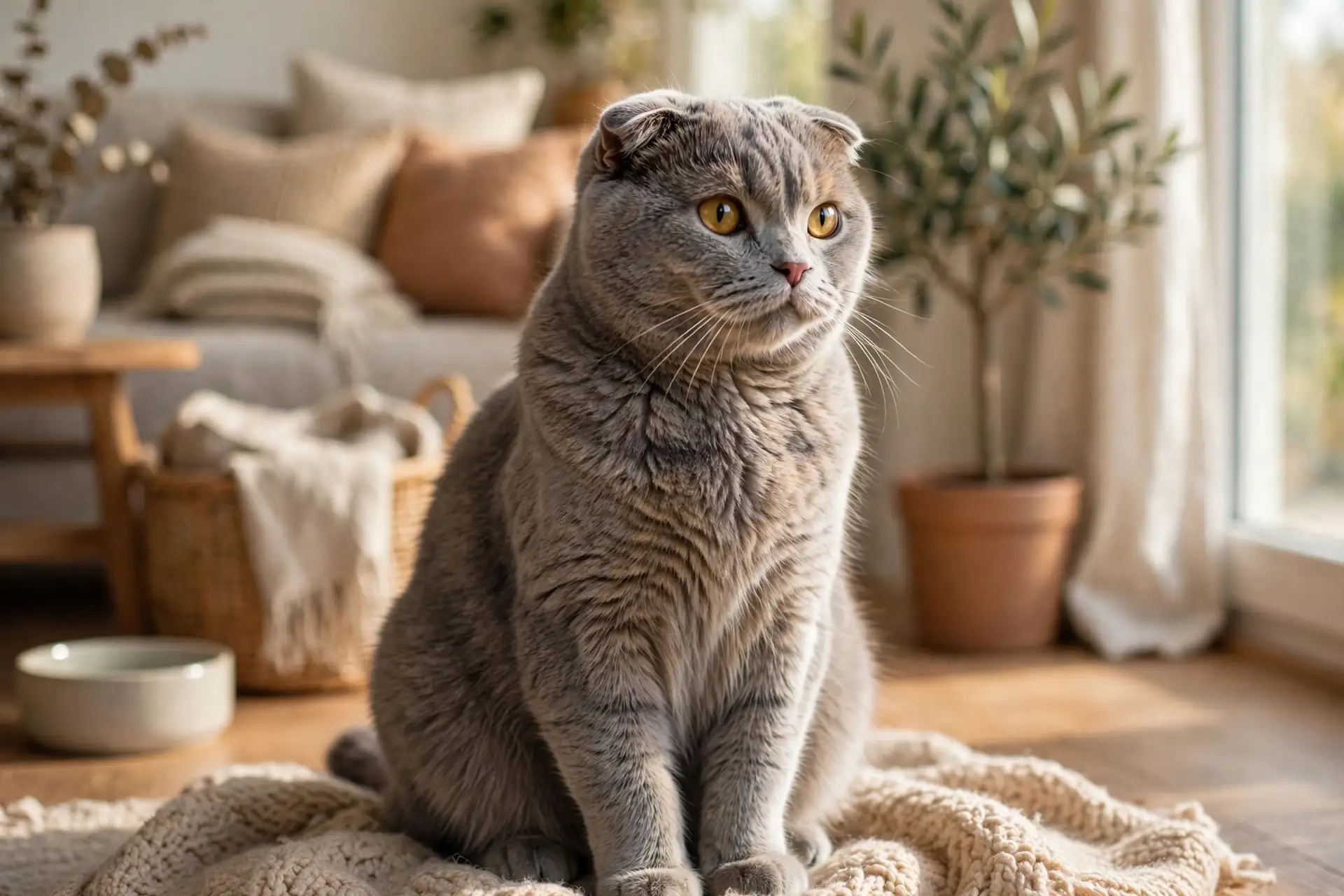
No cat looks quite like the Scottish Fold. Its small ears fold forward and downward, hugging a round head, and its large round eyes give it an owl-like expression that has charmed cat lovers for more than sixty years. Yet the breed’s story began by accident, with a single white barn cat on a farm in Scotland — and every Scottish Fold alive today traces its ancestry back to her.
This guide explores the Scottish Fold’s remarkable origin, explains the folded ears, describes its appearance and personality, and shares what makes this gentle breed so distinctive.
Origin and History of the Scottish Fold Cat
The Scottish Fold’s story begins in 1961, on a farm near Coupar Angus in the Tayside region of Scotland. A shepherd named William Ross noticed a white barn cat with unusual ears living among the farm cats belonging to his neighbours, the McRaes. The cat, named Susie, had ears that folded forward and downward in the middle, giving her a distinctive owl-like appearance. The trait had appeared as a spontaneous natural variation — nothing like it had been selectively bred for before.
Ross and his wife Mary were cat lovers, and they were fascinated by Susie’s look. When Susie produced kittens, two of them were born with the same folded ears. The Rosses acquired one of the folded-ear females, a white kitten they named Snooks, and began a careful breeding program with the help of geneticist Pat Turner. Over the first three years the program produced 76 kittens, 42 with folded ears and 34 with straight ears — evidence that the fold was passed on as a dominant trait, with roughly half of each litter showing it.
At first the breed was called “lop-eared” or “lops,” after the lop-eared rabbit. The Rosses registered their cats with the Governing Council of the Cat Fancy in Great Britain, and by 1966 the name Scottish Fold had been settled on. Snooks was bred to a British Shorthair, and British Shorthairs and American Shorthairs became the outcross partners that strengthened the breed’s gene pool — a pairing that still shapes the Fold’s sturdy, round build today.
The breed’s fortunes then split between two continents. In Britain, registration was withdrawn in the early 1970s, and the breed is still not recognised by the Governing Council of the Cat Fancy or by the Fédération Internationale Féline in Europe. In the United States, the story went the other way: in the early 1970s, some of the Rosses’ folds were sent to geneticist Dr. Neil Todd in Massachusetts for study, and the first American-born litter arrived on November 30, 1971. The Cat Fanciers’ Association granted the Scottish Fold championship status in 1978, and the longhaired variety — sometimes called the Highland Fold — was recognised for championship competition later, in the 1987–88 and 1993–94 show seasons.
The Folded Ears: What Makes Them Unique
The folded ear is the breed’s defining feature, and it comes in degrees. Breeders describe three types: a single fold, in which the ear tips fold forward; a double fold, in which the whole ear folds more tightly; and a triple fold, in which the ears lie almost flat against the head. The tighter the fold, the more the cat’s round head and large eyes dominate its expression — the look that makes people compare Folds to owls.
Not every kitten in a Fold litter has folded ears. All Fold kittens are born with straight ears, and the fold only begins to appear in the first few weeks of life. Kittens whose ears stay straight are known as Scottish Straights: they carry the breed’s round head, sweet expression, and gentle temperament, and they have long been valued as breeding partners, paired with folded-ear cats so that no kitten inherits the fold trait from both parents.
The ears themselves are small and set wide on the head, folding forward and downward so they sit like a cap. Combined with the round head, short nose, and large round eyes, they create the breed’s unmistakable face — soft, sweet, and a little surprised-looking.
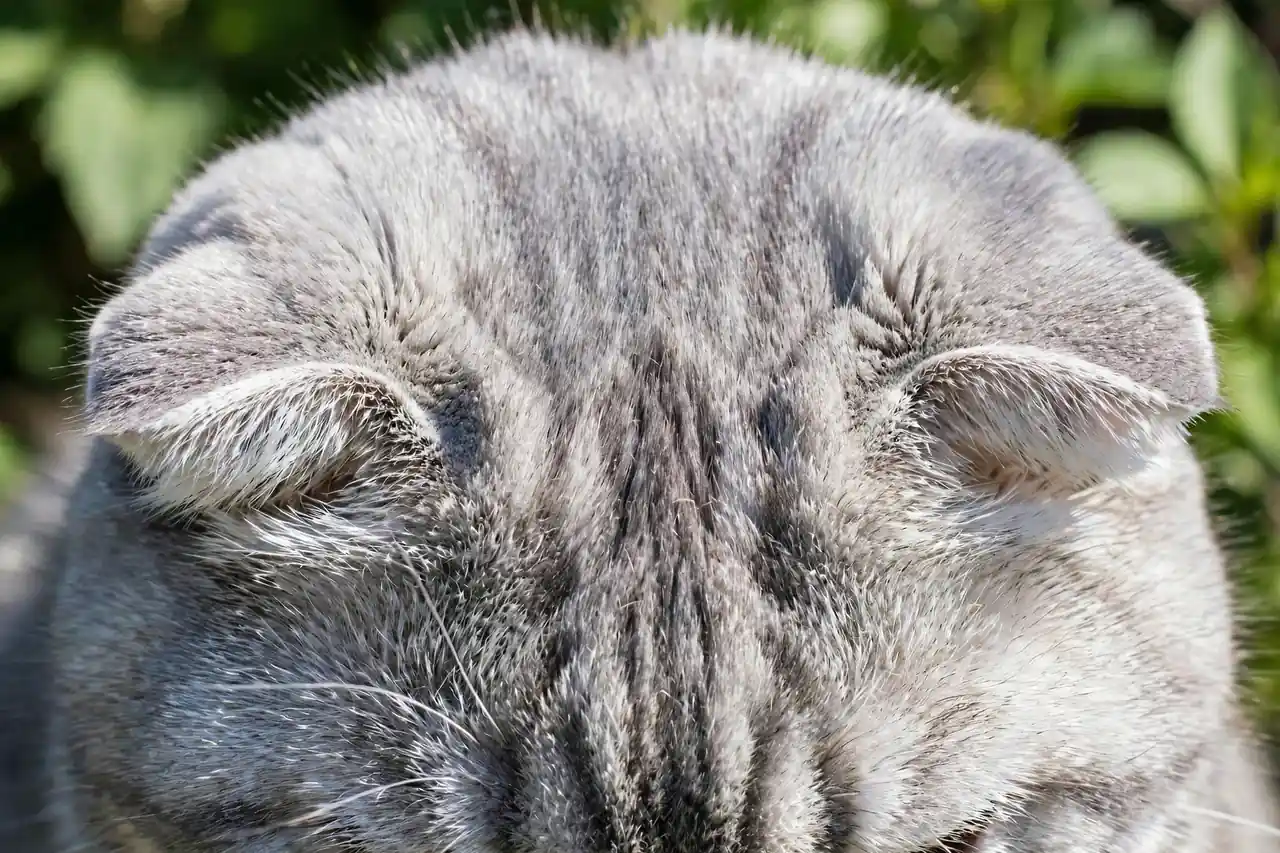
Appearance: The Owl-Like Look
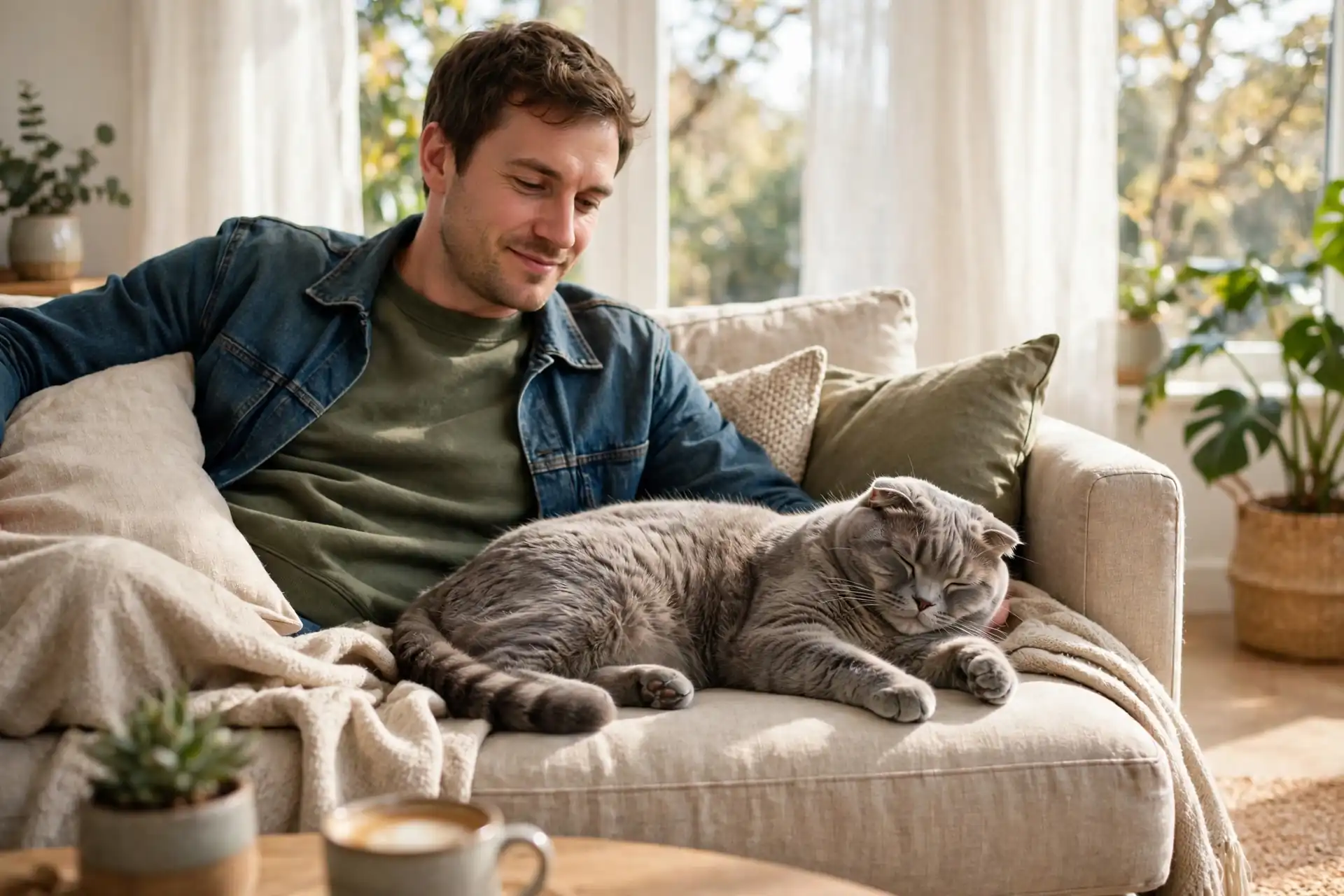
Everything about the Scottish Fold is round. The head is well-rounded, the eyes are large and round, the body is medium-sized and cobby, and even the paws are neat and round. Most adult Folds weigh between 6 and 13 pounds, with males typically larger than females. The overall impression is of a sturdy, well-proportioned cat with a soft, plush coat and a gentle expression.
Coat and Colours
Scottish Folds come in both shorthair and longhair varieties, and in a wide range of colours and patterns. The shorthair coat is dense, plush, and resilient, standing away from the body slightly and giving the cat a soft, teddy-bear quality. The longhair coat is medium-long and full, with a ruff around the neck and longer fur on the britches and tail. Colours range from solid white, black, blue, red, and cream to tabby, tortoiseshell, calico, and colourpoint patterns — the breed is shown in nearly every colour a cat can be.
The eyes are large, round, and set wide apart, and their colour usually complements the coat: copper or gold in most colours, blue in white and colourpoint cats, and green in some varieties. The tail is medium to long, tapering to a rounded tip, and carried with a gentle curve.
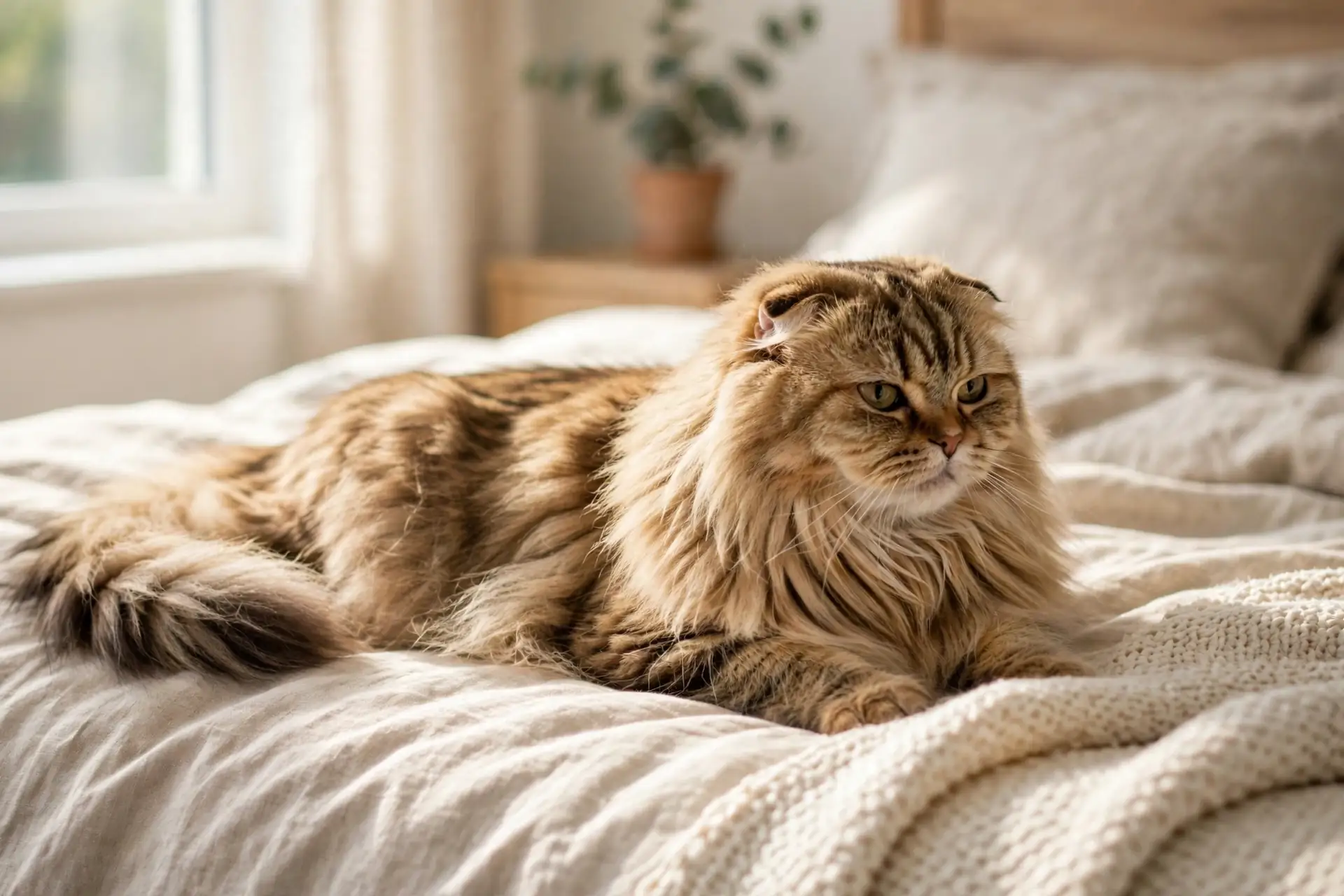
Build, Size, and Features
The Fold’s body is medium in size, with a broad chest, strong bone, and a level back. The legs are medium-length and sturdy, ending in neat, round paws. The head is broad with full cheeks, a short nose with a gentle curve, and a firm chin.
Personality: Sweet, Calm, and Devoted
If the Scottish Fold looks gentle, its personality matches. Folds are famously sweet-natured, calm, and adaptable, and they bond closely with their people without being demanding about it. They follow their owners from room to room, settle nearby while you work, and greet you at the door — affectionate companions rather than aloof observers.
Folds are playful without being hyperactive. They enjoy interactive play and will happily chase a toy or bat at a dangling string, but they are just as content to sit beside you and watch the world go by. Their voice is soft and quiet — a gentle chirp or a small meow rather than a running commentary — which makes them a good fit for homes where a very talkative breed like the Siamese might be too much. Readers comparing temperaments in our guide to the best cat breeds for first-time owners will find the Fold among the calmer, easier companions.
The breed has two famous habits that owners love to describe. The first is the “Buddha sit”: Folds often sit upright on their haunches with their legs stretched out in front of them and their paws in their lap, looking for all the world like little people sitting on the sofa. The second is lying flat on their back, paws in the air, completely relaxed — a pose that sums up the breed’s trusting, easygoing nature.
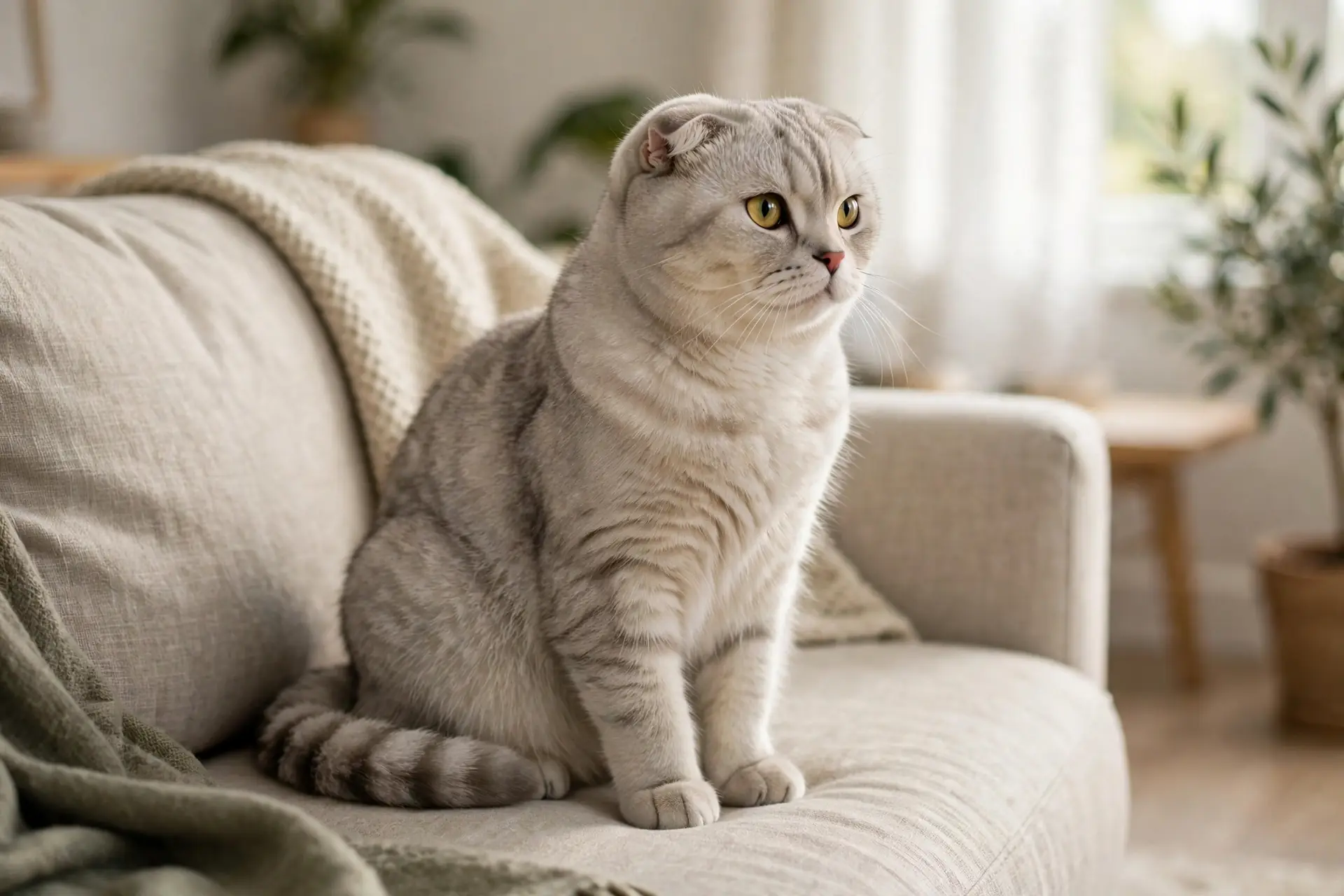
Scottish Fold Kittens: Folded Ears in the Making
Fold kittens arrive looking like any other kitten, with small straight ears and wide eyes. The fold, when it comes, appears over the first few weeks, and breeders watch the ears closely during that window to see which kittens will be Folds and which will be Straights. Until the ears settle, a kitten’s final look is a small surprise — part of the charm of the breed.
Kittens are playful and curious from the start, and they bond fast with the people around them. They learn quickly, enjoy gentle interactive play, and settle well into homes that give them company and attention.

Grooming and Everyday Care
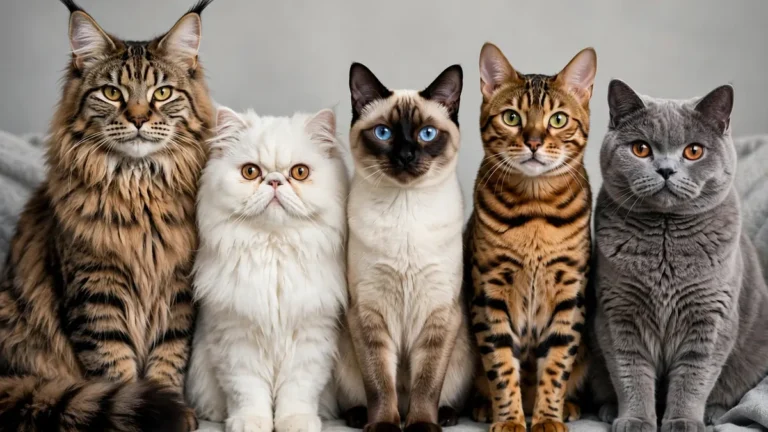
The Scottish Fold’s coat is genuinely easy to care for. The shorthair variety needs only a weekly brushing with a soft brush to keep it glossy and manage light shedding. The longhair variety asks a little more: a brushing two or three times a week keeps the longer coat free of tangles, especially around the ruff and the hind legs. Compared with the dense Maine Coon coat or the long Persian coat, the Fold is a light grooming commitment.
What the breed does ask for is companionship. Folds are indoor-oriented cats that prefer the centre of family life to solitary corners. Daily interactive play, a comfortable perch by a window, and plenty of time with their people cover most of a Fold’s daily needs. They adapt well to apartments and to homes with children and other pets, provided introductions are gentle and the cat has a quiet corner to retreat to when it wants one.
Scottish Fold vs Other Round-Faced Breeds: A Quick Comparison
The Fold is not the only breed with a round face and a sweet expression, but its folded ears set it apart. Here is how it compares with other reader favourites:
| Trait | Scottish Fold | British Shorthair | Persian | Ragdoll |
|---|---|---|---|---|
| Ears | Folded forward | Straight, medium | Straight, small | Straight, medium |
| Face | Round, owl-like | Round, broad | Round, flat | Wedge-shaped, sweet |
| Coat | Short or long, plush | Short, dense | Long, flowing | Semi-long, silky |
| Energy level | Moderate | Moderate | Low to moderate | Moderate |
| Vocality | Quiet | Quiet | Quiet | Soft, chatty |
| Best for | Calm homes, companionship | Owners wanting a steady companion | Owners wanting a lap cat | Families wanting a floppy friend |
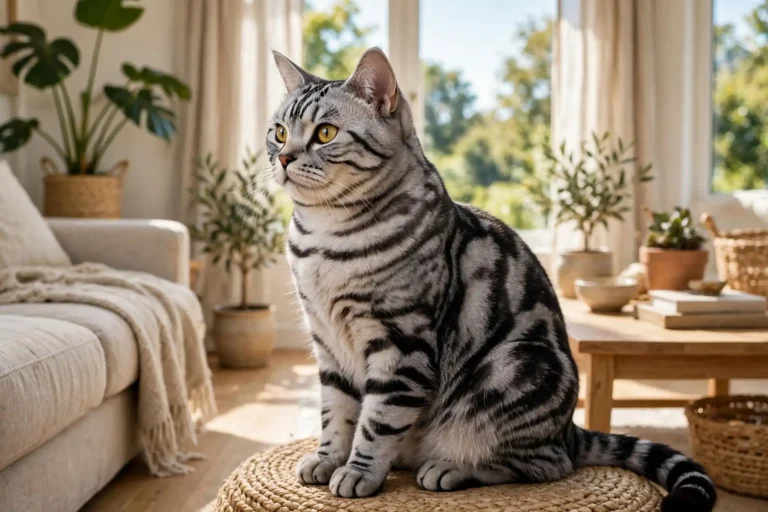
The British Shorthair shares the Fold’s round build and calm nature — no surprise, since it helped found the breed. The Fold’s ears remain unique to it, and its story, from a single barn cat in 1961 to championship status in 1978, is one of the most charming in the cat world.
Interesting Facts About Scottish Fold Cats
- One ancestor: Every Scottish Fold traces its ancestry back to Susie, the white barn cat found near Coupar Angus in 1961.
- A name from 1966: The breed was first called “lop-eared” or “lops” before the name Scottish Fold was settled on in 1966.
- The 42 of 76: In the first three years of the breeding program, 42 of 76 kittens were born with folded ears.
- The Buddha sit: Folds are famous for sitting upright like people, with their legs stretched out and their paws in their lap.
- Championship in 1978: The Cat Fanciers’ Association granted the Scottish Fold championship status in 1978.
- Straight-eared siblings: Kittens whose ears stay straight are called Scottish Straights — the same breed, with the same sweet nature, in a straight-eared form.
- Longhair, too: The longhaired variety, sometimes called the Highland Fold, carries the same folded ears in a flowing coat.
Living With a Scottish Fold: What to Know
The Scottish Fold is a cat for people who want a gentle, devoted companion with a look unlike any other breed. It is calm without being dull, playful without being demanding, and affectionate without being clingy.
If you love round faces and gentle temperaments, compare the Fold with other breeds in our most popular cat breeds guide, browse the Cats & Kittens section, and start from the MyPetsMyLove homepage to keep exploring.
Related Reading on MyPetsMyLove
- Most popular cat breeds in the USA
- British Shorthair cats guide
- Bengal cats guide
- Cats & Kittens hub page
- MyPetsMyLove homepage
- About Us page
References
- The Cat Fanciers’ Association (CFA) — Scottish Fold breed standard and profile
- The International Cat Association (TICA) — Scottish Fold breed information and standard
Frequently Asked Questions
Where did the Scottish Fold cat come from?
The Scottish Fold began with a white barn cat named Susie, found on a farm near Coupar Angus in Scotland in 1961. Her folded ears appeared as a spontaneous natural variation. Shepherd William Ross and his wife Mary acquired one of Susie’s folded-ear kittens, Snooks, and with geneticist Pat Turner began the breeding program that became the Scottish Fold.
Why do Scottish Fold cats have folded ears?
The fold is a natural genetic trait: the ear cartilage folds forward and downward, so the ears sit close to the head like a cap. All Fold kittens are born with straight ears, and the fold appears in the first few weeks of life. The degree of folding varies — single, double, or triple folds.
Are Scottish Fold cats good for first-time owners?
They are among the easier breeds for first-time owners. Folds are calm, adaptable, and affectionate, with a quiet voice and modest grooming needs. They do best in homes where they get regular companionship and daily interactive play. See our guide to the best cat breeds for first-time owners for comparisons.
What is a Scottish Straight?
A Scottish Straight is a kitten from a Fold litter whose ears stay straight instead of folding. It is the same breed, with the same round head, sweet expression, and gentle temperament — only the ears differ. Straights have long been valued as breeding partners.
Do Scottish Folds come in longhair?
Yes. The longhaired variety, sometimes called the Highland Fold, has a medium-long, full coat with a ruff around the neck. It carries the same folded ears and the same gentle personality as the shorthair.
How big do Scottish Fold cats get?
Most adult Scottish Folds weigh between 6 and 13 pounds, with males typically larger than females. They are medium-sized, sturdy cats with a round head, broad chest, and neat, round paws.
Conclusion
The Scottish Fold has captivated people since a shepherd first noticed a white barn cat with folded ears in 1961 — a cat with an owl-like face, a sweet and calm nature, and a habit of sitting upright like a little person. From Susie and Snooks to championship status in 1978, the breed’s journey is one of the most charming stories in the cat world.
If you want a gentle companion that will follow you around the house, greet you at the door, and settle beside you with a soft chirp, the Scottish Fold is hard to beat. Compare it with other remarkable breeds in our most popular cat breeds guide, explore the Cats & Kittens section, and start from the MyPetsMyLove homepage to meet more breeds worth knowing.
Disclaimer
Disclaimer
MyPetsMyLove dot com is an independent informational website covering pet species breeds characteristics activities positive training bonding grooming and responsible ownership
We are not a veterinary clinic medical provider pet food provider or veterinary nutrition service
We do not provide veterinary diagnosis medical advice treatment food recommendations or nutritional guidance
For pet health medical or food related concerns consult a qualified veterinarian or appropriate professional directly
Independent clinics listed on this website are not owned or operated by MyPetsMyLove unless explicitly stated
Verify third party credentials services fees and availability independently
We do not guarantee third party services or outcomes
To the extent permitted by applicable law we disclaim responsibility for independent third party services
Nothing in this notice excludes liability that cannot legally be excluded
The disclaimer does not make prohibited content acceptable
2 Comments