
Dachshund: The Fascinating History of the Long-Body Dog
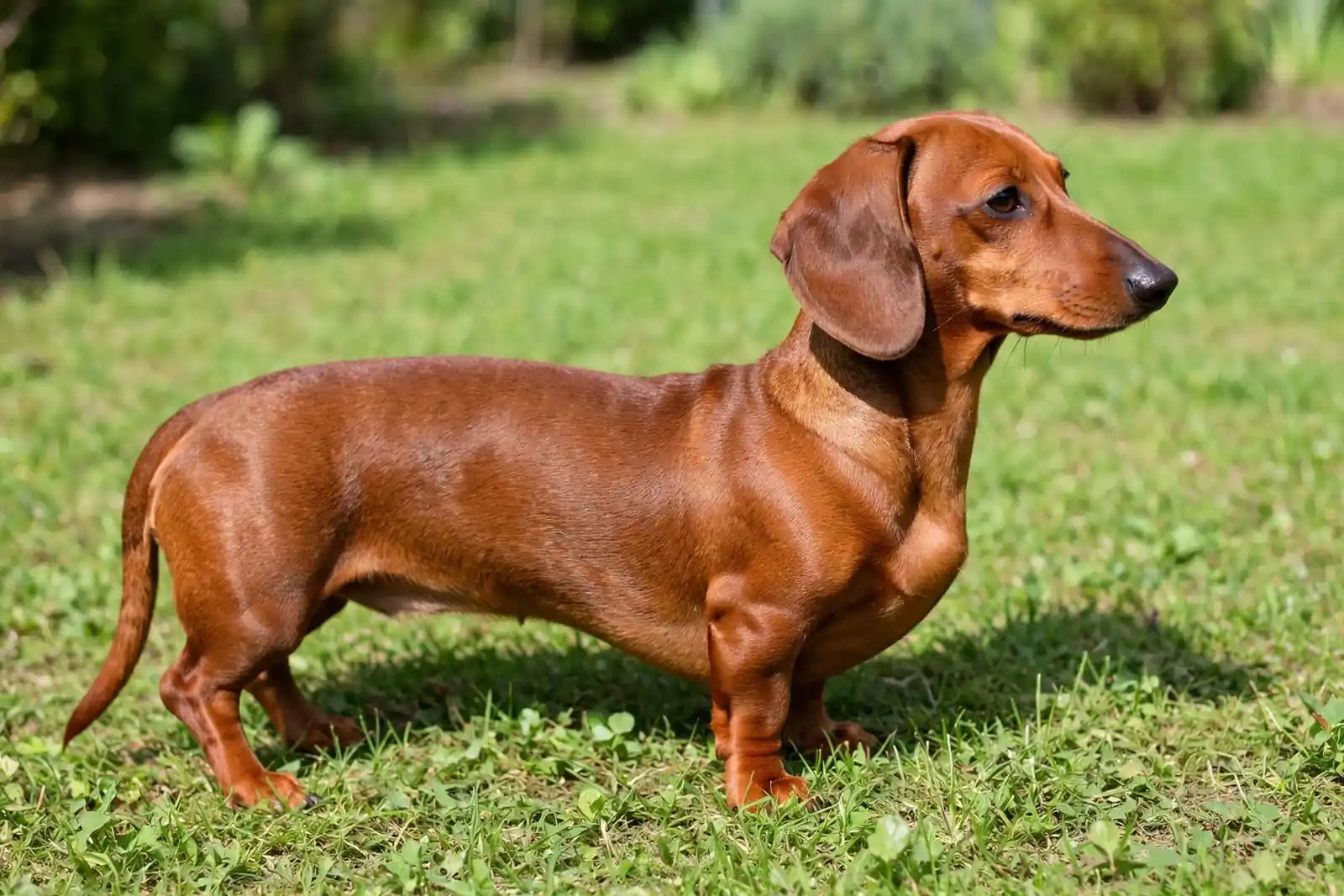
No dog looks quite like the Dachshund. Low to the ground, long in body and short of leg, with a deep chest, a tapering muzzle, and long, velvety ears, it is one of the most recognisable breeds in the world — and one of the most misunderstood. Behind the cartoon shape is a serious working dog: a brave, clever hunter bred in Germany to follow badgers into their underground dens. Its name says it plainly — in German, Dachshund means “badger dog.”
This guide explores the Dachshund’s fascinating history, explains why it is built the way it is, describes its sizes and coat types, and shares what makes this small dog’s personality so large.
Origin and History of the Dachshund
The Dachshund’s roots run back more than 600 years in Germany, where hunters needed a dog that could do a job no other dog could: pursue badgers into their burrows. Badgers are powerful, nocturnal animals that live in deep underground dens, and flushing one out took a dog that was narrow enough to fit the tunnels, brave enough to face the badger in an enclosed space, and stubborn enough not to back down. German breeders crossed elements of German, French, and English hounds and terriers to build exactly that dog.
The breed began to take its modern form in the late 17th century, and by the 18th century German foresters and hunters were breeding their type consistently. The American Kennel Club describes the breed standard as “low to the ground, long in body and short of leg with robust muscular development” — a dog with hunting spirit, capable of working above or below ground. The breed standard also calls the Dachshund “courageous to the point of rashness,” and anyone who has met one will recognise the description.
The Dachshund’s job shaped every part of its body. Its short legs curve slightly around its deep ribcage, letting it fit into narrow tunnels. Its long, paddle-shaped front feet are built for digging. Its deep chest houses powerful lungs for working underground, and its long ears sweep scent toward its nose as it tracks. It is the only hound allowed to compete in AKC terrier go-to-ground events — trials that test the ancient instinct to follow quarry into the earth.
As the breed spread beyond the hunt, its size split to match different quarry. The original standard Dachshund, at 16 to 32 pounds, was the badger dog. Smaller dogs, around 20 pounds, were bred to hunt foxes and to trail wounded game. In the 1800s, when Germany’s rabbit population grew, an even smaller version was developed to slip into rabbit warrens — the miniature Dachshund. In Europe, the Fédération Cynologique Internationale recognises a third, smaller category called the Rabbit Dachshund, known in Germany as the Teckel; in the United States, only the standard and miniature sizes are officially recognised.

Appearance: Built for the Burrow
Everything about the Dachshund’s shape has a purpose. The long body gives it reach underground, the short legs keep it low, the deep chest powers its stamina, and the long muzzle and keen nose track scent in the dark. The result is a dog that looks exaggerated to modern eyes but was, for centuries, a precision tool.
Sizes
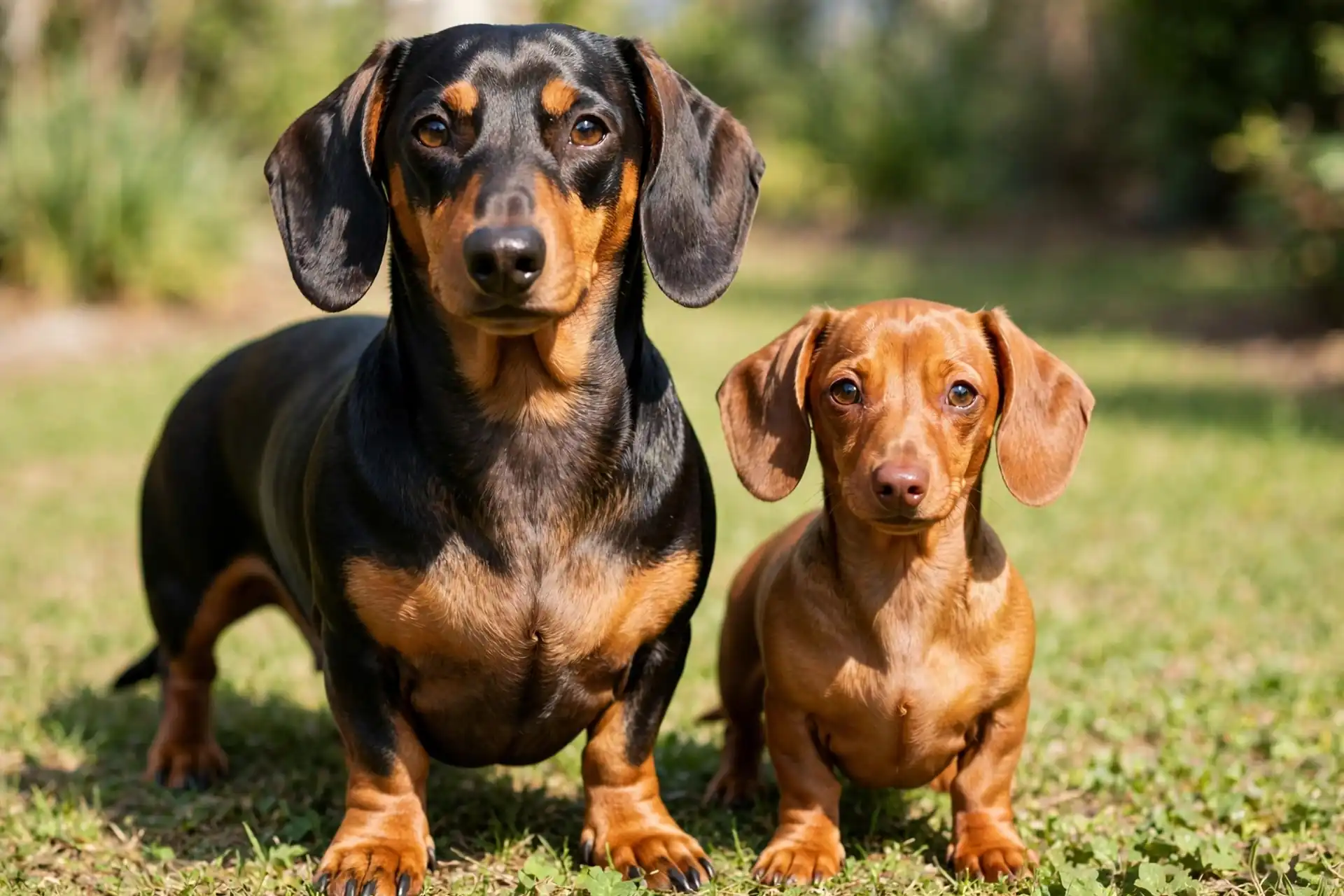
Dachshunds come in two sizes, defined by weight. The standard Dachshund usually weighs 16 to 32 pounds and stands 8 to 9 inches at the shoulder. The miniature Dachshund weighs up to 11 pounds at 12 months or older and stands 5 to 6 inches tall. Between the two sits the informal “tweenie” — a dog too large for miniature and too small for standard, usually weighing 11 to 16 pounds. Both sizes share the same long body, the same deep chest, and the same bold temperament; the difference is simply how much dog there is.
Coat Types
The breed comes in three coat varieties, each developed for practical reasons in the field. The smooth coat is the original: short, shiny, and close-lying, with a tail that tapers gradually to a point. The longhaired variety came later, from selective breeding of smooth-coated dogs with longer coats — and possibly crosses with spaniels — producing a sleek, slightly wavy coat that insulated the dog in colder climates. The wirehaired variety arrived in the late 1800s, from crosses with rough-coated terriers, giving the dog a uniform, tight, hard outer coat with a softer undercoat that protected it against burrs and thorns in the field.
Colours are just as varied. The classic is reddish-brown, with black-and-tan close behind, but Dachshunds also come in chocolate, cream, dapple, brindle, sable, and piebald patterns. The dapple pattern — lighter patches marbled through a darker base — is the same pattern called merle in other breeds.

Personality: Small Dog, Big Character
If the Dachshund looks like a joke, its personality is the punchline: this is a dog with the confidence of an animal three times its size. Dachshunds are lively, clever, and famously stubborn, with a strong sense of independence that comes straight from their hunting past — a dog that worked underground, out of sight of its handler, had to think for itself. That independence can look like stubbornness in training, but it is really self-reliance, and owners who work with it rather than against it find a quick, eager learner.
Dachshunds are deeply devoted to their people. They bond closely, often choosing one favourite person, and they like to be where the action is — on the sofa, under the blanket, or following you from room to room. They are playful well into adulthood, enjoying games, scent work, and digging, and they have a loud, deep bark that surprises everyone meeting them for the first time. Readers comparing temperaments in our guide to the best dog breeds for first-time owners should know the Dachshund asks for patience and consistency, and repays it with loyalty and comedy in equal measure.
The three coat varieties are often said to carry slightly different temperaments, a legacy of their different ancestors: longhairs are described as the most docile and gentle, wirehairs as the most brash and feisty, with the terrier spark still in them, and smooths sitting somewhere in between. Every dog is an individual, but the pattern is a useful starting point when choosing between varieties.
Dachshund Puppies: Small, Bold, and Busy
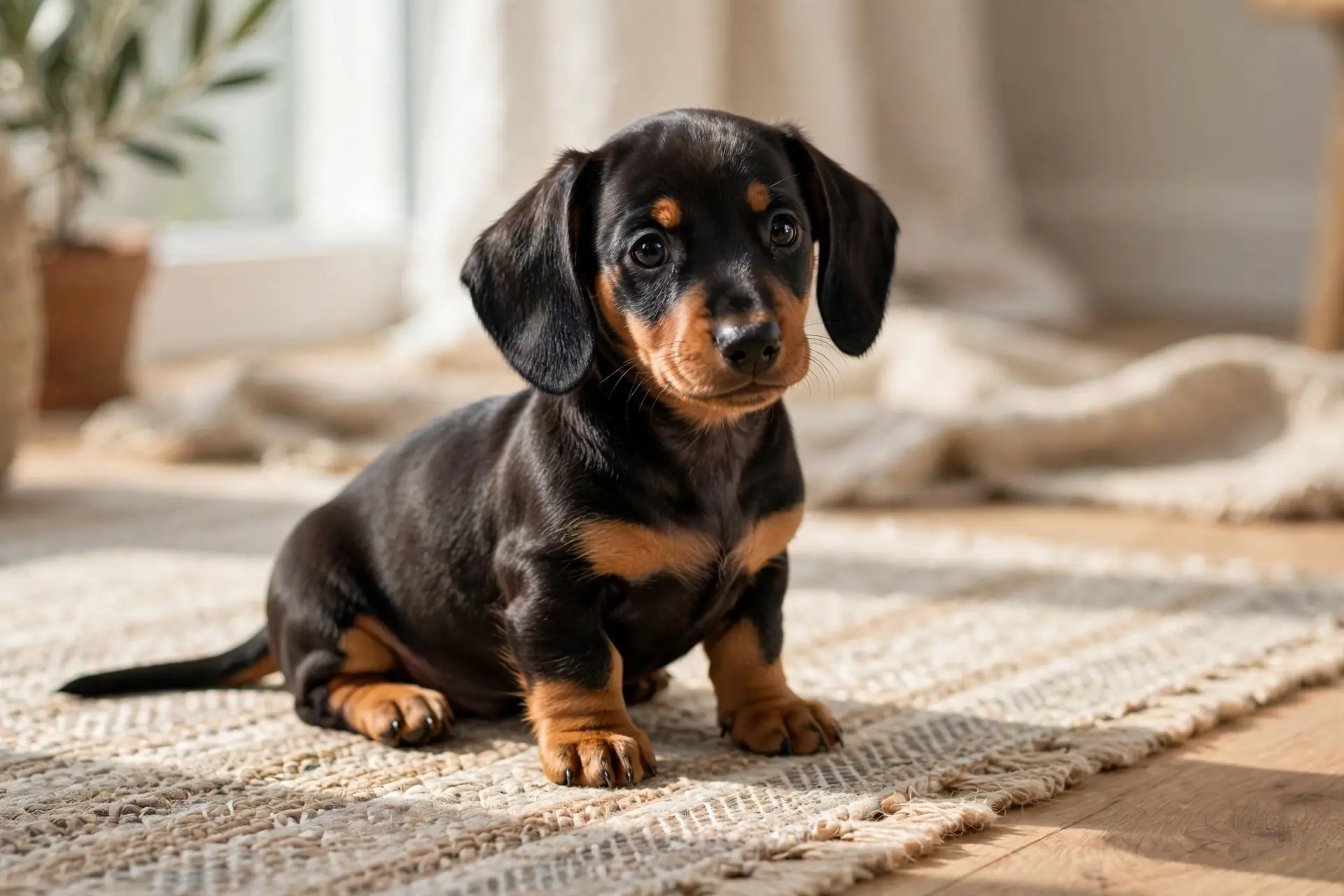
Dachshund puppies arrive with oversized ears, oversized paws, and confidence that far outruns their size. They grow into their long bodies quickly, and they start exploring — and digging — almost immediately. Puppies learn fast and bond fast, and they do best in homes that give them gentle, consistent guidance from the start, plenty of play, and safe outlets for their digging and scenting instincts, such as a sandpit or a snuffle mat.
Because the breed is so people-focused, puppies settle best where they are part of daily family life rather than left alone for long stretches. Early socialisation — meeting different people, places, and sounds while young — helps the puppy grow into the confident, well-mannered adult the breed is known for, rather than a nervous or overly vocal one.
Grooming and Everyday Care
Grooming needs depend on the coat. The smooth variety asks the least: an occasional brushing to remove dead hair keeps the short, shiny coat in good shape. The longhaired variety should be combed once or twice a week to keep the longer coat free of tangles, especially around the ears, chest, and hind legs. The wirehaired coat needs the most care, with weekly combing and occasional stripping — pulling dead hair out by hand — to keep the hard outer coat in condition. Compared with the heavy grooming of a Poodle, all three Dachshund coats are light work.
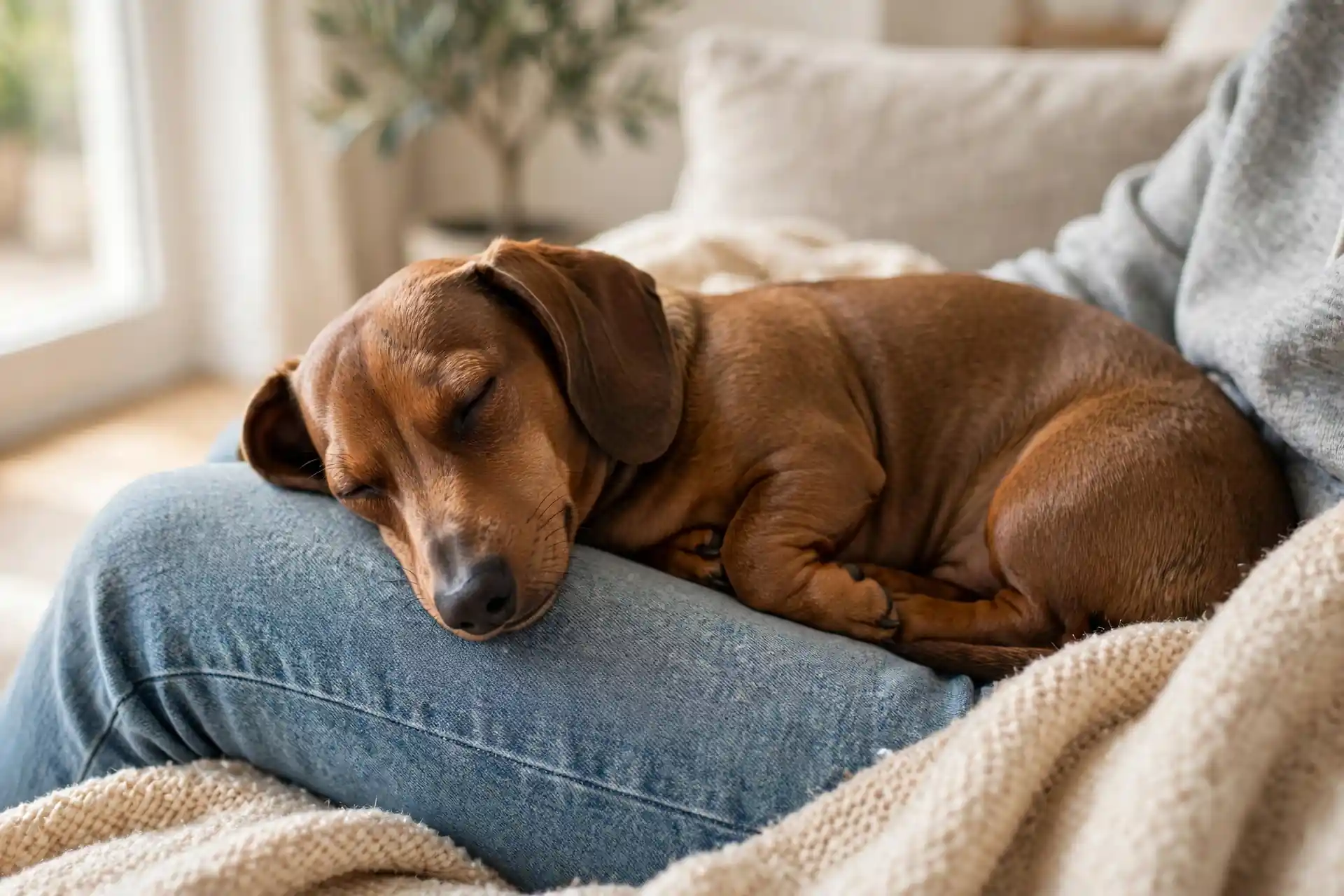
What the breed does ask for is activity and engagement. Dachshunds need daily walks and play, and they thrive on scent games and puzzle toys that use their remarkable nose. They are indoor-oriented dogs that prefer the centre of family life, and they are famous burrowers — given a blanket, a Dachshund will dig, circle, and disappear under it in seconds. A warm bed, a blanket of its own, and plenty of companionship cover most of a Dachshund’s daily needs.
Dachshund vs Other Small Breeds: A Quick Comparison
The Dachshund is not the only small breed with a big personality, but its hunting history sets it apart. Here is how it compares with other reader favourites:
| Trait | Dachshund | French Bulldog | Beagle | Poodle |
|---|---|---|---|---|
| Size | Standard 16–32 lb; miniature up to 11 lb | 16–28 lb | 20–25 lb | Toy 4–6 lb; miniature 10–15 lb; standard 40–70 lb |
| Coat | Smooth, longhaired, or wirehaired | Short, smooth | Short, dense | Curly, dense |
| Energy level | Moderate to high | Low to moderate | High | High |
| Vocality | Loud, alert bark | Quiet | Very vocal | Moderate |
| Best for | Owners wanting a bold small dog | Apartment living, calm homes | Active families, scent games | Owners wanting a clever, trainable dog |
The French Bulldog offers the same compact size with a calmer temperament, the Beagle shares the Dachshund’s scent-hound nose and voice, and the Poodle matches its intelligence with a more trainable nature. The Dachshund’s combination — a hunter’s courage in a lap-sized body — remains unique to it.
Interesting Facts About Dachshunds
- A name that is a job description: Dachshund is German for “badger dog” — Dachs means badger, Hund means dog.
- Six hundred years of history: The breed’s German history is older than 600 years, with its modern form taking shape in the late 1600s.
- The only hound in terrier trials: The Dachshund is the only hound allowed to compete in AKC terrier go-to-ground events.
- Three coats, two sizes: Standard and miniature sizes, each in smooth, longhaired, or wirehaired coats — six combinations in all.
- A rabbit solution: The miniature Dachshund was developed in the 1800s to hunt rabbits, when Germany’s rabbit population grew.
- Nicknames everywhere: The breed is also called the wiener dog, sausage dog, and doxie — all nods to that long body.
- Brave by standard: The breed standard describes the Dachshund as “courageous to the point of rashness.”
Living With a Dachshund: What to Know
The Dachshund is a dog for people who want a small companion with a large personality. It is clever, devoted, and funny, with a hunter’s independence and a lap dog’s love of comfort. For owners who enjoy an active, characterful dog and can offer consistent guidance, daily play, and a warm blanket to burrow under, the Dachshund is immensely rewarding.
If you love small breeds with big characters, compare the Dachshund with other breeds in our most popular dog breeds guide, browse the Dogs & Puppies section, and start from the MyPetsMyLove homepage to keep exploring.
Related Reading on MyPetsMyLove
- Most popular dog breeds in America
- Best dog breeds for first-time owners
- French Bulldog guide
- Dogs & Puppies hub page
- MyPetsMyLove homepage
- About Us page
References
- American Kennel Club (AKC) — Dachshund breed history and standard
- Encyclopaedia Britannica — Dachshund breed information
Frequently Asked Questions
Where did the Dachshund come from?
The Dachshund originated in Germany, where it was developed from hounds and terriers to hunt badgers in their burrows. Its history is older than 600 years, and the breed began to take its modern form in the late 17th century, with German foresters breeding the type consistently by the 18th century.
What does the name Dachshund mean?
Dachshund is German for “badger dog” — Dachs means badger and Hund means dog. The name describes the breed’s original job: following badgers into their underground dens and flushing them out.
What is the difference between a standard and a miniature Dachshund?
Size, defined by weight. A standard Dachshund usually weighs 16 to 32 pounds and stands 8 to 9 inches at the shoulder. A miniature weighs up to 11 pounds at 12 months or older and stands 5 to 6 inches tall. The miniature was developed in the 1800s to hunt smaller quarry such as rabbits.
What are the three Dachshund coat types?
Smooth, longhaired, and wirehaired. The smooth coat is the original — short and shiny. The longhaired coat is sleek and slightly wavy, suited to colder climates. The wirehaired coat is a tight, hard outer coat with a softer undercoat, developed in the late 1800s for protection against thorns and burrs.
Are Dachshunds good for first-time owners?
They can be, for owners who are patient and consistent. Dachshunds are clever and devoted, but their hunting independence can look like stubbornness. First-time owners who enjoy training and daily play will do well; see our guide to the best dog breeds for first-time owners for comparisons.
Why are Dachshunds so long and low?
Their shape was bred for the job: short legs to fit badger tunnels, a long body for reach underground, a deep chest for stamina, and long, paddle-shaped feet for digging. Every part of the Dachshund’s build traces back to following quarry below ground.
Conclusion
The Dachshund has fascinated people for more than six centuries — a dog shaped like no other, built for a job no other dog could do, with a personality far bigger than its body. From German badger dens to modern living rooms, the breed’s journey from working hunter to beloved companion is one of the most remarkable stories in the dog world.
If you want a small dog with a hunter’s courage, a comedian’s timing, and a lap dog’s heart, the Dachshund is hard to beat. Compare it with other remarkable breeds in our most popular dog breeds guide, explore the Dogs & Puppies section, and start from the MyPetsMyLove homepage to meet more breeds worth knowing.
Disclaimer
Disclaimer
MyPetsMyLove dot com is an independent informational website covering pet species breeds characteristics activities positive training bonding grooming and responsible ownership
We are not a veterinary clinic medical provider pet food provider or veterinary nutrition service
We do not provide veterinary diagnosis medical advice treatment food recommendations or nutritional guidance
For pet health medical or food related concerns consult a qualified veterinarian or appropriate professional directly
Independent clinics listed on this website are not owned or operated by MyPetsMyLove unless explicitly stated
Verify third party credentials services fees and availability independently
We do not guarantee third party services or outcomes
To the extent permitted by applicable law we disclaim responsibility for independent third party services
Nothing in this notice excludes liability that cannot legally be excluded
The disclaimer does not make prohibited content acceptable
2 Comments