
Poodle Dog Breed: Standard, Miniature and Toy Sizes Explained

The Poodle is one of the most recognizable dogs in the world — and one of the most misunderstood. Behind the fancy clips and the show-ring glamour is a clever, athletic water retriever that comes in three official sizes: the Standard, the Miniature, and the Toy. All three are the same breed, judged to the same standard, differing only in height.
This guide explains the Poodle dog breed from the ground up: where it came from, how the three sizes compare, what the famous curly coat and clips are all about, and what the breed’s celebrated intelligence means for everyday life.
Origin and History of the Poodle
Despite its strong association with France, the Poodle began in Germany as a water retriever. The name comes from the German word “Pudel,” from “pudeln,” meaning to splash in water. In France the breed is called the “Caniche,” from “canard,” the French word for duck — a nod to the same water-retrieving work. France later adopted the Poodle so enthusiastically that it became the country’s national dog, which is why so many people think of the breed as French.
The original Poodle was the Standard, a sturdy water dog that retrieved waterfowl for hunters. Its dense, curly coat protected it in cold water, and the famous clips began as practical trims: tradition holds that hunters clipped the coat close on the body to let the dog swim freely while leaving puffs of hair over the joints and chest for warmth and protection.
Over time, breeders scaled the Poodle down. The Miniature was developed for city living and performance work, and the Toy Poodle was bred in the early 20th century in America as a small companion dog, created by breeding the smallest Miniatures together. The American Kennel Club (AKC) recognized the Poodle in 1887, and today the Standard and Miniature compete in the Non-Sporting Group while the Toy competes in the Toy Group — all under one breed standard.

The Three Sizes Explained
The most important fact about Poodle sizes is that they are varieties of a single breed, not three separate breeds. The AKC separates them only by height at the highest point of the shoulders, and all three share the same build, proportions, coat, and temperament. The international FCI standard recognizes a fourth size, the Medium (or Moyen), between Miniature and Standard, but the AKC recognizes only the three sizes below.
Standard Poodle
The Standard is the original and largest variety, standing over 15 inches at the shoulder — most stand 22 to 27 inches — and weighing 40 to 70 pounds (males 60 to 70 pounds, females 40 to 50 pounds). Standards are athletic, sturdy dogs that enjoy swimming, long walks, and dog sports. They are the best choice for owners who want a large, active companion and have the space for one.
Miniature Poodle
The Miniature stands over 10 inches and up to 15 inches tall, and usually weighs 10 to 15 pounds. It is a compact, proportionate version of the Standard, with the same intelligence and energy in a smaller frame. Miniatures suit apartments and smaller homes better than Standards, while remaining sturdy enough for active family life and children’s play.
Toy Poodle
The Toy stands 10 inches or under at the shoulder and weighs just 4 to 6 pounds. It is a true lap dog, bred specifically as a companion, and it is the smallest of the three. Toy Poodles are delicate compared with their larger cousins, so they suit gentle households and owners who want a portable, affectionate companion rather than a rough-and-tumble playmate.
| Size | AKC height | Typical adult weight | Best for |
|---|---|---|---|
| Standard | Over 15 in (most 22–27 in) | 40–70 lb | Active owners, larger homes, swimming and dog sports |
| Miniature | Over 10 in, up to 15 in | 10–15 lb | Apartments, families, all-round companionship |
| Toy | 10 in or under | 4–6 lb | Lap companions, gentle households, small spaces |
The takeaway is simple: choose the size that fits your home and lifestyle, because the personality comes in the same package at every size. Our most popular dog breeds guide puts the Poodle alongside other reader favorites for a wider comparison.

Appearance: The Curly Coat and Classic Clips
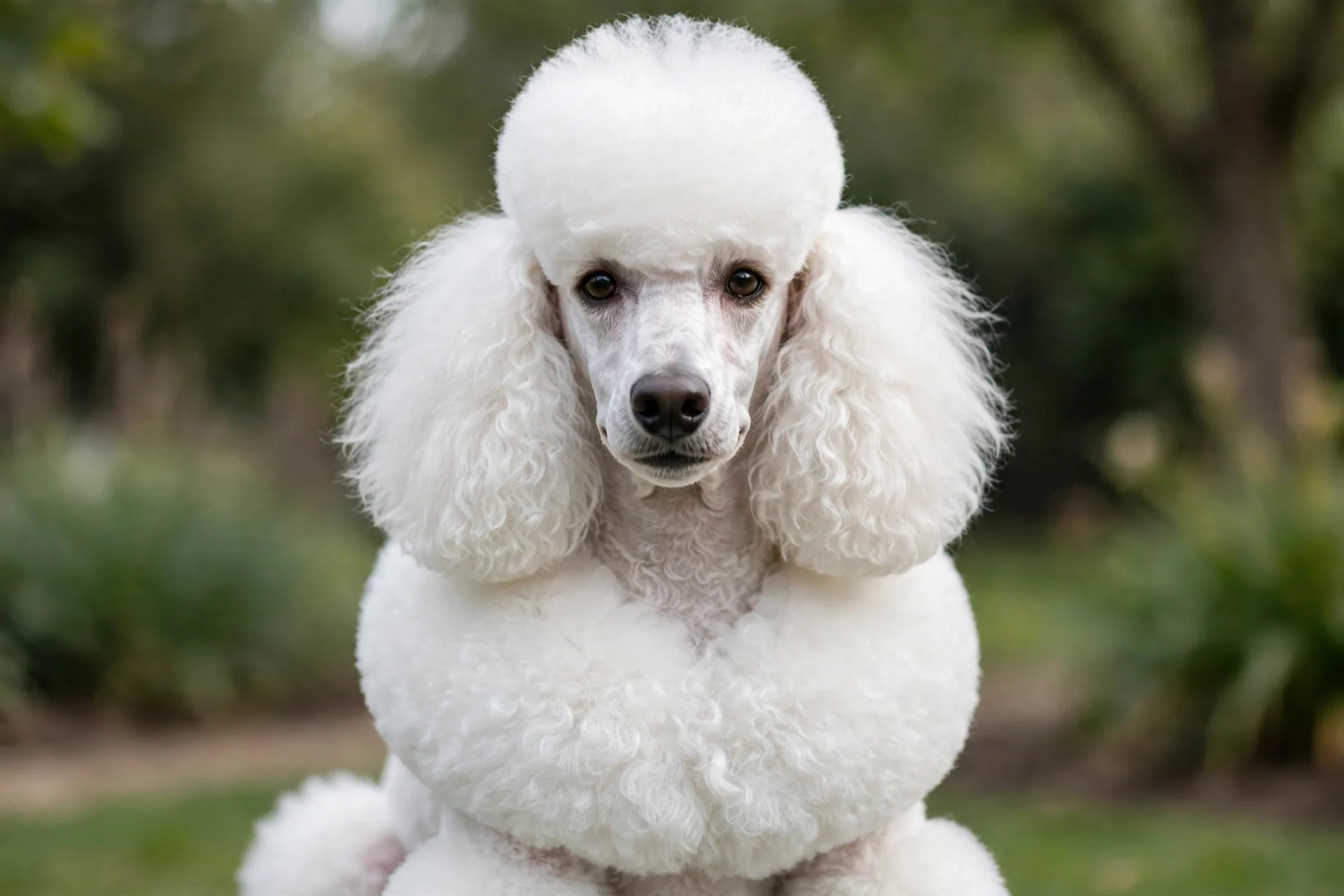
The Poodle’s coat is its signature: dense, curly, and low-shedding, growing continuously like hair rather than fur. The texture is what makes the breed’s famous sculpted clips possible — the curls hold their shape when trimmed, allowing the elaborate styles seen in the show ring.
Coat Colors
Poodles come in a wide range of solid colors: black, white, brown, apricot, cream, silver, blue, gray, and red, as well as parti-color (white with patches of another color) in some registries. The coat color can change as the dog matures — puppies are often born darker and lighten over the first year or two, especially in the silver, blue, and apricot varieties.
Famous Clip Styles
The show-ring clips have memorable names. The Continental clip is the most elaborate: the face, throat, feet, and base of the tail are clipped close, while pompons are left on the hips and the tail tip, with a full mane over the chest. The English Saddle clip is similar but keeps more coat on the hindquarters, with a shaved band across the back. The Puppy clip is the practical choice for most pet owners: the whole coat is kept at one even, manageable length, with the face, feet, and tail base clipped short.
For pet Poodles, most owners choose the Puppy clip or a short “sporting” trim, which keeps the coat easy to care for without the upkeep of a show clip. Whatever the style, the clips are part of what makes the Poodle instantly recognizable.
Personality: Clever, Trainable, and People-Focused
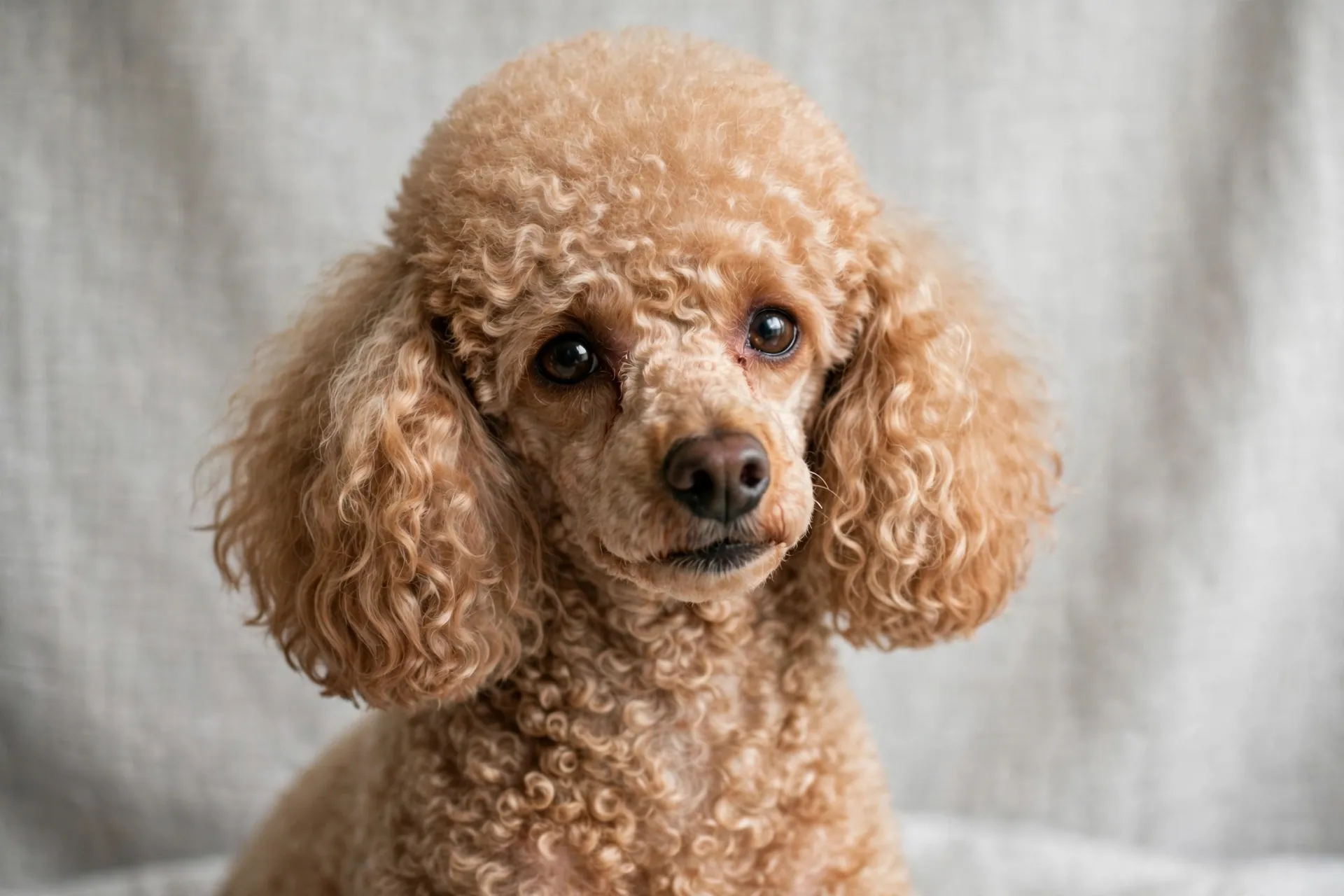
The Poodle is famous for its intelligence. Canine psychologist Stanley Coren, in his book The Intelligence of Dogs, ranked the Poodle second only to the Border Collie for working and obedience intelligence — a ranking that matches what owners report every day. Poodles learn new commands quickly, remember them, and genuinely enjoy training as a game.
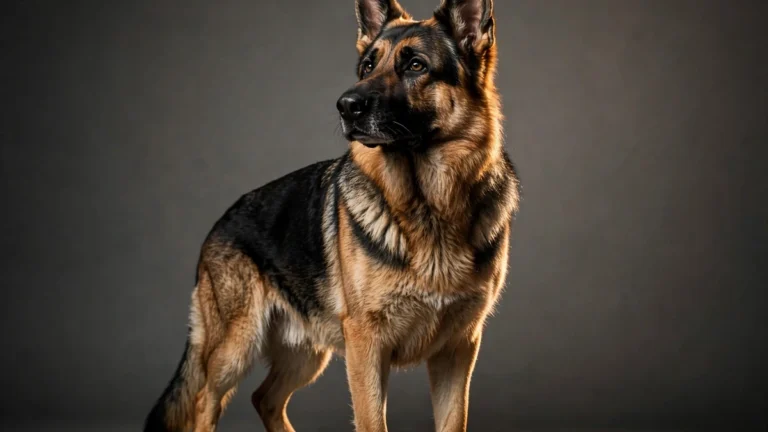
That intelligence has a flip side: a bored Poodle invents its own entertainment. The breed does best with regular mental challenges — training sessions, puzzle-style enrichment, and learning new tricks. Compared with high-drive working breeds like the German Shepherd, the Poodle asks less in raw exercise but more in engagement; compared with easygoing companions like the Golden Retriever and the Labrador Retriever, it asks for more variety in its routine.
Poodles are deeply people-focused dogs. They bond closely with their families, follow their owners from room to room, and thrive on companionship. They are generally good with children and other pets, especially when socialized early. Prospective owners comparing options in our guide to the best dog breeds for first-time owners will find the Poodle among the most trainable choices — with the honest caveat that its cleverness rewards owners who enjoy training as a partnership.
Poodle Puppies: What to Expect
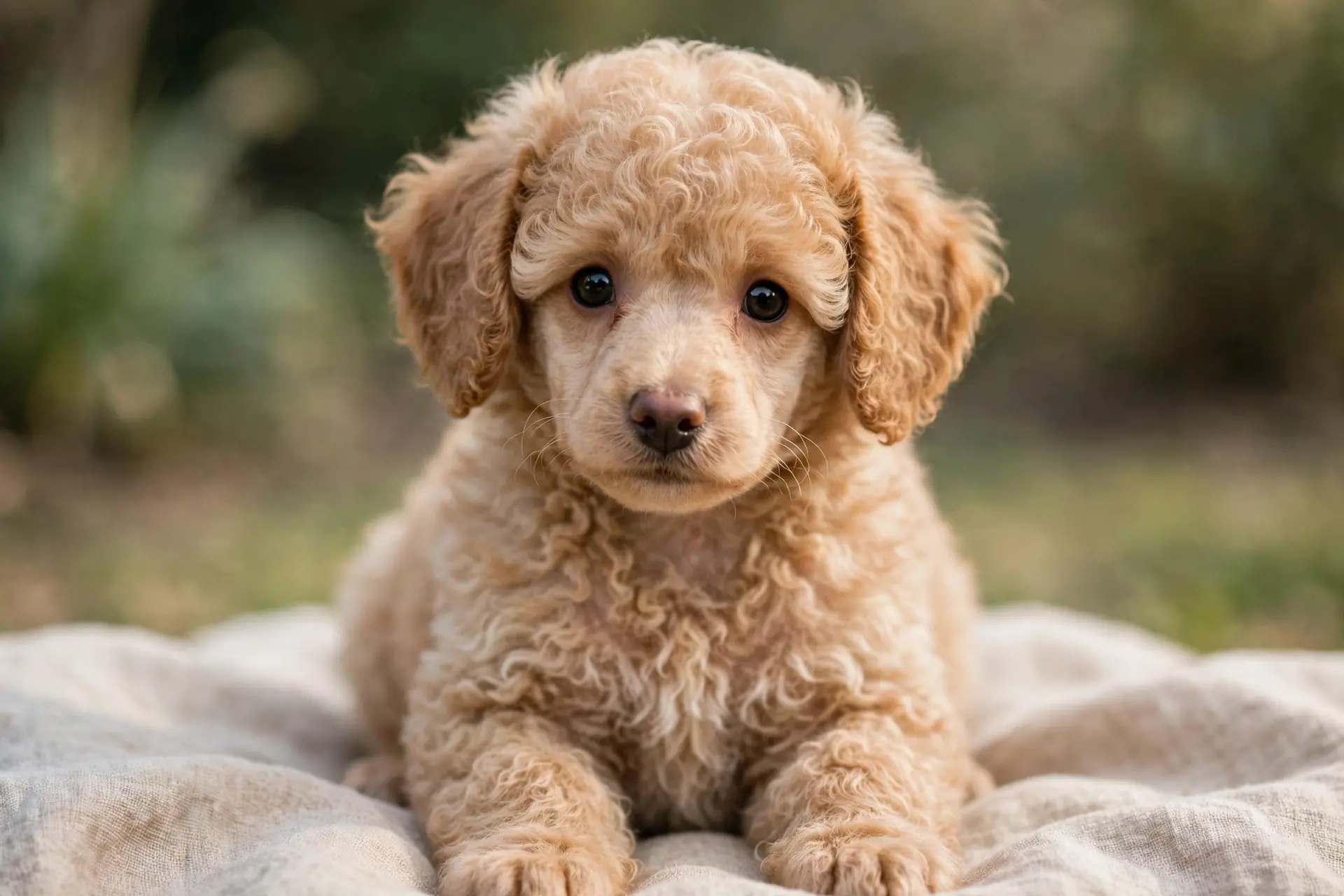
Poodle puppies are fluffy, curious, and quick to learn from the start. They bond to their people quickly and completely, and they respond best to early socialization — gentle exposure to different people, sounds, and environments — and to consistent, positive training begun right away.
Puppies benefit enormously from short, upbeat training sessions built on praise and play. The breed’s intelligence means puppies learn fast when training is fun and rewarding, and they remember every loophole when it is not. House manners come naturally to the breed — Poodles are clean, eager to please their people, and strongly motivated by togetherness.
Grooming and Everyday Care
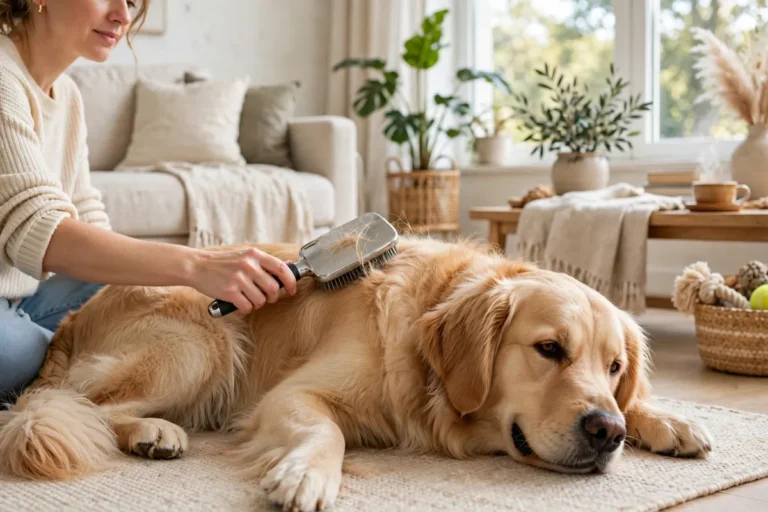
The Poodle’s coat needs regular attention: brushing several times a week keeps the curls from matting, and professional clipping every four to six weeks maintains the chosen style. A soft slicker brush and a metal comb are the standard tools, and many owners keep pet Poodles in a short clip to make the routine simpler.
Beyond the coat, the Poodle’s care is straightforward — quality companionship, daily walks and play, and a comfortable spot near its people, which the breed considers its rightful place. The ears deserve regular attention as part of an ordinary grooming routine, and the breed’s famous intelligence means training and enrichment should be part of everyday care, not an afterthought.
Which Poodle Size Is Right for You?
A few honest questions make the choice clearer:
- How much space do you have? Standards need room to move; Miniatures and Toys fit apartments comfortably.
- How active is your household? Standards want long walks and swimming; Toys are content with shorter outings and indoor play.
- Who will handle the dog? A 60-pound Standard is a lot of dog for a small child; a 5-pound Toy is fragile around rough play.
- How much grooming can you commit to? All three sizes need the same coat care — the Standard simply has more coat.
- Do you want a travel companion? Toys and Miniatures travel far more easily than Standards.
There is no wrong answer — only the size that fits your life. A Standard in a small apartment with an active owner can be perfectly happy, and a Toy in a large house with a devoted owner is just as content. Match the size to your home, and let the shared Poodle personality do the rest.
Interesting Facts About Poodle Dogs
- A water dog by trade: The Poodle was originally bred to retrieve waterfowl, and the name comes from the German word for splashing in water.
- Second smartest: Stanley Coren ranked the Poodle second only to the Border Collie for working intelligence.
- A national dog: France adopted the Poodle so enthusiastically that it became the country’s national dog — despite the breed’s German origins.
- Practical clips: The famous show clips began as working trims that protected a swimming dog’s joints while keeping the body free to move.
- Four sizes abroad: The international FCI standard recognizes a fourth size, the Medium (Moyen), between Miniature and Standard.
- Circus stars: Poodles were popular circus performers for centuries, thanks to their trainability and showmanship.
Living With a Poodle: What to Know
The Poodle offers a rare combination: the intelligence of a working dog, the elegance of a show dog, and the devotion of a shadow. It asks for regular grooming, daily engagement, and — above all — your company. In return, it gives years of clever companionship and entertainment.
If the Poodle’s clever, people-focused nature appeals to you, compare it with other companion breeds in our best dog breeds for first-time owners guide, browse the Dogs & Puppies section, and start from the MyPetsMyLove homepage to meet more remarkable breeds.
Related Reading on MyPetsMyLove
- Most popular dog breeds in America
- Best dog breeds for first-time owners
- Golden Retriever guide
- Dogs & Puppies hub page
- MyPetsMyLove homepage
- About Us page
References
Frequently Asked Questions
What are the three Poodle sizes?
The AKC recognizes three sizes of one Poodle breed: Standard (over 15 inches at the shoulder), Miniature (over 10 and up to 15 inches), and Toy (10 inches or under). All three share the same breed standard and temperament — only height separates them.
How big does a Standard Poodle get?
Most Standard Poodles stand 22 to 27 inches tall and weigh 40 to 70 pounds — males 60 to 70 pounds and females 40 to 50 pounds. They are the largest and most athletic of the three sizes.
Are Poodles good for first-time owners?
Yes, Poodles are often recommended for committed first-time owners because they are highly trainable and eager to please. Their intelligence means training works best with consistency and variety — see our guide to the best dog breeds for first-time owners for comparisons.
Do Poodles shed?
Poodles are low-shedding dogs: their dense, curly coat holds onto loose hair instead of dropping it around the house. The coat still needs regular brushing and clipping to prevent matting.
What is the difference between a Toy Poodle and a Miniature Poodle?
Only size. A Toy Poodle stands 10 inches or under and weighs 4 to 6 pounds, while a Miniature stands over 10 and up to 15 inches and weighs 10 to 15 pounds. Both share the same build, coat, and temperament.
Why do Poodles have such unusual haircuts?
The famous clips began as practical working trims for a water retriever: the coat was clipped close on the body so the dog could swim freely, while puffs of hair were left over the joints and chest for warmth and protection. The styles later became show-ring tradition.
Conclusion
From German duck ponds to Parisian salons to the top of the intelligence rankings, the Poodle’s journey is one of the great success stories in the dog world. The curly coat, the clever mind, and the deep devotion to its people explain why this breed has stayed beloved for well over a century — in three sizes to fit every home.
If you are looking for a trainable, affectionate companion that fits modern life beautifully, the Poodle deserves serious consideration. Compare it with other top breeds in our most popular dog breeds guide, explore the Dogs & Puppies section, and start from the MyPetsMyLove homepage to discover more breeds worth knowing.
Disclaimer
Disclaimer
MyPetsMyLove dot com is an independent informational website covering pet species breeds characteristics activities positive training bonding grooming and responsible ownership
We are not a veterinary clinic medical provider pet food provider or veterinary nutrition service
We do not provide veterinary diagnosis medical advice treatment food recommendations or nutritional guidance
For pet health medical or food related concerns consult a qualified veterinarian or appropriate professional directly
Independent clinics listed on this website are not owned or operated by MyPetsMyLove unless explicitly stated
Verify third party credentials services fees and availability independently
We do not guarantee third party services or outcomes
To the extent permitted by applicable law we disclaim responsibility for independent third party services
Nothing in this notice excludes liability that cannot legally be excluded
The disclaimer does not make prohibited content acceptable
3 Comments