
Rottweiler: History, Appearance and Breed Characteristics

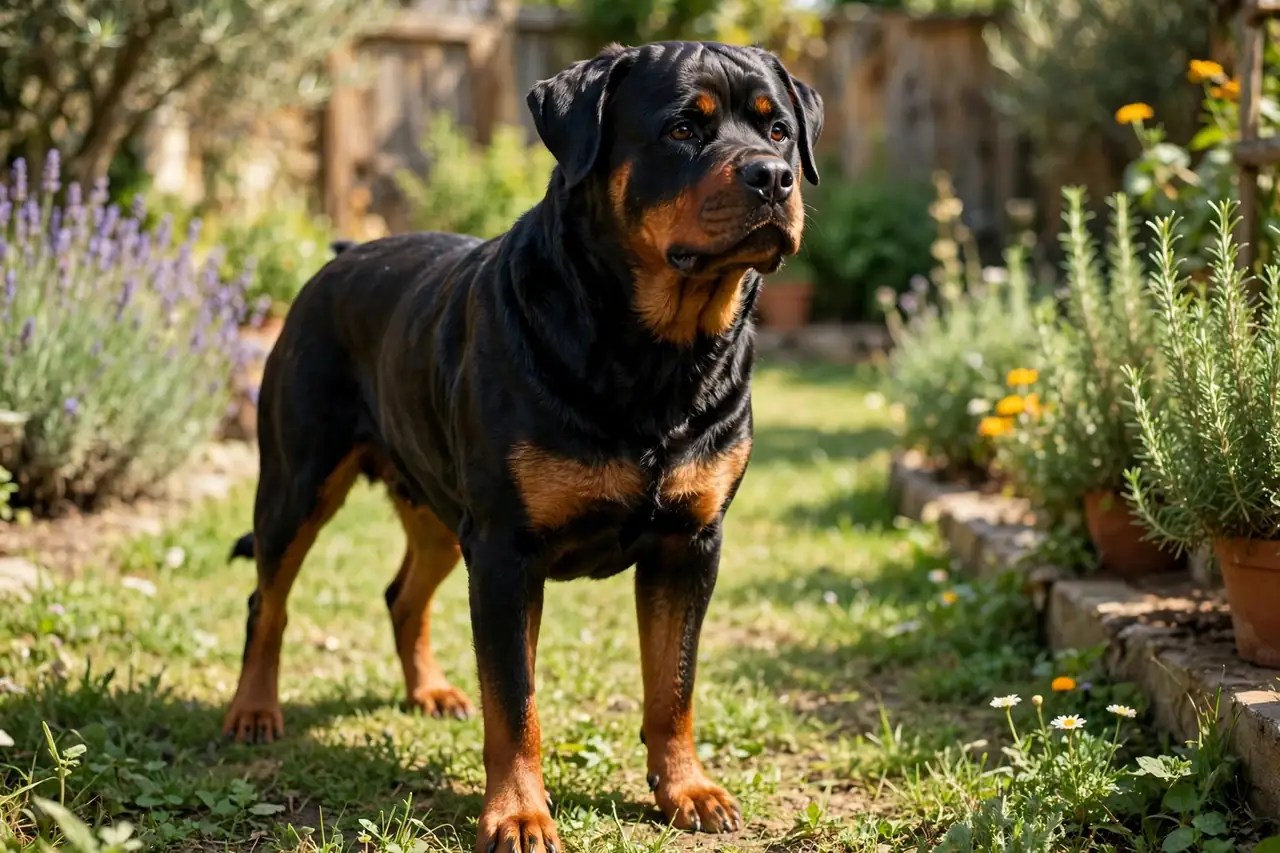
The Rottweiler is a large, powerful dog with a short black coat, rich mahogany markings, and a calm, confident manner. It is one of the oldest of the herding breeds, with a history that reaches back to the Roman Empire, and it has worked as a drover dog, a cart dog, and a guardian for centuries.
This guide covers the Rottweiler from the beginning — its Roman roots, its work in the German town of Rottweil, its path to recognition in the United States, and its modern role as a family companion. It also looks at its size and appearance, its famous black-and-tan coat, and its loyal, steady personality.
Origin and History of the Rottweiler
The Rottweiler may be a descendant of ancient Roman drover dogs. When Roman legions marched across Europe, mastiff-type dogs travelled with them, herding livestock and guarding supplies. Those rugged, intelligent dogs were the ancestors of the breed that later developed around the town of Rottweil in southern Germany.
In Rottweil, the dogs became the town’s working dogs. Butchers used them to drive cattle to market and to pull carts loaded with meat, and the dogs also guarded their owners and their goods. For a long time the breed was known as the butcher’s dog of Rottweil, and the town gave the breed its name.
As railways and motor vehicles replaced cattle drives and cart pulling in the nineteenth century, the Rottweiler’s traditional work faded, and the breed’s numbers fell. The breed was revived by German enthusiasts who valued its strength, intelligence, and guarding instincts. In 1901 the first standard Rottweiler was produced by the International Club for Leonbergers and Rottweiler Dogs in Germany, and in 1907 the Allgemeiner Deutscher Rottweiler-Klub, the ADRK, was founded in Germany. It remains the breed’s country-of-origin club.
Recognition in the United States followed. The American Kennel Club officially recognized the Rottweiler in 1931 and placed it in the Working Group, where it has remained ever since. The breed’s popularity in America stayed modest for decades, then grew steadily from the 1970s onward. Today the Rottweiler is one of the best-known large working breeds in the United States.
The Coat: Black With Rust to Mahogany Markings
The Rottweiler’s coat is its signature. The coat is short, dense, and straight, with a coarse outer coat and an undercoat that is thicker in colder weather. A long or wavy coat is considered a flaw under the AKC standard, so the correct coat lies flat and looks neat and tidy.
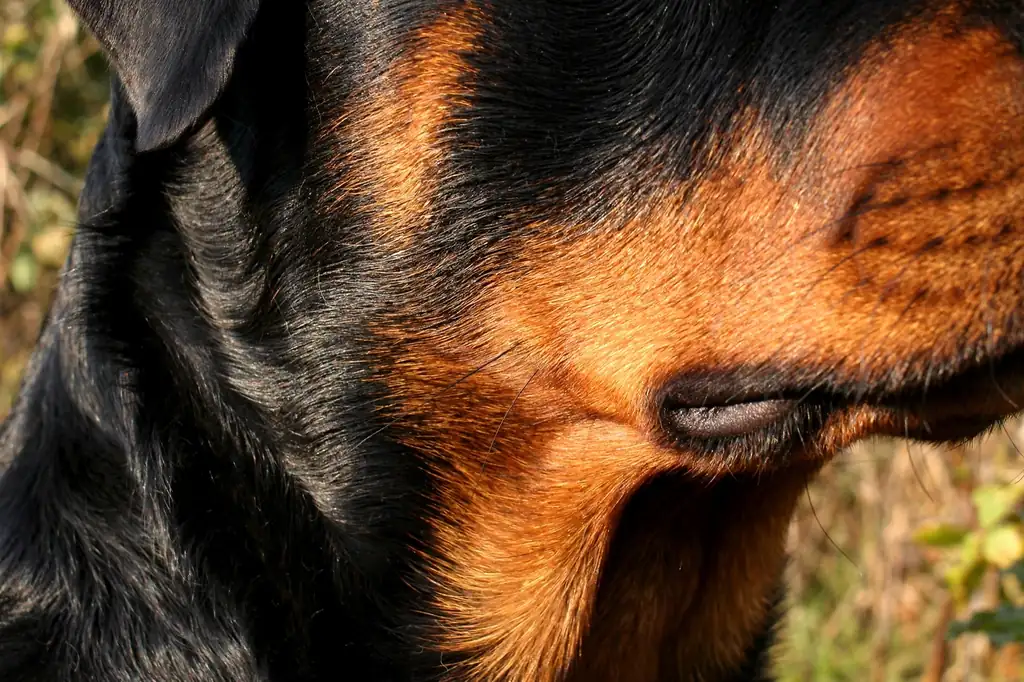
The colour is always black with clearly defined rust to mahogany markings. The markings appear in a set pattern: above each eye, on the cheeks, on the muzzle, on the chest, on the legs, and under the tail. The contrast between the jet-black coat and the warm markings makes the breed easy to recognize at a glance.
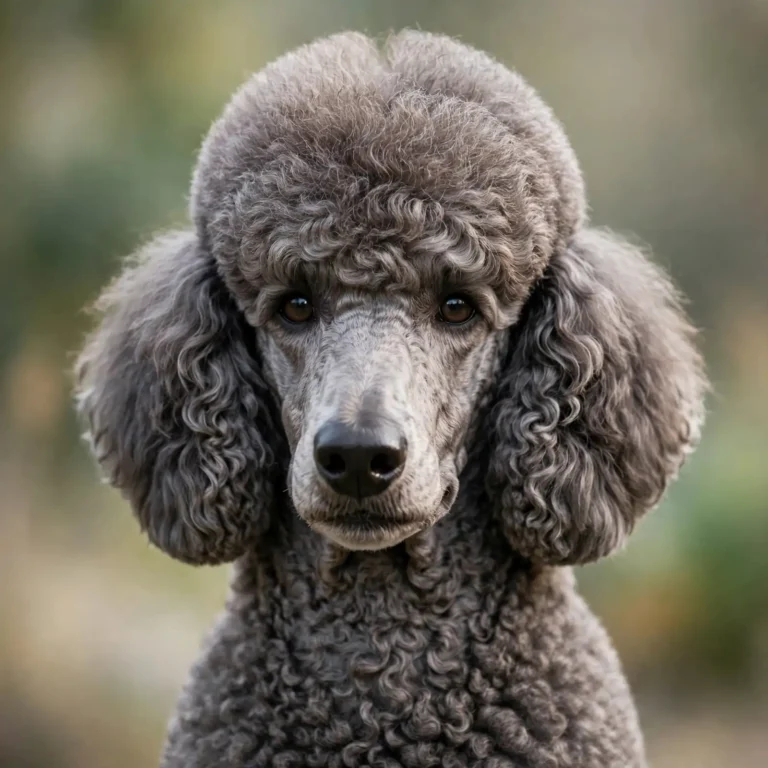
Compared with the long, flowing coat of the Golden Retriever, the Rottweiler’s short coat is far easier to brush, and compared with the curly coat of the Poodle, it needs much less shaping. Readers browsing our guide to the most popular dog breeds in America will spot the Rottweiler at once.
Appearance: A Robust, Powerful, Medium-Large Dog
The Rottweiler is a medium-large, robust, and powerful dog with a well-developed and muscled body. The AKC standard describes a dog standing 22 to 27 inches at the shoulder and weighing 80 to 135 pounds. Males stand 24 to 27 inches and weigh 95 to 135 pounds, while females are noticeably smaller at 22 to 25 inches and 80 to 100 pounds.
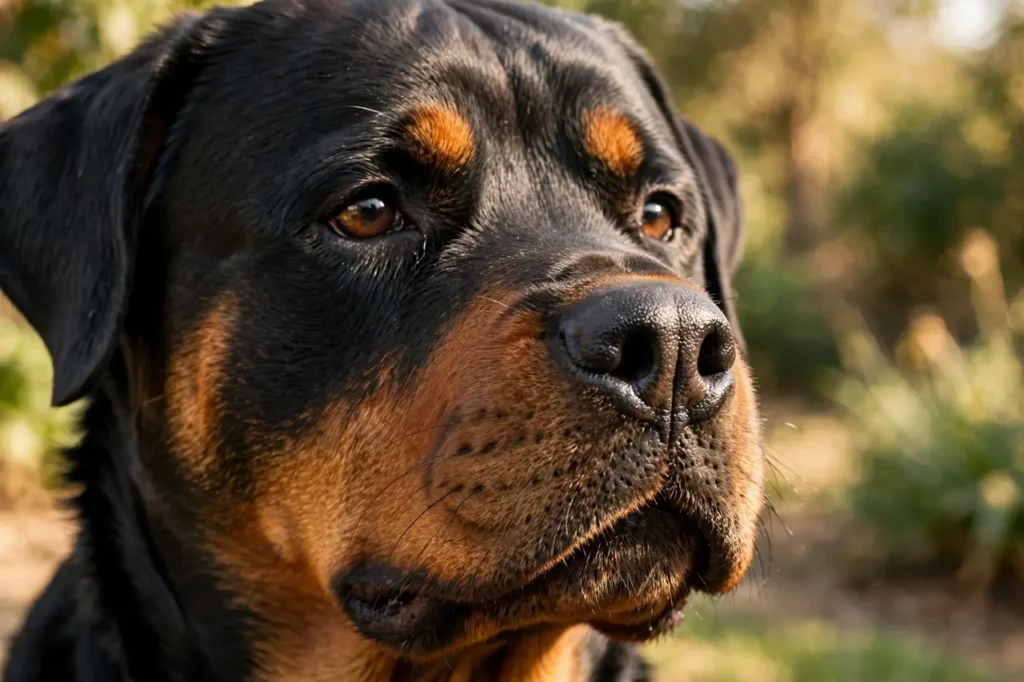
The head is broad, with a wide, deep muzzle, pronounced cheek muscles, and medium-sized, almond-shaped eyes that give an alert, intelligent expression. The ears are medium-sized and hang close to the head. The chest is deep and broad, the back is level and strong, and the tail is carried in a natural, relaxed way.
Everything about the Rottweiler looks built for work. The deep chest, strong legs, and level back give the dog power and stamina, and the overall impression is one of strength without heaviness. It is a dog that looks ready for a long walk, a game in the park, or a day of work.
Personality: Calm, Confident, and Courageous
The American Kennel Club describes the Rottweiler as “a calm, confident and courageous dog with a self-assured aloofness that does not lend itself to immediate and indiscriminate friendships.” That description captures the breed well: the Rottweiler is steady and self-assured, loyal to its own people, and reserved with strangers.
This is a devoted family dog. Rottweilers bond closely with their owners and want to be part of the household, following their people from room to room and settling nearby. They are good-natured and placid at home, and their calm manner makes them easy to live with once they know the routine.
The breed’s guarding instincts are part of its history. Rottweilers were bred to guard livestock, carts, and their owners’ goods, and that watchfulness is still part of the breed. A Rottweiler is naturally alert to what is happening around the home and quick to notice anything unusual.
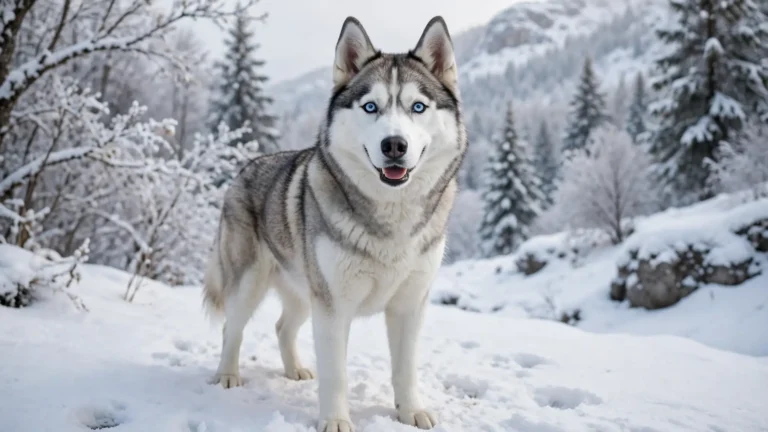
Play is a big part of a Rottweiler’s day. These dogs are strong and energetic, and they enjoy fetch, tug games, and long walks. They stay playful well into adulthood, and they enjoy games that involve their people. Compared with the famously merry Beagle, the Rottweiler is calmer and more serious, and compared with the independent Siberian Husky, it is more devoted to staying close to its owners.

Rottweiler Puppies: Sturdy, Curious, and Quick to Bond
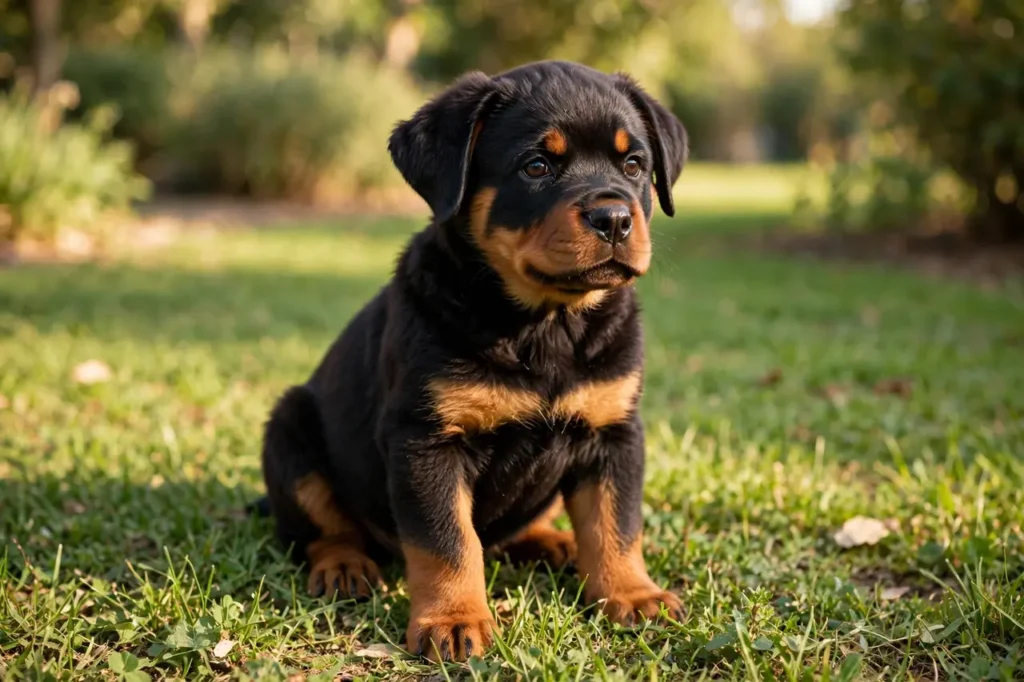
Rottweiler puppies are sturdy little dogs from the start. They are born with the breed’s black coat and tan markings, and their broad heads and stocky bodies give them a solid look even as puppies. A puppy explores the world with enthusiasm, investigating new sounds, new objects, and new people.
Puppies are playful and social from an early age. They chase, tug, and investigate everything in reach, and they bond quickly with the people around them. A Rottweiler puppy that grows up with plenty of company, gentle handling, and regular play becomes a confident, steady adult.
Early social time matters for this breed. Puppies that meet many different people, places, and everyday sounds grow into adults that take new situations in their stride. Like adults, puppies love closeness — a soft blanket, a warm spot beside a person, and a place in the middle of family life — see our guide to the best dog breeds for first-time owners for comparisons.
Grooming and Everyday Care
Grooming a Rottweiler is simple and ordinary. The short, dense coat sheds, and a gentle brush once or twice a week removes loose hair and keeps the coat looking neat. A soft brush or a grooming glove works well, and the routine is quick — a few minutes is usually enough.
Beyond the coat, everyday care is straightforward. The ears can be checked and gently wiped as part of the regular grooming routine, and the claws can be trimmed as part of ordinary care. The Rottweiler does best living inside with its family, where it is part of everyday life, and its calm nature makes everyday care easy.
Activity matters for this strong breed. Rottweilers need daily walks and play to stay happy, and they enjoy games that use their strength and intelligence — fetch, tug, and scent games in the garden are all good choices. A tired Rottweiler is a calm Rottweiler, and a regular routine of walks and play keeps the breed at its best.
Rottweiler vs Other Popular Breeds: A Quick Comparison
Here is how the Rottweiler compares with other reader favourites:
| Trait | Rottweiler | German Shepherd | Labrador Retriever | French Bulldog |
|---|---|---|---|---|
| Size | 22–27 inches, 80–135 pounds | Large, athletic herding dog | Large, sturdy sporting dog | Small, compact companion |
| Coat | Short, dense, black and mahogany | Medium double coat, many colours | Short, dense, three colours | Short, smooth coat |
| Origin | Germany, Roman drover dogs | Germany, herding dog | Canada, retrieving dog | France, companion breed |
| Personality | Calm, confident, courageous | Confident, smart, loyal | Friendly, outgoing, gentle | Affectionate, playful, adaptable |
| Best for | Owners wanting a loyal, steady guardian | Owners wanting a smart, active partner | Owners wanting a friendly family dog | Owners wanting a compact city companion |
The German Shepherd shares the Rottweiler’s German working heritage and its intelligence, but it is lighter and more agile. The Labrador Retriever is friendlier with strangers and more outgoing, while the French Bulldog is far smaller and easier to keep in a small home. The Rottweiler is the most powerful and the most reserved of the four.
Interesting Facts About Rottweilers
- Roman roots: The Rottweiler may descend from ancient Roman drover dogs that travelled with the legions, herding livestock and guarding supplies.
- The butcher’s dog: In Rottweil, butchers used the dogs to drive cattle to market and to pull carts loaded with meat — and the town gave the breed its name.
- A first standard in 1901: The first standard Rottweiler was produced by the International Club for Leonbergers and Rottweiler Dogs in Germany in 1901.
- The ADRK: The Allgemeiner Deutscher Rottweiler-Klub was founded in Germany in 1907 and remains the breed’s country-of-origin club.
- AKC recognition in 1931: The American Kennel Club officially recognized the Rottweiler in 1931 and placed it in the Working Group.
- A powerful size: Males stand 24 to 27 inches and weigh 95 to 135 pounds, while females stand 22 to 25 inches and weigh 80 to 100 pounds.
- A set pattern: The rust to mahogany markings always appear in the same places — above the eyes, on the cheeks, muzzle, chest, legs, and under the tail.
- Calm and courageous: The AKC describes the breed as “a calm, confident and courageous dog with a self-assured aloofness.”
Living With a Rottweiler: What to Know
The Rottweiler is a dog for people who want a loyal, steady companion with real strength behind it. It will follow you from room to room, greet you like a friend, play with you in the park, and settle happily at your feet in the evening.
If you love large working dogs with deep histories, compare the Rottweiler with other breeds in our most popular dog breeds in America guide, see how it stacks up for new owners in our guide to the best dog breeds for first-time owners, and browse the Dogs & Puppies section.

Related Reading on MyPetsMyLove
- Most popular dog breeds in America
- German Shepherd guide
- Siberian Husky guide
- Dogs & Puppies hub page
- MyPetsMyLove homepage
- About Us page
References
- American Kennel Club (AKC) — Rottweiler breed standard and history
- Encyclopaedia Britannica — Rottweiler breed information
Frequently Asked Questions
Where did the Rottweiler come from?
The Rottweiler may descend from ancient Roman drover dogs that travelled with the legions, herding livestock and guarding supplies. The breed developed around the town of Rottweil in southern Germany, where butchers used the dogs to drive cattle and pull carts — and the town gave the breed its name.
When was the Rottweiler recognized by the AKC?
The American Kennel Club officially recognized the Rottweiler in 1931 and placed it in the Working Group, where it has remained ever since. In Germany, the first standard Rottweiler was produced in 1901, and the ADRK club was founded in 1907.
How large does a Rottweiler grow?
Rottweilers are medium-large, robust dogs. Males stand 24 to 27 inches at the shoulder and weigh 95 to 135 pounds, while females stand 22 to 25 inches and weigh 80 to 100 pounds, according to the AKC standard.
What is a Rottweiler’s coat like?
The Rottweiler has a short, dense, straight double coat that is always black with clearly defined rust to mahogany markings. The markings appear above the eyes, on the cheeks, muzzle, chest, legs, and under the tail.
What is a Rottweiler’s personality like?
The AKC describes the Rottweiler as “a calm, confident and courageous dog with a self-assured aloofness that does not lend itself to immediate and indiscriminate friendships.” Rottweilers are loyal and devoted to their families, good-natured at home, and naturally watchful.
What is a Rottweiler puppy like?
Rottweiler puppies are sturdy, curious, and quick to bond, with the breed’s black coat and tan markings from the start. They are playful and social from an early age, and puppies that meet many different people, places, and everyday sounds grow into confident, steady adults.
How do you groom a Rottweiler?
Grooming is simple and ordinary. A gentle brush once or twice a week removes loose hair from the short, dense coat and keeps it looking neat. The ears can be checked and gently wiped as part of the regular grooming routine, and the claws can be trimmed as part of ordinary care.
Conclusion
The Rottweiler began as a drover dog travelling with Roman legions, became the butcher’s dog of Rottweil in Germany, and was recognized by the AKC in 1931 as a Working Group breed. With a short black coat and rich mahogany markings, a powerful build of up to 135 pounds, and a calm, confident, courageous nature, it is a dog that looks like a guardian and acts like a friend.
If you want a companion that will follow you from room to room, play with you, and settle happily at your feet, the Rottweiler is hard to beat. Compare it with other remarkable breeds in our most popular dog breeds in America guide, explore the Dogs & Puppies section, and start from the MyPetsMyLove homepage to meet more breeds worth knowing.
Disclaimer
Disclaimer
MyPetsMyLove dot com is an independent informational website covering pet species breeds characteristics activities positive training bonding grooming and responsible ownership
We are not a veterinary clinic medical provider pet food provider or veterinary nutrition service
We do not provide veterinary diagnosis medical advice treatment food recommendations or nutritional guidance
For pet health medical or food related concerns consult a qualified veterinarian or appropriate professional directly
Independent clinics listed on this website are not owned or operated by MyPetsMyLove unless explicitly stated
Verify third party credentials services fees and availability independently
We do not guarantee third party services or outcomes
To the extent permitted by applicable law we disclaim responsibility for independent third party services
Nothing in this notice excludes liability that cannot legally be excluded
The disclaimer does not make prohibited content acceptable




One Comment