
Doberman – Complete Breed Guide
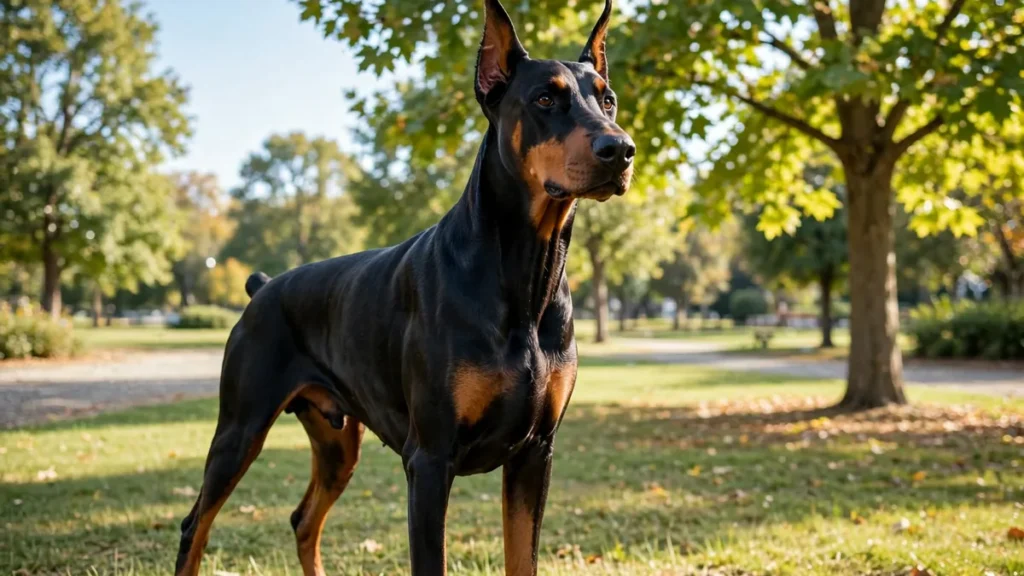
Picture a dog standing tall in a sunny park, ears pricked, eyes fixed on its owner, every muscle ready to move at a word — and then, a moment later, that same dog leaning gently against your leg for a quiet cuddle. That contrast is the Doberman in a nutshell: a sleek athlete with the bearing of a guardian and the devotion of a loyal companion. This guide covers Doberman history, appearance, temperament, puppies, training, exercise, grooming, and everyday life, so you can see clearly what sharing a home with one is really like.
Doberman History
The Doberman Pinscher story begins in the town of Apolda, in Germany, in the late 1800s. The breed was developed by Karl Friedrich Louis Dobermann, a tax collector who also worked with dogs and wanted a loyal, alert companion to accompany him on his rounds.
The exact mix of breeds behind the early Doberman is not fully documented, and breed histories differ on the details. Names often mentioned in accounts of the breed’s origins include the Rottweiler, the German Pinscher, and the Weimaraner, among others, but these are best understood as part of the breed’s traditional story rather than a proven pedigree. What is certain is that Dobermann’s dogs soon gained a reputation in their home region, and breeders after him refined the type into the sleek, consistent dog we recognize today.
The breed spread beyond Germany in the early twentieth century and reached the United States, where it found admirers quickly. The American Kennel Club recognized the Doberman Pinscher in 1908, a milestone that helped establish the breed in American dog life. Today, the Doberman remains one of the most recognizable of the most common dog breeds discussed by American dog lovers, and its German roots are still part of its identity.

Doberman Appearance
The Doberman is a medium to large dog with a compact, muscular body built for both speed and endurance. It stands tall on long, straight legs, with a deep chest, a level back, and a clean, athletic outline that looks powerful without looking heavy. The head is long and wedge-shaped, with a flat top, a muzzle that tapers neatly, and dark, almond-shaped eyes that give the breed its alert, intelligent expression.
The coat is one of the Doberman’s most striking features. It is short, smooth, and close-lying, with a glossy sheen that shows off the dog’s muscles. Doberman colors are rich and clearly marked: the best-known is black with rust-red markings, and other recognized colors include red with rust markings, blue with rust markings, and fawn with rust markings. The rust markings appear above the eyes, on the muzzle, chest, and legs, and the contrast is part of what makes the breed so eye-catching.
Compared with the heavier Rottweiler, the Doberman looks leaner, and compared with the German Shepherd, it has a shorter coat. Among popular us dog breeds, few combine elegance and athletic power as neatly.

Doberman Temperament
Doberman temperament is often described with three words: loyal, intelligent, and alert. Most Dobermans bond deeply with their people and like to stay close, following a favorite person from room to room and settling nearby while the household goes about its day. That devotion is the quality owners mention most often, and it is why the breed has such a strong following among people who want a dog that is truly part of the family.
The breed is also known for its intelligence and its eagerness to learn. Dobermans tend to pick up new routines quickly, enjoy tasks that ask them to think, and respond well to calm, consistent guidance. They are naturally watchful and notice changes around the home, from a visitor at the door to an unfamiliar sound in the garden, and they often place themselves between their family and anything new until they are sure it is welcome.
Like every breed, individual Dobermans vary. Some are outgoing and playful with everyone they meet, while others are more reserved with strangers and warmer once they know someone. Early, gentle introductions to different people, places, and everyday sounds help a Doberman grow into a confident adult,
Doberman Puppies
A Doberman puppy arrives as a bundle of long legs, oversized paws, and curiosity. In the first weeks at home, a puppy is busy learning the shape of its new world: the sound of the doorbell, the feel of different floors, the rhythm of the household, and the faces of the people and animals it will live with.
Puppies learn quickly, and that includes both the habits you want and the ones you do not. Clear, simple routines work best: a regular place to sleep, regular times to play and rest, and short training moments woven into the day rather than long, formal sessions. Rewarding calm behavior and the choices you like — with praise, a favorite toy, or a favorite game — teaches a puppy far more effectively than scolding
A Doberman puppy grows fast, and its body and its mind both need time to catch up with each other. A calm first week, with a quiet sleeping spot and a steady daily rhythm, helps a new puppy settle in and start learning the household rules with confidence. Play should be fun and age-appropriate,

Training a Doberman
Training a Doberman is one of the most rewarding parts of sharing life with the breed, because these dogs genuinely enjoy learning. They respond best to positive reinforcement: clear cues, rewards for getting it right, and short sessions that end while the dog is still keen. Our leash training guide covers the first steps for loose-leash walking.
Consistency matters more than cleverness. Everyone in the household should use the same words for the same behaviors and reward the same choices, so the dog is never left guessing what is wanted. Asking for a sit before a meal or a wait before a door turns ordinary moments into gentle practice.
Dobermans also enjoy training that asks them to think. Scent games, simple puzzle toys, and short sessions learning a new cue all give the breed a satisfying outlet for its intelligence Never use punishment or intimidation: harsh handling damages trust, teaches a dog to be wary of its people, and works against everything this loyal breed does best.
Living With a Doberman
Life with a Doberman is active, affectionate, and closely shared. This is a dog that wants to be where its people are, whether that means supervising homework from the rug, joining a walk around the neighborhood, or settling at the foot of the bed at night. The breed is at its best in a home where someone is around for much of the day.
Inside the home, Dobermans are generally calm once their need for activity has been met. They do well with older children who understand how to treat a large, strong dog with respect, and introductions to other pets should be calm and gradual, with each animal given space to get used to the other.
The breed’s short coat makes indoor life easy in one respect: there is little shedding to manage compared with heavy-coated breeds, and a Doberman is a tidy housemate. A Doberman left alone for long stretches day after day may become restless and unhappy, so this is a breed for people who can offer companionship, activity, and a real place in the household.

Exercise and Activities
The Doberman is an athletic breed that needs regular, purposeful exercise every day. A brisk walk, a run, or a lively play session in a secure area gives the breed the physical outlet it craves, and most adult Dobermans enjoy at least an hour or so of activity spread across the day, split into walks and play rather than one exhausting burst. Splitting activity between a morning walk and an afternoon play session suits most adult Dobermans well and keeps energy levels steady through the day.
Variety keeps exercise interesting for this intelligent breed. Fetch, tug games with a sturdy toy, and exploring new walking routes all add interest, and our guide to the best dog toys covers the kinds of toys that stand up to enthusiastic play.
Activities that involve the owner are the ones Dobermans enjoy most. Whether it is a morning walk, an afternoon game, or a training session in the park, the breed is happiest when exercise is shared. A well-exercised Doberman settles happily at home.

Grooming a Doberman
Grooming a Doberman is refreshingly simple, thanks to that short, smooth coat. A weekly brush with a soft brush or a grooming mitt lifts loose hair, keeps the coat glossy, and gives the dog a pleasant few minutes of attention.
Bathing is only needed occasionally, when the dog has rolled in something muddy or is due a freshen-up, and a gentle wash followed by a good towel dry is usually all it takes. Nails should be checked regularly and trimmed when they begin to click on hard floors, and ears can be checked during grooming time as part of the normal routine.
Because the coat is so short, a Doberman feels the cold more than a heavy-coated breed and may appreciate a warm coat on chilly winter walks. In summer, shade and fresh water on warm days keep an active dog comfortable. The grooming routine is short, but it is worth doing well: a few minutes each week keeps the Doberman looking sleek and gives the owner a regular chance to notice how the dog is doing.
Doberman vs Rottweiler vs German Shepherd
| Breed | Size and Build | Coat | Temperament | Best Known For |
|---|---|---|---|---|
| Doberman | Medium to large, lean and athletic | Short, smooth, glossy | Loyal, intelligent, alert | Sleek elegance and devotion |
| Rottweiler | Large, broad and powerful | Short, dense, black and tan | Confident, steady, devoted | Strength and calm confidence |
| German Shepherd | Large, strong and well proportioned | Medium double coat | Intelligent, loyal, watchful | Versatility and trainability |
The table shows why these three breeds are so often compared. The Rottweiler brings broad power and a calm, steady presence, the German Shepherd brings versatility and a thicker coat built for outdoor work, and the Doberman brings a leaner, more streamlined elegance. Readers who want to compare further can explore our Rottweiler guide and German Shepherd guide alongside this one, and our roundup of the most popular dog breeds in America places all three among the most best dog breeds American owners talk about most.
Interesting Facts About Dobermans
- A tax collector’s dog: The breed was developed in the late 1800s by Karl Friedrich Louis Dobermann, a tax collector in Apolda, Germany.
- Early recognition: The American Kennel Club recognized the Doberman Pinscher in 1908.
- Four coat colors: Black, red, blue, and fawn coats are recognized, each with rust markings in the same classic pattern.
- Quick learners: Dobermans are known for picking up new cues fast, which makes training sessions enjoyable for owners.
- Devoted shadows: Many Dobermans follow their favorite person from room to room and settle close by.
Related Reading on MyPetsMyLove
- Most popular dog breeds in America
- Rottweiler guide
- German Shepherd guide
- Dogs & Puppies hub page
- MyPetsMyLove homepage
- About Us page
References
- American Kennel Club (AKC) — Doberman Pinscher breed profile
- The Doberman Pinscher Club of America (DPCA) — breed information
- Encyclopaedia Britannica — dog breeds reference
- The Humane Society of the United States — pet care and enrichment resources
Frequently Asked Questions
What is a Doberman?
A Doberman, also known as the Doberman Pinscher, is a medium to large German breed known for its sleek, athletic build, short glossy coat with rust markings, and loyal, intelligent temperament.
Where does the Doberman come from?
The breed was developed in Apolda, Germany, in the late 1800s by Karl Friedrich Louis Dobermann, a tax collector who wanted a loyal, alert companion. The American Kennel Club recognized the Doberman Pinscher in 1908.
What colors do Dobermans come in?
Doberman colors include black with rust markings, red with rust markings, blue with rust markings, and fawn with rust markings. In each color, the rust markings appear in the same classic places, including above the eyes and on the chest and legs.
Are Dobermans good family companions?
Many Dobermans are devoted family companions that bond closely with their people and enjoy being part of daily household life. They do best in homes that can offer companionship, activity, and consistent, positive training, and they suit older children who treat a large dog with respect.
How much exercise does a Doberman need?
Dobermans are athletic dogs that need regular daily exercise, such as brisk walks and play sessions in a secure area, plus activities that engage their minds. Shorter, gentler sessions suit puppies and young dogs while they are still growing.
Are Dobermans easy to train?
Dobermans are intelligent and eager to learn, and they usually respond well to positive reinforcement, clear cues, and short, consistent sessions. Training that includes thinking games and scent games suits the breed well, and harsh methods should never be used.
How much grooming does a Doberman need?
Very little compared with many breeds. The short, smooth coat needs a weekly brush to stay glossy, with occasional baths, regular nail checks, and routine ear and teeth care as part of normal grooming.
Conclusion
The Doberman is a breed of striking contrasts: a sleek athlete and a devoted shadow, a watchful guardian and a gentle family companion. From its beginnings with a tax collector in Apolda to its place among the most discussed dogs in America today, it has kept the qualities that first made it admired — loyalty, intelligence, and an elegance that turns heads wherever it goes.
If the Doberman sounds like your kind of dog, keep exploring: compare it with the Rottweiler and the German Shepherd, browse more breeds in the Dogs & Puppies section, and start from the MyPetsMyLove homepage to meet more dogs worth knowing.
Disclaimer
Disclaimer
MyPetsMyLove dot com is an independent informational website covering pet species breeds characteristics activities positive training bonding grooming and responsible ownership
We are not a veterinary clinic medical provider pet food provider or veterinary nutrition service
We do not provide veterinary diagnosis medical advice treatment food recommendations or nutritional guidance
For pet health medical or food related concerns consult a qualified veterinarian or appropriate professional directly
Independent clinics listed on this website are not owned or operated by MyPetsMyLove unless explicitly stated
Verify third party credentials services fees and availability independently
We do not guarantee third party services or outcomes
To the extent permitted by applicable law we disclaim responsibility for independent third party services
Nothing in this notice excludes liability that cannot legally be excluded
The disclaimer does not make prohibited content acceptable