Great Dane: Discover the History of This Giant Dog Breed

Picture a dog so tall that standing on its hind legs it could look you in the eye — and then picture that same dog trying to fit itself onto your lap. That is the Great Dane, a breed that pairs the size of a small pony with the manners of a house guest who simply wants to be near you. Known as the Apollo of dogs for its noble, statuesque build, the Great Dane has walked beside people for centuries, from the hunting grounds of old Europe to the living rooms of modern America. This guide traces the breed’s history, explains its remarkable size and coat colors, and shows what life with one of these gentle giants is really like.
The Ancient Roots of the Great Dane
The Great Dane descends from the great mastiff-type dogs of ancient Europe. Large, powerful dogs appear in artwork and writing from many centuries ago, and the ancestors of today’s Great Dane were among the strong hunting dogs kept by nobles to pursue wild boar, deer, and other large game.
By the 1500s and 1600s, large boar-hunting dogs of this type were well known in the German states, where they were kept in the kennels of princes and landowners. Over time, breeders in Germany refined the type, crossing the heavy boarhounds with lighter, faster hounds to produce a taller, more elegant dog.
The breed as we know it today took shape in Germany in the 1800s. German breeders set a standard for the tall, well-proportioned dog with a long head, a deep chest, and a smooth coat, and the breed became known in its homeland as the Deutsche Dogge. In English-speaking countries the name Great Dane stuck, even though the breed’s modern development belongs to Germany rather than Denmark. The American Kennel Club recognized the Great Dane in 1887.
Appearance and Size of the Great Dane
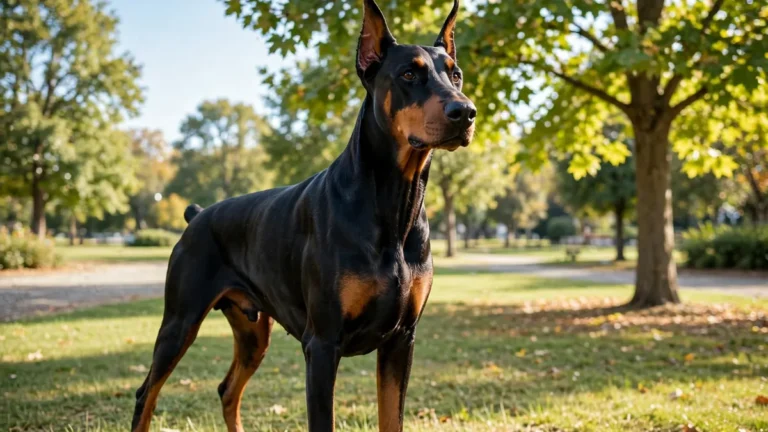
The first thing anyone notices about a Great Dane is its height. This is one of the tallest of all dog breeds, and a full-grown Great Dane can stand well above the knee of most adults. The breed is built for both power and grace: a deep chest, a long neck carried high, a straight back, and long, straight legs.
According to the American Kennel Club breed standard, adult males stand 30 to 34 inches at the shoulder, and adult females stand 28 to 32 inches. Males typically weigh 140 to 175 pounds, and females typically weigh 110 to 140 pounds. Individual dogs vary, but even a smaller example of the breed is a very large dog by any measure.
The head is long and narrow, with a rectangular muzzle, a black nose, and medium-sized ears that hang close to the cheeks. The eyes are medium in size and dark, with an alert and friendly expression. Everything about the breed’s outline speaks of balance: no single feature is exaggerated, and the whole dog looks like a single, flowing design.
| Feature | Male | Female |
|---|---|---|
| Height at the shoulder | 30–34 inches | 28–32 inches |
| Weight | 140–175 pounds | 110–140 pounds |
| Coat | Short, smooth, glossy | Short, smooth, glossy |
| Build | Tall, deep-chested, elegant | Tall, deep-chested, elegant |
Among the most common dog breeds in American homes, the Great Dane stands out simply by standing up. Readers comparing large breeds can see where it fits in our guide to the most popular dog breeds in America, which covers the breeds most often seen in US households.
Coat Colors and Patterns
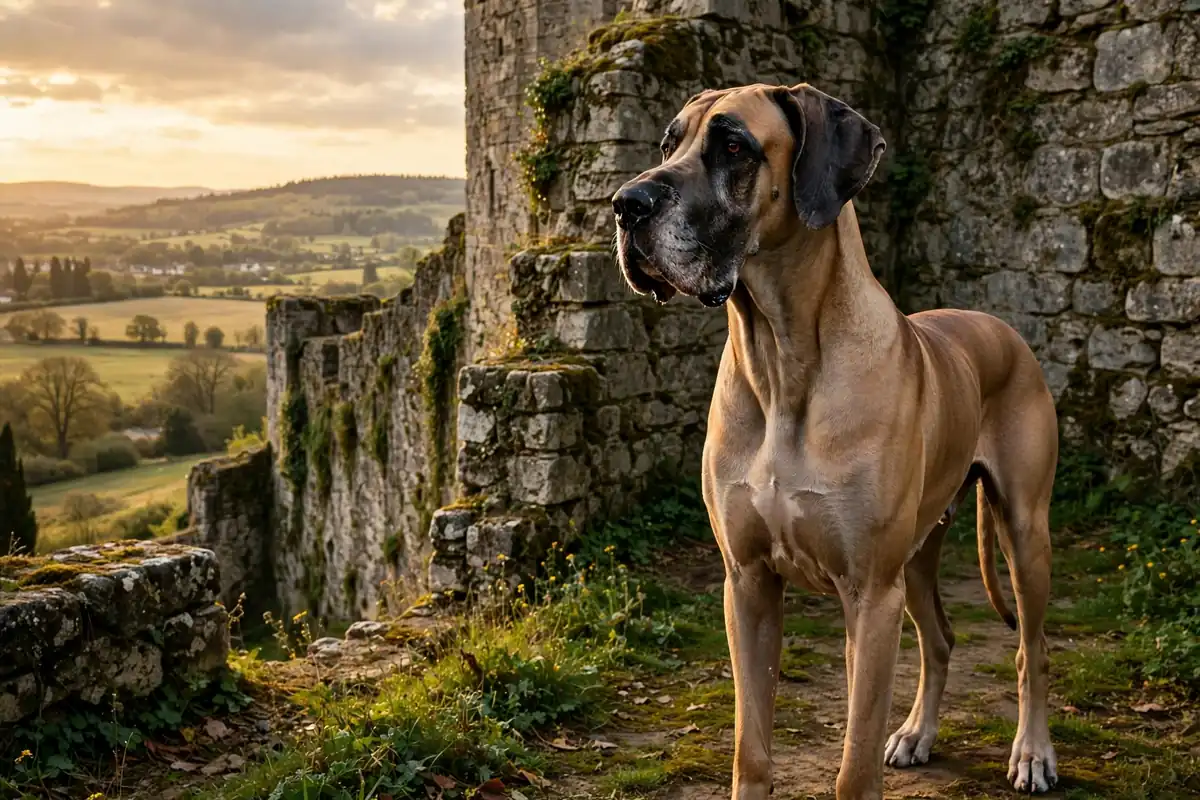
The Great Dane coat is short, smooth, and close-lying, with a healthy shine. It is one of the easiest large-breed coats to keep tidy, since the short hair does not mat and sheds at a moderate, steady pace. The coat comes in several recognized colors and patterns.
- Fawn: A warm golden tan with a black mask over the muzzle and around the eyes.
- Brindle: A fawn base striped with black in a tiger-stripe pattern. No two brindle coats look exactly alike.
- Blue: A solid steel gray-blue, sometimes called slate.
- Black: A solid, glossy black coat.
- Harlequin: A white base with irregular black patches scattered over the body — one of the breed’s most eye-catching looks.
- Mantle: A black blanket of color over the body with a white muzzle, chest, neck, legs, and tail tip, like a cloak over white.
- Merle: A gray base with darker gray or black patches.
Puppies are born in the color they will keep, although the shade can deepen or lighten a little as they mature. Whatever the color, the coat itself stays the same: short, smooth, and easy to care for.

Temperament and Personality
For all its size, the Great Dane is famous for a gentle, friendly nature — the reason the breed is so often called a gentle giant. Most Great Danes are calm indoors, affectionate with their families, and happy simply to be in the same room as their people. They tend to lean against their owners, rest a huge head on a lap, and follow the family from room to room.
The breed is generally patient and good-natured, and it is often described as a good companion for households with children, because it is steady rather than excitable. As with any large dog, early socialization and basic manners matter, and children should always be supervised around dogs of any breed. A Great Dane that has met many different people, places, and sounds as a puppy usually grows into a confident adult.
Great Danes are also watchful. They are not typically noisy dogs, but they notice strangers at the door and will announce them with a deep bark. Their size alone is usually enough to make a visitor pause. At the same time, the breed is not known for aggression; a well-socialized Great Dane is more likely to greet a guest politely than to act hostile.
Great Dane Puppies
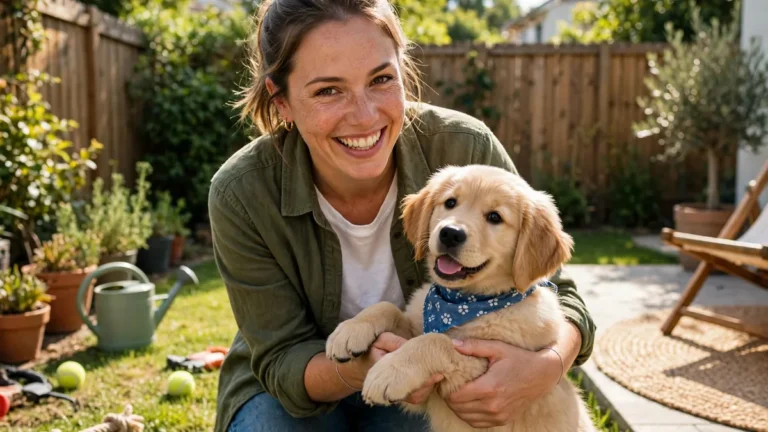
A Great Dane puppy is one of the most charming sights in the dog world: a small dog with enormous paws, long legs it has not yet grown into, and a habit of tripping over its own feet. Puppies grow very quickly — a puppy that fits in your arms in spring may be taller than your knee by autumn.
Young Great Danes are playful, curious, and eager to be with people. Short, gentle play sessions suit them well, and they enjoy simple games with toys, exploring the garden, and learning the routines of the household. For toy ideas, our guide to the best dog toys covers the types of toys dogs return to again and again.
Early experiences shape the adult dog. Meeting visitors, hearing everyday household sounds, and walking on different surfaces all help a puppy grow into a confident adult. Because a Great Dane puppy will soon be a very large dog, it is worth teaching simple manners early — walking politely on a lead, waiting at doorways, and greeting people without jumping up — while the puppy is still small enough to manage easily.

Living With a Great Dane
Life with a Great Dane is, above all, a matter of space. This is a dog that needs room to stand, stretch, and turn around comfortably, and a home with a spacious living area and a secure garden suits it best. A Great Dane can live in a smaller home if it gets enough daily exercise and time outdoors, but a cramped apartment with no nearby open space is a poor fit for a dog of this size.
Indoors, the Great Dane is a surprisingly quiet companion. It is not a restless dog that paces the house; it is far more likely to claim the largest soft spot in the room and settle there for hours. A sturdy, oversized dog bed is a good investment, because a Great Dane will outgrow a standard bed quickly.
Outdoors, a Great Dane needs daily exercise: walks, time in a secure garden, and the chance to stretch its long legs at a comfortable pace. Short, regular outings suit it better than one long, exhausting session. After exercise, a Great Dane is happy to come home and rest.
One practical point deserves mention: everything about a Great Dane is large, including its appetite for space on the sofa. A Great Dane that has been taught where its own resting spots are will use them happily, and a dog that is allowed on the furniture will claim the best seat in the house.

Training and Play
Great Danes respond well to positive training: clear cues, short sessions, and rewards for getting it right. The breed is intelligent and willing, and it usually learns basic commands quickly. Short, upbeat sessions work better than long, repetitive ones.
Basic commands worth teaching early include sit, stay, come, and walking politely on a lead. Because a full-grown Great Dane is so strong, lead manners matter more than they do for a small dog: a puppy that learns to walk without pulling is a pleasure to walk as an adult.
Play is an important part of a Great Dane’s day. The breed enjoys games of fetch, gentle tug, and exploring new places on walks. Large, sturdy toys suit it best, and rotating toys keeps play interesting. Among popular US dog breeds, the Great Dane is one of the calmer players: it enjoys a game, but it is just as happy to end the game and settle down beside you. Readers who enjoy active breeds may also like our Border Collie guide and our Australian Shepherd guide, two breeds with far more energy to burn.

Grooming Basics
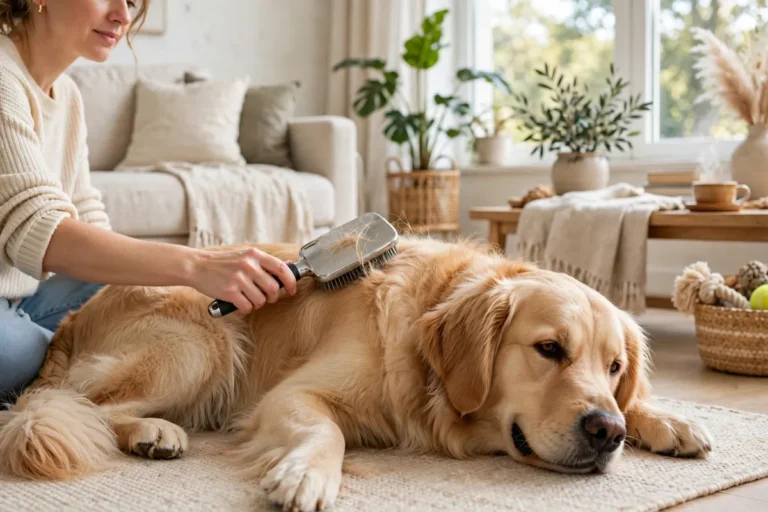
The Great Dane’s short coat makes grooming refreshingly simple for a dog of this size. A weekly brushing with a soft bristle brush or a rubber grooming mitt removes loose hair and keeps the coat glossy. During seasonal shedding, a few extra sessions help keep loose hair under control.
Bathing is only needed occasionally, when the dog is dirty or after a muddy walk. A gentle dog shampoo and a good rinse are enough, and the short coat dries quickly. Ears should be checked and wiped gently as part of the routine, and nails should be trimmed regularly, since long nails can make walking uncomfortable for a heavy dog.
One charming quirk of the breed is drool. Great Danes have loose lips, and they can drool after drinking or when they are excited. Many owners keep a cloth handy near the water bowl. It is a small price to pay for the company of a gentle giant, and most owners say they stop noticing it after the first week.
Great Dane vs Other Large Breeds
| Breed | Height | Coat | Temperament |
|---|---|---|---|
| Great Dane | 28–34 inches | Short, smooth | Calm, gentle, dignified |
| German Shepherd | 22–26 inches | Medium, double | Alert, loyal, hardworking |
| Labrador Retriever | 21–25 inches | Short, dense | Friendly, eager, playful |
| Golden Retriever | 21–24 inches | Medium, wavy | Gentle, patient, sociable |
| Border Collie | 18–22 inches | Medium, double | Energetic, clever, driven |
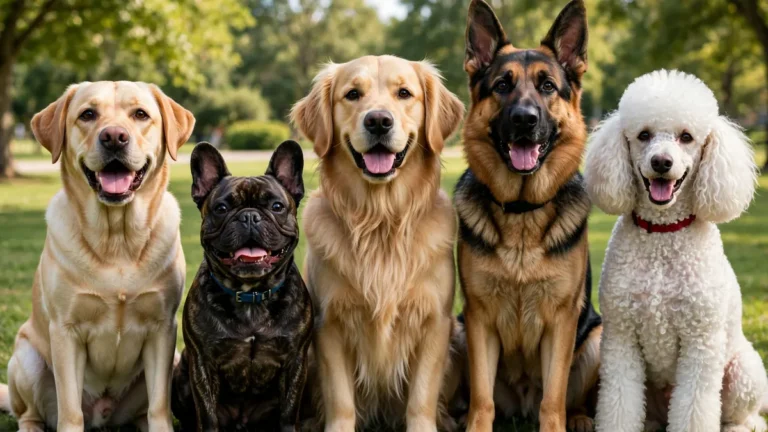
The table shows what makes the Great Dane different from the other popular breeds in American homes. The German Shepherd brings working drive, the Golden Retriever brings gentle sociability, and the Border Collie brings boundless energy. The Great Dane brings something else: towering size paired with a calm, unhurried nature. For readers weighing size against energy, the tiny Chihuahua sits at the opposite end of the scale.
Interesting Facts About Great Danes
- Apollo of dogs: The breed’s nickname reflects its noble, statuesque build and dignified bearing.
- A German breed: Despite the name, the modern Great Dane was developed in Germany, where it was known as the Deutsche Dogge.
- One of the tallest: The Great Dane is among the tallest of all dog breeds, with males reaching up to 34 inches at the shoulder.
- A famous cartoon dog: The cartoon character Scooby-Doo is a Great Dane, which helped make the breed familiar to generations of children.
- A record holder: A Great Dane named Zeus, who lived in Michigan, was recognized as the tallest dog ever recorded, standing 44 inches at the shoulder.
- Gentle giants: The breed is famous for a calm, friendly nature that contrasts with its imposing size.
Related Reading on MyPetsMyLove
- Most popular dog breeds in America
- German Shepherd guide
- Labrador Retriever guide
- Dogs & Puppies hub page
- MyPetsMyLove homepage
- About Us page
References
- American Kennel Club (AKC) — Great Dane breed profile
- Encyclopaedia Britannica — Great Dane reference
- The Humane Society of the United States — pet care and enrichment resources
- Guinness World Records — tallest dog ever recorded
Frequently Asked Questions
Where did the Great Dane originate?
The modern Great Dane was developed in Germany, where it was known as the Deutsche Dogge, from the large boar-hunting dogs of old Europe. The American Kennel Club recognized the breed in 1887.
How tall does a Great Dane get?
According to the American Kennel Club breed standard, adult males stand 30 to 34 inches at the shoulder and adult females stand 28 to 32 inches, making the Great Dane one of the tallest dog breeds in the world.
What colors do Great Danes come in?
Recognized colors include fawn, brindle, blue, black, harlequin, mantle, and merle. Fawn dogs usually have a black mask, and the harlequin pattern — black patches on a white coat — is one of the breed’s most striking looks.
Are Great Danes good family dogs?
Great Danes are generally calm, gentle, and affectionate with their families, and they are often described as good companions for households with children. As with any large dog, early socialization and supervision around children are important.
Are Great Danes good apartment dogs?
A Great Dane can adapt to a smaller home if it gets enough daily exercise and time outdoors, but the breed is best suited to a spacious home with a secure garden, because it needs room to stand, stretch, and move comfortably.
How much exercise does a Great Dane need?
A Great Dane needs daily exercise — walks, time in a secure garden, and the chance to stretch its long legs. Short, regular outings suit the breed better than one long, exhausting session, and it is happy to rest at home afterwards.
How much grooming does a Great Dane need?
Very little. The short, smooth coat needs only a weekly brushing with a soft bristle brush or rubber grooming mitt, plus occasional baths, regular nail trims, and ear checks as part of the routine.
Conclusion
The Great Dane is a breed of wonderful contrasts: one of the tallest dogs in the world, yet one of the gentlest; a descendant of the great hunting dogs of old Europe, yet happiest stretched out on the living room floor beside its people. Its history, its size, its striking coat colors, and its calm, loyal nature all add up to a companion unlike any other.
Compare the Great Dane with other popular breeds in our guide to the most popular dog breeds in America, meet the alert German Shepherd and the friendly Labrador Retriever, and explore more breeds in the Dogs & Puppies section, starting from the MyPetsMyLove homepage.
Disclaimer
Disclaimer
MyPetsMyLove dot com is an independent informational website covering pet species breeds characteristics activities positive training bonding grooming and responsible ownership
We are not a veterinary clinic medical provider pet food provider or veterinary nutrition service
We do not provide veterinary diagnosis medical advice treatment food recommendations or nutritional guidance
For pet health medical or food related concerns consult a qualified veterinarian or appropriate professional directly
Independent clinics listed on this website are not owned or operated by MyPetsMyLove unless explicitly stated
Verify third party credentials services fees and availability independently
We do not guarantee third party services or outcomes
To the extent permitted by applicable law we disclaim responsibility for independent third party services
Nothing in this notice excludes liability that cannot legally be excluded
The disclaimer does not make prohibited content acceptable