
Best Dog Toys: 20 Popular Types for Different Play Styles

Why does one dog destroy a brand-new toy in five minutes flat, while another dog carries the same soft toy everywhere for years and never tears it? The answer is not the price tag. It is the play style. A dog that loves to chase needs a toy built for speed, a dog that loves to chew needs a toy built for jaws, and a dog that loves to think needs a toy that makes it work. Buy the wrong type and the toy lasts a day. Buy the right type and it becomes a favourite.
This guide compares 20 types of dog toys across five play styles — fetch and chase, chew, tug, puzzle, and comfort — with the materials, sizes, and features that matter.
Why the Right Toy Depends on Play Style
Dogs do not all play the same way. Some dogs live for the chase and will sprint after anything that moves. Some dogs chew to relax and need something to gnaw on for an hour. Some dogs love the back-and-forth of tug-of-war, and some dogs need a puzzle to stay interested. The best dog toys are the ones that match the instinct behind the play.
Watch how your dog plays before you shop. A dog that shreds plush toys in seconds is telling you it needs rubber or nylon, not softer toys. A dog that loses interest in a ball after two throws may be a thinker that needs a puzzle instead. A dog that carries a toy to bed is telling you it wants comfort, not a challenge. Match the toy to the dog, and the toy lasts longer and the dog enjoys it more.
Fetch and Chase Toys
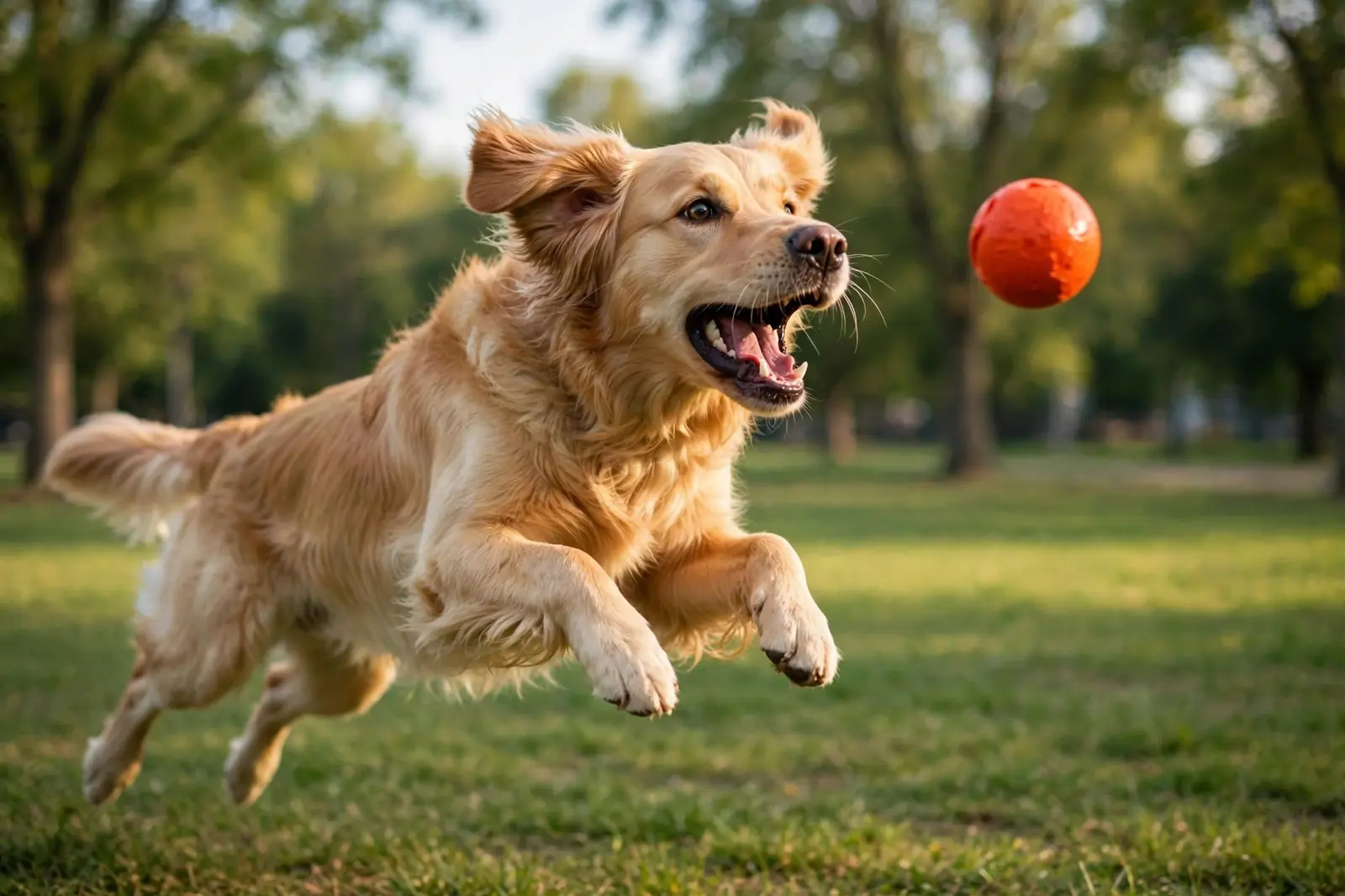
Fetch toys are the classics. They are built for dogs that love to run, jump, and retrieve, and they turn a walk into a workout.
1. Rubber fetch ball. The staple of fetch. A solid rubber ball bounces unpredictably, survives chewing better than a tennis ball, and comes in sizes from small to large. Choose a ball too big to fit fully in your dog’s mouth, and look for a bright colour that is easy to spot in grass.
2. Flying disc. A soft, flexible disc flies further than a ball and suits athletic dogs that love to jump. Flexible rubber or fabric discs are kinder to teeth and gums than hard plastic ones, and they are easier to catch in mid-air.
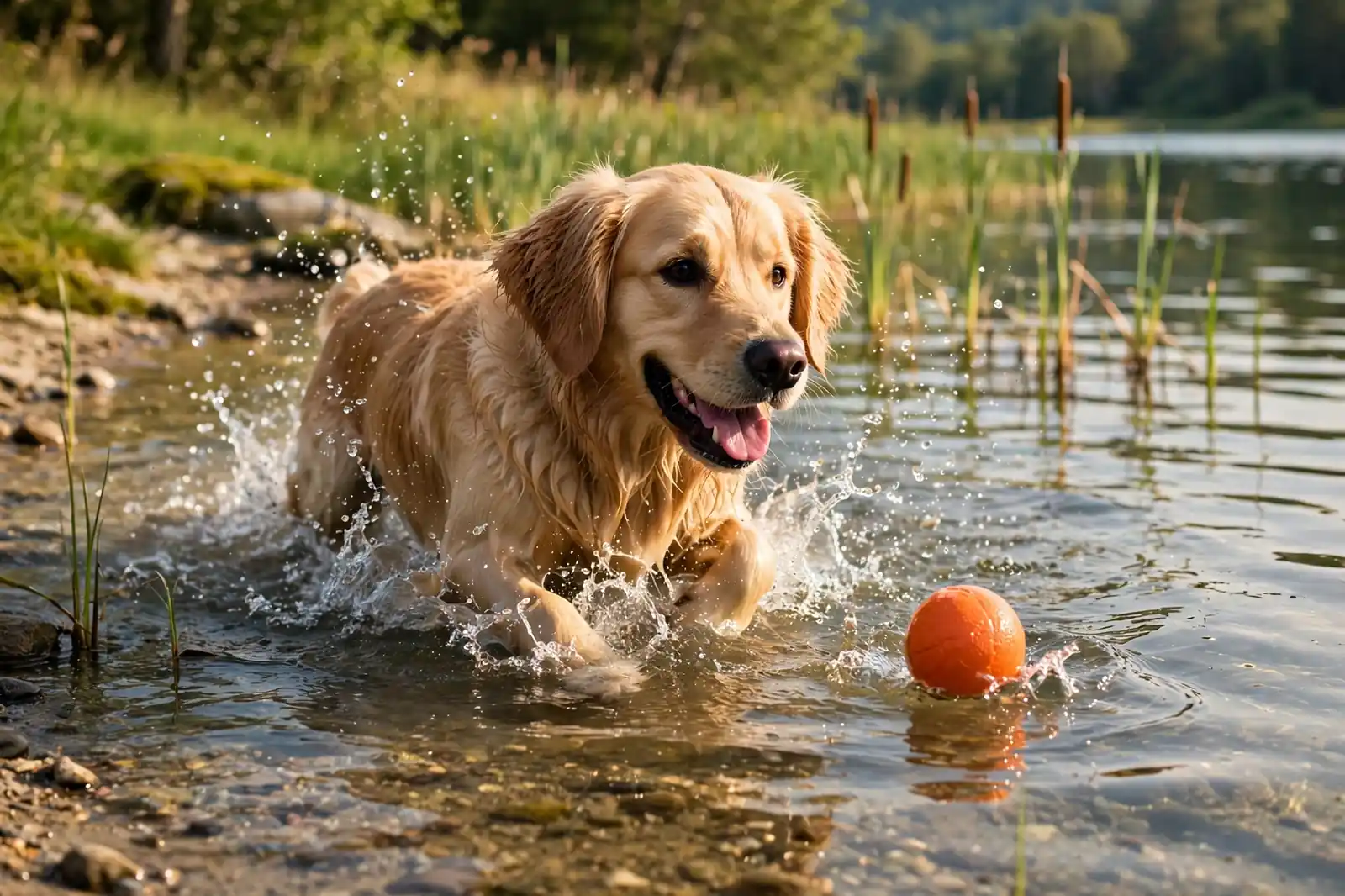
3. Floating fetch toy. A floating toy is made from buoyant rubber or foam that stays on the surface of the water. It suits dogs that love to swim and lets them play fetch in a lake, a river, or a shallow pool. Bright colours help you spot it from the shore.
4. Ball launcher. A throwing stick or launcher lets you throw a ball much further than by hand, which suits high-energy dogs that never tire of fetch. The launcher also keeps your hands clean and lets you pick the ball up without bending down.
5. Flirt pole. A flirt pole is a long stick with a rope and a lure on the end, and it works like a giant fishing rod for dogs. You drag the lure along the ground and the dog chases it in circles. It is a brilliant workout for a small garden, and it taps straight into the chase instinct.
Chew Toys
Dogs explore the world with their mouths, and the urge to chew is natural and strong, especially in puppies. Chew toys are designed to withstand that gnawing and give it a safe outlet.
6. Durable rubber chew toy. The workhorse of chew toys. A thick rubber toy, often shaped like a bone or a ring, flexes under the jaw without breaking. Rubber chews come in different strengths — soft for puppies, regular for most dogs, and extra-tough for heavy chewers.
7. Nylon chew bone. A hard nylon bone is very durable and suits strong chewers that wear rubber down quickly. Look for a bone sized for your dog, and check it regularly for sharp edges or small pieces breaking off.
8. Teething toy for puppies. Puppies chew to soothe their gums, and a teething toy is made for them. Softer rubber or textured rings are gentle on young teeth, and some can be chilled in the fridge for extra comfort. A teething toy should be small enough for a puppy to carry but too big to swallow.
9. Heavy-duty chew ring. A thick rubber or nylon ring gives a strong chewer something to work on for a long time. Rings roll when a dog paws at them, which adds a chasing game to the chewing, and the shape is easy to grip with both paws.
Tug Toys
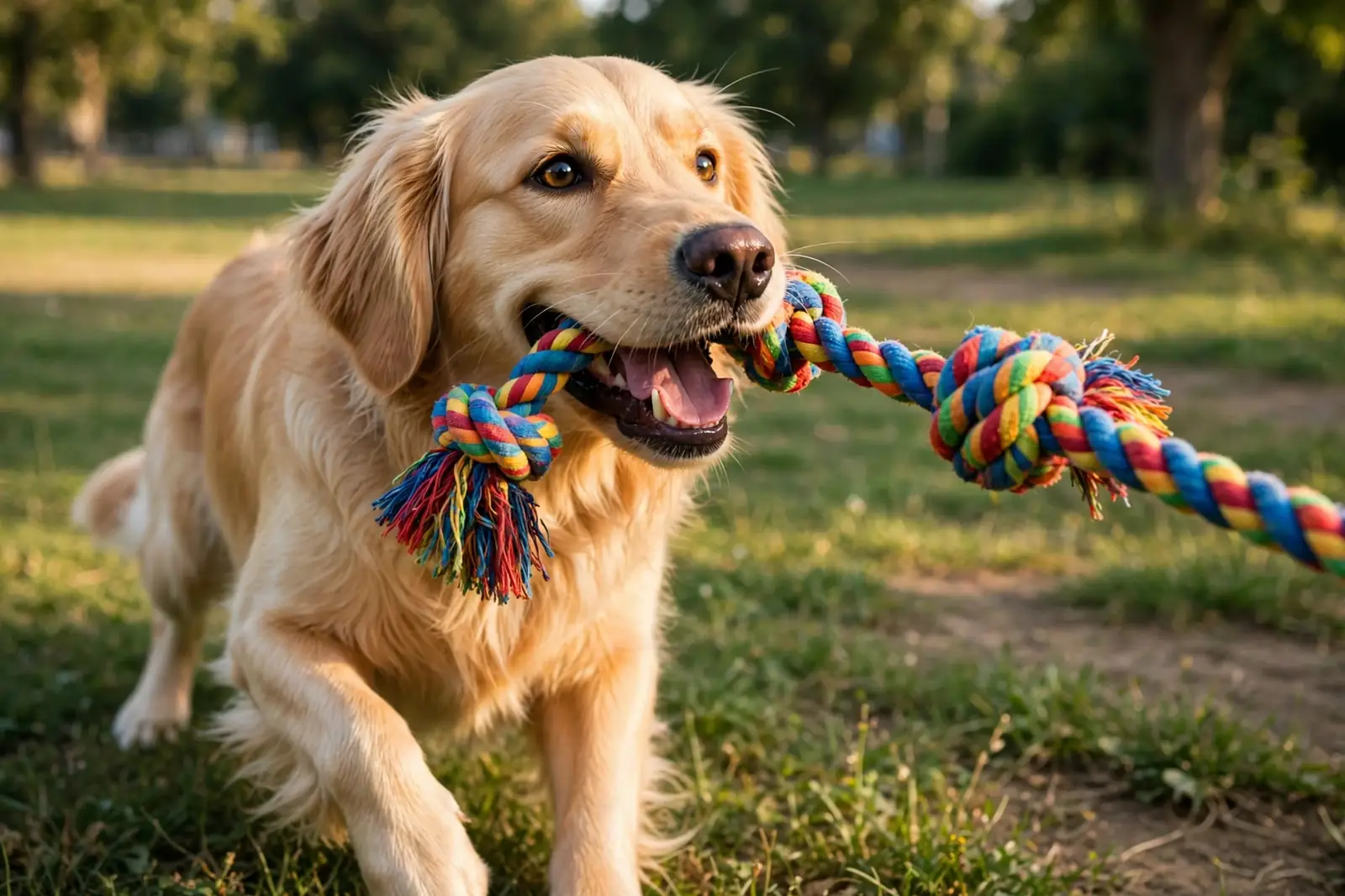
Tug-of-war is a wonderful interactive game. It builds confidence, strengthens the bond between you and your dog, and burns off energy fast. The right tug toy is thick, sturdy, and easy to grip.
10. Knotted rope toy. The classic tug toy. A twisted cotton or hemp rope with knots at the ends is strong, flexible, and easy to hold. The fibres act like dental floss as the dog’s teeth sink in, and the rope can be washed when it gets dirty.
11. Tug ring. A rubber or rope ring with a handle gives you a firm grip and the dog a clear target. Tug rings suit two-dog households too, since two dogs can pull from opposite sides.
12. Firehose tug toy. Made from tough recycled firehose material, these toys are built for dogs that shred ordinary rope. The flat, dense fabric is hard to tear and easy to grip, and it survives tug games that would destroy a plush toy in minutes.
Puzzle and Thinking Toys
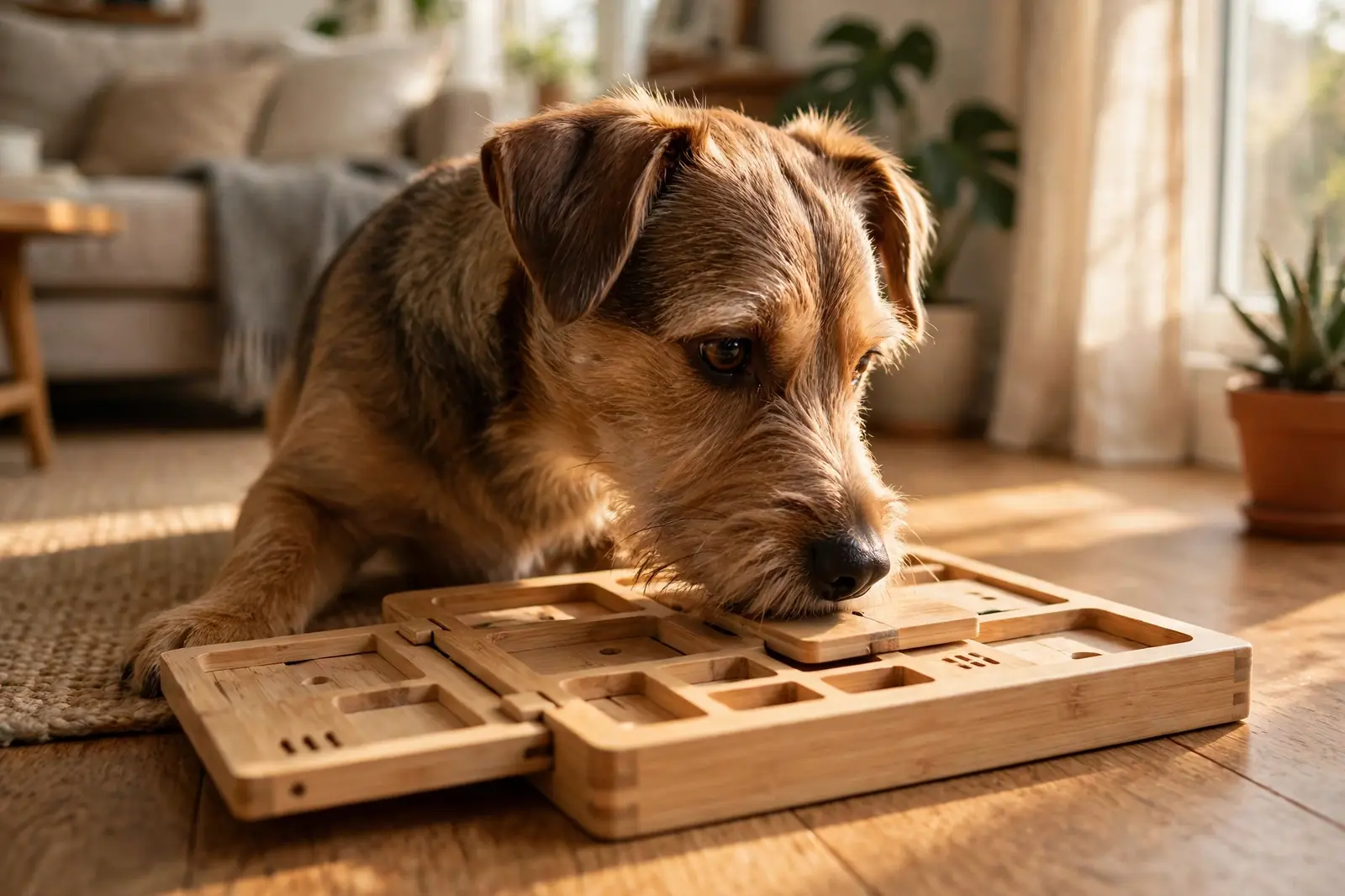
Some dogs get bored with a ball after two throws. Puzzle toys are for them. They make a dog work for a reward, and they tire a clever dog out faster than a run around the park.
13. Treat-dispensing ball. A hollow rubber ball with a small opening holds rewards inside, and the dog has to roll it, nudge it, and chew it to get them out. It turns an ordinary ball into a game that lasts.
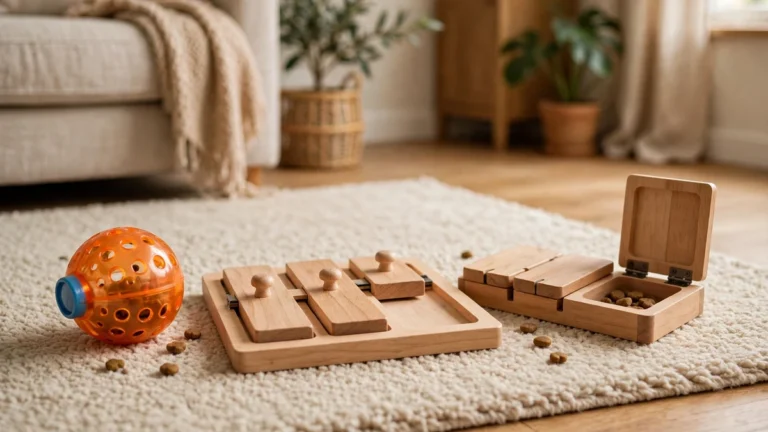
14. Sliding puzzle board. A flat board with sliding compartments, levers, and lids hides rewards underneath. The dog has to figure out how to move each piece to reveal what is hidden. Puzzle boards come in difficulty levels, from beginner to expert.
15. Snuffle mat. A fabric mat with folds and flaps hides small rewards in its layers, and the dog has to sniff and nose through it to find them. It suits dogs that love to forage and works well as a calm, quiet game indoors.
16. Lick mat. A flat silicone mat with ridges and grooves spreads a soft reward across its surface, and the dog licks it off slowly. The repetitive licking is calming, and the mat is easy to wash afterwards.
17. Hide-and-seek burrow toy. A plush burrow with small squeaky toys hidden inside challenges the dog to pull each one out. It combines the comfort of a plush toy with the puzzle of a hunt, and the small toys can be tucked back inside for another round.
Comfort and Cuddle Toys
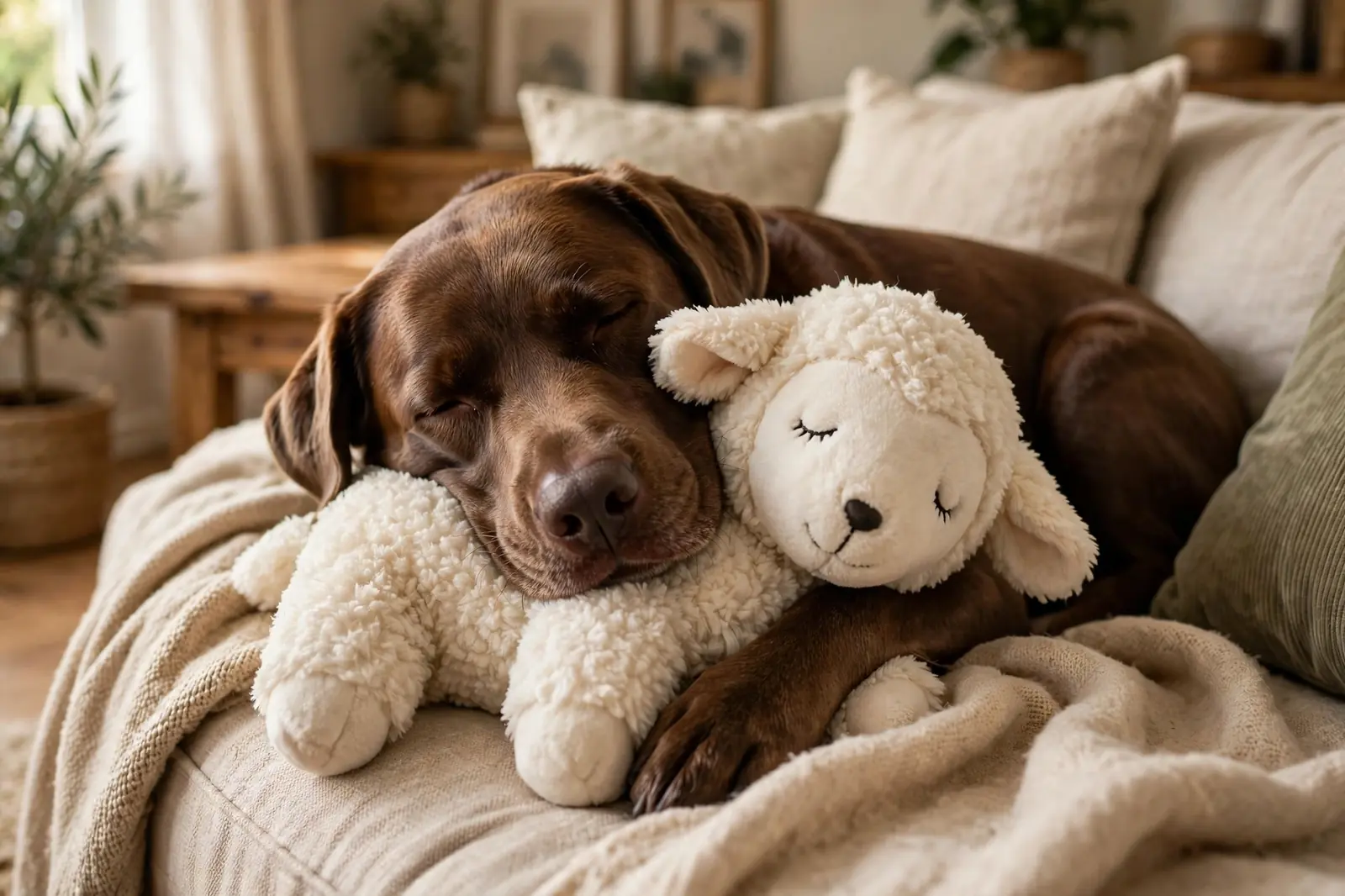
Not every toy is for chewing or chasing. Some dogs want a companion to carry around, cuddle with, or sleep beside. Comfort toys are soft, light, and made for gentle play.
18. Plush companion toy. A soft stuffed animal in a fun shape is the classic comfort toy. Dogs that love to carry a toy around the house, take it to bed, or cuddle it on the sofa will choose a plush toy every time. Look for reinforced stitching and a size that suits your dog.
19. Squeaky plush toy. A plush toy with a squeaker inside adds sound to the comfort. The squeak mimics the sound of captured prey, which is why so many dogs love it. Some modern toys use a silent squeaker that only dogs can hear, which saves your sanity.
20. Stuffing-free plush toy. A flat plush toy with no stuffing inside gives a dog the soft texture it loves with far less mess. If the dog tears it open, there is nothing to scatter across the floor, and the toy is light enough for small dogs to carry easily.
Water and Outdoor Play
Water-loving dogs need toys that float. Floating fetch toys are made from buoyant rubber or foam that stays on the surface and is easy to spot. A floating toy lets a dog play fetch in a lake or a shallow pool, and it doubles as an ordinary fetch toy on dry land. Look for a bright colour, a size that is easy to carry, and a material that dries quickly.
20 Dog Toy Types at a Glance
| # | Toy type | Play style | Best material | Best for |
|---|---|---|---|---|
| 1 | Rubber fetch ball | Fetch and chase | Solid rubber | Dogs that love to run and retrieve |
| 2 | Flying disc | Fetch and chase | Flexible rubber or fabric | Athletic dogs that love to jump |
| 3 | Floating fetch toy | Fetch and chase | Buoyant rubber or foam | Water-loving dogs |
| 4 | Ball launcher | Fetch and chase | Plastic stick and rubber ball | High-energy dogs, long throws |
| 5 | Flirt pole | Fetch and chase | Stick, rope, and lure | Chase games in a small garden |
| 6 | Durable rubber chew | Chew | Thick rubber | Most chewers, all strengths |
| 7 | Nylon chew bone | Chew | Hard nylon | Strong chewers |
| 8 | Teething toy | Chew | Soft rubber | Puppies |
| 9 | Heavy-duty chew ring | Chew | Thick rubber or nylon | Power chewers |
| 10 | Knotted rope toy | Tug | Cotton or hemp rope | Interactive tug games |
| 11 | Tug ring | Tug | Rubber or rope | Two-dog tug games |
| 12 | Firehose tug toy | Tug | Recycled firehose fabric | Dogs that shred ordinary rope |
| 13 | Treat-dispensing ball | Puzzle | Hollow rubber | Dogs that need a challenge |
| 14 | Sliding puzzle board | Puzzle | Wood or hard plastic | Clever dogs, indoor play |
| 15 | Snuffle mat | Puzzle | Fabric folds | Foraging dogs, calm play |
| 16 | Lick mat | Puzzle | Silicone | Calm, slow play |
| 17 | Hide-and-seek burrow toy | Puzzle | Plush with small toys | Dogs that love to hunt and carry |
| 18 | Plush companion toy | Comfort | Soft plush | Gentle chewers, cuddlers |
| 19 | Squeaky plush toy | Comfort | Plush with squeaker | Dogs that love sound and soft toys |
| 20 | Stuffing-free plush toy | Comfort | Flat plush, no stuffing | Small dogs, mess-free cuddles |
How to Choose Dog Toys
Choosing the best dog toys comes down to three things: size, chew strength, and play style. Pick a toy sized for your dog — too small and it can be swallowed, too big and the dog cannot carry it. Match the material to the chew strength: soft rubber for puppies and gentle chewers, thick rubber or nylon for strong chewers, and plush only for dogs that do not shred. And match the type to the play style your dog actually shows, not the one you wish it had.
A few habits help too. Check toys regularly for loose parts, torn seams, or frayed rope, and replace a toy once it starts to come apart. Supervise a strong chewer with a new toy, and rotate toys every week or two so an old favourite feels new again.
For more ideas on matching toys to play, see our guide to the best cat toys and our guide to interactive cat toys — the same play-style thinking applies across species. For toys built to last, see our guide to durable toys for active cats.
Related Reading on MyPetsMyLove
- Best cat toys guide
- Durable toys for active cats
- Cat puzzle toys guide
- Pet Products hub page
- MyPetsMyLove homepage
- About Us page
References
- The Humane Society of the United States — pet care and enrichment resources
- American Kennel Club (AKC) — dog care, training, and enrichment resources
- Encyclopaedia Britannica — dog breeds and behaviour reference
Frequently Asked Questions
What are the best dog toys for a dog that destroys everything?
Match the material to the chew strength. Thick rubber chews, hard nylon bones, and heavy-duty chew rings suit strong chewers, while plush and latex toys are better left to gentle chewers. Check any toy regularly and replace it once it starts to come apart.
What types of dog toys are there?
The main dog toy types are fetch toys (balls, discs, floating toys, launchers, flirt poles), chew toys (rubber, nylon, teething toys, chew rings), tug toys (rope, tug rings, firehose toys), puzzle toys (treat-dispensing balls, puzzle boards, snuffle mats, lick mats, burrow toys), and comfort toys (plush, squeaky, stuffing-free).
How do I choose dog toys for my dog?
Choose by size, chew strength, and play style. Pick a toy too big to swallow, match the material to how hard your dog chews, and match the type to how your dog actually plays — fetch, chew, tug, puzzle, or cuddle.
Are puzzle toys good for dogs?
Yes. Puzzle toys make a dog think before it earns its reward, and they tire a clever dog out faster than a run around the park. Start with an easy puzzle and move to harder ones as your dog learns.
What dog toys are best for puppies?
Puppies do best with soft rubber teething toys, small plush toys, and gentle squeaky toys. Choose toys sized for a puppy, avoid hard nylon until the adult teeth are in, and supervise play with any new toy.
How often should I replace dog toys?
Replace a toy once it shows torn seams, loose parts, frayed rope, or sharp edges. Check toys every week, and rotate them every week or two so an old favourite feels new again.
Can small dogs play with the same toys as large dogs?
Size matters more than the toy type. A small dog needs a smaller ball, a thinner rope, and a lighter plush toy, while a large dog needs a bigger, tougher version of the same toy. Always choose a toy too big for your dog to swallow.
Conclusion
The best dog toys are not the most expensive ones — they are the ones that match how your dog actually plays. A fetch dog needs a ball that bounces and survives the chase. A chewer needs rubber or nylon that stands up to its jaws. A tugger needs a rope that holds. A thinker needs a puzzle that makes it work. And a cuddler needs a soft toy to carry to bed. Twenty types, five play styles, one simple rule: match the toy to the dog.
Start with your dog’s favourite game, pick a type from the list, and check the size and material before you buy. Browse our Pets Products section for more guides, compare play styles in our best cat toys guide, and start from the MyPetsMyLove homepage to discover more about dogs and the products that make their lives fun.
Disclaimer
Disclaimer
MyPetsMyLove dot com is an independent informational website covering pet species breeds characteristics activities positive training bonding grooming and responsible ownership
We are not a veterinary clinic medical provider pet food provider or veterinary nutrition service
We do not provide veterinary diagnosis medical advice treatment food recommendations or nutritional guidance
For pet health medical or food related concerns consult a qualified veterinarian or appropriate professional directly
Independent clinics listed on this website are not owned or operated by MyPetsMyLove unless explicitly stated
Verify third party credentials services fees and availability independently
We do not guarantee third party services or outcomes
To the extent permitted by applicable law we disclaim responsibility for independent third party services
Nothing in this notice excludes liability that cannot legally be excluded
The disclaimer does not make prohibited content acceptable

5 Comments