DIY Cat Toys vs Store-Bought Toys: A Practical Comparison
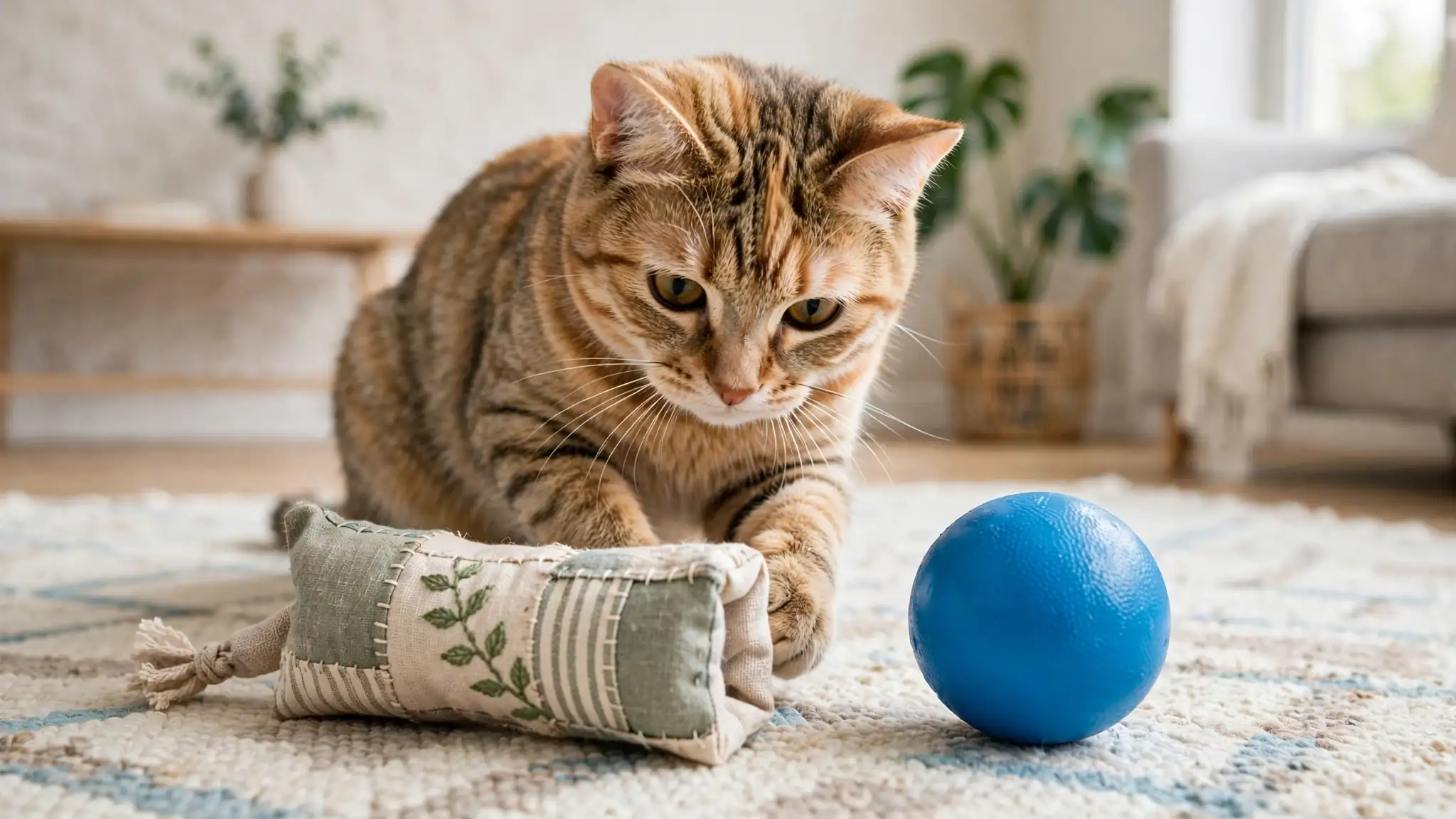
A cat does not care whether a toy came from a shop shelf or from your sewing basket. What matters is how the toy feels in the paws, how it moves, and how long it survives a good wrestling match. The choice between DIY cat toys and store-bought toys is less about price and more about materials, construction, sizes, and how easy a toy is to repair or replace.
What Are DIY Cat Toys?
DIY cat toys are toys made at home from household and craft materials: cotton fabric, felt, fleece, sisal rope, jute twine, cardboard, wood, and crinkle material. A kicker toy might be a fabric tube stitched from an old shirt; a sock toy, a rolled sock knotted at the end; a cardboard tunnel, a few boxes taped together.
The appeal is practical: homemade cat toys use materials you already have, so a new toy costs little and takes minutes to make, and they can be sized exactly to your cat. The trade-off is consistency — every handmade toy is only as good as the materials and stitching that went into it.
What Are Store-Bought Cat Toys?
Store-bought cat toys are made in a workshop or factory from consistent materials: natural rubber, hard plastic, heavy-duty fabric, and sisal. The same design is produced many times, so the size, weight, and construction are the same from one toy to the next. That consistency is the main advantage: a rubber ball bought twice behaves the same way twice.
Store-bought toys also benefit from tested designs: makers refine shapes, weights, and attachment points over many production runs, choosing materials for specific jobs. The limitation is choice — you buy the sizes and colours on the shelf, and a toy that is almost right may not come in the exact size you want.
DIY vs Store-Bought at a Glance
| Feature | DIY cat toys | Store-bought cat toys |
|---|---|---|
| Materials | Cotton, felt, fleece, sisal, jute, cardboard, wood, crinkle | Natural rubber, hard plastic, heavy-duty fabric, sisal |
| Construction | Hand-stitched, knotted, or taped | Machine-stitched or moulded to a fixed design |
| Sizes | Fully custom | Fixed sizes from the product range |
| Durability | Varies with materials and stitching | Consistent and tested |
| Customization | High — size, shape, colour, filling | Low — limited to the range |
| Repairability | Easy — restitch, re-knot, rebuild | Varies — some parts replaceable |
| Cost to replace | Low — household materials | Higher — a new purchase |
Neither column wins outright. Most cat owners end up with a mix: handmade toys where custom size and easy repair matter, and shop-made toys where consistent materials and tested designs matter.
Materials Compared
Materials decide most of a toy’s lifespan. DIY materials: cotton fabric is the workhorse — soft, easy to sew, and available as old shirts or scraps. Felt holds its shape well, which suits small toys and danglers. Fleece is soft and stretchy, good for kicker toys and pom-pom balls, though it can pill with heavy use. Sisal rope and jute twine add grip for scratchers and tug-style toys. Cardboard is the classic free material for tunnels and scratchers, and crinkle material adds a rustling sound that excites many cats.
Store-bought materials: natural rubber is the toughest all-rounder — it flexes under teeth instead of tearing, bounces well, and survives repeated washing. Hard plastic suits balls and rolling toys, where a smooth, rigid surface keeps the toy moving. Heavy-duty fabric is the standard for shop-made kicker toys. Sisal appears on both sides, but shop-made sisal toys use rope of a consistent thickness. The honest difference is predictability: a shop-made toy’s material is the same every time, while a handmade toy’s material depends on what you had in the cupboard. For more on materials in play, see our guide to durable toys for active cats.
Construction: What Holds a Toy Together
Construction is where DIY cat toys either shine or fall apart. Double stitching is the most important detail for fabric toys: a single line of stitching opens quickly under a wrestling cat, while two parallel lines spread the force and hold far longer. Sew fabric toys inside out, so the seam sits inside the toy.
Strong knots matter for sock toys, pom-pom balls, and anything tied rather than sewn: pull each knot tight, double it, and tuck the ends inside the toy.
Reinforced attachment points are the weak spot of wand toys and dangling toys. Fix the cord to the rod and to the dangler with a firm knot, a wrap of thread, or both — never with glue alone — and give every attachment a firm tug before the toy goes to the cat. No small detachable parts: buttons, plastic eyes, beads, and small bells should be left off handmade toys entirely.
DIY Toy Types Worth Making
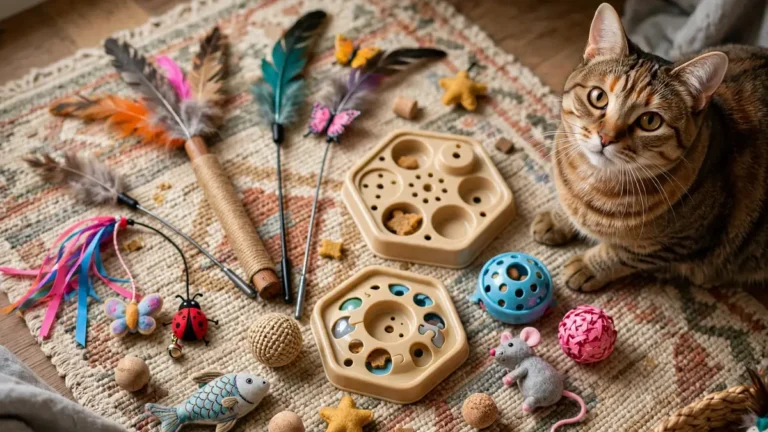
These seven DIY toy types cover most of a cat’s play. For the wider range of toy types, start with our best cat toys guide.
Fabric Kicker Toys
A DIY kicker toy is a long fabric tube, stuffed firmly and stitched shut. It takes the most punishment of any toy type. Make it at least as long as the cat’s body, fill it densely so it holds its shape, and double-stitch every seam. A kicker filled with a little catnip — a toy filling material — can add interest; our guide to catnip vs silvervine toys explains the difference between the two fillings.
Sock and Ball Toys
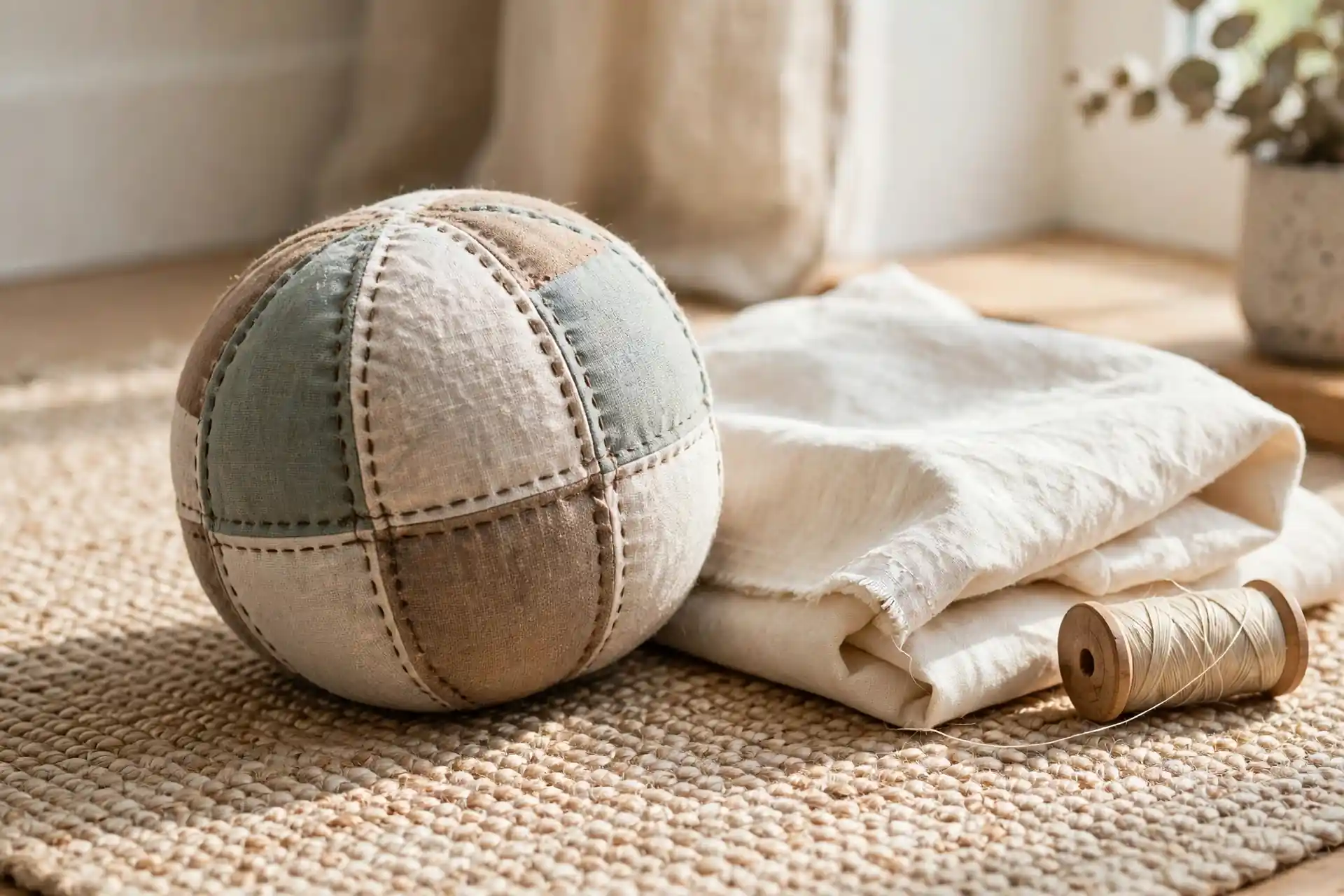
Sock toys are the fastest DIY toy of all: roll a clean sock into a ball, knot the open end, and you have a soft toy a cat can bat and carry. For a firmer ball, stuff the sock with fabric scraps first. Keep balls big enough to bat easily and avoid very small ones, which disappear under furniture.
Cardboard Tunnels and Scratchers
Cardboard tunnels and scratchers are the best value in DIY cat toys, because the material is free and the build takes minutes. Tape sturdy boxes together, cut wide openings at each end, and you have a tunnel a cat can charge through, hide in, and pounce from. A flat pad of layered corrugated cardboard makes a good scratcher. When one wears out, recycle it and build another. Compare tunnel designs in our guide to the best tunnel toys for kittens and adult cats.

Crinkle Toys
Crinkle toys are fabric toys with a rustling layer inside. Sew a sheet of crinkle material into a small fabric ball or a flat pouch, double-stitch the edges, and the toy rustles with every bat. The crinkle layer wears out before the fabric does, so a crinkle toy is a short-life toy by design — easy to make, easy to replace, and best kept as one of several toys in rotation.
Wand Toys With a Sturdy Cord
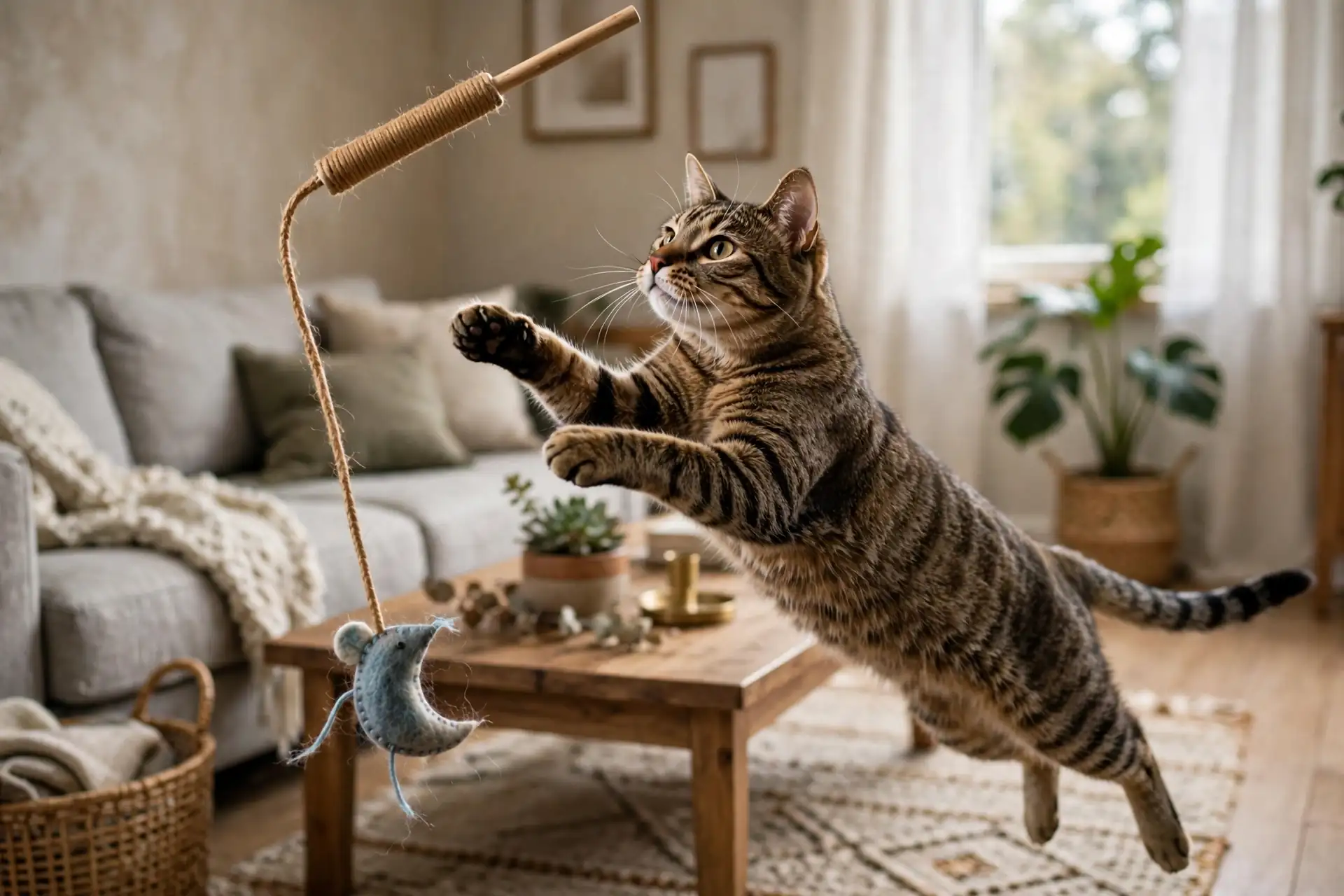
A DIY wand toy needs three parts: a rod, a sturdy cord, and a dangler. A wooden dowel makes a good rod, and the cord should be thick and long enough to keep the dangler well away from your hand. Attach a felt fish, a fleece strip, or a small fabric pouch as the dangler, fixed with a firm knot plus a wrap of thread. Play together, then put the wand away so the cord never gets chewed overnight. Compare shop-made styles in our guide to the best wand toys for cats.
Pom-Pom Balls
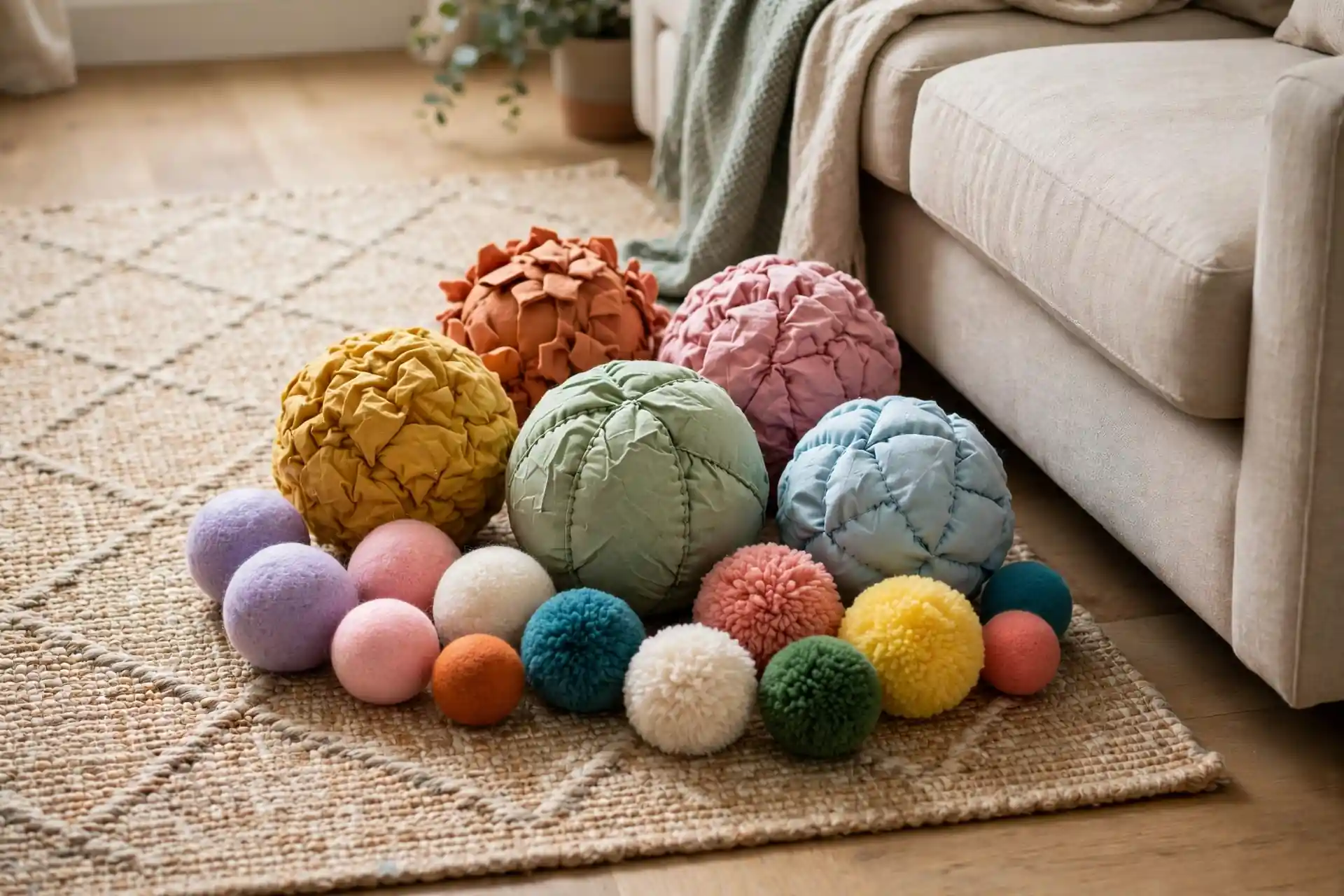
Pom-pom balls are soft, light, and easy to bat across a floor. Wrap yarn or fleece strips around a small cardboard ring, tie the centre tightly, and trim the loops into a round shape. The centre tie must be tight enough that the ball never sheds strands. Pom-pom balls suit gentle batters and kittens best, and a worn one is replaced in minutes rather than repaired.
Simple Puzzle-Style Batting Toys
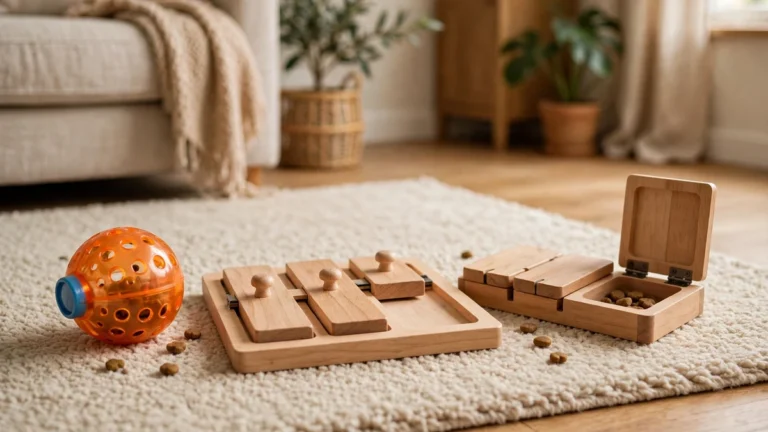
A simple DIY puzzle-style toy is a sturdy cardboard box with holes cut in the sides, just wide enough for a paw — with a ball or a pom-pom inside for the cat to bat and chase. Keep the holes smooth and the box heavy enough that it does not slide. For ready-made versions of this idea, see our cat puzzle toys guide.
Sizes: Getting the Fit Right
Size is a durability factor in its own right, and it is where DIY toys have their clearest advantage.
- Kicker toys should be at least as long as the cat’s body, so the cat can grip with the front paws and kick with the back legs. A kicker that is too short gets kicked apart at the ends.
- Balls should be big enough to bat without being lost — avoid very small ones, under about an inch across.
- Tunnels should be at least 25 cm wide for most adult cats, so a full-grown cat can move through without squeezing.
- Wand toys need a rod long enough to keep the dangler well away from your hand.
- Heavier cats need the widest, sturdiest versions of every type — when in doubt, size up.
Durability, Customization, and Repairability
Durability is the one area where store-bought toys usually win. A shop-made rubber ball or a machine-stitched kicker is built from consistent materials to a tested design, and it survives rough play longer than most handmade toys. A handmade toy’s lifespan depends on your materials and stitching.
Customization is where DIY toys win outright. You choose the size, the shape, the colour, and the filling: a cat that ignores every shop-made ball may love a fleece pom-pom in a particular size.
Repairability splits the difference. A handmade toy is easy to repair: restitch a seam, re-knot a cord, replace a worn dangler, or rebuild a cardboard tunnel. A store-bought toy is harder to fix, but some shop-made toys sell replaceable parts, especially wand toys with spare attachments. Compare automatic vs manual cat toys for the full picture on powered and manual play, and see our guide to the best interactive ball toys for indoor cats.
Precautions: Supervise, Inspect, Rotate
Both handmade and shop-made toys need the same simple precautions:
- Supervise play with any new toy, especially a handmade one. Watch the first few sessions to see how your cat uses it and whether any seam, knot, or attachment starts to give way.
- Inspect toys regularly. Check seams, knots, cords, and attachment points before each play session, and discard worn toys — a torn covering, a frayed cord, a loose part, or a collapsed cardboard structure means the toy has done its job.
- Discard a toy that is falling apart. A quick restitch can save a sound toy, but a shredding toy is finished.
- Rotate toys. Put out one or two toys at a time and swap them every few days — a returning toy often feels new again. Our interactive cat toys guide has more ideas for keeping play fresh.
Which Option Should You Choose First?
If you are starting from scratch, make a simple set and buy a simple set. Make a fabric kicker toy, a few pom-pom balls, and a cardboard tunnel — the three DIY toys that cost almost nothing and cover wrestling, batting, and hiding. Buy a natural rubber ball and a sturdy wand toy — the two shop-made toys where consistent materials and tested designs matter most. Together, the five toys cover most of a cat’s play.
Once you know your cat’s favourites, lean into them. If the handmade kicker is the toy your cat wrestles every day, make a spare in a slightly larger size. If the shop-made rubber ball is the one that survives, buy a second. A small set of well-chosen toys beats a large box of toys that do not suit your cat.

Related Reading on MyPetsMyLove
- Best cat toys guide
- Catnip vs silvervine toys
- Durable toys for active cats
- Pet Products hub page
- MyPetsMyLove homepage
- About Us page
References
- The Humane Society of the United States — cat enrichment and play guidance
- American Association of Feline Practitioners (AAFP) — feline environmental enrichment resources
Frequently Asked Questions
Are DIY cat toys safe for cats?
They can be, when they are made well. Use sturdy materials, double-stitch fabric seams, tie strong knots, reinforce attachment points, and leave off small detachable parts such as buttons and beads. Supervise the first few play sessions and inspect the toy regularly for wear.
Which DIY cat toy should I make first?
A fabric kicker toy is the best first project. It is simple to sew, it suits the wrestling play most cats love, and it is easy to size to your cat — make it at least as long as the cat’s body and double-stitch every seam. A few pom-pom balls and a cardboard tunnel are quick second projects.
What materials work best for DIY cat toys?
Cotton fabric, felt, and fleece suit fabric toys; sisal rope and jute twine suit scratchers and tug-style toys; cardboard suits tunnels and scratchers; wood suits sturdy bases; and crinkle material adds sound to fabric balls. Choose the material for the job — fleece for a soft kicker, cardboard for a tunnel, sisal for grip.
Do DIY cat toys last as long as store-bought toys?
Usually not quite as long, but the gap is smaller than many owners expect. A double-stitched handmade kicker can last for months, while a single-stitched one may last a week. Store-bought toys win on consistency, but handmade toys win on easy repair and replacement — a worn DIY toy can be rebuilt the same afternoon.
What size should a DIY kicker toy be?
At least as long as the cat’s body, so the cat can grip it with the front paws and kick with the back legs. A kicker that is too short gets kicked apart at the ends, while a longer one spreads the force of play across the whole toy.
When is a store-bought toy the better choice?
When you want consistent materials and a tested design — most often for rubber balls, hard plastic rolling toys, and wand toys with replaceable attachments. Shop-made toys are also the better choice when you do not have time to sew or when you want a toy in an exact size and weight that is hard to make at home.
How often should I replace homemade cat toys?
Inspect them before each play session and replace any toy with a torn covering, a frayed cord, a loose knot, or a seam that has started to open. Rotating toys every few days also extends their life, because no single toy takes all the wear.
Conclusion
DIY cat toys and store-bought toys are not rivals — they are two halves of a good toy collection. Handmade toys give you custom sizes, cheap replacements, and easy repairs. Shop-made toys give you consistent materials, tested designs, and replaceable parts. The cats that play hardest benefit from both: a handmade kicker sized exactly to their body, and a shop-made rubber ball built to survive rough play.
Start with a small mixed set, watch which toys your cat reaches for, and build from there. Explore more ideas in our best cat toys guide, compare play styles in our interactive cat toys guide, browse the Pets Products section, and start from the MyPetsMyLove homepage to keep exploring.
Disclaimer
Disclaimer
MyPetsMyLove dot com is an independent informational website covering pet species breeds characteristics activities positive training bonding grooming and responsible ownership
We are not a veterinary clinic medical provider pet food provider or veterinary nutrition service
We do not provide veterinary diagnosis medical advice treatment food recommendations or nutritional guidance
For pet health medical or food related concerns consult a qualified veterinarian or appropriate professional directly
Independent clinics listed on this website are not owned or operated by MyPetsMyLove unless explicitly stated
Verify third party credentials services fees and availability independently
We do not guarantee third party services or outcomes
To the extent permitted by applicable law we disclaim responsibility for independent third party services
Nothing in this notice excludes liability that cannot legally be excluded
The disclaimer does not make prohibited content acceptable