
Automatic Cat Toys vs Manual Toys: Which Is Better for Playtime?
 wand toy on a rug.” class=”wp-image-1238″/>
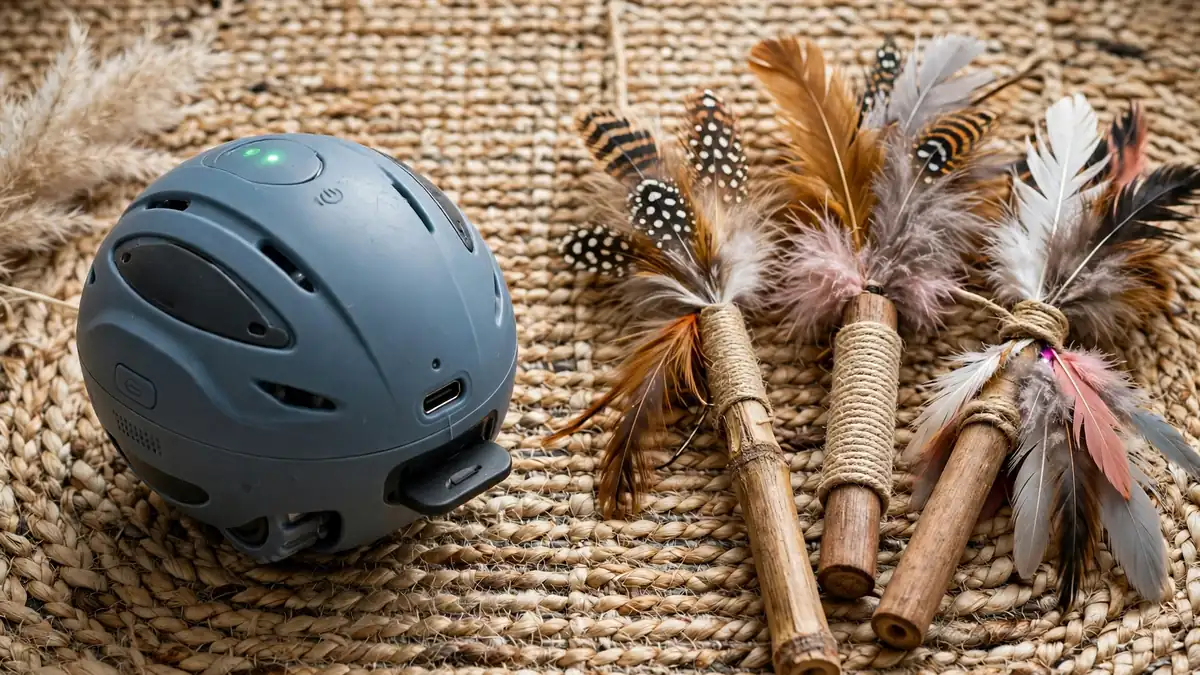
Walk down any pet toy aisle and you will see two very different philosophies of play. On one side: automatic cat toys — battery-powered balls that roll on their own, flopping fish that wiggle, and motion-activated teasers that spring to life. On the other: manual toys — feather wands, teaser sticks, and simple designs powered entirely by you.
Both promise to keep your cat entertained, but they work in fundamentally different ways. This guide compares automatic and manual cat toys head to head: how each type works, their strengths and drawbacks, what to look for in materials and construction, and how to decide which — or which combination — is right for your cat.
How Automatic Cat Toys Work
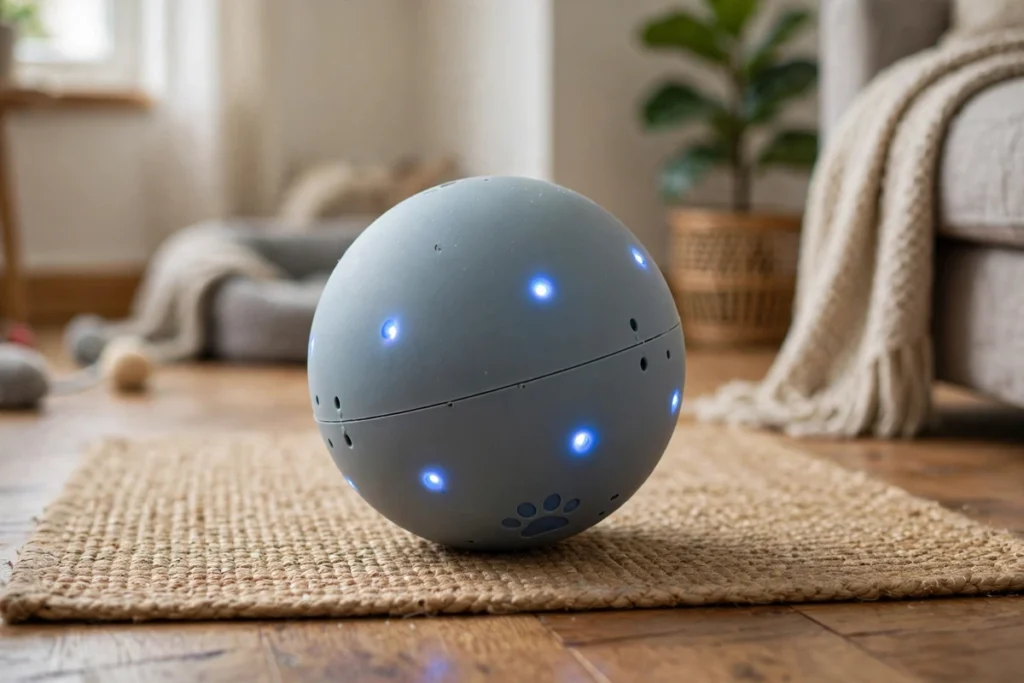
Automatic cat toys are electronic or battery-powered toys designed to move without human input. Common designs include rolling balls that change direction when they bump into furniture, flopping or wiggling plush toys with internal motors, spinning teasers under a fabric cover, and motion-activated toys that switch on when a cat approaches.
Most run on replaceable or rechargeable batteries and offer multiple modes — continuous motion, intermittent bursts, or sensor-triggered play. Timers are common: a toy might run for five or ten minutes, then shut off to rest, sometimes reactivating later. The core idea is simple: unpredictable movement triggers a cat’s chase instinct even when no one is holding the toy.
Pros of Automatic Cat Toys
- Independent entertainment. Automatic toys keep cats engaged when owners are busy, working, or away from home — useful for high-energy cats that want more play than a schedule allows.
- Unpredictable motion. Random direction changes and erratic movements mimic prey behavior, which many cats find irresistible.
- Mental stimulation. Motion-activated and puzzle-style electronic toys add variety that can hold a clever cat’s attention longer than a static toy.
- Convenience. No effort required from the owner; just switch the toy on (or let the sensor do it) and let the cat play.
Cons of Automatic Cat Toys
- No bonding component. The biggest trade-off: automatic toys do not involve you. Shared play strengthens the bond between cat and owner in a way solo toys cannot replicate.
- Battery dependence. Batteries need replacing or recharging, and a dead toy is just an expensive paperweight. Motors also wear out over time.
- Noise. Some electronic toys hum, buzz, or rattle loudly enough to startle timid cats — or to annoy light sleepers in the same room.
- One-trick movement. Once a cat learns a toy’s movement pattern, interest can fade. Many owners report the novelty wearing off within weeks.
- Supervision still needed. Despite the “automatic” label, electronic toys should still be checked regularly for loose parts, exposed battery compartments, or frayed coverings.
How Manual Cat Toys Work
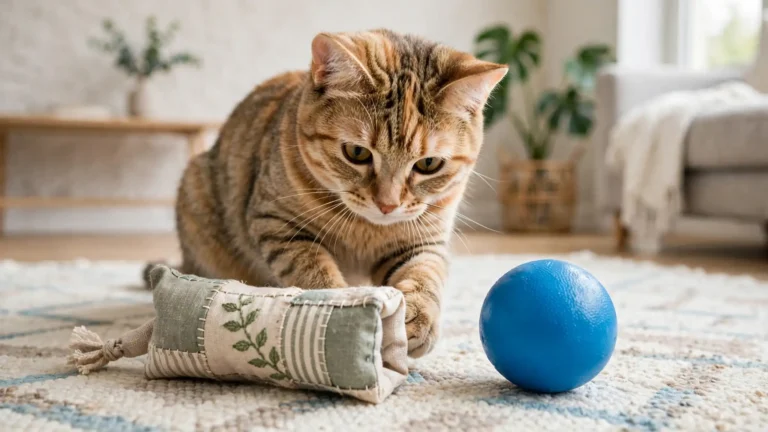
Manual cat toys are the classics: feather wands, fishing-rod teasers, ribbon sticks, and hand-held lures of every description. They have no motors or batteries — the owner provides all the movement, waving, dragging, and flicking the lure to mimic prey.
This simple concept is also their greatest strength. Because you control the toy, you can adapt in real time to your cat’s mood: fast and erratic for a high-energy hunter, slow and creeping for a cautious stalker. No algorithm predicts a cat’s preferences better than an attentive owner watching body language.

Pros of Manual Cat Toys
- Bonding through play. Shared play sessions build trust and deepen the relationship between you and your cat — widely considered one of the best parts of cat ownership.
- Fully adaptable. You can change speed, direction, and style instantly based on what excites your cat in the moment.
- Simple and affordable. No batteries, no motors, no charging cables. Most manual toys cost little and last well with basic care.
- Great exercise. Active wand play gives cats vigorous physical workouts — running, leaping, pouncing — that few automatic toys can match.
- Quiet. No motors means no buzzing to startle sensitive cats or disturb the household.
Cons of Manual Cat Toys
- Requires your time. The obvious limitation: manual toys only work when you pick them up. Busy owners may struggle to fit in enough sessions.
- Effort and consistency. Keeping a cat engaged for a full play session takes energy and creativity, especially with cats that lose interest quickly.
- Storage needed. Wand toys with long strings should be stored out of reach between sessions, which requires a dedicated spot.
Head-to-Head Comparison
| Feature | Automatic toys | Manual toys |
|---|---|---|
| Human involvement | None needed | Required |
| Bonding benefit | Low | High |
| Exercise intensity | Moderate | High (with active owner) |
| Mental stimulation | Moderate–high | High |
| Cost over time | Higher (batteries, replacements) | Lower |
| Noise | Can be noisy | Silent |
| Novelty lifespan | Often fades as patterns repeat | Stays fresh with owner creativity |
| Best for | Busy owners, independent cats | Bonding, high-energy play |
Materials and Build Quality: What to Check
Whichever type you lean toward, construction quality determines safety and lifespan.
Automatic toys: Check that battery compartments close securely with screws or locking tabs — never a compartment a cat could pry open. Motors should be enclosed, moving parts smooth with no pinch points, and outer coverings tightly stitched. Look for an automatic shut-off feature, which protects both the motor and a cat that plays too long. Avoid toys with a strong chemical smell when unpacked.
Manual toys: Examine where the string meets the rod and the lure — these joints take the most stress and should be reinforced, not simply glued. Lures should use non-toxic, pet-safe materials with secure stitching and no small detachable parts. Rods should flex without snapping; handles should be comfortable to grip for extended sessions.
For both types, inspect toys regularly and retire anything with frayed cords, loose feathers, exposed stuffing, cracked plastic, or damaged battery covers.
Which Is Better? Matching Toys to Your Cat
The honest answer: neither type wins outright — they serve different needs, and most cats do best with both.
Choose automatic toys if: your schedule is packed, your cat is home alone for long stretches, or your cat is highly independent and enjoys solo play. They are excellent additions that add enrichment between your play sessions.
Choose manual toys if: bonding matters to you (it should), your cat is high-energy and needs vigorous exercise, or your cat is timid and startled by motorized noise. For most cats, interactive wand play remains the gold standard of feline enrichment.
Choose both if: you want the complete package. Use manual wand sessions as the centerpiece of daily play — that shared time is irreplaceable — and keep one or two automatic toys for independent entertainment during the day. Rotate the collection regularly, since cats lose interest in toys that are always available.
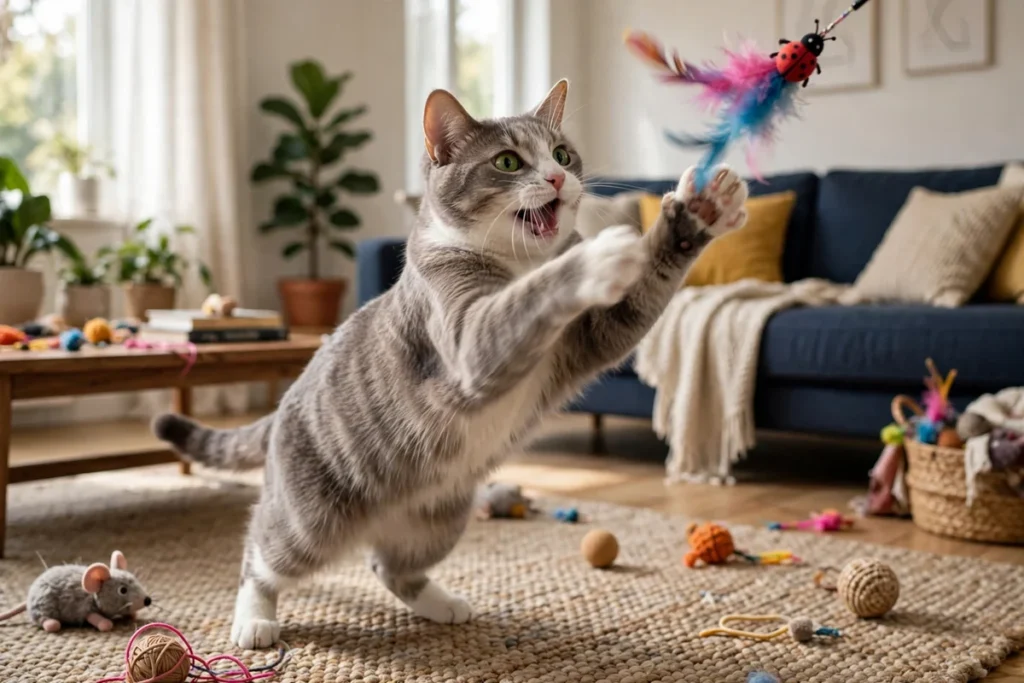
Watch your individual cat. Some cats ignore every electronic gadget but go wild for a simple feather wand; others are mesmerized by a rolling ball and merely tolerate wand play. There is no universal winner — the best toy is the one your cat actually plays with.
Budget is another practical factor. A good manual wand toy costs very little and can last for months with basic care, while automatic toys cost more up front and keep costing through batteries or recharging. If you are equipping a new cat’s toy box from scratch, starting with affordable manual toys and adding one automatic toy later is a sensible, low-risk way to discover your cat’s preferences without overspending.
For more guidance on specific toy types, explore our Pet Products guides, where we break down everything from wand toys to puzzle feeders.
Related Reading on MyPetsMyLove
- Best Wand Toys for Cats: Styles, Materials and Features
- Interactive Cat Toys: How to Choose the Right Playtime Accessories
- Cat Puzzle Toys: How They Make Indoor Play More Interesting
- Pet Products hub page
- MyPetsMyLove homepage
- Cats & Kittens hub page
References
- The Humane Society of the United States — cat enrichment and play resources
- American Association of Feline Practitioners (AAFP) — feline environmental needs guidelines
Frequently Asked Questions
Are automatic cat toys safe to leave with my cat unsupervised?
Automatic toys are designed for independent play, but supervision habits still matter. Inspect electronic toys regularly for loose parts, damaged battery compartments, or frayed coverings, and remove any toy that shows wear. Choose designs with securely closed battery compartments.
Do cats prefer automatic or manual toys?
It varies by individual. Many cats show the strongest response to manual wand toys because the movement adapts to them in real time, while others love the unpredictability of automatic toys. Offering both and observing your cat’s preference is the most reliable approach.
How long do automatic cat toy batteries last?
Battery life varies widely by design and usage — some toys run for hours across many sessions, others drain faster with continuous motion. Rechargeable models save on replacement costs over time. Check product descriptions for stated runtimes, but treat them as estimates.
Can manual toys provide enough exercise on their own?
Yes. Active wand play — running, leaping, and pouncing — gives most cats a thorough workout. Many behavior resources recommend one or two interactive sessions daily of about 10–15 minutes each, adjusted to the cat’s age and energy level.
Why did my cat lose interest in its automatic toy?
Cats habituate to repeated movement patterns, so the novelty of an automatic toy often fades. Rotating toys in and out of availability every week or two renews interest, as does pairing automatic toys with regular interactive wand sessions.
Are electronic cat toys too noisy?
Some are. Motors can hum or buzz loudly enough to startle timid cats. If your cat is noise-sensitive, look for quieter designs or lean on silent manual toys, which work for every temperament.
Conclusion
Automatic and manual cat toys are not rivals — they are teammates. Manual wand toys deliver the bonding, adaptability, and vigorous exercise that make playtime special, while automatic toys fill the gaps with independent enrichment when life gets busy. Together, with regular rotation, they cover everything a cat needs from play.
Start with your cat: watch how it plays, note what excites it, and build a small collection around those preferences. For deeper dives into specific toy types, browse our Pet Products guides and explore more on the MyPetsMyLove homepage.
Disclaimer
Disclaimer
MyPetsMyLove dot com is an independent informational website covering pet species breeds characteristics activities positive training bonding grooming and responsible ownership
We are not a veterinary clinic medical provider pet food provider or veterinary nutrition service
We do not provide veterinary diagnosis medical advice treatment food recommendations or nutritional guidance
For pet health medical or food related concerns consult a qualified veterinarian or appropriate professional directly
Independent clinics listed on this website are not owned or operated by MyPetsMyLove unless explicitly stated
Verify third party credentials services fees and availability independently
We do not guarantee third party services or outcomes
To the extent permitted by applicable law we disclaim responsibility for independent third party services
Nothing in this notice excludes liability that cannot legally be excluded
The disclaimer does not make prohibited content acceptable

2 Comments