
Best Interactive Ball Toys for Indoor Cats

Of all the toys you can buy for a cat, the humble ball might be the most effective. It rolls, it bounces, it disappears under furniture at the worst possible moment — and it triggers exactly the chase instincts that indoor cats need to exercise. But not all ball toys are equal: materials, size, sound, and motion features all change how a cat responds to them.
This guide compares the main types of interactive ball toys for indoor cats — simple rolling balls, motion-activated electronic balls, ball-track circuits, and light-up designs — by features, materials, and sizes, so you can choose what suits your cat and your home. For the bigger picture on feline play, start with our best cat toys guide.
Why Balls Are a Perfect Toy for Indoor Cats
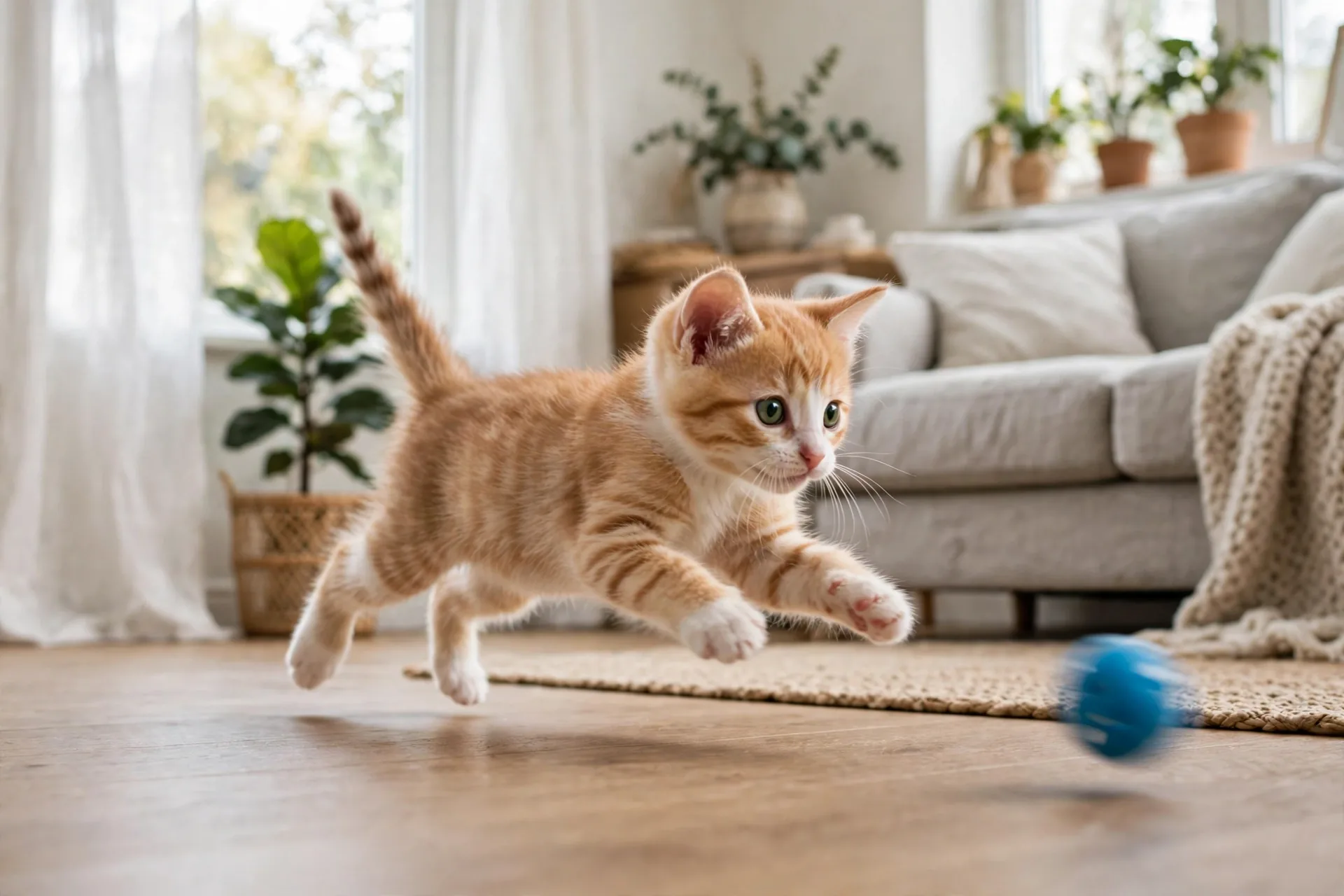
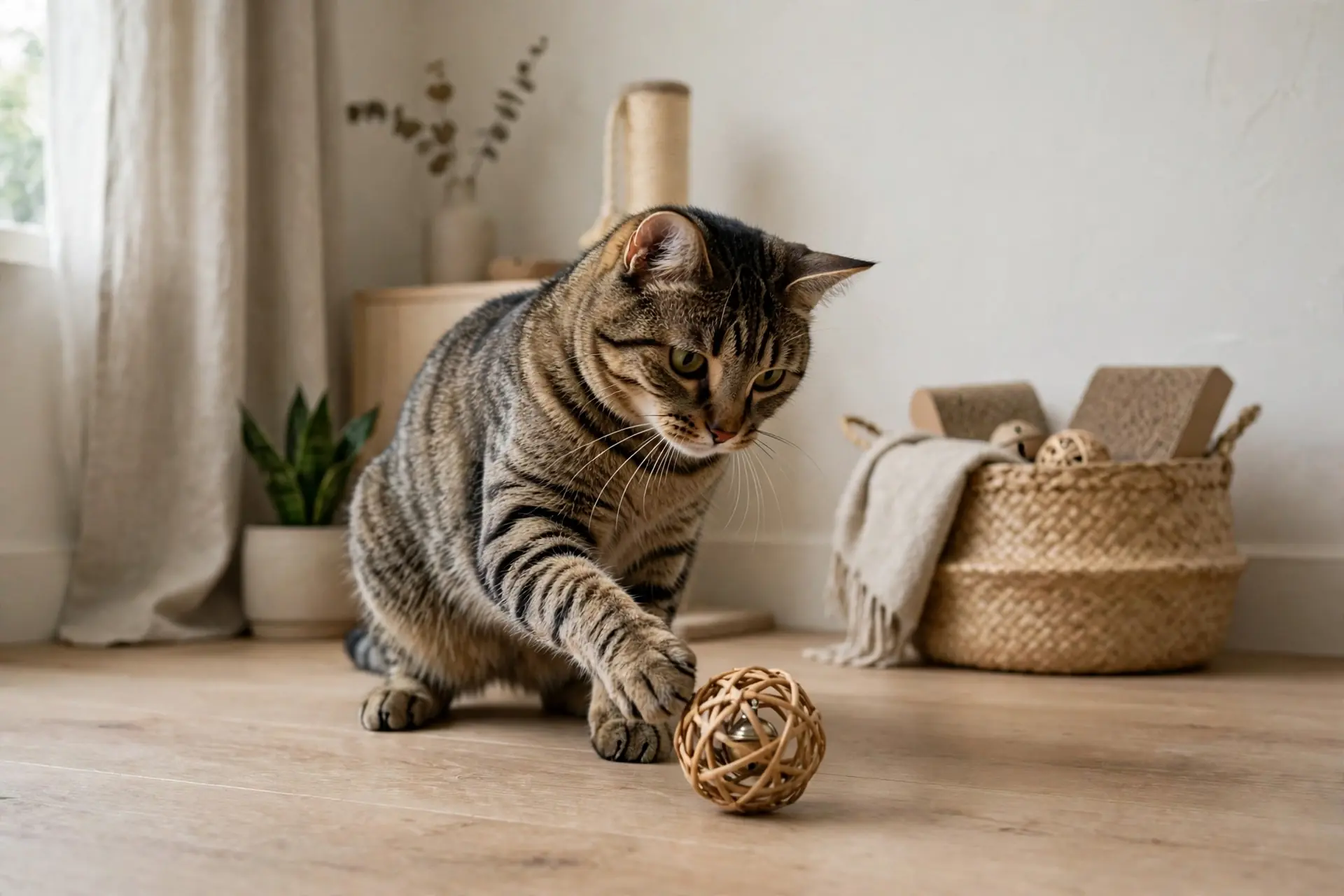
A cat’s play is practice hunting. The classic sequence — stalk, chase, pounce, catch — is hardwired, and a rolling ball recreates the most exciting part: an object that moves away unpredictably and demands pursuit. Animal welfare organizations like the Humane Society of the United States emphasize that indoor cats need daily interactive play to stay active and engaged, and few toys deliver that as simply as a ball.
Balls also solve the solo-play problem. Unlike wand toys, which need a human at the other end, a ball keeps working after you put it down — a nudge sends it rolling, and the chase is on. For owners who work during the day, leaving a few well-chosen balls around gives an indoor cat legitimate entertainment between human-led play sessions.
Types of Interactive Ball Toys
Simple Rolling Balls
The classic cat ball is a lightweight sphere, usually 1.5 to 2.5 inches across, designed to roll with the slightest touch. Common designs include:
- Lattice or cage balls: hollow plastic balls with cut-out patterns — light, bouncy, and easy for paws to hook.
- Crinkle balls: thin, crinkly material that makes noise when batted, adding an auditory trigger many cats love.
- Foam and soft balls: quiet, lightweight options that will not damage furniture or startle noise-sensitive cats.
- Felt and pompom balls: soft wool or felt spheres that roll gently and are easy for kittens to carry.
Simple rolling balls are inexpensive, come in multi-packs, and suit almost every cat. Their main limitation is predictability — some cats lose interest once the novelty fades, which is where rotation (covered below) helps.
Motion-Activated Electronic Balls
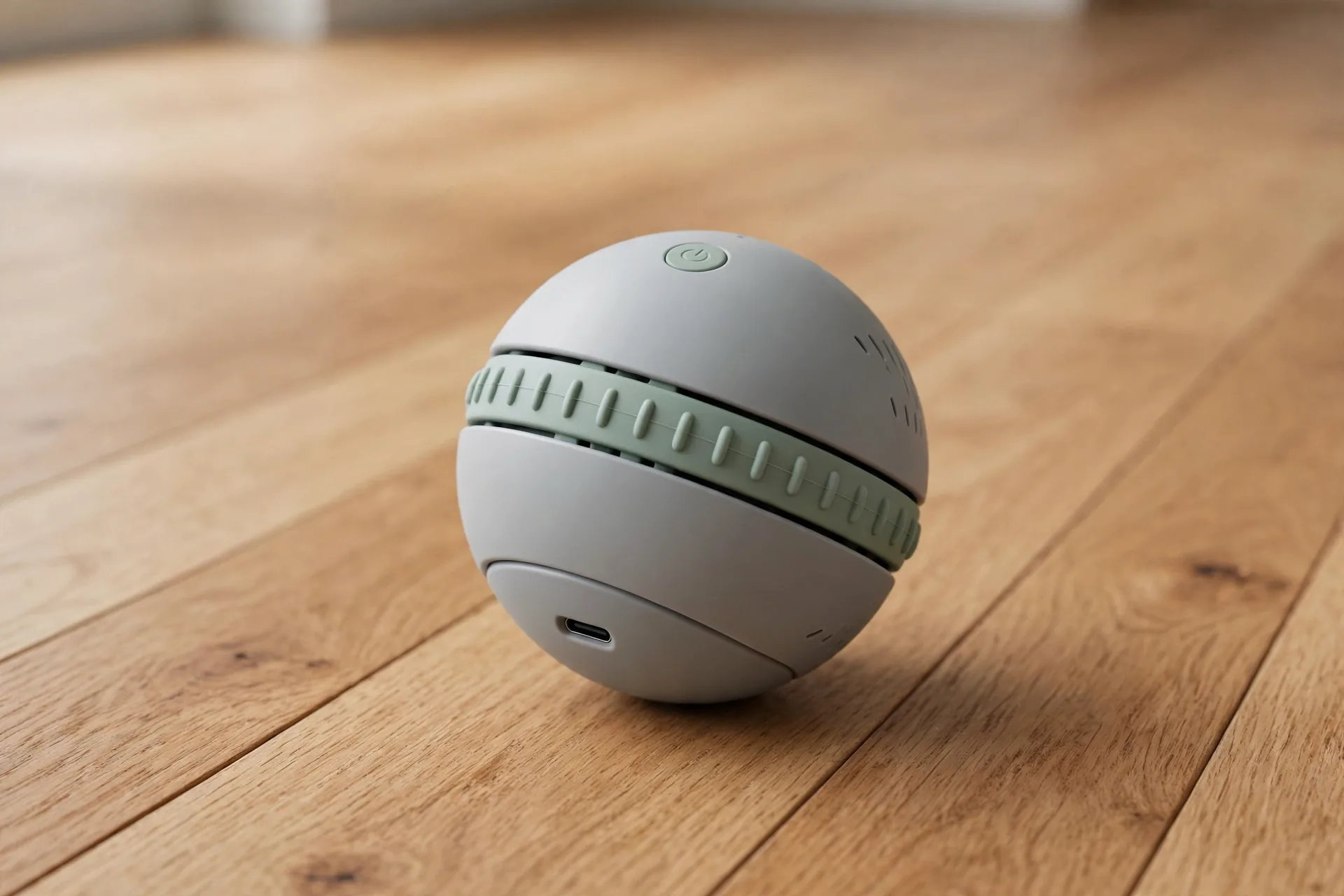
Electronic ball toys contain a small battery-powered motor that makes the ball roll, wobble, or change direction on its own — sometimes when nudged, sometimes on a timer. For a cat, a ball that moves by itself is far more intriguing than a passive one, and these toys can hold attention longer during solo play.
Features to compare include run time per charge, whether the ball pauses automatically, noise level of the motor, and how the shell opens for battery changes. As with all electronic toys, supervise play and check that battery compartments close securely — our comparison of automatic vs manual cat toys covers the trade-offs in detail.
Ball-Track Circuits
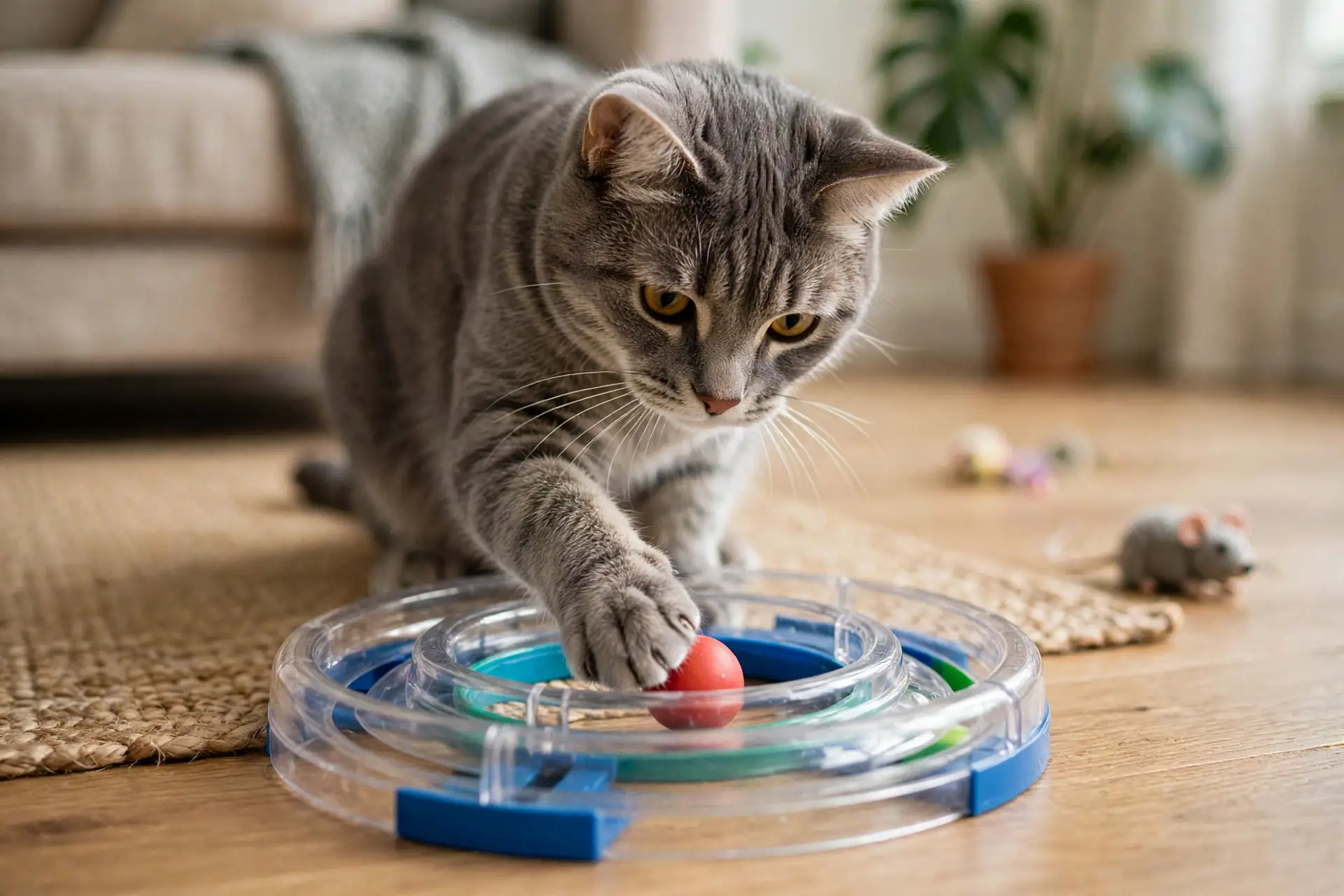
A ball-track toy pairs a captive ball with a circular (sometimes multi-level) track. The cat bats the ball around the track, but the ball can never escape — which means it never rolls under the refrigerator. These are among the most popular solo-play toys for good reason: they combine the chase trigger with a puzzle-like element, since the cat learns to hook the ball through the track openings.
Tracks come in single-circle, figure-eight, and tower designs with two or three stacked levels. Sturdier bases suit vigorous players; lighter ones are fine for gentle batters. Many owners pair a track toy with the ideas in our interactive cat toys guide for a fuller enrichment setup.
Light-Up and Textured Balls
Some balls add flashing lights, varied textures, or internal bells and rattles to the basic roll. Light-up balls can fascinate cats in dim rooms, while textured surfaces give paws and teeth (during supervised play) more to grip. Sound features split cats into fans and skeptics — bell balls delight some cats and annoy others, and crinkle textures tend to be the safer crowd-pleaser.
Ball Toy Materials Compared
Material determines how a ball moves, how loud it is, and how long it lasts. Here is how the common options compare:
| Material | Typical designs | Noise level | Best for | Watch-outs |
|---|---|---|---|---|
| Hard plastic | Lattice balls, track balls | Medium–high | Bouncy, energetic play on hard floors | Can be loud on tile; check for cracks over time |
| Crinkle film | Crinkle balls | High | Cats motivated by sound | Supervise; discard if torn |
| Foam / EVA | Soft foam balls | Low | Quiet homes, apartments, nighttime play | Determined chewers may tear pieces off |
| Felt / wool | Pompom balls | Very low | Gentle play, kittens, carrying toys around | Can unravel with heavy chewing |
| Plush fabric | Soft stuffed balls | Low | Cuddly carry toys, less active cats | Seams should be sturdy; check stitching |
| Rubber / silicone | Bouncy balls | Medium | Durable, washable options | Choose solid designs with no small detachable parts |
No single material wins for every cat. Many owners keep a small assortment — a quiet foam ball for nighttime, a crinkle ball for energetic sessions — and let the cat’s preferences decide.
Size and Design Considerations
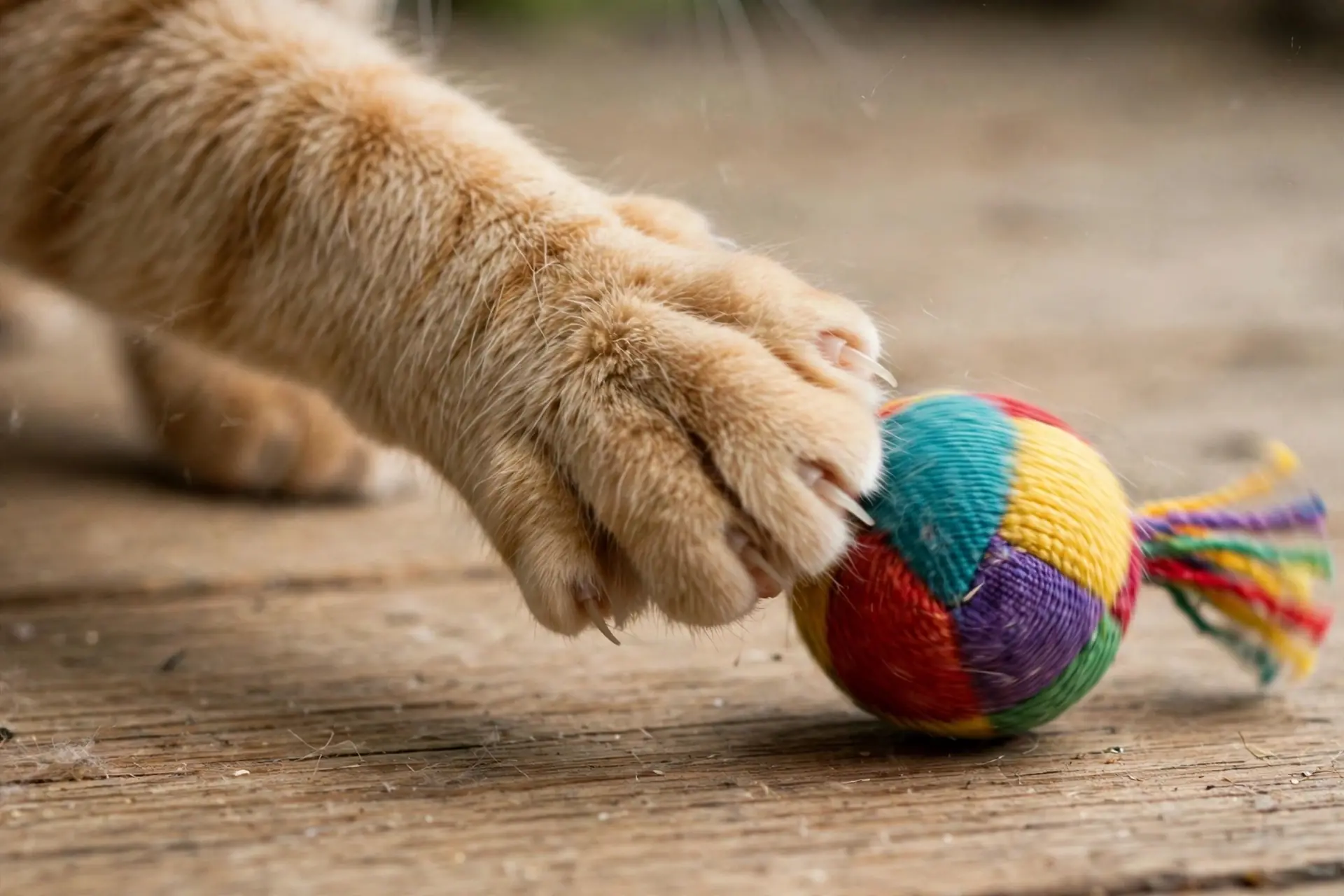
Size matters more than most buyers expect. A ball around 1.5 to 2 inches suits most adult cats — large enough to bat and chase, small enough to hook with a paw. Kittens do well with lighter, smaller balls they can carry. Very small balls (under about an inch) are best avoided for enthusiastic players, since anything a cat could fit entirely in its mouth is a poor choice for unsupervised play.
Design details worth comparing:
- Weight: lighter balls roll farther with less effort; heavier balls suit cats who like to wrestle.
- Bounce: high-bounce balls add unpredictability; low-bounce balls stay controllable in small rooms.
- Noise: consider your household — crinkle and bell balls entertain cats but can grate during late-night play sessions.
- Battery access: on electronic balls, the compartment should close firmly and require deliberate effort to open.
- Replaceability: balls are consumables. Designs sold in multi-packs make rotation and replacement painless.
Getting the Most Out of Ball Play
A few simple habits multiply the value of any ball toy:
- Rotate the selection. Put out two or three balls at a time and swap them every few days. A “new” old toy often triggers fresh interest — the same principle behind our cat puzzle toy rotation advice.
- Play the hallway game. Roll a ball down a hallway or across a room so your cat can chase at full sprint. Short, energetic sessions beat long, dull ones.
- Add hiding spots. Roll balls so they vanish behind furniture edges or under a rug corner — the reappearance restarts the stalk-chase cycle.
- Combine toy types. Alternate ball sessions with wand play or puzzle feeders across the week for varied enrichment.
- Let the cat win. End interactive sessions by letting your cat “catch” the ball, satisfying the hunt sequence.
- Try the stairs (with soft balls). Rolling a lightweight foam ball down carpeted stairs creates a thrilling multi-level chase. Use only soft balls, and supervise.
- Make it a routine. A short ball session at the same time each day builds a ritual cats look forward to — many owners find an evening play session becomes the highlight of their cat’s day.
Matching Ball Toys to Your Cat’s Play Style
Cats have distinct play personalities, and the best ball for each differs:
- The Chaser lives for the sprint. Lightweight lattice or foam balls that roll far and fast down hallways are ideal. Avoid heavy balls that stop quickly.
- The Batter prefers swatting from a comfortable position. Ball-track circuits are perfect — the ball stays in reach and the batting never ends.
- The Carrier likes to pick toys up and parade them around. Small, soft felt or plush balls fit the bill; hard plastic balls frustrate carriers.
- The Wrestler grabs with all four paws and bunny-kicks. Slightly larger, soft-but-sturdy balls (foam or plush) stand up to the assault better than thin crinkle designs.
Most cats blend two styles. Watch a few play sessions before buying in quantity — a five-dollar assortment tested against your cat’s real preferences beats a single expensive guess every time.
Limitations and Sensible Precautions
Ball toys are simple, but a few precautions keep play safe and fun:
- Supervise electronic toys and inspect any toy regularly for wear — discard balls with torn coverings, cracked shells, or loose parts.
- Match the toy to the player. Heavy chewers need sturdier designs; tiny, light balls suit gentle batters and kittens.
- Mind the noise. If a ball’s bell or crinkle sound stresses a shy cat, swap it for a quiet foam or felt option.
- Do not expect miracles. No toy replaces human interaction — balls are at their best as part of a routine that includes daily interactive play with you.
Quick Buying Checklist
- Size appropriate for your cat (about 1.5–2 inches for most adults)
- Material suits your home’s noise tolerance and flooring
- No small detachable parts; sturdy construction
- For electronic balls: secure battery compartment, sensible run time
- Multi-pack or replaceable design for easy rotation
- Matches your cat’s play style (chaser, batter, carrier, or wrestler)
Final Thoughts on Ball Toys for Indoor Cats
The best interactive ball toy is the one your cat actually chases — and that varies by individual. Start with an inexpensive assortment across materials, watch which designs earn repeat play, and build from there. Combined with rotation, a few minutes of hallway fetch, and your own participation, simple balls deliver some of the highest play value per dollar of any cat toy category.
To keep building your cat’s toy collection, explore our best cat toys guide, compare automatic vs manual options, and browse the Pets Products section for more enrichment ideas.
Related Reading on MyPetsMyLove
- Best cat toys guide
- Interactive cat toys guide
- Automatic vs manual cat toys
- Pet Products hub page
- MyPetsMyLove homepage
- About Us page
References
- The Humane Society of the United States — cat enrichment and play guidance
- American Association of Feline Practitioners (AAFP) — feline environmental enrichment resources
Frequently Asked Questions
What makes ball toys good for indoor cats?
Balls trigger a cat’s natural stalk-chase-pounce sequence: they roll unpredictably and invite pursuit. That makes them one of the simplest ways to give an indoor cat active play, including solo play when owners are busy.
Are electronic motion-activated ball toys safe for cats?
They can be a good option with sensible precautions: supervise play, check that battery compartments close securely, and inspect the toy regularly for wear. Choose sturdy designs with no small detachable parts, and discard damaged toys.
What size ball toy is best for a cat?
About 1.5 to 2 inches suits most adult cats — large enough to bat and chase, small enough to hook with a paw. Kittens do well with lighter, smaller balls. Avoid very small balls that a cat could fit entirely in its mouth during unsupervised play.
Do cats get bored of ball toys?
They can, which is why rotation works so well. Keep two or three balls out at a time and swap them every few days — a returning toy often feels new again. Combining ball play with wand toys and puzzle toys also keeps things fresh.
Can kittens play with ball toys?
Yes. Kittens love lightweight balls they can chase and carry, such as soft foam or felt pompom balls. Start with quiet, gentle designs and supervise play, especially with very young kittens.
Are ball-track toys better than loose balls?
Neither is strictly better — they serve different purposes. Track toys keep the ball permanently in play (never lost under furniture) and add a batting challenge, while loose balls allow full-room chases. Many owners keep both.
Conclusion
Ball toys prove that the best cat enrichment is often the simplest: a sphere that rolls away is all it takes to wake up a cat’s hunter. By comparing types — rolling, electronic, track, and light-up — and matching materials and sizes to your cat’s style, you can build a small collection that delivers daily play for a long time.
Keep exploring with our best cat toys guide, dive into interactive cat toys for more ideas, and browse the Pets Products section — your cat’s next favorite toy is waiting.
Disclaimer
Disclaimer
MyPetsMyLove dot com is an independent informational website covering pet species breeds characteristics activities positive training bonding grooming and responsible ownership
We are not a veterinary clinic medical provider pet food provider or veterinary nutrition service
We do not provide veterinary diagnosis medical advice treatment food recommendations or nutritional guidance
For pet health medical or food related concerns consult a qualified veterinarian or appropriate professional directly
Independent clinics listed on this website are not owned or operated by MyPetsMyLove unless explicitly stated
Verify third party credentials services fees and availability independently
We do not guarantee third party services or outcomes
To the extent permitted by applicable law we disclaim responsibility for independent third party services
Nothing in this notice excludes liability that cannot legally be excluded
The disclaimer does not make prohibited content acceptable
4 Comments