
Interactive Cat Toys: How to Choose the Right Playtime Accessories
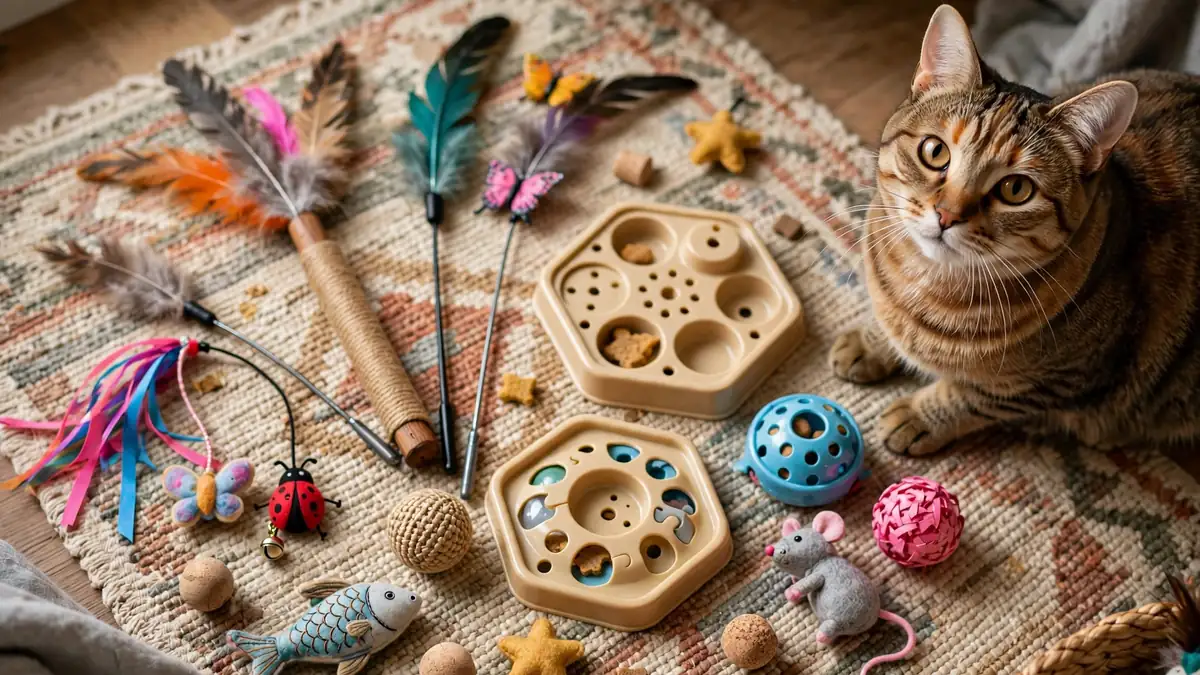
Play is a natural part of a cat’s day. In the wild, cats stalk, chase, and pounce — and interactive toys let indoor cats express those same instincts in a safe, fun way. Unlike toys that sit untouched in a corner, interactive toys are designed for play sessions you share with your cat, strengthening your bond while giving your cat the exercise and mental stimulation it needs.
With so many designs on the market — feather teasers, wand toys, puzzles, and more — choosing the right ones can feel overwhelming. This guide breaks down the main types of interactive cat toys, what to look for in materials and construction, how to play safely, and how to match toys to your cat’s personality.
What Are Interactive Cat Toys?
Interactive cat toys are toys designed for shared play between a cat and its owner, as opposed to solo toys a cat bats around alone. They typically involve something you move, dangle, or control — a feather on a string, a lure on a wand, a puzzle you set up — so your cat can chase, stalk, and “catch” it.
These toys serve several purposes at once. They provide physical exercise, which is especially valuable for indoor cats. They offer mental enrichment, since tracking and capturing a moving target engages a cat’s problem-solving instincts. And perhaps most importantly, they create positive shared experiences that deepen the bond between you and your cat. Many behavior experts recommend regular interactive play sessions as part of a cat’s daily routine.
Types of Interactive Cat Toys
Feather Teaser Toys
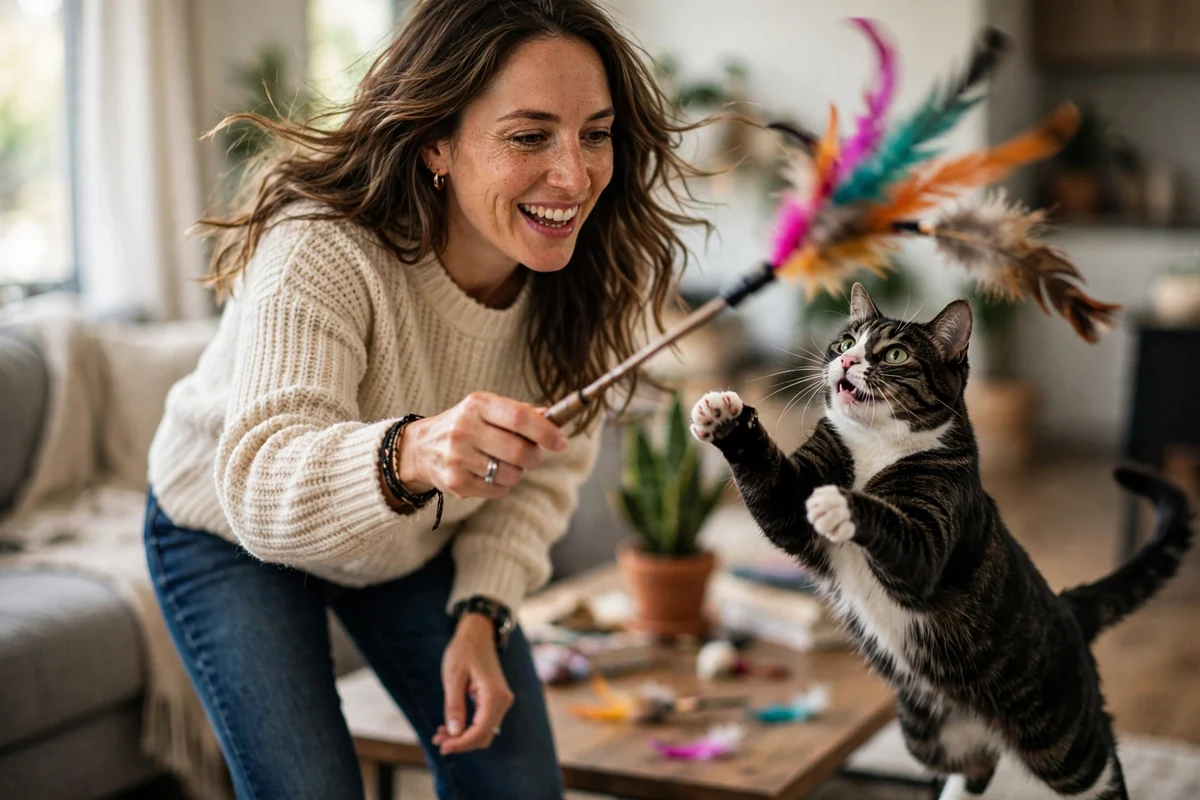
Feather teasers are short sticks or handles with bunches of feathers attached, sometimes mixed with ribbons or fabric strips. Waved gently through the air, they mimic the fluttering of birds — one of the most irresistible triggers for a cat’s chase instinct. They are simple, affordable, and effective for cats of all ages.
When comparing feather teasers, look at how securely the feathers are attached and whether replacement heads are available, since enthusiastic play wears feathers out. Shorter handles suit close-up play; the feathers do most of the work.

Wand and Fishing-Rod Toys
Wand toys — also called fishing-rod toys — pair a long, flexible rod with a string and a dangling lure, which may be feathers, fabric, or a small plush shape. The extra length lets you create wide, sweeping movements that encourage running, leaping, and dramatic pounces, all while keeping your hands at a safe distance from claws.
Look for flexible, break-resistant rods and lures made from pet-safe materials with secure stitching. Because the string is long, these toys should always be used under supervision and stored out of reach when playtime ends.
Treat Puzzle Toys
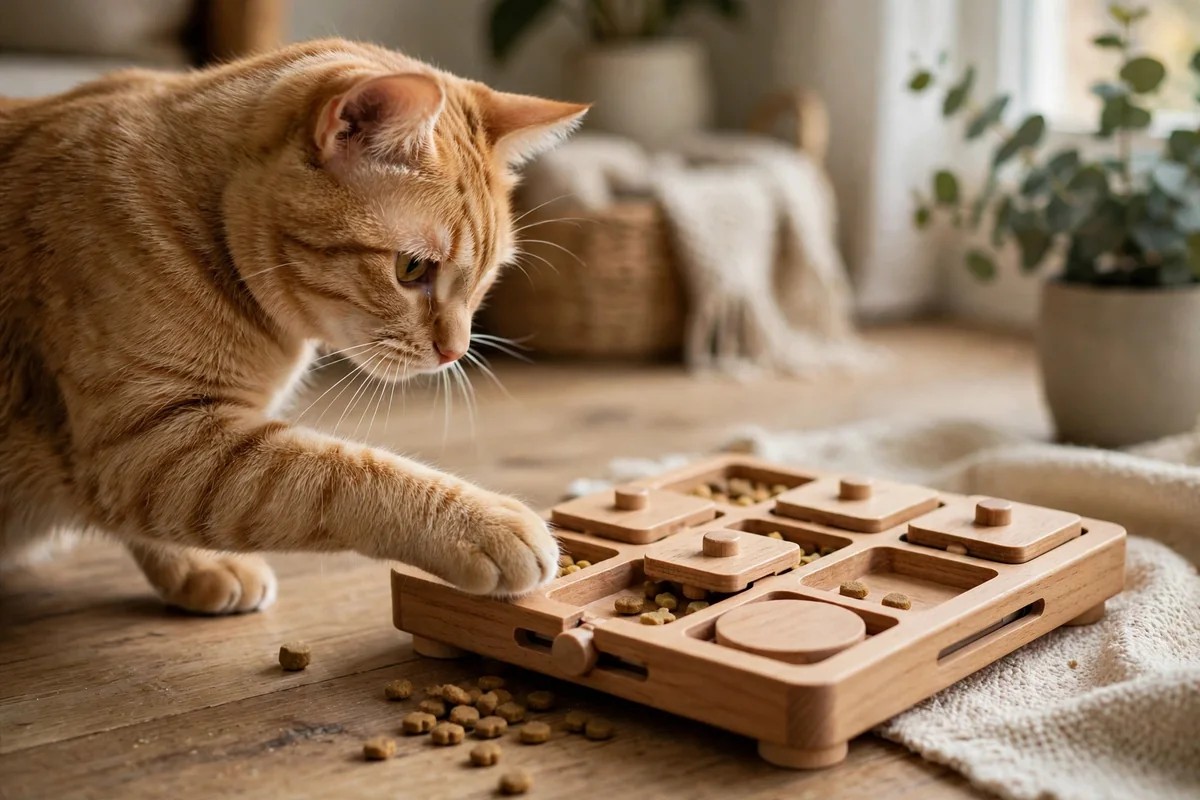
Treat puzzles challenge cats to think as well as move. They feature sliding panels, spinning layers, lifting cups, or hidden compartments that a cat must manipulate to reveal a treat inside. They range from simple one-step designs for beginners to multi-stage puzzles for experienced players.
When choosing a puzzle, consider your cat’s experience level — start easy and work up — and look for food-safe materials and designs that come apart for cleaning. Puzzles are an excellent option for clever cats that lose interest in simpler toys quickly.
Laser Pointers
Laser pointers project a small dot of light that darts across floors and walls, triggering an intense chase response in many cats. They are inexpensive, require no setup, and provide vigorous exercise — especially appealing for high-energy cats.
The main consideration is that a cat can never actually catch the light. A good practice is to end laser sessions by tossing a tangible toy your cat can pounce on and “capture.” Never shine the beam toward a cat’s eyes, and choose models with a simple on/off button you control.
Electronic Motion Toys
Battery-operated toys move, wiggle, spin, or pop up on their own — some run continuously, others activate on a timer or when they sense motion. They can entertain a cat during independent play, but they also work well as interactive toys when you join in and guide the action.
Check that battery compartments close securely and that moving parts are enclosed or soft. As with all electronic toys, supervise play and inspect the toy regularly for wear.
Ribbon and String Teasers
Ribbon teasers use flowing strips of fabric or ribbon instead of feathers, creating an unpredictable fluttering motion that appeals to visually oriented cats. They are lightweight, inexpensive, and easy to wave in enticing patterns.
The same supervision rule applies as with wand toys: ribbons and strings are for interactive play only and should be put away afterward. Choose designs where ribbons are firmly anchored to the handle.
Materials and Build Quality
A well-made interactive toy lasts longer and is safer to use. Here is what to evaluate when comparing options:
Lure materials. Feathers, fabric, felt, and plush are common. Natural-look feathers tend to attract the strongest response, while fabric and felt hold up longer under rough play. Avoid lures with glued-on small parts that could detach.
Rods and handles. Wood, plastic, and fiberglass rods each have trade-offs: wood feels sturdy, plastic is lightweight, and fiberglass offers flexibility. Whatever the material, the rod should flex without snapping and the handle should be comfortable to grip.
Strings and cords. Braided cords generally outlast thin strings. Check where the cord meets the rod and the lure — these joints take the most stress and should be reinforced.
Stitching and seams. On plush lures and fabric toys, tight, even stitching without loose threads indicates better construction. Give seams a gentle tug in the store or when the toy arrives.
Material safety. Look for products described as using non-toxic, pet-safe materials, and avoid toys with a strong chemical smell when unpacked.
Safety Tips for Interactive Play
Interactive toys are safe when used as intended. A few simple habits keep playtime worry-free:
- Supervise string play. Any toy with a string, ribbon, or cord should only be used while you are actively playing, then stored where your cat cannot reach it.
- Inspect toys regularly. Retire toys with frayed strings, loose feathers, exposed stuffing, or cracked plastic before they become hazards.
- Match toy size to your cat. Very small lures can be a concern for large, enthusiastic cats; choose lures too big to be swallowed.
- Watch energy levels. End sessions while your cat is still having fun rather than pushing to exhaustion — most cats signal they are done by walking away or lying down.
- Store toys properly. A dedicated toy box or drawer keeps interactive toys in good condition and makes them feel “new” each time they appear.
How to Choose the Right Interactive Toys
With the basics covered, here is how to narrow your choices to the toys your cat will actually love:
Observe your cat’s play style. Does your cat stalk and ambush? Feather teasers and wand toys are ideal. Prefer batting and wrestling? Look for sturdy lures. Love problem-solving? Start with a treat puzzle.
Consider age and energy. Kittens and young adults usually enjoy fast, vigorous wand play. Older or calmer cats may prefer slower-moving teasers and simpler puzzles.
Think about your space. Long wand toys need room to sweep; in a small apartment, shorter teasers and tabletop puzzles may work better.
Rotate your collection. Cats lose interest in toys that are always available. Keeping a small rotation — say, a wand toy, a feather teaser, and a puzzle — and swapping them weekly keeps playtime fresh.
Start with a starter set. If you are buying your first interactive toys, a combination of one wand toy, one feather teaser, and one beginner treat puzzle covers the main play styles and gives you a clear read on what your cat prefers.
For more ideas on equipping your home for play, browse our Pet Products guides.
Related Reading on MyPetsMyLove
- Best Wand Toys for Cats: Styles, Materials and Features
- Cat Puzzle Toys: How They Make Indoor Play More Interesting
- Best Cat Toys: 20 Types Every Cat Owner Should Know About
- Pet Products hub page
- MyPetsMyLove homepage
- About Us page
References
- The Humane Society of the United States — cat enrichment and play resources
- American Association of Feline Practitioners (AAFP) — feline environmental needs guidelines
Frequently Asked Questions
How often should I play with my cat using interactive toys?
Many behavior resources suggest at least one or two interactive play sessions per day, roughly 10–15 minutes each, adjusted to your cat’s age and energy. Consistency matters more than marathon sessions — a short daily routine beats an occasional long one.
Are laser pointers safe for cats?
Laser pointers are widely sold as cat toys and provide great exercise. The main guidance is to never shine the beam into a cat’s eyes and to end sessions with a tangible toy the cat can catch, since the light itself can never be “caught.”
What is the best interactive toy for a kitten?
Kittens typically love wand toys and feather teasers because the movement triggers their developing chase instincts. Choose lightweight lures and keep sessions short, since kittens tire quickly. Always supervise string play.
How do I know when to replace an interactive toy?
Replace toys when you see frayed strings, loose or missing feathers, torn fabric, exposed stuffing, or cracked plastic. A quick inspection before each play session takes only seconds and keeps play safe.
My cat ignores new toys. What should I do?
Try different movement styles — some cats prefer fast, erratic motion while others like slow, creeping movements. Dragging a teaser along the ground like prey, pausing, and letting the cat “stalk” often works better than constant waving. Rotating toys in and out of availability also renews interest.
Do cats get bored with the same toys?
Yes — most cats show less interest in toys that are always available. Rotating a small collection in and out every week or two keeps familiar toys feeling new and maintains your cat’s enthusiasm for playtime.
Conclusion
Interactive cat toys turn everyday play into something you and your cat genuinely share — exercise, mental stimulation, and quality time in one. Start with the classics that match your cat’s play style, prioritize sturdy construction and safe materials, and keep sessions regular and supervised.
Build a small rotation, watch what your cat loves, and expand from there. For more buying guides and playtime ideas, explore our Pet Products guides, learn more about MyPetsMyLove, and visit the MyPetsMyLove homepage for the full collection.
Disclaimer
Disclaimer
MyPetsMyLove dot com is an independent informational website covering pet species breeds characteristics activities positive training bonding grooming and responsible ownership
We are not a veterinary clinic medical provider pet food provider or veterinary nutrition service
We do not provide veterinary diagnosis medical advice treatment food recommendations or nutritional guidance
For pet health medical or food related concerns consult a qualified veterinarian or appropriate professional directly
Independent clinics listed on this website are not owned or operated by MyPetsMyLove unless explicitly stated
Verify third party credentials services fees and availability independently
We do not guarantee third party services or outcomes
To the extent permitted by applicable law we disclaim responsibility for independent third party services
Nothing in this notice excludes liability that cannot legally be excluded
The disclaimer does not make prohibited content acceptable
8 Comments