How to Make Your Cat Like You: 7 Gentle Ways to Win a Cat’s Trust

You walk into the room, and your cat looks at you — then turns away, jumps off the sofa, and hides under the bed. Meanwhile, your friend’s cat climbs straight onto a stranger’s lap within minutes. What is the difference? It is not luck, and it is not that some cats are simply cold. Cats choose their people carefully, and they choose them for reasons you can learn. Once you understand how a cat sees the world, you can become the kind of person a cat wants to be near — and this guide shows you how, one gentle step at a time.
Why Cats Choose Their People
Cats are not like dogs, and that is the first thing to accept. A dog will often greet anyone with enthusiasm, but a cat watches first. A cat’s ancestors were solitary hunters that survived by being careful, and that caution is still part of every house cat today. A cat does not hand out trust on the first meeting — it watches, listens, and decides whether you are safe, predictable, and worth its time.
That is actually good news. It means a cat’s affection is earned, and once it is earned, it is real. The cat that ignores you today is not rejecting you forever — it is simply waiting for proof that you are worth trusting.
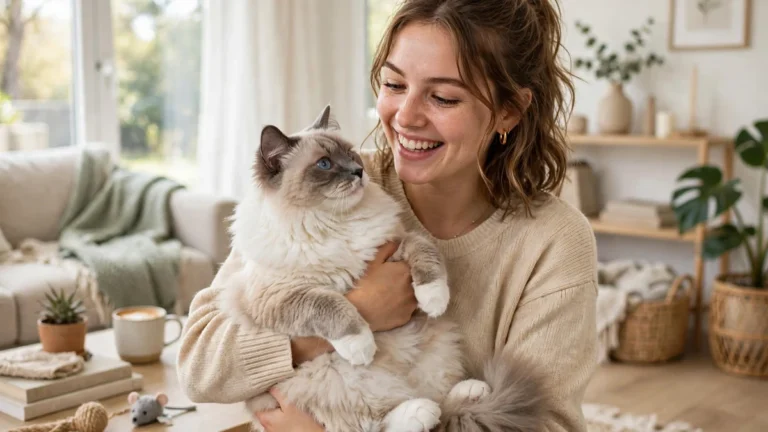
It also helps to remember that every cat has its own personality. Some of the most common cat breeds in American homes, such as the Siamese and the Ragdoll, are famously people-oriented, while other cats are naturally more independent. A shy cat is not a broken cat — it is a cat with a different pace, and the steps in this guide work for all of them, simply faster with some than with others.
Learn to Speak Cat
Before you can make your cat like you, you need to understand what your cat is already telling you. Cat body language is a whole language, and once you can read it, everything becomes easier. A cat communicates with its ears, eyes, tail, whiskers, and posture, and the signals are surprisingly clear once you know what to look for.
A relaxed cat is easy to spot. The ears point forward in their natural position, the eyes are soft and half-closed, the whiskers sit loosely to the sides, and the tail is held low or wrapped calmly around the body.
An unhappy or nervous cat sends very different signals. Ears flattened back, a tail lashing from side to side, wide eyes with large pupils, and a low, tense crouch all mean the cat wants space. The kindest thing you can do in that moment is give it. Stepping back when a cat asks for space is one of the fastest ways to build trust, because it teaches the cat that you listen.
The tail deserves special attention. A tail held straight up with a slight curve at the tip is a friendly greeting, while a tail tucked low means the cat feels unsure.
The Slow Blink: A Cat’s Way of Saying Hello
One of the most charming discoveries in cat behaviour is the slow blink. When a cat looks at you and slowly closes its eyes, then opens them again, it is offering a sign of trust. In cat language, a slow blink says that the cat feels safe enough to close its eyes in your presence — and for a small animal that survives by staying alert, that is a real compliment.
The wonderful part is that you can answer in the same language. Sit near your cat, relax your face, and slowly close your eyes for a second or two, then open them again. Do it softly, without staring or leaning toward the cat. Many cats will return the slow blink right away; others will take a few days, and some will simply look at you, then look away — which, in cat terms, is also a calm and friendly answer.
Make the slow blink a small daily greeting ritual — it costs nothing, takes two seconds, and tells your cat you are not a threat.

Play Is the Fastest Way to a Cat’s Heart
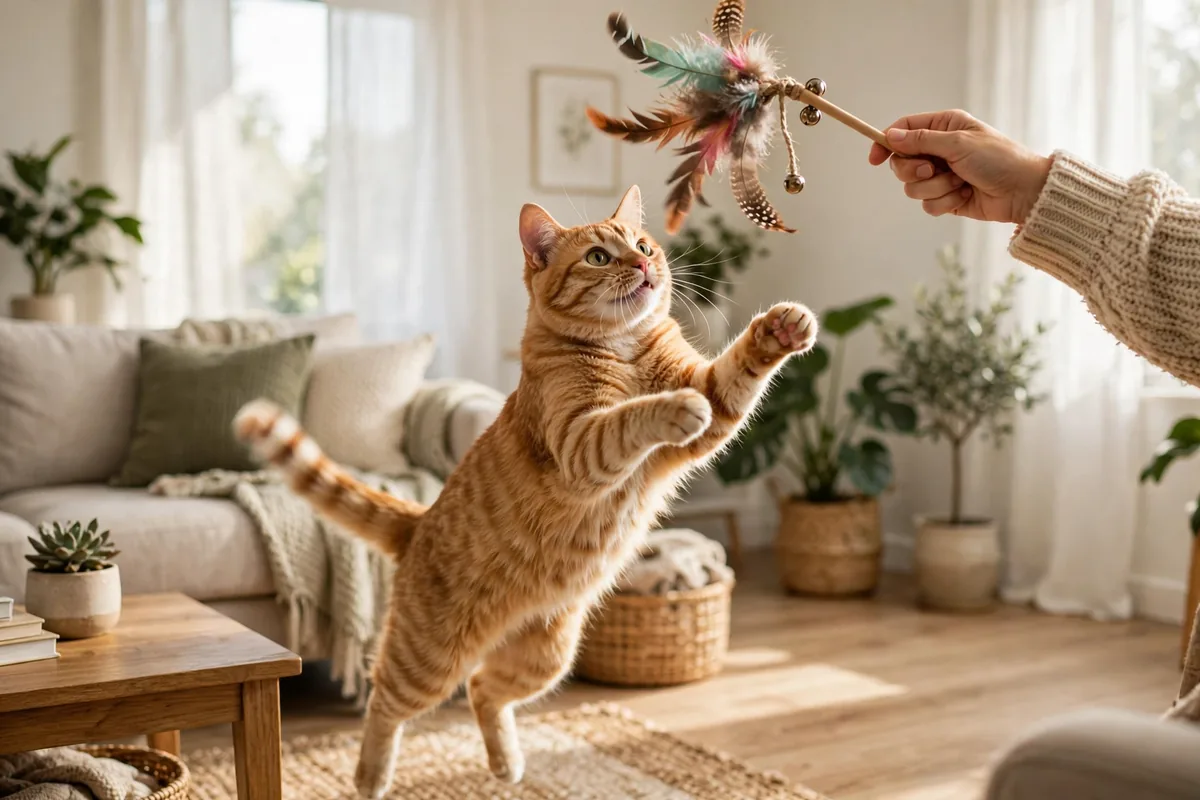
If you want to bond with a cat, play with it — every day, and on the cat’s terms. Play is how cats practise hunting, burn off energy, and learn to trust the creature at the other end of the toy. A cat that plays with you learns that you are fun, predictable, and safe, and that lesson sticks.
The best games are the ones that let the cat chase, stalk, and pounce. A feather wand toy is a classic for a reason: it moves like prey, it keeps your hands at a safe distance, and it lets the cat show off its hunting skills. Short play sessions work better than long ones — ten to fifteen minutes, once or twice a day, is plenty for most cats.
Choosing the right toy matters, and there are many types of cat toys to explore, from wand toys and balls to puzzle toys that keep a clever cat busy. Our guide to the best cat toys covers the ones cats return to again and again, and our guide to interactive cat toys is a good place to start if you are wondering how to choose cat toys for a cat that gets bored easily. The best toy for cat play is usually the one your cat chooses — so watch what it reaches for and offer more of that.
Respect the Boundaries
Here is the secret most people miss: the fastest way to make your cat like you is to stop trying so hard. Cats are drawn to people who respect their space. The person who sits quietly, waits, and lets the cat decide is far more attractive to a cat than the person who reaches out, follows, and picks the cat up.
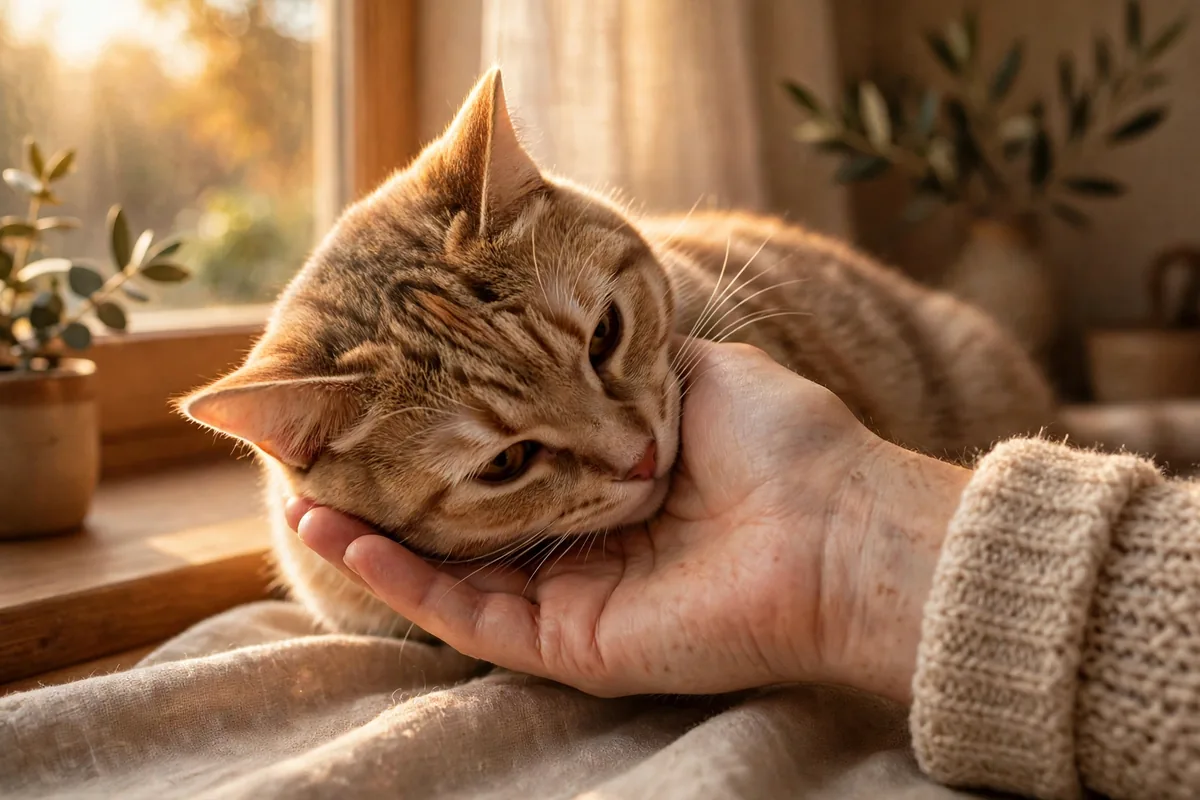
Let your cat come to you. Sit on the floor or on the sofa, stay still, and let the cat approach on its own schedule. When it does come close, offer the back of your hand to sniff — cats greet each other by scent, and this is the polite way to introduce yourself. If the cat rubs its cheek against your hand, you have just been given a great honour: that is a head-butt, and it is how a cat marks you as part of its family.
Most cats enjoy gentle strokes on the cheeks, under the chin, and along the top of the head, and dislike being touched on the belly, tail, or paws. Watch the response: a cat that leans in wants more, and one that twitches or turns away is asking you to stop — and stopping at the first sign is what builds trust. Never pick a cat up against its will or corner it for a cuddle; a cat that can walk away freely will choose to come back far more often than one that feels trapped.
Build a Routine Your Cat Can Trust
Cats love routine. A cat that knows when playtime happens, when the house quiets down, and when you will be sitting in your usual spot is a cat that feels safe. Predictability is comfort to a cat, and comfort is the soil where affection grows.
Keep your daily rhythm steady. Play at roughly the same times each day, keep your cat’s favourite resting spots in the same places, and avoid sudden changes in the home when you can. If you are travelling, our guide to travelling with your cat explains how to keep that sense of safety on the road. And if your cat is new to your home, our guide on how to help a cat adjust to a new home walks through the first days step by step.
Talk to your cat, too. Use a calm, soft voice and say its name often. Cats learn the sound of their name and the tone of their person’s voice, and a familiar voice is a powerful comfort. A gentle greeting when you come home and a quiet goodnight are enough — your cat is listening even when it pretends not to be.

Let Your Cat Come to You
Patience is the hardest part of bonding with a cat, and it is also the most important. Some cats warm up in a day; others take weeks, especially a shy cat or a cat that has recently moved home. That is normal, and it is not a failure. Every day you sit nearby, play gently, and respect the cat’s space, you are building trust — even when it does not look like it.
Make yourself easy to approach. Spend time in the same room as your cat without demanding anything. Read a book, work on your laptop, or simply sit quietly. A cat is far more likely to investigate a calm person who is minding their own business than a person who is staring at it and reaching out. The moment a cat chooses to climb onto your lap on its own is worth every patient minute that came before it.
If you share your home with other people, ask everyone to follow the same gentle rules. A cat that is chased by one person and respected by another will stay confused, and confusion slows trust down. Consistency from the whole household helps the cat relax and bond faster.
Signs Your Cat Likes You
How do you know it is working? Cats show affection in their own quiet ways, and once you know the signs, you will see them everywhere.
A cat that likes you will greet you with its tail held high, rub its head against your legs, and follow you from room to room for no reason at all. It will slow-blink at you, knead its paws on a soft blanket near you, and choose to sleep close to you — sometimes on your lap, sometimes just near your feet. A cat that purrs while it sits beside you, or that rolls over and shows its belly in your presence, is telling you it feels completely safe.
These signs arrive gradually. First the cat stops hiding when you enter the room. Then it starts watching you from across the room. Then it sits a little closer each day. One morning you will look down and find it asleep on your lap, and you will realise the work is done: your cat has chosen you.

Do This, Not That
| Do this | Not that |
|---|---|
| Let the cat approach you first | Chasing the cat for a cuddle |
| Answer with a slow blink | Staring directly into the cat’s eyes |
| Play daily with a wand toy | Using your hands as toys |
| Stroke the cheeks and chin | Reaching for the belly |
| Keep a steady daily routine | Changing the home around suddenly |
| Stop petting at the first warning sign | Pushing on when the cat walks away |
Things to Remember
- Trust takes time: A cat’s affection is earned, not demanded — patience is the fastest route.
- Play builds the bond: Daily play teaches your cat that you are fun and safe.
- Boundaries build trust: Letting a cat walk away freely is what makes it come back.
- Routine is comfort: A steady, predictable day helps a cat feel safe.
- Quiet wins: Soft voices, slow blinks, and calm company.
- Every cat is different: Some bond in a day, others in weeks — both are normal.
Related Reading on MyPetsMyLove
- Best cat toys guide
- How to help a cat adjust to a new home
- Travelling with your cat guide
- Cats & Kittens hub page
- MyPetsMyLove homepage
- About Us page
References
- The Humane Society of the United States — cat behaviour and enrichment resources
- Cat Fanciers’ Association (CFA) — cat breed and care information
- The International Cat Association (TICA) — cat behaviour and breed resources
- Encyclopaedia Britannica — domestic cat reference
Frequently Asked Questions
How long does it take for a cat to like you?
It depends on the cat. A confident, social cat may warm up within a day or two, while a shy cat or a cat that has recently moved home can take several weeks. Daily play, a steady routine, and respecting the cat’s space will speed things up, but patience is the most important ingredient.
Why does my cat ignore me?
A cat that ignores you is usually still deciding whether you are safe. Cats are cautious by nature, and a new person, a new home, or a loud approach can make them keep their distance. Sit quietly nearby, avoid staring, and let the cat come to you — most cats begin to investigate within a few days.
What does it mean when a cat slow blinks at me?
A slow blink is a sign of trust and relaxation. A cat that slowly closes its eyes in your presence is saying it feels safe enough to look away. You can return the slow blink to tell your cat you feel the same way, and many cats will blink right back.
How can I bond with a shy cat?
Spend time in the same room without demanding attention, play daily with a wand toy, and keep your movements slow and your voice soft. Let the cat set the pace, and never chase it or pick it up against its will. A shy cat that is given space and routine will usually begin to approach on its own.
Why does my cat head-butt me?
A head-butt, or bunting, is a cat’s way of marking you with its scent and claiming you as part of its family. It is one of the clearest signs of affection a cat can give. When your cat head-butts your hand, stay still and let it enjoy the moment.
How often should I play with my cat?
Most cats benefit from one or two play sessions a day, each lasting about ten to fifteen minutes. Short, regular sessions are better than one long session, and ending the game while your cat is still enjoying it will make it look forward to the next one.
How do I know if my cat likes me?
Look for the quiet signs: a tail held high when it greets you, slow blinks, head-butts, following you from room to room, kneading nearby, and choosing to sleep close to you. A cat that purrs while sitting beside you or shows its belly in your presence is telling you it feels safe and happy.
Conclusion
Making your cat like you is not a trick — it is a promise. A promise to be patient, to listen to what your cat is telling you, to play every day, and to let your cat choose you in its own time. The slow blinks, the head-butts, and the quiet afternoons asleep on your lap are worth every patient minute.
Start today: sit near your cat, offer a slow blink, and play a short game with a wand toy. Then explore more in the Cats & Kittens section, read our guide to the best cat toys, and if your cat is new to your home, our guide on how to help a cat adjust to a new home will help you through the first days. Your cat is already watching — give it a reason to come closer.
Disclaimer
Disclaimer
MyPetsMyLove dot com is an independent informational website covering pet species breeds characteristics activities positive training bonding grooming and responsible ownership
We are not a veterinary clinic medical provider pet food provider or veterinary nutrition service
We do not provide veterinary diagnosis medical advice treatment food recommendations or nutritional guidance
For pet health medical or food related concerns consult a qualified veterinarian or appropriate professional directly
Independent clinics listed on this website are not owned or operated by MyPetsMyLove unless explicitly stated
Verify third party credentials services fees and availability independently
We do not guarantee third party services or outcomes
To the extent permitted by applicable law we disclaim responsibility for independent third party services
Nothing in this notice excludes liability that cannot legally be excluded
The disclaimer does not make prohibited content acceptable