

How to Help a Cat Adjust to a New Home

You open the carrier door, and your new cat takes one look at the unfamiliar room, turns around, and disappears under the bed. Sound familiar? A new home means new smells, new sounds, and new people, and for a creature of habit, that is a lot to take in. The good news is that most cats settle in beautifully with a small safe space, a steady routine, and time to explore at their own pace. This guide shows you how to help a cat adjust to a new home, from the first quiet hours to the day the new house feels like home.
Start Small: Set Up a Safe Room First
The single most helpful thing you can do for a new cat at home is to start small. Instead of giving your cat the whole house on day one, set up one quiet room as a cat safe room. A spare bedroom or a calm bathroom works well: one room the cat can learn completely, where everything it needs is close by.
Place a litter box in one corner, away from the food and water bowls. Add a comfortable bed or a soft blanket in a sheltered spot, a scratching post, and a couple of toys. A cardboard box with a doorway cut into it makes a wonderful little den. Keep the room warm and quiet, and make sure windows and doors close securely.
Keep the carrier in the room too, with its door open. For a cat that has just travelled, the carrier smells familiar, and it often becomes the first hiding place of choice. Sit quietly nearby and let the cat get used to you without any pressure to interact. This calm start is the foundation of cat settling in.

The First Day: Let Your Cat Set the Pace
The first day in a new home is about observation, not interaction. Your cat is busy learning the sounds of the house and its people. Some cats come out within an hour, curious and ready to explore. Others stay tucked away for most of the day. Both are normal.
Follow these steps on arrival day:
- Carry the cat into the safe room in its carrier and set it on the floor.
- Open the carrier door and step back, giving the cat space to come out.
- Leave food, fresh water, and the litter box within easy reach.
- Close the door and give the cat a quiet hour or two alone.
- Check in gently, speaking softly and moving slowly.
- Offer play only if the cat comes to you and seems relaxed.
- Keep the house calm, and ask visitors to wait a day or two.
Never pull a cat out of the carrier or a hiding place. Forcing contact teaches a cat that it has no control here. Patience on day one pays off for weeks.
Why Cats Hide in a New Home
Hiding is the most common behaviour in a new cat. A cat hiding under a bed is not being unfriendly. Hiding is how cats cope with a world that suddenly feels too big: a small, enclosed space feels safe. When you help a shy cat, the goal is never to remove the hiding places. The goal is to make the rest of the home feel as safe as the hiding place does.
Give your cat several good hiding options in the safe room: an open closet with a blanket inside, a box on its side, or a covered bed. Knowing a safe retreat is always nearby makes a cat braver, not more fearful. You will often notice the hiding spot change over the first week. That slow journey is exactly what settling in looks like.
Some cats are naturally bolder and skip the long hiding phase, while others need longer. Both patterns are normal. Avoid hovering near the hiding spot or reaching in to coax the cat out. Sit nearby, do something quiet, and let curiosity do the work. When the cat peeks out, stay still and let it come to you.

Helping Your Cat Explore the Home
Once your cat is eating, using the litter box, and moving around the safe room confidently, it is time to open up a little more of the house. Open the safe room door and let the cat choose when to venture out, keeping the house calm with music low and noise gentle. The safe room door should stay open so the cat can retreat at any time.
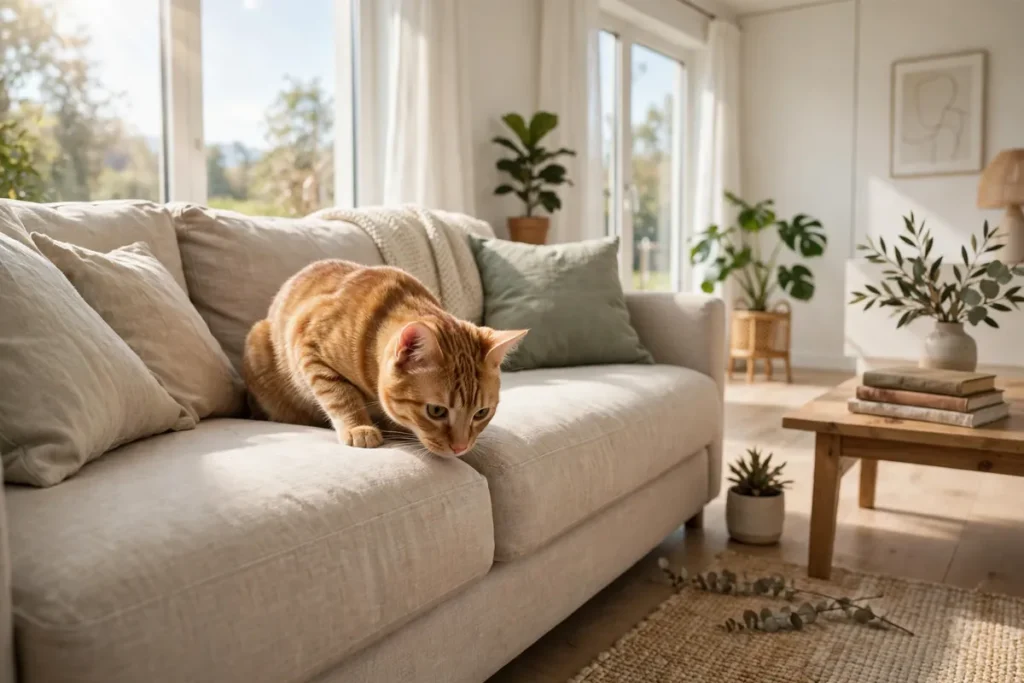
Cats explore with their noses first, sniffing the corners of sofas, the edges of rugs, and the legs of tables. This is how a cat builds a map of its territory. You can help by placing a familiar-smelling item, such as the blanket from the safe room, in the next room the cat visits. Familiar scent turns a strange room into one that already smells a little like home.
Introduce the home in stages; one new room every day or two is plenty. Keep cat-free rooms closed from the start. If you have other pets, wait until the cat is confident in its own room, then introduce them gradually, one sense at a time: scent first, then sight, and only then a short supervised meeting. Introducing a cat to a new home is a gradual process.
Building Trust and Bonding
Trust is the heart of helping a cat adjust to a new home, and it is built in small, quiet moments. Sit on the floor in the safe room so you seem smaller and less imposing. Avoid direct eye contact at first, since many cats read a fixed stare as a challenge. A slow blink — closing your eyes gently and opening them again — is a friendly signal that many cats return.
Let the cat make the first move. Offer a finger to sniff, and if the cat rubs its head against your hand, that is an invitation to pet it gently around the cheeks and chin. Keep early petting short, ending while the cat is still enjoying it. If the cat walks away, that is fine. Coming back is the cat’s choice, and the more choices the cat has, the faster trust grows.
Talk to your cat in a soft, even voice. Cats learn the sound of their person’s voice quickly, and a calm voice becomes one more familiar thing in a new place. Use the cat’s name often. Over the first week, most cats begin to seek out their person, following from room to room or napping nearby. That quiet decision to be near you is the real milestone.

Routines, Play, and Familiar Scent
Cats love routine, and a predictable day is one of the kindest gifts you can give a cat in a new home. Feed at the same times each day, keep the litter box in the same place, and play at roughly the same time each evening. When a cat can predict what happens next, the new home starts feeling safe.
Play is one of the fastest ways to help a cat feel at home. A short session with a wand toy or a rolling ball lets a cat practise its natural hunting moves. The best cat toys for settling in are simple ones: a wand toy, a soft ball, or a crinkly toy the cat can bat around. Keep sessions short, around five to ten minutes, and always end with the cat catching the toy. Our guide to the best cat toys has more ideas for toys cats return to again and again.
Scent is a cat’s strongest sense of home. A blanket that smells of the cat’s previous home, if you have one, can be a comfort in the first days. Rubbing a soft cloth on the cat’s cheeks and then on furniture corners spreads the cat’s own scent around the room. A cat tree also becomes a scent marker over time; our guide to cat trees vs cat towers can help you choose one.
Signs Your Cat Is Settling In
The signs that a cat is settling in are usually quiet and easy to miss. Watch for the small changes. A cat that once ate only when the room was empty begins to eat while you are nearby. A cat that slept pressed against the wall begins to sleep stretched out in the middle of the floor. A cat that hid at every sound begins to greet your footsteps with a slow blink.
Other happy signs include grooming in the open, playing without being prompted, and kneading a blanket. A cat that rubs its face on furniture or your legs is marking the home as its own, a clear sign of confidence.
Settling in takes time, and the pace is different for every cat. Many cats show real confidence within the first week, and most are fully comfortable within a few weeks, but a shy cat may take a little longer. What matters is the direction of travel: a little more exploring each day, a little less hiding, a little more time spent near you.

First Day vs First Week vs First Month
| Stage | What to Expect | Your Role |
|---|---|---|
| First day | Hiding, cautious sniffing, eating little, sleeping a lot | Keep the safe room quiet, provide food, water, and litter nearby, and let the cat choose when to come out |
| First week | Exploring the safe room, then one or two new rooms, eating on a regular schedule | Open up new rooms gradually, start a daily routine, play gently, and build trust with quiet time together |
| First month | Sleeping in the open, greeting you, playing freely, using the whole home | Keep the routine steady, deepen play and bonding, and enjoy the cat’s growing confidence |
Common Mistakes to Avoid
A few common mistakes can slow a cat’s adjustment, and most come from enthusiasm. The first is giving the cat too much space too soon: a whole house on day one is overwhelming. The second is forcing affection: pulling a cat from hiding, holding it when it wants to leave, or chasing it for a cuddle all teach the cat that people cannot be trusted to listen. Let affection be the cat’s idea.
The third mistake is changing things too often in the first weeks. Moving the litter box or rearranging furniture adds newness on top of newness. The fourth is forgetting that other pets and visitors are also new: keep introductions slow, keep early visits short, and give the cat a quiet room to escape to when the house gets busy. Finally, do not compare your cat with someone else’s. Your cat’s timeline is the only one that matters.
A Little Patience Goes a Long Way
Helping a cat adjust to a new home is less about doing a lot and more about doing the right few things with patience. A quiet safe room, a steady routine, gentle play, and the freedom to explore at its own pace will carry most cats through the transition beautifully. The first days may feel slow, but every small step — the first meal eaten in the open, the first slow blink, the first nap on the sofa — is progress worth celebrating.
You are not just giving a cat a new address. You are giving it a new life, and the trust that grows in these first weeks becomes the foundation of your whole relationship. Keep the pace gentle and let your cat show you when it is ready for more. Before long, the cat that hid under the bed will be stretched out in the sunniest spot in the house, and the new home will simply be home.
Related Reading on MyPetsMyLove
- Best cat toys guide
- Best cat beds guide
- Travelling with your cat guide
- Cats & Kittens hub page
- MyPetsMyLove homepage
- About Us page
References
- The Humane Society of the United States — pet care and enrichment resources
- ASPCA — cat care and behaviour resources
- Encyclopaedia Britannica — cat breeds reference
Frequently Asked Questions
How long does it take for a cat to adjust to a new home?
It varies from cat to cat. Many cats show real confidence within the first week, and most are comfortable within a few weeks, but a shy cat may take longer. The key is the direction of travel: a little more exploring and a little less hiding each day means your cat is adjusting.
Should I let my new cat roam the whole house on the first day?
No. Start with one quiet safe room where the cat has food, water, a litter box, a bed, and a hiding place. Open up new rooms gradually, one at a time, once the cat is confident in its safe room.
What should I put in a cat safe room?
Food and water bowls, a litter box placed away from the food, a comfortable bed or blanket, a scratching post, a few toys, and a hiding spot such as a cardboard box or a covered bed. Keep the room warm, quiet, and secure.
Why is my new cat hiding all the time?
Hiding is a normal way for cats to cope with a new place. A small, enclosed space feels safe while everything else is unfamiliar. Give your cat good hiding options, stay calm and quiet nearby, and let it come out in its own time. Never pull a cat out of hiding.
How can I help a shy cat feel safe?
Keep the home calm, move slowly, speak softly, and let the cat make the first move. Sit on the floor nearby, offer a finger to sniff, and keep early petting sessions short. A steady daily routine and gentle play also help a shy cat gain confidence.
When can I introduce my new cat to other pets?
Wait until the cat is confident in its safe room first. Then introduce pets gradually: let them smell each other’s scent on a blanket or cloth, then allow sight through a cracked door, and only then try a short, supervised meeting. Keep the safe room available as a retreat at all times.
What are the signs my cat is settling in?
A cat that is settling in eats while you are nearby, grooms and plays in the open, sleeps stretched out instead of hidden away, and rubs its face on furniture and people. Choosing to nap near you and greeting you with a slow blink are also good signs.
Conclusion
A new home is a big change for a cat, but with a quiet safe room, a steady routine, gentle play, and plenty of patience, most cats settle in within a few weeks and go on to make the place entirely their own. The first days are about letting your cat set the pace, and the reward is a confident, relaxed companion who trusts you.
Read more about life with cats in the Cats & Kittens section, find toys your cat will love in our best cat toys guide, and start from the MyPetsMyLove homepage to explore more guides for happy cats.
Disclaimer
Disclaimer
MyPetsMyLove dot com is an independent informational website covering pet species breeds characteristics activities positive training bonding grooming and responsible ownership
We are not a veterinary clinic medical provider pet food provider or veterinary nutrition service
We do not provide veterinary diagnosis medical advice treatment food recommendations or nutritional guidance
For pet health medical or food related concerns consult a qualified veterinarian or appropriate professional directly
Independent clinics listed on this website are not owned or operated by MyPetsMyLove unless explicitly stated
Verify third party credentials services fees and availability independently
We do not guarantee third party services or outcomes
To the extent permitted by applicable law we disclaim responsibility for independent third party services
Nothing in this notice excludes liability that cannot legally be excluded
The disclaimer does not make prohibited content acceptable






2 Comments