
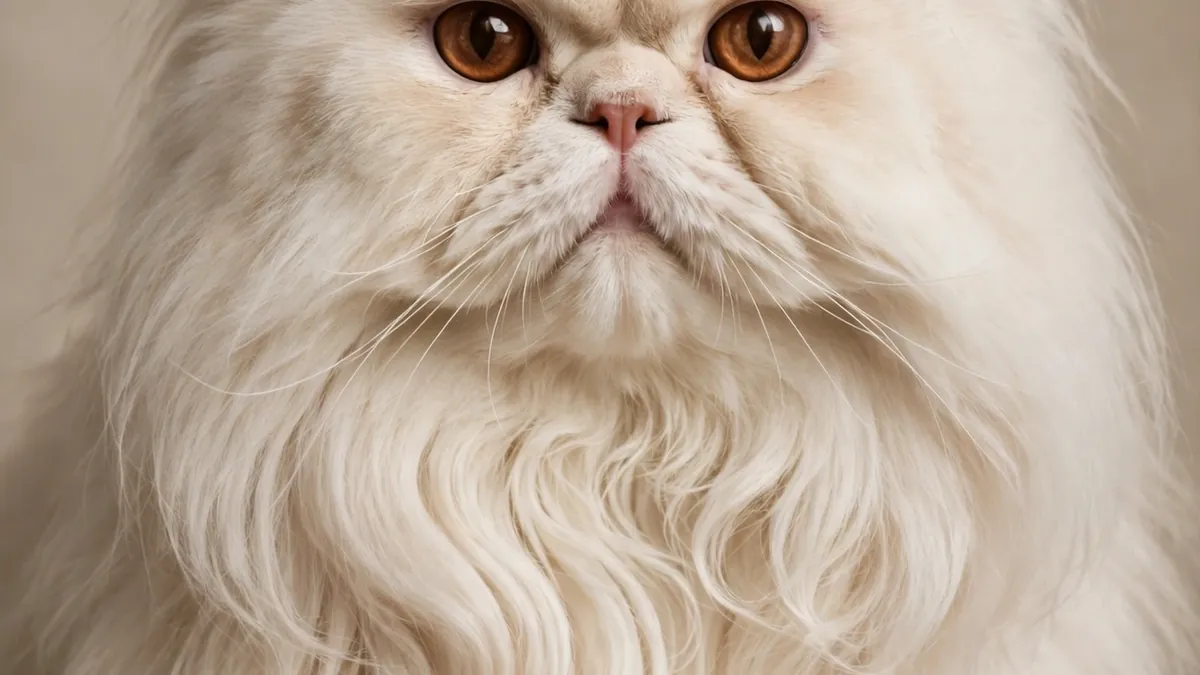
Persian Cats: History, Coat Types and Distinctive Features
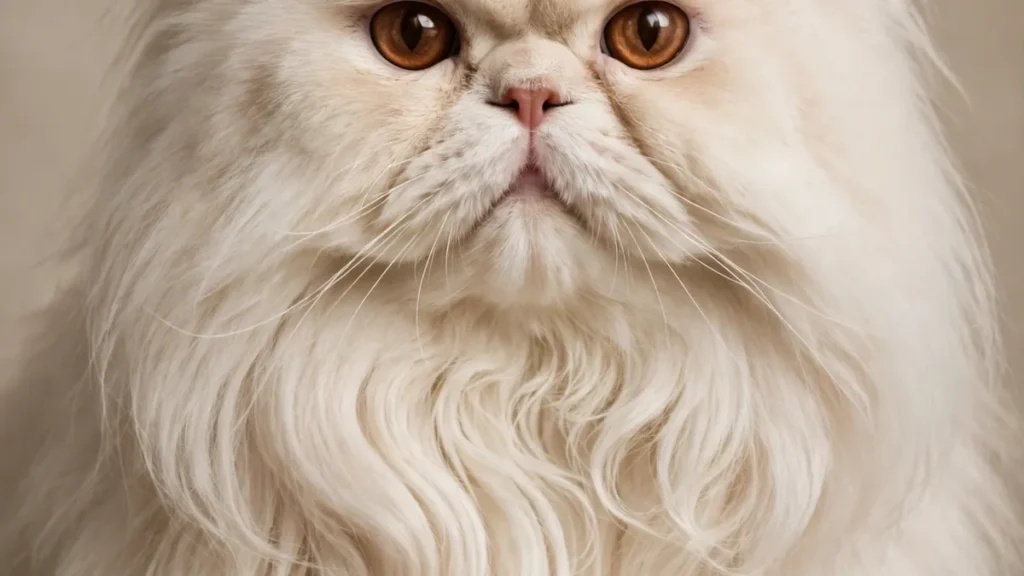
Few cats are as instantly recognizable as the Persian. With its luxurious flowing coat, round face, and calm, dignified presence, this breed has captured hearts for centuries and remains one of the most popular pedigree cats in the United States. Whether you have seen Persians in cat shows, films, or simply admired their glamorous appearance, there is much more to this breed than its beautiful looks.
This guide explores the Persian cat in depth: its fascinating history, the remarkable variety of coat types and colors, the physical features that make it unmistakable, and the gentle temperament behind the glamour.
History and Origins of the Persian Cat
The Persian is among the oldest recognized cat breeds in the world, with a history that reads like an adventure story spanning continents and centuries.
From Ancient Persia to Europe
The breed’s story begins in the region historically known as Persia, modern-day Iran, where longhaired cats had been known for centuries. These striking cats first caught European attention in the 1600s, when travelers returning from the Middle East brought longhaired cats home — one of the earliest documented accounts comes from an Italian traveler who wrote admiringly of the beautiful longhaired cats he encountered in Persia.
From Italy, these exotic longhaired cats spread across Europe, reaching France and England where they were prized as luxury companions. In an era when most domestic cats were shorthaired working mousers, a cat with a magnificent flowing coat was a genuine novelty — a living symbol of faraway lands and refined taste.
Development in England
The modern Persian took shape largely in England during the 1800s. British breeders selectively bred the longhaired imports, refining them over generations: rounder heads, stockier bodies, and ever more abundant coats. The breed became a fixture of the earliest organized cat shows, and its popularity soared when Queen Victoria — known to keep Persians herself — made them fashionable in Victorian society.
By the late 1800s, the Persian was one of the foundation breeds of the organized cat fancy. When the Cat Fanciers’ Association (CFA) was established in the United States in the early 1900s, the Persian was among the first breeds recognized, and it has remained a cornerstone of pedigreed cats ever since. Persians arrived in America in the late 1800s and quickly became favorites, consistently ranking among the most registered breeds for decades.
Appearance and Distinctive Features
The Persian’s appearance is unmistakable. Every aspect of its conformation, from the shape of its head to the plume of its tail, has been refined over generations to create one of the most distinctive silhouettes in the cat world.
The Face
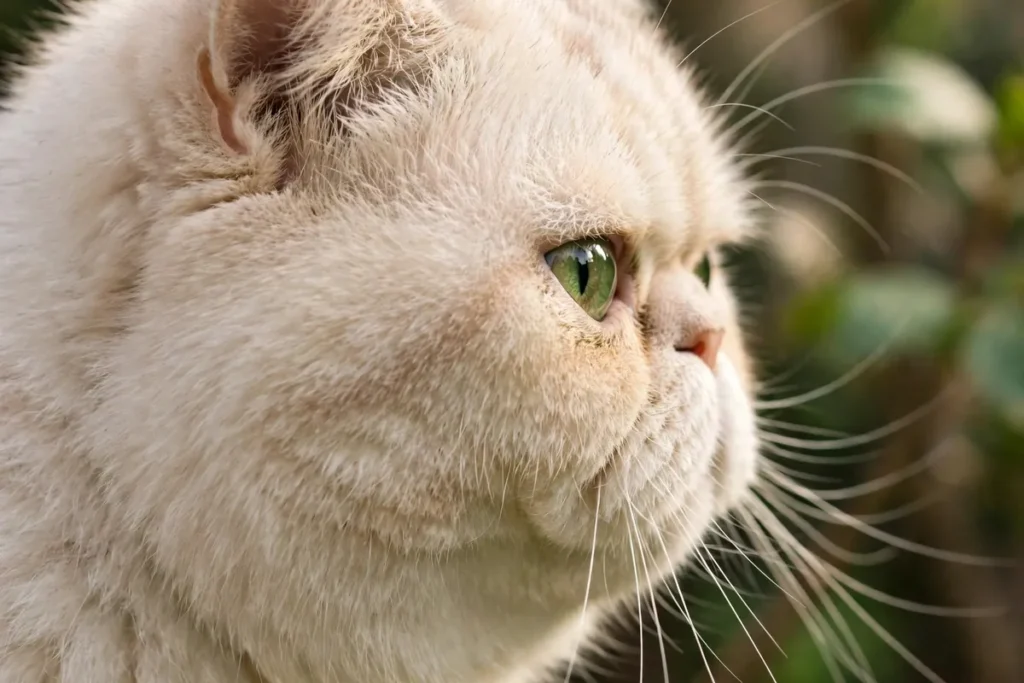
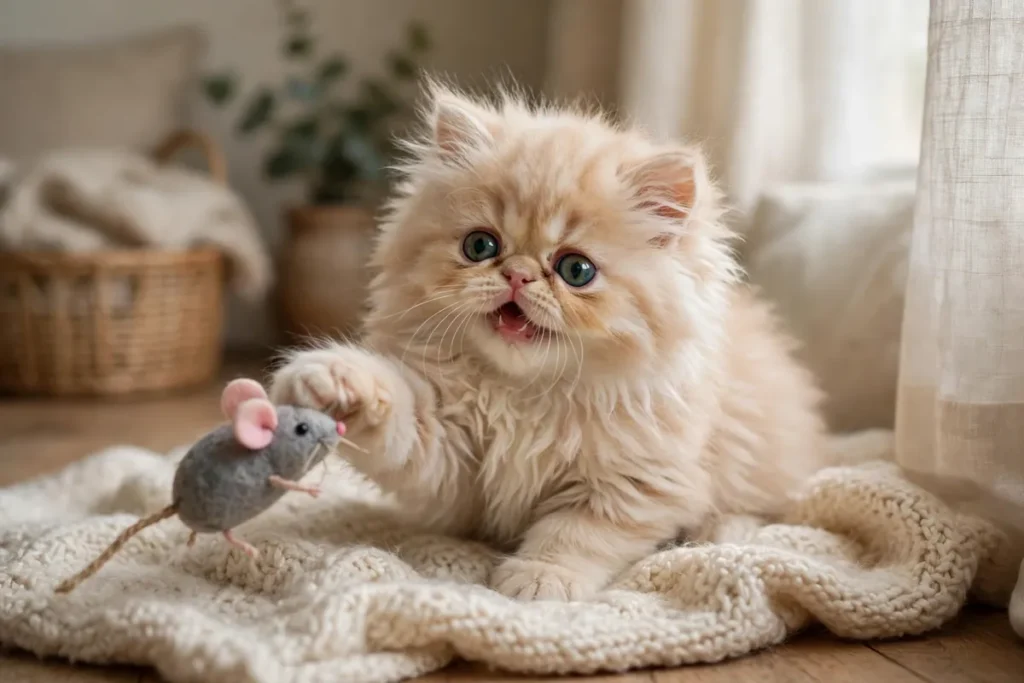
The Persian’s face is its signature. The head is large and round, with full cheeks that give the breed its characteristic sweet expression. The muzzle is short, and the nose sits high on the face, contributing to the breed’s distinctive profile. The eyes are large, round, and wide-set — often described as the breed’s most captivating feature — in colors that complement the coat: copper, green, blue, and odd-eyes in certain whites.
The ears are small and rounded, set low on the head, and whisker pads are full — completing the soft, rounded face no other breed quite matches.
Body and Tail
The Persian has a cobby body type — short, stocky, and solidly built, with a broad chest, short thick legs, and large round paws. Despite the sturdy frame, Persians move with graceful deliberation rather than athletic speed. The tail is short but spectacularly plumed, flowing behind like a banner and completing one of the most regal silhouettes in the cat world.
Coat Types and Colors
If the face is the Persian’s signature, the coat is its crown. No other breed is quite so defined by its fur.
The Persian Coat
The Persian carries a long, thick coat that stands out from the body rather than lying flat. The fur is fine and silky, with a dense undercoat that gives remarkable volume. A full ruff frames the neck and chest like a lion’s mane, while britches — longer fur on the hind legs — and the plumed tail complete the glamorous picture.
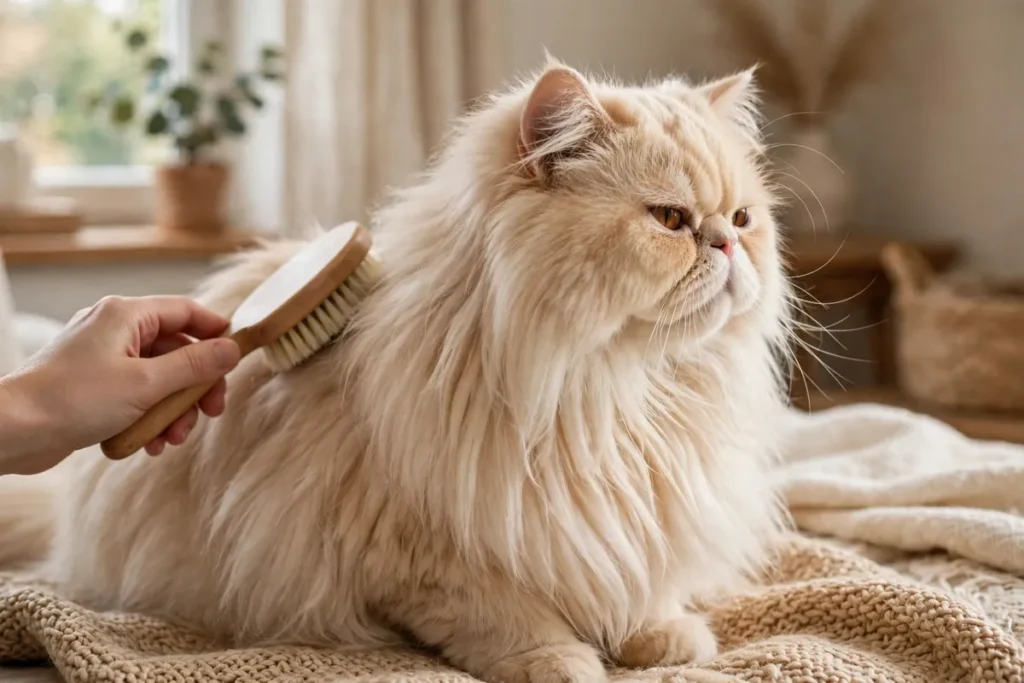
This is a high-maintenance coat by any standard. The long, fine fur tangles readily, which is why the breed is traditionally associated with dedicated daily grooming. Owners generally describe a short daily brushing session as the essential routine that keeps the coat flowing and mat-free. It is this very coat, demanding as it is, that gives the Persian its breathtaking appearance.
Color and Pattern Groups
Persians are recognized in a dazzling array of colors and patterns — one of the widest ranges of any breed. Cat associations typically organize them into several divisions:
Solid colors. Rich solid shades including white, black, blue (a soft gray), red, and cream. The solid white Persian, with its pristine coat and copper or blue eyes, is perhaps the most iconic image of the breed.
Silver and golden. Sparkling coats with dark tipping over a pale undercoat — the chinchilla silver, white with delicate black tipping, is among the most glamorous of all.
Shaded and smoke. Shaded Persians carry color concentrated at the fur tips, while smoke Persians have a pale undercoat beneath deeply colored outer fur that flashes light color as the cat moves.
Tabby patterns. Classic, mackerel, and patched tabbies combine the breed’s luxurious coat with striped and swirled markings in browns, reds, and silvers.
Particolor and bicolor. Tortoiseshell, blue-cream, calico, and bicolor (white plus another color) Persians display striking multi-colored coats, each one unique.
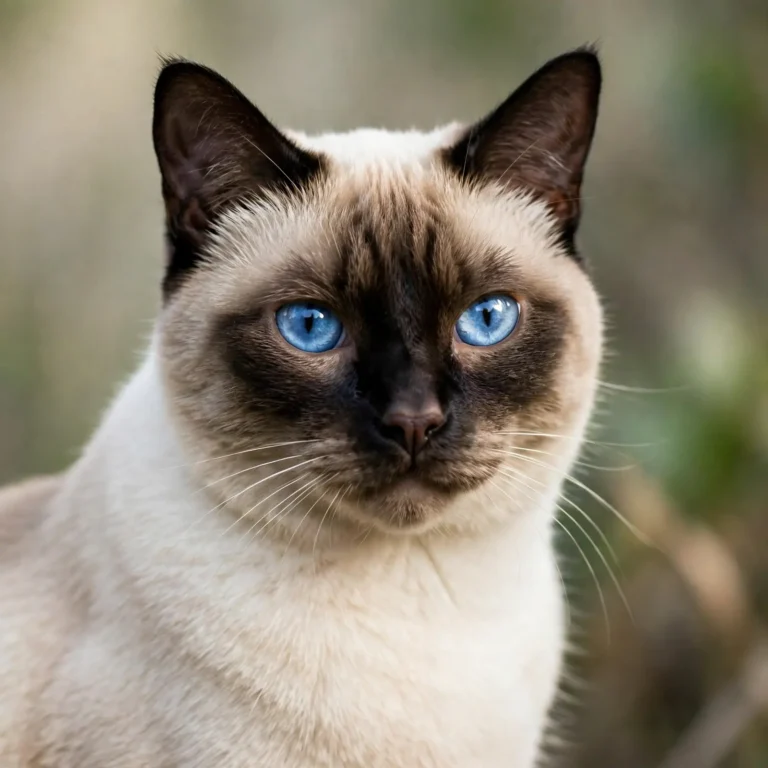
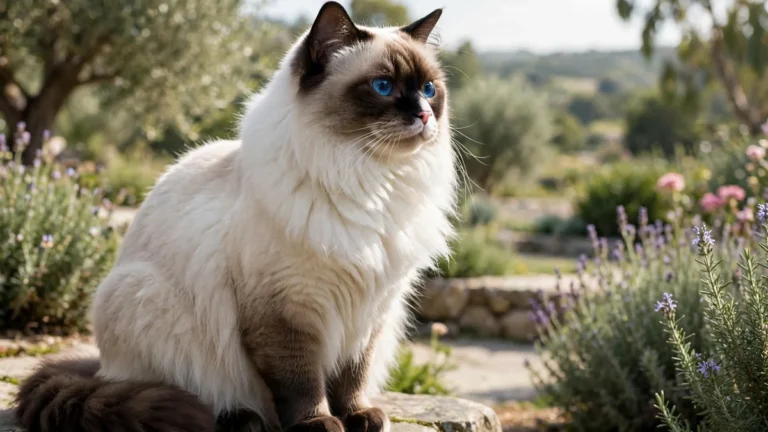
Colorpoint (Himalayan type). The colorpoint Persian — often called the Himalayan — combines the Persian body and coat with pointed patterning: darker ears, face mask, legs, and tail against a lighter body, plus vivid blue eyes. It was developed through crosses with Siamese-type cats and is now shown within the Persian breed in many associations.
Temperament and Personality
Beyond the glamour, the Persian is cherished for its gentle, composed nature. This is not a demanding or hyperactive breed — it is the quintessential lap cat.
Persians are famously calm and quiet. They tend to observe household life with serene dignity rather than inserting themselves into every activity. Many owners describe their Persians as sweet and affectionate on their own terms: they enjoy gentle petting and lap time, but they rarely demand attention vocally or insistently. Their voice, when used, is typically soft and musical.
The breed adapts well to calm, predictable households and is often recommended for quieter homes and apartment living. Persians generally coexist peacefully with other gentle pets and are patient with respectful children. Playfulness has its place — Persians enjoy gentle interactive play, particularly when young — but their style stays relaxed rather than wild.
Grooming and Daily Coat Care
A Persian’s coat does not maintain itself, and prospective owners should understand the commitment honestly. The long, fine fur mats easily, especially in friction areas like behind the ears, under the legs, and around the ruff.
Most Persian owners settle into a daily brushing ritual, working through the coat section by section with a wide-tooth metal comb. This daily attention prevents tangles from becoming mats and keeps the coat glossy — and most Persians learn to enjoy the attention, making it a pleasant bonding ritual.
Regular grooming sessions also offer a chance to check ears and eyes as part of the routine. Beyond brushing, the breed’s long coat benefits from occasional bathing to keep it clean and flowing, a practice many show breeders follow and pet owners adapt to their own schedules.
Living With a Persian Cat
Persians are indoor cats by tradition and temperament. Their long coat picks up debris outdoors, and their calm nature makes them perfectly content as house cats — they are among the breeds least inclined to roam or demand outdoor access.
A Persian-friendly home is a calm one: comfortable resting spots, a few gentle toys, and a consistent daily rhythm. They appreciate routine and thrive in stable households.
What the Persian asks for in return is modest: regular grooming, fresh water, a clean litter box, and gentle daily companionship. In exchange, owners receive one of the most serene and beautiful companions in the cat world — a cat that seems to embody quiet elegance.
Interesting Facts About Persian Cats
- The Persian is one of the oldest deliberately bred cat breeds, with roots tracing back to longhaired cats documented in Persia in the 1600s.
- Queen Victoria’s fondness for Persians in the 1800s helped make the breed a Victorian-era status symbol.
- The Persian has consistently ranked among the most registered breeds with the Cat Fanciers’ Association for decades.
- The colorpoint Himalayan type was developed through crosses with Siamese-type cats, blending pointed coloring with the Persian’s coat and build.
Related Reading on MyPetsMyLove
- Ragdoll Cats: Why This Blue-Eyed Breed Captures So Much Attention
- British Shorthair Cats: Origin, Colours and Personality Traits
- Maine Coon Cats: Origin, Size, Appearance and Interesting Facts
- Cats & Kittens hub page
- MyPetsMyLove homepage
- About Us page
References
- The Cat Fanciers’ Association (CFA) — Persian breed standard and profile
- The International Cat Association (TICA) — Persian breed information
Frequently Asked Questions
What is the Persian cat known for?
The Persian is known for its luxurious long coat, round face with large expressive eyes, and calm, gentle temperament. It is one of the oldest recognized cat breeds and remains among the most popular pedigree cats in the United States.
Where did Persian cats originally come from?
The breed traces its roots to longhaired cats from the region historically known as Persia (modern-day Iran). These cats were brought to Europe in the 1600s, and the modern breed was largely developed by British breeders in the 1800s.
What coat colors do Persian cats come in?
Persians come in one of the widest color ranges of any breed, including solid colors (white, black, blue, red, cream), silver and golden shades, shaded and smoke patterns, tabbies, tortoiseshell and bicolor combinations, and the colorpoint (Himalayan) pattern.
How much grooming does a Persian cat need?
The Persian’s long, fine coat typically needs daily brushing with a wide-tooth comb to prevent tangles and mats. Most owners build this into a short daily routine that also serves as bonding time with the cat.
Are Persian cats good for quiet households?
Yes. Persians are famously calm, quiet, and undemanding. They adapt well to serene homes and apartment living, preferring gentle companionship over high-energy activity.
What is the difference between a Persian and a Himalayan?
The Himalayan is the colorpoint variety of the Persian — it has the Persian’s body type and long coat combined with pointed coloring (darker ears, mask, legs, and tail) and blue eyes. Many cat associations classify it within the Persian breed.
Conclusion
The Persian cat is far more than a beautiful face: it is a breed shaped by centuries of history, refined by generations of dedicated breeders, and loved worldwide for its serene temperament. From its origins on ancient trade routes to its place as a modern icon of feline elegance, the Persian’s story is as rich as its coat.
If this glimpse into the breed has captured your imagination, there is much more to explore. Our Cats & Kittens guides cover breeds, behavior, grooming, and everyday care, and you can learn more about MyPetsMyLove. MyPetsMyLove is here to help you discover the cats you love.
Disclaimer
Disclaimer
MyPetsMyLove dot com is an independent informational website covering pet species breeds characteristics activities positive training bonding grooming and responsible ownership
We are not a veterinary clinic medical provider pet food provider or veterinary nutrition service
We do not provide veterinary diagnosis medical advice treatment food recommendations or nutritional guidance
For pet health medical or food related concerns consult a qualified veterinarian or appropriate professional directly
Independent clinics listed on this website are not owned or operated by MyPetsMyLove unless explicitly stated
Verify third party credentials services fees and availability independently
We do not guarantee third party services or outcomes
To the extent permitted by applicable law we disclaim responsibility for independent third party services
Nothing in this notice excludes liability that cannot legally be excluded
The disclaimer does not make prohibited content acceptable

8 Comments