Cat Grooming at Home: A Step-by-Step Guide for Every Cat Owner

Your cat spends hours each day grooming itself, so you might wonder why it needs your help at all. Then one day you find a tangle behind its ear, loose fur all over your favourite chair, or nails that catch on the blanket every time it kneads. Cats are excellent self-groomers, but they cannot do everything alone. Cat grooming at home is simpler than most owners expect, and once you learn the steps, it becomes a calm little ritual that brings you and your cat closer.
Why Groom Your Cat at Home?
Grooming at home has three big rewards. The first is comfort: regular brushing removes loose fur before it ends up on your sofa and keeps long coats smooth and tangle-free.
The second reward is bonding. Grooming is quiet, close-up time together, and cats that enjoy being brushed start to look forward to it. The slow rhythm of a brush and a gentle hand tell your cat the same thing: you are safe with me.
The third reward is familiarity. When you groom your cat regularly, you learn what is normal for your cat — how its coat usually feels and how it usually behaves when you touch its paws. That familiarity helps you notice when something has changed, so you can ask a professional about it sooner rather than later.
Best of all, you do not need special skills or expensive equipment. A brush, a comb, a pair of nail clippers, and a little patience are enough.
Gather Your Grooming Tools
Before you begin, gather everything you need and place it within easy reach. A cat will not wait while you search for the clippers, so set up first and groom second. Keep your tools in one small box or basket. You will need a slicker brush, a wide-tooth comb, cat nail clippers, a soft cloth, cat shampoo, towels, and a favourite toy for a reward afterwards. Choose tools made for cats: cat brushes have softer bristles and smaller heads, and cat nail clippers are shaped to fit a small, curved claw.
Brushing: The Heart of Cat Grooming at Home
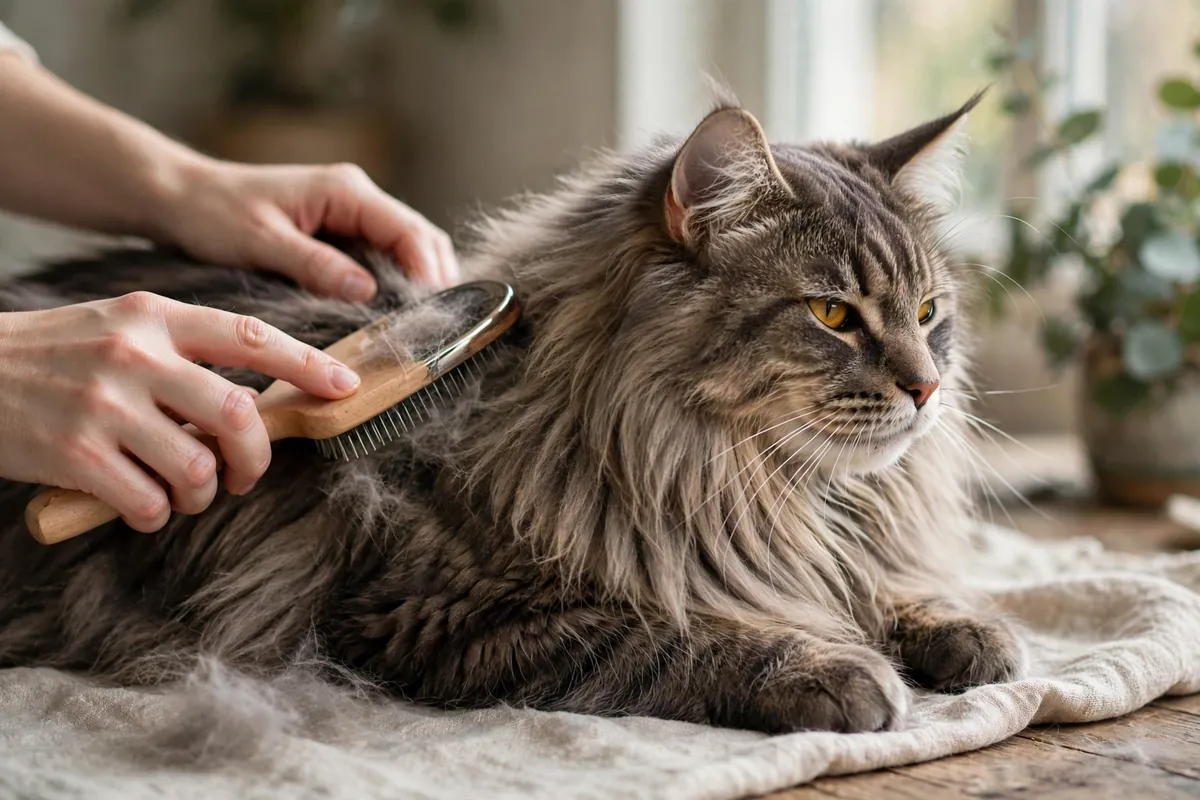
Brushing is the single most important part of cat grooming at home, and it is where you should start. A good brushing session removes loose fur and keeps the fur smooth.
Start slowly. Let your cat sniff the brush first, then stroke it gently along the back, in the direction the fur grows. Use light, even strokes and watch your cat’s reaction: a cat that leans in is enjoying it, and a cat that twitches or walks away needs a shorter session. Two or three minutes is plenty for a first try.
How often you brush depends on your cat’s coat. Short-haired cats usually need brushing once or twice a week, while long-haired cats need it every day or every other day, because longer fur tangles more easily. That difference is one reason the most common cat breeds in American homes need such different routines: the domestic shorthair cat, the most common house cat of all, is happy with a quick weekly brush, while long-haired favourites such as the Persian and the Maine Coon need brushing most days. The Siamese, with its short, fine coat, sits at the easy end of the scale.
Work in sections: back, sides, chest, and then the belly last, if your cat allows it. If you find a tangle, do not pull it — hold its base with your fingers so the skin does not pull, and work it apart gently with a wide-tooth comb. Tangles behind the ears, under the legs, and around the collar are the most common.
Finish each session with something pleasant: a quiet word, a stroke in a favourite spot, or a short play session with one of the best cat toys your cat loves.
Bathing Your Cat: Only When Needed
Here is the good news: most cats rarely need a bath. Cats clean themselves every day, and a healthy indoor cat can go months without one. A bath is worth doing when your cat has rolled in something sticky or dusty.
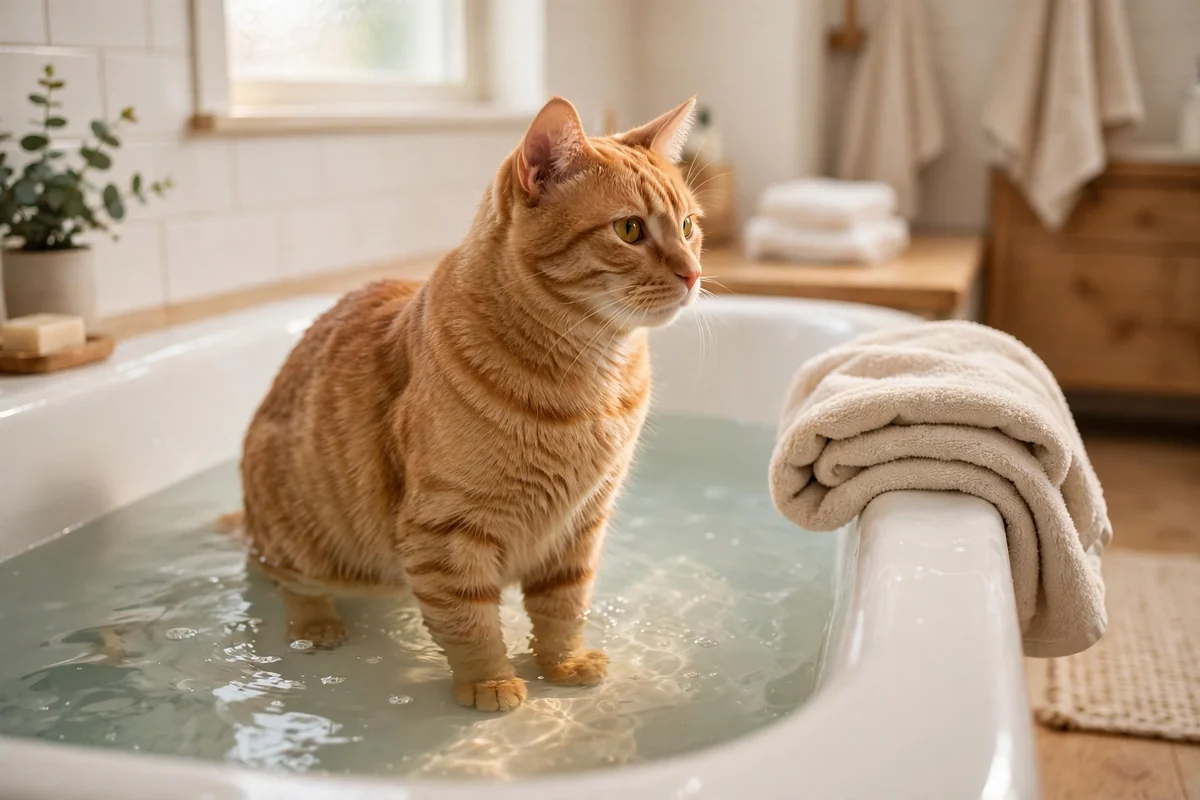
Prepare everything before you start. Fill a basin or sink with a few inches of lukewarm water — never hot, and never cold — and place a rubber mat or folded towel on the bottom so your cat can stand without slipping. Have your cat shampoo, a cup for rinsing, and two towels ready.
Lower your cat gently into the water, keeping your voice calm and your movements slow. Wet the coat with your hand or the cup, avoiding the face and ears, then work a small amount of cat shampoo through the fur. Rinse thoroughly, because shampoo left in the coat can make the fur look dull. Most cats tolerate a bath for only a few minutes, so work quickly and calmly.
Lift your cat out and wrap it in a towel straight away. Pat the coat dry rather than rubbing it, which can tangle long fur. Keep your cat in a warm room until it is fully dry, and never use a hair dryer unless your cat is completely comfortable with the sound — most are not.
One rule matters more than any other: never use human shampoo on a cat. Human shampoo is made for human skin and can dry out a cat’s coat and skin. Use a shampoo made for cats, and use only a small amount.
How to Trim Cat Nails
Cat nails grow constantly, and indoor cats do not wear them down the way outdoor cats do. Trimming the sharp tips keeps your cat comfortable and protects your furniture.
Start by getting your cat used to having its paws touched. For a few days before the first trim, hold a paw gently during a quiet moment and press the pad softly so a claw extends, then let go and offer a calm word. When your cat accepts this without pulling away, you are ready.
Hold the clipper in one hand and the paw in the other. Press the pad gently to extend one claw, and look at it in the light: you will see the pink area near the base and the clear, sharp tip beyond it. Trim only the clear tip — a tiny amount, no more than the very end. Cutting into the pink area hurts, so when in doubt, trim less. It is far better to trim a little and repeat next week than to trim too much once.
Work through one paw at a time, and take a break if your cat gets restless. Many owners trim just the front paws in one session and the back paws another day. Two paws done calmly beat four paws done in a struggle.
Finish with praise and a reward. A calm word, a gentle stroke, or a short play session tells your cat that nail trimming is nothing to fear.

How to Clean Cat Ears
A cat’s ears need very little attention, and gentle is the rule. For most cats, a quick look and a soft wipe of the outer ear once every week or two is all that is needed.
Dampen a soft cloth with a little warm water and wipe only the outer, visible part of the ear — the soft flap and the folds you can easily reach. Never push anything into the ear canal, and never use cotton swabs inside the ear. A cat’s ear canal is delicate, and anything pushed inside can cause harm.
If you notice a lot of dark debris, a strong smell, or your cat shaking its head or scratching its ears often, stop the home routine and ask your veterinarian about it. Ear cleaning at home is for routine care only.
Keep the session short and calm, just like the rest of grooming. One ear, then the other, then a gentle word and a reward.

Managing Shedding at Home
Every cat sheds — it is a normal, year-round part of having a cat in the house. Shedding usually increases in spring and autumn, when cats swap their coats for the season, and long-haired cats shed more visibly than short-haired ones. You cannot stop shedding, but you can manage it easily.
Brushing is your best tool. A regular brush removes loose fur before it drifts onto your furniture and clothes, and during heavy shedding seasons a quick daily brush makes a visible difference. A rubber grooming mitt can also help: it lifts loose fur while feeling like a gentle massage, and many cats enjoy it more than a brush.
Around the home, a few small habits help. A lint roller by the door keeps clothes fur-free, and a quick vacuum of favourite sleeping spots keeps the fur under control.
Remember that shedding is normal. A cat that sheds is a cat with a healthy, working coat, and your job is simply to keep up with it — a few minutes of brushing and a lint roller by the door.
A Simple Grooming Routine to Follow
The secret to cat grooming at home is not doing everything at once — it is doing a little, regularly. A short routine you actually keep is worth far more than a long session that happens once in a blue moon.
| Coat type | Brushing | Bathing | Nails | Ears |
|---|---|---|---|---|
| Short-haired | Once or twice a week | Only when dirty | Every 2–3 weeks | Every 2 weeks |
| Long-haired | Every day or every other day | Only when dirty | Every 2–3 weeks | Every 2 weeks |
Pick a time when your cat is already relaxed — after a meal, or during a quiet evening — and keep each session short. Five minutes of brushing, a quick nail check, and a gentle ear wipe can all fit into one calm evening. If your cat walks away halfway through, let it go and finish tomorrow. Grooming should feel like a treat, not a chore.
For a new cat, start even more slowly. Our guide on how to help a cat adjust to a new home explains how to build trust in the first days, and the same gentle pace works for grooming: one short brush, one paw, one ear — then stop while things are going well.

Do This, Not That
| Do this | Not that |
|---|---|
| Brush gently in the direction of the fur | Pulling at tangles or brushing against the grain |
| Start with short, calm sessions | Forcing a long session on a nervous cat |
| Trim only the clear tip of the nail | Cutting into the pink area of the claw |
| Wipe only the outer ear with a soft cloth | Pushing anything into the ear canal |
| Use shampoo made for cats | Using human shampoo on your cat |
| End every session with praise or play | Ending a session while the cat is upset |
Things to Remember
- Brushing is the foundation: Regular brushing keeps coats smooth and reduces loose fur around the home.
- Short sessions win: Five calm minutes beat a long struggle — stop while things are going well.
- Long hair needs more care: Long-haired cats need brushing most days; short-haired cats need it weekly.
- Baths are rare: Most cats need a bath only when they are dirty, not on a schedule.
- Trim only the tip: Cut just the clear end of the nail, never the pink area.
- Ears stay simple: Wipe only the outer ear, and leave anything unusual to a professional.
Related Reading on MyPetsMyLove
- Most popular cat breeds in the USA
- Persian cats guide
- Maine Coon cats guide
- Cats & Kittens hub page
- MyPetsMyLove homepage
- About Us page
References
- The Humane Society of the United States — cat grooming and care resources
- Cat Fanciers’ Association (CFA) — cat breed and grooming information
- The International Cat Association (TICA) — cat care and breed resources
- Encyclopaedia Britannica — domestic cat reference
Frequently Asked Questions
How often should I groom my cat at home?
It depends on the coat. Short-haired cats usually need brushing once or twice a week, while long-haired cats need brushing every day or every other day. Nail trims are usually needed every two to three weeks, and a gentle ear wipe every couple of weeks is enough for most cats.
How do I groom a cat that does not like being brushed?
Start very slowly and keep sessions short — two or three minutes at most. Let the cat sniff the brush first, use gentle strokes along the back, and stop before the cat gets upset. Reward calm behaviour with praise or play, and build up the time gradually over days and weeks.
Do indoor cats need baths?
Most indoor cats rarely need a bath because they clean themselves every day. A bath is worth doing when your cat has rolled in something sticky or dusty, or when its coat feels dirty despite regular brushing. For most cats, that means only a few baths a year at most.
How do I trim my cat’s nails without hurting my cat?
Trim only the clear, sharp tip of each claw, well away from the pink area near the base. Press the paw pad gently to extend one claw, clip just the tip, and stop if your cat gets restless. If you are unsure, trim less and repeat next week — a small trim is always safer than a big one.
How do I clean my cat’s ears at home?
Wipe only the outer, visible part of the ear with a soft cloth dampened with warm water. Never push anything into the ear canal or use cotton swabs inside the ear. If you notice a lot of dark debris, a strong smell, or frequent head shaking, ask your veterinarian about it instead.
What is the best brush for a long-haired cat?
A slicker brush is a good choice for long-haired cats because it removes loose fur and smooths the coat, and a wide-tooth comb helps work through tangles gently. Brush in the direction the fur grows, hold the base of any tangle so the skin does not pull, and work it apart slowly with the comb.
How can I reduce shedding around my home?
Regular brushing is the best step, because it removes loose fur before it lands on your furniture. During heavy shedding seasons, brush daily, use a rubber grooming mitt if your cat enjoys it, and keep a lint roller handy for clothes and soft furnishings.
Conclusion
Cat grooming at home is not a chore to dread — it is a few quiet minutes that keep your cat comfortable and bring the two of you closer. A brush, a pair of clippers, and a soft cloth are all you need, and a short, regular routine does far more than a rare marathon session ever will.
Start today: pick up the brush, sit with your cat for five calm minutes, and see how it goes. Then explore more in the Cats & Kittens section, read our guide to the best cat toys for a perfect post-grooming reward, and if your cat is new to your home, our guide on how to help a cat adjust to a new home will help you build trust from day one. Your cat is already grooming itself — now you can help it look and feel its best.
Disclaimer
Disclaimer
MyPetsMyLove dot com is an independent informational website covering pet species breeds characteristics activities positive training bonding grooming and responsible ownership
We are not a veterinary clinic medical provider pet food provider or veterinary nutrition service
We do not provide veterinary diagnosis medical advice treatment food recommendations or nutritional guidance
For pet health medical or food related concerns consult a qualified veterinarian or appropriate professional directly
Independent clinics listed on this website are not owned or operated by MyPetsMyLove unless explicitly stated
Verify third party credentials services fees and availability independently
We do not guarantee third party services or outcomes
To the extent permitted by applicable law we disclaim responsibility for independent third party services
Nothing in this notice excludes liability that cannot legally be excluded
The disclaimer does not make prohibited content acceptable