
Tabby Cats Explained: Classic, Mackerel, Spotted and Ticked Patterns
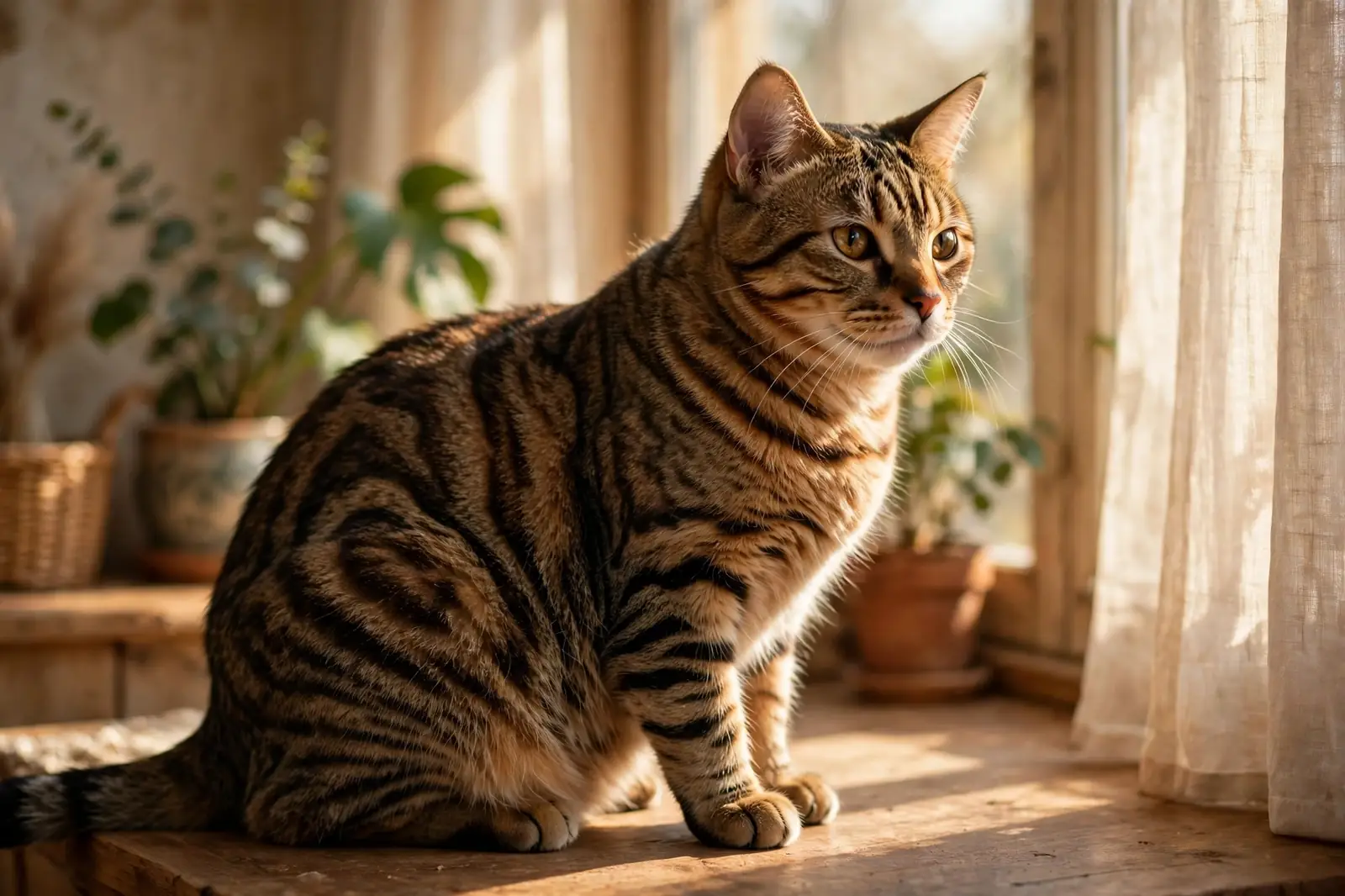
Take a look at the cat asleep on your sofa, or the one weaving between your ankles at breakfast. If it has stripes, swirls, spots, or a speckled coat — and a clear letter “M” on its forehead — there is a good chance it is a tabby. Here is the surprise: a tabby cat is not a breed at all. Tabby is a coat pattern, and it is the pattern on the most common house cat in America. It shows up on pedigreed breeds and on mixed-breed cats alike, from a tiny kitten to a full-grown Maine Coon.
This guide explains what a tabby cat really is, the four tabby patterns — mackerel, classic, spotted, and ticked — the colours tabbies come in, the simple genetics behind the pattern, and which breeds wear it best.
What Is a Tabby Cat?
A tabby cat is any cat whose coat carries the tabby pattern: stripes, swirls, spots, or ticking made from agouti hairs, plus the famous “M” marking on the forehead. The word tabby describes the coat, not the cat. A tabby can be a pedigree British Shorthair, a Bengal, an Abyssinian, or a mixed-breed domestic shorthair cat with no pedigree at all.
The pattern is ancient. Domestic cats inherited the tabby pattern from their wild ancestor, the African wildcat, and it is the default coat pattern of the domestic cat. Every domestic cat carries the tabby gene, even solid-coloured cats — in those cats the pattern is simply hidden by other genes. The word tabby itself is thought to come from Attabiya, a district of Baghdad once known for striped silk cloth.
Among domestic cats in America, the tabby is everywhere. The most common cats in American homes are mixed-breed domestic shorthairs, and most of them wear some form of tabby pattern. When people picture a typical house cat, they are usually picturing a tabby.
The Four Tabby Patterns
There are four recognised tabby patterns, and each one has its own look. Most tabbies fall clearly into one of the four, though some cats mix features from more than one.
Mackerel Tabby
The mackerel tabby is the most common tabby pattern of all. It has narrow, vertical stripes running down the sides of the body, like the bones of a fish — which is where the name comes from. The stripes run in parallel lines that curve gently along the body, and the pattern is sometimes called the tiger pattern because of its resemblance to a tiger’s stripes.
Mackerel is the wild type, the original pattern of the domestic cat’s ancestors, and its gene is dominant over the classic pattern. The American Shorthair is one of the breeds where mackerel striping shows up often, and it is the pattern most people picture when they hear the word tabby.
Classic Tabby
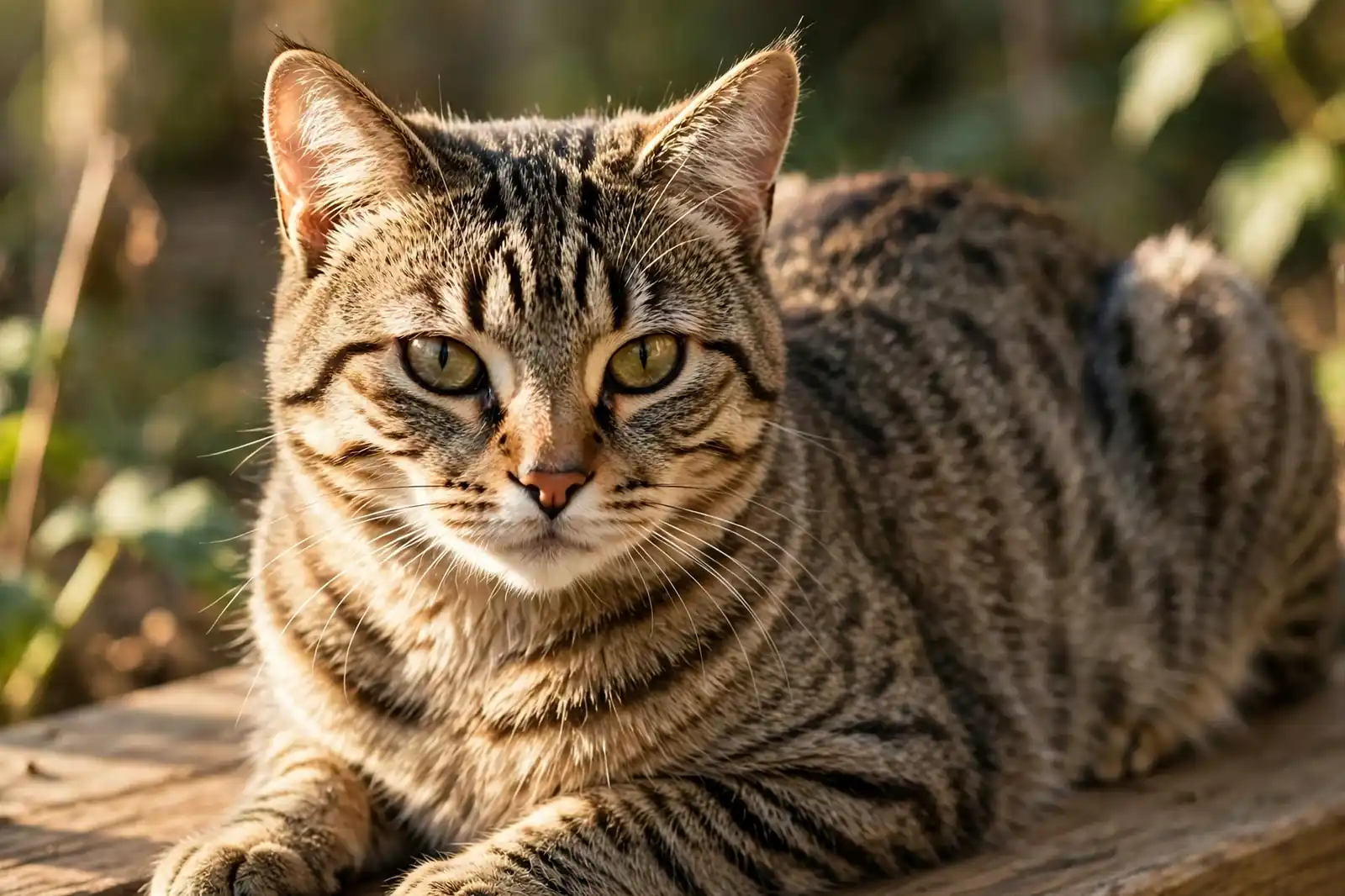
The classic tabby, also called the blotched tabby, swaps thin stripes for thick, swirling bands. The most recognisable feature is a bullseye-shaped marking on each side of the body, with butterfly shapes across the shoulders. The swirls look like marbled stone, which is why this pattern is sometimes called marbled.
Classic is the recessive pattern, so a cat needs two copies of the gene to show it. It is especially common in the British Shorthair, where the bold swirls suit the breed’s dense, plush coat. A classic tabby looks dramatic even at rest, and the bullseye is the easiest way to tell it apart from a mackerel tabby.
Spotted Tabby
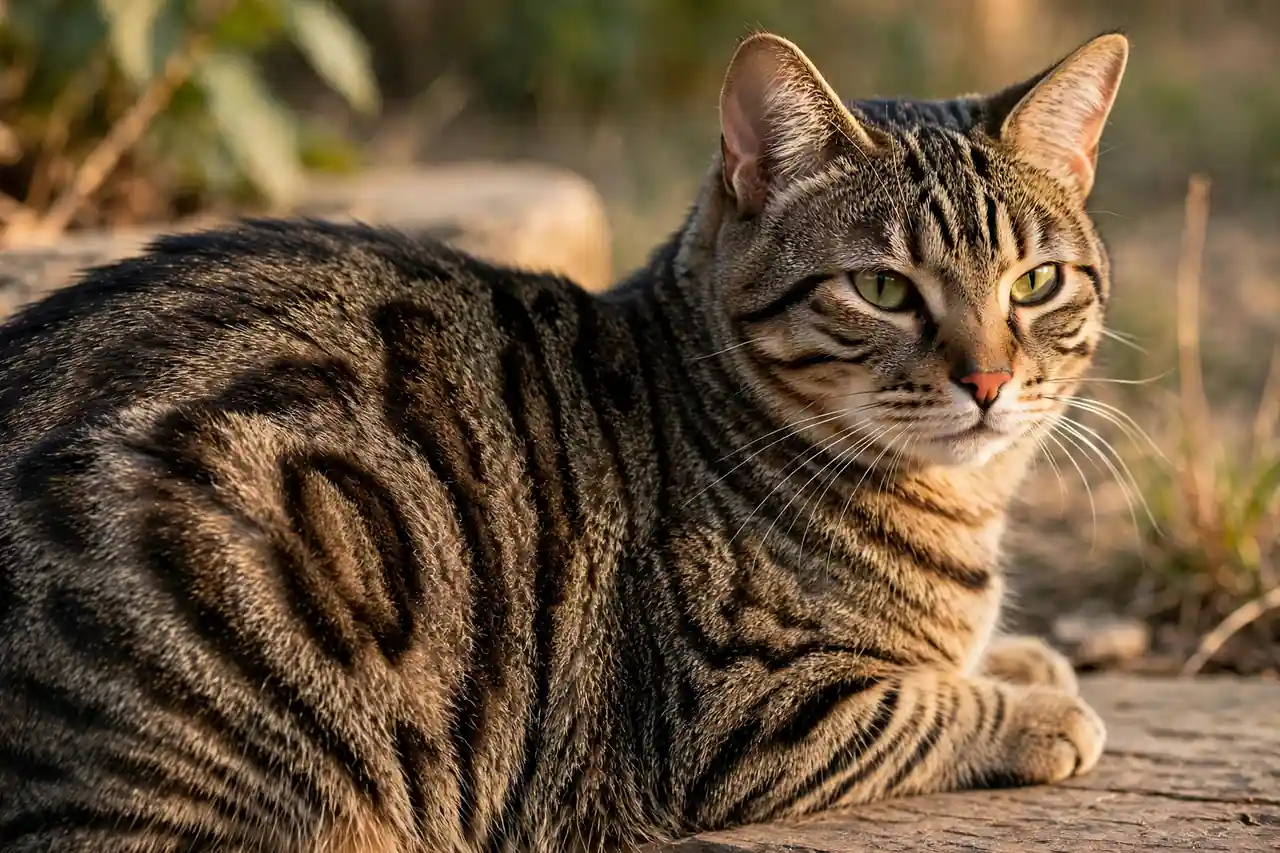
Spotted tabbies have spots instead of stripes. Those spots are broken mackerel stripes: a modifier gene interrupts the stripe formation, so the lines fragment into ovals or round dots arranged in rows along the body. The spots can be large or small, neat or scattered, depending on the cat.
The spotted pattern is the signature look of the Bengal, where the spots echo the markings of wild leopard cats, and it also appears in the Egyptian Mau and the Ocicat. But spotted tabbies are not limited to pedigreed breeds — many mixed-breed domestic shorthairs carry the same spotted pattern.
Ticked Tabby
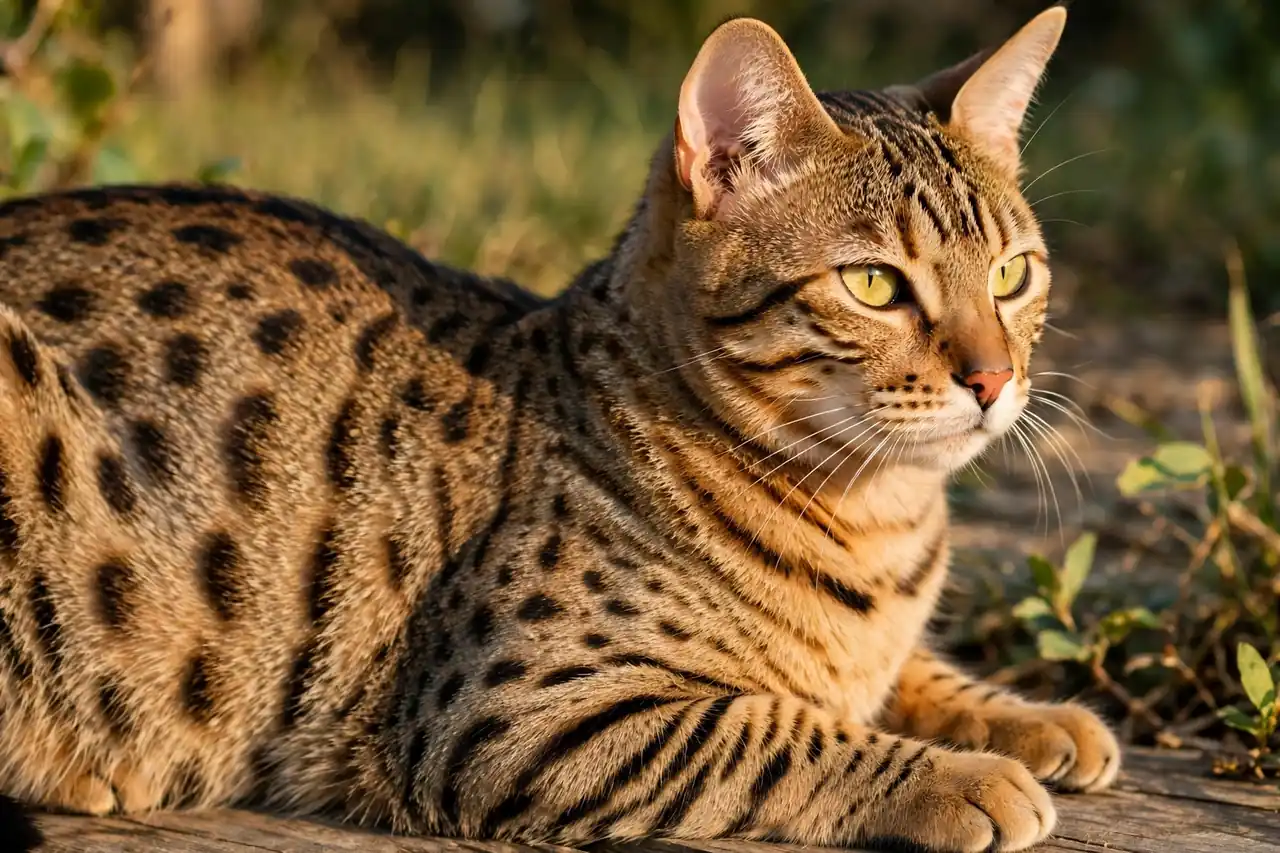
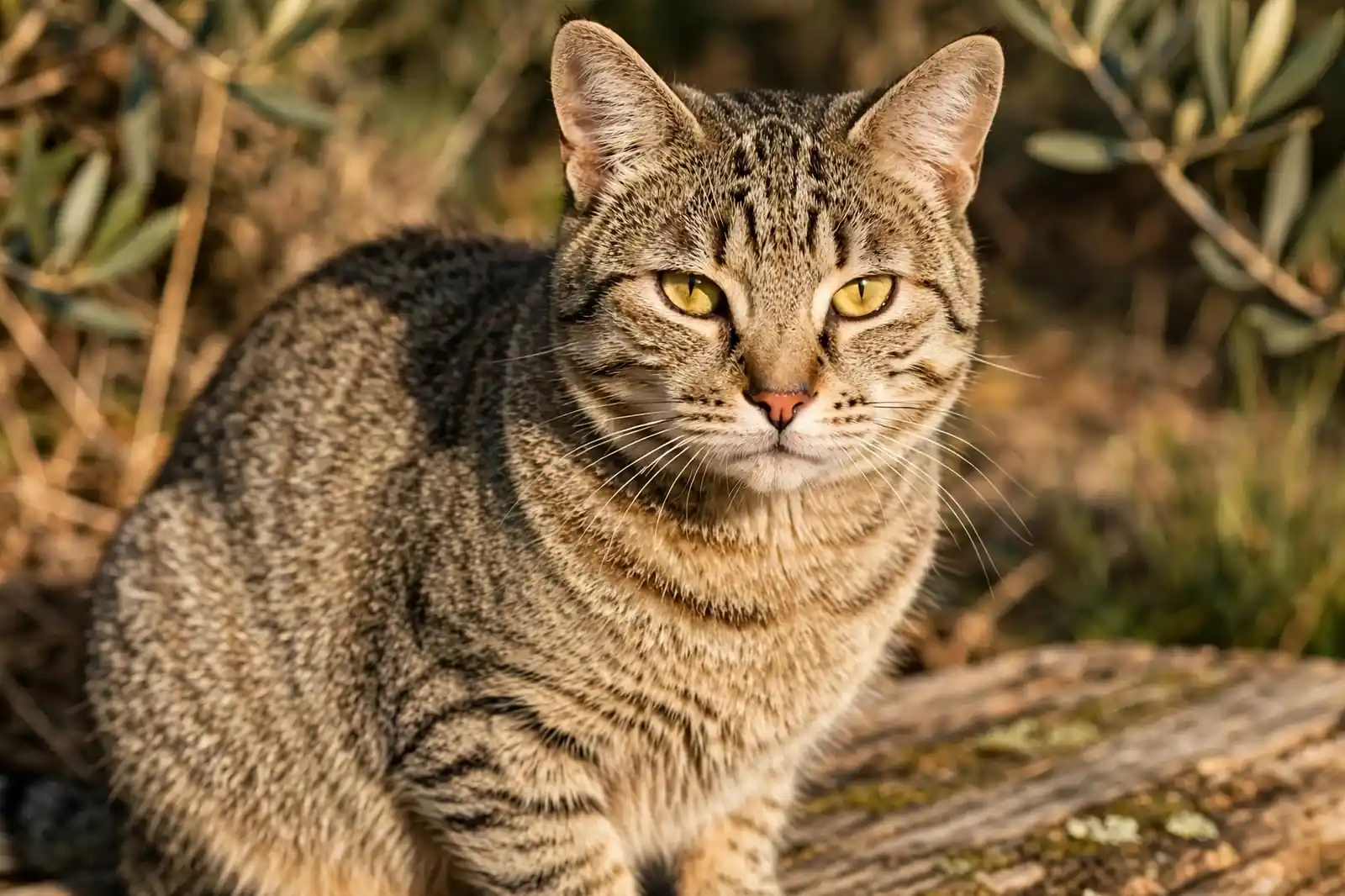
The ticked tabby is the most subtle of the four. Instead of obvious stripes or spots, each individual hair has alternating bands of light and dark colour. This banding is called agouti, and it gives the coat a speckled, salt-and-pepper look with almost no visible pattern on the body. The face, legs, and tail usually keep faint tabby markings, including the “M” on the forehead.
The Abyssinian is the best-known ticked tabby breed, and its shimmering coat is the finest example of the pattern. The ticked gene is dominant over the mackerel and classic patterns, so a ticked tabby parent can pass the pattern on easily.
The “M” on the Forehead and Other Markings
Whatever the pattern, almost every tabby shares the same set of face markings. The most famous is the “M” on the forehead, a dark letter shape formed by the striping above the eyes. Tabbies also tend to have dark lines running from the corners of the eyes, pale “spectacles” around the eyes, and striping on the legs and tail.
Stories about the “M” go back centuries, and different cultures have their own tales about how it got there. What is certain is that the marking comes from the same pattern genes that stripe the rest of the coat — it is part of the tabby design, not a separate feature.
Tabby Colours
Tabby is a pattern, so it comes in almost every cat colour. The most familiar is the brown tabby, with black markings on a warm brown or grey-brown background. Silver tabbies pair black markings with a pale silver ground colour, and the contrast makes the pattern stand out sharply.
Orange tabbies, also called red or ginger tabbies, are a colour variant of the same patterns. Their markings come from pheomelanin, the pigment behind orange and red, instead of the darker eumelanin. Orange tabbies are almost always male, because the orange gene sits on the X chromosome — a detail that makes ginger tabbies a favourite talking point among cat lovers.
Blue tabbies, cream tabbies, and chocolate tabbies all exist too, and the pattern can appear on a white background as well. A fifth pattern, the torbie, combines tabby striping with tortoiseshell colouring, and it appears in female cats that carry both black and orange genes.
Tabby Genetics in Simple Terms
The genetics behind the tabby pattern are simpler than they sound. Two gene locations do most of the work. The agouti gene controls whether the pattern shows at all: when it is active, each hair grows in bands of light and dark, and the tabby pattern appears. When a cat inherits two copies of the recessive non-agouti version, the banding is switched off and the coat looks solid.
A second gene, known as Taqpep, decides which pattern appears. Cats with at least one dominant version develop mackerel stripes, while cats with two recessive copies get the classic blotched pattern. The ticked pattern comes from a different version of the same gene, and it is dominant over both. The spotted pattern comes from a modifier gene that breaks mackerel stripes into spots.
The practical point is simple: the tabby pattern is the foundation of the domestic cat’s coat. It is the pattern every domestic cat carries underneath, and it shows whenever the other colour genes let it through.
Tabby Cats and Breeds
Because tabby is a pattern and not a breed, it appears across the cat world. Some breeds are famous for it. The Maine Coon often wears a classic or mackerel tabby coat in brown or silver. The British Shorthair is well known for its classic tabby swirls. The Bengal shows the spotted pattern at its boldest. The Abyssinian shows the ticked pattern at its finest. The American Shorthair, one of the most popular breeds in the United States, commonly comes in a silver tabby coat.
But the most common tabby of all is not a pedigree breed. It is the domestic shorthair cat — the mixed-breed house cat found in homes across America. Among the common breeds of house cats, the domestic shorthair is the everyday cat, and the tabby pattern is its most common coat. Readers browsing our guide to the most popular cat breeds in the USA will notice how many of the listed breeds come in tabby versions.
Tabby Kittens
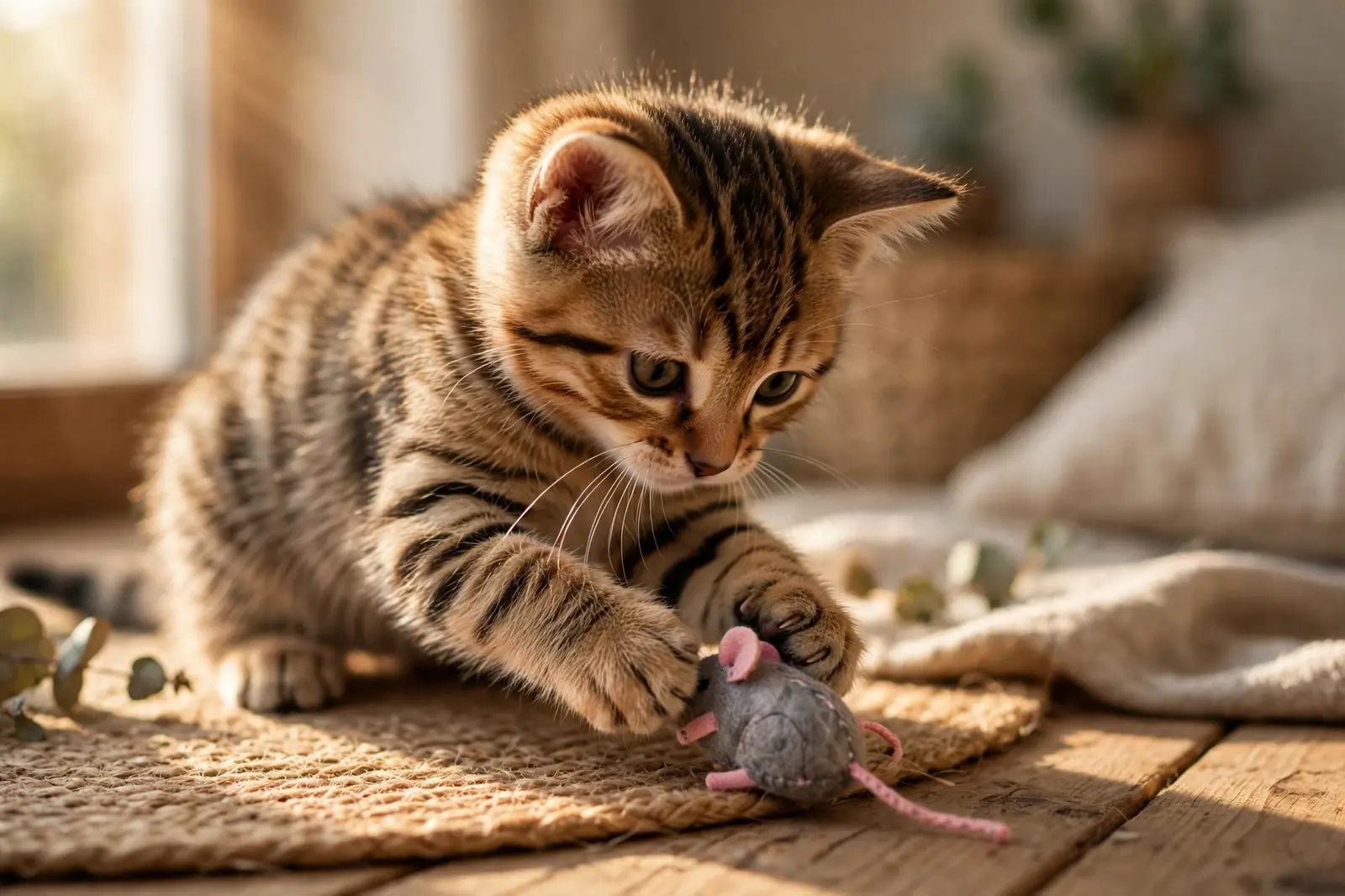
Tabby kittens show their pattern from the very start. A mackerel kitten has fine stripes, a classic kitten shows the first swirls of its bullseye, and a spotted kitten has dots that grow clearer as it grows. Ticked kittens look darker at first, and their speckled coat develops as the agouti banding matures.
Kittens are curious and playful from an early age. They chase toys, climb anything they can reach, and investigate every new sound. A tabby kitten that grows up with gentle handling, regular play, and company becomes a confident, social adult — see our guide to the best cat breeds for first-time owners for comparisons with other friendly breeds.
Grooming and Everyday Care
Grooming a tabby cat depends on the coat length rather than the pattern. A short-haired tabby needs only a comb or brush once a week or so, and the routine is quick. Longer-haired tabbies need more regular brushing to keep the coat free of tangles.
Beyond the coat, everyday care is straightforward. The ears can be checked and gently wiped as part of the regular grooming routine, and the claws can be trimmed as part of ordinary care. Tabbies do best living inside, where they are safe and comfortable, and their active nature means they need daily play — a feather wand, a rolling ball, or a puzzle toy will keep a tabby happy.
Tabby Patterns at a Glance
| Pattern | Markings | How to spot it | Breeds that show it well |
|---|---|---|---|
| Mackerel | Narrow vertical stripes | Thin tiger-like lines down the sides | American Shorthair, domestic shorthair |
| Classic | Thick swirling bands | Bullseye on each flank | British Shorthair, Maine Coon |
| Spotted | Oval or round spots | Stripes broken into dots in rows | Bengal, Egyptian Mau, Ocicat |
| Ticked | Banded hairs, no body stripes | Speckled salt-and-pepper coat | Abyssinian, Somali, Singapura |
Interesting Facts About Tabby Cats
- Not a breed: Tabby is a coat pattern, not a breed — it appears on pedigreed cats and mixed-breed cats alike.
- The original pattern: The mackerel tabby is the wild type, the pattern carried by the domestic cat’s wild ancestors.
- Every cat carries it: Every domestic cat has the tabby gene, even solid-coloured cats where the pattern is hidden.
- The “M” mark: Almost every tabby has a clear letter “M” on its forehead, whatever the pattern on its body.
- Orange tabbies: Orange tabbies are usually male, because the orange gene sits on the X chromosome.
- Ancient roots: The tabby pattern comes from the African wildcat, the ancestor of all domestic cats.
- A fifth pattern: Torbies combine tabby striping with tortoiseshell colouring, and they are almost always female.
Living With a Tabby Cat
A tabby cat is a cat for people who want a companion with character. Tabbies are active, curious, and social, and they tend to stay playful well into adulthood. They follow their owners from room to room, supervise whatever is happening, and ask to be part of it.
Compare tabby patterns with the main cat breeds in our guide to the most popular cat breeds in the USA, see how tabbies suit new owners in our guide to the best cat breeds for first-time owners, and browse the Cats & Kittens section to keep exploring.
Related Reading on MyPetsMyLove
- Most popular cat breeds in the USA
- American Shorthair cats guide
- Maine Coon cats guide
- Cats & Kittens hub page
- MyPetsMyLove homepage
- About Us page
References
- Wikipedia — Tabby cat, patterns and genetics
- The Cat Fanciers’ Association (CFA) — cat breed standards and profiles
- The International Cat Association (TICA) — cat breed information and standards
- Encyclopaedia Britannica — cat breeds and history reference
Frequently Asked Questions
Is a tabby cat a breed?
No. Tabby is a coat pattern, not a breed. It appears on pedigreed breeds such as the Maine Coon, British Shorthair, Bengal, and Abyssinian, and on mixed-breed domestic shorthair cats as well.
What are the four tabby patterns?
The four tabby patterns are mackerel (narrow vertical stripes), classic (thick swirling bands with a bullseye on each side), spotted (stripes broken into spots), and ticked (banded hairs with no visible stripes on the body).
Why do tabby cats have an “M” on their forehead?
Almost every tabby has a dark “M” marking on its forehead. It comes from the same pattern genes that stripe the rest of the coat, and it appears on mackerel, classic, spotted, and ticked tabbies alike.
What colours can tabby cats be?
Tabby is a pattern, so it comes in many colours: brown, silver, orange (also called red or ginger), blue, cream, and chocolate. Orange tabbies are usually male, because the orange gene sits on the X chromosome.
Are tabby cats the most common cats?
Yes. The tabby pattern is the most common coat pattern in domestic cats, and the most common house cat in America — the mixed-breed domestic shorthair — very often wears a tabby coat.
What is a tabby kitten like?
Tabby kittens show their pattern from the start, and it grows clearer as they mature. They are curious and playful from an early age, and they love to chase toys, climb, and explore the house.
How do you groom a tabby cat?
Grooming depends on coat length, not the pattern. A short-haired tabby needs a comb or brush once a week or so, while a longer-haired tabby needs more regular brushing to keep the coat free of tangles.
Conclusion
A tabby cat is not a breed — it is a coat pattern, and it is the pattern on the most common house cat in America. From the tiger stripes of the mackerel tabby to the swirling bullseye of the classic, the neat spots of the spotted tabby, and the speckled shimmer of the ticked tabby, the pattern is the oldest coat design in the domestic cat’s story, carried by every cat underneath and shown whenever the genes let it through.
Next time a striped cat weaves between your ankles, look for the “M” on its forehead — it is the tabby’s signature. Compare the patterns with other remarkable cats in our most popular cat breeds in the USA guide, explore the Cats & Kittens section, and start from the MyPetsMyLove homepage to meet more breeds worth knowing.
Disclaimer
Disclaimer
MyPetsMyLove dot com is an independent informational website covering pet species breeds characteristics activities positive training bonding grooming and responsible ownership
We are not a veterinary clinic medical provider pet food provider or veterinary nutrition service
We do not provide veterinary diagnosis medical advice treatment food recommendations or nutritional guidance
For pet health medical or food related concerns consult a qualified veterinarian or appropriate professional directly
Independent clinics listed on this website are not owned or operated by MyPetsMyLove unless explicitly stated
Verify third party credentials services fees and availability independently
We do not guarantee third party services or outcomes
To the extent permitted by applicable law we disclaim responsibility for independent third party services
Nothing in this notice excludes liability that cannot legally be excluded
The disclaimer does not make prohibited content acceptable

One Comment