
Sphynx Cats: Everything to Know About These Hairless Cats

No cat looks quite like the Sphynx. With velvety skin instead of a fur coat, big lemon-shaped eyes, and very large ears, it has one of the most striking appearances in the cat world. Yet the first thing most people notice after the looks is the personality: this is a warm, affectionate, people-oriented cat that wants to be wherever its owners are.
This guide covers the Sphynx cat from the beginning — its surprising origin in Toronto, the truth about its so-called hairless coat, its appearance and personality, Sphynx kittens, and the ordinary grooming routines that keep this unusual breed comfortable.
Origin and History of the Sphynx Cat
The Sphynx story begins in 1966 in Toronto, Canada, with a surprise. A black-and-white domestic shorthair named Elizabeth gave birth to a hairless male kitten, who was named Prune. The kitten’s lack of hair was a natural mutation — not something anyone had planned — and breeders began developing the line through selective breeding, working to establish a breed from that unusual beginning.
A second founding line followed in 1978, also in Toronto. Three hairless kittens — Bambi, Punkie, and Paloma — were found and raised by Shirley Smith. These three kittens became the foundation of the breed as it exists today, and the cats descended from them, together with the Prune line, shaped the modern Sphynx.
Recognition came gradually. The Cat Fanciers’ Association gave the breed provisional showing status, then revoked it in 1971 over fertility concerns. The International Cat Association recognized the breed in 1979, and the Cat Fanciers’ Association later granted championship status in 2002. That long road from a single surprising kitten in 1966 to championship recognition shows how much patient work went into building the breed.
The name itself is a nod to appearance rather than origin. The breed was named for its resemblance to an Egyptian sphinx sculpture, and it was first called the Canadian Hairless — a name that points to its true home in Toronto. Despite the Egyptian-sounding name, the Sphynx has no Egyptian connection at all. It is a Canadian breed through and through.
The Hairless Coat: Not Quite Hairless
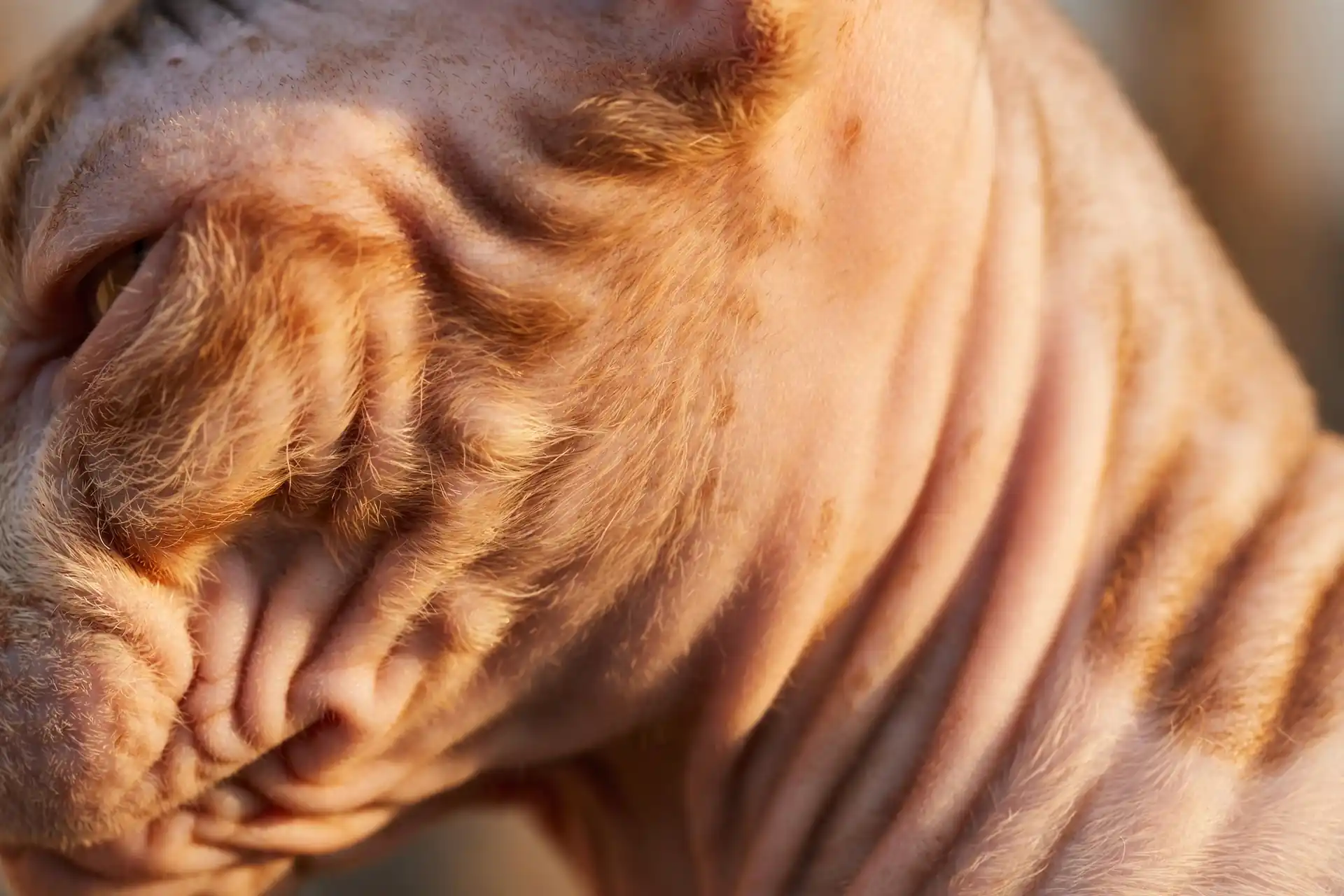
The first thing to know about the Sphynx is that it is not truly hairless. The breed carries a fine, short down over its skin that feels like peach fuzz — soft and warm to the touch. Run a hand over a Sphynx and you feel that velvety texture rather than bare skin, and the down gives the cat a warm, suede-like feel that surprises people who expect something cold or smooth.
Because there is no thick fur coat in the way, the skin itself shows the cat’s colours and patterns. A Sphynx can display solid colours, tabby patterns, tortoiseshell markings, and pointed patterns, all visible directly on the skin. The skin also shows wrinkles, especially around the head, neck, and legs — and those wrinkles are part of the breed’s charm, giving kittens and adults alike a distinctive, expressive look.
Compared with a coated breed like the Persian, whose long flowing coat defines its silhouette, the Sphynx shows its body shape directly. Every curve of its muscular frame is visible, which is part of why the breed looks so different from other cats. Readers browsing our guide to the most popular cat breeds will spot the Sphynx immediately — no other breed in the list looks anything like it.
Appearance: Muscular Build, Lemon Eyes, and Large Ears
The Sphynx is a medium-sized, muscular cat with a sturdy, athletic frame. Males weigh about 8 to 11 pounds, and females are slightly smaller. Despite the lack of fur, the breed looks solid and well built rather than delicate, with a broad chest, a rounded belly, and strong legs.
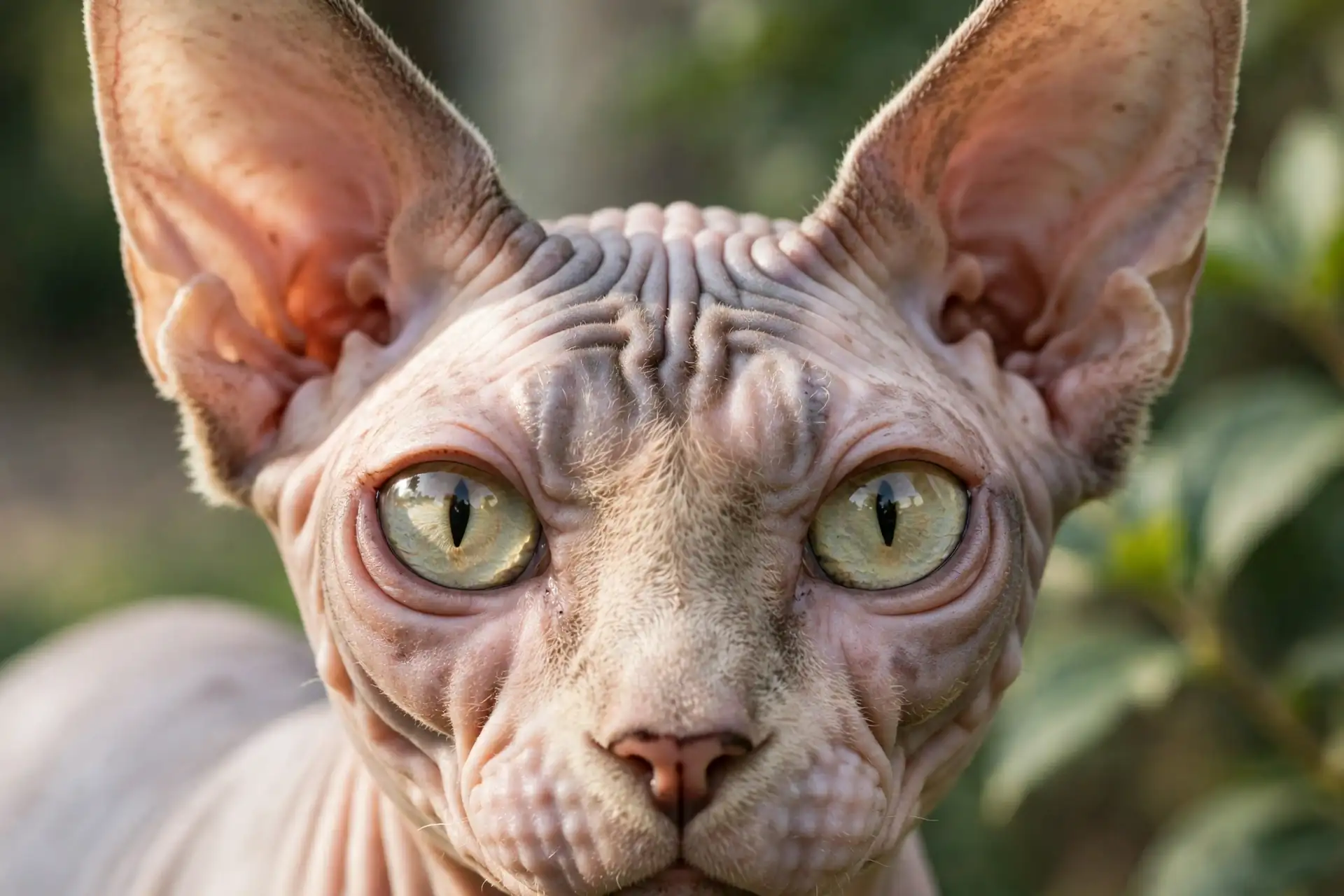
The head is wedge-shaped, with a flat forehead, prominent cheekbones, and a short nose. The eyes are large and lemon-shaped, set wide apart, and they give the breed an alert, expressive face. Eye colours include green, gold, blue, copper, and hazel, and the colour often pairs beautifully with the skin’s colour and pattern.
The ears are one of the breed’s most dramatic features. They are very large, wide at the base, and carried upright, which adds to the cat’s alert, almost otherworldly expression. The long, tapering tail completes the picture — thin and whip-like, often with a small tuft of fur at the tip. Put it all together and the Sphynx has a look that is hard to mistake for any other breed.
Personality: Affectionate, Social, and Playful
If the Sphynx looks unusual, its personality is just as memorable. Sphynx cats are affectionate, social, and playful, and they are famously people-oriented. A Sphynx does not just live in the same house as its owners — it follows them from room to room, greets them at the door, and looks for any chance to climb into a lap.
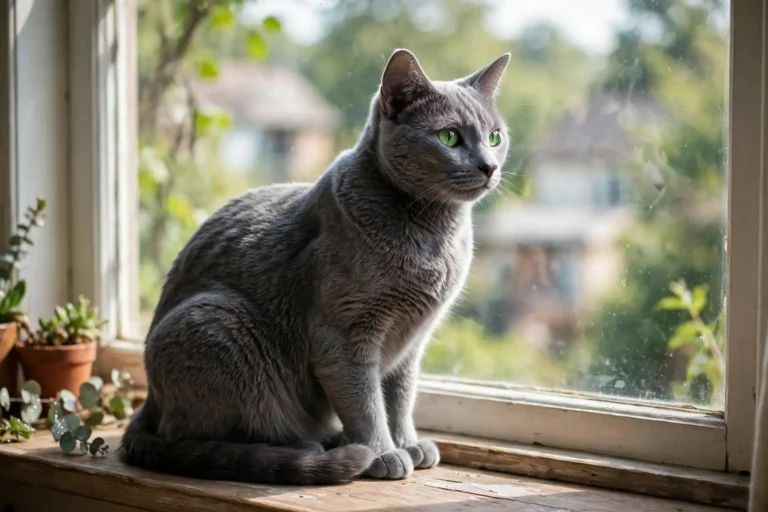
This is a vocal breed, too. Sphynx cats use their voices to talk to their people, with chirps, trills, and meows that say hello, ask for attention, or simply comment on the day. They are more talkative than a quiet breed like the Russian Blue, and closer in spirit to the famously chatty Siamese — though each Sphynx has its own voice and its own favourite sounds.
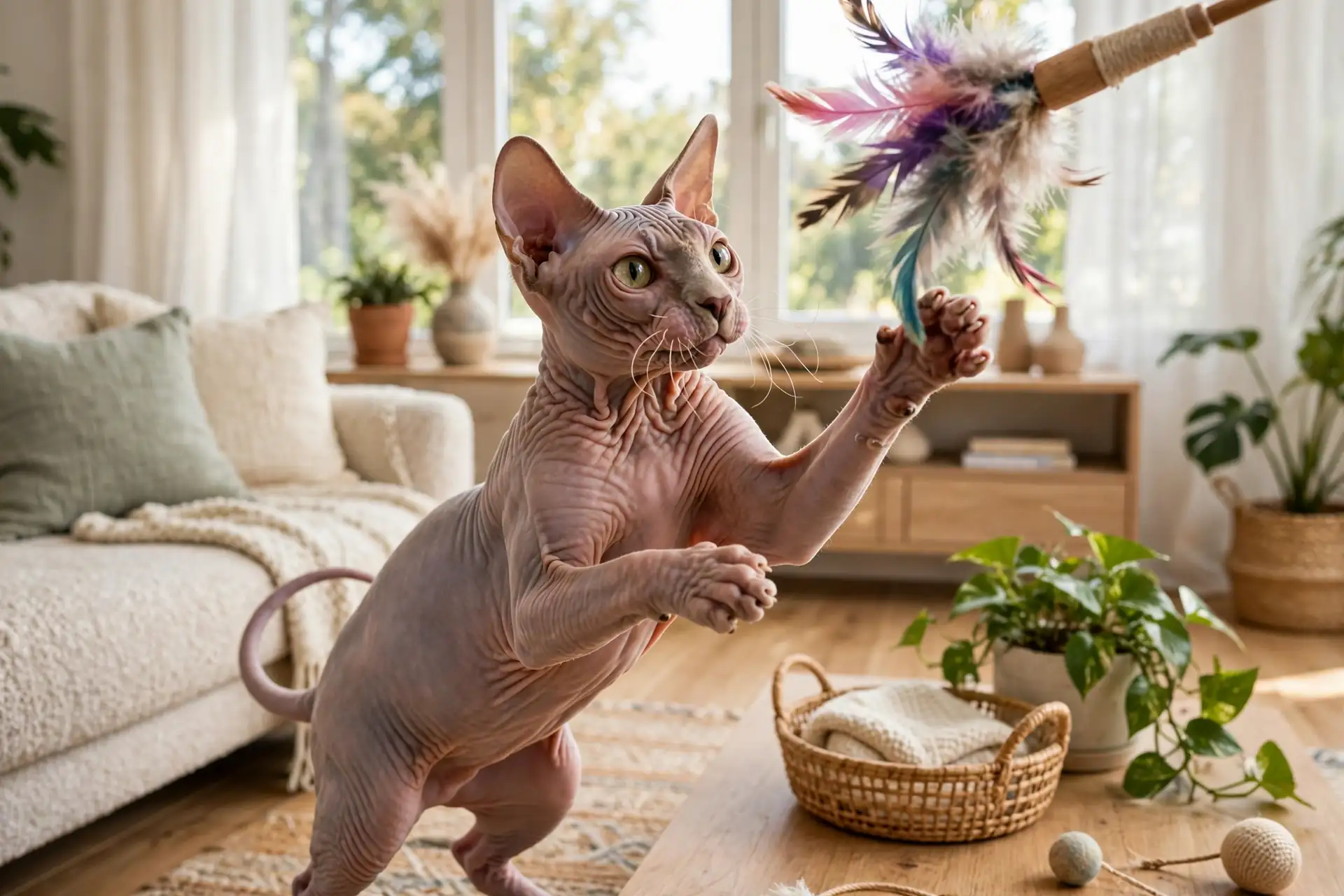
Play is a big part of a Sphynx’s day. These cats love interactive games — a feather wand, a rolling ball, a game of chase across the living room — and they stay playful well into adulthood. They are curious and clever, quick to investigate a new object or a new corner of the house, and they enjoy games that involve their people rather than solo toys left in a corner.
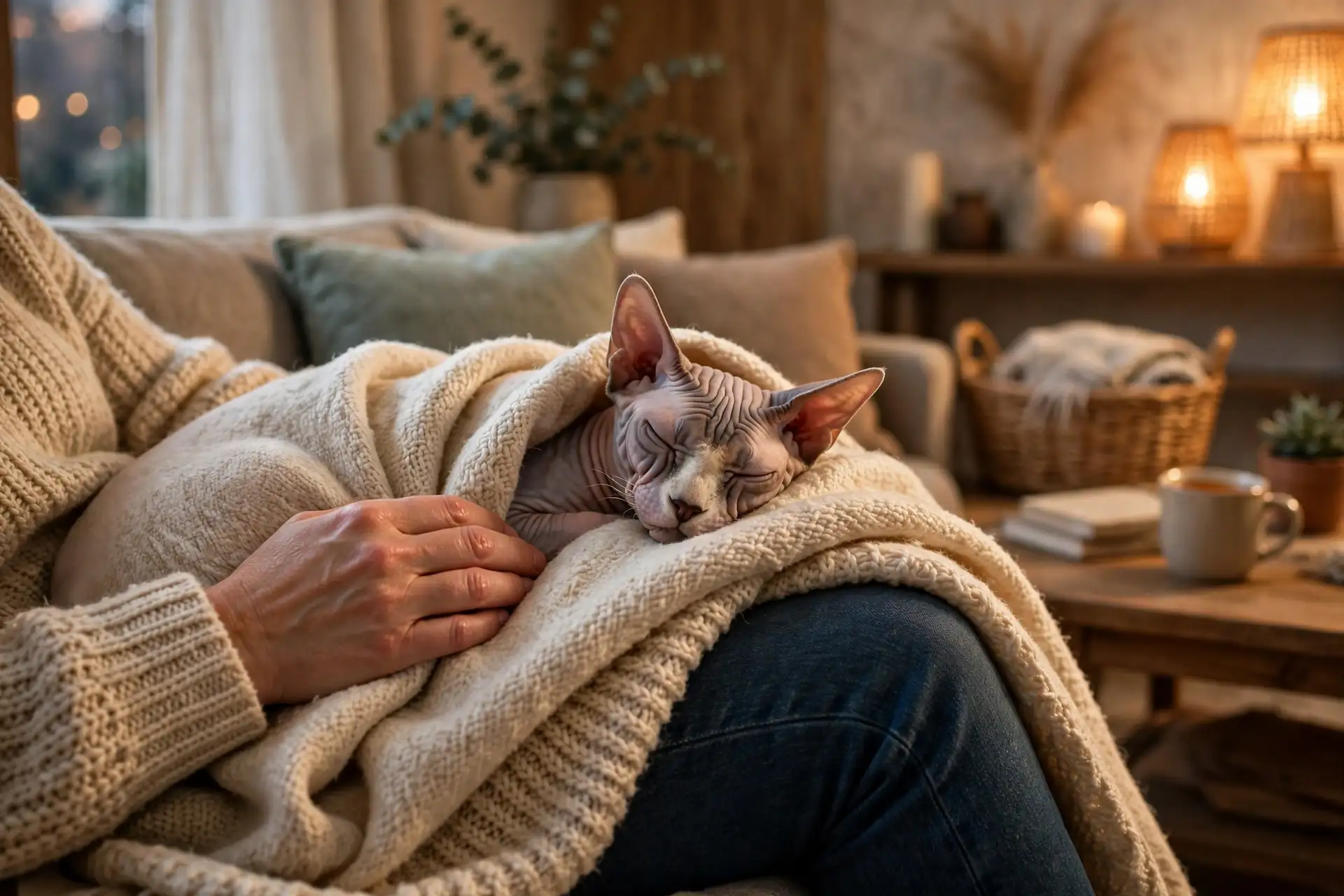
Warmth is a Sphynx’s favourite comfort. Without a fur coat, the breed seeks out warm places: a sunny windowsill, a spot near a heater, a blanket left on the sofa, and above all a warm lap. A Sphynx is happiest when it is warm and close to its people.
Sphynx Kittens: Wrinkly, Warm, and Curious
Sphynx kittens are among the most distinctive kittens in the cat world. They are born with the breed’s signature wrinkles — folds of skin around the head, neck, and legs that give them an endearing, almost ancient look. Their skin feels warm and velvety from the start, and their big eyes open onto a world they are eager to explore.
Kittens are playful and curious from an early age. They climb, chase, pounce, and investigate everything in reach, and they bond quickly with the people around them. A Sphynx kitten that grows up with plenty of company and gentle interactive play becomes a confident, social adult — one that greets visitors rather than hiding from them.
Like adults, kittens love warmth — a soft blanket, a warm lap, a sunny spot — and will often choose to sleep curled against a person rather than alone. That closeness is the heart of the breed’s appeal: a Sphynx kitten does not just want a home, it wants company.

Grooming and Everyday Care
Sphynx grooming is different from grooming a coated cat, but the routines are simple and ordinary. Because the breed has no fur to absorb the skin’s natural oils, regular baths are part of everyday care — a gentle bath removes the oils from the skin and keeps the coat’s fine down and the skin feeling clean. How often a bath is needed varies from cat to cat, and owners soon learn the rhythm that suits their own Sphynx.
Ear cleaning is another ordinary grooming routine for the breed. The Sphynx’s very large ears collect wax and debris more visibly than a coated cat’s ears, so a gentle wipe of the outer ear as part of the regular grooming routine keeps them clean. It is a quick, simple job once it becomes part of the weekly routine.
Keeping warm matters every day. Sweaters and blankets are a normal part of a Sphynx’s life, especially in cooler weather, and a warm spot — a sunny windowsill, a heated bed, or a lap — is always appreciated. Sphynx cats are indoor cats, and they do best living inside, where the temperature is steady and the comforts of home are close at hand.
Beyond grooming and warmth, a Sphynx needs daily interactive play, company, and a home that welcomes a cat who wants to be part of everything — more togetherness than the independent British Shorthair or the quiet Scottish Fold.
Sphynx vs Other Popular Breeds: A Quick Comparison
The Sphynx stands out for its coat, but how does it compare with other reader favourites? Here is a side-by-side look:
| Trait | Sphynx | Siamese | Persian | Russian Blue |
|---|---|---|---|---|
| Coat | Fine peach-fuzz down, skin shows colour and pattern | Short, sleek, pointed coat | Long, flowing coat | Dense double coat, silver-blue |
| Eye colour | Green, gold, blue, copper, or hazel | Blue | Copper, blue, or green | Vivid green |
| Build | Medium, muscular | Medium, slender | Medium, cobby | Medium, lithe, fine-boned |
| Energy | High | High | Low to moderate | Moderate |
| Vocality | Vocal | Very vocal | Quiet | Quiet |
| Best for | Owners wanting a warm, people-oriented companion | Owners wanting an active, talkative cat | Owners wanting a calm lap cat | Calm homes, devoted companionship |
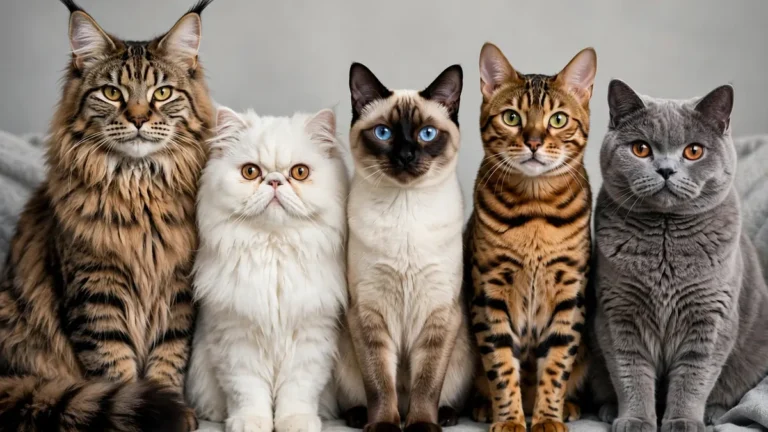
The Siamese shares the Sphynx’s energy and love of conversation, but wears a short pointed coat and blue eyes. The Persian offers the opposite — a long flowing coat and a quiet, calm nature. The Sphynx is the most people-oriented of the four, and the only one whose skin, rather than fur, shows its colours.
Interesting Facts About Sphynx Cats
- A Toronto beginning: The breed began in 1966 in Toronto, Canada, when a hairless male kitten named Prune was born to a black-and-white domestic shorthair named Elizabeth.
- A second founding line: In 1978, three hairless kittens — Bambi, Punkie, and Paloma — were found in Toronto and raised by Shirley Smith, forming the foundation of today’s breed.
- First called the Canadian Hairless: Before the Sphynx name caught on, the breed was known as the Canadian Hairless — a name that points to its true home.
- An Egyptian name, a Canadian cat: The name comes from the breed’s resemblance to an Egyptian sphinx sculpture, but the breed has no Egyptian connection.
- Not truly hairless: A fine, short down covers the skin and feels like peach fuzz.
- Skin shows the pattern: Colours and patterns — solid, tabby, tortoiseshell, and pointed — show directly on the skin.
- Recognition took decades: TICA recognized the breed in 1979, and CFA granted championship status in 2002, after an earlier provisional status was revoked in 1971.
- Warmth seekers: Sphynx cats love laps, blankets, and sunny windows — and sweaters are a normal part of their wardrobe.
Living With a Sphynx: What to Know
The Sphynx is a cat for people who want a companion, not just a pet. It follows its owners, talks to them, and greets them like a friend who has missed them.
If you love unusual cats with big personalities, compare the Sphynx with other breeds in our most popular cat breeds guide, see how it stacks up for new owners in our guide to the best cat breeds for first-time owners, browse the Cats & Kittens section, and start from the MyPetsMyLove homepage to keep exploring.
Related Reading on MyPetsMyLove
- Most popular cat breeds in the USA
- Siamese cats guide
- Scottish Fold cats guide
- Cats & Kittens hub page
- MyPetsMyLove homepage
- About Us page
References
- The Cat Fanciers’ Association (CFA) — Sphynx breed standard and profile
- The International Cat Association (TICA) — Sphynx breed information and standard
Frequently Asked Questions
Where did the Sphynx cat come from?
The Sphynx began in Toronto, Canada, in 1966, when a hairless male kitten named Prune was born to a black-and-white domestic shorthair named Elizabeth. A second founding line followed in 1978, when three hairless kittens — Bambi, Punkie, and Paloma — were found in Toronto and raised by Shirley Smith.
Is the Sphynx cat really hairless?
Not quite. The Sphynx carries a fine, short down over its skin that feels like peach fuzz. Because there is no thick fur coat, the skin itself shows the cat’s colours and patterns.
Why is it called the Sphynx?
The breed was named for its resemblance to an Egyptian sphinx sculpture. It has no Egyptian connection — it is a Canadian breed, and it was first called the Canadian Hairless.
What do Sphynx cats look like?
Sphynx cats are medium-sized and muscular, with a wedge-shaped head, large lemon-shaped eyes, very large ears, and a long tail. Males weigh about 8 to 11 pounds, and females are slightly smaller. Eye colours include green, gold, blue, copper, and hazel.
Are Sphynx cats good for first-time owners?
They can be, for owners who want an affectionate, social, playful companion and who enjoy a cat that follows them around and talks to them. Sphynx cats love warmth and company, and they need regular baths and ear cleaning as part of their ordinary grooming routine. See our guide to the best cat breeds for first-time owners for comparisons.
What is a Sphynx kitten like?
Sphynx kittens are wrinkly, warm, and curious, with velvety skin and big eyes. They are playful from an early age, bond quickly with the people around them, and love warm laps, soft blankets, and sunny spots.
How do you groom a Sphynx cat?
Sphynx grooming is based on ordinary routines: regular baths to remove skin oils, ear cleaning as part of the regular grooming routine, and keeping the cat warm with sweaters, blankets, and warm spots. Sphynx cats live indoors, where the temperature is steady.
Conclusion
The Sphynx began with a surprise — a hairless kitten named Prune, born in Toronto in 1966 — and grew into one of the most recognizable breeds in the cat world. With velvety peach-fuzz skin, big lemon eyes, very large ears, and a warm, playful, people-oriented nature, it is a cat that looks like no other and acts like no other either.
If you want a companion that will follow you from room to room, talk to you, play with you, and curl up warm on your lap, the Sphynx is hard to beat. Compare it with other remarkable breeds in our most popular cat breeds guide, explore the Cats & Kittens section, and start from the MyPetsMyLove homepage to meet more breeds worth knowing.
Disclaimer
Disclaimer
MyPetsMyLove dot com is an independent informational website covering pet species breeds characteristics activities positive training bonding grooming and responsible ownership
We are not a veterinary clinic medical provider pet food provider or veterinary nutrition service
We do not provide veterinary diagnosis medical advice treatment food recommendations or nutritional guidance
For pet health medical or food related concerns consult a qualified veterinarian or appropriate professional directly
Independent clinics listed on this website are not owned or operated by MyPetsMyLove unless explicitly stated
Verify third party credentials services fees and availability independently
We do not guarantee third party services or outcomes
To the extent permitted by applicable law we disclaim responsibility for independent third party services
Nothing in this notice excludes liability that cannot legally be excluded
The disclaimer does not make prohibited content acceptable
One Comment