
Siberian Husky: Arctic Origins, Coat Colours and Beautiful Eyes
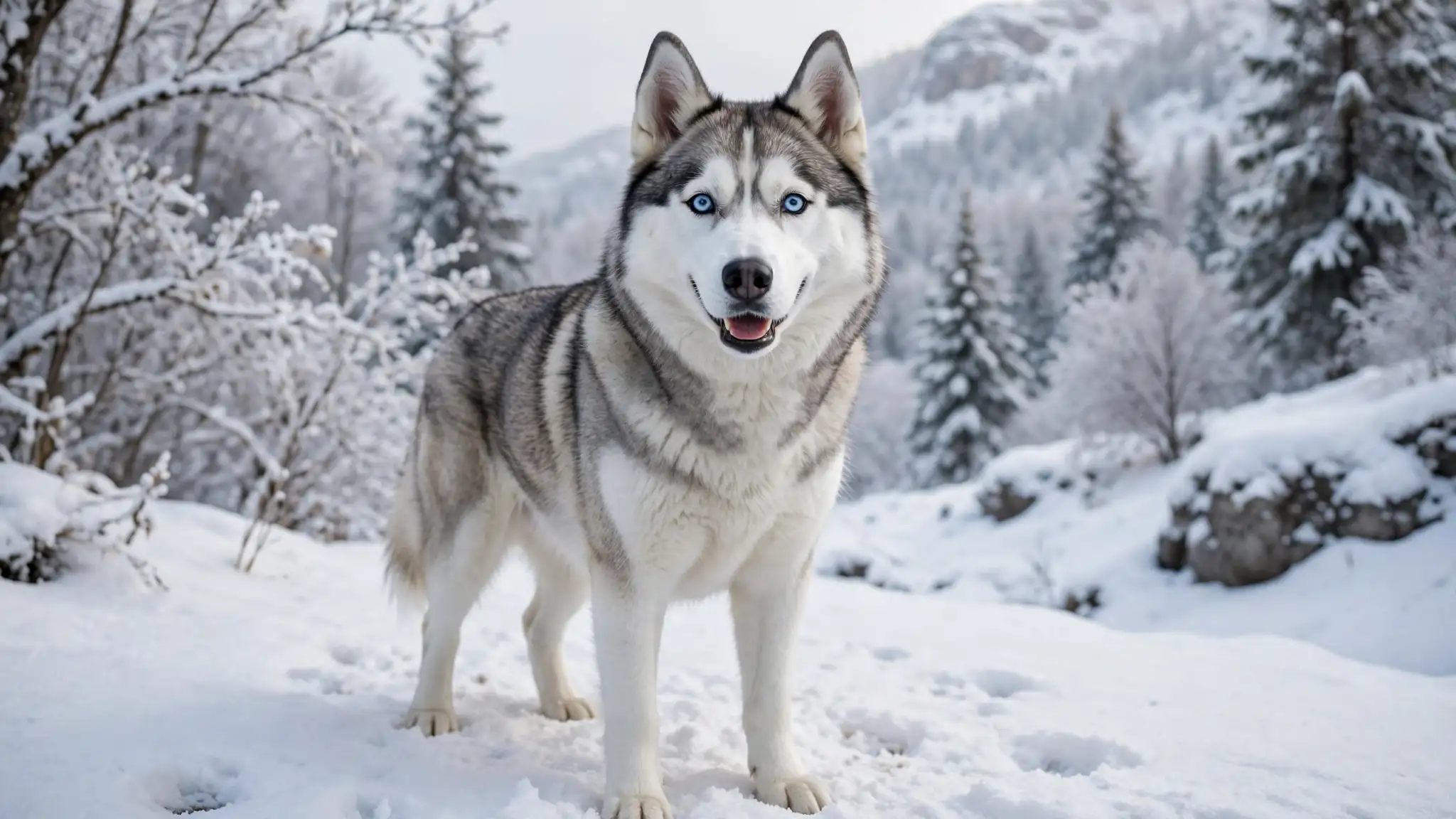
Few dogs look as ready for adventure as the Siberian Husky. Its thick coat, erect ears, and striking eyes give it the look of a wolf from the far north, yet its manner is friendly, outgoing, and full of joy. This is a dog bred to run for miles across snow and to pull a sled as part of a team.
This guide explores the Siberian Husky’s Arctic origins, explains its coat colours and beautiful eyes, describes its size and appearance, and shares what its personality is really like.
Origin and History: The Chukchi People of Siberia
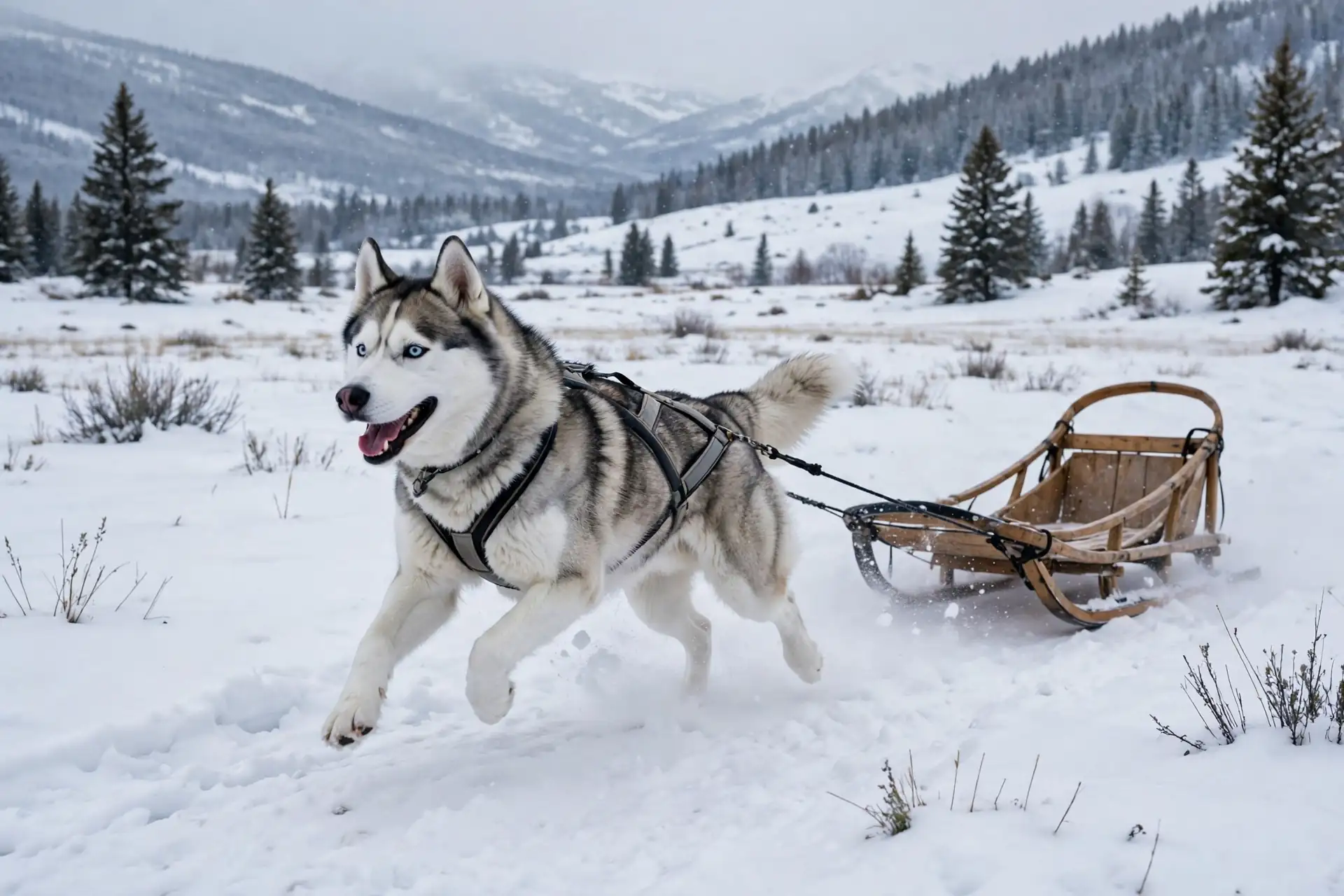
The Siberian Husky was bred by the Chukchi people of northeastern Siberia. The Chukchi lived in a cold, harsh land where dogs were essential partners, and over many generations they developed a dog built for endurance rather than brute strength. These dogs pulled light sleds over long distances, moving steadily through snow in conditions that would exhaust heavier dogs.
What set the Chukchi dogs apart was not only their stamina but also their closeness to people. The dogs lived closely with Chukchi families, sharing their homes and daily lives. Children played with them, and the dogs learned to be gentle and trusting around people. That early companionship helped shape the friendly temperament the breed still shows today.
The Chukchi wanted a dog that could travel far on little food, work happily in a team, and remain good-natured at home. The result was a medium-sized, athletic dog with a thick double coat for insulation, a light and efficient gait, and a sociable nature.
From Siberia to Alaska: Nome and the Great Races
The Siberian Husky’s journey to America began in the early 1900s, when traders brought Siberian dogs to Alaska. The first Siberian teams reached Nome, Alaska, in autumn 1908. At the time, Alaskan sled dogs were larger and heavier, and many people doubted that the smaller Siberian dogs could compete. The Siberians soon proved them wrong.
In 1909, Siberian teams competed in the All-Alaska Sweepstakes, a 408-mile race that tested speed and endurance across the Alaskan wilderness. The Siberian dogs finished strongly, showing that their light build and steady pace were an advantage over long distances.
The breed’s most famous moment came in the winter of 1925, during the serum run to Nome. A relay of sled teams carried medicine about 674 miles from Nenana to Nome in about five and a half days, with around 20 mushers and about 150 dogs taking part. Togo led Leonhard Seppala’s team over the longest leg, about 261 miles, through difficult conditions. Balto led Gunnar Kaasen’s team on the final leg into Nome. A statue of Balto stands in Central Park, New York, and the Iditarod race commemorates the relay.
Recognition in America
As the breed’s reputation grew, dog fanciers in the United States worked to have it formally recognised. The American Kennel Club recognised the breed in April 1930, giving the Siberian Husky an official place among American breeds. Eight years later, in 1938, the Siberian Husky Club of America was founded to promote the breed and to look after its standard and its future.
Recognition brought the Siberian Husky into the show ring and into American homes. Breeders valued the dog’s Arctic heritage, its efficient movement, and its friendly nature. Readers comparing popular American breeds will find the Husky among the favourites in our guide to the most popular dog breeds in America.
Siberian Husky Coat Colours
The Siberian Husky’s coat is one of its most admired features, and it comes in a remarkable range of colours. The coat is a thick double coat: a dense, soft undercoat beneath a straight outer coat of medium length. That double layer protected the breed against the bitter cold of Siberia, trapping warmth close to the body while the outer coat shed snow and wind.
The colours include black, gray, white, red, sable, and agouti. Many Huskies combine two colours, often with white on the chest, legs, and underside, and many carry striking facial markings. A white blaze down the face, a dark cap over the head, or a mask around the eyes can make each dog’s face look quite different from the next.
Agouti is the colour most often linked to the breed’s wild look. An agouti coat is banded, with each hair showing more than one shade, giving a grizzled, wolf-like effect. A solid white Husky, by contrast, looks almost luminous in snow. Red Huskies range from a light copper to a deep chestnut, while sable coats blend black-tipped hairs over a lighter base.

Appearance: Size, Eyes, Ears, and Tail
The Siberian Husky is a medium-sized dog, built for speed and endurance rather than bulk. It stands 20 to 23.5 inches at the shoulder and weighs 35 to 60 pounds. Males are usually 45 to 60 pounds, while females are usually 35 to 50 pounds. The body is compact and well muscled, with a level back, a deep chest, and legs that move with a smooth, effortless gait.
The head is medium-sized, with a slightly rounded skull, a straight muzzle, and a friendly, alert expression. The ears are erect and triangular, set high on the head and carried upright. The tail is the classic brush tail, thick with fur and carried over the back in a graceful curve when the dog is alert or moving.
The eyes are the breed’s most famous feature. They are almond-shaped and set slightly apart, and they may be blue, brown, or one of each. Blue eyes are the best known, and a Husky with two bright blue eyes is an unforgettable sight. Brown eyes are just as typical of the breed, and a dog with one blue eye and one brown eye is common in Huskies.

Siberian Husky Personality: Friendly, Energetic, and Independent
The Siberian Husky personality is friendly, outgoing, energetic, intelligent, and independent. Huskies are famously sociable dogs. They greet people with enthusiasm, enjoy company, and usually get along well with other dogs, a legacy of their history as team dogs that lived and worked closely together.
Energy is the defining trait of the breed. Huskies love running and pulling, and they need lots of exercise and company every day. A Husky that runs, plays, and explores is a happy Husky, while a Husky left alone with nothing to do will quickly find its own entertainment.
Huskies are also intelligent and independent thinkers. They were bred to work at a distance from the musher, making decisions on the trail, and that independence still shows. A Husky may understand a request perfectly well and still decide to consider it first. Patient, positive training works best with this breed, using rewards and play rather than force.
The breed is also famously vocal. Huskies are known for their howls, yips, and talkative sounds, and many owners describe their Husky as a dog that likes to chat. Compared with the quieter Beagle or the steady Labrador Retriever, the Husky is a far more expressive communicator. Readers weighing a first dog should compare temperaments in our guide to the best dog breeds for first-time owners.
Siberian Husky Puppies
Siberian Husky puppies are playful, curious, and full of energy from the start. Even as young puppies they show the breed’s love of movement, chasing toys, exploring the garden, and wrestling happily with littermates.
Puppies bond quickly with the people around them and learn fast when training is kept positive and fun. Early socialisation matters: meeting different people, hearing everyday sounds, and exploring new places helps a puppy grow into a confident adult. Because Huskies are such social dogs, puppies do best in homes where someone is around for much of the day.
A Husky puppy’s appearance changes as it grows. The fluffy puppy coat gives way to the thick adult double coat, the facial markings become clearer, and the eye colour settles.

Living With a Siberian Husky: Exercise, Training, and a Secure Garden
Living with a Siberian Husky is rewarding, but it asks for an active lifestyle and a little planning. Daily exercise is essential. Long walks, runs, hikes, and games of fetch all suit the breed, and many owners enjoy activities such as canicross or bike rides that let the dog run and pull in a controlled way.
The breed is also known as an escape artist, so a secure garden matters. Huskies are clever, agile, and determined, and they can climb, dig under, or slip through gaps in fencing that would hold other dogs. A tall, sturdy fence with no gaps, checked regularly, is one of the most practical things a Husky owner can provide. Huskies should also be kept on a lead in unfenced areas, because their love of running can carry them a long way in a short time.
Positive training and a steady routine help a Husky settle. The breed responds well to rewards, play, and praise, and it enjoys learning new things when the lesson feels like a game. Grooming is straightforward: regular brushing keeps the thick double coat in good condition and lifts away loose hair. The Golden Retriever and the German Shepherd are useful comparisons here, since all three are active breeds that need regular exercise, while the smaller French Bulldog and the Poodle suit a quieter pace.
Siberian Husky vs Other Popular Breeds: A Quick Comparison
The Siberian Husky is often compared with other popular breeds. Here is how it stands beside three reader favourites:
| Trait | Siberian Husky | Labrador Retriever | German Shepherd | Beagle |
|---|---|---|---|---|
| Size | 20–23.5 inches, 35–60 pounds | Medium-large | Medium-large | Small-medium |
| Coat | Thick double coat | Short double coat | Medium double coat | Short, smooth coat |
| Energy level | Very high | High | High | Moderate to high |
| Vocality | Very vocal, howls and talks | Moderate | Moderate | Vocal, bays |
| Best for | Active owners who love running | Active families | Active owners wanting a loyal companion | Owners wanting a smaller scent hound |
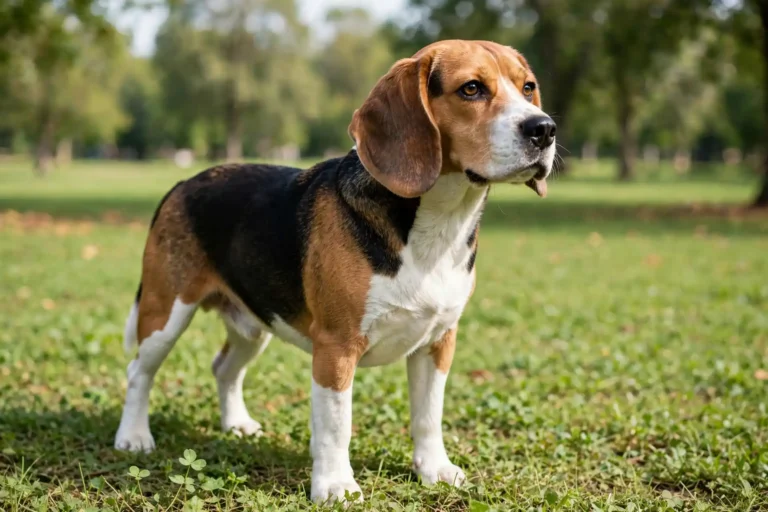
The Labrador Retriever is the more easygoing family dog, happy to please and quick to settle. The German Shepherd is the more focused working companion, loyal and watchful. The Beagle is smaller and more compact, with a scent hound’s curiosity.
Interesting Facts About Siberian Huskies
- A Chukchi companion: The breed was developed by the Chukchi people of northeastern Siberia, and the dogs lived closely with Chukchi families.
- First teams in Nome, 1908: The first Siberian teams reached Nome, Alaska, in autumn 1908.
- A 408-mile race: Siberian teams competed in the All-Alaska Sweepstakes in 1909, a 408-mile race.
- The 1925 serum run: A relay of sled teams carried medicine about 674 miles from Nenana to Nome in about five and a half days.
- Togo’s long leg: Togo led Leonhard Seppala’s team over the longest leg, about 261 miles.
- Balto’s final leg: Balto led Gunnar Kaasen’s team on the final leg into Nome, and a statue of Balto stands in Central Park, New York.
- Two different eyes: A Husky may have one blue eye and one brown eye, a look common in the breed.
- A famous escape artist: Huskies are known for climbing, digging, and slipping through gaps in fencing.
Living With a Siberian Husky: What to Know
The Siberian Husky is a dog for people who love the outdoors, enjoy an active life, and want a friendly, expressive companion. It brings Arctic history, a stunning coat, and unforgettable eyes into everyday life, along with energy and independence that ask for respect and planning. Give a Husky exercise, company, positive training, and a secure garden, and it will reward you with loyalty and joy.
Compare the Husky with the Dachshund and other breeds in our most popular dog breeds in America guide, and browse the Dogs & Puppies section to keep exploring.
Related Reading on MyPetsMyLove
- Most popular dog breeds in America
- Golden Retriever guide
- Beagle guide
- Dogs & Puppies hub page
- MyPetsMyLove homepage
- About Us page
References
- American Kennel Club (AKC) — Siberian Husky breed information and standard
- Encyclopaedia Britannica — Siberian Husky
Frequently Asked Questions
Where did the Siberian Husky come from?
The Siberian Husky was bred by the Chukchi people of northeastern Siberia as an endurance sled dog and companion. The dogs lived closely with Chukchi families. The first Siberian teams reached Nome, Alaska, in autumn 1908.
What colours do Siberian Huskies come in?
Siberian Huskies come in black, gray, white, red, sable, and agouti, often with white markings and distinctive facial markings. The thick double coat gives the breed its full, soft outline.
Why do Siberian Huskies have blue eyes?
Many Siberian Huskies have blue eyes, but brown eyes are just as typical, and some Huskies have one blue eye and one brown eye. The eyes are almond-shaped, and the colour is simply one of the breed’s most charming variations.
How big do Siberian Huskies get?
Siberian Huskies stand 20 to 23.5 inches at the shoulder and weigh 35 to 60 pounds. Males are usually 45 to 60 pounds, while females are usually 35 to 50 pounds.
Are Siberian Huskies good for first-time owners?
They can be a challenge for first-time owners because they are so energetic, independent, and vocal, and they need lots of exercise and company. Active owners who enjoy running and outdoor time will enjoy them most. See our guide to the best dog breeds for first-time owners for comparisons.
Why are Siberian Huskies known as escape artists?
Huskies are clever, agile, and determined, and they can climb, dig under, or slip through gaps in fencing. A secure garden with a tall, sturdy fence matters a great deal for this breed.
What made the Siberian Husky famous in America?
The 1925 serum run to Nome made the breed famous. A relay of sled teams carried medicine about 674 miles from Nenana to Nome in about five and a half days. Togo led the longest leg, about 261 miles, and Balto led the final leg into Nome.
Conclusion
The Siberian Husky has travelled a remarkable road, from the Chukchi families of northeastern Siberia to the races of Nome, the 1925 serum run, and American Kennel Club recognition in April 1930. It is a friendly, energetic, and independent dog with a thick double coat in colours from black to agouti, almond-shaped eyes in blue, brown, or one of each, and a love of running that never fades.
If you want an active companion with Arctic heritage and unforgettable eyes, the Siberian Husky is hard to beat. Compare it with other remarkable breeds in our most popular dog breeds in America guide, explore the Dogs & Puppies section, and start from the MyPetsMyLove homepage to meet more breeds worth knowing.
Disclaimer
Disclaimer
MyPetsMyLove dot com is an independent informational website covering pet species breeds characteristics activities positive training bonding grooming and responsible ownership
We are not a veterinary clinic medical provider pet food provider or veterinary nutrition service
We do not provide veterinary diagnosis medical advice treatment food recommendations or nutritional guidance
For pet health medical or food related concerns consult a qualified veterinarian or appropriate professional directly
Independent clinics listed on this website are not owned or operated by MyPetsMyLove unless explicitly stated
Verify third party credentials services fees and availability independently
We do not guarantee third party services or outcomes
To the extent permitted by applicable law we disclaim responsibility for independent third party services
Nothing in this notice excludes liability that cannot legally be excluded
The disclaimer does not make prohibited content acceptable
One Comment