
Leash Training: How to Walk Your Dog With Confidence

Picture this: you step out the front door, your dog trots happily beside you, the leash hangs in a soft curve, and the whole walk feels easy. Now picture the opposite — the version many owners know too well. The leash goes tight before you reach the sidewalk, your arm gets pulled toward every interesting smell, and by the time you get home, both of you are frustrated. The difference between those two walks is not luck. It is leash training, and it is one of the most useful skills any dog owner can teach. This guide walks you through it step by step, from choosing the right gear to handling distractions.
What Is Leash Training?
Leash training means teaching your dog to walk calmly on a leash without pulling, lunging, or weaving across your path. The core skill is called loose-leash walking: the dog walks near you with the leash hanging slack, instead of straining at the end of it. A dog that walks on a loose leash can still sniff, look around, and enjoy the walk — the leash simply stays relaxed, and the dog checks in with you instead of dragging you along.
Good leash training is built on positive reinforcement. That means rewarding the behavior you want — walking close, checking in, turning with you — rather than punishing the behavior you do not want. When walking beside you earns praise or a small reward, the dog starts choosing that position on its own. This approach works for dogs of every age and size, from a tiny puppy taking its first steps outside to an adult dog that has pulled for years.
The training itself is simple, but it takes patience and consistency, and the results are worth every short practice session.
Choosing the Right Leash, Collar, and Harness
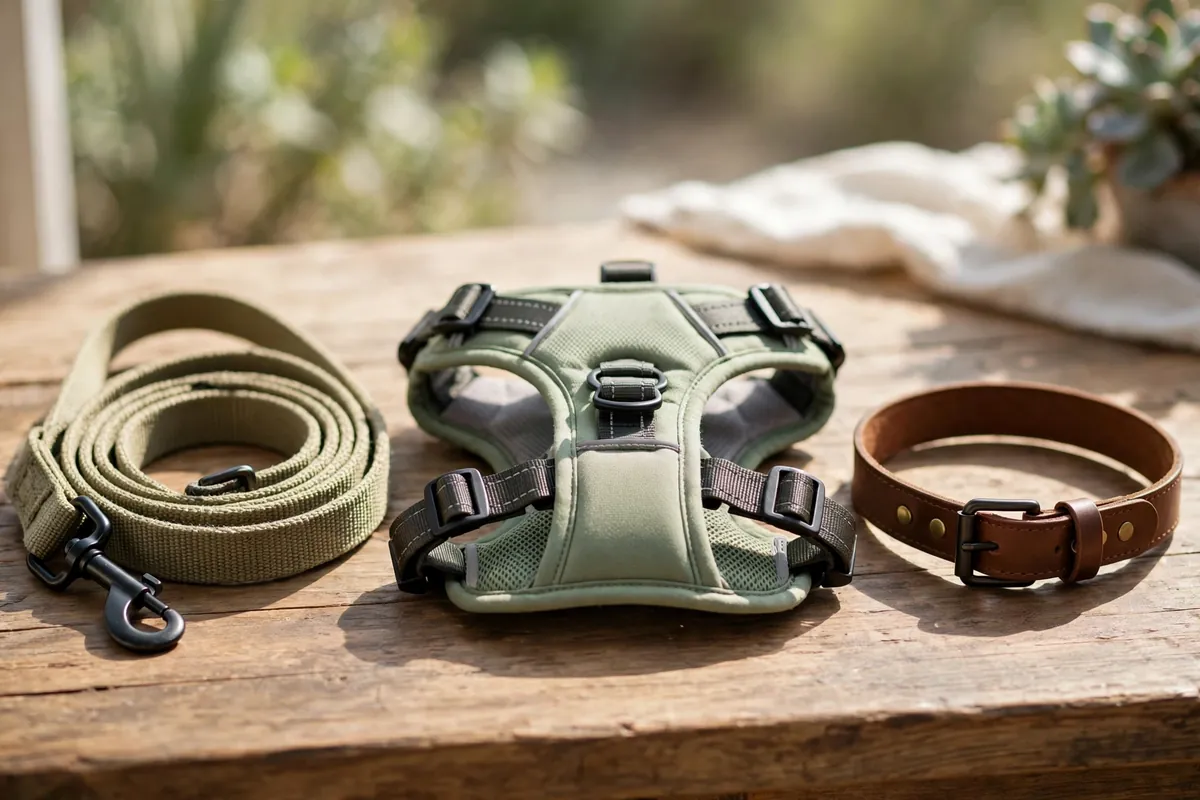
The right gear makes leash training easier, and the wrong gear can work against you. A standard flat leash, about four to six feet long, is the best starting point for most dogs. It gives your dog room to walk and sniff while keeping you close enough to guide it. Retractable leashes are not a good choice for training, because they teach the dog that pulling makes the leash longer.
For the collar or harness, fit matters more than style. A flat collar should sit snugly enough that it cannot slip over the head, but loosely enough that you can fit two fingers underneath. A well-fitting harness spreads pressure across the chest and shoulders instead of the neck, which many owners prefer for dogs that pull. A front-clip harness, where the leash attaches at the chest, can gently turn a pulling dog back toward you. Avoid choke chains, prong collars, and anything that works by causing discomfort — these tools do not teach a dog to walk calmly.
| Gear | Best for | Notes |
|---|---|---|
| Standard flat leash (4–6 ft) | Everyday training and walks | Gives a consistent length; easy to handle |
| Flat collar | Dogs that already walk fairly well | Check the fit every few weeks as the dog grows |
| Back-clip harness | Comfortable everyday walks | Spreads pressure across the chest |
| Front-clip harness | Dogs that pull strongly | Gently turns the dog toward you |
| Retractable leash | Open areas only, not training | Teaches pulling; avoid while training |
Hold the leash with both hands if your dog is strong, and keep a small pouch of rewards handy so you can praise good walking the moment it happens.
Getting Your Dog Comfortable With the Gear
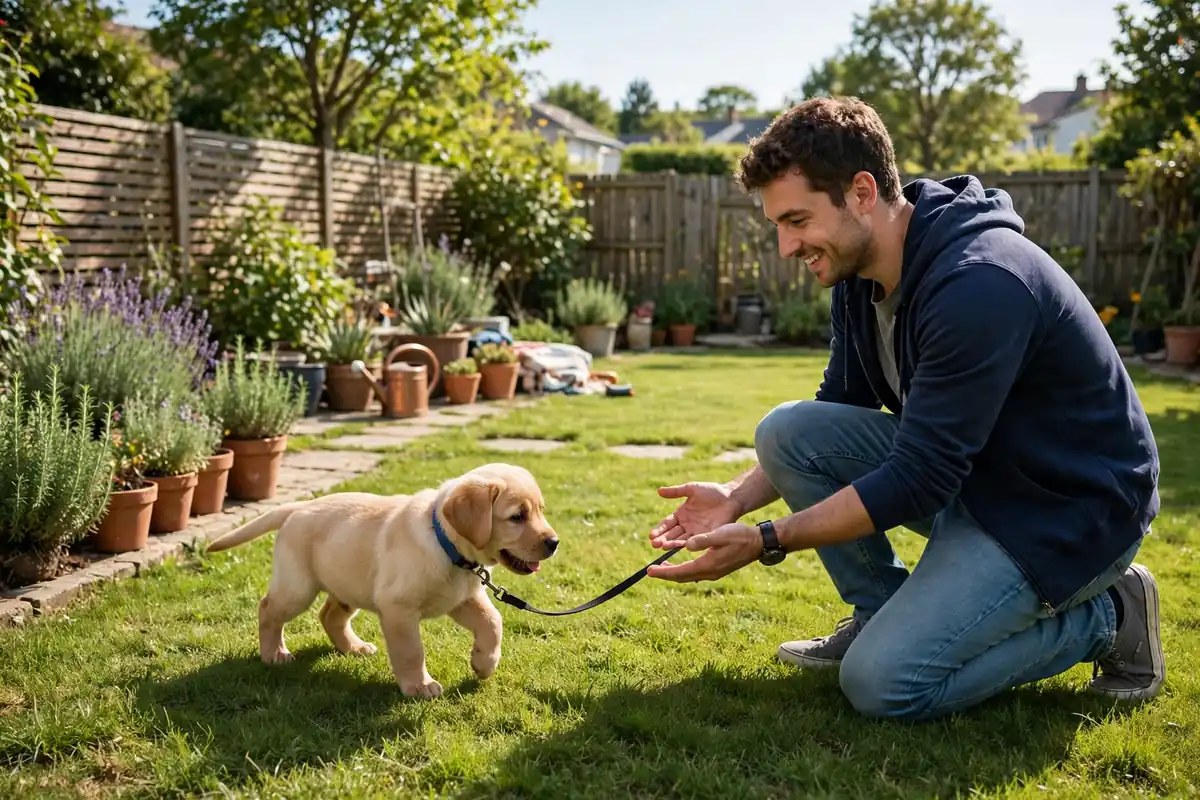
Before the first real walk, let your dog get used to the gear at home. Clip the leash to the collar or harness indoors and let your dog wander around the house wearing it for a few minutes at a time. Offer praise and a small reward while the gear is on, so the dog connects the leash with good things. If the dog paws at the harness or freezes, keep the session short and cheerful, then try again later.
Practice walking around the house or garden with the leash on. Take a few steps, praise your dog for walking beside you, and reward it. These indoor rehearsals teach the basic idea — walking near you is rewarding — without the excitement of the street.
Choose the first outdoor sessions carefully. A quiet street or a calm corner of the garden is far better than a busy park. Keep the first outings short, five to ten minutes, and end on a good note while your dog is still walking nicely.
How to Teach Loose-Leash Walking, Step by Step
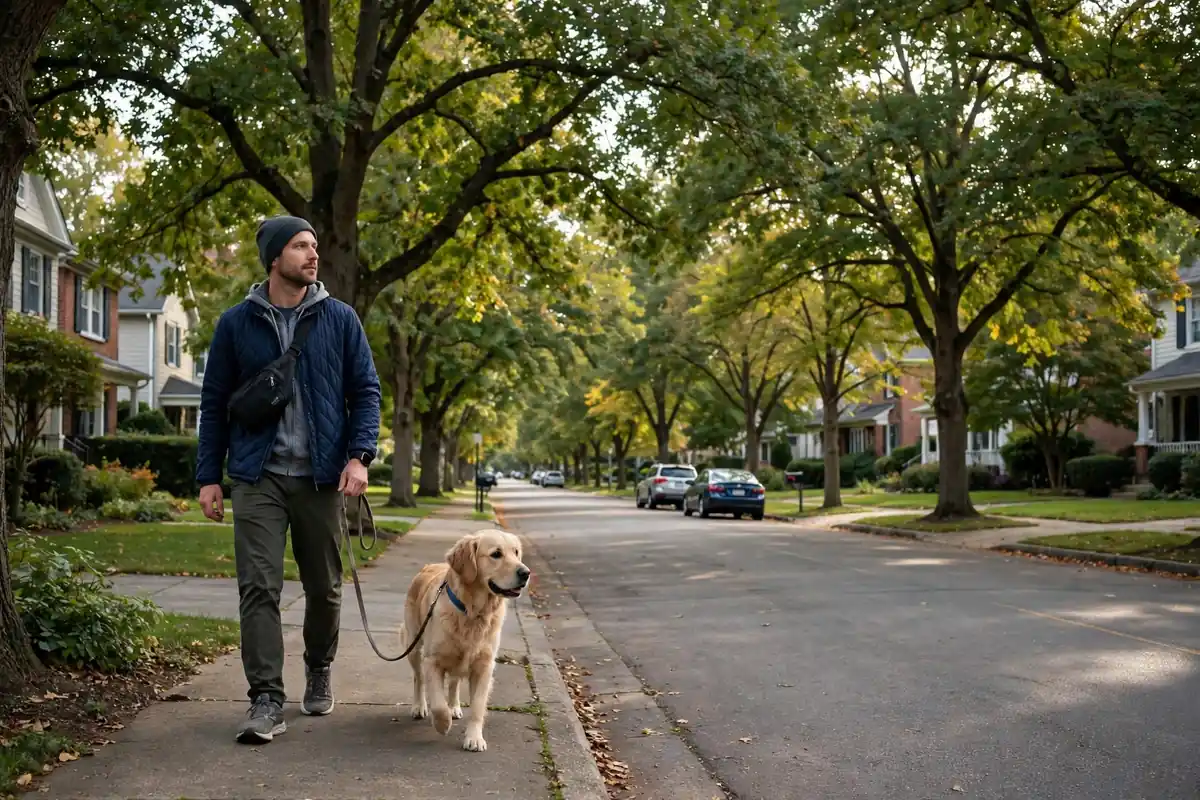
Start in a quiet place with your dog on one side — pick a side and stay consistent. Hold the leash with a gentle slack, stand still for a moment, let your dog settle, and then step forward calmly.
Follow these steps to build the habit:
- Step forward and reward the position. Walk a few steps with your dog beside you. The moment your dog is in the right spot, praise it warmly and offer a small reward.
- Stop when the leash goes tight. If your dog pulls ahead and the leash tightens, stop walking immediately. Stand still and wait. Do not drag the dog back or yank the leash.
- Wait for slack, then move again. When your dog turns back toward you or the leash loosens, praise it and start walking again. The dog learns that a tight leash stops the walk, while a loose one keeps it going.
- Change direction to reset. If your dog keeps surging ahead, turn and walk the other way, so it learns to pay attention to where you are going.
- Reward check-ins. Whenever your dog looks up at you during a walk, praise it — eye contact keeps a dog connected to you.
- Build distance gradually. Start with ten or twenty steps of good walking, then stretch it to a full block, then to a longer route. Add distance only when the shorter distance is going well.
- End on a success. Finish each session while your dog is still walking nicely, even if that means a shorter walk than you planned. A good ending is what the dog remembers.
Practice this pattern in short sessions, a few times a day if you can. Most dogs start to understand the idea within a week or two, though steady loose-leash walking in busy places takes longer. Patience is part of the method — every calm step is progress.
What to Do When Your Dog Pulls
Pulling is the most common leash problem, and it is also the most fixable. Dogs pull because it works: pulling gets them to the next interesting smell faster. Leash training reverses that logic. When pulling stops the walk and walking calmly restarts it, the dog has a clear reason to choose the calm option.
The stop-and-go method described above is your main tool. The moment the leash tightens, you become a tree: stop, wait for the leash to slacken, and then continue. It can feel slow at first, and the first few walks may cover very little ground. That is normal — a short walk done well teaches more than a long one spent being dragged.
If your dog lunges toward another dog or a person, increase the distance. Calmly turn away, walk in the opposite direction, and praise your dog once it settles. Do not jerk the leash or shout — sudden corrections add excitement and tension. A calm response from you is the fastest way to bring a dog’s excitement down.
Common Leash Training Mistakes
Even careful owners slip into habits that slow training down. The most common mistake is inconsistency — letting the dog pull sometimes and not others. If pulling works on the way to the park but not on the way home, the dog gets a confusing message. Every walk is a training walk, even a quick trip to the mailbox.
Another common mistake is walking too far too soon. A long route through a busy area asks a lot of a dog that has only just learned the basics. Build up gradually: quiet street first, then a busier street, then the park.
Using a retractable leash during training is another setback, because it constantly changes the length of the leash and rewards pulling with more freedom. So is walking while looking at your phone — your dog notices when your attention is gone. Stay present, watch your dog, and reward the moments of good walking as they happen.
Walking Puppies vs. Adult Dogs
Puppies and adult dogs learn leash training the same way, but the pace is different. Puppies have short attention spans, so keep their sessions very short — just a few minutes of walking at a time — and make them playful. A puppy that is having fun learns fast, and every gentle walk is a chance to meet new sights and sounds calmly. For ideas on keeping a young dog busy between walks, our guide to the best dog toys covers toy types that suit different play styles.
Adult dogs that have pulled for years need more patience, because pulling has become a strong habit. The method is the same — stop when the leash tightens, reward the slack — but it may take several weeks before the habit changes. Older dogs can learn new walking habits just as well as puppies; they simply need more repetitions.
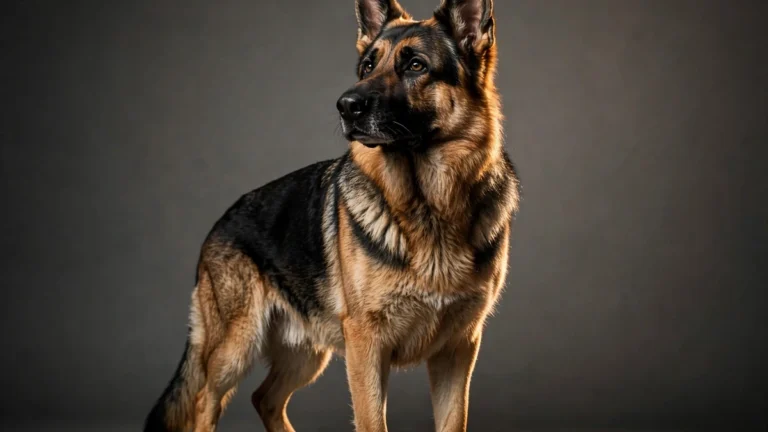
Size matters too. A small dog like the Chihuahua is easier to manage while it learns, while a large, strong breed needs a well-fitting harness. Among the most common dog breeds, energetic types such as the Border Collie and the German Shepherd often need extra practice, because their enthusiasm makes them eager to get ahead. Patient training works for all of them — the timeline simply varies.
Practicing in Different Places
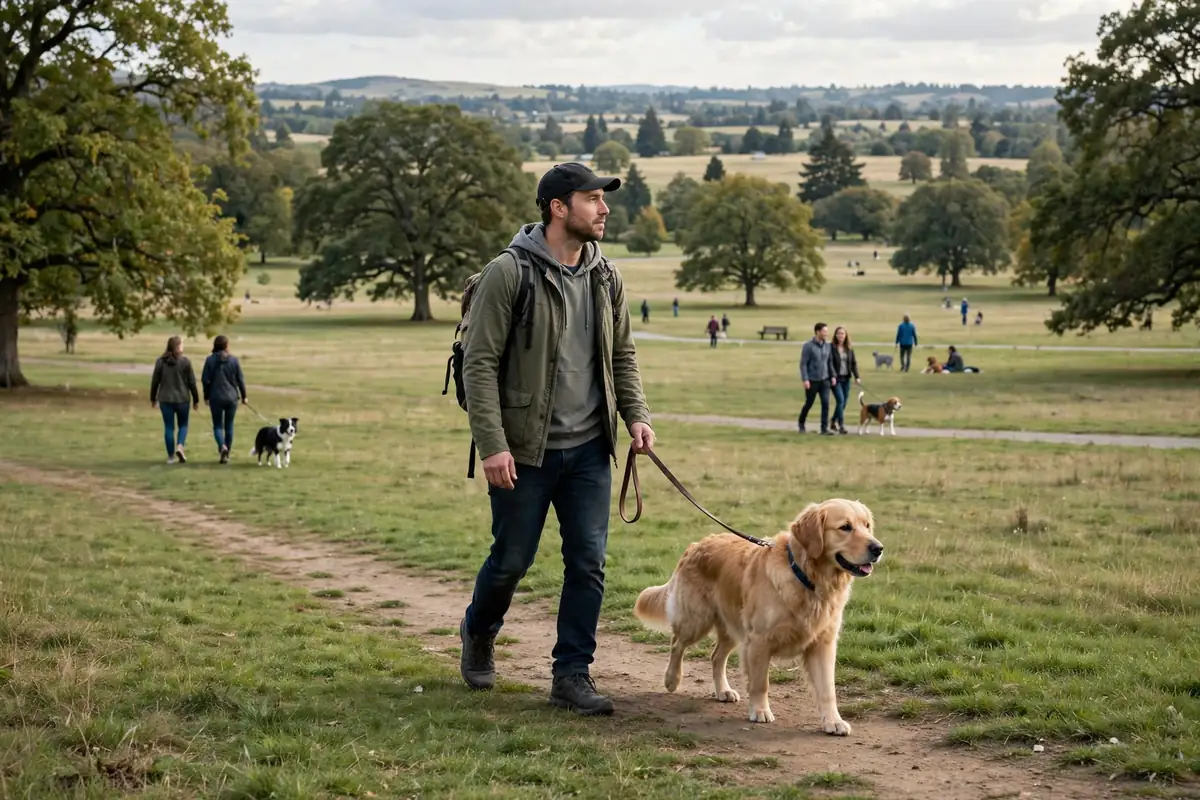
A dog that walks beautifully on a quiet street may struggle in a busy park, and that is expected. Each new place feels like a new lesson, so once your dog walks calmly in one spot, practice in a slightly busier one. Move from your street to a nearby path, then to a park entrance, then into the park itself.
Distractions are part of the training, not an interruption to it. When you see another dog, a squirrel, or a group of children ahead, give your dog more distance and keep moving calmly. Praise your dog for staying with you as you pass. Over time, your dog learns that distractions are just part of the scenery.
If your dog gets overexcited in a new place, step back to an easier spot and rebuild. Each successful walk in a new place adds to your dog’s confidence. The goal is a dog that walks nicely anywhere, and that comes from practicing everywhere, one place at a time.
Building a Daily Walking Routine
Consistency turns training into habit. Most dogs do well with two or three walks a day, and keeping the routine roughly the same each day helps the dog know what to expect. Walk at similar times and keep the same rules on every walk — no pulling, ever, even on the quick late-night trip outside.
Vary the routes a little so walks stay interesting. One day take the quiet street, another day try the park path. A dog that gets to explore new smells and sights is a happier dog, and a happy dog is easier to walk. Just keep the leash rules the same wherever you go.
Remember that walks are not only exercise — they are also your dog’s window to the world. Sniffing, watching, and exploring are how dogs take in information, so allow plenty of sniffing breaks. A walk with time to sniff is more satisfying for a dog than a brisk march with no stops. Different breeds enjoy walks in their own ways — see our guide to the most popular dog breeds in America, and the history of the Labrador Retriever and golden retriever traits and characteristics explain why some of the most popular US dog breeds are such enthusiastic walking companions.

Related Reading on MyPetsMyLove
- Most popular dog breeds in America
- Border Collie guide
- German Shepherd guide
- Dogs & Puppies hub page
- MyPetsMyLove homepage
- About Us page
References
- American Kennel Club (AKC) — dog training and walking guidance
- The Humane Society of the United States — dog walking and training resources
- Encyclopaedia Britannica — dog breeds reference
Frequently Asked Questions
How long does leash training take?
Most dogs start to understand loose-leash walking within one to two weeks of short, consistent practice sessions. Walking calmly in busy places takes longer — often several weeks or more — because each new location adds distractions. Steady daily practice is more important than long sessions.
What is the best leash for leash training?
A standard flat leash about four to six feet long is the best choice for training. It keeps a consistent length and gives you enough control to guide your dog. Retractable leashes are not recommended during training because they teach the dog that pulling makes the leash longer.
Should I use a harness or a collar for leash training?
Either can work if it fits well. A flat collar suits dogs that already walk fairly calmly, while a well-fitting harness spreads pressure across the chest and is a good choice for dogs that pull. A front-clip harness can also gently turn a pulling dog back toward you.
Why does my dog pull on the leash?
Dogs pull because pulling works — it gets them to the next interesting smell or sight faster. Leash training reverses that: when the leash tightens, the walk stops, and when the leash is loose, the walk continues. Once pulling stops paying off, most dogs choose to walk calmly.
Can an older dog learn leash training?
Yes. Adult dogs can learn loose-leash walking just as well as puppies. The method is the same, but an older dog that has pulled for years may need several weeks of consistent practice to replace the old habit. Patience and short, successful sessions are the key.
How do I stop my dog from lunging at other dogs on walks?
Increase the distance first — calmly turn away and walk in the opposite direction, then praise your dog once it settles. Do not jerk the leash or shout, because sudden corrections add excitement. Practicing at a comfortable distance, and rewarding calm behavior as other dogs pass, builds better habits over time.
How long should a leash training session be?
Keep sessions short: about five to ten minutes for puppies and ten to fifteen minutes for adult dogs, a few times a day if you can. End each session while your dog is still walking nicely, so the dog remembers the walk as a success.
Conclusion
Leash training turns the daily walk from a struggle into one of the best parts of owning a dog. With the right gear, short and consistent practice sessions, and a calm, positive approach, almost any dog can learn to walk on a loose leash — whether it is a puppy taking its first steps outside or an adult dog that has pulled for years. Start small, reward the good moments, and build up to busier places one step at a time.
Explore more ways to enjoy life with your dog in the Dogs & Puppies section, compare breeds in our guide to the most popular dog breeds in America, and start from the MyPetsMyLove homepage to discover more guides for happy, healthy pets.
Disclaimer
Disclaimer
MyPetsMyLove dot com is an independent informational website covering pet species breeds characteristics activities positive training bonding grooming and responsible ownership
We are not a veterinary clinic medical provider pet food provider or veterinary nutrition service
We do not provide veterinary diagnosis medical advice treatment food recommendations or nutritional guidance
For pet health medical or food related concerns consult a qualified veterinarian or appropriate professional directly
Independent clinics listed on this website are not owned or operated by MyPetsMyLove unless explicitly stated
Verify third party credentials services fees and availability independently
We do not guarantee third party services or outcomes
To the extent permitted by applicable law we disclaim responsibility for independent third party services
Nothing in this notice excludes liability that cannot legally be excluded
The disclaimer does not make prohibited content acceptable
2 Comments