
Best Cat Breeds for First-Time Owners: A Complete Comparison
 Ragdoll, a British Shorthair, and a Maine Coon sitting together in a living room.” class=”wp-image-1208″/>
Bringing home your first cat is an exciting milestone, and choosing the right breed can make the whole experience smoother for both you and your new companion. While every cat is an individual with its own personality, breeds do differ in temperament, energy level, grooming needs, and how much attention they expect — all factors that matter when you are still learning the ropes of cat ownership.
Some breeds are famously easygoing and adaptable, settling into new homes with minimal fuss. Others are more demanding, vocal, or high-energy, which can overwhelm someone who has never lived with a cat before. This guide compares eight cat breeds that are widely considered good matches for beginners, looking at what each one is really like to live with day to day.
Whether you live in a small apartment or a spacious house, work long hours or spend most of your time at home, you will find a breed below that fits your lifestyle. Use the comparison to shortlist your favorites, then explore our Cats & Kittens guides for more on feline behavior, play, and everyday care.
What Makes a Cat Breed Good for First-Time Owners?
No breed is objectively “the best” for everyone, but certain traits consistently make life easier for beginners. Here is what to look for when comparing breeds.
Temperament. Calm, friendly breeds that tolerate handling and adapt to new environments tend to suit first-time owners. A cat that greets visitors politely and adjusts to household routines without stress makes the learning curve much gentler.
Grooming needs. Short-coated breeds generally need only occasional brushing, while long or semi-long coats require regular grooming sessions. Beginners who are not ready for a daily brushing routine often do better with lower-maintenance coats — though many longhaired breeds are worth the extra effort if you enjoy the ritual.
Energy level and play needs. Moderately active cats are the easiest fit for most households. Very high-energy breeds need plenty of interactive play every day, which can be a lot for someone still figuring out a routine.
Independence. Some breeds are content to entertain themselves while you are at work; others follow you from room to room and want near-constant company. Neither style is better, but matching it to your schedule prevents frustration on both sides.
Vocalization. Certain breeds are famously chatty, while others rarely make a sound. In apartments or shared housing, a quieter breed is often the more considerate choice.
8 Cat Breeds That Suit First-Time Owners
1. Ragdoll
The Ragdoll is one of the most frequently recommended breeds for beginners, and it is easy to see why. These large, semi-longhaired cats are known for an exceptionally docile temperament — the breed’s name comes from its tendency to go limp and relaxed when picked up, like a rag doll. Ragdolls are affectionate without being demanding, often following their owners from room to room and greeting them at the door.
Their silky coat looks high-maintenance but is surprisingly manageable, typically needing brushing a few times a week to prevent tangles. They are indoor-oriented cats that tend to get along well with children and other pets, making them a strong choice for family households.

2. British Shorthair
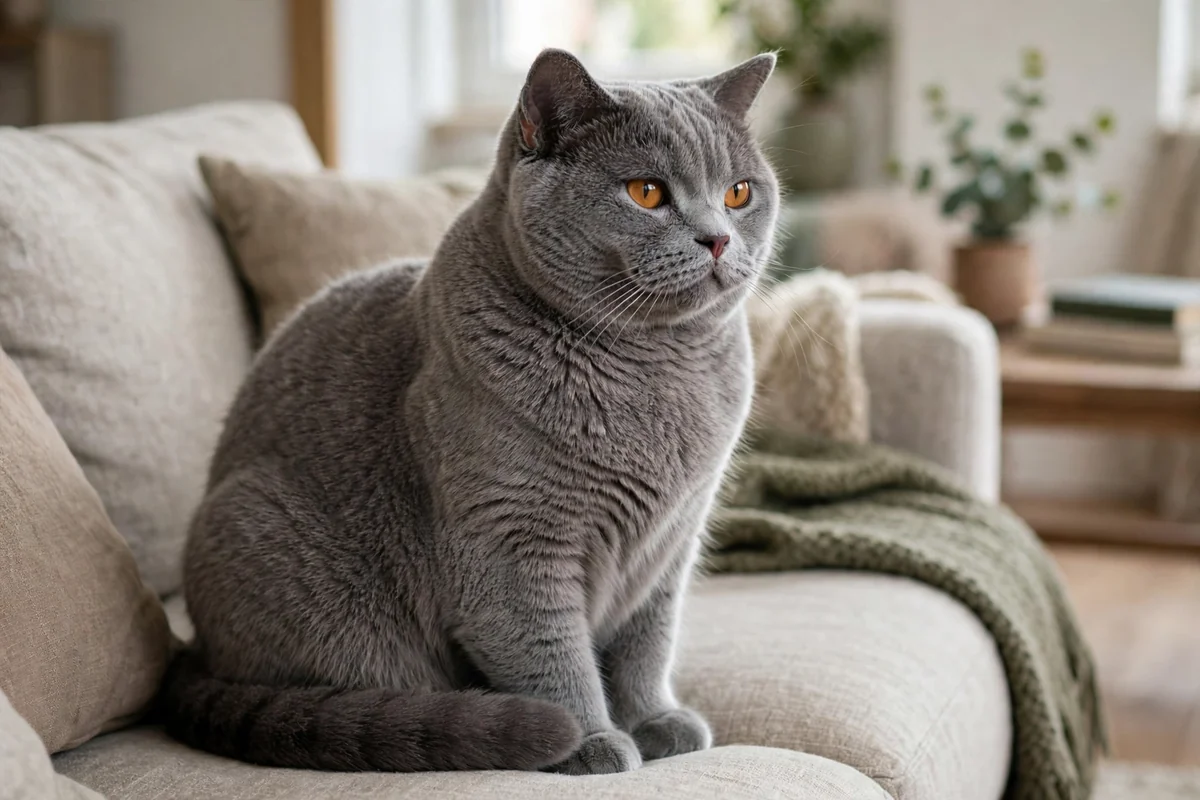
Calm, dignified, and famously easygoing, the British Shorthair is an excellent match for first-time owners with busy schedules. These sturdy cats have plush, dense coats and round faces that give them a teddy-bear appearance. They are affectionate in a quiet way — happy to sit near you rather than on you — and they handle alone time during the workday better than many breeds.
Their short coat needs only weekly brushing, and their moderate energy level means they are content with regular play sessions rather than constant activity. For apartment dwellers seeking a low-drama companion, the British Shorthair is hard to beat.
3. Maine Coon
Despite being one of the largest domestic cat breeds, the Maine Coon is often described as a gentle giant. These cats are sociable, playful, and remarkably adaptable — traits that make them forgiving of beginner mistakes. They tend to enjoy the company of people, including children, and many even enjoy interactive games like fetch.
Their shaggy coat does require regular brushing to stay tangle-free, so they suit owners willing to commit to a grooming routine. In return, you get a confident, affectionate companion with a dog-like willingness to participate in family life.

4. American Shorthair
The American Shorthair is the definition of an easygoing all-rounder. Originally developed as a working farm cat, this breed is sturdy, adaptable, and even-tempered. American Shorthairs are playful when you want to engage and independent when you are busy, striking a balance that works well for first-time owners.
Their short, dense coat is simple to maintain, and they tend to be healthy, long-lived companions. If you want a classic, no-fuss cat that fits into almost any household, the American Shorthair deserves a spot on your shortlist.
5. Exotic Shorthair
Love the look of the Persian but not the daily grooming commitment? The Exotic Shorthair offers the same sweet expression and cobby build with a short, plush coat that is far easier to care for. These cats are calm, quiet, and affectionate — true lap cats that enjoy a relaxed pace of life.
They are less active than many breeds, which makes them well suited to apartments and quieter homes. Weekly brushing is usually enough to keep their coat in good condition, making them one of the most beginner-friendly of the laid-back breeds.
6. Birman
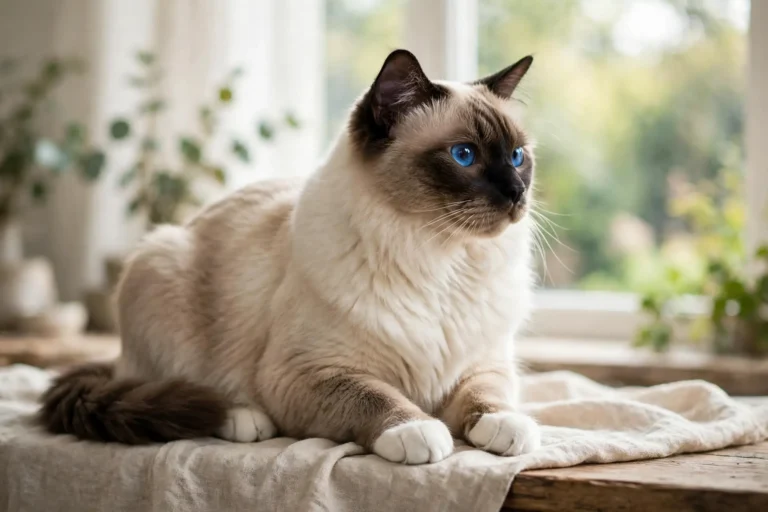
The Birman combines striking looks — a silky medium-long coat, deep blue eyes, and distinctive white “gloves” on the paws — with a gentle, people-oriented temperament. Birmans are social cats that enjoy being involved in household activities, yet they are less demanding than some of the more vocal breeds.
Their single silky coat is less prone to matting than many longhaired coats, so grooming a few times a week is typically sufficient. For a first-time owner who wants an elegant, affectionate cat without an overwhelming grooming burden, the Birman is a lovely option.
7. Burmese
If you want a cat that is deeply bonded to its people, the Burmese is worth considering. These sleek, muscular cats are playful, curious, and famously people-oriented — they want to be part of everything you do. Their short, satiny coat needs minimal grooming, which is a plus for beginners.
The honest caveat: Burmese cats crave companionship and do not enjoy being left alone for very long. They are best suited to homes where someone is around much of the day, or where another friendly pet can keep them company.
8. Russian Blue
The Russian Blue is a quiet, graceful breed with a shimmering silvery-blue coat and vivid green eyes. These cats are loyal and affectionate with their families while remaining politely reserved with strangers. They are known for tidy habits and a calm demeanor, and their short, dense coat sheds relatively little, keeping grooming simple.
Because they can be shy in chaotic environments, Russian Blues do best in stable, predictable households. For a first-time owner seeking a serene, low-maintenance companion, they are an excellent fit.
Comparison at a Glance
| Breed | Temperament | Coat and grooming | Energy level | Apartment friendly |
|---|---|---|---|---|
| Ragdoll | Docile, affectionate | Semi-long; brush a few times a week | Low–moderate | Yes |
| British Shorthair | Calm, independent | Short; weekly brushing | Low–moderate | Yes |
| Maine Coon | Sociable, playful | Long shaggy; regular brushing | Moderate | Yes, with space to roam |
| American Shorthair | Easygoing, adaptable | Short; minimal grooming | Moderate | Yes |
| Exotic Shorthair | Sweet, laid-back | Short plush; weekly brushing | Low | Yes |
| Birman | Gentle, social | Medium-long silky; brush a few times a week | Low–moderate | Yes |
| Burmese | People-oriented, playful | Short sleek; minimal grooming | Moderate–high | Yes, with companionship |
| Russian Blue | Quiet, loyal | Short dense; minimal grooming | Low–moderate | Yes |
Related Reading on MyPetsMyLove
- Ragdoll Cats: Why This Blue-Eyed Breed Captures So Much Attention
- British Shorthair Cats: Origin, Colours and Personality Traits
- 25 Most Popular Cat Breeds in the USA and What Makes Each One Special
- Cats & Kittens hub page
- MyPetsMyLove homepage
- About Us page
References
- The Cat Fanciers’ Association (CFA) — breed standards and profiles
- The International Cat Association (TICA) — recognized breed list
Frequently Asked Questions
What is the easiest cat breed for a first-time owner?
There is no single answer, but the Ragdoll and British Shorthair are among the most commonly recommended. Both are calm, adaptable, and tolerant of beginner mistakes. The best choice ultimately depends on your living situation, schedule, and how much grooming you are willing to do.
Should a first-time owner get a kitten or an adult cat?
Both can work well. Kittens are playful and adaptable but need more supervision, training, and patience. Adult cats have established personalities, so you know exactly what temperament you are getting — a real advantage for beginners who want predictability.
How much grooming do beginner-friendly breeds need?
Short-coated breeds like the British Shorthair, American Shorthair, Burmese, and Russian Blue typically need only weekly brushing. Semi-long and long-coated breeds such as the Ragdoll, Maine Coon, and Birman do best with brushing several times a week to prevent tangles.
Can first-time owners handle a long-haired breed?
Yes, as long as you are committed to a regular brushing routine. Breeds like the Ragdoll and Birman have silky coats that are easier to maintain than they look. If you prefer minimal grooming, the Exotic Shorthair gives you a plush, Persian-like cat with a short coat.
Which cat breeds might be challenging for beginners?
Very high-energy or demanding breeds — such as the Bengal, Abyssinian, and Siamese — need experienced handling, abundant interactive play, and lots of attention. Hairless breeds like the Sphynx also require specialized skin-care routines. These are wonderful cats, but they are better suited to owners who already know the ropes.
Conclusion
Choosing your first cat is about honest self-assessment: your schedule, your space, and the kind of companionship you want. The eight breeds above all offer the forgiving temperaments and manageable care needs that help first-time owners succeed — from the placid Ragdoll to the independent British Shorthair.
Once you have a shortlist, spend time learning about daily life with cats: play, grooming, litter habits, and enrichment. Our Cats & Kittens guides cover all of it, and you can learn more about MyPetsMyLove and how we put our guides together. MyPetsMyLove is here to help you start your journey on the right paw.
Disclaimer
Disclaimer
MyPetsMyLove dot com is an independent informational website covering pet species breeds characteristics activities positive training bonding grooming and responsible ownership
We are not a veterinary clinic medical provider pet food provider or veterinary nutrition service
We do not provide veterinary diagnosis medical advice treatment food recommendations or nutritional guidance
For pet health medical or food related concerns consult a qualified veterinarian or appropriate professional directly
Independent clinics listed on this website are not owned or operated by MyPetsMyLove unless explicitly stated
Verify third party credentials services fees and availability independently
We do not guarantee third party services or outcomes
To the extent permitted by applicable law we disclaim responsibility for independent third party services
Nothing in this notice excludes liability that cannot legally be excluded
The disclaimer does not make prohibited content acceptable


8 Comments