
Turkish Angora Cats: History, Appearance and Famous White Coats
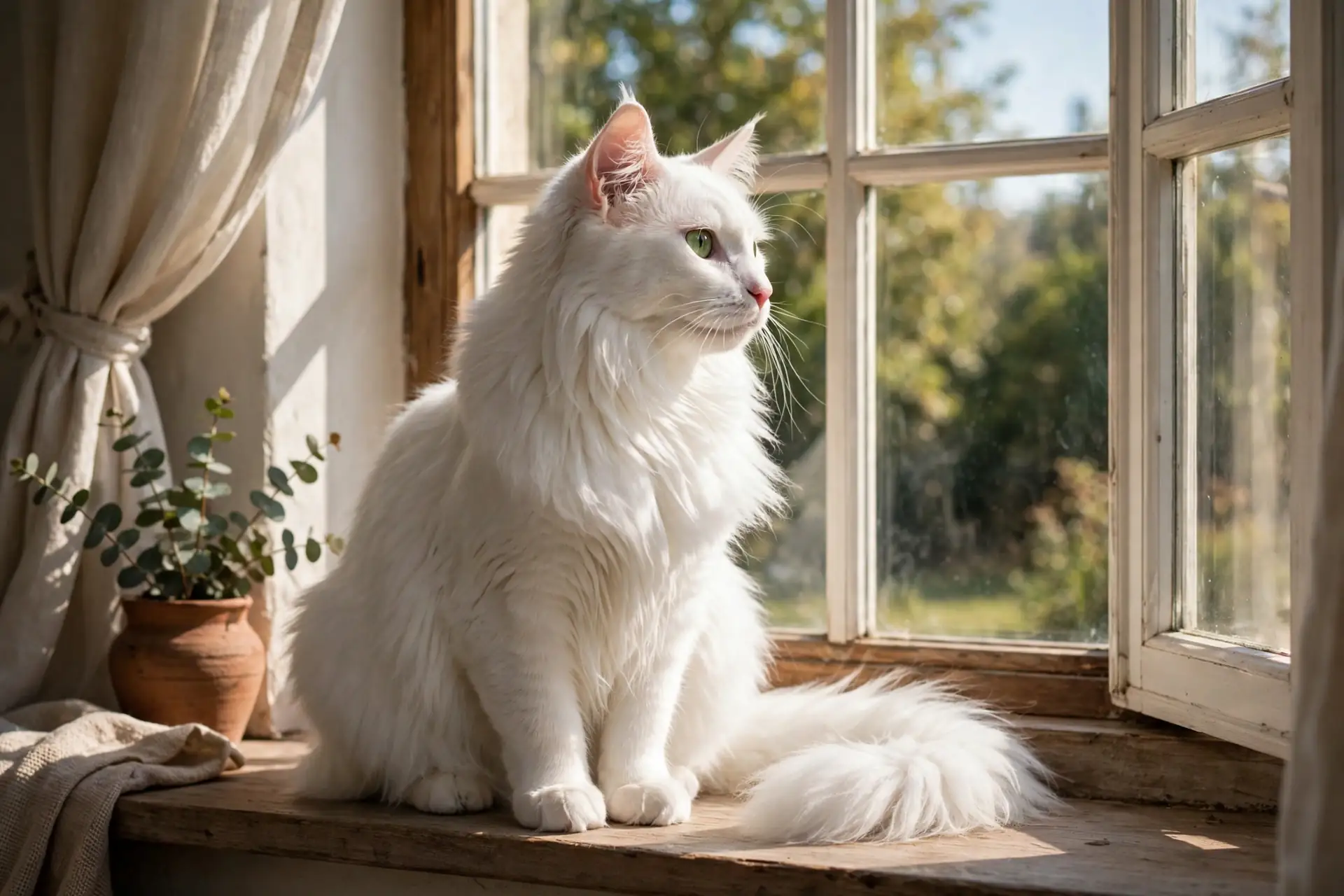
Picture a cat with a coat so white and silky that it looks like fresh snow, moving through the house with the grace of a dancer. That is the Turkish Angora, one of the oldest natural cat breeds in the world — and the breed behind the famous white coat that has charmed cat lovers for centuries. Yet the white coat is only the beginning of the story. Behind those striking looks sits a clever, playful, and deeply loyal cat with a history that reaches back to the mountains and palaces of Turkey.
The Turkish Angora comes from Ankara, the capital of Turkey, a city once known in the West as Angora. It is a natural breed, which means its elegant body and silky coat developed over centuries in the highlands of Anatolia rather than through modern breeding programmes. This guide covers the breed’s history, appearance, famous white coat, personality, and life with one.
History of the Turkish Angora
The Turkish Angora is one of the oldest known long-haired cat breeds. Long-haired cats from the region around Ankara were described by travellers as early as the 16th century, and the breed was already admired in Europe by the 1700s, when Angora cats arrived in France and Britain as prized gifts and companions. In those days the name Angora was used for almost any long-haired cat from the East, but the true Turkish Angora came from one place: the Ankara region of central Turkey.
For centuries the breed lived in the highlands of Anatolia, where cold winters favoured a long, silky coat. The cats were valued in Turkish homes and, according to long-standing tradition, kept in the palaces of the Ottoman sultans, where white cats were especially treasured.
The breed’s fortunes changed in the 19th century. As the Persian cat grew popular in Europe, Angora cats were widely crossed with Persians, and the pure Turkish Angora almost disappeared. By the early 20th century, the original cats of Ankara were rare. The turning point came when the Turkish government began a breeding programme to protect the breed, centred on the Ankara Zoo, which worked to preserve the classic white Turkish Angora. Cats from that programme later travelled to Europe and North America, and cat associations began recognising the breed in the 1970s.
Appearance of the Turkish Angora
The Turkish Angora is a medium-sized cat with a long, graceful body and fine bones. It looks delicate at first glance, but the body is firm and muscular under the silky coat, and the breed is athletic and quick. The legs are long and slim, the paws are small and neat, and the tail is long and plumed, carried high like a feather.
The head is a medium wedge shape, with a straight profile and a firm chin. The ears are large, pointed, and set close together, giving the cat an alert, listening look. The eyes are large and almond-shaped, and they slant slightly upward at the corners, which adds to the breed’s elegant expression.
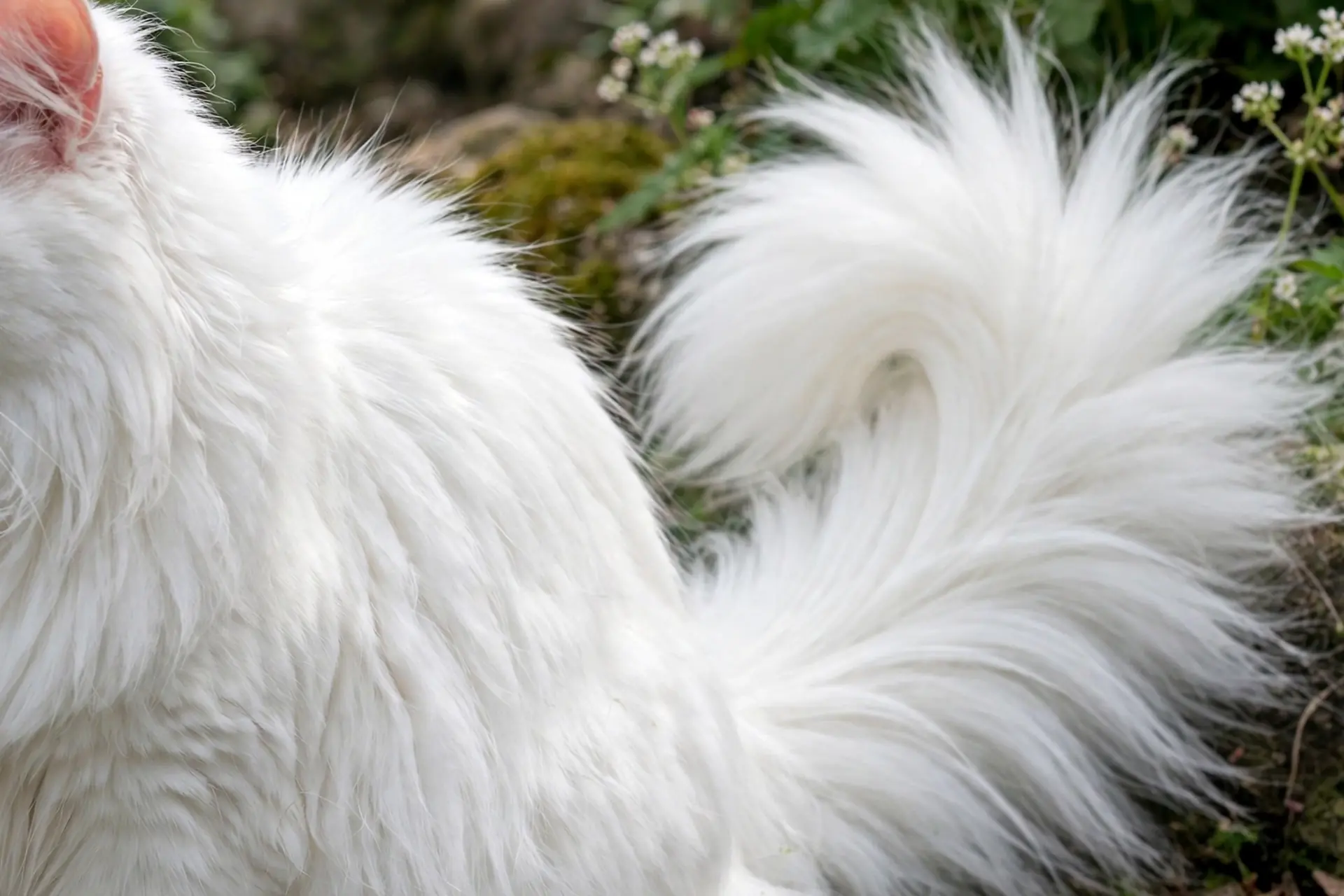
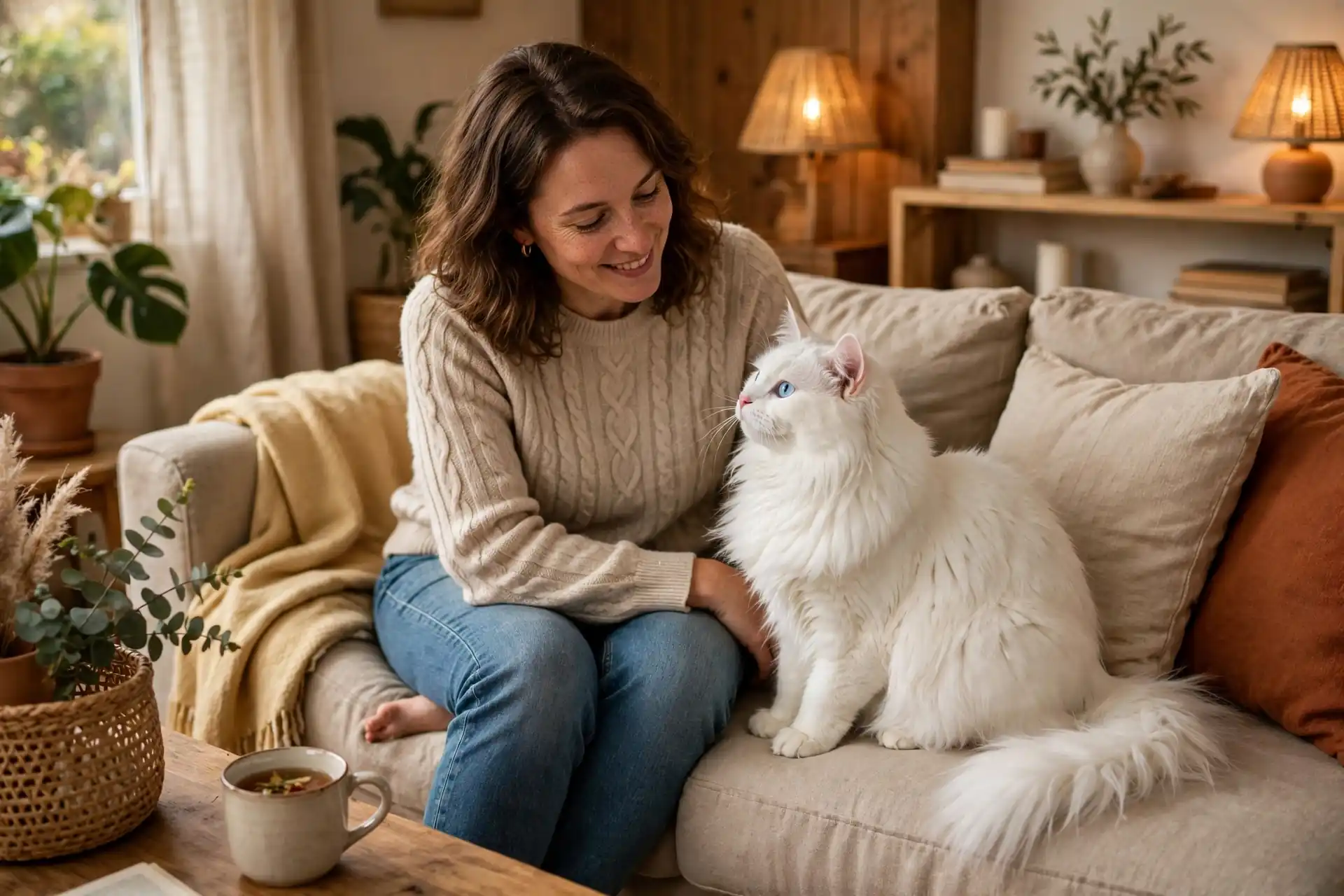
The coat is the Turkish Angora’s signature. It is long, fine, and silky, with almost no undercoat, so it feels light and smooth rather than thick and heavy. The coat lies close to the body on the back and grows longer around the neck, where it forms a ruff, and on the legs and tail, where it becomes full and feathery.
The Famous White Coat
White is the colour most people picture when they hear the name Turkish Angora, and for good reason. The classic Turkish Angora is pure white, and the white coat has been the breed’s trademark for centuries. In Turkey, the white Angora was traditionally the most prized of all, and the Ankara Zoo’s preservation programme focused on white cats above all others.
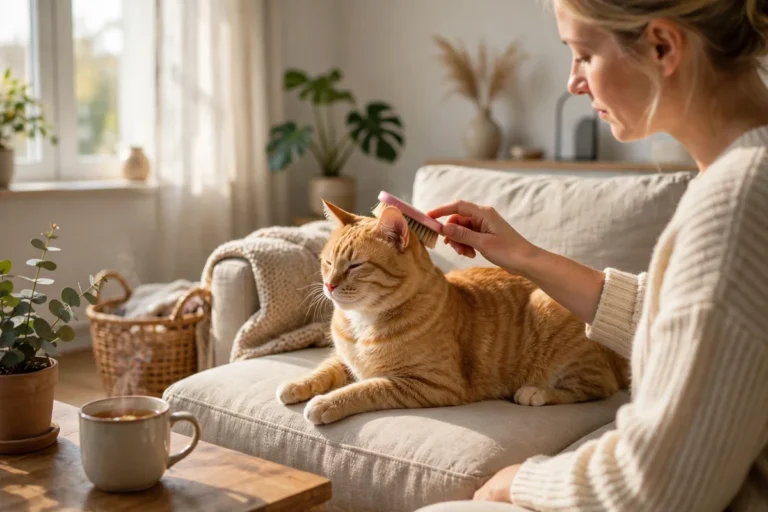
The white coat is beautiful, but it is also practical. Because the coat has almost no undercoat, it does not mat as easily as the thick double coats of many long-haired breeds. A gentle brushing once or twice a week is usually enough to keep it smooth and free of tangles, and the fine hair sheds in soft strands rather than heavy clumps. White fur shows dust more readily than darker coats, but the routine stays simple compared with the daily grooming some long-haired breeds need.
The silky texture is part of the breed’s identity. Run a hand along a Turkish Angora’s back and the coat feels like fine silk, cool and smooth. It is one of the first things people notice when they meet the breed, and one of the reasons the white coat has stayed famous for so long.
Coat Colours and Eye Colours
Although white is the famous colour, the Turkish Angora comes in many colours and patterns, including black, blue, cream, red, tabby patterns, tortoiseshell, and calico. A Turkish Angora in any of these colours has the same elegant body and silky coat — only the colour changes. Readers who love patterned coats can compare the breed’s tabby versions with the patterns in our tabby cats guide.
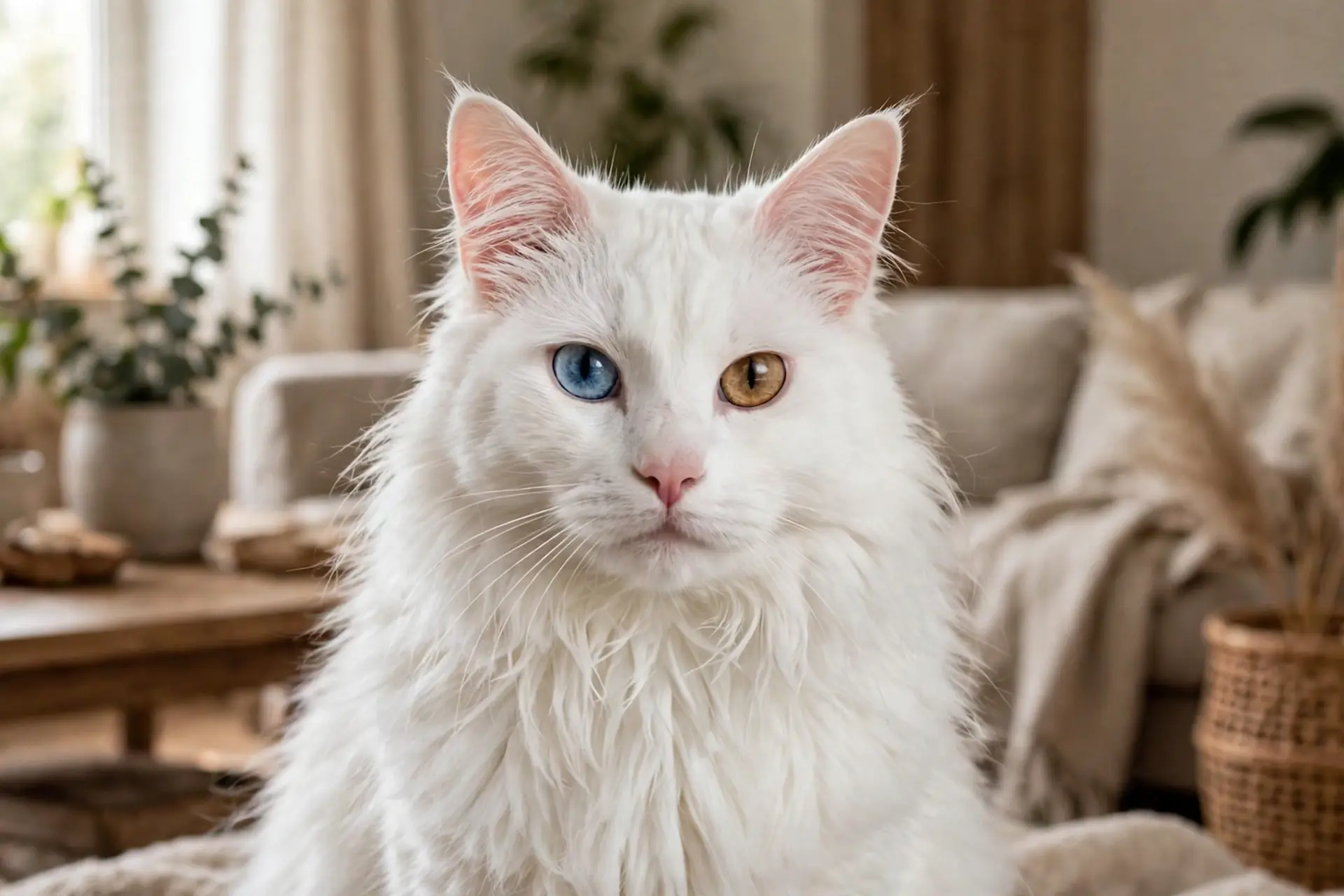
The eyes are just as striking as the coat. Turkish Angoras can have blue, green, gold, or amber eyes, and the colour often suits the coat — white cats frequently have blue or amber eyes. The most famous eye combination of all is the odd-eyed Turkish Angora: one blue eye and one amber or green eye. Odd eyes are a form of heterochromia, and they appear in the breed more often than in most others. An odd-eyed white Turkish Angora is one of the most photographed cats in the world.
Personality and Temperament
The Turkish Angora is intelligent, playful, and affectionate. It bonds closely with its people and often chooses one person as its favourite, following that person from room to room and settling beside them whenever they sit down. The breed is sometimes described as dog-like in its loyalty, and it is not unusual for a Turkish Angora to greet its owner at the door.
Turkish Angoras are talkative cats, but their voices are soft. They chirp, trill, and murmur rather than yowling, and they use their voices to comment on what is happening around them. They are sensitive to the mood of the household and quick to notice changes in routine.
The breed is confident and social. A Turkish Angora usually welcomes visitors, enjoys company, and adapts well to a busy home. It does best in a household where someone is around for much of the day, because it dislikes being left alone for long stretches. Among the main cat breeds, it stands out for combining elegance with a genuinely social nature, and readers comparing breeds can see how it ranks in our guide to the most popular cat breeds in the USA.
Intelligence and Play
The Turkish Angora is one of the cleverer cat breeds. It learns quickly, solves simple problems, and enjoys games that make it think. Many Turkish Angoras learn to fetch, open cupboard doors, and switch on taps, and they remember where their favourite toys are kept. A puzzle toy suits this breed well, because it gives the cat a problem to work on and a reward at the end.
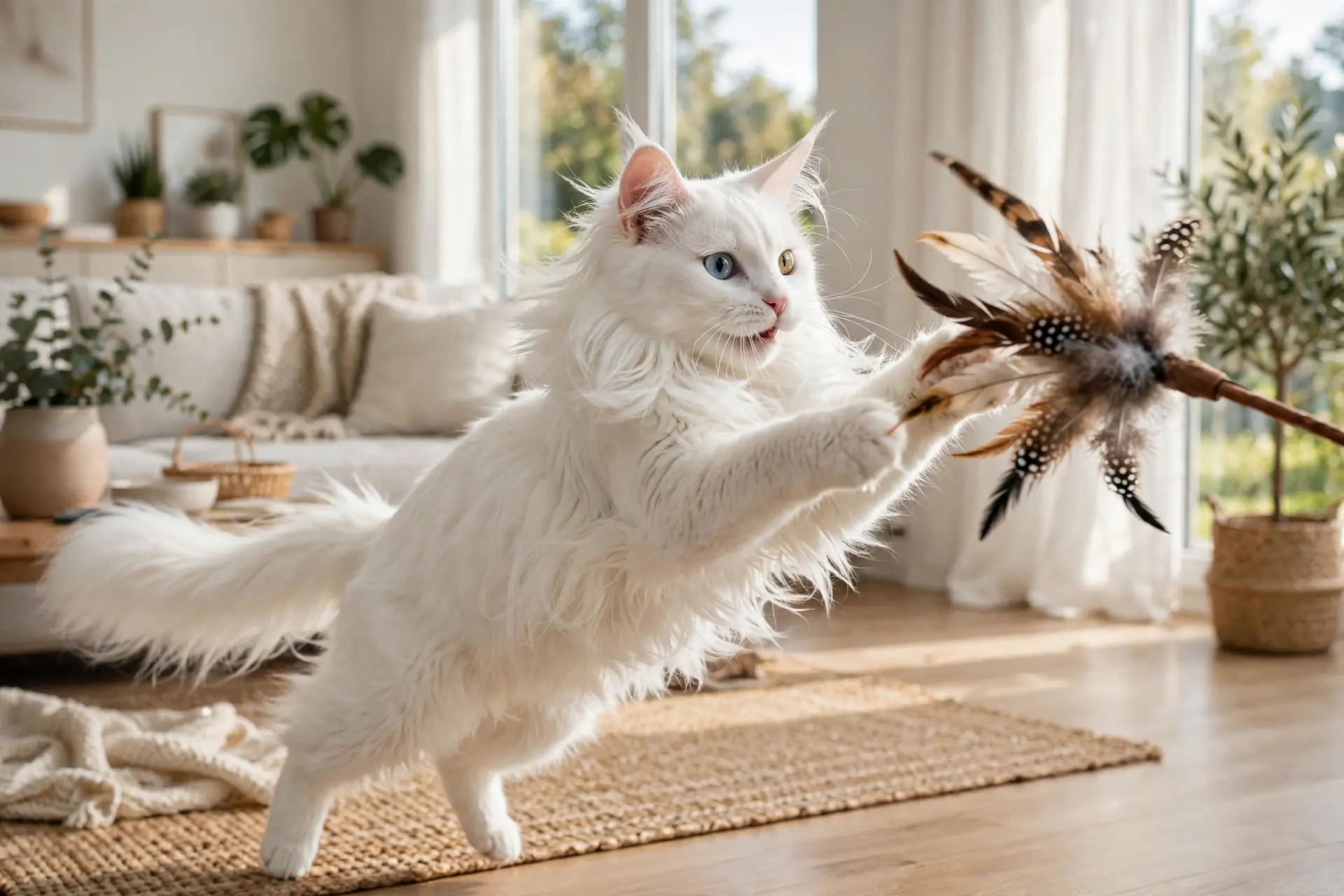
Play is a daily need, not an occasional extra. The Turkish Angora is athletic and loves to climb, jump, and chase. A tall scratching post, a cat tree with high perches, and a few rolling balls will keep it busy, and a feather wand brings out the hunter in it. The breed stays playful well into adulthood, and a game with its owner is often the best part of its day. For ideas on matching toys to a playful cat, see our guide to the best cat toys.
Because the breed is so bright, it can also get bored. A Turkish Angora left alone all day with nothing to do may invent its own entertainment, which usually means climbing the curtains or knocking things off shelves.
Living With a Turkish Angora
Life with a Turkish Angora is active and affectionate. The breed needs daily play and company, and it rewards its owners with loyalty and charm. It suits a home where people are around and willing to play, and it gets on well with children who treat it gently and with other pets introduced with care.
Grooming is straightforward for a long-haired breed. A soft brush once or twice a week keeps the silky coat smooth, and the lack of an undercoat means tangles are rare. The ears can be checked and gently wiped as part of the regular routine, and the claws can be trimmed as part of ordinary care.
One thing to know before bringing a Turkish Angora home: this is not a cat that keeps itself to itself. It wants to be involved. It will supervise cooking, join video calls, and sleep on the bed. Owners who want a quiet, independent cat may prefer a calmer breed, but owners who want a companion will find the Turkish Angora hard to beat.
Turkish Angora Kittens
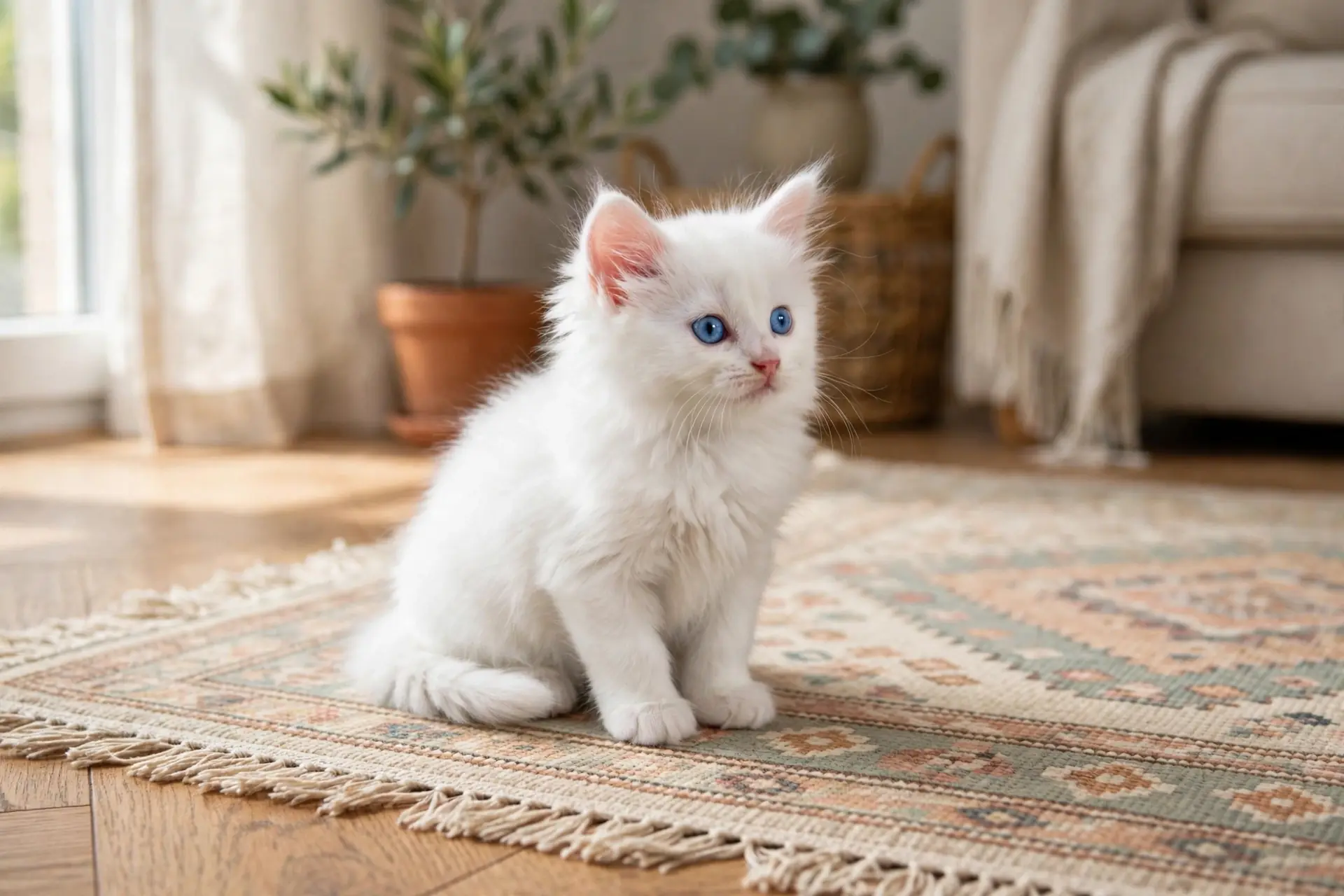
Turkish Angora kittens are born playful and curious. White kittens often have blue eyes at first, and the eye colour may settle into blue, amber, green, or one of each as the kitten grows. The coat starts short and fluffy, then grows long and silky as the kitten matures, with the full ruff and plumed tail developing over the first year or two.
Kittens learn fast and bond quickly. Gentle handling, regular play, and company in the early weeks help a kitten grow into a confident adult. A kitten that grows up with people, sounds, and everyday household activity becomes the social, outgoing adult the breed is known for. Readers thinking about a first cat can compare the breed with others in our guide to the best cat breeds for first-time owners.
Turkish Angora vs Other Long-Haired Breeds
| Breed | Coat | Body | Personality note |
|---|---|---|---|
| Turkish Angora | Long, silky, single coat | Medium, elegant, athletic | Playful, social, dog-like loyalty |
| Persian | Long, thick, double coat | Medium, stocky, round face | Calm, quiet, relaxed |
| Norwegian Forest Cat | Long, thick, water-resistant | Large, sturdy, strong | Independent, gentle, outdoorsy |
| Maine Coon | Long, shaggy, dense | Very large, muscular | Friendly, easy-going, chatty |
| Siamese | Short, fine, close-lying | Medium, slim, angular | Vocal, social, demanding |
The table shows what sets the Turkish Angora apart: the only breed here with a long coat that has almost no undercoat, paired with an active, people-focused personality. The Norwegian Forest Cat is a useful contrast — a large, sturdy cat built for cold weather.
Interesting Facts About Turkish Angora Cats
- One of the oldest breeds: The Turkish Angora is one of the oldest natural cat breeds, known in the Ankara region since at least the 16th century.
- A national treasure: Turkey ran a breeding programme at the Ankara Zoo to protect the breed when it nearly disappeared.
- The famous white coat: Pure white is the classic colour, though the breed comes in many colours.
- Odd eyes: Some Turkish Angoras have one blue eye and one amber or green eye, a trait called heterochromia.
- No undercoat: The silky coat has almost no undercoat, so it mats far less than most long-haired coats.
- Dog-like loyalty: The breed often follows its favourite person from room to room and greets them at the door.
- Clever and chatty: Turkish Angoras learn tricks, solve simple problems, and talk in soft chirps and trills.
Related Reading on MyPetsMyLove
- Norwegian Forest cats guide
- Siamese cats guide
- Tabby cats guide
- Cats & Kittens hub page
- MyPetsMyLove homepage
- About Us page
References
- The Cat Fanciers’ Association (CFA) — Turkish Angora breed profile
- The International Cat Association (TICA) — Turkish Angora breed information
- Encyclopaedia Britannica — cat breeds and history reference
Frequently Asked Questions
Where does the Turkish Angora come from?
The Turkish Angora comes from Ankara, the capital of Turkey, a city once known in the West as Angora. It developed naturally in the highlands of Anatolia over centuries.
Why is the white coat so famous?
Pure white is the classic colour of the Turkish Angora and has been the most prized colour for centuries. The Ankara Zoo’s preservation programme focused on white cats, which helped make the white coat the breed’s trademark.
Do Turkish Angora cats have odd eyes?
Some do. An odd-eyed Turkish Angora has one blue eye and one amber or green eye. The trait is called heterochromia and appears in this breed more often than in most others.
Is the Turkish Angora coat hard to groom?
No, for a long-haired breed it is easy. The coat is silky with almost no undercoat, so it mats far less than thick double coats. A gentle brushing once or twice a week is usually enough.
Are Turkish Angora cats good with families?
Yes. The breed is social, playful, and affectionate, and it usually gets on well with children who treat it gently. It bonds closely with its people and likes to be part of daily life.
Are Turkish Angora cats intelligent?
Yes, the breed is known for being clever. Turkish Angoras learn quickly, solve simple problems, enjoy puzzle toys, and can learn games such as fetch.
How long do Turkish Angora kittens take to grow up?
The coat takes time to mature. A kitten’s coat starts short and fluffy, and the full ruff and plumed tail develop over the first year or two, while the eye colour may also settle during that time.
Conclusion
The Turkish Angora is one of the oldest natural cat breeds in the world, a survivor from the highlands of Anatolia with a silky white coat, striking eyes, and a personality to match its looks. It is clever, playful, loyal, and deeply social — a cat that wants to be part of the household, not just a decoration in it.
If the white coat first caught your eye, the personality is what will keep you. Compare the Turkish Angora with other remarkable breeds in our most popular cat breeds in the USA guide, explore the Cats & Kittens section, and start from the MyPetsMyLove homepage to meet more breeds worth knowing.
Disclaimer
Disclaimer
MyPetsMyLove dot com is an independent informational website covering pet species breeds characteristics activities positive training bonding grooming and responsible ownership
We are not a veterinary clinic medical provider pet food provider or veterinary nutrition service
We do not provide veterinary diagnosis medical advice treatment food recommendations or nutritional guidance
For pet health medical or food related concerns consult a qualified veterinarian or appropriate professional directly
Independent clinics listed on this website are not owned or operated by MyPetsMyLove unless explicitly stated
Verify third party credentials services fees and availability independently
We do not guarantee third party services or outcomes
To the extent permitted by applicable law we disclaim responsibility for independent third party services
Nothing in this notice excludes liability that cannot legally be excluded
The disclaimer does not make prohibited content acceptable
One Comment