Russian Blue Cats: Origin, Silver-Blue Coat and Green Eyes

Few cats look as quietly elegant as the Russian Blue. Its dense coat shimmers silver-blue in the light, its eyes are a vivid green, and its whole bearing is graceful and composed. Yet behind that polished appearance is a gentle, loyal cat that bonds deeply with its people — and a history that stretches back to the cold ports of northern Russia.
This guide explores the Russian Blue’s remarkable origin, explains the silver-blue coat and green eyes, describes its appearance and personality, and shares what makes this breed so distinctive.
Origin and History of the Russian Blue Cat
The Russian Blue’s story begins in Arkhangelsk, a port city on the White Sea in northern Russia. The breed is traditionally said to descend from the cats of that cold northern region, and its earliest name in the West was the Archangel cat — Archangel being the English name for Arkhangelsk. According to long-standing lore, the cats were kept by Russian czars, and sailors carried them from the White Sea ports to England and northern Europe. The precise early history is uncertain, and the czar connection is a legend rather than a documented fact, but the Arkhangelsk origin is the story the breed has carried for more than a century.
The first Russian Blue to be exhibited was shown at the Crystal Palace cat show in London in 1875. At that early show the blue cats were exhibited together in one class, alongside other blue-coated cats including the British Shorthair, then known as the British Blue. By 1912 the Russian Blue had been given its own class for competition, a sign that cat fanciers had come to recognize it as a breed in its own right.
The breed’s numbers fell low in the early 1940s, and breeders worked to rebuild it, crossing the remaining Russian Blues with other breeds — including the Siamese — to restore the population. Over time, the Siamese influence was bred out, and the breed returned to its original type. In 1949 the Cat Fanciers’ Association accepted the Russian Blue for registration, and the breed’s popularity grew steadily in America through the 1960s. Today it is recognized by registries around the world, including The International Cat Association.
The Silver-Blue Coat: What Makes It Special
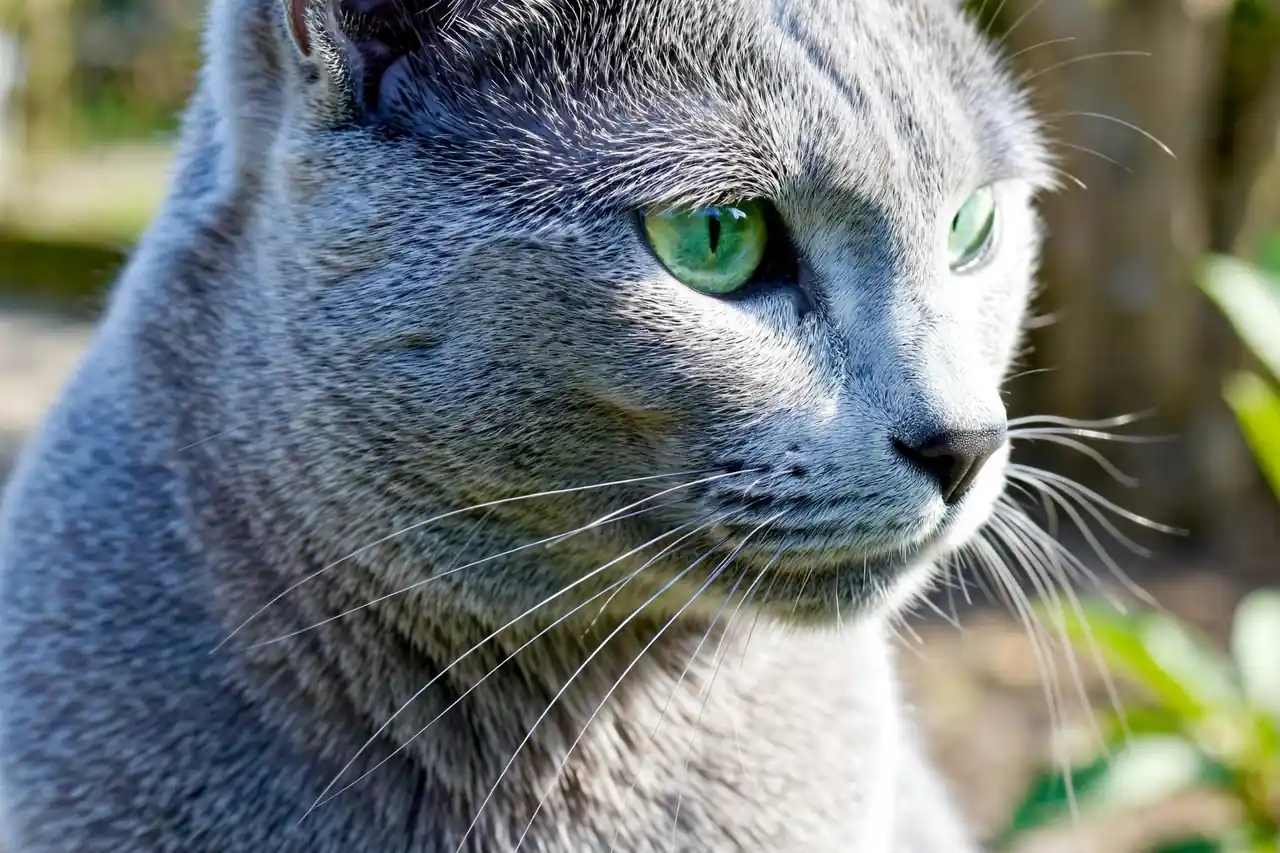
The Russian Blue’s coat is its signature. It is a dense double coat: a thick, plush undercoat covered by longer guard hairs, each tipped with silver. That silver tipping is what gives the coat its shimmer — in sunlight the fur seems to glow, as if dusted with frost. The colour itself is what cat fanciers call “blue”: a soft, even grey-blue without markings, the result of a dilution gene that lightens black pigment.
The coat feels unlike most shorthair coats. It is thick and plush rather than sleek, and it stands away from the body slightly, giving the cat a soft, velvety outline. Run a hand through it and the fur holds the impression for a moment — a trait breeders sometimes describe as the coat “taking a fingerprint.” The density is a legacy of the breed’s northern origins, where a thick double coat was protection against long, harsh winters.
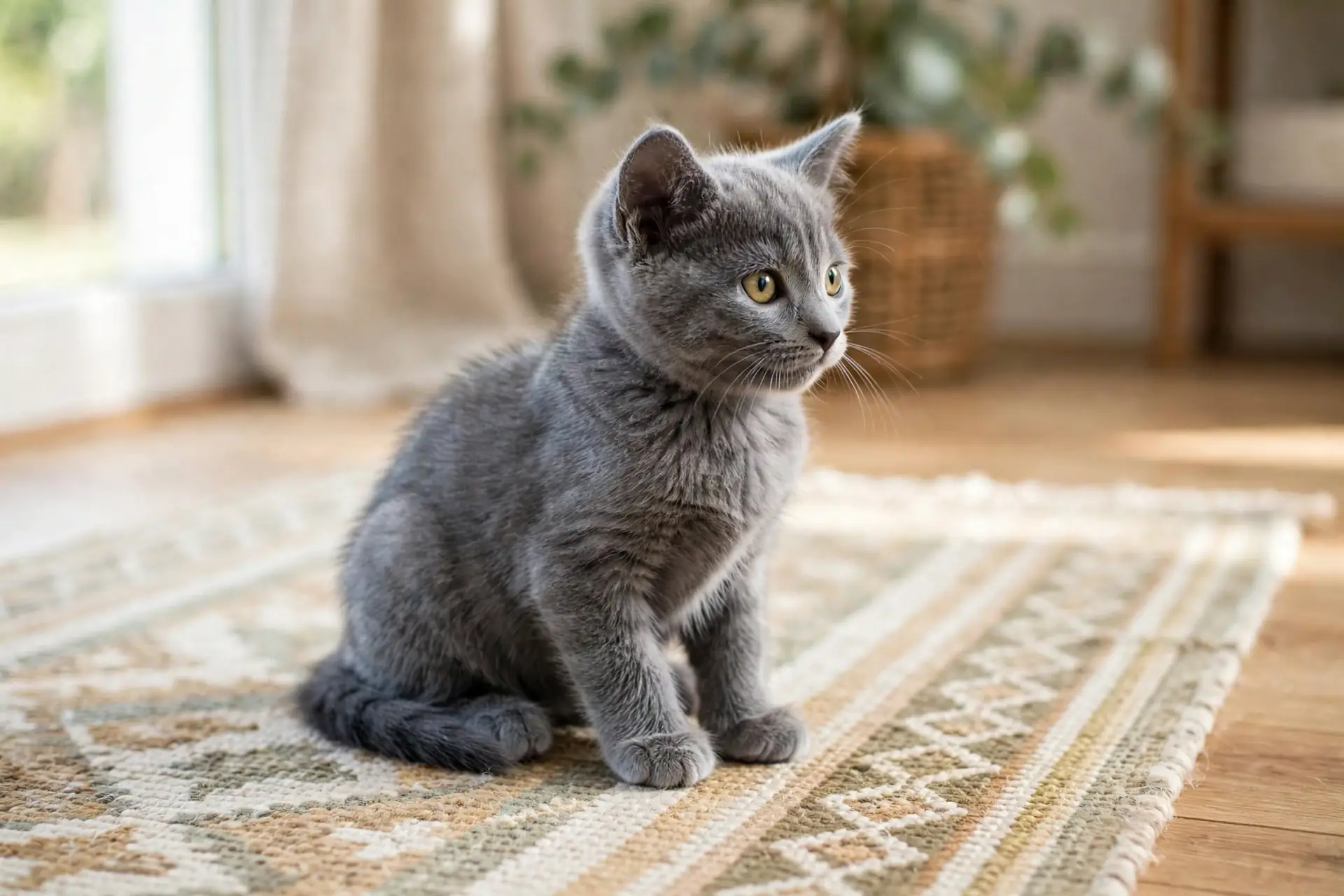
Russian Blue kittens are born with faint tabby markings in the coat, and with yellow eyes. Both change as the kitten grows: the markings fade away, leaving the even silver-blue of the adult coat, and the eyes deepen to green over the first year. An adult Russian Blue has no tabby markings at all — the coat should be a single, even blue-grey from root to tip, with the silver sheen on the guard hairs.
Appearance: Elegant Build and Vivid Green Eyes
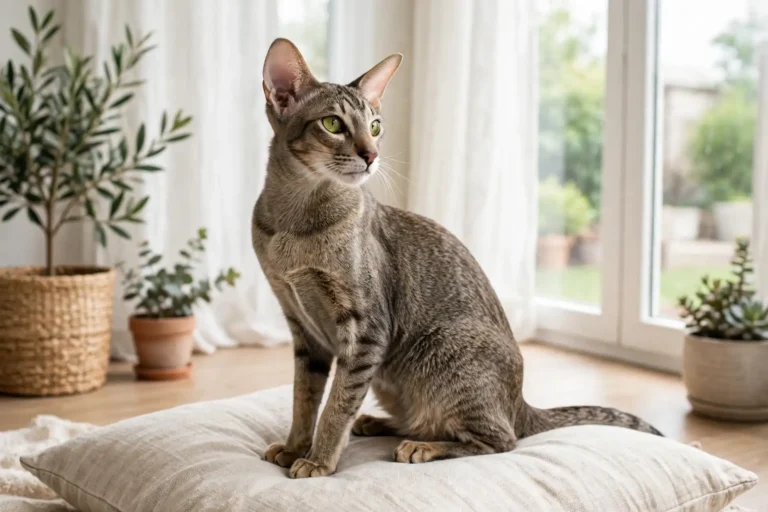
Everything about the Russian Blue is fine-boned and graceful. The body is medium-sized and lithe, with long legs and a long, tapering tail. Most adult Russian Blues weigh between 7 and 12 pounds, with males typically larger than females. The overall impression is of an elegant, athletic cat — neither cobby nor delicate, but finely made.
The head is wedge-shaped, with a flat skull, a straight nose, and large ears set wide apart and carried upright. The eyes are large, almond-shaped, and set wide — and their colour is one of the breed’s defining features. Adult Russian Blues have vivid green eyes, a striking contrast against the silver-blue coat. The combination of green eyes, silver coat, and wedge-shaped head gives the breed a look unlike any other.
Breeders also talk about the “Russian smile”: the corners of the mouth turn up slightly, giving the cat a gentle, contented expression even at rest. It is a small detail, but it adds to the breed’s reputation as a cat with a sweet, serene face.

Personality: Gentle, Loyal, and a Little Shy
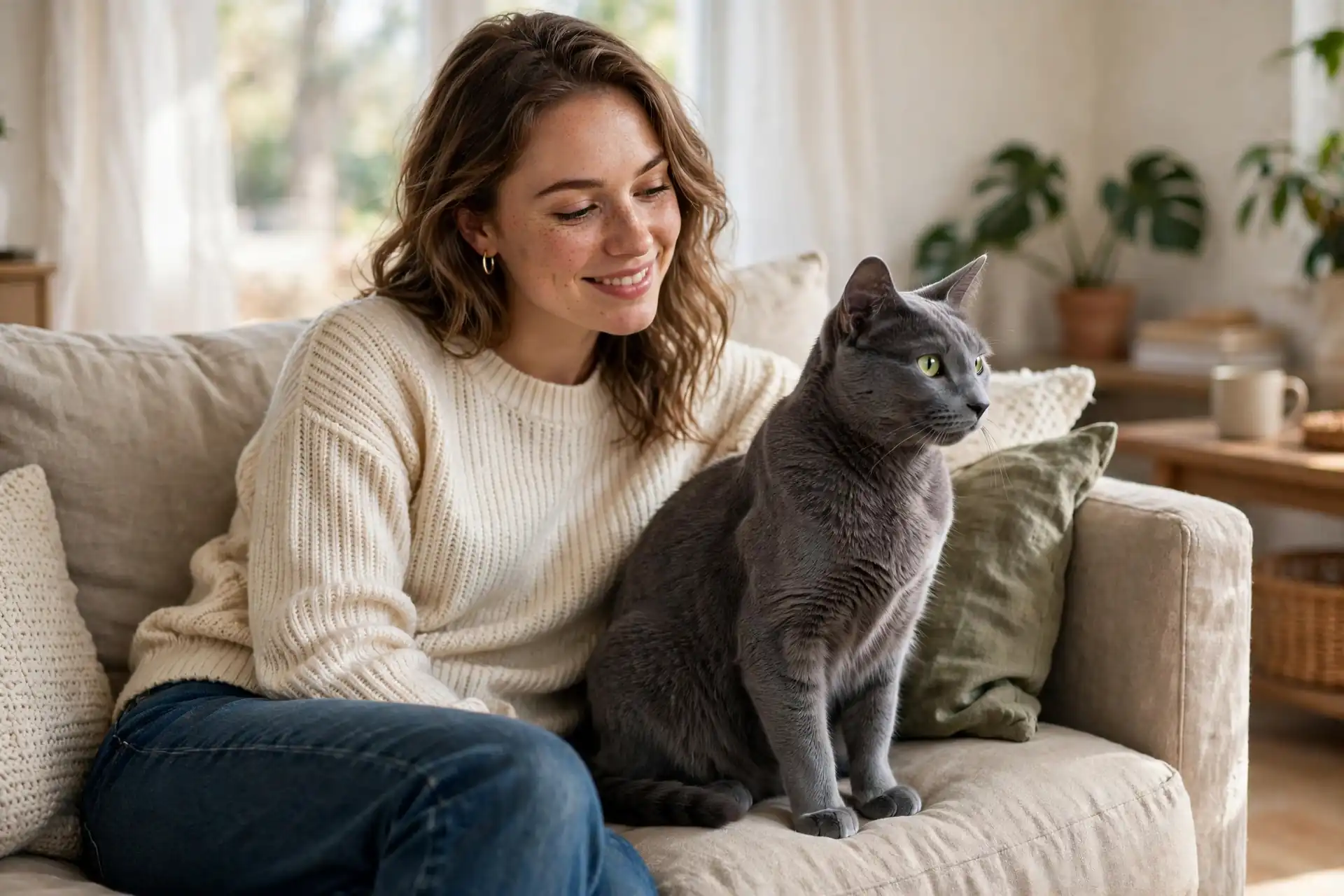
If the Russian Blue looks serene, its personality matches. Russian Blues are famously gentle, quiet, and loyal, and they bond closely with their families — often choosing one favourite person and following that person from room to room. They are affectionate without being demanding, happy to sit beside you while you work and to greet you at the door when you come home.
With strangers, the breed is famously reserved. A Russian Blue meeting a new person is more likely to watch from a distance than to rush forward, and it may take time to warm up. This shyness is not aloofness — once the cat knows someone, it is devoted and playful. Owners who enjoy a calm, predictable companion will find the breed’s quiet loyalty deeply rewarding.
Russian Blues are playful in a graceful way. They enjoy interactive play — a wand toy, a rolling ball, a game of chase — and they are quick, agile players. Their voice is soft and quiet, a gentle chirp or a small meow rather than a running commentary, which makes them a good fit for homes where a very talkative breed like the Siamese might be too much. Readers comparing temperaments in our guide to the best cat breeds for first-time owners will find the Russian Blue among the calmer, more devoted companions — with the honest note that its shyness with strangers asks for a little patience.
The breed also loves routine. Russian Blues settle into household rhythms quickly and prefer a stable, predictable day — the same play sessions, the same quiet evenings, the same familiar routines. A home that offers calm and consistency gets the best of this breed.

Russian Blue Kittens: Silver Coats in the Making
Russian Blue kittens arrive with their silver-blue colour already visible, though it deepens as they grow. The faint tabby markings of kittenhood fade over the first months, and the yellow eyes of a young kitten gradually turn green. Until the adult coat and eye colour settle, a kitten’s final look is still developing — part of the charm of watching the breed grow up.
Kittens are playful and curious from the start, and they bond fast with the people around them. They learn quickly, enjoy gentle interactive play, and settle well into homes that give them company and attention. Like adult Russian Blues, kittens can be a little shy with new people at first, and they do best when introductions are calm and unhurried.
Grooming and Everyday Care
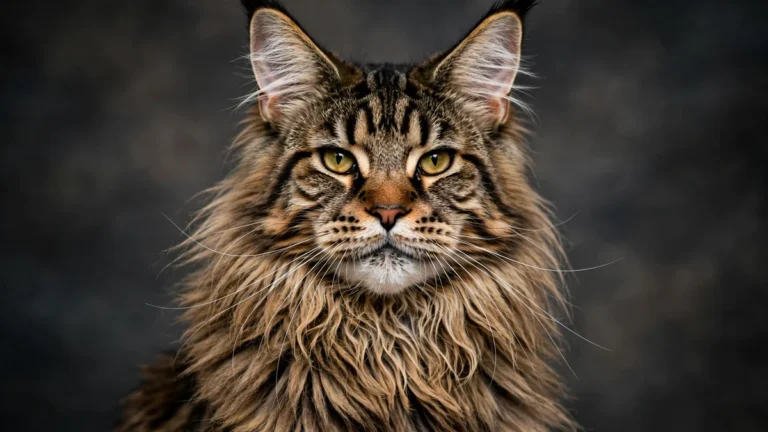
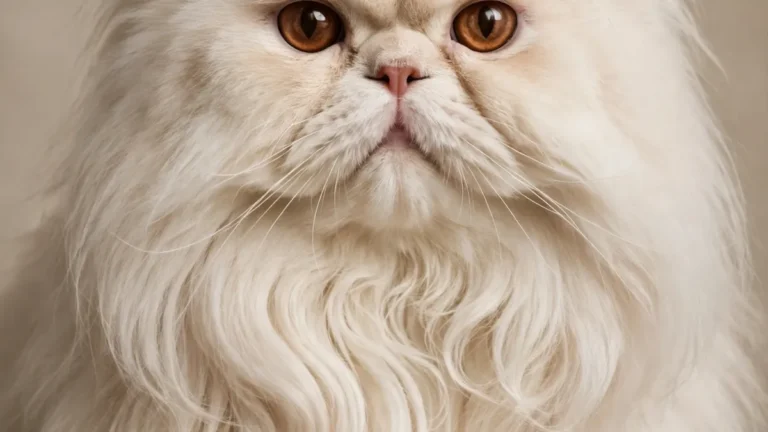
The Russian Blue’s dense double coat is genuinely easy to care for. A weekly brushing with a soft brush keeps it glossy, lifts away loose hair, and suits the coat’s plush texture. Compared with the dense Maine Coon coat or the long Persian coat, the Russian Blue asks very little in grooming time — a short weekly session is enough for most of the year.
What the breed does ask for is companionship and calm. Russian Blues are indoor-oriented cats that prefer the centre of family life to solitary corners, and they do best in homes with a steady routine. Daily interactive play, a comfortable perch by a window — a favourite spot for watching the world — and plenty of quiet time with their people cover most of a Russian Blue’s daily needs. They adapt well to apartments and to homes with children and other pets, provided introductions are gentle and the cat has a quiet corner to retreat to when it wants one.
Russian Blue vs Other Grey-Coated Breeds: A Quick Comparison
The Russian Blue is not the only grey-coated breed, but its silver shimmer and green eyes set it apart. Here is how it compares with other reader favourites:
| Trait | Russian Blue | British Shorthair | Persian | Scottish Fold |
|---|---|---|---|---|
| Coat | Dense double coat, silver-blue | Short, dense, plush | Long, flowing | Short or long, plush |
| Eye colour | Vivid green | Copper or gold | Copper, blue, or green | Copper or gold |
| Build | Medium, lithe, fine-boned | Medium-large, cobby | Medium, cobby | Medium, cobby |
| Energy level | Moderate | Moderate | Low to moderate | Moderate |
| Vocality | Quiet | Quiet | Quiet | Quiet |
| Best for | Calm homes, devoted companionship | Owners wanting a steady companion | Owners wanting a lap cat | Calm homes, gentle temperaments |
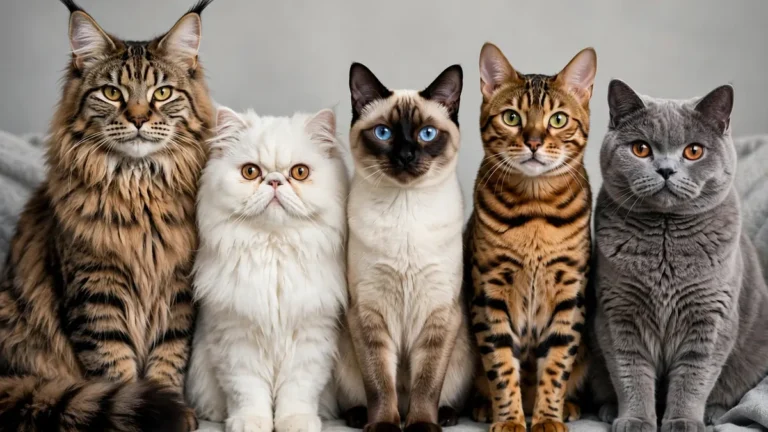
The British Shorthair shares the Russian Blue’s blue-grey colouring but carries a heavier, cobby build and copper eyes. The Persian offers the same quiet nature in a long, flowing coat. The Russian Blue’s combination — silver-tipped double coat, vivid green eyes, and fine-boned elegance — remains unique to it.
Interesting Facts About Russian Blue Cats
- An Archangel name: The breed was first known in the West as the Archangel cat, after Arkhangelsk, the northern Russian port it is said to come from.
- Crystal Palace, 1875: The first Russian Blue was exhibited at the Crystal Palace cat show in London in 1875, among the earliest cat shows in the world.
- A class of its own: By 1912 the Russian Blue had been given its own competition class, separate from other blue-coated cats.
- CFA recognition in 1949: The Cat Fanciers’ Association accepted the Russian Blue for registration in 1949.
- The Russian smile: The corners of the mouth turn up slightly, giving the breed a gentle, contented expression.
- Eyes that change: Kittens are born with yellow eyes that deepen to vivid green over the first year.
- A coat that holds a print: The dense double coat is so plush that it briefly holds the impression of a stroke.
Living With a Russian Blue: What to Know
The Russian Blue is a cat for people who want a gentle, devoted companion with a look unlike any other breed. It is calm without being dull, playful without being demanding, and affectionate without being clingy. Its shyness with strangers is the one trait to plan for — give the cat time, and it will reward patience with deep loyalty.
If you love elegant cats with quiet temperaments, compare the Russian Blue with other breeds in our most popular cat breeds guide, browse the Cats & Kittens section, and start from the MyPetsMyLove homepage to keep exploring.
Related Reading on MyPetsMyLove
- Most popular cat breeds in the USA
- British Shorthair cats guide
- Scottish Fold cats guide
- Cats & Kittens hub page
- MyPetsMyLove homepage
- About Us page
References
- The Cat Fanciers’ Association (CFA) — Russian Blue breed standard and profile
- The International Cat Association (TICA) — Russian Blue breed information and standard
Frequently Asked Questions
Where did the Russian Blue cat come from?
The Russian Blue is traditionally said to come from Arkhangelsk, a port city on the White Sea in northern Russia. Sailors are believed to have carried the cats from there to England and northern Europe. The breed was first exhibited at the Crystal Palace cat show in London in 1875, and the Cat Fanciers’ Association accepted it for registration in 1949.
Why is the Russian Blue’s coat silver-blue?
The coat is a dense double coat with silver-tipped guard hairs over a thick undercoat. The silver tipping catches the light and gives the fur its shimmering look, while the base colour — what cat fanciers call “blue” — is a soft, even grey-blue.
Why do Russian Blue cats have green eyes?
Vivid green eyes are a defining trait of the adult breed. Kittens are born with yellow eyes, and the colour deepens to green over the first year as the cat matures.
Are Russian Blue cats good for first-time owners?
They can be, for owners who want a calm, devoted companion and a quiet home. Russian Blues are gentle, loyal, and easy to groom, but they are shy with strangers and prefer a steady routine. See our guide to the best cat breeds for first-time owners for comparisons.
Do Russian Blue kittens have tabby markings?
Yes, faint ones. Russian Blue kittens are born with faint tabby markings in the coat, which fade away as they grow, leaving the even silver-blue coat of the adult.
How big do Russian Blue cats get?
Most adult Russian Blues weigh between 7 and 12 pounds, with males typically larger than females. They are medium-sized, fine-boned cats with a lithe, elegant build.
Conclusion
The Russian Blue has captivated people since the first silver-blue cats appeared at the Crystal Palace in 1875 — a cat with a shimmering double coat, vivid green eyes, and a gentle, loyal nature. From the cold ports of Arkhangelsk to championship recognition in 1949, the breed’s journey is one of the most elegant stories in the cat world.
If you want a calm companion that will bond deeply with you, greet you quietly at the door, and settle beside you with a soft chirp, the Russian Blue is hard to beat. Compare it with other remarkable breeds in our most popular cat breeds guide, explore the Cats & Kittens section, and start from the MyPetsMyLove homepage to meet more breeds worth knowing.
Disclaimer
Disclaimer
MyPetsMyLove dot com is an independent informational website covering pet species breeds characteristics activities positive training bonding grooming and responsible ownership
We are not a veterinary clinic medical provider pet food provider or veterinary nutrition service
We do not provide veterinary diagnosis medical advice treatment food recommendations or nutritional guidance
For pet health medical or food related concerns consult a qualified veterinarian or appropriate professional directly
Independent clinics listed on this website are not owned or operated by MyPetsMyLove unless explicitly stated
Verify third party credentials services fees and availability independently
We do not guarantee third party services or outcomes
To the extent permitted by applicable law we disclaim responsibility for independent third party services
Nothing in this notice excludes liability that cannot legally be excluded
The disclaimer does not make prohibited content acceptable