Best Tunnel Toys for Kittens and Adult Cats
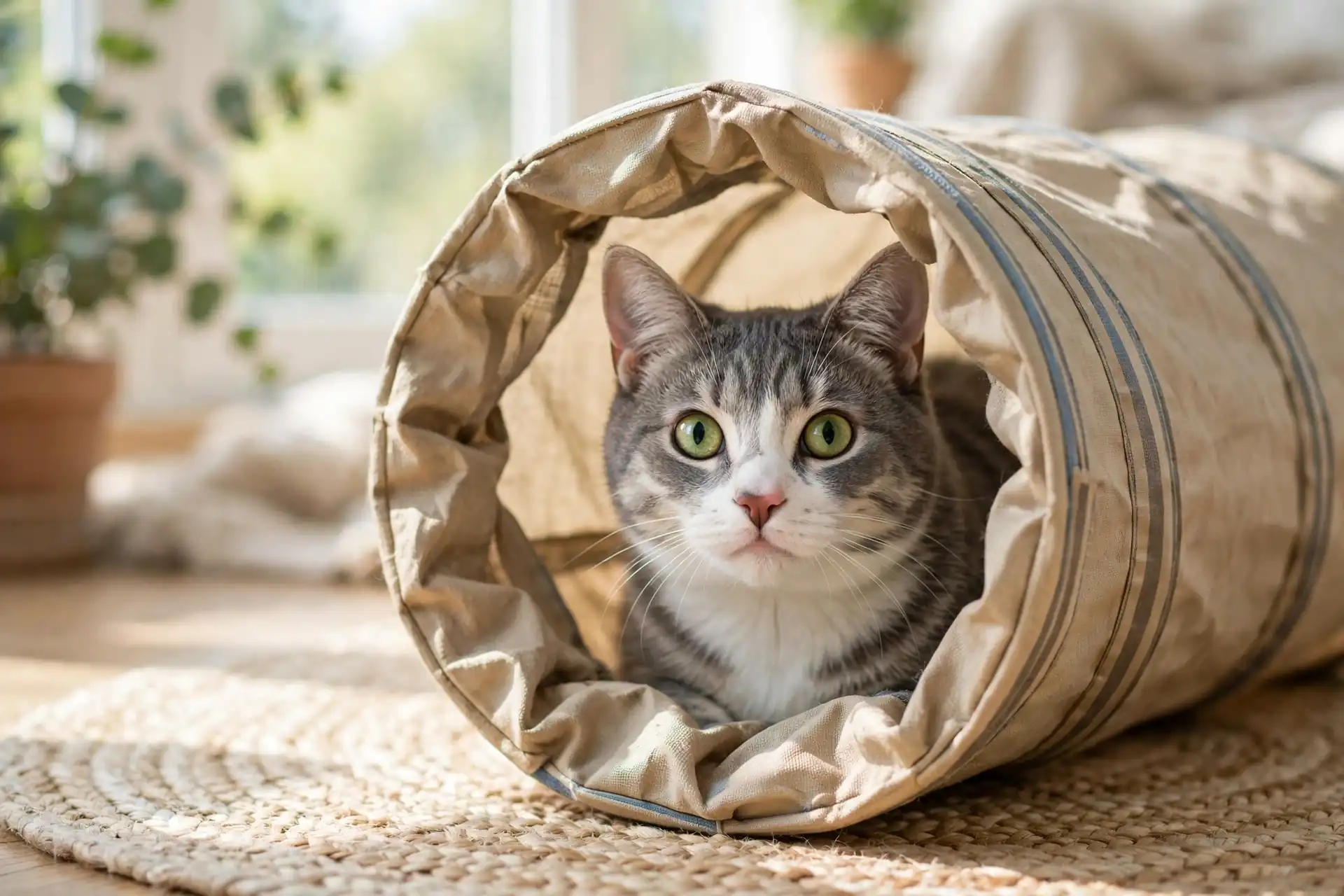
Of all the toys you can buy a cat, a tunnel may be the simplest — and the most reliably loved. It is a tube of fabric, sometimes crinkly, sometimes plain, with an opening at each end. Yet for a cat, it is a hunting ground, a hiding place, a race track, and a napping spot all at once. Kittens charge through it at full speed. Adult cats stalk it, pounce from it, and disappear inside it to watch the room from safety.
This guide explains what tunnel toys for cats are, compares the main types, and helps you choose the right one for a kitten or an adult cat — by size, material, shape, and play style.
What Is a Cat Tunnel Toy?
A cat tunnel is a flexible tube, usually made of fabric over a spiral wire frame, that a cat can run through, hide in, and play around. Most tunnels are between 90 and 120 cm long (about 3 to 4 feet) and 25 to 30 cm wide (about 10 to 12 inches) — wide enough for an adult cat to move through comfortably, narrow enough to feel like a proper hiding place.
The appeal is instinctive. Cats are ambush hunters: in the wild, they stalk from cover and pounce. A tunnel gives an indoor cat a place to stalk from, a spot to hide in, and a track to sprint along. It also gives a shy cat a safe retreat — a covered space where it can watch the room without being watched. For kittens, it is pure excitement; for adult cats, it is a place to play, rest, and observe.
Most tunnels collapse flat for storage: twist the spiral frame and the whole tube folds into a disc that slides under a bed or behind a sofa. That fold-flat design is one of the reasons tunnels have become a staple of the cat toy world — a large toy that takes up almost no space when playtime ends.
Types of Tunnel Toys Compared
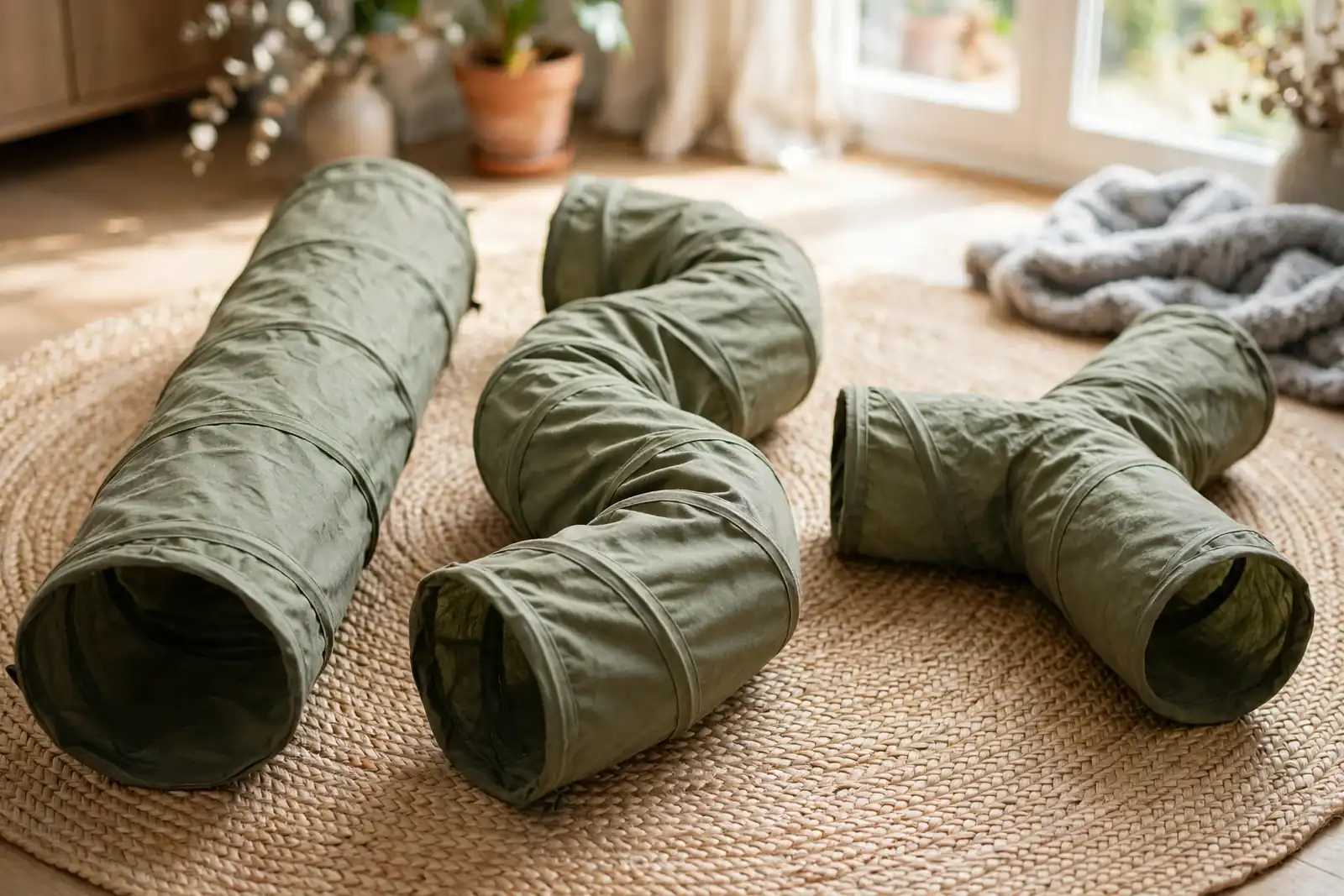
Not all tunnels are the same. The shape, the material, and the extras change how a cat plays with them. Here are the main types.
Straight Tunnels
The classic: a single straight tube with an opening at each end. Straight tunnels are the best starting point — simple, easy for a kitten to understand, and ideal for chase games, with a cat darting in one end and out the other. They come in crinkle and non-crinkle versions, and they are usually the most affordable type. If you are buying your first tunnel, start here.
S-Shaped and Curved Tunnels
Curved tunnels bend in the middle, so a cat inside cannot see straight through to the other end. That bend changes the game: the cat has to stalk around the curve, and a toy dangled at one end is a genuine surprise. S-shaped tunnels are a good second tunnel for cats that have mastered the straight one, and they fit well along walls and around furniture.
Multi-Way Tunnels
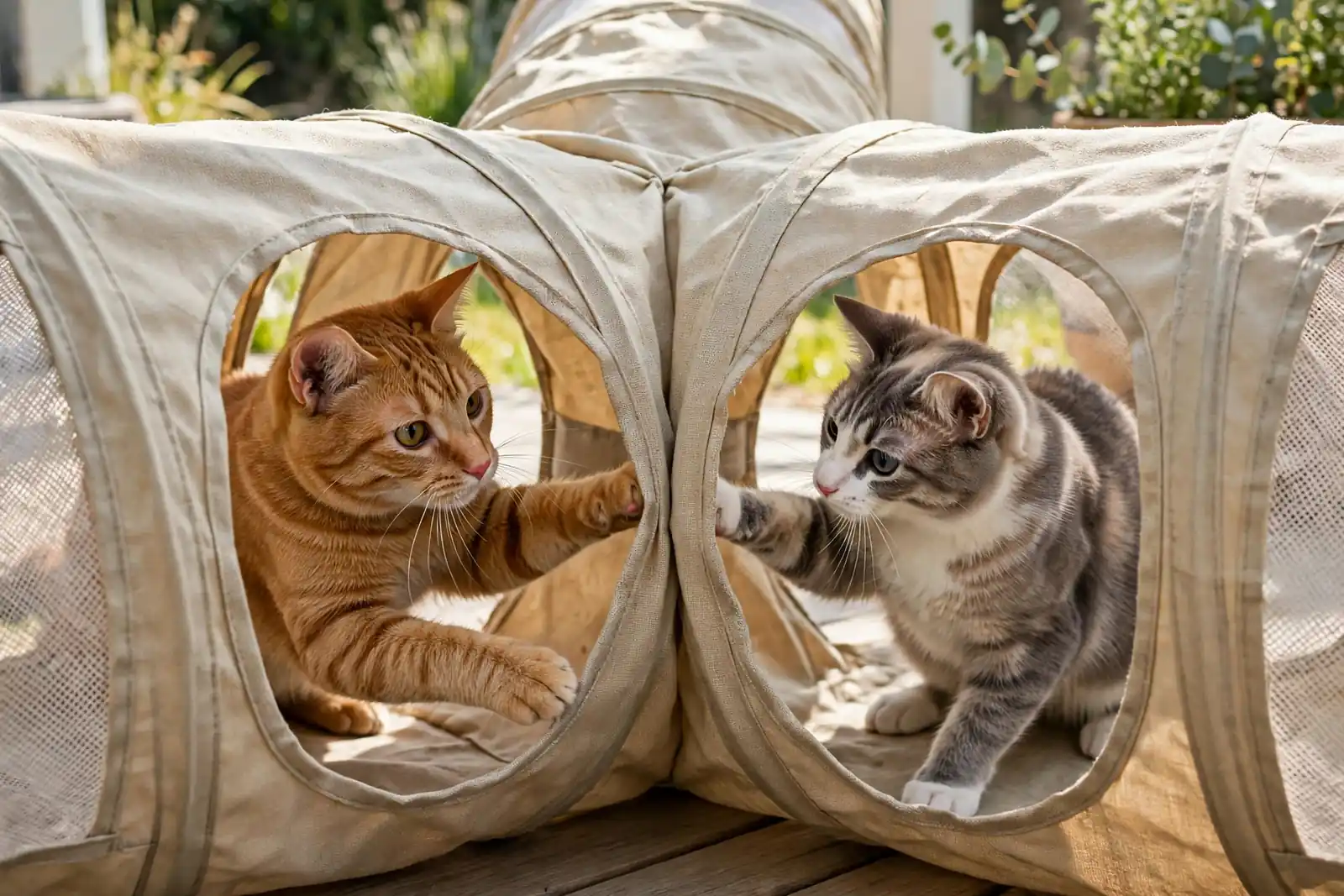
Multi-way tunnels have three or four openings — Y-shaped, T-shaped, or cross-shaped designs. They are the best choice for homes with two or more cats, because one cat can hide inside while another stalks from a different entrance, and the game becomes hide-and-seek. They also give a single cat more choices: enter one way, exit another, and surprise a toy from a third direction. Multi-way tunnels take up more floor space, so measure your room before choosing one.
Crinkle Tunnels
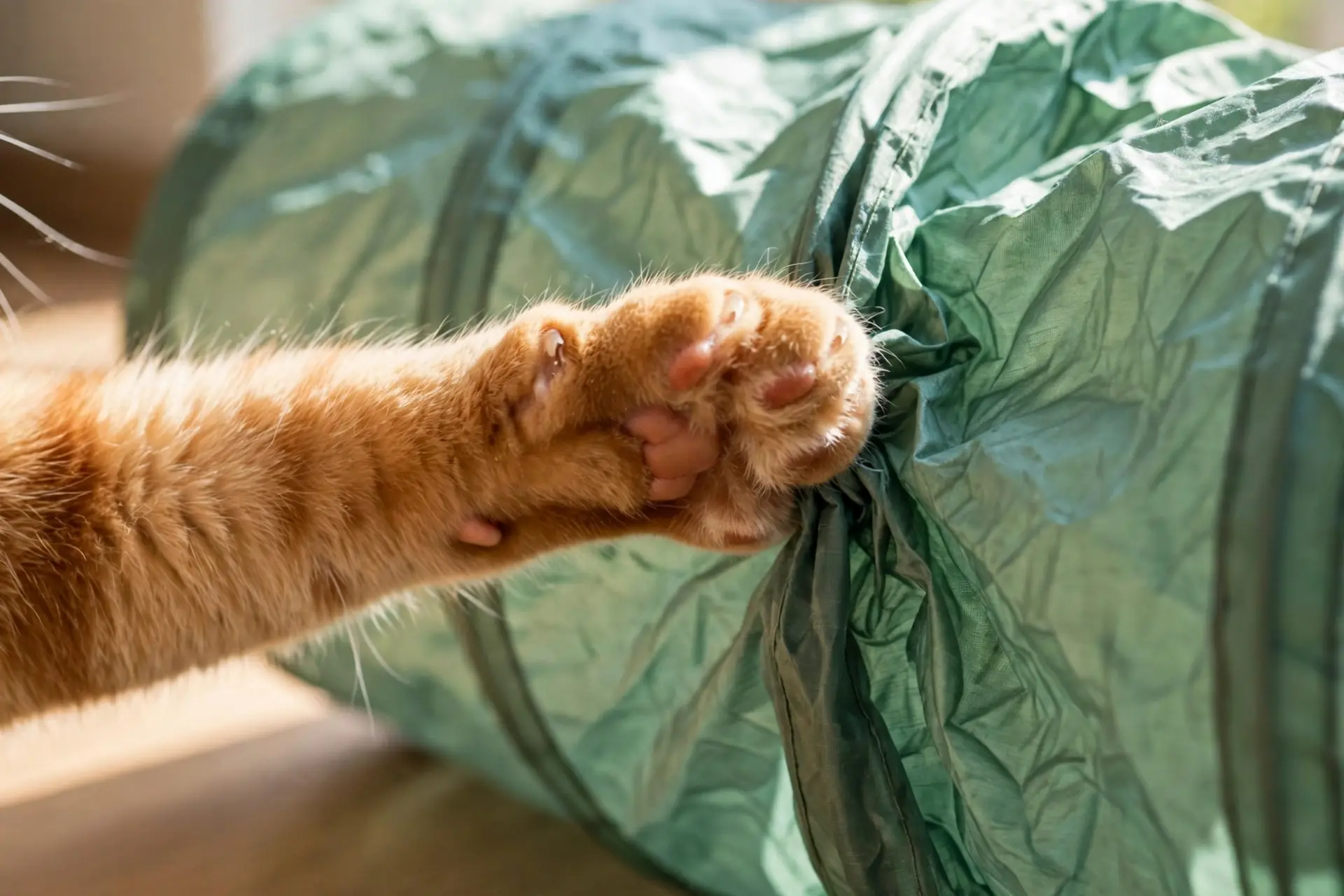
Crinkle tunnels are lined or covered with a material that rustles and crackles when touched. The sound adds a whole layer to the play: every step, every paw, and every pounce makes a noise that excites many cats and draws them back again and again. Some cats love the sound; a few are put off by it at first, so if your cat is sound-sensitive, a plain fabric tunnel may be a better first choice. Many tunnels combine crinkle sections with quiet sections, giving the cat both.
Tunnels With Dangling Toys
Some tunnels come with a ball, a pom-pom, or a feather toy hanging at one entrance, or a peekaboo hole in the middle with a toy inside. The dangling toy gives the cat a target to bat at from inside the tunnel, turning a simple tube into an interactive game. These extras are easy to replace if they wear out — a tunnel with a worn dangling toy is still a perfectly good tunnel.
Tunnel Toys for Kittens
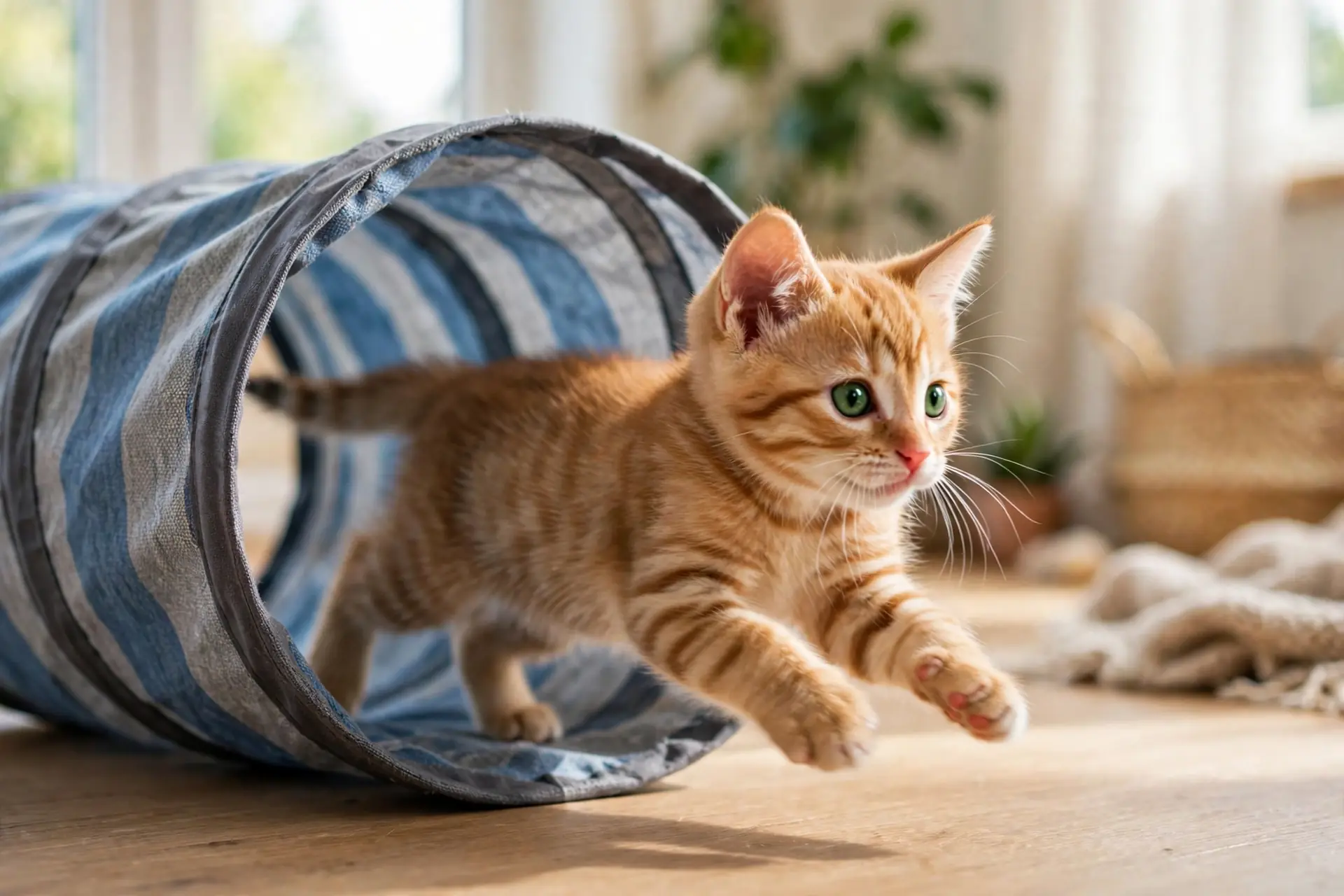
Kittens take to tunnels instantly. A kitten’s play is all about chasing, pouncing, and hiding, and a tunnel serves all three at once: the kitten races through it, hides inside it, and leaps out at a toy — or at a sibling — from the entrance. For a young cat, a tunnel is also a safe place to retreat to when the world feels too big, which helps a new kitten settle into a home.
For kittens, choose a tunnel that is light, flexible, and easy to move through. A straight crinkle tunnel around 90 cm long is a good first choice: short enough that the kitten can see the other end, light enough to shift as the kitten plays, and noisy enough to hold its attention. Avoid tunnels with very small openings — the entrance should be wide enough for the kitten to enter and exit without squeezing. And because kittens play hard, look for a tunnel with a sturdy spiral frame that springs back into shape after being pounced on, sat on, and dragged across the room.
Pair the tunnel with other kitten favourites from our best cat toys guide — a wand toy dangled at the tunnel entrance turns the tube into a hunting game, and a small ball rolled through it gives the kitten something to chase from one end to the other.
Tunnel Toys for Adult Cats
Adult cats use tunnels differently from kittens. A grown cat is less likely to charge through at full speed and more likely to use the tunnel as a base: hiding inside, watching the room, and pouncing when a toy or a housemate passes by. Many adult cats also nap in their tunnels, treating the tube as a cosy, covered resting place — especially tunnels with a soft, plush lining or a peekaboo hole that lets the cat watch without being seen.
For adult cats, size matters more. Choose a tunnel at least 25 cm wide, and longer — 120 cm or more — so a full-grown cat can stretch out inside. Larger breeds, and heavier cats, need the widest tunnels available; a tunnel that is too narrow will simply be ignored. Multi-way tunnels suit adult cats well, because they offer more than one entrance and more room to manoeuvre, and a tunnel with a dangling toy or a peekaboo hole keeps an adult cat interested long after the novelty of a plain tube has worn off.
If your adult cat ignores a new tunnel at first, give it time and a little encouragement. Place the tunnel in a spot the cat already likes, put a favourite toy just inside the entrance, and let the cat discover it on its own terms. Many cats that ignore a tunnel on day one are sleeping in it by day three.
Materials, Sizes, and Durability Compared
Tunnel toys are usually made from one of three materials, and each has trade-offs.
Polyester fabric is the most common: light, colourful, easy to wipe clean, and quick to dry. Most crinkle tunnels use polyester, and it holds up well to daily play. Plush or fleece feels softer and warmer, and cats that like to nap in their tunnels often prefer it — but it shows wear sooner and is harder to clean. Nylon is the toughest of the three, resisting claws and teeth well, and it is a good choice for vigorous players; it is also the noisiest material, which some cats love and others do not.
Durability depends on the frame as much as the fabric. Look for a tunnel with a strong steel spiral frame that holds its shape, reinforced stitching at the entrances, and a fabric that does not tear at the first claw. A well-made tunnel should survive months of daily play; a flimsy one will collapse after a few enthusiastic sessions. Check the stitching around the openings and the peekaboo holes, where wear shows first, and replace a tunnel when the frame breaks through the fabric or the material frays — a torn tunnel can snag claws.
| Feature | Straight tunnel | S-shaped tunnel | Multi-way tunnel |
|---|---|---|---|
| Best for | First tunnel, chase games | Cats that mastered the straight tunnel | Multi-cat homes, hide-and-seek |
| Entrances | 2 | 2 | 3–4 |
| Floor space | Small | Medium | Large |
| Price range | Lowest | Mid | Mid to high |
| Storage | Folds flat | Folds flat | Folds flat |

Choosing the Right Tunnel for Your Cat
Start with your cat. A playful kitten needs a light, short, crinkle tunnel. A large adult cat needs a wide, long one. A shy cat needs a plain fabric tunnel with a covered feel, placed somewhere quiet. A household with two cats needs a multi-way tunnel with room for both. And a cat that loves noise will adore a crinkle tunnel, while a sound-sensitive cat will prefer quiet fabric.
Then check the practical details: measure the space where the tunnel will live, and make sure the tunnel fits with room for the cat to enter and exit freely. Check that the entrance is wide enough for your cat — 25 cm is a good minimum for most adults. Look for a tunnel that folds flat for storage, with a frame that springs back, and with fabric you can wipe clean. Finally, think about what else your cat already loves: a tunnel pairs naturally with the toys in our interactive cat toys guide and our best wand toys for cats guide, and it sits well alongside the puzzle and ball toys in our cat puzzle toys guide and best interactive ball toys guide.
Which One Should You Try First?
If you are buying your first tunnel, keep it simple: a straight, collapsible, crinkle tunnel around 90 to 120 cm long, wide enough for your cat, with a sturdy frame. It is the most versatile type, the easiest to store, and the one most cats take to immediately. Once your cat is a tunnel fan, add a second shape — an S-shaped or multi-way tunnel — and watch the games change.
A tunnel is one of the rare cat toys that works for almost every cat, at almost every age: a race track for kittens, a hunting blind for adults, and a cosy hiding place for shy cats. It folds flat, costs little, and turns an ordinary room into a playground. For most cats, that is a combination worth trying.
Related Reading on MyPetsMyLove
- Best cat toys guide
- Interactive cat toys guide
- Cat puzzle toys guide
- Pet Products hub page
- MyPetsMyLove homepage
- About Us page
References
- The Cat Fanciers’ Association (CFA) — cat play and enrichment resources
- The International Cat Association (TICA) — cat care and enrichment resources
Frequently Asked Questions
What is a cat tunnel toy?
A cat tunnel is a flexible fabric tube, usually supported by a spiral wire frame, that a cat can run through, hide in, and play around. Most tunnels are 90 to 120 cm long and 25 to 30 cm wide, and most collapse flat for storage.
Are tunnel toys good for kittens?
Yes — kittens take to tunnels instantly. A tunnel gives a kitten a place to chase, pounce, hide, and retreat to when the world feels too big. Choose a light, straight crinkle tunnel around 90 cm long with a wide entrance for a first tunnel.
Are tunnel toys good for adult cats?
Yes, though adult cats use them differently: more as a hiding place, a stalking base, and a napping spot than as a race track. Choose a tunnel at least 25 cm wide and 120 cm or longer so a full-grown cat can stretch out inside.
What is a crinkle tunnel?
A crinkle tunnel is lined or covered with a material that rustles and crackles when touched. The sound adds excitement for many cats and draws them back to play again and again. A few sound-sensitive cats prefer plain fabric, so a tunnel that mixes crinkle and quiet sections suits both.
How do I choose the right tunnel size?
Measure your cat and your room. The tunnel should be at least 25 cm wide for most adult cats, and longer tunnels (120 cm or more) suit larger cats. Make sure the entrance is wide enough for your cat to enter and exit without squeezing, and that the tunnel fits your floor space with room to spare.
Do cat tunnels fold for storage?
Most do. Twist the spiral frame and the tunnel folds flat into a disc that slides under a bed or behind a sofa. That fold-flat design is one of the reasons tunnels are so popular — a large toy that takes up almost no space when playtime ends.
Conclusion
A tunnel toy is one of the simplest, most reliable buys in the cat world: a tube of fabric that becomes a hunting ground, a hiding place, a race track, and a nap spot, for kittens and adult cats alike. Start with a straight, collapsible crinkle tunnel that fits your cat and your room, and add a second shape once your cat is hooked.
Explore more toy ideas in our best cat toys guide, compare play styles in our interactive cat toys guide, browse the Pet Products section, and start from the MyPetsMyLove homepage to keep exploring.
Disclaimer
Disclaimer
MyPetsMyLove dot com is an independent informational website covering pet species breeds characteristics activities positive training bonding grooming and responsible ownership
We are not a veterinary clinic medical provider pet food provider or veterinary nutrition service
We do not provide veterinary diagnosis medical advice treatment food recommendations or nutritional guidance
For pet health medical or food related concerns consult a qualified veterinarian or appropriate professional directly
Independent clinics listed on this website are not owned or operated by MyPetsMyLove unless explicitly stated
Verify third party credentials services fees and availability independently
We do not guarantee third party services or outcomes
To the extent permitted by applicable law we disclaim responsibility for independent third party services
Nothing in this notice excludes liability that cannot legally be excluded
The disclaimer does not make prohibited content acceptable