
Birman Cats: The Blue-Eyed Breed with a Fascinating History
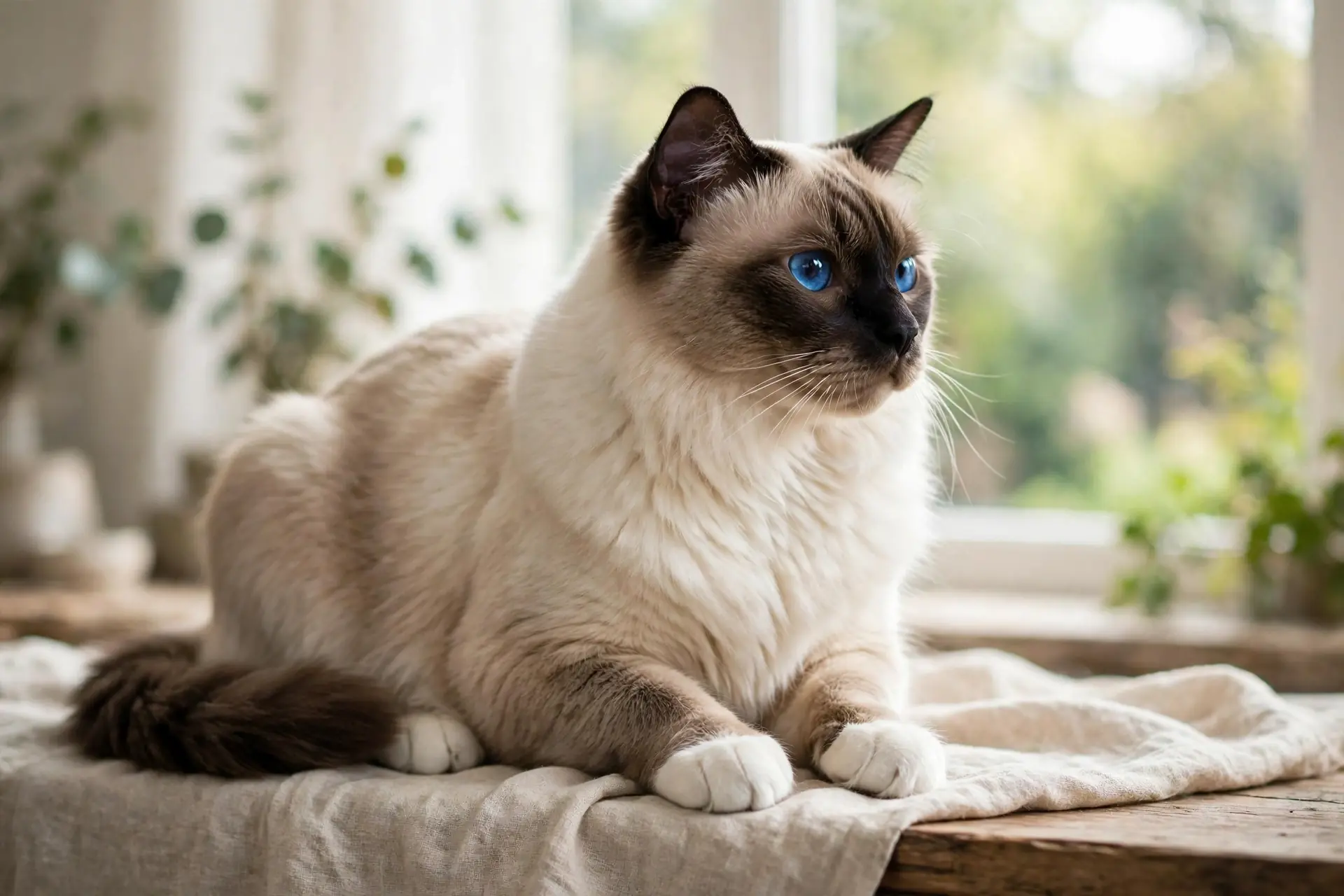
Few cats look at you the way a Birman cat does. The eyes are a deep, almost startling blue, the paws look as if they have been dipped in fresh snow, and the whole cat carries itself with a calm that feels centuries old. Then there is the story that travels with the breed: a tale of temple cats in Burma, a loyal companion who would not leave his priest, and a coat that was said to have been touched by a goddess. Is any of it true? The legend is part of the Birman’s charm, and this guide separates the story from the documented history, then covers the coat, the temperament, the kittens, and what living with this gentle breed is really like.
The Legend of the Temple Cats of Burma
According to breed legend, the Birman descends from the temple cats of Burma, in the land now known as Myanmar. The story is traditionally told about the temple of Lao-Tsun, where priests kept long-haired white cats with golden eyes as sacred companions. One much-loved temple cat, named Sinh, belonged to an elderly priest and stayed close beside him at all times, even during prayer.
The legend says that when the priest died, Sinh placed his paws on his master and faced the statue of the goddess of the temple. In that moment, the story goes, the cat’s fur took on a golden tint, his eyes turned the deep blue of the goddess’s eyes, and his face, ears, legs, and tail darkened — while the paws that rested on the priest stayed pure white. Every Birman since, the tale claims, carries those marks: the blue eyes, the pointed coat, and the white gloves.
It is a beautiful story, and breeders and breed histories repeat it often. It should be enjoyed as legend and tradition rather than proven fact, because no records survive to confirm it. What the legend does explain is why the breed is sometimes called the Sacred Cat of Burma, and why its most treasured features are exactly the ones the story describes.
The Documented History of the Birman
The recorded history of the Birman begins in France in the early twentieth century. Breed histories commonly tell that a pair of Birman-type cats reached France in the years after the First World War, and that French breeders developed the cats they found there into a distinct breed. France recognized the Birman as a separate breed in 1925, and early French breeders are credited with setting the standard for the blue eyes, the pointed coat, and the white gloves.
The breed then came close to disappearing during the Second World War. Widely repeated breed histories say that only a very small number of Birmans survived the war years in Europe, and that patient breeding work in France after the war rebuilt the breed from those few cats. Numbers recovered slowly, and the Birman gradually spread beyond France. The breed reached the United States in the late 1950s and early 1960s, was shown there in the following years, and went on to gain recognition from major cat registries in North America and Britain.
Today the Birman is an established breed on both sides of the Atlantic, kept and shown by registries such as the Cat Fanciers’ Association and The International Cat Association. Its journey from French catteries to homes around the world is recent and well documented, even if the temple chapter of the story remains a legend.
Appearance of the Birman
The Birman is a medium to large cat with a sturdy, well-balanced body and a calm, rounded outline. It is not as slender as a Siamese and not as heavy as some larger breeds; it sits comfortably in between, with strong legs of medium length and a tail in proportion to the body. The head is broad and rounded, with full cheeks, a medium-length nose that shows a slight dip in profile, and ears that are medium in size and set a little apart.
The eyes are the feature everyone remembers first. Birman eyes are round to oval, widely set, and always blue — the deeper and richer the blue, the more the breed standard prizes it. Combined with the darker face markings, the effect is striking: a gentle, open expression that owners often describe as sweet.
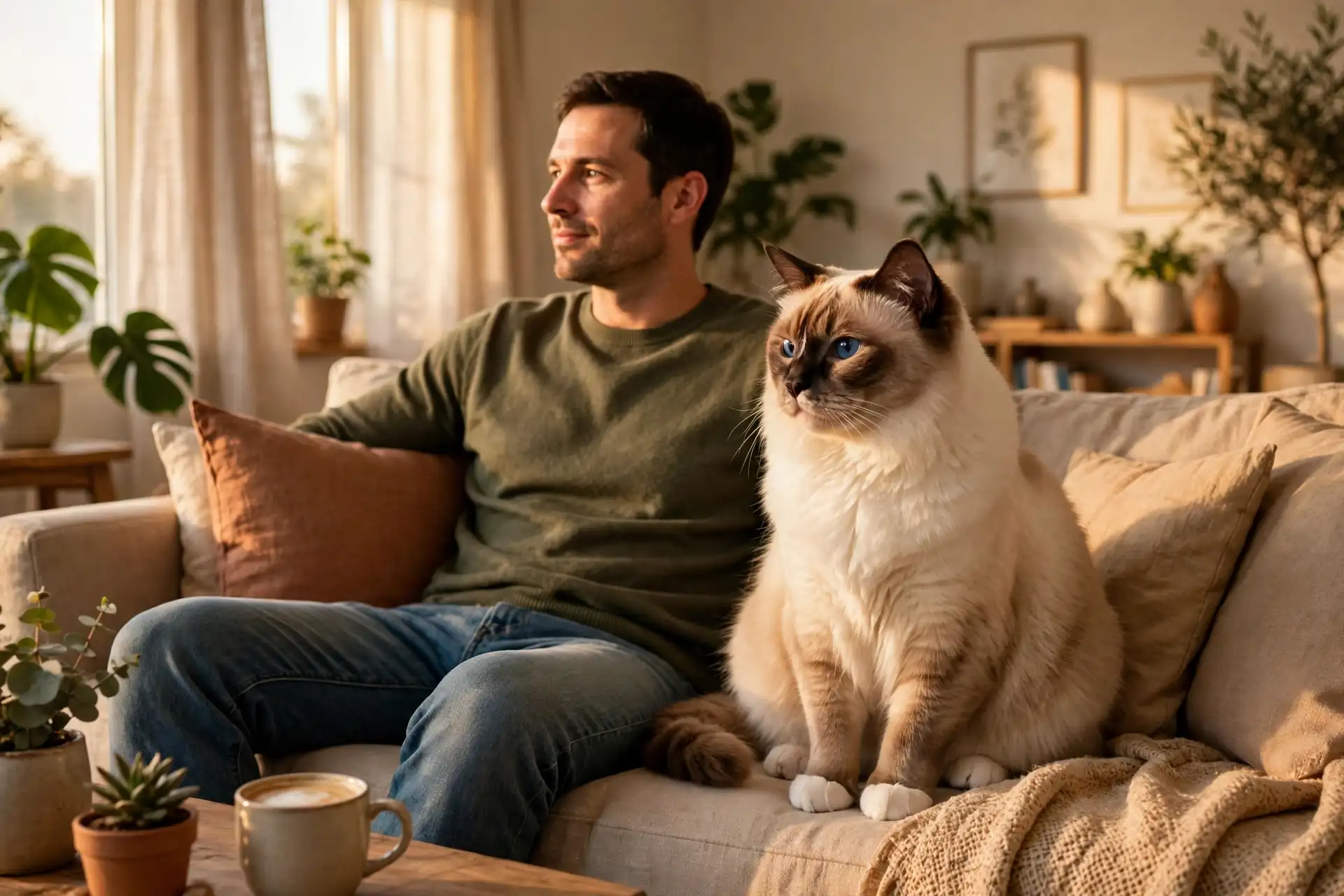
Compared with the sleek Siamese cat, the Birman looks softer and more rounded, and compared with the large, floppy Ragdoll cat, it is a little more compact and upright. Among the main cat breeds kept in American homes, its combination of points, blue eyes, and white paws is unique.
Coat, Colors, and the Famous White Gloves
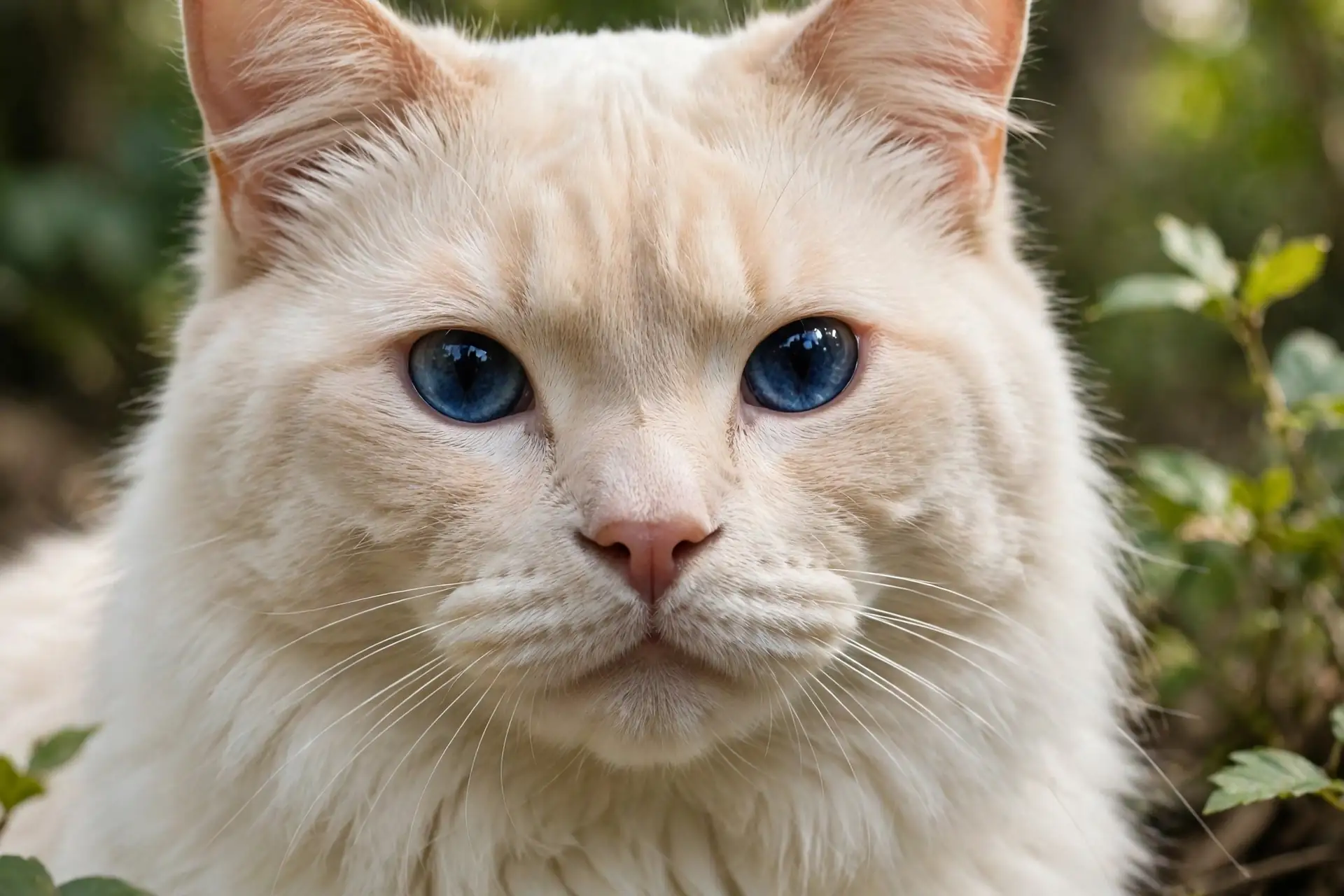
The Birman coat is semi-long and silky, with a texture that feels noticeably different from other long-haired breeds: it lies smoothly, forms a heavier ruff around the neck, and does not tangle as readily as many full long coats. There is only a light undercoat, so regular gentle brushing is usually enough to keep the coat in order, with a little extra care during seasonal shedding.
The color pattern is called pointed, which means the face, ears, legs, and tail are darker than the body. The body stays a pale cream to golden tone, and the contrast deepens as the cat matures. The traditional color is seal point, a deep brown, and blue point, a soft slate gray, is also classic. Other recognized point colors include chocolate, lilac, red, and cream, along with tabby and tortoiseshell variations of those shades.
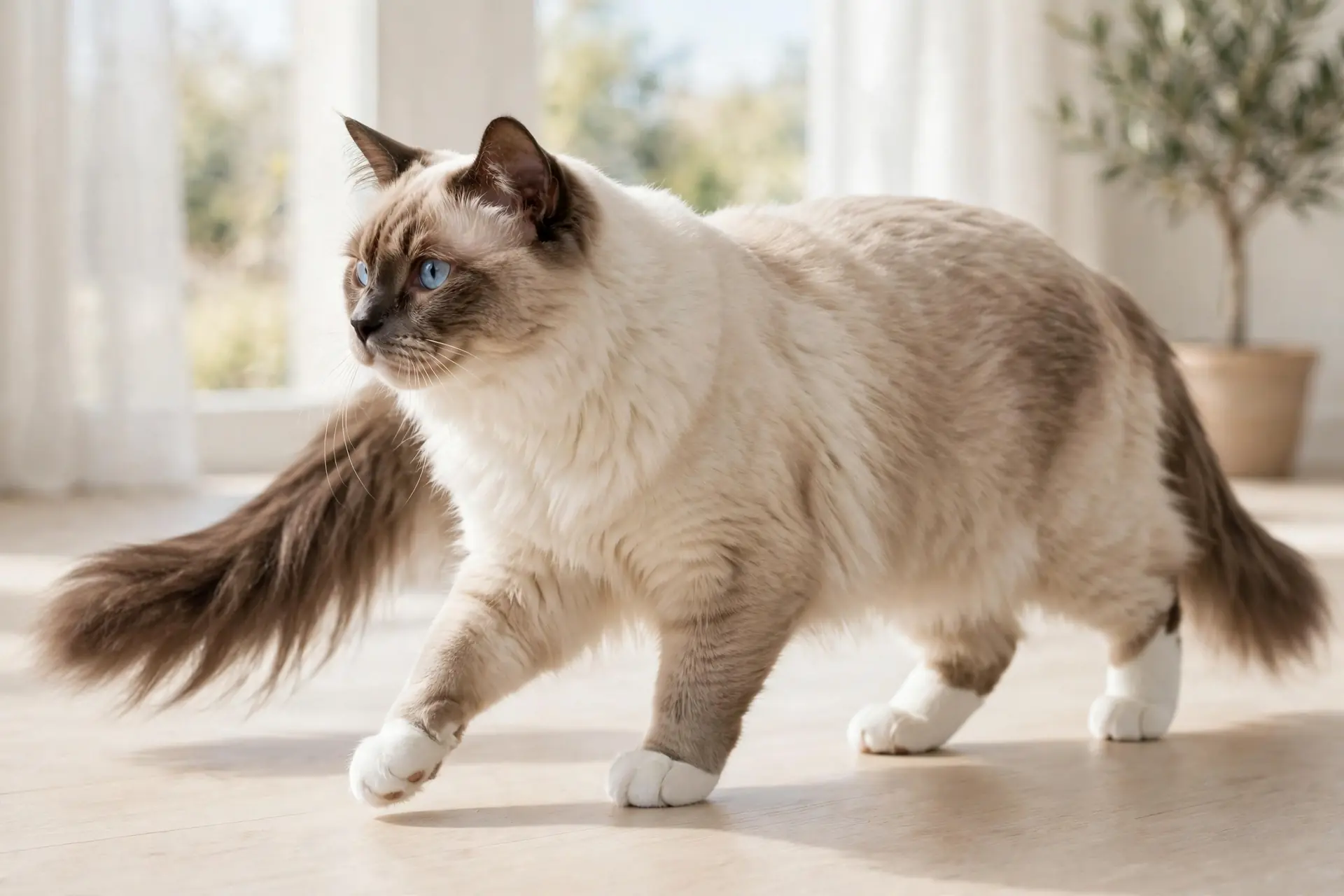
The gloves are the breed’s signature. All four paws are pure white, as if the cat were wearing neat little gloves and socks. On the front paws the white usually ends in a clean line across the foot, and on the back legs it rises higher at the back in a pattern breeders call laces. Well-marked, even gloves are prized in the show standard, while pet Birmans may have slightly uneven markings and lose none of their charm for it.
Temperament and Personality
If the Birman’s looks draw people in, its temperament is what keeps them. This is a gentle, calm, and people-oriented breed that enjoys company without demanding constant attention. Birmans often follow their owners from room to room, settle nearby while work is being done, and greet visitors with quiet curiosity rather than shyness.
The breed is known for a soft voice, used sparingly. A Birman will answer when spoken to and may hold a short, quiet conversation, but it is far less talkative than its pointed cousin in our Siamese cats guide. Playfulness lasts well into adult life: most Birmans enjoy a daily game with a wand toy or a rolling ball, then happily return to a cushion for a long, relaxed rest.
Birmans usually cope well with calm children and with other cats, and many live peacefully alongside friendly dogs. Their easygoing nature makes them a popular choice among domestic cat breeds for households that want an affectionate companion rather than an independent loner. Readers comparing popular breeds can see where the Birman fits in our guide to the most popular cat breeds in the USA.
Birman Kittens
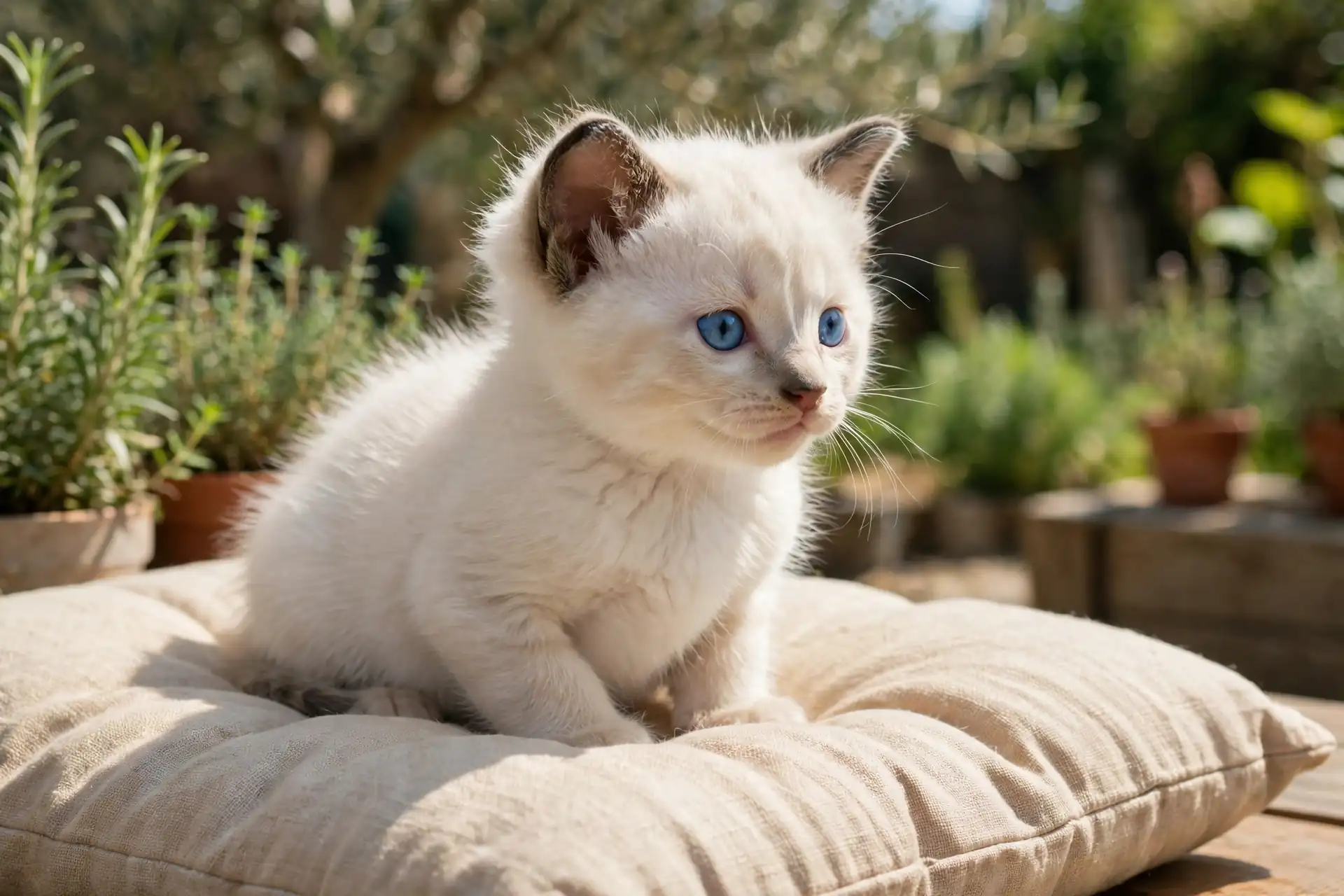
Birman kittens begin life looking nothing like their parents. Every kitten is born completely white, with pink paw pads and no points at all. Within the first weeks, color begins to appear on the ears and nose, then spreads slowly to the legs and tail. The full depth of the point color and the final shade of the coat can take two years or more to develop completely, so a young Birman is a work in progress.
The white gloves, by contrast, are there from the beginning. Even a tiny kitten shows the white paws that mark the breed, though how even and tidy the gloves will be only becomes clear as the kitten grows. Eye color also develops over the first weeks, settling into the breed’s deep blue.
Young Birmans are playful, curious, and quick to bond with the people around them. Gentle handling, short play sessions, and introductions to everyday household sounds help a kitten grow into the calm, confident adult the breed is known for. Anyone choosing between pointed breeds may also enjoy our Turkish Angora cats guide, another elegant breed with a long history and a loyal following.
Living With a Birman
Life with a Birman is quiet in the best way. This is largely an indoor companion that prefers to be where its people are, whether that means supervising from the back of the sofa or sleeping at the foot of the bed. A sunny window perch, a comfortable resting spot on each floor, and a scratching post in a room the family uses will cover most of what a Birman asks from its home.
The breed is moderately active rather than athletic. Short play sessions spread through the day suit it better than one long session, and simple toys are usually a success — for ideas, our guide to the best cat toys covers the types cats return to again and again. Birmans are not famous climbers to the top of the bookcase, but a modest cat tree with a good perch is still well used.
Coat care is light for a semi-long breed. A gentle brush once or twice a week keeps the silky fur smooth and lifts loose hair, and most Birmans enjoy the attention as part of the routine. The white paws may show household dust after an adventure under the furniture, which owners tend to find more amusing than annoying.
Birman vs Other Pointed Breeds
| Breed | Coat | Eyes | Paws | Temperament |
|---|---|---|---|---|
| Birman | Semi-long, silky, pointed | Deep blue | White gloves on all four paws | Gentle, calm, people-oriented |
| Siamese | Short, fine, pointed | Blue | No white gloves | Vocal, lively, demanding |
| Ragdoll | Semi-long, plush, often pointed | Blue | White markings vary | Relaxed, affectionate, large |
| Turkish Angora | Semi-long, silky, usually solid colors | Blue, green, amber, or odd-eyed | No gloves | Graceful, playful, independent streak |
The table shows why the Birman stands apart even among popular breeds with pointed coats. The Siamese brings the voice and the energy, the Ragdoll brings the size and the famously relaxed nature, and the Turkish Angora brings an older, elegant look in mostly solid colors. The Birman is the quiet middle path: pointed, blue-eyed, soft-coated, and calm, with the white gloves that no other breed standard requires in quite the same way.
Interesting Facts About Birmans
- A sacred name: The breed is still nicknamed the Sacred Cat of Burma, after the temple legend.
- Born white: Every Birman kitten is born pure white, and the points develop gradually over months.
- Gloves from birth: The famous white paws are visible on newborn kittens, long before the point color arrives.
- French beginnings: Whatever the legend says, the documented breed was developed and first recognized in France in 1925.
- A close call: Breed histories say only a handful of Birmans survived the Second World War in Europe, and the breed was rebuilt from them.
- Quiet company: Birmans have soft voices and use them sparingly, preferring to communicate by following and watching.
- Two classic colors: Seal point and blue point are the oldest and best-known Birman colors.

Related Reading on MyPetsMyLove
- Siamese cats guide
- Ragdoll cats guide
- Turkish Angora cats guide
- Cats & Kittens hub page
- MyPetsMyLove homepage
- About Us page
References
- Cat Fanciers’ Association (CFA) — Birman breed profile
- The International Cat Association (TICA) — Birman breed profile
- The Humane Society of the United States — pet care and enrichment resources
- Encyclopaedia Britannica — cat breeds reference
Frequently Asked Questions
Why is the Birman called the Sacred Cat of Burma?
The nickname comes from breed legend, which says Birmans descend from white temple cats kept by priests in Burma. The story tells of a temple cat whose coat, eyes, and paws were transformed while he stayed beside his priest. It is a tradition rather than a proven history.
Are Birman cats born with their point colors?
No. Birman kittens are born completely white. Color appears first on the ears and nose within the early weeks, then develops on the legs and tail, and the full depth of color can take two years or more to finish developing.
Do all Birman cats have white paws?
Yes. White gloves on all four paws are a defining feature of the breed. The front paws show neat white gloves, and the white rises higher at the back of the hind legs in a pattern called laces. Even markings are prized, but pet Birmans may have slightly uneven gloves.
What colors do Birman cats come in?
The classic colors are seal point and blue point. Recognized colors also include chocolate, lilac, red, and cream points, along with tabby and tortoiseshell variations. In every color, the body stays pale and the paws stay white.
Are Birman cats vocal?
No, Birmans are known for soft, quiet voices that they use sparingly. A Birman may answer when spoken to, but the breed is far less talkative than the Siamese, another pointed breed with blue eyes.
Are Birman cats good family companions?
Yes. Birmans are gentle, calm, and people-oriented, and they usually cope well with calm children, other cats, and friendly dogs. They enjoy company and tend to follow their owners around the home without being demanding.
How much grooming does a Birman need?
Less than many long-haired breeds. The semi-long, silky coat has only a light undercoat and does not tangle readily, so a gentle brush once or twice a week is usually enough, with a little extra during seasonal shedding.
Conclusion
The Birman cat brings together a legend worth retelling and a temperament worth living with: deep blue eyes, a silky pointed coat, four white gloves, and a calm, loyal nature that fits quietly into family life. Whether the temple story is history or poetry, the cat in front of you today is very real — gentle, beautiful, and devoted to its people.
Compare the Birman with its pointed cousins in our Siamese cats guide and Ragdoll cats guide, explore more breeds in the Cats & Kittens section, and start from the MyPetsMyLove homepage to meet more cats worth knowing.
Disclaimer
Disclaimer
MyPetsMyLove dot com is an independent informational website covering pet species breeds characteristics activities positive training bonding grooming and responsible ownership
We are not a veterinary clinic medical provider pet food provider or veterinary nutrition service
We do not provide veterinary diagnosis medical advice treatment food recommendations or nutritional guidance
For pet health medical or food related concerns consult a qualified veterinarian or appropriate professional directly
Independent clinics listed on this website are not owned or operated by MyPetsMyLove unless explicitly stated
Verify third party credentials services fees and availability independently
We do not guarantee third party services or outcomes
To the extent permitted by applicable law we disclaim responsibility for independent third party services
Nothing in this notice excludes liability that cannot legally be excluded
The disclaimer does not make prohibited content acceptable
One Comment