Burmese Cat: The Golden-Eyed Companion from Burma
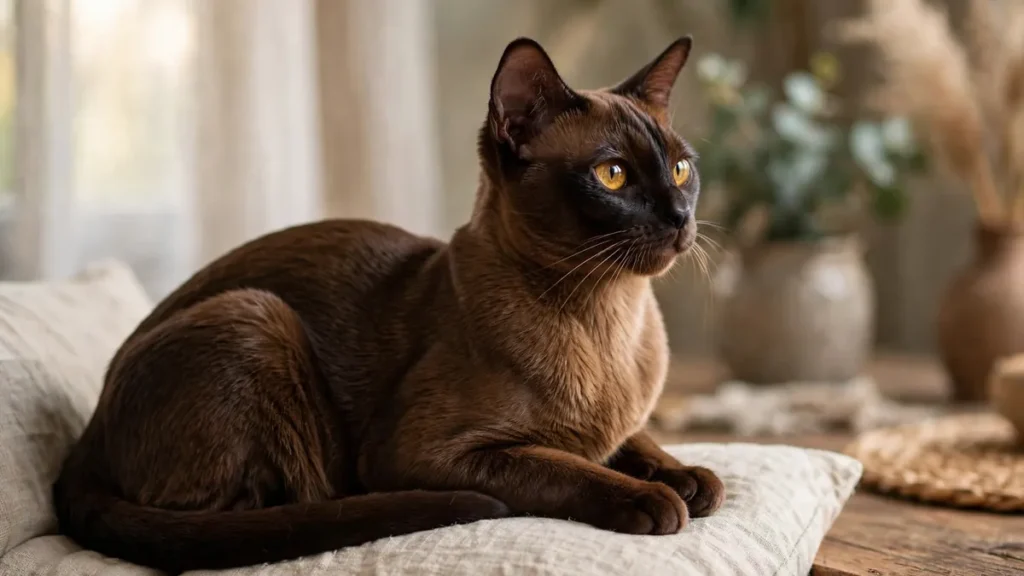
There is a cat that will meet you at the door, follow you to the kitchen, supervise your work from the nearest chair, and then curl up in your lap as if that were the whole point of the day. That cat is very likely a Burmese. With its gleaming sable coat, its large golden eyes, and a habit of staying close to the people it loves, the Burmese has earned a reputation as one of the most people-oriented of all domestic cat breeds. It is often described as dog-like, not because it behaves like a dog, but because it greets, follows, and seeks out company in a way many cats do not. This guide tells the story of the breed, from a single cat who sailed from Burma to America nearly a century ago, and covers the coat, the temperament, the kittens, and life with the breed.
The History of the Burmese Cat
The Burmese traces its story to Burma, the country now known as Myanmar, where brown cats with golden eyes were known long before the breed reached the West. The details of those early years are uncertain, and much of what is told about cats in old Burmese temples and households survives as tradition rather than as records that can be checked. What is certain is the part of the story that begins with one cat, because that chapter is well documented.
That cat was Wong Mau, a small brown female with a short, glossy coat. In 1930, Dr. Joseph Thompson, a doctor in the United States Navy, brought her from Burma to San Francisco. Thompson set out to learn whether she represented a distinct breed. Working with breeders in California, he paired Wong Mau with a Siamese, and the kittens from those pairings showed a pattern that pointed to something new: some were brown like their mother, and some looked like Siamese. Further careful breeding over the following years fixed the brown, sable coloring as the hallmark of the new breed.
The breed grew quickly in the United States. The Cat Fanciers’ Association recognized the Burmese in 1936, only six years after Wong Mau arrived. Over time, breeders in America and in Britain developed the breed along slightly different lines, which is why today there are two recognized types: the American Burmese, with a rounder head and a more compact build, and the European Burmese, with a slightly longer, more wedge-shaped head. Both keep the golden eyes and glossy coat that made Wong Mau stand out.
Among the most common cat breeds kept in American homes, the Burmese holds a special place, because its history is unusually clear: a named founding cat, a known year of arrival, and a documented path to recognition. That clarity is part of its charm.
Appearance of the Burmese
The Burmese is a medium-sized cat with a compact, muscular body that is heavier than it looks. Pick one up and you may be surprised by the weight, which has led breeders to describe the breed as a brick wrapped in silk. The body is sturdy and well rounded, with a broad chest, strong legs, and a tail of medium length that tapers gently. Nothing about the Burmese is extreme, and that balance is what the breed standard prizes.
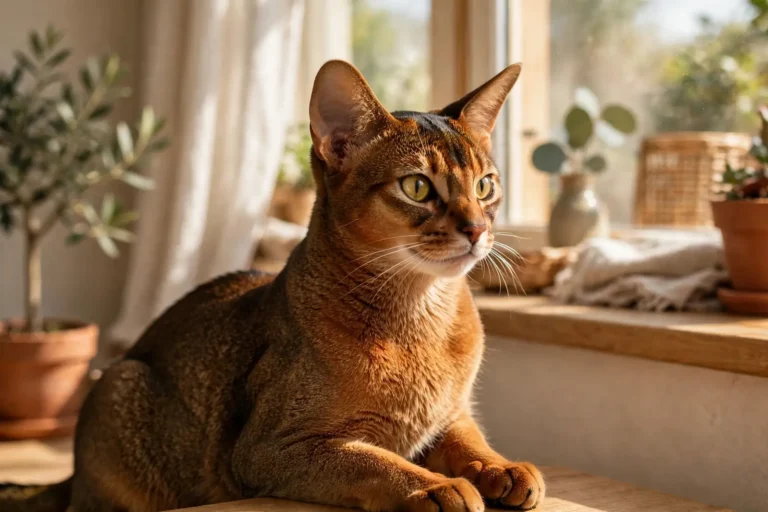
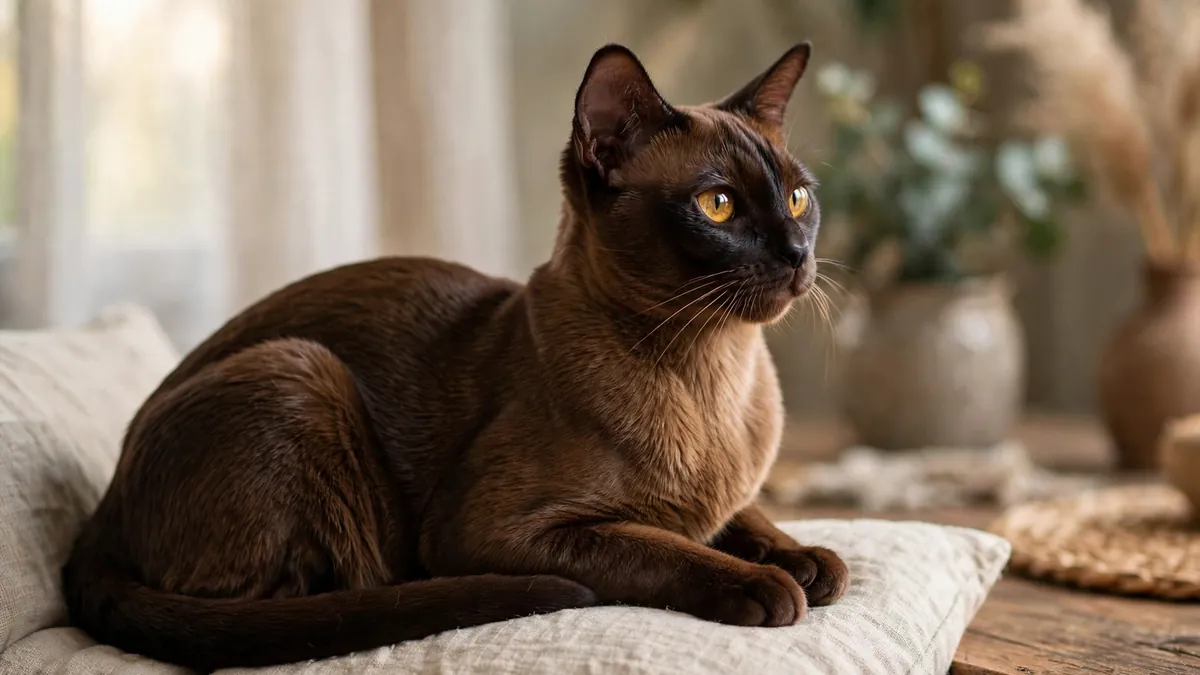
The head is round, with full cheeks, a short muzzle, and a nose that shows a visible break in profile. The ears are medium in size, set well apart, and slightly tilted forward. The eyes are large, round, and set wide apart, and their color is one of the breed’s defining features: a deep gold to rich yellow that seems to glow against the dark coat. In the sable Burmese, the contrast between the dark fur and the golden eyes is striking.
Compared with the sleek, angular Siamese cat, the Burmese looks softer and rounder, and compared with the longer-coated Birman cat, it looks sleeker and more compact. Among the main cat breeds, its combination of a short glossy coat, golden eyes, and a rounded, muscular body is easy to recognize once you have seen it.

Coat and Colors
The Burmese coat is short, fine, and close-lying, with a satin-like shine that catches the light as the cat moves. Because it is so short, it needs far less brushing than the coats of longer-haired breeds. A gentle weekly brushing is usually enough to lift loose hair and keep the shine, and most Burmese enjoy the attention.
The original and best-known color is sable, a rich, warm brown that is darker on the back and slightly lighter underneath. Over the years, breeders developed three more colors that are now widely recognized: champagne, a warm honey beige; blue, a soft gray with a faint warm tone; and platinum, a pale silvery gray with a hint of lilac. In every color, the coat should be even and glossy.
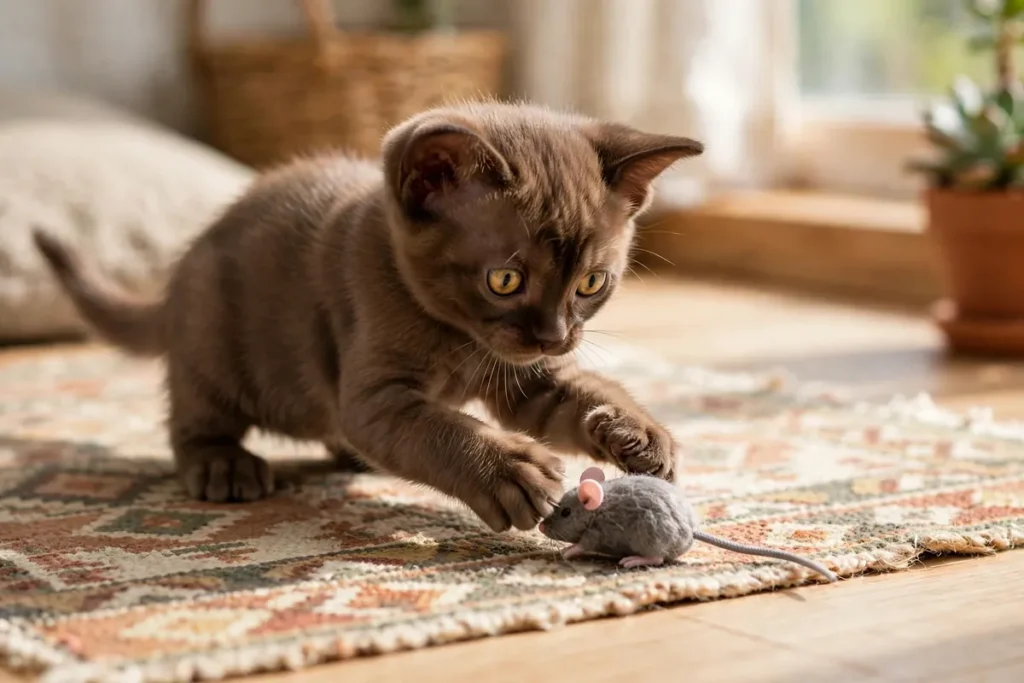
Burmese kittens are born lighter than adults, and their color deepens gradually as they grow. A young sable kitten may look soft milk-chocolate brown before the coat darkens into the deep warm brown of the adult, and the golden eyes grow more vivid as the coat darkens around them.

Temperament and Personality
If the Burmese coat draws people in, the temperament is what keeps them. This is a warm, affectionate, and deeply people-oriented breed that wants to be part of whatever its family is doing. Burmese cats follow their owners from room to room, sit on laps, and greet visitors at the door with open curiosity. They form strong bonds with their people and show it openly.
The Burmese voice is soft and sweet, used in conversation rather than in constant demands. A Burmese will answer when spoken to and greet you when you come home, but it is far less vocal than its close relative in our Siamese cats guide. Playfulness lasts well into adult life: most Burmese enjoy a daily game with a wand toy or a rolling ball, and many will learn to fetch a small toy and bring it back, again and again.
Burmese cats usually cope well with calm children and with other cats, and many live peacefully alongside friendly dogs. Their easygoing nature makes them a popular choice among the most common cats kept as family companions, and readers comparing popular breeds can see where the Burmese fits in our guide to the most popular cat breeds in the USA. A Burmese does not enjoy long hours alone, and is happiest where someone is around for much of the day, or where another friendly cat keeps it company.
Burmese Kittens
Burmese kittens are born lighter in color than the adults they will become, with soft, pale coats that deepen month by month. Their eyes start out a paler shade and grow into the deep gold the breed is known for. By the time a kitten reaches its first birthday, the glossy adult coat is well on its way.
Young Burmese are playful, curious, and quick to bond with the people around them. Gentle handling and short play sessions help a kitten grow into a calm, confident adult. Positive training works well with this breed: short, reward-based sessions, patience, and praise suit a kitten that wants to please, while punishment or intimidation only frightens a young cat and damages trust.
A Burmese kitten will usually choose one or two favorite people and follow them everywhere, and that loyalty only grows with age.
Living With a Burmese
Life with a Burmese is warm, busy, and full of company. This is largely an indoor companion that prefers to be where its people are, whether that means supervising from the back of the sofa or watching from a sunny window perch. A resting spot in the rooms the family uses, a scratching post, and a sturdy cat tree will cover most of what a Burmese asks from its home.
The breed is moderately active rather than restless. Short play sessions spread through the day suit it better than one long session, and simple toys are usually a success — for ideas, our guide to the best cat toys covers the types cats return to again and again. Burmese cats are agile climbers and keen jumpers, so a cat tree with more than one level is well used.
Coat care is light for a short-haired breed. A gentle brush once a week keeps the glossy fur smooth and lifts loose hair. The short coat also means less shedding around the home than many longer-haired breeds. When a Burmese wants company, it will come and find you and settle close.

Burmese vs Siamese vs Bombay
| Breed | Coat | Eyes | Build | Temperament |
|---|---|---|---|---|
| Burmese | Short, glossy, sable and other colors | Deep golden yellow | Compact, muscular, heavier than it looks | Affectionate, people-oriented, playful |
| Siamese | Short, fine, pointed | Blue | Slender, angular, elegant | Vocal, lively, demanding |
| Bombay | Short, glossy, black | Copper to gold | Compact, muscular, medium | Affectionate, calm, people-oriented |
The table shows why the Burmese stands apart even among popular breeds with short coats. The Siamese brings the voice and the energy, while the Bombay brings a glossy black coat and a calm, steady nature. The Burmese sits between them: the sleek, glossy coat of the Bombay, the social energy of the Siamese, and golden eyes that belong to neither. For readers comparing an American cat breed with a short coat and a loyal nature, the Burmese is often the first that comes to mind.
Interesting Facts About Burmese Cats
- One founding cat: Every modern Burmese traces back to Wong Mau, the brown cat Dr. Joseph Thompson brought from Burma in 1930.
- A quick recognition: The Cat Fanciers’ Association recognized the Burmese in 1936, only six years after Wong Mau arrived in the United States.
- Heavier than it looks: The Burmese is famously described as a brick wrapped in silk, because its compact body weighs more than its size suggests.
- Golden eyes: The deep gold to yellow eye color is a defining feature of the breed, and it grows more vivid as the coat darkens.
- Born lighter: Burmese kittens are born with paler coats, and their color deepens gradually as they grow.
- Two types: American and European Burmese developed along slightly different lines, with the American type rounder and the European type longer in the head.
- Dog-like devotion: The breed is often described as dog-like for greeting owners at the door and following them around the home.
Playtime and Enrichment
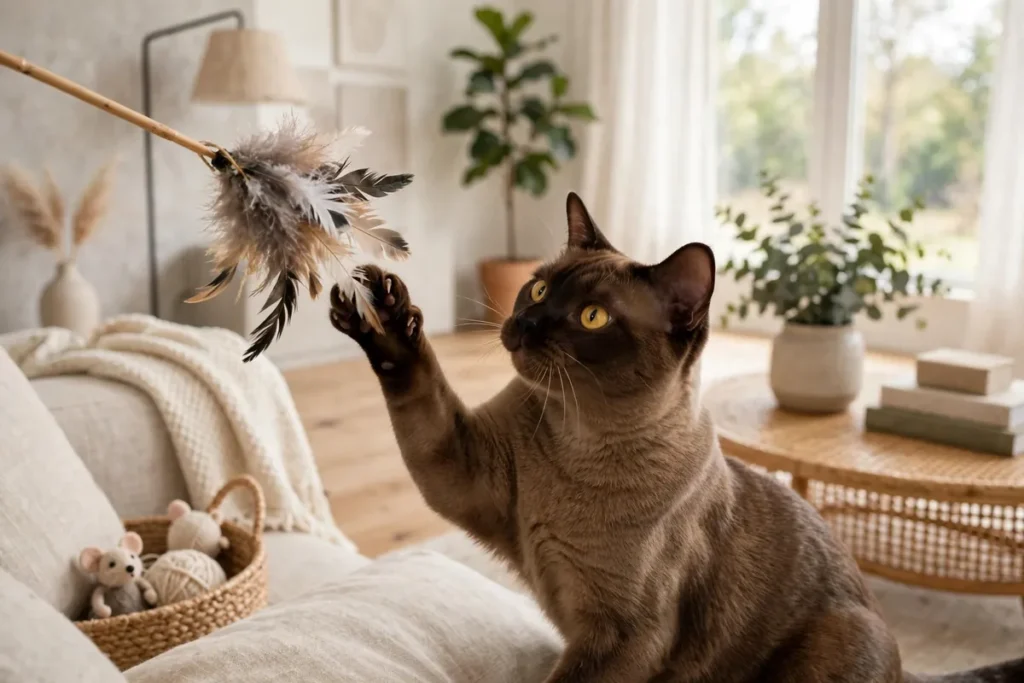
Play is not a luxury for a Burmese, it is part of the daily routine. This is an intelligent, active breed that enjoys games. A feather wand brings out the hunting pounce, a rolling ball starts a chase across the floor, and a simple game of fetch with a small soft toy can keep a Burmese happily busy for a long stretch. Many Burmese invent their own games too, carrying a favorite toy from room to room or dropping it at their feet as an invitation to play.
Short, frequent play sessions work best, spread through the day rather than packed into one long burst. A morning game, an afternoon wand session, and a gentle evening game give a Burmese the movement and attention it craves. Rotating toys keeps things fresh.
Play is also a good time for gentle positive training. A Burmese learns through patience, praise, and short, enjoyable sessions. Never use punishment or intimidation: a frightened cat stops playing and stops trusting, and this breed’s open, affectionate nature is best kept by kindness.
Related Reading on MyPetsMyLove
- Most popular cat breeds in the USA
- Siamese cats guide
- Birman cats guide
- Cats & Kittens hub page
- MyPetsMyLove homepage
- About Us page
References
- Cat Fanciers’ Association (CFA) — Burmese breed profile
- The International Cat Association (TICA) — Burmese breed profile
- The Humane Society of the United States — pet care and enrichment resources
- Encyclopaedia Britannica — cat breeds reference
Frequently Asked Questions
Where does the Burmese cat come from?
The Burmese traces to Burma, the country now known as Myanmar. The modern breed begins with Wong Mau, a brown cat brought to San Francisco from Burma in 1930 by Dr. Joseph Thompson, and the breed was recognized by the Cat Fanciers’ Association in 1936.
What colors do Burmese cats come in?
The original and best-known color is sable, a rich warm brown. Breeders later developed three more recognized colors: champagne, a warm honey beige; blue, a soft gray; and platinum, a pale silvery gray. In every color, the coat is short, fine, and glossy.
Why are Burmese cats called dog-like?
Burmese cats are often described as dog-like because they are so people-oriented: they greet their owners at the door, follow them from room to room, and seek out company. The comparison describes their social behavior, not their appearance.
Are Burmese cats vocal?
Burmese cats have soft, sweet voices and use them in conversation, answering when spoken to and greeting their owners. They are far less vocal than the Siamese, a close relative known for its loud, frequent voice.
Are Burmese cats good family companions?
Yes. Burmese cats are affectionate, playful, and social, and they usually cope well with calm children, other cats, and friendly dogs. They are happiest in homes where someone is around for much of the day, or where another friendly cat keeps them company.
Do Burmese kittens change color as they grow?
Yes. Burmese kittens are born lighter in color than adults, and their coats deepen gradually over the first months. A young sable kitten may look soft milk-chocolate brown before the coat darkens into the deep warm brown of the adult.
How much grooming does a Burmese cat need?
Very little. The short, glossy coat needs only a gentle brushing about once a week to lift loose hair and keep its shine. Many Burmese enjoy the attention so much that grooming becomes a bonding routine.
Conclusion
The Burmese cat brings together a remarkable story and a warm, loyal nature: golden eyes, a short glossy sable coat, and a companion that greets you at the door and stays close all day. From Wong Mau’s journey from Burma in 1930 to the homes the breed fills today, the Burmese has kept the qualities that made that first cat stand out — beauty, intelligence, and an open love of people.
Compare the Burmese with its pointed cousin in our Siamese cats guide, meet another golden-eyed breed in our Birman cats guide, explore more breeds in the Cats & Kittens section, and start from the MyPetsMyLove homepage to meet more cats worth knowing.
Disclaimer
Disclaimer
MyPetsMyLove dot com is an independent informational website covering pet species breeds characteristics activities positive training bonding grooming and responsible ownership
We are not a veterinary clinic medical provider pet food provider or veterinary nutrition service
We do not provide veterinary diagnosis medical advice treatment food recommendations or nutritional guidance
For pet health medical or food related concerns consult a qualified veterinarian or appropriate professional directly
Independent clinics listed on this website are not owned or operated by MyPetsMyLove unless explicitly stated
Verify third party credentials services fees and availability independently
We do not guarantee third party services or outcomes
To the extent permitted by applicable law we disclaim responsibility for independent third party services
Nothing in this notice excludes liability that cannot legally be excluded
The disclaimer does not make prohibited content acceptable