

Rat – Complete Pet Guide

Think of a rat, and the first picture in your mind is probably not a pet. It might be a shadow slipping down an alley at night. Now picture something very different: a small animal perched on your shoulder, whiskers twitching and bright eyes watching you, learning its own name and coming to greet you when you walk into the room. That is the pet rat, and it surprises almost everyone who meets one. Pet rats are clever, curious, and deeply social animals that bond closely with the people who care for them. They play, explore, learn simple tricks, and snuggle into a warm pocket or a cozy hammock at the end of a busy day. This complete guide covers where fancy rats come from, what they look like, how they behave, what kind of home they need, and how to share your days with them — so you can decide with clear eyes whether a pet rat is right for you.
From Wild Brown Rat to Fancy Rat
The pet rat descends from the brown rat, the same species that lives wild in towns and countryside around the world. Brown rats long lived alongside people in barns, warehouses, and city streets. In the 1800s in England, rat catchers sometimes kept the most unusual rats they found. Enthusiasts began breeding them on purpose, choosing the calmest animals and the most interesting colors, and a hobby was born. These early keepers called their animals fancy rats, using the word fancy in its old sense of a hobby, and the name has stuck. Clubs and shows for fancy rats appeared in England, and the hobby later reached the United States. Today’s pet rats are many generations removed from their wild ancestors, bred to be handled and to enjoy human company.
What Does a Pet Rat Look Like?
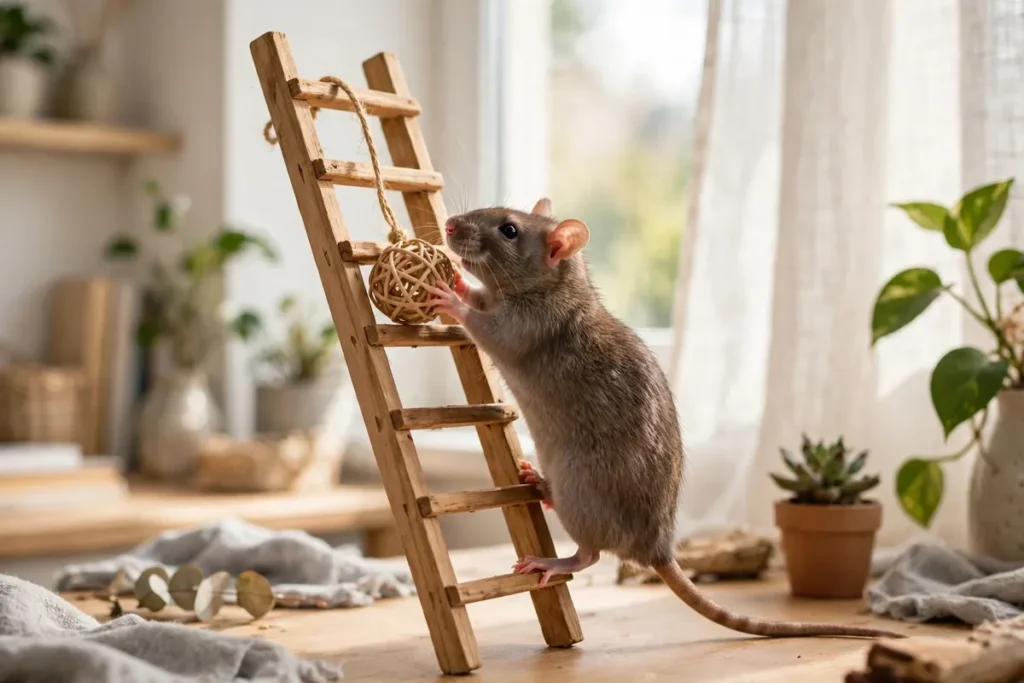
A pet rat is a small, slender animal that fits comfortably in cupped hands, with a long tail that helps it balance when it climbs. The body is covered in soft fur, and the small paws are surprisingly dexterous. The head is pointed, with a neat nose and whiskers that feel the way ahead. Most pet rats have large, round ears set high on the head, and some have the wide, low-set ears known as dumbo ears. The eyes are round and bright, and in some varieties they are pink or ruby red. Pet rat colors and markings are wonderfully varied. The classic wild color is agouti, a warm brown with banded hairs. Solid colors include black, white, grey, and a soft slate shade often called blue. Marked varieties include the hooded rat, with a colored head and a stripe down its back, the Berkshire, with a colored body and white belly, and the capped rat, with color only on its head.

Pet Rat Temperament and Intelligence
If there is one thing that wins people over to pet rats, it is the temperament. Rats are curious by nature and want to know what is going on. A pet rat will investigate a new toy within minutes, poke its nose into every corner of a play area, and watch its owner with open interest. Pet rats can learn their names and come when called, find their way through a tunnel maze, and pick up simple tricks such as climbing onto a hand on cue. Not every rat has the same personality, and that is part of the fun. Some rats are bold explorers that want to climb everything in sight. Others are calm cuddlers that would rather settle on a shoulder and watch the world go by. What they are not is a pet you can leave alone all day without a thought. Rats need daily time outside the cage, daily play, and daily interaction with people.
Setting Up a Rat Cage
A good cage is the foundation of pet rat care, and bigger is better. Rats are active climbers that use every level of their home, so a tall cage with several platforms, ramps, and levels suits them far better than a low, flat one. The bar spacing should be narrow enough that a rat cannot squeeze its head through, and the floors and platforms should be solid rather than open wire, so little feet have a comfortable surface to walk on. Inside the cage, bedding gives rats a soft floor to walk on and a material to dig and nest in. Paper-based bedding and aspen shavings are two common choices, and many owners mix bedding with shredded paper for nesting. Furniture makes the cage a home. A hammock is almost essential — rats love to sleep piled together in a swaying fabric hammock. Add a hideaway or two, such as a small wooden house or a fabric cube, so each rat has a quiet place to retreat. Keep the cage in a room the family uses, away from direct sunlight, cold drafts, and noisy appliances.

Enrichment and Playtime
A pet rat without something to do will make its own entertainment, usually by chewing the nearest interesting object, so enrichment is not a luxury — it is part of daily rat care. Enrichment simply means giving rats things to explore, climb, chew, and puzzle over, and it can be as simple as rearranging the cage furniture or adding a new cardboard tunnel. Rat toys come in many shapes: wooden chew toys, hanging toys, ropes, ladders, and tunnels all give rats something to climb on and gnaw at. For more ideas about choosing toys that animals return to again and again, our guide to the best cat toys covers the same playful principles. Playtime outside the cage is the highlight of a rat’s day. Set aside time every day for supervised free roaming in a rat-proofed room or playpen, with doors closed, wires out of reach, and small gaps blocked off. A play area with tunnels, boxes, and climbing toys lets rats run, jump, and explore at full speed.
Handling and Bonding
Bonding with a pet rat starts with patience. A new rat needs a day or two to settle into its cage, learn the sounds of the house, and decide that the hands reaching toward it are friendly. Begin by spending time near the cage, talking in a soft voice, and offering a hand to sniff. Pick a rat up gently, scooping it with both hands and supporting its body, and never lift a rat by its tail. Short handling sessions, several times a day, work better than one long session, especially in the first weeks. Positive handling is the only kind that builds trust. Never punish a rat, shout at it, or handle it roughly, even if it nips or startles you. A gentle touch, a calm voice, and a little patience go much further than any scolding ever could. Over days and weeks, most rats learn to recognize their owner by voice and scent, come running when they hear the cage door open, and settle happily into a lap or a hood pocket for a rest.

Companionship: Rats Need Rat Friends
Rats are social animals, and this is one of the most important things to know before bringing one home. In the wild, brown rats live in groups, sleeping together, grooming each other, and exploring side by side. Pet rats keep that same social nature. A rat kept on its own will be lonely, no matter how much time its owner spends with it, because people cannot replace the company of another rat. For that reason, rats are best kept in pairs or small groups. Two rats of the same sex are the usual choice for beginners, and a small group can work just as well with enough space and enough hammocks and hideaways to go around. Cage mates groom each other, play together, and sleep in a warm pile, and watching that friendship is one of the great pleasures of keeping rats. If you are choosing rats, look for animals that are already living together, or ask for guidance on introducing new cage mates slowly and carefully on neutral ground. Our budgerigar care guide shows how another small, social pet thrives on daily company too.

Everyday Care Routines
Daily care for pet rats is simple, but it is not something to skip. Start each day by checking the cage: remove any soiled bedding, tidy the litter area, and check that toys and hammocks are in good shape. A full cage clean once a week, with fresh bedding throughout and a wipe-down of platforms and bars, keeps the home fresh and pleasant for rats and owners alike. Watching your rats during their daily playtime is part of the routine too. Rats that get daily attention stay tame, confident, and happy to be handled. Keep their cage in a room with regular light and dark hours, keep playtime at roughly the same time each day, and keep their routine predictable. Rats settle best when they know what to expect. Remember that rats are not a low-maintenance pet. They ask for real time every single day — time to play, time to explore, and time with you. In return, they offer curiosity, affection, and a surprising amount of personality for such a small animal.
Pet Rat vs Hamster vs Guinea Pig at a Glance
Choosing between small pets can be hard, because each one has its own charm. This quick comparison shows how the pet rat measures up against two other popular small pets, so you can see which one fits your home and your daily routine best.
| Pet | Size | Social nature | Activity | Handling |
|---|---|---|---|---|
| Pet rat | Small and slender, with a long tail | Very social, best kept in pairs or small groups | Active and curious, loves to climb and explore | Enjoys being held, learns to come when called |
| Hamster | Small and compact | Mostly solitary, usually kept alone | Active at night, loves wheels and tunnels | Can be tamed but often prefers short sessions |
| Guinea pig | Larger and stockier | Social, best kept in pairs | Active during the day, loves floor time | Gentle and calm, enjoys lap time once tame |
No other small pet combines such a social nature with such a love of handling and learning. A hamster suits a quieter home, a guinea pig suits someone with more floor space, and the rat suits someone who wants an interactive companion and has time every day to play together.
Interesting Facts About Pet Rats
- A fancy history: Pet rats descend from brown rats first bred for their colors and markings by enthusiasts in 1800s England.
- Busy whiskers: A rat’s whiskers constantly sweep and feel the world ahead, helping it find its way through dark tunnels and tight corners.
- Tail for balance: The long tail works like a counterweight, steadying the rat as it climbs, jumps, and walks along narrow ledges.
- Happy teeth chattering: A content rat may chatter its teeth softly, a behavior owners call bruxing, and its eyes may gently bulge and settle in a movement called boggling.
- Quick learners: Pet rats can learn their names, solve simple puzzles, and remember the layout of a play area from one day to the next.
- Dumbo ears: Some fancy rats have wide, low-set dumbo ears, one of many varieties recognized by rat clubs and shows.
Related Reading on MyPetsMyLove
- Budgerigar care guide
- Most popular cat breeds in the USA
- Best cat toys guide
- Best dog toys guide
- MyPetsMyLove homepage
- About Us page
References
- The Humane Society of the United States — pet care and enrichment resources
- ASPCA — pet care resources
- Encyclopaedia Britannica — rat reference
- Rat and Mouse Club of America — fancy rat standards and resources
Frequently Asked Questions
Are pet rats good pets for beginners?
Yes, pet rats can be a good choice for beginners who have time every day for play, handling, and cage care. They are social, curious, and quick to bond, but they are not a pet to leave alone all day, so a beginner should be ready for that daily commitment.
Do pet rats need to live in pairs?
Yes. Rats are social animals that live in groups, and a rat kept on its own will be lonely. Pet rats are best kept in pairs or small groups, usually two rats of the same sex for beginners, so they always have the company of their own kind.
What kind of cage does a pet rat need?
A tall, spacious cage with several levels, platforms, and ramps suits a pet rat best. It should have narrow bar spacing, solid floors, a hammock, hideaways, and room for toys and climbing. A bigger cage is always better, especially for a pair or a small group.
Can pet rats learn their names?
Yes. Pet rats are intelligent and can learn their names and come when called. They can also learn simple tricks, such as climbing onto a hand on cue, and find their way through tunnels and mazes. Short, cheerful training sessions with gentle encouragement work best.
How much daily time do pet rats need?
Pet rats need time every single day: supervised playtime outside the cage, handling and bonding with their owner, and a quick daily check of the cage, bedding, and toys. They are not a low-maintenance pet, and their day should always include time with people.
Do pet rats enjoy being handled?
Most pet rats enjoy gentle handling once they trust their owner. They learn to recognize their owner by voice and scent, climb onto an open hand, and settle on a shoulder or in a lap. Handling should always be gentle and positive, and a rat should be allowed to return to its cage when it wants to.
What colors and markings do fancy rats come in?
Fancy rats come in many colors and markings. Solid colors include black, white, grey, and a soft slate shade called blue, and the classic wild color is agouti. Popular markings include hooded, Berkshire, and capped, and some fancy rats have curly coats or wide, low-set dumbo ears.
Conclusion
The pet rat is one of the most surprising small pets you can share your home with: clever enough to learn its name, social enough to need a rat friend by its side, and affectionate enough to fall asleep on your shoulder. From the fancy rats first bred in 1800s England to the hooded, Berkshire, and dumbo-eared rats kept today, this little animal brings curiosity, play, and real companionship into everyday life. If you have the time to play, handle, and care for them every day, a pair of pet rats can be a wonderful addition to your home.
Want to meet another small, social pet? Read our budgerigar care guide, find toy ideas in our best cat toys guide, and start from the MyPetsMyLove homepage to explore more pets worth knowing. To learn more about us, visit our About Us page.
Disclaimer
Disclaimer
MyPetsMyLove dot com is an independent informational website covering pet species breeds characteristics activities positive training bonding grooming and responsible ownership
We are not a veterinary clinic medical provider pet food provider or veterinary nutrition service
We do not provide veterinary diagnosis medical advice treatment food recommendations or nutritional guidance
For pet health medical or food related concerns consult a qualified veterinarian or appropriate professional directly
Independent clinics listed on this website are not owned or operated by MyPetsMyLove unless explicitly stated
Verify third party credentials services fees and availability independently
We do not guarantee third party services or outcomes
To the extent permitted by applicable law we disclaim responsibility for independent third party services
Nothing in this notice excludes liability that cannot legally be excluded
The disclaimer does not make prohibited content acceptable