
Bengal Cats: Wild Looks, Beautiful Patterns and Fascinating Origins
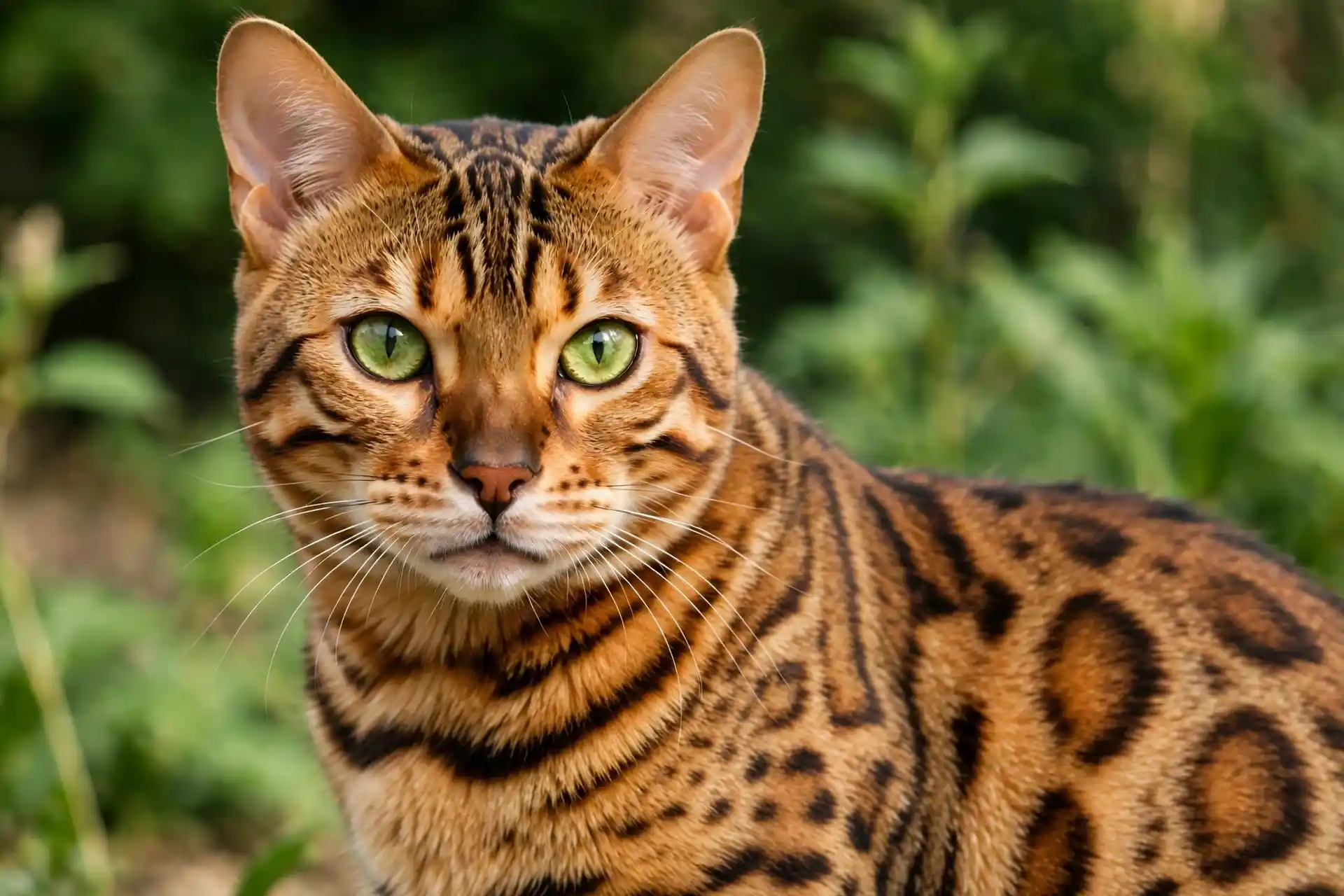
Few cats stop people in their tracks the way a Bengal does. With its bold leopard-like rosettes, gleaming golden coat, and athletic, muscular build, the Bengal looks like a wild cat that wandered in from the jungle — yet it is a fully domestic breed, bred to be a companion. It is also one of the most energetic and talkative cats you can bring home.
The Bengal’s story is unlike any other breed’s. It began with a deliberate cross between a small wild cat and a domestic cat, driven by a breeder who wanted to give people a leopard look without taking a wild animal from its habitat. This guide explores the Bengal’s fascinating origins, explains its remarkable coat patterns, describes its appearance and personality, and shares what makes this breed so captivating.
Origin and History of the Bengal Cat
The Bengal descends from the Asian leopard cat (Prionailurus bengalensis), a small spotted wild feline native to Asia — and the breed takes its name from that wild ancestor’s scientific name, not from the Bengal tiger. The modern breed was created by American breeder Jean Mill, who made the first deliberate cross between a domestic tomcat and an Asian leopard cat in 1963.
Mill’s idea was as much about conservation as about beauty. She hoped that if people could own a domestic cat with the wild leopard look, there would be less demand for wild-caught spotted cats kept as exotic pets. The early hybrids were not yet the Bengal we know: the first generations were shy and unpredictable, and Mill spent years backcrossing the offspring with domestic cats — including the spotted Egyptian Mau and the Abyssinian — until the cats were several generations removed from their wild ancestor and had the temperament of a domestic companion.
Mill resumed the project in earnest in the late 1970s, working with additional foundation cats from a genetics research program at the University of California, Davis. By the early 1980s the breed was taking shape, and The International Cat Association (TICA) accepted the Bengal as a new breed in the 1980s. TICA granted the Bengal championship status in 1991, allowing Bengals to compete in cat shows. Other major registries followed: The Cat Fanciers’ Association (CFA) accepted Bengals for registration in 2016, and today the breed is recognized by registries around the world.
One detail matters for anyone researching the breed: a Bengal sold as a pet is at least four generations removed from its wild ancestor. In TICA’s terminology, these are “SBT” (Stud Book Tradition) Bengals — fully domestic cats with a pedigree, not wild hybrids. Early-generation cats (F1 through F3) are a different matter and are not the pet Bengals this guide describes.

Appearance: The Wild Leopard Look
Everything about the Bengal is designed by nature — or rather, by careful breeding — to look wild. The coat pattern does most of the work: bold markings on a warm golden background, a muscular body built for leaping, and large, expressive eyes. Yet the breed standard judges the Bengal as a domestic cat, with specific requirements for pattern, color, and structure.
Rosettes and Patterns
The Bengal’s most famous pattern is the rosette: a spot shaped like a tiny rose, with a darker outline and a lighter center, scattered across the coat like a leopard’s markings. Rosettes can be large and bold, or smaller and more numerous, and the best examples show clear contrast between the markings and the background color.
Bengals also come in two other patterns. The spotted pattern has solid dark spots rather than rosettes, giving a look closer to a cheetah. The marbled pattern is completely different: swirling, horizontal bands of dark color that flow across the body like marble, with no spots at all. All three patterns are accepted, and all three keep the Bengal’s wild appearance.
The Glittered Coat
Many Bengals carry a trait breeders call “glitter”: individual hairs with a hollow, translucent quality that catches the light and makes the coat shimmer, as if dusted with gold. The effect is most obvious in sunlight, when a glittered Bengal seems to glow. Not every Bengal has glitter, and its presence varies from cat to cat, but it is one of the breed’s most admired features.
The coat itself is short, dense, and unusually soft and silky, lying close to the body. It comes in several colors: brown (the classic golden-brown with black markings), silver (a cool, pale background with dark markings), and snow (a pale, almost white coat with faint markings in three variations — seal lynx point, seal mink, and seal sepia). A charcoal pattern, with a dark mask and cape-like markings, is also recognized.
Build, Size, and Features
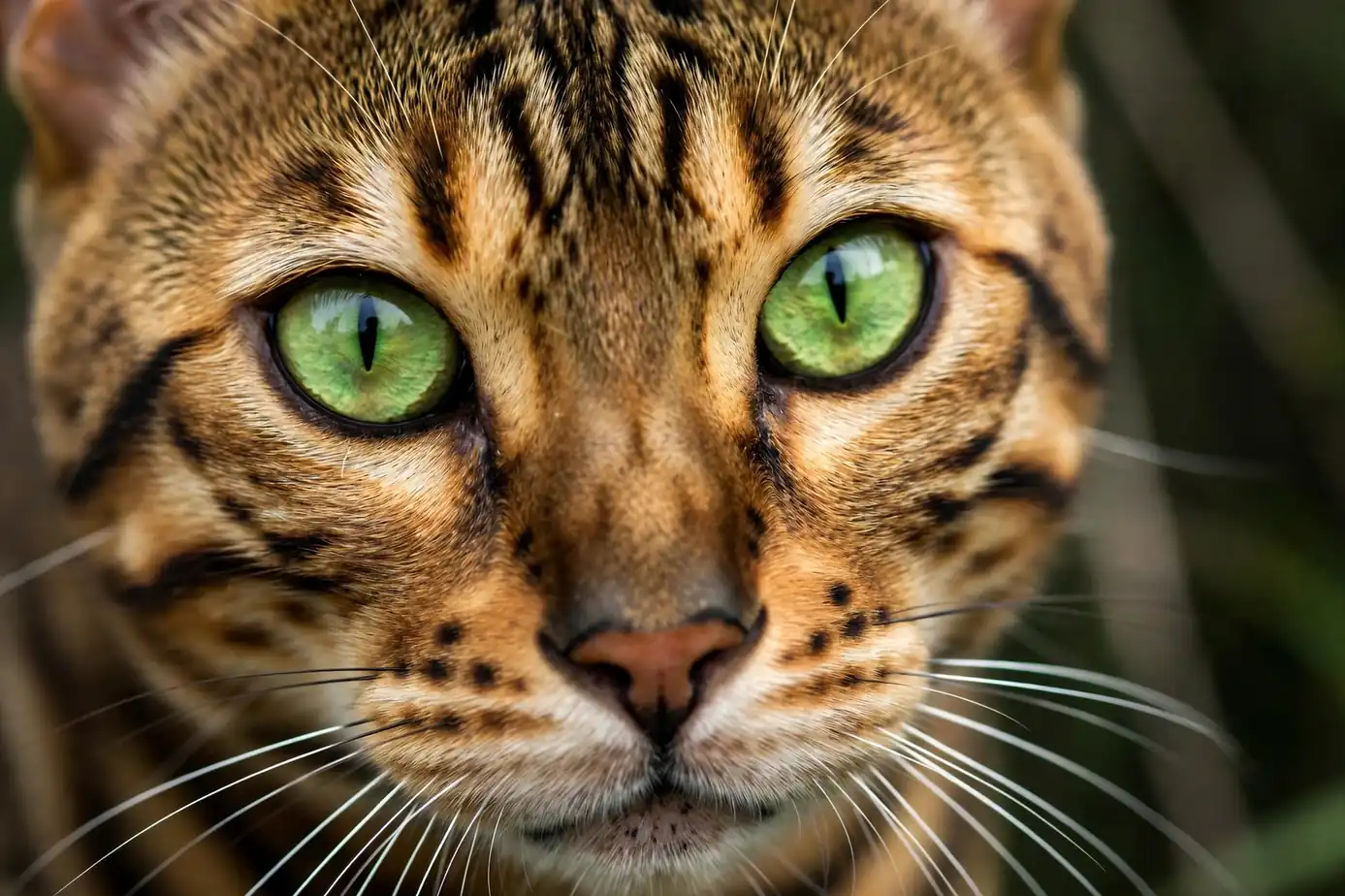
The Bengal is a medium-to-large cat with a long, muscular body built for movement. Most adult Bengals weigh between 8 and 15 pounds, with males typically larger than females. The head is broad with a strong jaw, the ears are medium-sized and set wide, and the eyes are large, oval, and usually green or gold — though blue eyes appear in the snow varieties.
The tail is medium-length and thick, often with dark rings and a dark tip. The legs are medium-length and sturdy, with large, round paws. Taken together, the Bengal looks like an athlete: long, lean, and powerful, with a confident, alert expression.
Personality: Energetic, Playful, and Devoted
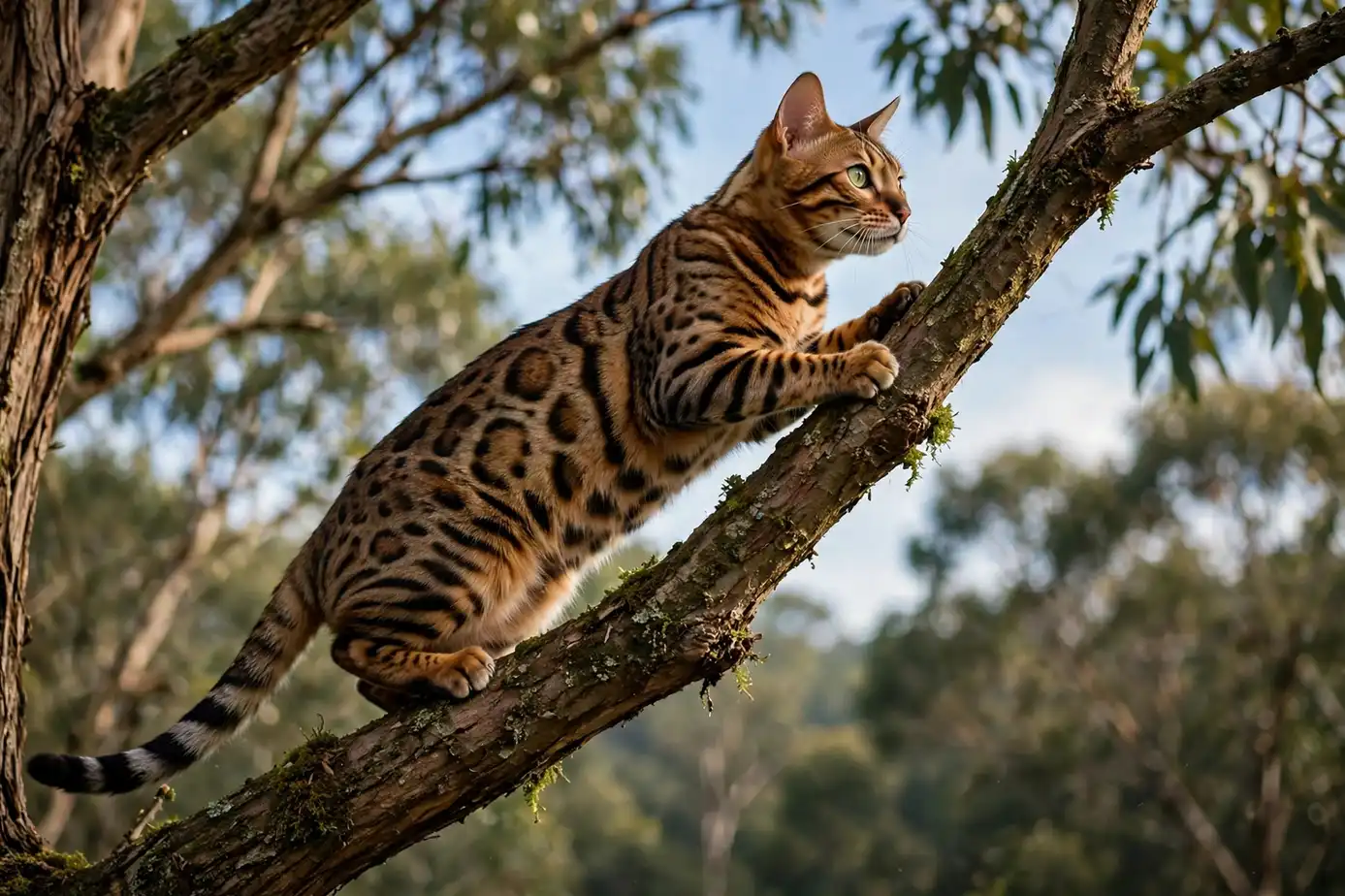
If the Bengal looks wild, its personality is pure domestic enthusiasm — turned up high. Bengals are famously energetic and intelligent, and they need more play and interaction than most breeds. They love climbing, leaping, and exploring, and many enjoy puzzle-style enrichment that gives their busy minds something to work on. Owners comparing options in our guide to the best cat breeds for first-time owners should know the Bengal asks for more time and attention than calmer breeds like the Persian or the British Shorthair.
Bengals are also famously vocal — not as relentlessly chatty as the Siamese, but they will happily hold a conversation with chirps, trills, and meows, especially when they want attention or play. Many Bengals are fascinated by water in a way most cats are not, splashing in sinks and batting at running taps. They tend to bond closely with their people, following them from room to room and joining in whatever is happening.
That devotion has a flip side: a bored Bengal can be a destructive Bengal. This is a breed that does best in a home with plenty of play, climbing opportunities, and companionship — including, for some owners, a second cat to wrestle with. For the right household, the payoff is a cat with a personality as striking as its coat.
Bengal Kittens: Spots That Grow With Them
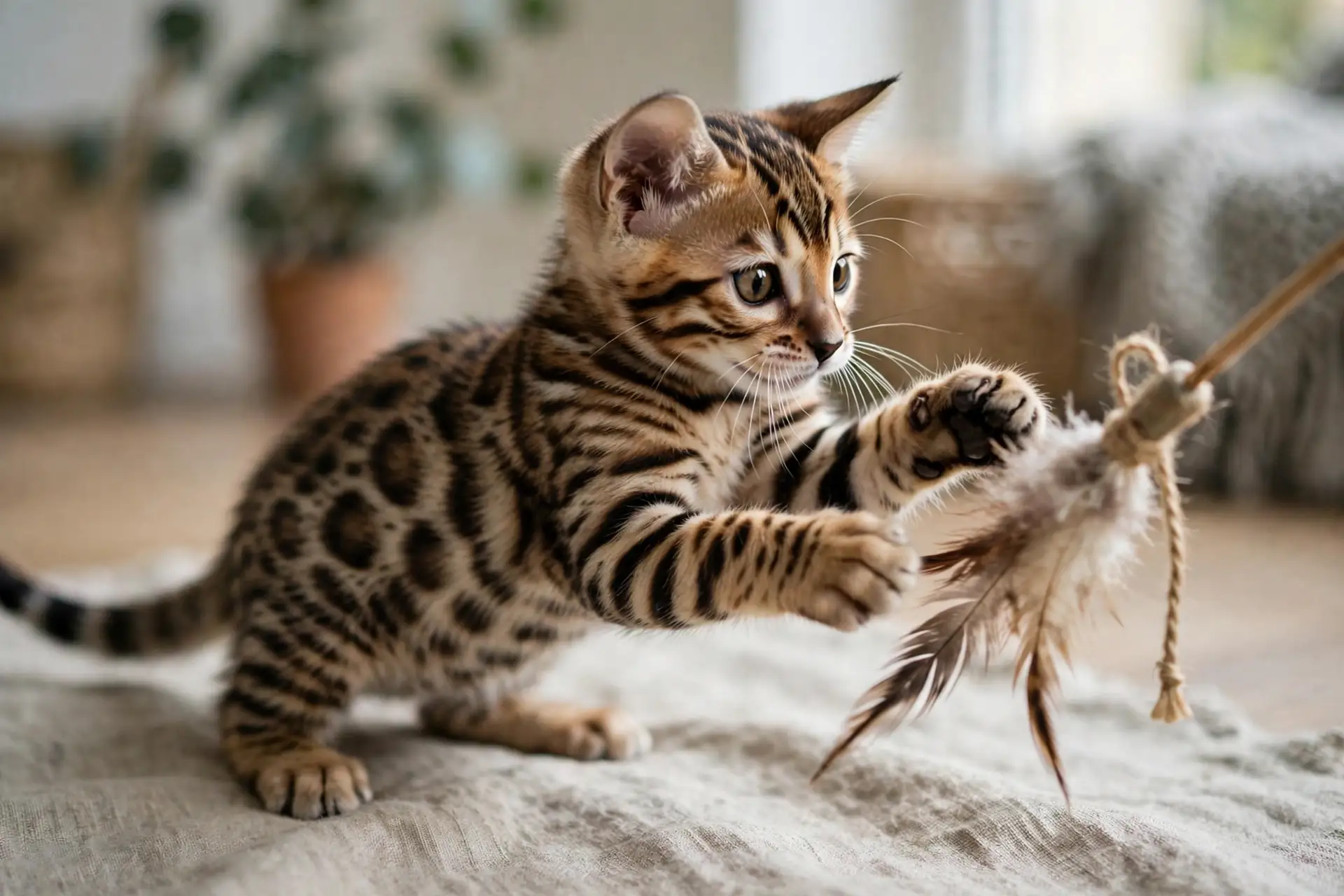
Bengal kittens arrive with their pattern already visible, though it changes as they grow. Young kittens often go through a fuzzy stage in which the coat looks softer and the markings less defined — breeders sometimes call it the “fuzzies” — and the crisp adult pattern emerges over the first months as the kitten coat gives way to the adult coat.
Kittens are bundles of energy from the start: climbing, pouncing, and testing everything in reach. They learn quickly and bond fast, and they do best in homes ready for an active, people-focused young cat. Because the breed is so demanding of attention even as kittens, reputable breeders typically keep Bengal kittens with their littermates a little longer than average before they go to new homes, so the kittens arrive well socialized.
Grooming and Everyday Care
The Bengal’s short, sleek coat is genuinely low-maintenance. A weekly brushing with a soft brush or grooming mitt keeps it glossy and manages the light shedding. Compared with the dense Maine Coon coat or the long Persian coat, the Bengal asks very little in grooming time.
What the breed does ask for is engagement. Daily interactive play sessions, climbing furniture, and plenty of companionship keep a Bengal content. These are indoor-oriented cats that prefer the center of family life to solitary corners. A tall cat tree, a sturdy scratching post, and — most importantly — involved humans cover most of a Bengal’s daily needs.
Bengal vs Other Spotted Breeds: A Quick Comparison
The Bengal is not the only spotted breed, but its wild look sets it apart. Here is how it compares with other reader favorites:
| Trait | Bengal | Egyptian Mau | Ocicat | Siamese |
|---|---|---|---|---|
| Pattern | Rosettes, spots, or marble | Natural spots | Spots | Colorpoint, no spots |
| Coat | Short, silky, glittered | Short, silky | Short, satin | Short, fine |
| Energy level | Very high | High | High | High |
| Vocality | Talkative | Quiet to moderate | Chatty | Very talkative |
| Best for | Active owners, play lovers | Owners wanting a natural spotted breed | Families wanting a spotted look | Owners home often |
Note that the Egyptian Mau and the Ocicat are distinct breeds with their own histories; the Mau is a naturally spotted breed, while the Ocicat was developed to look wild without any wild ancestry. The Bengal’s rosettes and glitter remain unique to it, and its wild ancestry is what gives the breed its name and its story.
Interesting Facts About Bengal Cats
- A name from science: The Bengal is named after Prionailurus bengalensis, the Asian leopard cat — not the Bengal tiger.
- A conservation idea: Jean Mill hoped a domestic leopard look-alike would reduce demand for wild-caught spotted cats.
- The glitter gene: Many Bengals carry a glitter trait that makes the coat shimmer in sunlight.
- Water fans: Many Bengals enjoy splashing in water, a trait most domestic cats do not share.
- Championship in 1991: TICA granted the Bengal championship status in 1991, less than a decade after accepting the breed.
- The “fuzzies”: Bengal kittens go through a fuzzy stage in which their markings look soft and muted before the adult pattern sharpens.
Living With a Bengal: What to Know
The Bengal is not a background pet. It is an athletic, intelligent, people-obsessed companion that wants a starring role in your daily life. For owners who are home often, enjoy an interactive cat, and find the idea of a leopard look-alike delightful rather than exhausting, the Bengal is immensely rewarding.
If you love striking looks but want a calmer presence, compare the Bengal with other breeds in our most popular cat breeds guide, browse the Cats & Kittens section, and start from the MyPetsMyLove homepage to keep exploring.

Related Reading on MyPetsMyLove
- Most popular cat breeds in the USA
- Siamese cats guide
- Maine Coon cats guide
- Cats & Kittens hub page
- MyPetsMyLove homepage
- About Us page
References
- The Cat Fanciers’ Association (CFA) — Bengal breed standard and profile
- The International Cat Association (TICA) — Bengal breed information and standard
Frequently Asked Questions
Where did the Bengal cat come from?
The Bengal was developed in the United States by breeder Jean Mill, who crossed a domestic cat with an Asian leopard cat, beginning with a first deliberate cross in 1963. The breed was refined through generations of backcrossing with domestic cats and was granted championship status by TICA in 1991.
What are Bengal rosettes?
Rosettes are spots shaped like tiny roses, with a darker outline and a lighter center, scattered across the coat. They are the Bengal’s most famous pattern and resemble the markings of a leopard. Bengals also come in spotted and marbled patterns.
Are Bengal cats good for first-time owners?
They can be, for owners who are home often and want a very active, interactive companion. Bengals need more play, climbing opportunities, and companionship than calmer breeds, so first-time owners with long work hours may find a more independent breed easier. See our guide to the best cat breeds for first-time owners for comparisons.
Why does a Bengal’s coat glitter?
Many Bengals carry a glitter trait that gives individual hairs a translucent quality, catching the light and making the coat shimmer — most noticeably in sunlight. Not every Bengal has glitter, and the effect varies from cat to cat.
How big do Bengal cats get?
Most adult Bengals weigh between 8 and 15 pounds, with males typically larger than females. They are medium-to-large cats with a long, muscular build.
What is an SBT Bengal?
SBT stands for Stud Book Tradition in TICA’s terminology. It means the cat is at least four generations removed from its wild Asian leopard cat ancestor — a fully domestic pedigree cat. Pet Bengals sold today are SBT cats.
Conclusion
The Bengal has captivated people since the first rosetted kittens appeared — a domestic cat that looks like a miniature leopard, with a glittered coat, an athletic build, and a personality to match. From Jean Mill’s first cross in 1963 to championship status in 1991, the breed’s journey is one of the most fascinating stories in the cat world.
If you want a cat that will play with you, talk to you, and throw itself wholeheartedly into family life, the Bengal is hard to beat. Compare it with other remarkable breeds in our most popular cat breeds guide, explore the Cats & Kittens section, and start from the MyPetsMyLove homepage to meet more breeds worth knowing.
Disclaimer
Disclaimer
MyPetsMyLove dot com is an independent informational website covering pet species breeds characteristics activities positive training bonding grooming and responsible ownership
We are not a veterinary clinic medical provider pet food provider or veterinary nutrition service
We do not provide veterinary diagnosis medical advice treatment food recommendations or nutritional guidance
For pet health medical or food related concerns consult a qualified veterinarian or appropriate professional directly
Independent clinics listed on this website are not owned or operated by MyPetsMyLove unless explicitly stated
Verify third party credentials services fees and availability independently
We do not guarantee third party services or outcomes
To the extent permitted by applicable law we disclaim responsibility for independent third party services
Nothing in this notice excludes liability that cannot legally be excluded
The disclaimer does not make prohibited content acceptable

2 Comments