Maine Coon vs Ragdoll: Which Breed Fits Your Home?
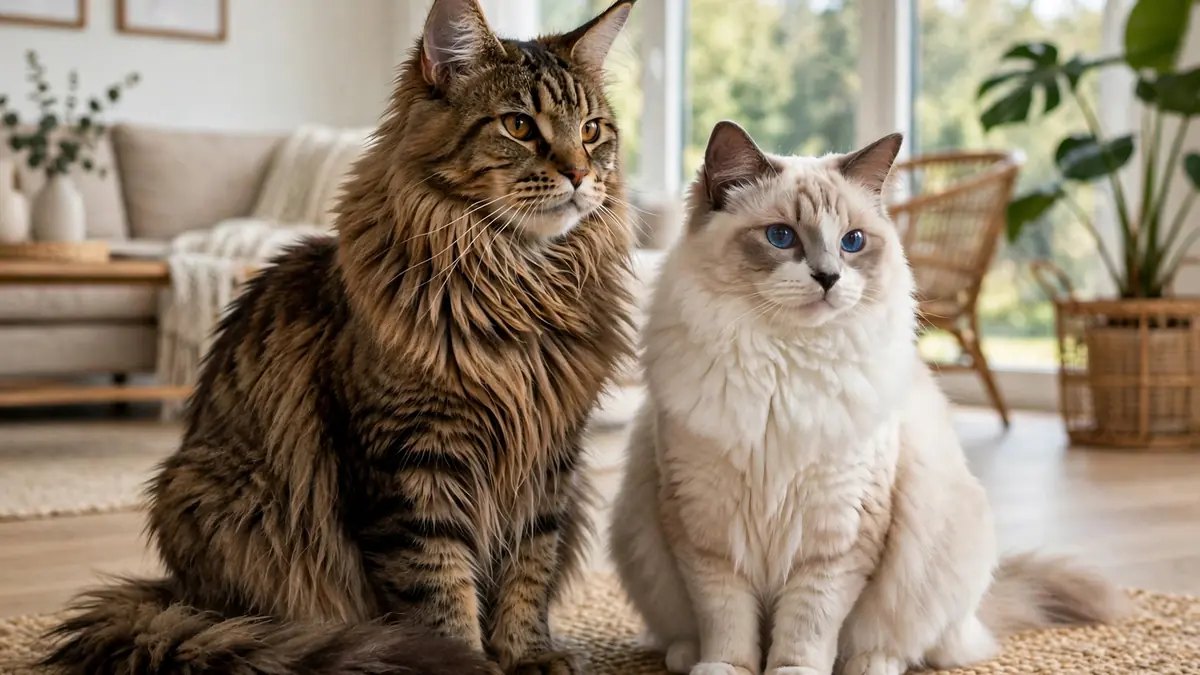
Put a Maine Coon and a Ragdoll in the same room and the first impression is the same: two very large, very beautiful, long-coated cats. Look a little longer, though, and the differences start to show. One is a rugged farm cat from the American Northeast, built for cold winters. The other is a soft, famously relaxed companion that often goes limp when picked up. This guide compares origins, size, coat, eyes, personality, activity, grooming, voice and daily life, so you can see which fits your home.
Where the Maine Coon Comes From
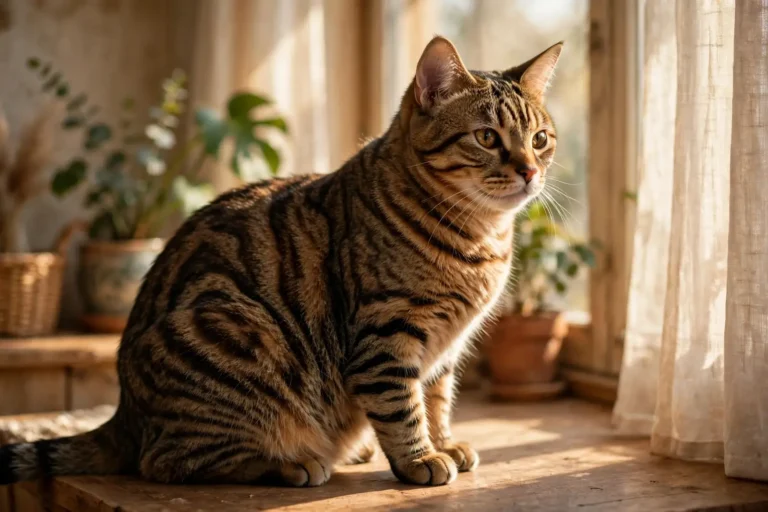
The Maine Coon is one of the oldest natural breeds in North America, and its roots lie in Maine, in the American Northeast. Breed histories describe long-coated farm cats and ship cats that worked around barns, ships and coastal towns, catching mice and coping with long, cold winters. Over generations, the cats that thrived there were large, sturdy and heavily coated, with bushy tails.
Legends travel with the breed, and they are best enjoyed as tradition rather than proven fact. One tale links the Maine Coon to Marie Antoinette; another suggests a cross with a raccoon, which is not possible and is now repeated only as folklore. What is documented is that Maine Coons were shown as a distinct type in the late nineteenth century, faded from fashion, and were rebuilt by breeders in the twentieth century. Today the breed is recognized by the Cat Fanciers’ Association and The International Cat Association, and it is the official state cat of Maine. See our Maine Coon cats guide.
Where the Ragdoll Comes From
The Ragdoll has a much shorter history, and it begins in California in the 1960s. The breed was developed by breeder Ann Baker in Riverside, California, from a white long-coated female cat named Josephine and the cats she produced. Baker selected for large size, a soft semi-long coat, pointed colouring and a calm, relaxed temperament, and the breed became known for going limp, like a rag doll, when held.
Unlike the Maine Coon, the Ragdoll was not shaped by farm work or a harsh climate. It was shaped from the start as a house companion, bred for temperament and looks. That difference explains a great deal about what follows. Our Ragdoll cats guide covers the breed in full.
Size and Build: Two Large Cats, Different Shapes
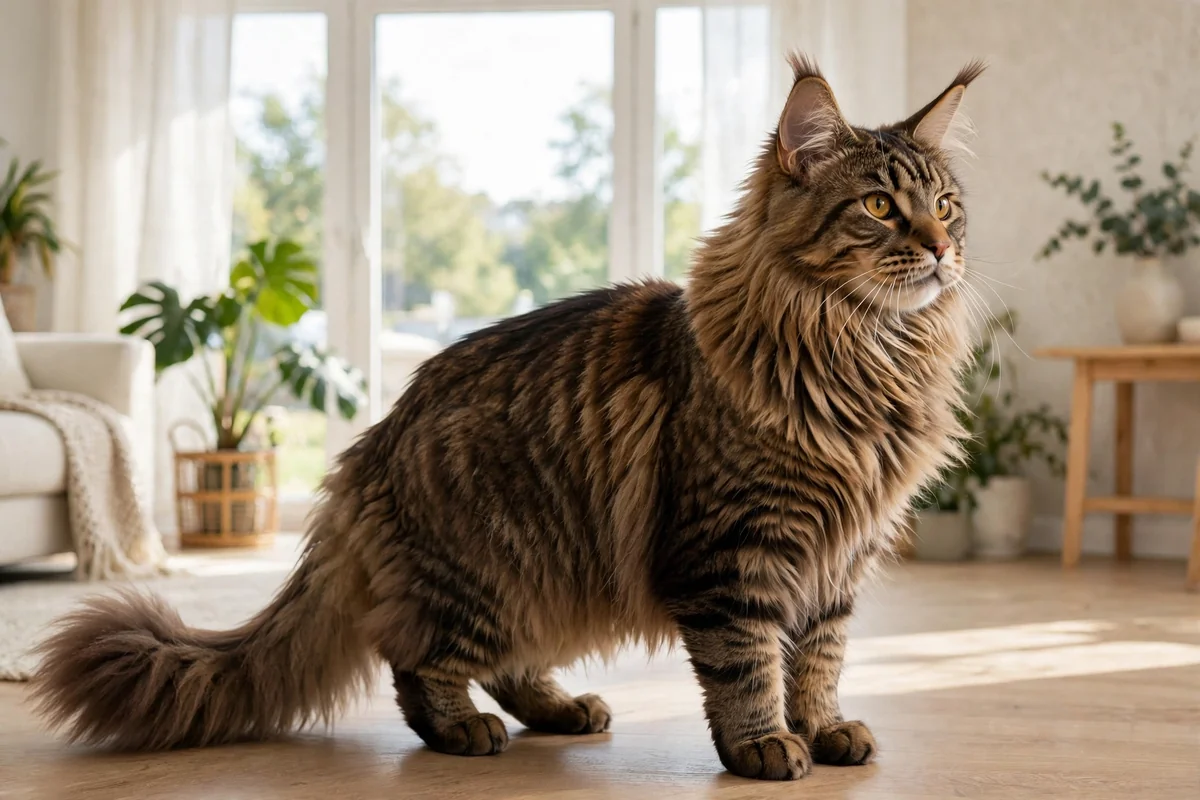
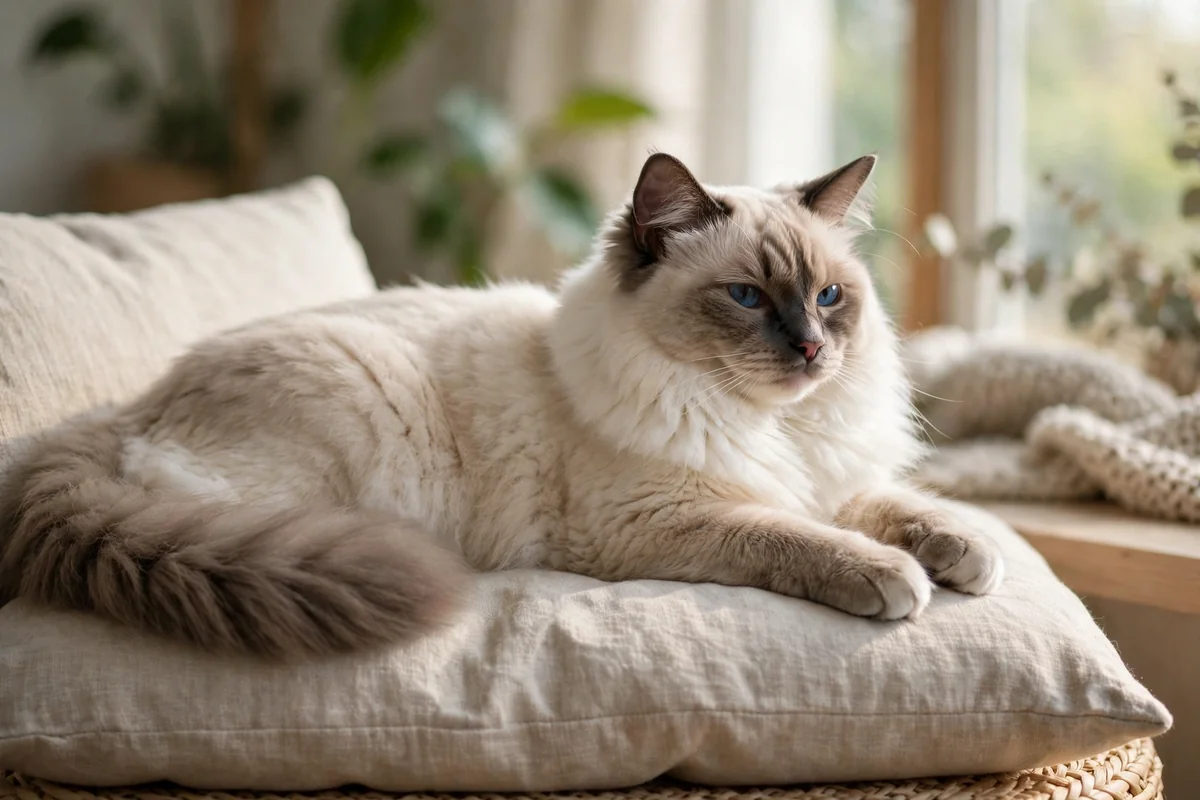
Both breeds are large by cat standards, and both take their time to reach full size, often growing for three or four years. The Maine Coon is long, rectangular and muscular, with a broad chest, strong legs and a long, bushy tail. It is often described as the largest of the main cat breeds kept in American homes.
The Ragdoll is also large and heavy, with a long body and a sturdy frame, but its outline is softer and rounder, and its tail is long and plush rather than bushy. Neither breed should be judged on size alone: a small Maine Coon and a large Ragdoll can weigh about the same, and both need a sturdy scratching post and a roomy resting spot.
Coats and Colours
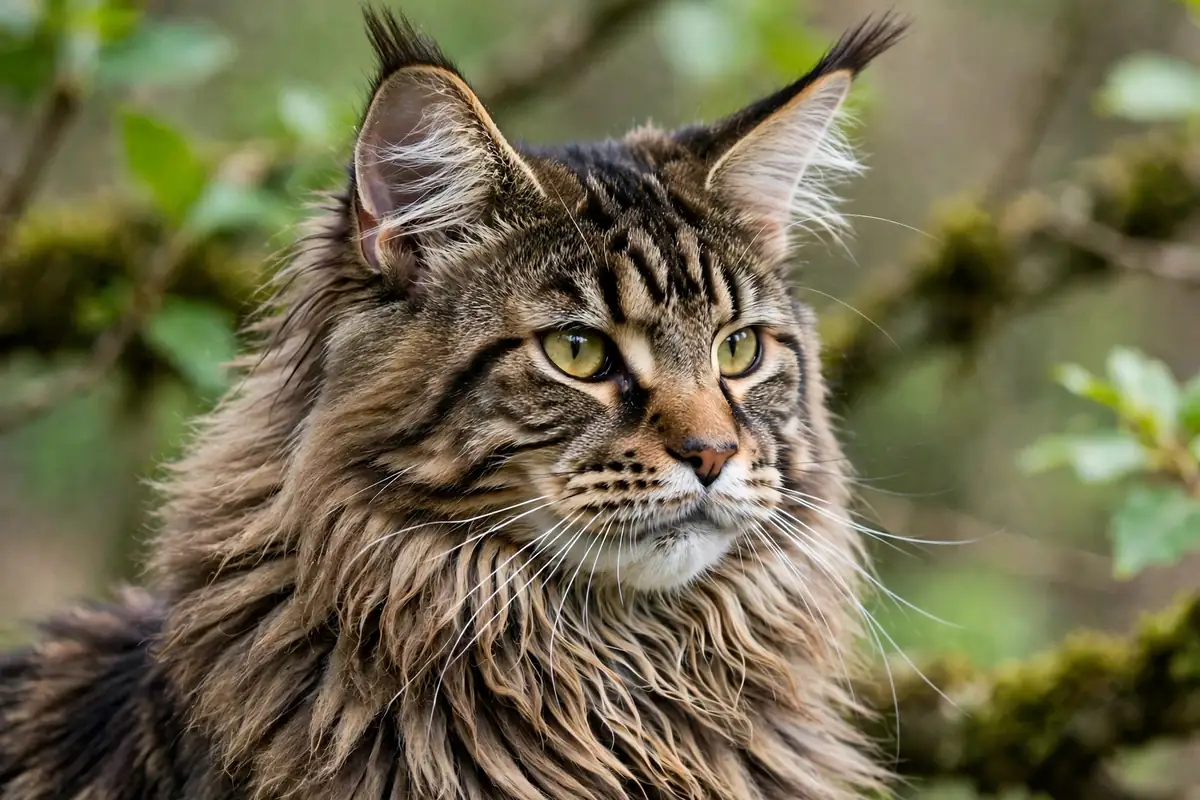
The coats are where the two breeds are easiest to tell apart. The Maine Coon coat is shaggy and uneven, longer on the ruff, belly and hind legs, and shorter across the shoulders. It has a water-resistant outer layer and a soft undercoat, and it can look fuller in winter than in summer. Maine Coon colours are wide-ranging: brown tabby is the classic pattern, but the breed comes in many solid colours, tabby patterns, tortoiseshell patterns and combinations with white.
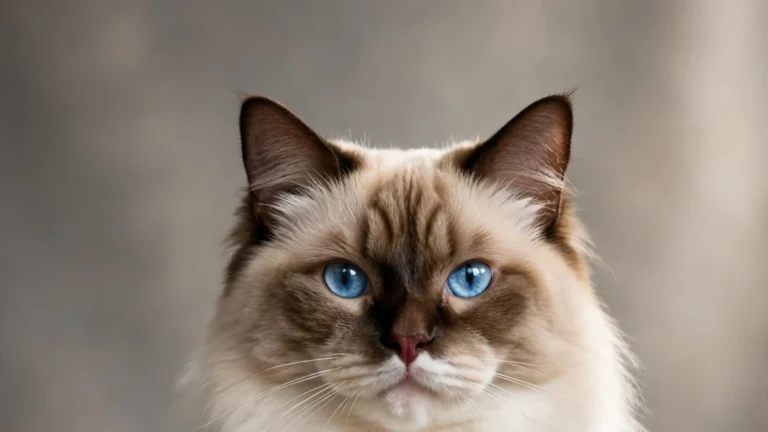
The Ragdoll coat is semi-long, soft and plush, and it lies smoothly against the body. It has a light undercoat, so it is less dense than the Maine Coon coat. Ragdoll colours are pointed, which means the face, ears, legs and tail are darker than the body. Seal, blue, chocolate, lilac, red and cream points are recognized, in solid, tabby and tortoiseshell variations, and in three patterns: colourpoint, mitted and bicolour. For another pointed breed, see our Birman cats guide.
Eye Colour
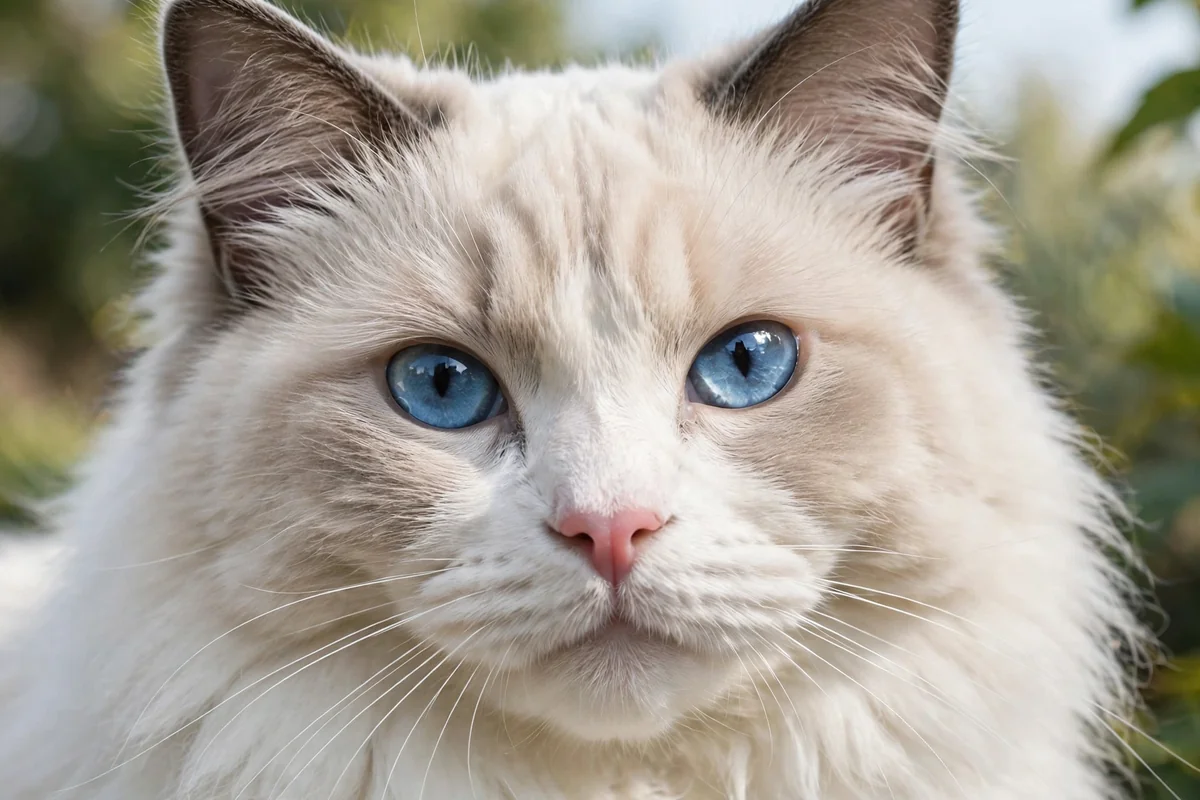
Eye colour is one of the clearest differences between the two breeds. Ragdoll eyes are always blue. The shade can range from a soft sky blue to a deep, vivid blue, and the colour stands out sharply against the pale pointed coat.
Maine Coon eyes are far more varied. Green, gold and copper are the most common colours, and some Maine Coons have blue or odd-coloured eyes, particularly in white-coated cats. In short, blue eyes point toward the Ragdoll, while green or gold eyes point toward the Maine Coon.
Personality and Temperament
Both breeds are known for being people-oriented, and both are often described as gentle, but they express that nature in different ways. The Maine Coon is often called the gentle giant of the cat world. Many Maine Coons are friendly, confident and curious, following their owners around the house and joining in whatever is happening, without clinging or demanding constant handling. They are usually described as social rather than lap-bound: happy to be near people and happy to play.
The Ragdoll is quieter and more physically affectionate. Many Ragdolls seek out laps, settle against their owners and relax completely when held, which is where the breed’s name comes from. They are often described as calm and trusting. That is not true of every Ragdoll — individual cats vary — but the relaxed, floppy reputation is the breed’s best-known trait. With children and visitors, both breeds are usually described as tolerant and easygoing, and both often live well with other cats and with friendly dogs. Readers comparing other large breeds may also enjoy our Norwegian Forest cats guide.
Activity and Play
Activity is where the farm-cat past and the house-companion past show most clearly. The Maine Coon is the more active of the two. Many Maine Coons enjoy climbing, exploring high shelves and playing with wand toys, rolling balls and puzzle toys. A tall, sturdy cat tree, a window perch and a daily play session suit the breed well.
The Ragdoll is moderately active and far more relaxed. Many Ragdolls enjoy a short game with a wand toy or a soft ball, then settle down for a long rest. They are not famous climbers, and they often prefer play at floor level, close to their owner. Our guide to the best cat toys covers the types of toys cats return to again and again.
Grooming Routines
Both breeds need regular grooming, but the routines feel different because the coats are different. The Maine Coon coat is longer, thicker and more prone to tangles, especially around the ruff, the belly and the hind legs. A gentle brush two or three times a week usually keeps the coat in order, with a little extra care during seasonal shedding.
The Ragdoll coat is softer and less dense, with only a light undercoat, so it tangles less readily. A gentle brush once or twice a week is usually enough, again with a little extra during shedding. For both breeds, grooming is also a bonding moment, and a patient approach works better than rushing. Our cat grooming at home guide explains the ordinary routines and tools that suit long-coated cats.
Vocal Nature
Voice is another clear point of difference. Maine Coons are known for a soft, chirping voice that sounds quite different from an ordinary meow. Many Maine Coons chirp and trill when they see a bird through a window, when they greet their owner, or when they want attention.
Ragdolls are usually quieter. Many Ragdolls have a soft, sweet voice and use it sparingly, often to answer their owner or to ask for company. They are not known for long, demanding conversations. If a quiet home matters to you, the Ragdoll usually has the edge. If you enjoy a cat that talks back with chirps and trills, the Maine Coon is the more likely companion.
Living With Each Breed
Daily life with a Maine Coon feels a little more outdoorsy, even for an indoor cat. This is a large, curious cat that likes space, height and things to investigate. A home with a tall cat tree, a sunny window and a sturdy scratching post suits it well. Many Maine Coons are also famously fond of water, paddling at a dripping tap.
Daily life with a Ragdoll feels calmer and closer. This is a cat that likes to be in the same room as its people, often on the sofa beside them or asleep at the foot of the bed. A comfortable resting spot, a window perch and a scratching post will cover most of what a Ragdoll asks from its home. Both breeds usually settle well in family homes, and both often live happily alongside friendly dogs — gentle dog breeds such as the Golden Retriever are a common example. The Maine Coon suits a home that can offer height, play and room to explore, while the Ragdoll suits a home that can offer calm company and a lap. Explore more breeds in the Cats & Kittens section and the Dogs & Puppies section.
Maine Coon vs Ragdoll at a Glance
| Feature | Maine Coon | Ragdoll |
|---|---|---|
| Size | Large, long and muscular, often the largest of the main cat breeds | Large and heavy, long body with a softer, rounder outline |
| Coat | Shaggy, thick, water-resistant, longer ruff and belly | Semi-long, soft and plush, light undercoat, lies smoothly |
| Eyes | Green, gold or copper most often; blue or odd-coloured in some cats | Always blue, from soft sky blue to deep vivid blue |
| Colours | Wide range: tabby, solid, tortoiseshell, with or without white | Pointed only: seal, blue, chocolate, lilac, red or cream, in colourpoint, mitted or bicolour patterns |
| Personality | Friendly, confident, curious, social rather than lap-bound | Calm, trusting, physically affectionate, famously relaxed when held |
| Activity | More active, enjoys climbing, exploring and longer play | Moderately active, prefers short floor-level play and long rests |
| Grooming | Brush two or three times a week, extra care when shedding | Brush once or twice a week, extra care when shedding |
| Vocal nature | Soft chirps and trills, gently chatty | Soft, sweet voice, used sparingly, usually quieter |
| Suitability | Homes with space, height and daily play | Calm homes that can offer close company and a steady routine |
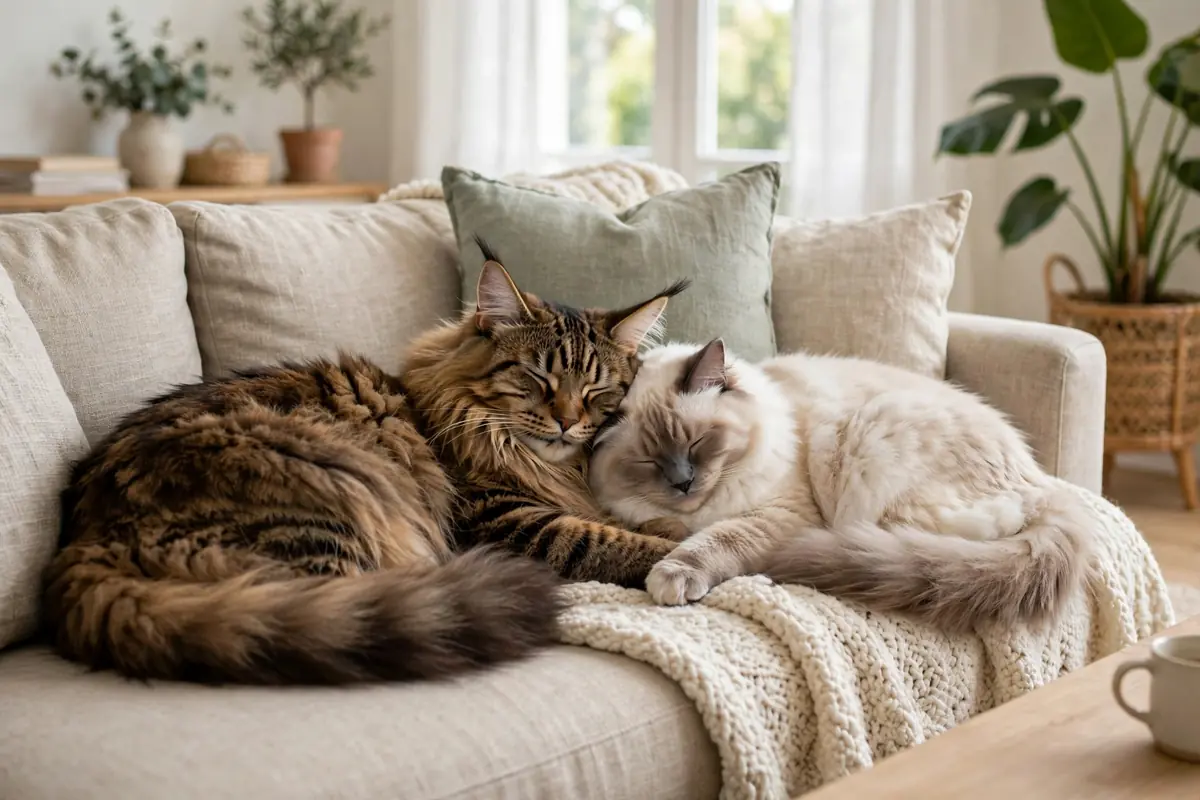
The table sums up the comparison. Both breeds are large, long-coated and people-oriented, but the Maine Coon is the rugged, active, outdoorsy cousin, while the Ragdoll is the soft, calm, lap-loving companion. Neither is better than the other.
Interesting Facts
- State cat: The Maine Coon is the official state cat of Maine.
- A floppy name: The Ragdoll is named for the way many cats of the breed relax and go limp when held.
- Slow growers: Both breeds take three or four years to reach full size.
- Chirping Coons: Many Maine Coons chirp and trill instead of meowing.
- Always blue: Every Ragdoll has blue eyes, whatever its point colour.
- Farm roots: The Maine Coon was shaped by farm and coastal life in New England.
- California newcomer: The Ragdoll was developed in California in the 1960s.
Related Reading on MyPetsMyLove
- Maine Coon cats guide
- Ragdoll cats guide
- Most popular cat breeds in the USA
- Cats & Kittens hub page
- MyPetsMyLove homepage
- About Us page
References
- Cat Fanciers’ Association (CFA) — Maine Coon and Ragdoll breed profiles
- The International Cat Association (TICA) — Maine Coon and Ragdoll breed profiles
- The Humane Society of the United States — pet care and enrichment resources
- Encyclopaedia Britannica — cat breeds reference
Frequently Asked Questions
Which is bigger, a Maine Coon or a Ragdoll?
Both are large breeds, and individual cats vary a great deal. The Maine Coon is often described as the largest of the main cat breeds, with a long, rectangular, muscular body, while the Ragdoll is also large and heavy, with a long body and a softer, rounder outline. A small Maine Coon and a large Ragdoll can weigh about the same.
Do Ragdolls really go limp when you pick them up?
Many Ragdolls do relax completely and go limp when held, which is where the breed’s name comes from. It is a well-known trait of the breed, but it is not true of every Ragdoll, and individual cats vary in how relaxed they are when picked up.
Do Maine Coons and Ragdolls both have blue eyes?
No. Ragdoll eyes are always blue, from soft sky blue to deep vivid blue. Maine Coon eyes are usually green, gold or copper, although some Maine Coons have blue or odd-coloured eyes, particularly in white-coated cats.
Which breed is more affectionate, Maine Coon or Ragdoll?
Both are people-oriented, but they show affection differently. Many Ragdolls seek out laps and settle against their owners for long stretches, while many Maine Coons are friendly and social without being lap-bound, preferring to stay near their people and join in what is happening.
Which breed needs more grooming?
The Maine Coon usually needs a little more. Its coat is longer, thicker and more prone to tangles, so a gentle brush two or three times a week is usually recommended. The Ragdoll coat is softer and less dense, so a gentle brush once or twice a week is usually enough.
Are Maine Coons more active than Ragdolls?
Yes, usually. Many Maine Coons enjoy climbing, exploring and longer play sessions, while many Ragdolls prefer short, gentle play at floor level followed by a long rest. Both breeds still benefit from regular play and enrichment every day.
Which breed is better for a quiet home?
The Ragdoll usually suits a quiet home better, because many Ragdolls are calm, settled and sparing with their voices. The Maine Coon can also settle well in a quiet home, but it is more active and more likely to chirp and trill, so it suits a home that can offer space, height and daily play.
Conclusion
Maine Coon vs Ragdoll comes down to a simple choice between two kinds of companionship. The Maine Coon is a rugged, confident, playful giant from the farms and coasts of New England, with a shaggy coat, green or gold eyes and a chirping voice. The Ragdoll is a soft, calm, trusting companion from 1960s California, with a plush pointed coat, always-blue eyes and a famously relaxed way of settling into your arms. Both are large, both are gentle, and both love being near their people — they simply show it in different ways.
If you want an active, curious cat that climbs, explores and talks back in chirps, the Maine Coon is likely your match. If you want a calm, lap-loving cat that keeps you company through a quiet evening, the Ragdoll is likely yours. Read the full Maine Coon cats guide and Ragdoll cats guide, compare them with the other most popular cats in our guide to the most popular cat breeds in the USA, and explore the Cats & Kittens section to meet more breeds worth knowing.
Disclaimer
Disclaimer
MyPetsMyLove dot com is an independent informational website covering pet species breeds characteristics activities positive training bonding grooming and responsible ownership
We are not a veterinary clinic medical provider pet food provider or veterinary nutrition service
We do not provide veterinary diagnosis medical advice treatment food recommendations or nutritional guidance
For pet health medical or food related concerns consult a qualified veterinarian or appropriate professional directly
Independent clinics listed on this website are not owned or operated by MyPetsMyLove unless explicitly stated
Verify third party credentials services fees and availability independently
We do not guarantee third party services or outcomes
To the extent permitted by applicable law we disclaim responsibility for independent third party services
Nothing in this notice excludes liability that cannot legally be excluded
The disclaimer does not make prohibited content acceptable