Lovebird Care Guide: Types, Bonding, Play and Home
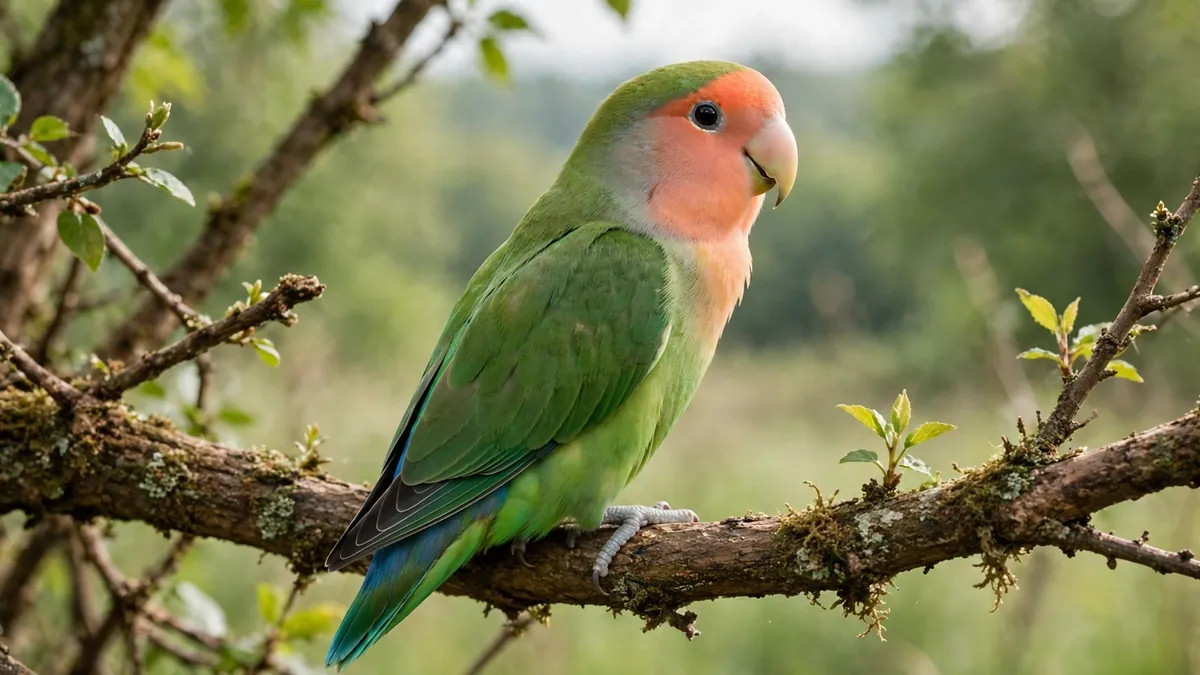
Imagine a parrot small enough to sit in the palm of your hand, bright as a spring leaf, with a peach-colored face and a habit of snuggling close. That is a lovebird, and the name is no accident. These little African parrots are famous for the close bonds they form, whether with another lovebird or with a person who spends time with them every day. This guide covers what a lovebird is, the most familiar types, what they look and sound like, and how to set up a comfortable home for one.
What Is a Lovebird?
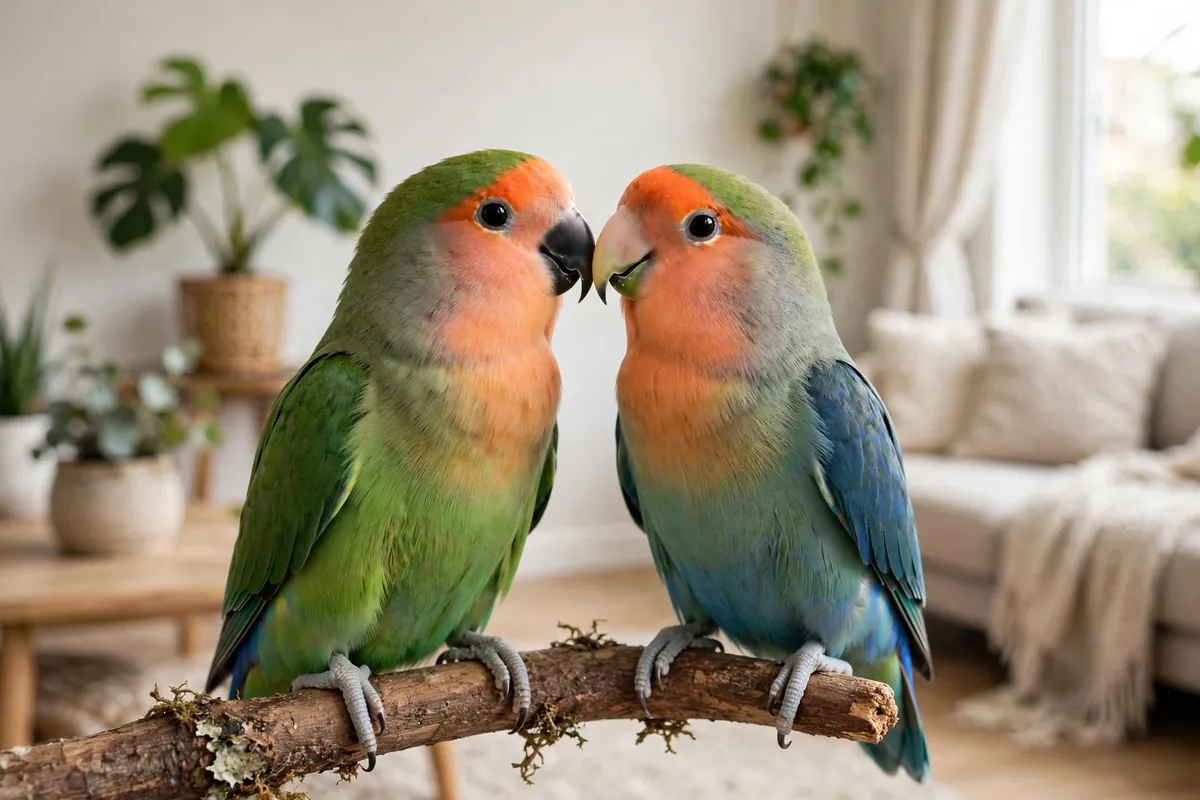
A lovebird is a small parrot in the genus Agapornis, a group of nine species native to Africa. The name Agapornis comes from Greek words meaning love and bird, and the common name reflects how these parrots behave in pairs. In the wild, lovebirds live in flocks and form strong pair bonds, sitting close together and preening each other.
Lovebirds are true parrots, with a curved beak, strong gripping feet, and a clever, curious nature. They are much smaller than the parrots most people picture first, such as the African grey parrot in our African grey parrot guide, yet they carry the same bold spirit in a compact body. The peach-faced, Fischer’s, and masked lovebirds are the three types new owners are most likely to meet.
Common Lovebird Types
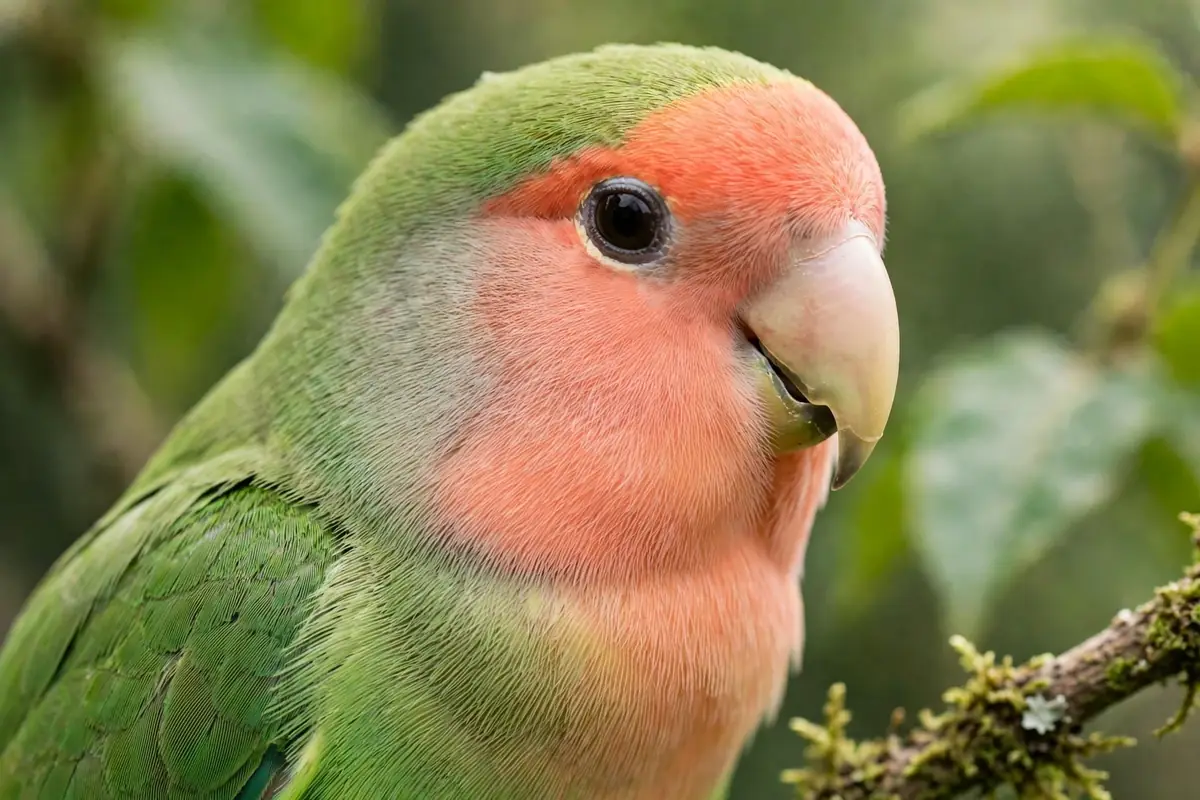
Three lovebird species dominate the companion-bird world. The peach-faced lovebird is the best known, with a green body, a peach or salmon-colored face, and a pale horn-colored beak. The Fischer’s lovebird has a bright orange face, a green body, and a vivid red beak ringed by a white eye ring. The masked lovebird, also called the yellow-collared lovebird, has a dark brown-black head like a mask, a bright yellow collar, a green body, and a red beak with a white eye ring.
| Type | Face and head | Body | Beak | Eye ring |
|---|---|---|---|---|
| Peach-faced lovebird | Peach or salmon face | Bright green | Pale horn color | None |
| Fischer’s lovebird | Bright orange face | Bright green | Red | White |
| Masked lovebird | Dark brown-black mask | Green with yellow collar | Red | White |
Other Agapornis species exist, including the black-cheeked and Lilian’s lovebirds, but they are far less common as companions. Captive-bred color variations add shades of blue, yellow, and pale cream, and a young bird’s colors may deepen slightly as it matures.
Appearance and Size
A lovebird is a compact, stocky little parrot, usually about 5 to 7 inches long and weighing only about 40 to 60 grams, roughly the weight of a small apple. Its short tail, rounded head, and sturdy beak give it a chunky, cheerful outline.
Wild-type lovebirds are vivid green across the back, wings, and chest, with contrasting faces in peach, orange, or dark brown-black. The wings are short and rounded, built for quick flights, and the tail is short and squared off — a clue that separates lovebirds from longer-tailed small parrots such as the budgerigar in our budgerigar care guide. Males and females of most companion species look very much alike.
Personality and Bonding
Lovebirds are bold, curious, and full of energy. They investigate everything in reach, climb with confidence, and develop strong opinions about favorite perches, toys, and people. Many owners describe a lovebird as a big parrot personality in a small body, and these birds enjoy being part of the household’s daily rhythm.
The pair bond is the heart of the lovebird’s reputation. Two lovebirds that get along sit shoulder to shoulder, preen each other’s head feathers, and rest side by side for long periods. A single lovebird can form the same kind of close bond with a person, seeking out hands, shoulders, and pockets and greeting a familiar face with cheerful chatter. That bond grows through regular, gentle interaction. Each bird is an individual — some are cuddly, while others prefer to perch nearby and watch.
Sounds, Talking and Communication
Lovebirds are chatty birds: cheerful chirps, chattering bursts, and soft contact calls that say, in effect, where are you and I am here. They can be loud for their size, especially in the morning and at dusk, when wild parrots are naturally at their most vocal. A lovebird that calls out is usually looking for company.
Some lovebirds learn to mimic a few words or whistles, though they are not known as the clearest talkers among parrots. A single bird that spends a lot of time with people is more likely to pick up sounds than a bird in a busy pair, and our guide on how to train a parrot to talk covers the patient approach. Body language helps too: a relaxed lovebird fluffs its feathers and settles on one foot, while an excited bird may bob its head.
Cage Setup and Perches
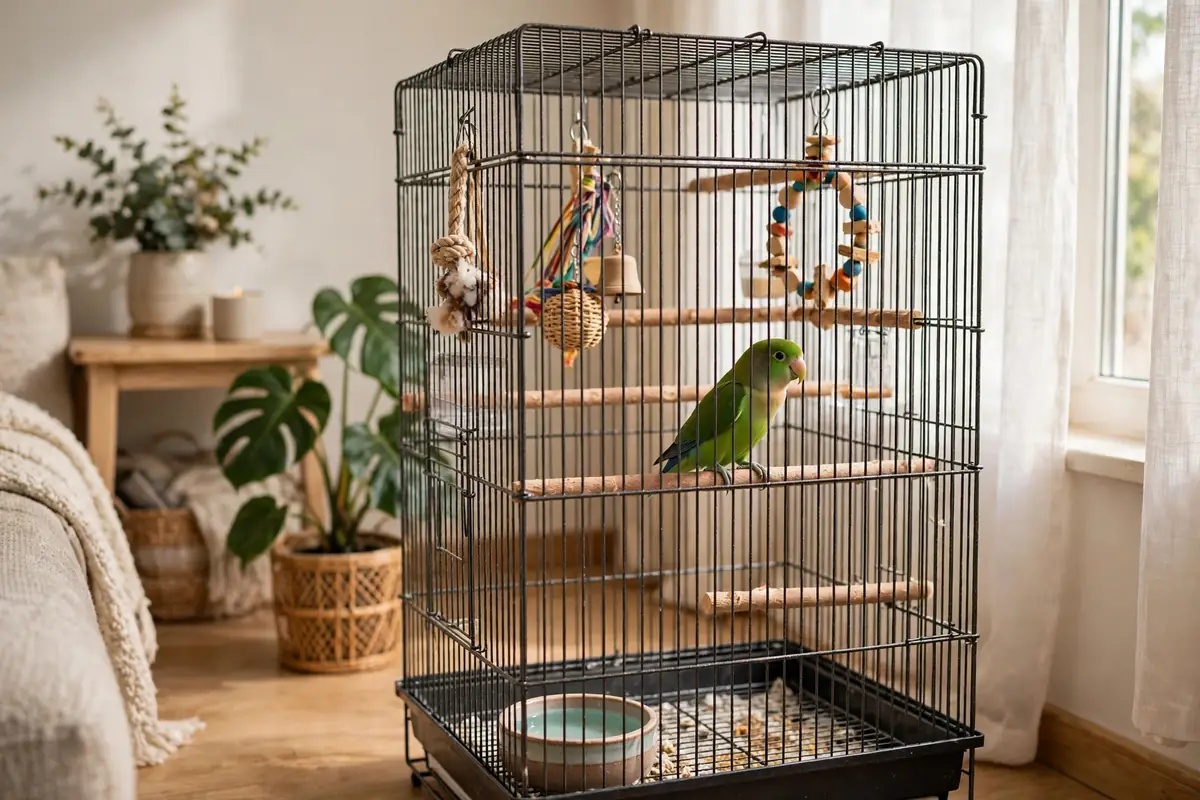
A lovebird needs a cage roomy enough for climbing, short flights, and play — at least 24 inches wide, 18 inches deep, and 24 inches tall. Horizontal bars are ideal, because lovebirds climb bars like little mountaineers. Bar spacing should be narrow, about half an inch to five-eighths of an inch, so a small bird cannot squeeze its head between the bars.
Offer several perches of different diameters and materials, including natural wood branches with bark, which give feet a varied grip. Place perches at different heights, keep one clear of toys and dishes as a resting spot, and avoid placing perches above water dishes. Inside the cage, a lovebird needs a water dish, a sturdy cup or two, a few toys, and a swing. Clean the cage regularly, wash dishes daily, and replace worn perches and toys before they fray.
Where to Place the Cage
A bright corner of a living room works well, with one side of the cage near a wall so the bird feels sheltered. Lovebirds are social birds that do best where they can see and hear the household without being in the middle of constant commotion.
Avoid the kitchen, where cooking fumes and sudden temperature changes are common, and keep the cage away from drafty windows and doors. Direct sun for part of the day is pleasant, but the cage should always offer a shaded corner, and a cover over the cage at night helps signal rest time. When the bird is out, close windows and doors and keep other pets out of the room.
Play and Toys
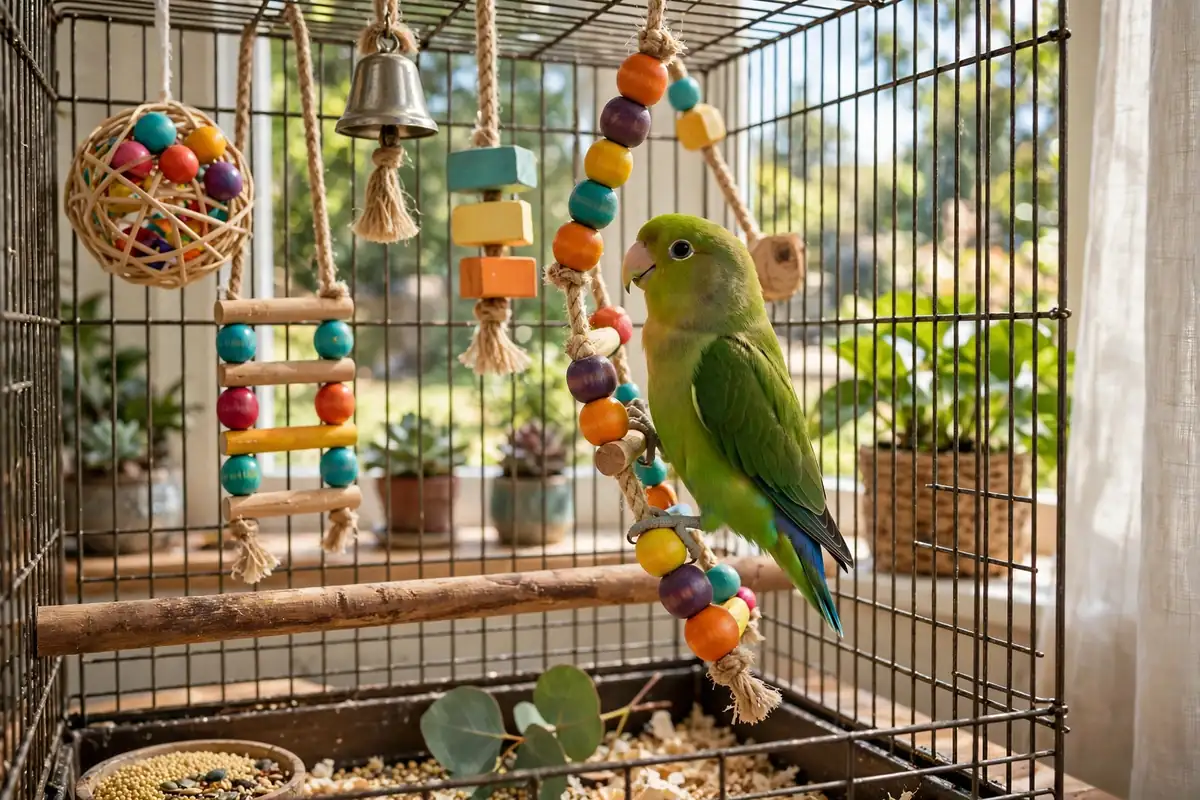
Play is a central part of a lovebird’s day. Lovebirds love to climb, swing, chew, shred, and pull at safe, bird-sized toys: hanging toys, small ladders, swings, and shreddable items made from paper, palm leaf, and soft wood. Rotating toys every week or two keeps the cage interesting.
Size matters when choosing toys. A toy made for a large parrot can be too heavy for a lovebird, while a toy with tiny parts or loose threads can be a snagging risk. Look for toys sized for small parrots, with sturdy fixings and natural materials, and keep just a few in the cage at a time so the bird has room to move and flap. Out-of-cage play matters too, in a safe room with a play stand. The same rotation idea works for cats — see our guide to the best cat toys, where the types of cat toys are sorted by how cats use them.
Bathing and Preening
Lovebirds are tidy birds that spend a good part of the day preening, running their beaks through their feathers to keep them smooth. Preening is also a social act: bonded pairs preen each other’s head and neck feathers.
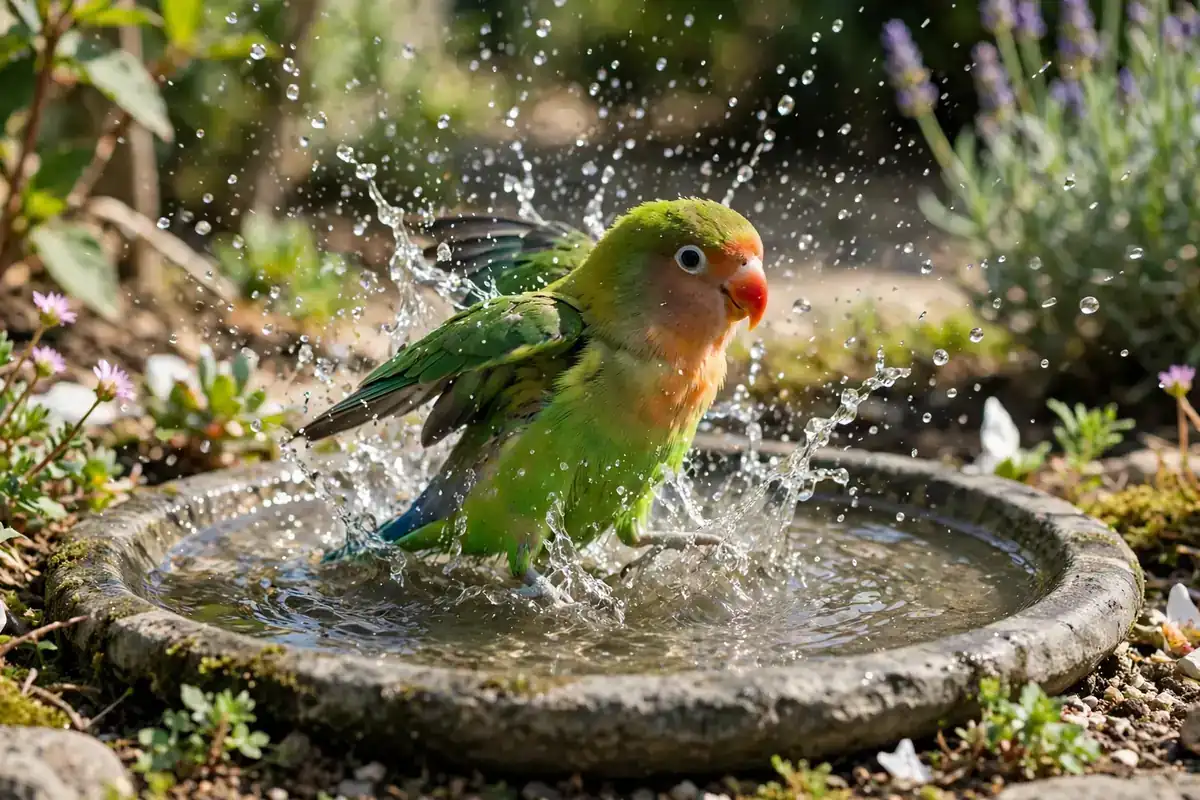
Many lovebirds enjoy bathing, and a shallow dish of clean water a few times a week is often all it takes. Let the bird decide whether to splash, dip, or simply sit nearby. Some prefer a light mist from a spray bottle, while others love a gently dripping tap. Never force a bird into water, and always let it dry in a warm, draft-free room. After a bath, a lovebird will shake, fluff, and preen until its feathers lie flat again.
A Day with a Lovebird
Mornings are usually the liveliest part of a lovebird’s day, with chatter, climbing, and a burst of energy as the bird greets the household. Midday often brings a quieter spell of resting and preening from a favorite perch, and evenings bring another social stretch before the bird settles for the night.
Most lovebirds enjoy an hour or more outside the cage each day, in a safe room where they can fly short distances and spend time near their people. Short, regular sessions beat rare long ones, because they build trust and keep the bird used to hands, voices, and household sounds. A steady routine — regular times for waking, play, and covering the cage at night — helps a lovebird feel secure, with a new toy or perch now and then to keep life interesting.
Before You Bring a Lovebird Home
A lovebird is a long commitment that deserves careful thought. Lovebirds commonly live for well over a decade with good care, so bringing one home means planning for years of daily attention, play, and companionship.
Think honestly about noise, time, and space. Lovebirds are vocal, especially at dawn and dusk, and they need daily interaction to stay happy and bonded. A home where someone is around for part of the day and can offer regular play and company usually suits a lovebird well. Choosing between one lovebird and a pair is another early decision: a single bird often bonds closely with its person and needs more human time, while a pair bonds closely with each other and needs more space.
Among the most common cat breeds and the popular breeds of dogs kept in American homes, small parrots like the lovebird offer a different kind of companionship — bright, vocal, and wonderfully interactive in a very small package. Our finch care guide is a useful next read for anyone comparing small companion birds.
Interesting Facts About Lovebirds
- A name with a story: The genus name Agapornis joins Greek words for love and bird, and the common name lovebird comes from the close pair bonds these parrots form.
- African origins: All nine lovebird species are native to Africa, where they live in flocks across woodlands and savannas.
- Small but mighty: A lovebird weighs only about as much as a small apple, yet it has the bold, curious spirit of a much larger parrot.
- Paper shredders: Peach-faced lovebirds tuck strips of paper into their rump feathers to carry back to a favorite spot.
- Eye rings tell a story: Fischer’s and masked lovebirds show a clear white ring around the eye, while the peach-faced lovebird has none.
- Chatty at dawn and dusk: Lovebirds are most vocal in the morning and evening, matching the rhythm of wild parrot flocks.
- Preening partners: Bonded lovebirds preen each other’s head feathers, a spot a bird cannot easily reach alone.
Related Reading on MyPetsMyLove
- Budgerigar care guide
- How to train a parrot to talk
- 10 things to know before getting a pet
- MyPetsMyLove homepage
- About Us page
References
- Encyclopaedia Britannica — lovebird reference
- The Humane Society of the United States — pet bird care and enrichment resources
- Cornell Lab of Ornithology — bird behavior and species information
- World Parrot Trust — parrot species information
Frequently Asked Questions
What is a lovebird?
A lovebird is a small parrot in the genus Agapornis, native to Africa. Lovebirds are known for their bright green plumage, contrasting face colors, small size, and the close pair bonds they form with another lovebird or with a person.
What are the most common types of lovebirds kept as companions?
The three most familiar types are the peach-faced, Fischer’s, and masked lovebirds. The peach-faced has a peach face and no eye ring, the Fischer’s has an orange face with a white eye ring, and the masked has a dark mask with a yellow collar and a white eye ring.
How big do lovebirds get?
Lovebirds are small parrots, usually about 5 to 7 inches long from beak to tail tip. Most companion lovebirds weigh only about 40 to 60 grams, roughly the weight of a small apple.
Can lovebirds learn to talk?
Some lovebirds learn to mimic a few words or whistles, though they are not known as the clearest talkers among parrots. A single bird with plenty of one-to-one time with people is more likely to pick up sounds, and short, calm, repeated sessions work best.
Should I keep one lovebird or a pair?
Both choices can work, and the right answer depends on your home. A single lovebird often bonds closely with its person and needs more human time each day, while a pair bonds closely with each other and needs more space. Plan for either choice with daily attention in mind.
How much play and out-of-cage time does a lovebird need?
Lovebirds are active, playful birds that enjoy daily play inside the cage and time outside it in a safe room. Most enjoy an hour or more outside the cage each day, with short, regular sessions that build trust and give them space to climb, fly, and explore.
Do lovebirds like to bathe?
Many lovebirds enjoy bathing in a shallow dish of clean water a few times a week, and some prefer a light mist from a spray bottle. Let the bird choose whether to splash or sit nearby, and always let it dry in a warm, draft-free room.
Conclusion
The lovebird packs a remarkable amount of personality into a very small parrot: bright colors, cheerful chatter, playful energy, and a bond that can last for years. From the peach-faced favorite to the orange-faced Fischer’s and the masked lovebird, each type brings its own look and charm, and all of them thrive on the same simple things — a roomy cage, varied perches, fresh toys, a splash of water, and time with the people they love.
If a lovebird sounds like the right companion for your home, keep exploring: our African grey parrot guide and budgerigar care guide compare other popular pet birds, our finch care guide covers another small companion bird, and the MyPetsMyLove homepage is the place to start for more pet birds, cats, and dogs worth knowing.
Disclaimer
Disclaimer
MyPetsMyLove dot com is an independent informational website covering pet species breeds characteristics activities positive training bonding grooming and responsible ownership
We are not a veterinary clinic medical provider pet food provider or veterinary nutrition service
We do not provide veterinary diagnosis medical advice treatment food recommendations or nutritional guidance
For pet health medical or food related concerns consult a qualified veterinarian or appropriate professional directly
Independent clinics listed on this website are not owned or operated by MyPetsMyLove unless explicitly stated
Verify third party credentials services fees and availability independently
We do not guarantee third party services or outcomes
To the extent permitted by applicable law we disclaim responsibility for independent third party services
Nothing in this notice excludes liability that cannot legally be excluded
The disclaimer does not make prohibited content acceptable