Best Cat Trees for Small Apartments: Space-Smart Guide
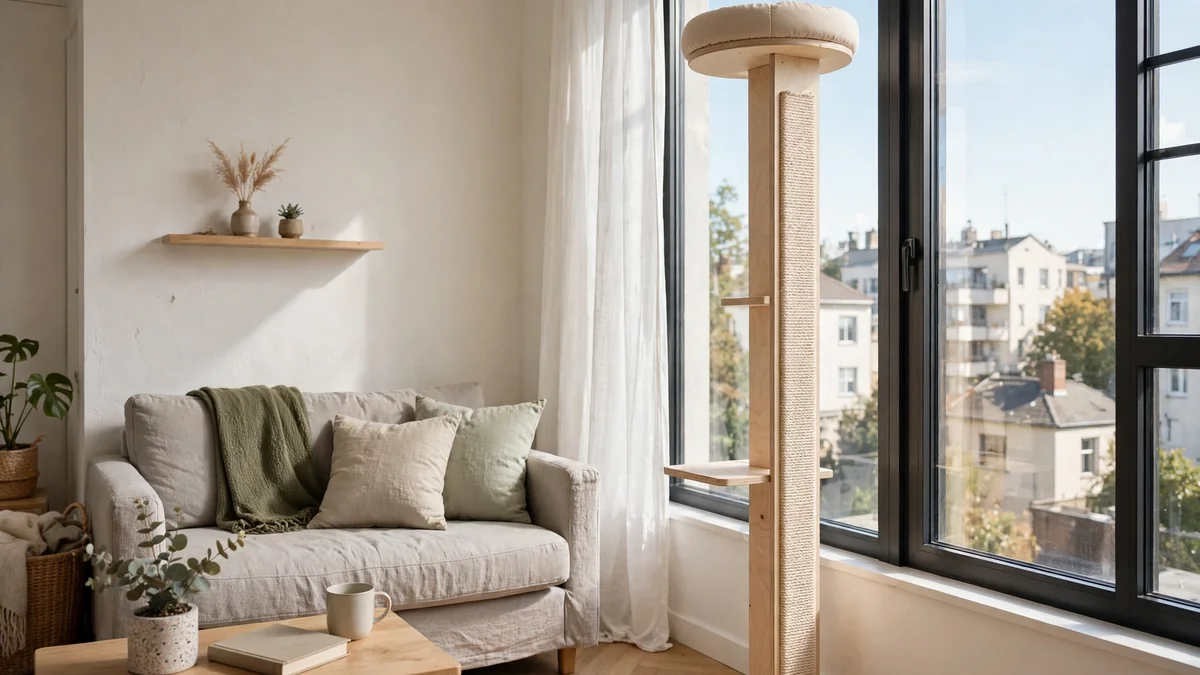
Picture this: your cat is perched on the bookshelf, one paw reaching for the plant on the sill, while you try to find floor space for a cat tree that will not swallow your living room. The best cat trees for small apartments build upward instead of outward, tuck into corners, climb the wall, or perch at the window.
Why Small Apartments Need Space-Smart Cat Trees
Cats climb, scratch, and survey their territory from above. In a small apartment that matters even more, because there is less room for a cat to roam, stretch, and find a quiet perch of its own. A well-chosen tree gives a cat vertical territory — a perch, a scratching post, and a hideaway — on a footprint not much bigger than a side table. Without that outlet, a cat in a studio often claims the furniture instead, turning the sofa back into a lookout and the armchair into a scratching post. Readers comparing breeds can start with our guide to the most popular cat breeds in the USA, which covers many of the most common cat breeds kept in American homes.
Measure Your Space Before You Shop
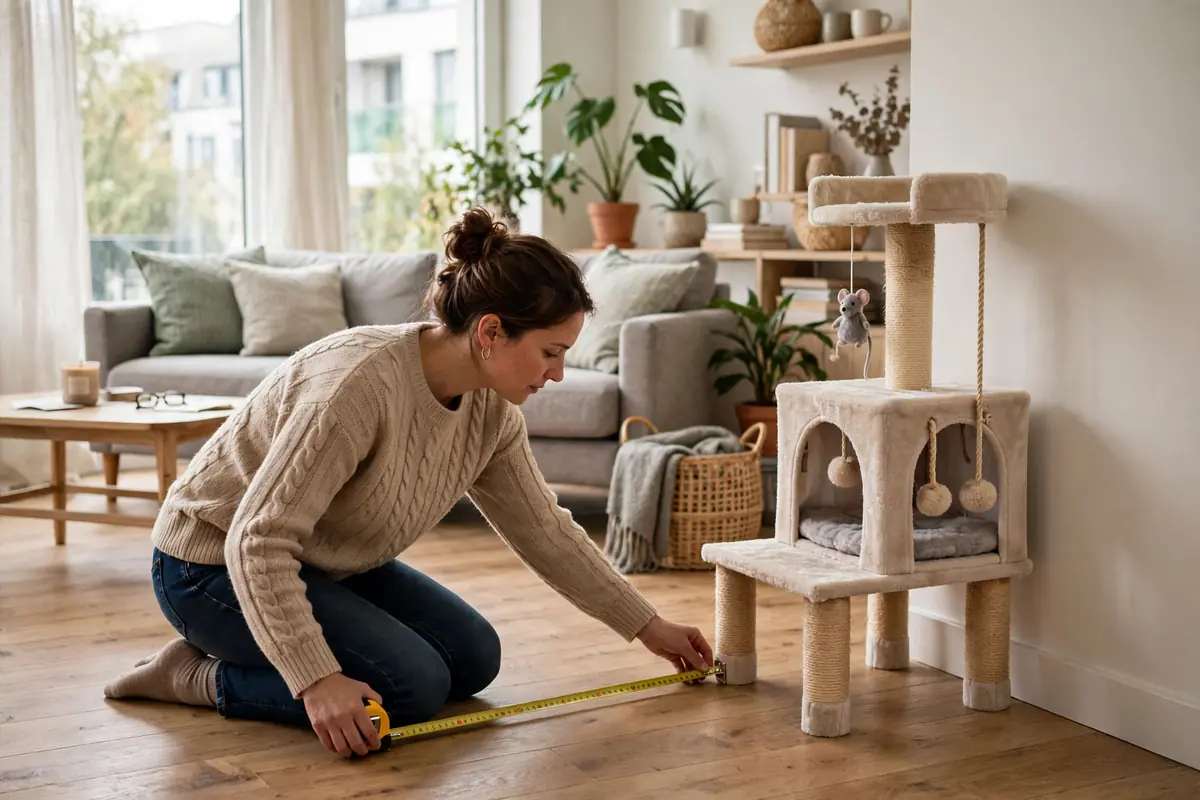
Measure before you shop, and write the numbers down. Measure the width and depth of the floor space, the ceiling height, and the height of any nearby windowsill or radiator, and leave a clear walking path. Tape the footprint out on the floor first, because a tree that looks compact online can feel enormous beside a sofa. Also measure the route the tree will travel — front door, hallway, elevator, tight turns — and compare the narrowest doorway with the tree’s assembled dimensions. Finally, measure your cat stretched out and curled up, so you know the minimum perch and condo sizes to look for.
Cat Tree Types That Work in Small Rooms
No single design suits every small apartment: the right choice depends on your floor plan, your wall space, and whether your cat prefers to climb high, hide low, or watch from a window.
| Tree type | Footprint | Best for | Watch out for |
|---|---|---|---|
| Corner tree | Small, triangular | Unused corners | Smaller platforms |
| Wall-mounted shelves | None on the floor | Studios | Needs a solid wall |
| Compact tower | Narrow, tall | Climbers | Can tip if the base is light |
| Window perch | Very small | Sun lovers | Needs a sturdy sill |
| Slim multi-level | Narrow, tall | Several resting spots | Platforms may be small |
Corner Trees
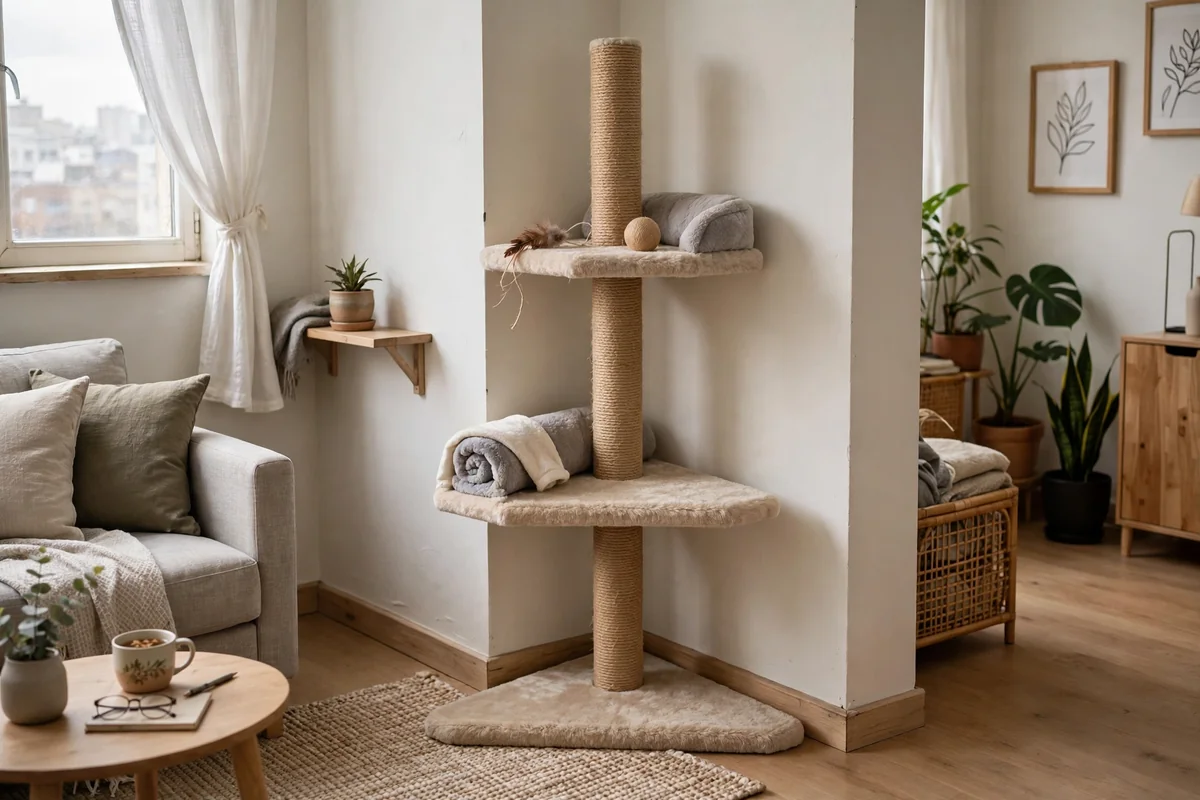
A corner tree is shaped to sit flush against two walls, so it uses space that usually goes to waste. Most are triangular, with two or three platforms above a scratching post and sometimes a small condo at the base. The trade-off is platform size, so check the measurements against your cat before you buy.
Wall-Mounted Shelves
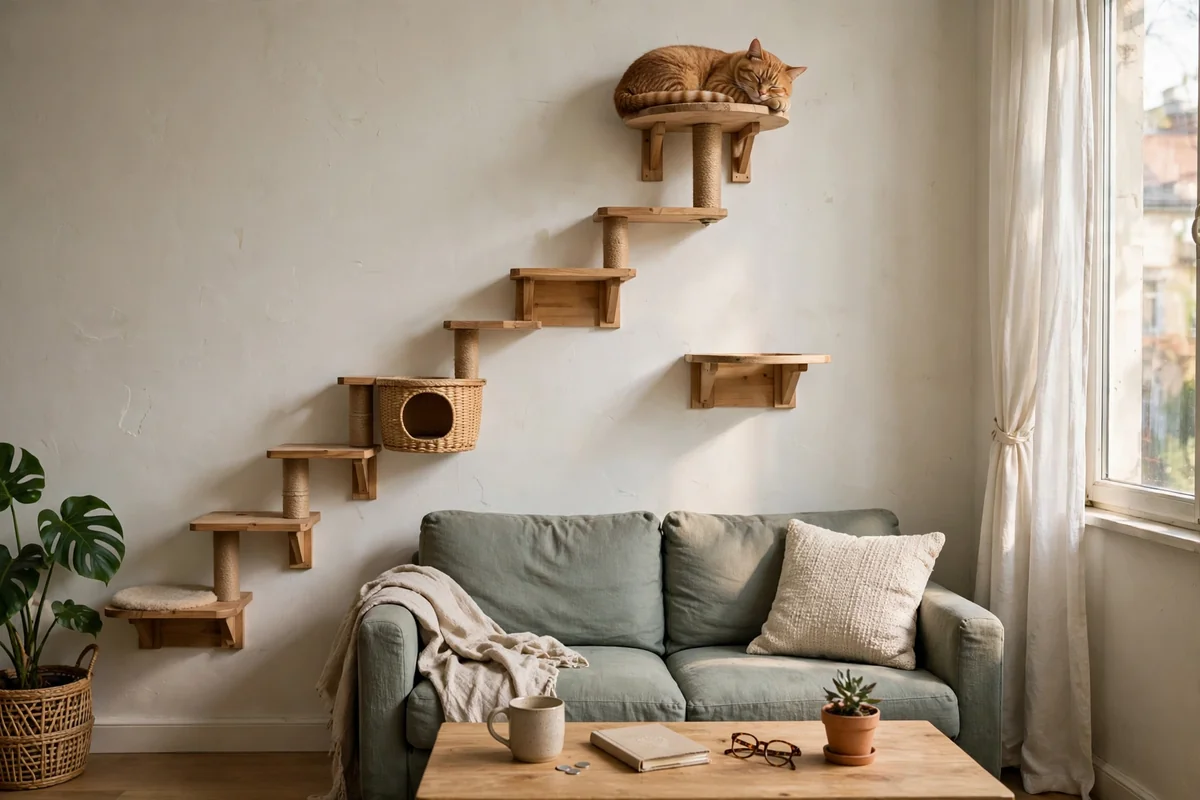
Wall-mounted shelves take up no floor space at all. Wooden or carpeted shelves, steps, and perches fixed to the wall create a climbing route up to a high resting spot. Shelves must be fixed into studs or solid masonry, not just plasterboard, and the layout needs a clear route a cat can actually use.
Compact Towers
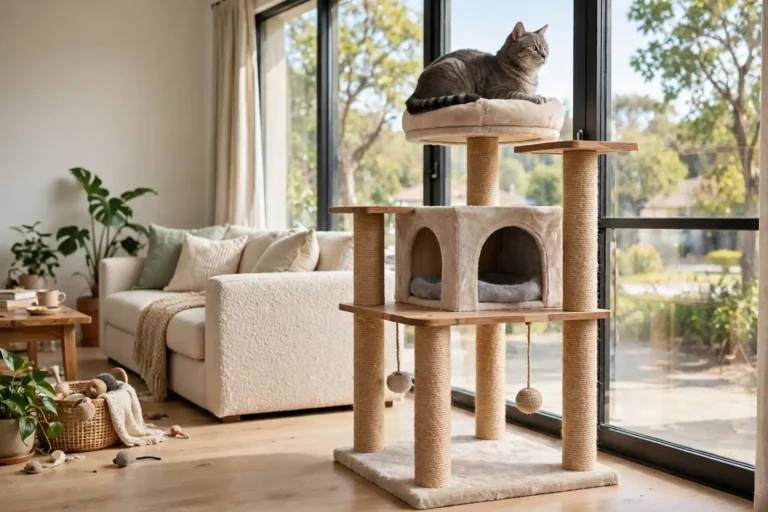
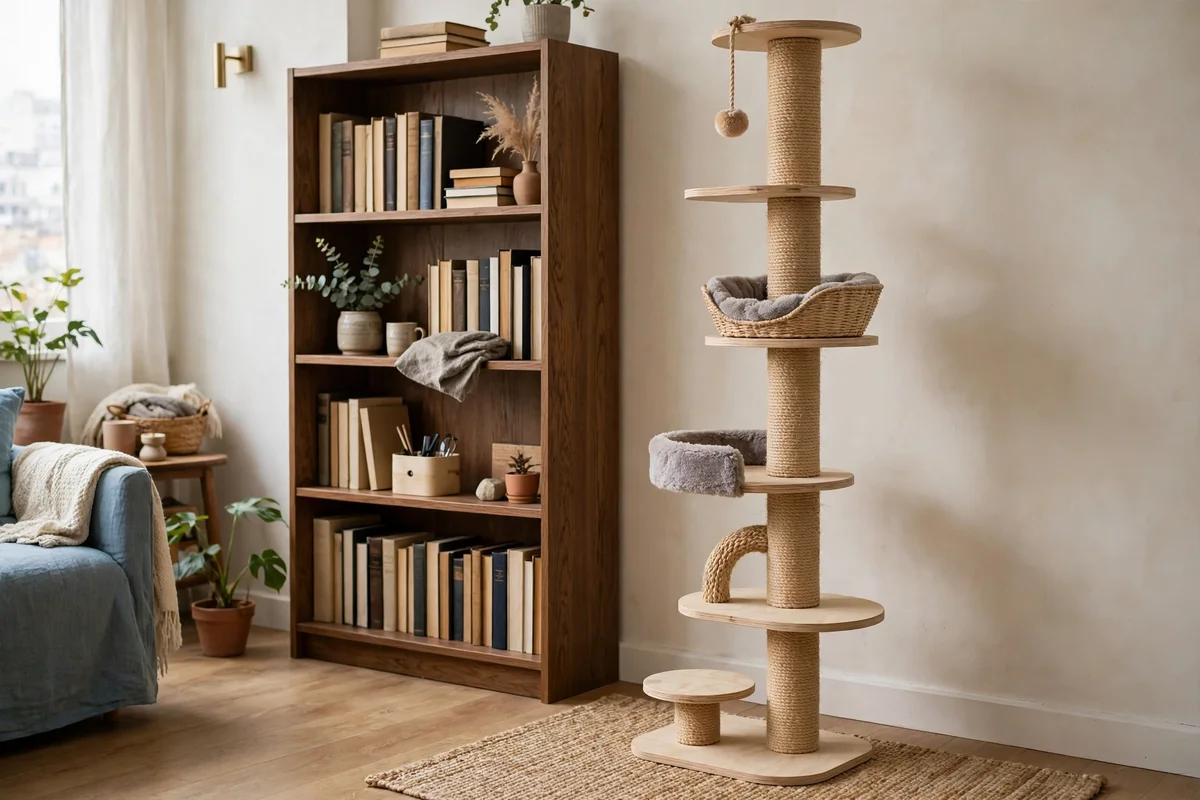
A compact tower keeps the classic cat tree shape — a base, a scratching post, stacked platforms, and a top perch — but shrinks the footprint and stretches the height. A good one reaches high enough for a cat to survey the room. Look for staggered platforms for a natural zigzag climb, and a wide, heavy base to keep a tall, narrow tower steady.
Window Perches
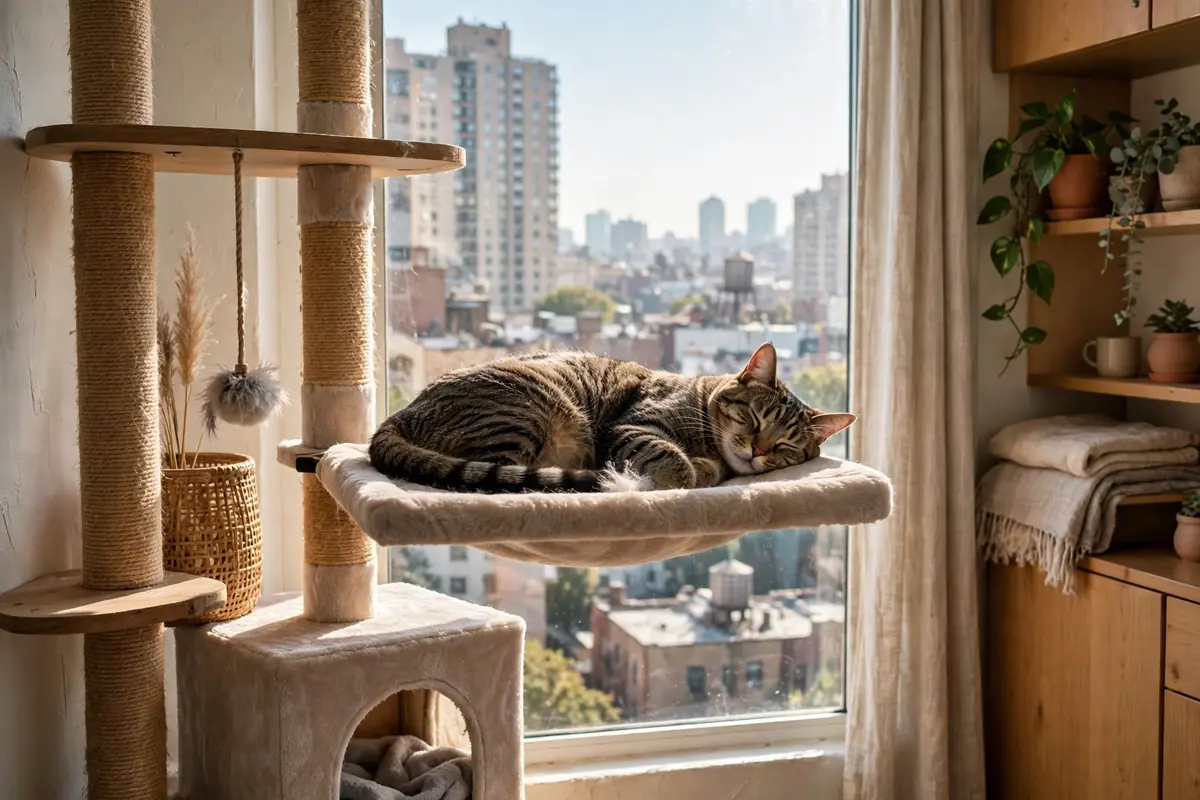
A window perch is a small platform, hammock, or seat fixed to a windowsill or mounted to the glass, sometimes built into a slim tree that stands in front of the window. It gives a cat warmth from the sun and a view of the world outside. Window perches suit homes where floor space is scarce but windows are plentiful.
Slim Multi-Level Designs
A slim multi-level design combines several small platforms, a condo, and a scratching post in one narrow column. It is the closest thing to a full-size tree that still fits a small apartment, and it suits cats that like variety: scratch low, hide in the middle, and sleep high.
Materials That Hold Up in Daily Use
Sisal is the standard wrapping for scratching posts: a tough plant fiber wound tightly around a post that gives claws a satisfying grip. Look for sisal wound tightly with no loose ends, and posts thick enough for your cat to stretch fully against. Carpet covers many platforms and condos. It is soft and warm with good grip, and short, dense carpet lasts longer and is easier to keep clean than long, loose pile. Solid wood is the premium choice for bases and shelves: heavy, steady, and long-lasting. Plush fabric covers many perches and condos. It is soft and inviting, but it shows hair, so removable, washable covers are worth looking for.
Stability, Base Size and Safety in Tight Spaces
In a small apartment, a cat tree stands close to people, furniture, and walkways, so stability is not a minor detail. The base should be at least as wide as the widest platform above it, and heavier is better. Some slim designs add a wall strap that anchors the top of the tree to the wall. Weight should sit low, with a condo or heavy base at the bottom and lighter platforms above. Before the first use, push the tree firmly from several directions; if it rocks, move it to a corner where two walls can brace it.
Perch and Condo Sizes: Matching the Tree to Your Cat
A perch is only useful if your cat can actually lie on it. Measure your cat curled up and stretched out, then compare those numbers with the perch dimensions. A perch should be wide enough for your cat to turn around, and a platform should fit your cat’s full length when stretched out. Condos need the same care: the opening should be wide enough for your cat to enter without squeezing, and the interior should be tall enough for your cat to sit upright. A condo that is too small becomes a storage space, while one that is too large loses the snug feeling cats look for. A condo at the base does double duty, giving a shy cat a hiding place and adding weight low down for stability.
Scratching Posts and Climbing Features
Scratching is how cats stretch, mark territory, and keep their claws in shape, so a scratching post is not an optional extra. In a small apartment, the post on the tree may be the only full-height scratching surface your cat has, so it needs to be tall enough for a full stretch. A post at the base of the tree gets used far more than one tucked behind a condo. An agile cat will enjoy staggered platforms and a steep route to the top, while an older or heavier cat needs a gentler route with platforms close together.
How Many Levels Does a Small Apartment Tree Need?
The right number is the number your cat will actually use, and each level should have a clear purpose: scratching, hiding, resting, and a high lookout. For one cat in a studio, two or three levels are often enough: a base with a scratching post, a middle platform or condo, and a top perch. For two cats, or for a cat that loves height, three or four levels give each cat a level of its own. Too many levels can dominate a small room, block light from the window, and include platforms too small to use. Count the usable resting spots rather than the advertised number of levels.
Placement Ideas That Make a Small Room Feel Bigger
Where you put the tree matters as much as which tree you buy. The best spot is usually one your cat already likes: near a window, beside the sofa, or in a corner the cat already visits. A window spot is the classic choice: sunlight and a view keep a cat occupied for hours. A corner spot keeps the tree out of the walking path and braces it with two walls. Avoid spots that block a doorway, a radiator, or the only daylight, and avoid noisy appliances. If your cat is new to the home, our guide on how to help your cat adjust to a new home covers settling-in routines that pair well with a quiet, familiar corner.
Matching the Tree to Your Cat’s Size and Climbing Style
Cats come in very different sizes and climbing styles, and a tree that suits a small, agile cat may not suit a large, heavy one. The most popular cat breeds in the USA include both light, athletic breeds and large, sturdy ones, so size is worth checking rather than assuming. Large cats need wide perches, thick posts, and a heavy base: look for extra-wide platforms and posts at least as thick as your cat’s forearm. Active climbers need height: staggered platforms, a tall post, and a top perch. Calmer cats may prefer a shorter tree with a roomy condo and a single sunny perch, and they may ignore a tall tower altogether. Kittens grow quickly, so buy for the adult size your cat will reach.
Care and Upkeep: Keeping a Cat Tree Fresh
A cat tree in a small apartment sits close to where you live, so keeping it clean matters more than it would in a large house. Vacuum the platforms and condo at least once a week to lift loose hair, and brush plush surfaces to keep them tidy. Check the tree for wear: sisal unravels over time, and loose strands should be trimmed before they become a snagging hazard. Tighten bolts every few months, because daily climbing loosens them, and most wobbles come from a single loose bolt.
What to Avoid in Tight Spaces
Wide, sprawling trees with a footprint larger than a coffee table eat the floor space a small room cannot spare. Avoid trees with a narrow base and a tall, heavy top, which tip easily when a cat jumps on. Avoid platforms with raised edges too high to step onto, and perches with no rim on a tall tower, where a sleeping cat can roll off. Avoid designs where the only resting spot is at the very top. Also avoid buying for looks alone: a tree with a post too short to scratch on or platforms too small to lie on will sit unused. If you are comparing broad designs first, our guides to cat trees vs cat towers and how to choose the right cat tree explain the differences in detail.
Double-Check the Fit Before You Buy
Before you order, run through the numbers one last time. Re-measure the floor space and the ceiling height, and compare them with the assembled dimensions of the tree, not the box. Then check the cat-sized numbers: perch width, condo opening, and scratching post height against your cat’s measurements. Finally, picture the room with the tree in place: is the walking path clear, and can the doors, drawers, and window still open? If yes, you have found a tree that fits your apartment as well as your cat.
Related Reading on MyPetsMyLove
- Cat trees vs cat towers
- How to choose the right cat tree
- Best cat beds guide
- Pet Products hub page
- MyPetsMyLove homepage
- About Us page
References
- The Humane Society of the United States — pet care and enrichment resources
- Encyclopaedia Britannica — cat breeds reference
- Cat Fanciers’ Association (CFA) — cat breed profiles
- The International Cat Association (TICA) — cat breed profiles
Frequently Asked Questions
What is the best type of cat tree for a small apartment?
A compact tower, a corner tree, or wall-mounted shelves usually work best, because they use height or unused corners instead of floor space. The right choice depends on your floor plan: a corner tree suits a free corner, wall shelves suit a studio with little floor space, and a compact tower suits a cat that loves to climb.
How much floor space does a cat tree need?
Most space-smart designs need a footprint roughly the size of a side table, but the exact space depends on the design. Measure the width and depth of your chosen spot, leave a clear walking path in front of the tree, and tape the footprint out on the floor before you order.
Are wall-mounted cat shelves safe?
Yes, when they are fixed correctly into wall studs or solid masonry and arranged as a clear climbing route with steps a cat can use. Shelves fixed only into plasterboard, or a single shelf placed too high to reach, are not safe or useful.
How tall should a cat tree be for a small apartment?
Tall enough for your cat to climb and perch above the room, but not so tall that it blocks light or overwhelms the space. A tower that reaches about chest height or a little above usually gives a cat a good lookout without dominating a small room.
Do cats use a cat tree in a small apartment?
Yes, when the tree is placed where the cat already likes to spend time, such as near a window or beside the sofa, and when the perches and condo fit the cat. A tree placed in a noisy or unused corner is far less likely to be used.
What size perch does my cat need?
The perch should be wide enough for your cat to turn around and lie down without hanging over the edge. Measure your cat curled up and stretched out, then compare those numbers with the perch dimensions before you buy.
How do I keep a cat tree clean in a small apartment?
Vacuum the platforms and condo at least once a week, brush plush surfaces to lift hair, and wipe solid wood with a damp cloth. Check sisal for loose strands and tighten bolts every few months to keep the tree steady.
Conclusion
The best cat trees for small apartments are not the biggest trees — they are the smartest ones. A compact tower, a corner tree, wall-mounted shelves, or a sunny window perch can give your cat height, scratching, and rest without taking over the room you live in. Measure your space, match the perch and condo sizes to your cat, check the base for stability, and place the tree where your cat already loves to be.
Start with the comparisons in our guides to cat trees vs cat towers and how to choose the right cat tree, browse the Pets Products section for more apartment-friendly ideas, and explore the Cats & Kittens hub to meet the breeds that suit small-space living.
Disclaimer
Disclaimer
MyPetsMyLove dot com is an independent informational website covering pet species breeds characteristics activities positive training bonding grooming and responsible ownership
We are not a veterinary clinic medical provider pet food provider or veterinary nutrition service
We do not provide veterinary diagnosis medical advice treatment food recommendations or nutritional guidance
For pet health medical or food related concerns consult a qualified veterinarian or appropriate professional directly
Independent clinics listed on this website are not owned or operated by MyPetsMyLove unless explicitly stated
Verify third party credentials services fees and availability independently
We do not guarantee third party services or outcomes
To the extent permitted by applicable law we disclaim responsibility for independent third party services
Nothing in this notice excludes liability that cannot legally be excluded
The disclaimer does not make prohibited content acceptable