Himalayan Cats: History, Appearance and Personality
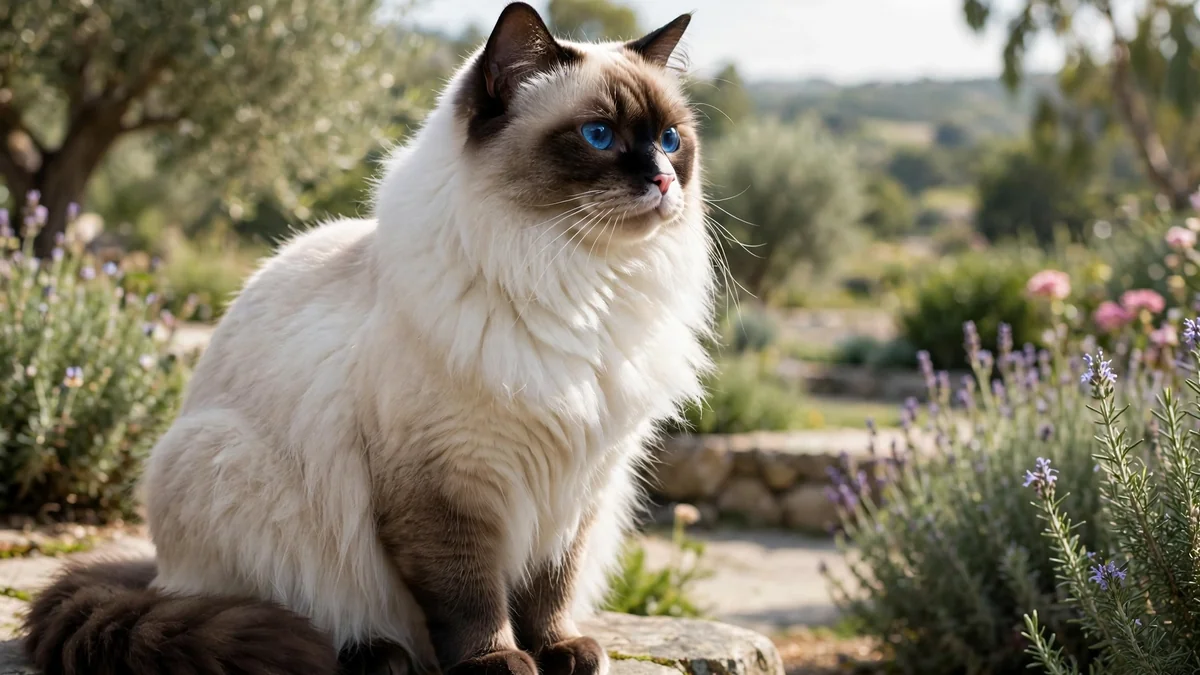
Look into a Himalayan cat’s eyes and you may feel you have met two breeds at once. There is the long, flowing coat and the round, sweet face of a Persian, and there is the striking colourpoint pattern and deep blue eyes of a Siamese. The Himalayan is exactly that meeting point: a breed created by crossing the Persian with the Siamese, and named after neither a mountain nor a monastery, but after a rabbit. This guide covers the Himalayan cat’s history, its appearance, its coat colours, its famously gentle personality, and what everyday life with one is really like.
The Story Behind the Name
The Himalayan cat is not named after the Himalaya mountains at all. It takes its name from the Himalayan rabbit, a rabbit breed with the same colour pattern: a pale body with darker ears, face, legs, and tail. When breeders produced cats with that same pattern, the name Himalayan was a natural fit, and it stuck.
The pattern itself is called colourpoint, and it works the same way in cats as it does in the rabbit. The body stays pale, while the cooler parts of the body — the ears, face, legs, and tail — show darker colour. That is why a Himalayan looks as if it has been dipped in darker paint at the edges, and why the pattern is one of the most recognisable looks among the main cat breeds kept in American homes.
There is a certain charm in a breed named for a rabbit. It also tells you something useful about the cat: the Himalayan was designed, quite deliberately, to combine two famous breeds, and the name was chosen to describe the result rather than its place of origin.
The History of the Himalayan Cat
The Himalayan is a deliberately created breed, and its history is well documented. In the 1930s, breeders in the United States and in Britain began crossing the Persian with the Siamese, hoping to produce a cat with the Persian’s long coat and sturdy body and the Siamese’s colourpoint pattern. Early experiments produced the look breeders wanted, but it took decades of careful work before the breed was stable and consistent.
By the 1950s, the Himalayan was gaining recognition as a breed in its own right. The Cat Fanciers’ Association recognized the Himalayan in 1957, and the breed soon found a following among American cat lovers who wanted the beauty of a pointed cat with the calmer nature of a Persian. The International Cat Association also recognizes the Himalayan as a breed, while the Cat Fanciers’ Association later grouped it as the colourpoint division of the Persian breed. That is why you will sometimes see the Himalayan described as a Persian variety rather than a separate breed — the two views come from different registries, and both describe the same cat.
Today the Himalayan is an established breed on both sides of the Atlantic, shown and kept by registries including the Cat Fanciers’ Association and The International Cat Association. Its history is short compared with ancient breeds, but it is a clear example of how modern breeding shaped a new companion cat from two much older ones.
Appearance of the Himalayan Cat
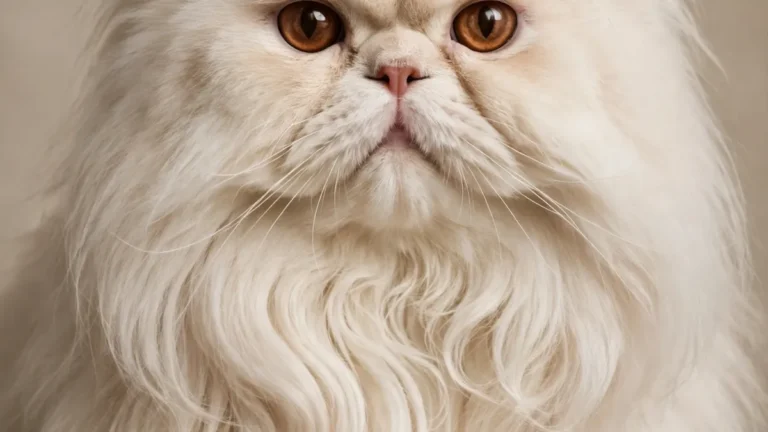
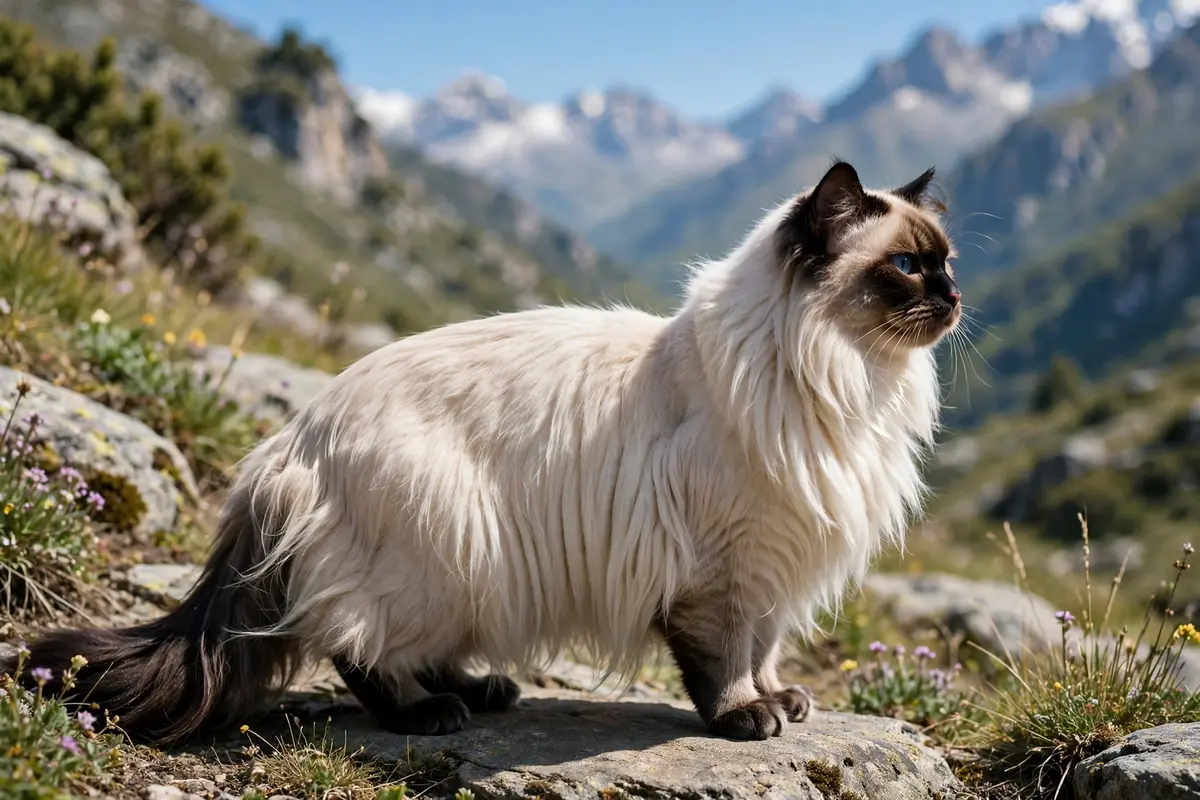
The Himalayan is a medium to large cat with a sturdy, cobby body borrowed from the Persian side of its family. It has a broad chest, short strong legs, and a full, plumed tail carried low. Most adult Himalayans weigh between about 7 and 12 pounds, with males often a little heavier than females. The overall impression is one of softness and roundness rather than length or sleekness.
The head is large and round, with full cheeks, a short nose, and small ears set wide apart and tipped with tufts of fur. The face is the classic Persian type: broad, sweet, and flat, with a short muzzle. Combined with the dark face mask of the colourpoint pattern, the effect is dramatic — a pale, fluffy cat with a dark face framed by long fur.
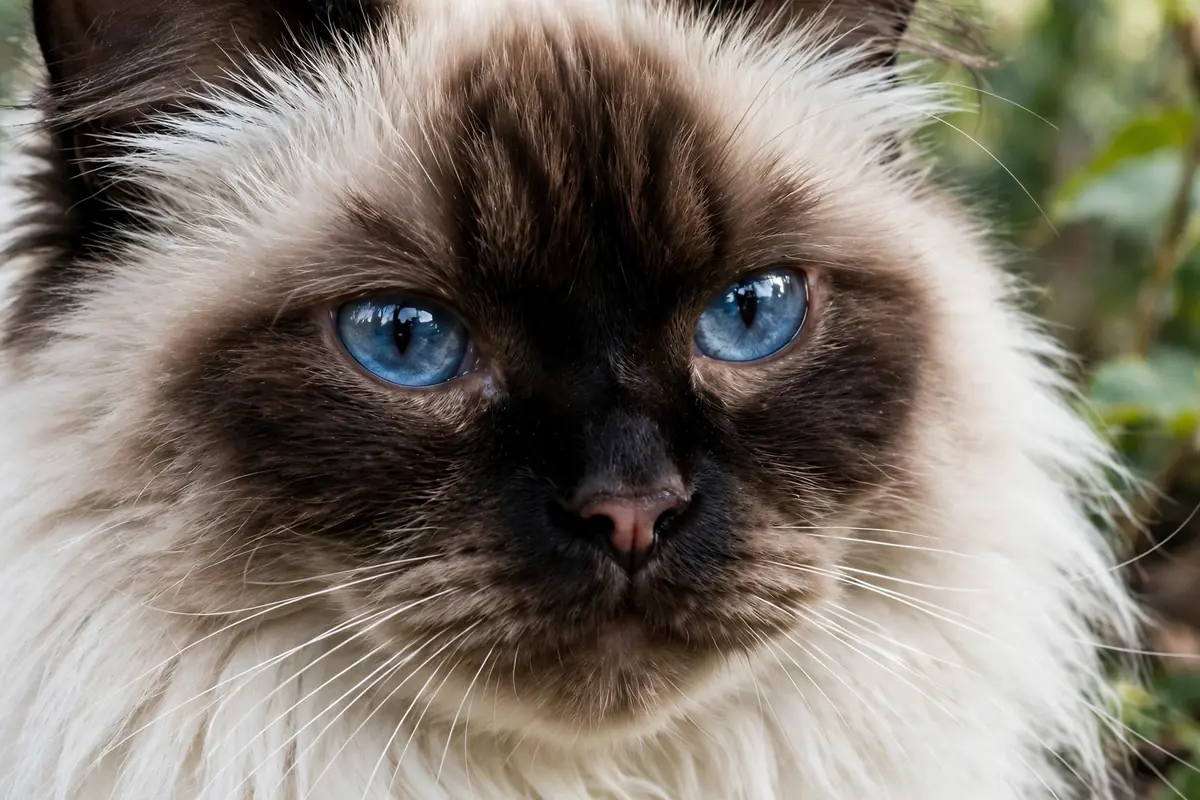
The eyes are the feature everyone remembers first. Himalayan eyes are large, round, and always blue, set wide apart in the broad face. The deeper and more vivid the blue, the more the breed standard prizes it. Against the dark points of the face, the blue looks even brighter, giving the cat a gentle, open expression that owners often describe as sweet and slightly wistful.
Compared with the sleek Siamese cat, the Himalayan looks far softer and rounder, and compared with the solid-coloured Persian cat, it stands out at once for its dark points and blue eyes. Among the most common cat breeds, its combination of a long coat, colourpoint pattern, and blue eyes is distinctive.
Coat and Colours
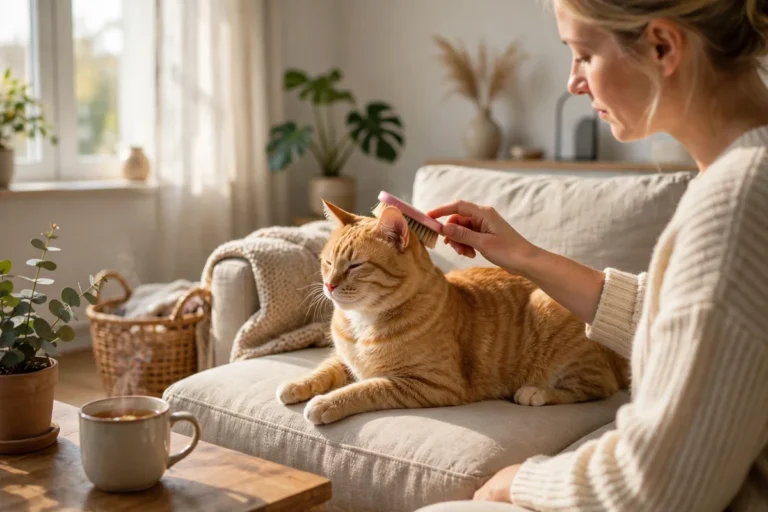
The Himalayan coat is long, thick, and silky, with a fine texture and a full ruff around the neck and chest. It flows over the sturdy body and gives the cat a luxurious, almost cloud-like outline. Because the coat is long and dense, it needs regular care: a gentle brush several times a week keeps it smooth and free of tangles, and most Himalayans learn to enjoy the attention as part of their routine.
The colour pattern is called pointed, which means the face, ears, legs, and tail are darker than the body. The body stays a pale cream to soft white, and the contrast between body and points is the heart of the breed’s look. The traditional point colour is seal point, a deep warm brown, and blue point, a soft slate grey, is also classic. Other recognized point colours include chocolate, lilac, red, and cream, along with tortoiseshell and tabby, or lynx, variations of those shades.
The points deepen as the cat matures, and the final shade can take a year or two to settle fully. A Himalayan’s coat also looks slightly darker in cooler seasons and lighter in warmer ones, because the point colour responds to temperature — one of the small, fascinating details of the colourpoint pattern. For a closer look at the breed’s Persian side, see our Persian cats guide, which covers the long coat and its care in more detail.
Temperament and Personality
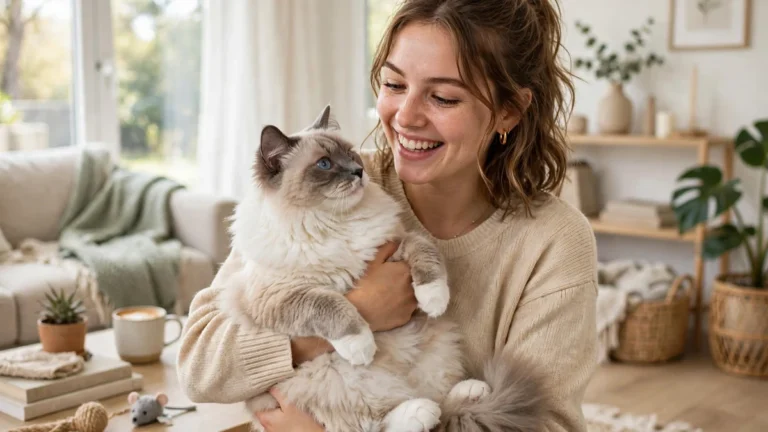
If the Himalayan’s looks draw people in, its temperament is what keeps them. This is a gentle, calm, and affectionate breed that enjoys company without demanding constant attention. Himalayans often follow their owners from room to room, settle nearby while work is being done, and greet visitors with quiet curiosity rather than shyness.
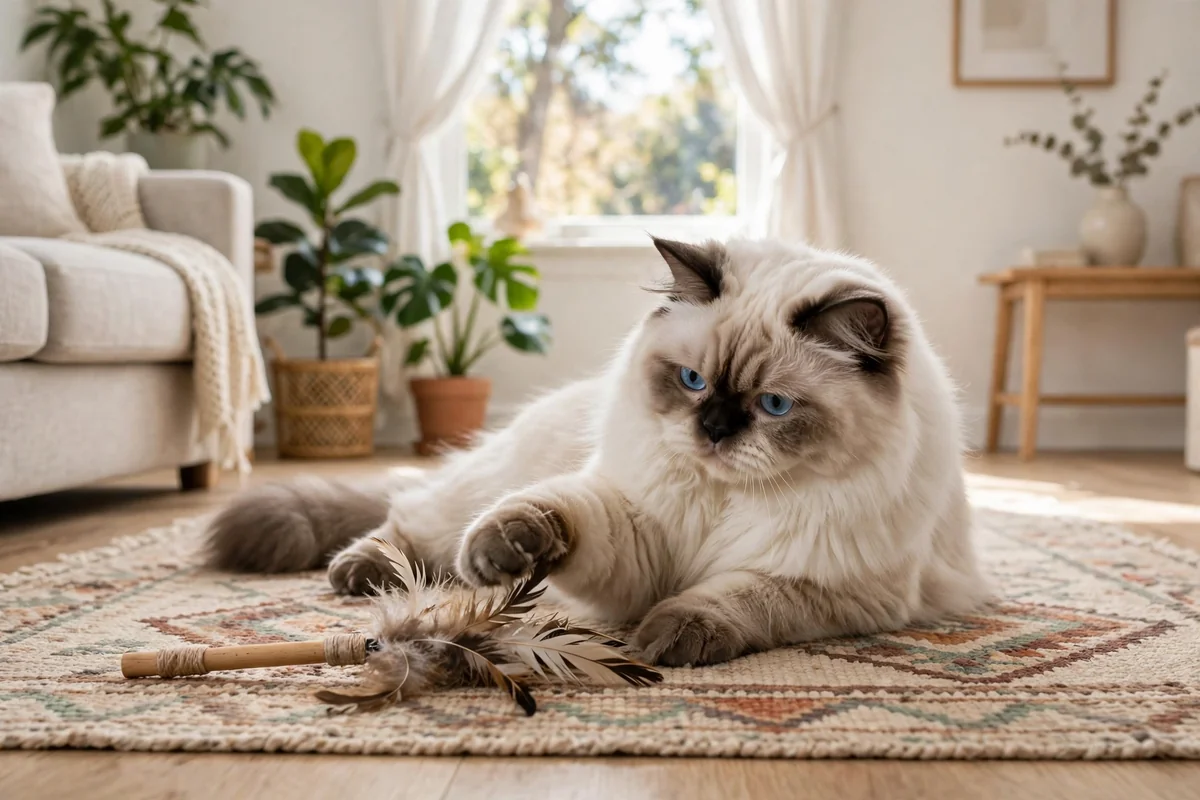
The breed is known for a soft, sweet voice, used sparingly. A Himalayan will answer when spoken to and may hold a short, quiet conversation, but it is far less talkative than its pointed cousin in our Siamese cats guide. Playfulness lasts well into adult life, but it is a gentle kind of play: a slow stalk of a feather wand, a lazy batting at a rolling ball, then a long, relaxed rest on a favourite cushion.
Himalayans usually cope well with calm children and with other cats, and many live peacefully alongside friendly dogs. Their easygoing nature makes them a popular choice among domestic cat breeds for households that want an affectionate companion rather than an independent loner. Readers comparing popular breeds can see where the Himalayan fits in our guide to the most popular cat breeds in the USA.
Himalayan Kittens
Himalayan kittens begin life looking nothing like their parents. Every kitten is born pale cream or almost white, with no points at all. Within the first weeks, colour begins to appear on the ears and nose, then spreads slowly to the legs and tail. The full depth of the point colour and the final shade of the coat can take a year or two to develop completely, so a young Himalayan is a work in progress.
Eye colour also develops over the first weeks, settling into the breed’s deep blue. The coat, meanwhile, grows longer and fuller as the kitten matures, so the fluffy adult look arrives gradually rather than all at once.
Young Himalayans are playful, curious, and quick to bond with the people around them. Gentle handling, short play sessions, and introductions to everyday household sounds help a kitten grow into the calm, confident adult the breed is known for. Anyone choosing between long-haired breeds may also enjoy our Birman cats guide, another gentle, blue-eyed breed with a pointed coat and a loyal following.

Living With a Himalayan
Life with a Himalayan is quiet in the best way. This is largely an indoor companion that prefers to be where its people are, whether that means supervising from the back of the sofa or sleeping at the foot of the bed. A sunny window perch, a comfortable resting spot on each floor, and a scratching post in a room the family uses will cover most of what a Himalayan asks from its home.
The breed is moderately active rather than athletic. Short play sessions spread through the day suit it better than one long session, and simple toys are usually a success — for ideas, our guide to the best cat toys covers the types cats return to again and again. Himalayans are not famous climbers to the top of the bookcase, but a modest cat tree with a good perch is still well used, and a comfortable bed in a quiet corner is always appreciated — our guide to the best cat beds explains the styles and materials to consider.
Coat care is the main daily routine. A gentle brush several times a week keeps the long, silky fur smooth and lifts loose hair, and a quick wipe around the eyes with a soft, damp cloth keeps the face clean as part of ordinary grooming. Most Himalayans enjoy the attention, and the routine doubles as quiet bonding time. The breed suits apartment living well, as long as it has company, a window to watch, and a calm corner of its own.
Himalayan vs Persian vs Siamese
| Breed | Coat | Eyes | Points | Temperament |
|---|---|---|---|---|
| Himalayan | Long, silky, colourpoint | Deep blue | Dark points on face, ears, legs, tail | Gentle, calm, affectionate |
| Persian | Long, silky, solid or varied colours | Copper, green, or blue | Usually no points | Calm, quiet, sweet |
| Siamese | Short, fine, colourpoint | Blue | Dark points on face, ears, legs, tail | Vocal, lively, demanding |
| Birman | Semi-long, silky, pointed | Deep blue | Dark points plus white gloves | Gentle, calm, people-oriented |
The table shows why the Himalayan sits in the middle of its two parent breeds. The Persian brings the long coat and the quiet nature, the Siamese brings the points and the blue eyes, and the Himalayan blends the two into a cat that looks pointed and sounds gentle. The Birman offers a similar blend in a semi-long coat, but with white gloves the Himalayan does not have. Among the most common house cat breeds in America, the Himalayan’s mix of looks and temperament makes it easy to understand why it has kept its following for decades.
Interesting Facts About Himalayans
- Named for a rabbit: The breed takes its name from the Himalayan rabbit, which shares the same colourpoint pattern.
- Born pale: Every Himalayan kitten is born cream or white, and the points develop gradually over months.
- Two breeds in one: The Himalayan was created by crossing the Persian with the Siamese, beginning in the 1930s.
- A registry difference: The Cat Fanciers’ Association groups the Himalayan as the colourpoint division of the Persian, while The International Cat Association recognizes it as a separate breed.
- Always blue-eyed: Blue eyes are a fixed feature of the breed, part of the colourpoint pattern itself.
- Temperature-sensitive colour: The point colour deepens in cooler conditions and looks lighter in warmer ones.
- Quiet company: Himalayans have soft voices and use them sparingly, preferring to communicate by following and watching.

Related Reading on MyPetsMyLove
- Most popular cat breeds in the USA
- Persian cats guide
- Birman cats guide
- Cats & Kittens hub page
- MyPetsMyLove homepage
- About Us page
References
- Cat Fanciers’ Association (CFA) — Himalayan/Persian breed profile
- The International Cat Association (TICA) — Himalayan breed profile
- The Humane Society of the United States — pet care and enrichment resources
- Encyclopaedia Britannica — cat breeds reference
Frequently Asked Questions
What is a Himalayan cat?
A Himalayan cat is a long-haired breed created by crossing the Persian with the Siamese. It has the Persian’s long, silky coat and sturdy body, the Siamese’s colourpoint pattern, and deep blue eyes.
Why is it called a Himalayan cat?
The breed is named after the Himalayan rabbit, which has the same colour pattern: a pale body with darker ears, face, legs, and tail. It is not named after the Himalaya mountains.
Are Himalayan kittens born with their point colours?
No. Himalayan kittens are born pale cream or almost white. Colour appears first on the ears and nose within the early weeks, then develops on the legs and tail, and the full depth of colour can take a year or two to finish developing.
What colours do Himalayan cats come in?
The classic colours are seal point and blue point. Recognized colours also include chocolate, lilac, red, and cream points, along with tortoiseshell and tabby, or lynx, variations. In every colour, the body stays pale and the eyes stay blue.
Are Himalayan cats vocal?
No, Himalayans are known for soft, quiet voices that they use sparingly. A Himalayan may answer when spoken to, but the breed is far less talkative than the Siamese, another pointed breed with blue eyes.
Are Himalayan cats good family companions?
Yes. Himalayans are gentle, calm, and affectionate, and they usually cope well with calm children, other cats, and friendly dogs. They enjoy company and tend to follow their owners around the home without being demanding.
How much grooming does a Himalayan need?
More than many breeds, because the coat is long and dense. A gentle brush several times a week keeps the silky fur smooth and free of tangles, and a quick wipe around the eyes with a soft, damp cloth keeps the face clean as part of ordinary grooming.
Conclusion
The Himalayan cat brings together the best of two famous breeds: the long, flowing coat and quiet nature of the Persian, and the striking colourpoint pattern and deep blue eyes of the Siamese. Add a gentle, affectionate temperament and a love of quiet company, and you have a companion that fits calmly into family life.
Compare the Himalayan with its parent breeds in our Persian cats guide and Siamese cats guide, explore more breeds in the Cats & Kittens section, and start from the MyPetsMyLove homepage to meet more cats worth knowing.
Disclaimer
Disclaimer
MyPetsMyLove dot com is an independent informational website covering pet species breeds characteristics activities positive training bonding grooming and responsible ownership
We are not a veterinary clinic medical provider pet food provider or veterinary nutrition service
We do not provide veterinary diagnosis medical advice treatment food recommendations or nutritional guidance
For pet health medical or food related concerns consult a qualified veterinarian or appropriate professional directly
Independent clinics listed on this website are not owned or operated by MyPetsMyLove unless explicitly stated
Verify third party credentials services fees and availability independently
We do not guarantee third party services or outcomes
To the extent permitted by applicable law we disclaim responsibility for independent third party services
Nothing in this notice excludes liability that cannot legally be excluded
The disclaimer does not make prohibited content acceptable