
Best Wand Toys for Cats: Styles, Materials and Features
Of all the toys you can buy for a cat, few earn their keep like a good wand toy. A stick, a string, and something fluttery on the end — it sounds almost too simple, yet this humble design triggers a cat’s deepest play instincts: stalk, chase, pounce, capture. For interactive play sessions that build your bond while giving your cat real exercise, nothing beats a wand in the right hands.
But not all wand toys are created equal. Rod materials range from classic wood to whippy fiberglass. Lures come as feathers, fabric strips, faux fur, and crinkly shapes. Some wands are short and precise; others stretch several feet for wide, sweeping play. This guide compares the main wand toy styles, breaks down the materials and construction details that matter, and shows you how to choose the right wand for your cat’s play style.
What Are Wand Toys?
Wand toys — also called teaser wands or fishing-rod toys — are interactive cat toys built around a simple concept: a rod with a string attached, ending in a lure that moves enticingly when you wave it. You control the action, and your cat does the hunting.
The magic lies in the movement. A skilled hand can make a feather lure dart like a bird or skitter like a mouse — triggering the full sequence of feline predatory play. Because the rod keeps your hands at a distance, wand toys let you play vigorously while keeping fingers safely away from claws. A single good wand, used ten or fifteen minutes a day, can transform a bored indoor cat into an engaged, satisfied hunter.
Wand Toy Styles
Wand toys come in several distinct styles, each with its own feel and best use.
Feather Wands
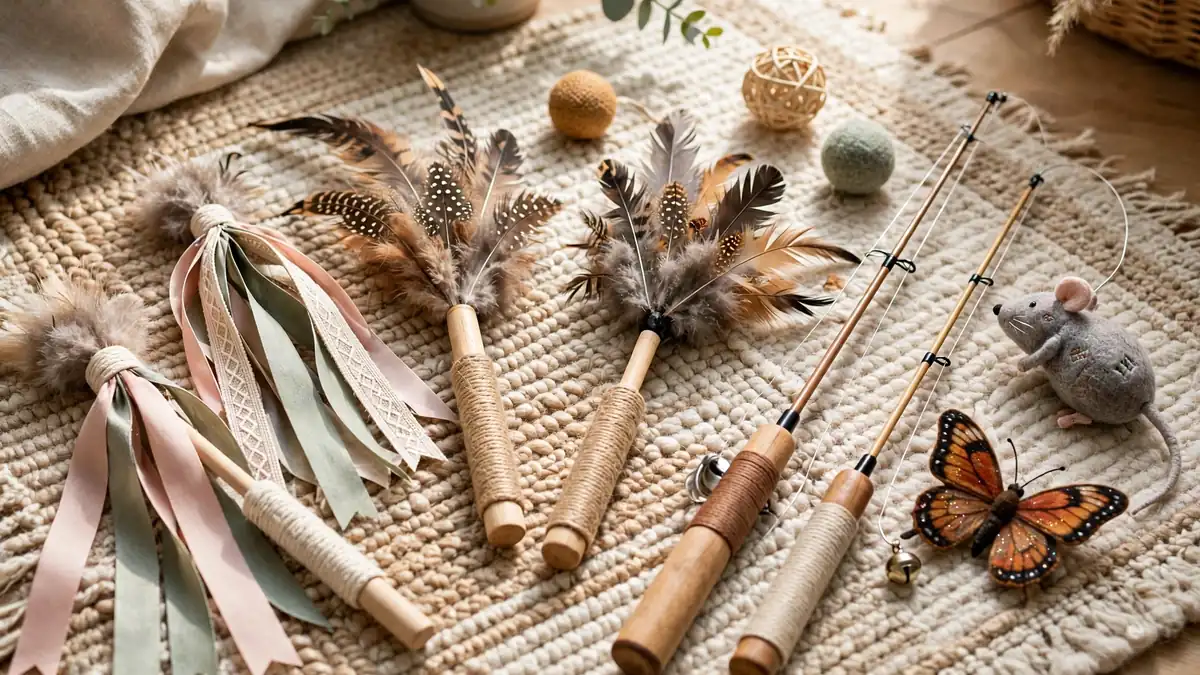
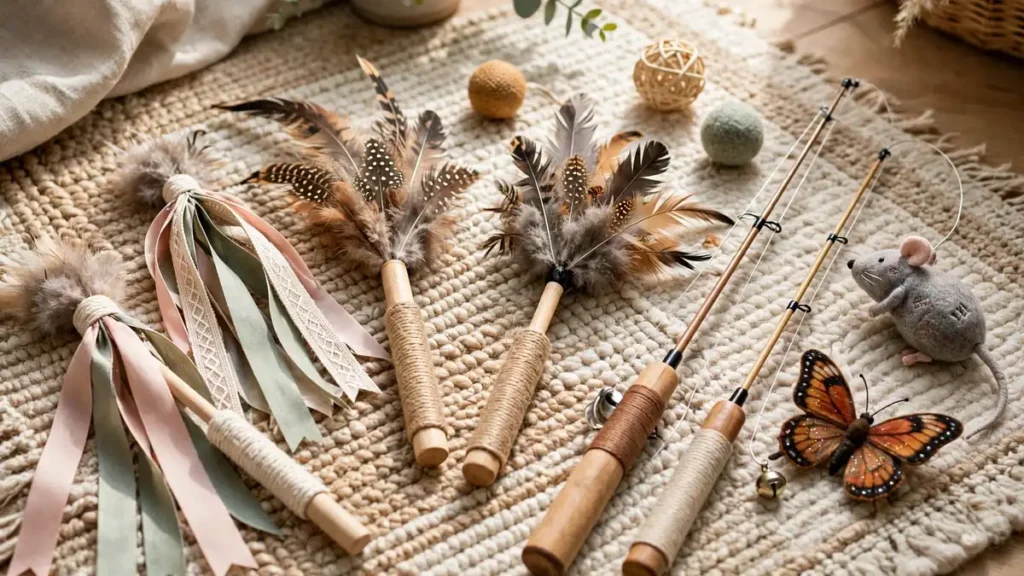
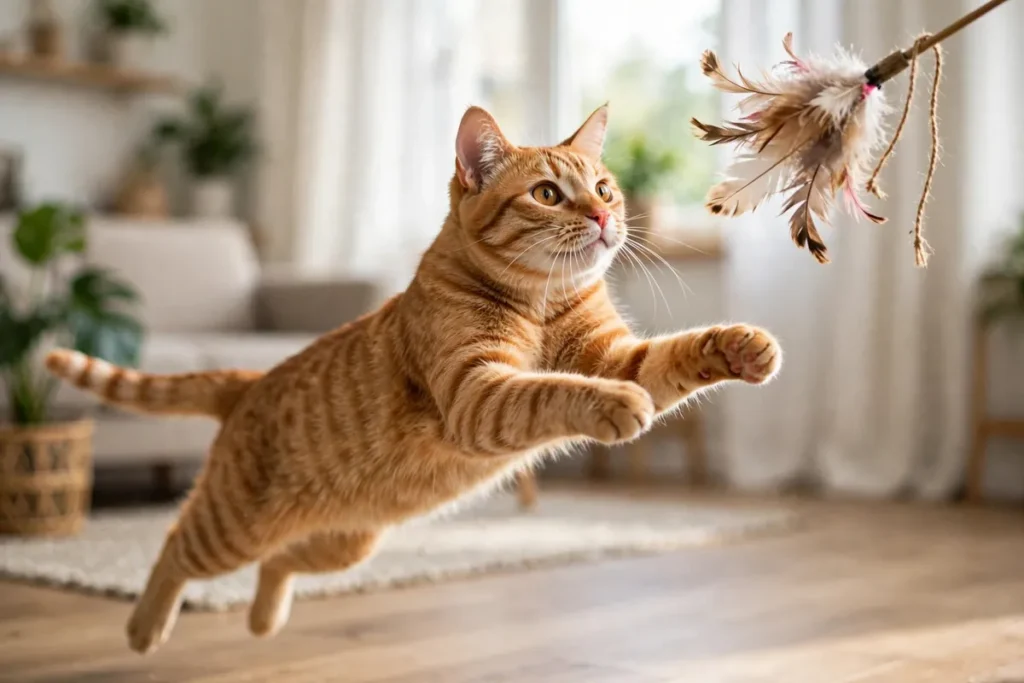
The classic. Feather wands pair a handle or short rod with a cluster of feathers, sometimes mixed with ribbons. Waved through the air, they mimic fluttering birds — one of the most irresistible triggers for a cat’s chase instinct. They suit close-up, precise play and work well even in smaller rooms. Look for dense feather clusters and check whether replacement lure heads are available, since enthusiastic cats wear feathers down over time.
Ribbon and String Teasers
Instead of feathers, these wands trail flowing ribbons or fabric strips. The unpredictable fluttering motion appeals especially to visually oriented cats. Ribbon teasers are lightweight and inexpensive, suiting slow, creeping play as well as quick dashes. As with all string toys, they are for supervised interactive play and should be stored away afterward.
Fishing-Rod Wands
The long-reach option. Fishing-rod wands use an extended, flexible rod with a cord and lure at the end. The extra length creates wide, sweeping arcs that encourage running, leaping, and dramatic pounces — ideal for high-energy cats and larger rooms. Many designs telescope or break down for storage.
Crinkle and Fabric Lure Wands
These wands swap feathers for fabric, felt, faux fur, or crinkle material. Fabric lures outlast feathers under rough play, and crinkle textures add an auditory thrill some cats love. They suit power chewers who destroy feather lures quickly, and owners who prefer non-feather materials.
Interchangeable-Lure Wands
Wands with clip-on lure attachments let you swap feathers, ribbons, plush shapes, and crinkle toys on a single rod. These systems offer variety without buying a new wand each time and solve the worn-lure problem — when one lure wears out, clip on a fresh one. Check that the attachment mechanism is secure and easy to operate.
Rod Materials and Construction
The rod is the engine of the wand toy. Its material determines flexibility, durability, reach, and feel.
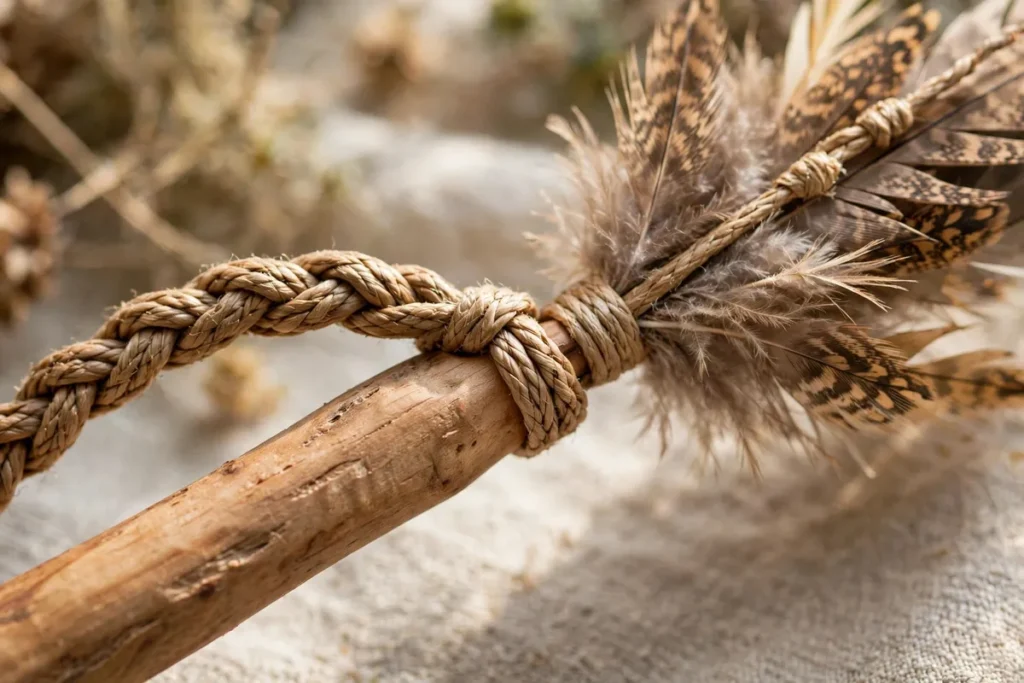
Wood. The traditional choice. Wooden rods feel solid and natural in the hand, and quality hardwood wands can last for years. They are generally stiffer than fiberglass, which suits precise, controlled movements. Look for smoothly sanded finishes with no splinters or rough spots.
Fiberglass. Popular in longer fishing-rod styles, fiberglass offers an excellent strength-to-weight ratio with natural flex. That flex adds whip and bounce to lure movements, making play more lifelike, and absorbs the shock of hard pounces without snapping. Check thin rods for cracks over time.
Plastic. Lightweight and affordable, plastic rods appear in many entry-level wands. They work fine for gentle play but can feel flimsy under vigorous use. For casual play with calm cats, plastic is perfectly serviceable.
Length and balance. Shorter wands (around 1–2 feet) offer precision for close play and small spaces. Longer wands (3 feet and beyond) create bigger movements and keep more distance between hands and claws. The best choice depends on your room size and your cat’s energy: long for athletes, short for snugglers.
Handles and grips. A comfortable handle matters more than it sounds — you will be waving this thing daily. Look for smooth, rounded grips; some wands add foam or textured sleeves for comfort during longer sessions.
Lure Types and Materials
The lure is what your cat actually hunts, so its design deserves close attention.
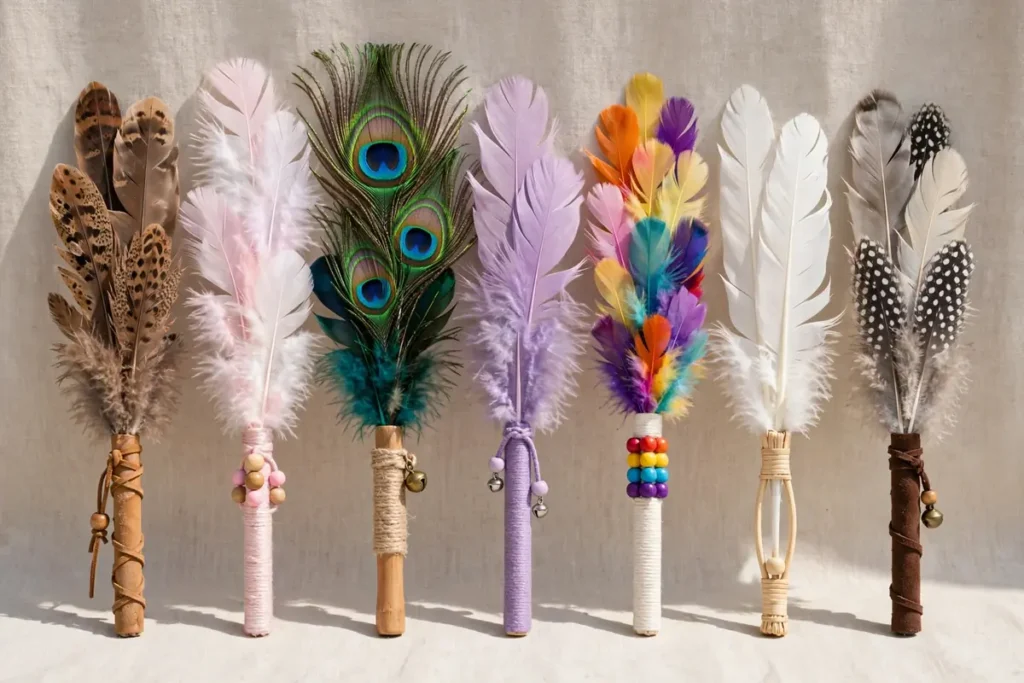
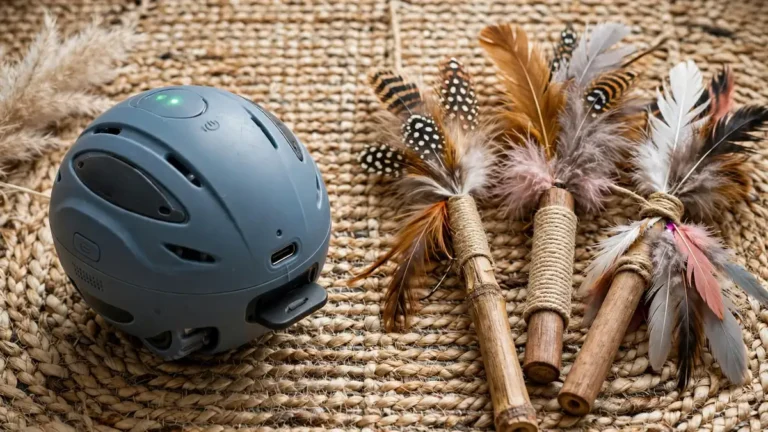
Natural feathers. The gold standard for many cats — they flutter realistically and trigger intense chase responses. They do wear out, so look for full, securely bound clusters and expect periodic replacement.
Dyed feathers. Brightly colored feathers add visual excitement. If you choose dyed lures, look for products described as using pet-safe dyes.
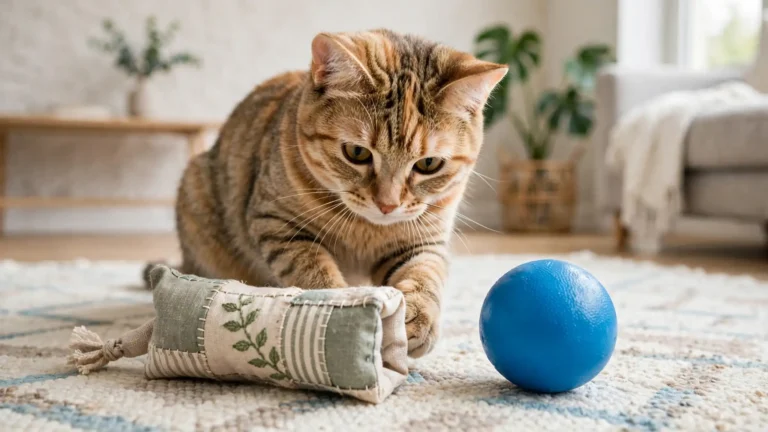
Fabric and felt. Strips of fabric, felt shapes, and plush lures offer durability that feathers cannot match. They are quieter in motion, which suits noise-sensitive cats, and they stand up to chewing and bunny-kicking far longer.
Faux fur. Small faux-fur mice or tails on a string combine the visual appeal of fur with washable, long-lasting construction. Many cats treat them like real prey, carrying them around after the “kill.”
Crinkle materials. Mylar-like crinkle fabrics add sound to the hunt. The crackling noise as the lure moves can excite cats that respond strongly to auditory cues.
Attachment security. However attractive the lure, it must stay attached. Look for tight wrapping, strong stitching, or reinforced knots at the cord joint. Give the lure a firm tug before first use.
Safety Features to Look For
Wand toys are safe when well made and used as intended. When comparing options, check these safety points:
Secure construction. Every joint — rod to cord, cord to lure — should be firmly fixed. Avoid wands with glued-on small parts, loose beads, or decorative bits that could detach during play.
No sharp edges. Check the rod and handle for splinters, burrs, or sharp mold lines. Lure attachments should have no exposed wire or sharp clips.
Appropriate cord length. Very long cords increase tangling risk. Choose a cord length suited to your space, and never leave any wand toy — especially ribbon and string styles — where an unsupervised cat can reach it.
Supervised play design. The best wand toys are clearly designed for interactive use, with the implicit understanding that they get put away after each session. A dedicated storage spot, like a tall jar or hook, keeps wands in good condition and out of reach.
Material transparency. Prefer products that describe their materials as non-toxic and pet-safe. Avoid wands with a strong chemical smell when unpacked, and retire any toy that starts shedding fragments.
How to Choose the Right Wand Toy
With styles and materials covered, here is how to match a wand to your cat:
Start with play style. Watch how your cat plays. Stalk-and-ambush hunters love feather wands dragged along the ground with pauses. High-energy chasers thrive with long fishing-rod wands and big aerial movements. Gentle players do well with short, soft fabric teasers.
Consider your space. Long wands need room to sweep — wonderful in open living areas, frustrating in cramped corners. In smaller homes, shorter wands and tabletop-height play work better.
Weigh durability against enthusiasm. Power players destroy delicate lures fast; for them, choose fabric or interchangeable-lure wands with replaceable heads. Gentler cats can enjoy fine feather wands for much longer.
Think about storage. If you are short on space, telescoping or break-down rods and interchangeable lure systems keep the collection compact.
Buy a starter pair. One feather wand and one fishing-rod wand cover the two main play styles and quickly reveal your cat’s preference. From there, expand into the styles your cat loves.
For more inspiration on equipping your home for play, explore our Pet Products guides.
Related Reading on MyPetsMyLove
- Interactive Cat Toys: How to Choose the Right Playtime Accessories
- Automatic Cat Toys vs Manual Toys: Which Is Better for Playtime?
- Best Cat Toys: 20 Types Every Cat Owner Should Know About
- Pet Products hub page
- Cats & Kittens hub page
- MyPetsMyLove homepage
- About Us page
References
- The Humane Society of the United States — cat enrichment and play resources
- American Association of Feline Practitioners (AAFP) — feline environmental needs guidelines
Frequently Asked Questions
What is the best type of wand toy for cats?
There is no single best type — it depends on your cat. Feather wands suit most cats and small spaces, fishing-rod wands suit high-energy cats with room to run, and fabric or crinkle lures suit power players who destroy feathers quickly. Many owners keep two or three styles in rotation.
Are feather wand toys safe for cats?
Yes, when well made and used interactively under supervision. Choose wands with securely attached feathers, check for loose parts before play, and store the wand out of reach afterward — like all string toys, it should not be left with an unsupervised cat.
How long should a wand toy session last?
Most cats enjoy sessions of about 10–15 minutes, once or twice a day. Watch your cat’s signals: when it starts walking away, lying down, or losing interest, the session has run its course. Ending while your cat is still engaged keeps playtime positive.
What is the difference between a wand toy and a fishing-rod toy?
The terms overlap heavily. Generally, “wand toy” covers the whole category, while “fishing-rod toy” refers to longer, flexible-rod designs built for wide, sweeping movements. Short feather teasers and long fishing-rod wands are both wand toys.
How often should I replace wand toy lures?
Replace lures when feathers thin out, fabric frays, stitching loosens, or attachments weaken. With interchangeable-lure wands, swapping a worn lure takes seconds; with fixed-lure wands, retire the whole toy once the lure is past its prime.
Can kittens play with wand toys?
Yes — kittens typically love wand toys, as the movement triggers their developing chase instincts. Use lightweight lures, keep sessions short since kittens tire quickly, and always supervise play with strings and cords.
Conclusion
The humble wand toy earns its place as the centerpiece of interactive cat play: simple in concept, endlessly engaging in practice. Choose a style that matches your cat’s play personality, look for sturdy rods and securely attached lures, and make daily play sessions part of your routine. Your cat gets exercise, enrichment, and quality time — you get the best seat in the house for the show.
Ready to build your play collection? Start with a feather wand and a fishing-rod style, watch what your cat loves, and expand from there. For more buying guides, explore our Pet Products guides and Cats & Kittens guides, learn more about MyPetsMyLove, and visit the MyPetsMyLove homepage for the full collection.
Disclaimer
Disclaimer
MyPetsMyLove dot com is an independent informational website covering pet species breeds characteristics activities positive training bonding grooming and responsible ownership
We are not a veterinary clinic medical provider pet food provider or veterinary nutrition service
We do not provide veterinary diagnosis medical advice treatment food recommendations or nutritional guidance
For pet health medical or food related concerns consult a qualified veterinarian or appropriate professional directly
Independent clinics listed on this website are not owned or operated by MyPetsMyLove unless explicitly stated
Verify third party credentials services fees and availability independently
We do not guarantee third party services or outcomes
To the extent permitted by applicable law we disclaim responsibility for independent third party services
Nothing in this notice excludes liability that cannot legally be excluded
The disclaimer does not make prohibited content acceptable


12 Comments