
How to Choose Durable Toys for Active Cats

Some cats play gently. Active cats do not. They pounce, wrestle, bunny-kick, chew, drag, and launch their toys across the room — and a flimsy toy can fall apart in days. Choosing durable toys for cats is not about buying the most expensive option; it is about matching tough materials, strong construction, and the right size to the way your cat actually plays.
This guide explains what makes a cat toy durable, compares the main materials and toy types, and helps you choose toys that survive rough play — for kittens, adult cats, and determined wrestlers alike.
What Makes a Cat Toy Durable?
Durability comes down to three things: material, construction, and fit. A toy made from a tough material will still fail quickly if its seams are weak. A well-stitched toy will still wear out fast if it is too small for the cat playing with it. The most durable toys get all three right.
Material is the starting point. Tough materials resist teeth and claws: natural rubber, hard plastic, thick sisal rope, and heavy-duty fabric all hold up far longer than thin plush or loosely woven cloth. Construction is what holds the material together: double-stitched seams, reinforced attachment points, and solid cores last longer than single stitching and glued joints. Fit is the part owners most often overlook: a toy sized for the cat — big enough to grab and kick, small enough to carry — spreads the force of play across the whole toy instead of concentrating it on one weak seam.
Weight matters, too: a toy with some heft stays in play longer and gives the cat something substantial to wrestle, and a toy that can be cleaned lasts longer in practice.
Materials Compared
Cat toys are made from a handful of materials, and each has clear trade-offs for an active cat:
| Material | Durability | Best for | Watch out for |
|---|---|---|---|
| Natural rubber | Very high | Chewers, batters, ball rollers | Very hard rubber can be heavy for small kittens |
| Hard plastic | High | Balls, rolling toys, chase games | Can crack if thin; check for sharp edges as it wears |
| Sisal rope | High | Scratchers, tug-style toys, kickers | Fibres loosen over time; trim frayed strands |
| Heavy-duty fabric | Medium to high | Kicker toys, plush wrestlers | Seams are the weak point — look for double stitching |
| Felt and wool | Medium | Gentle players, kittens, quiet play | Tears under determined chewing |
| Wood | High | Chew sticks, natural textures | Splinters eventually — discard sticks chewed down to fragments |
| Crinkle material | Medium | Sound-motivated cats, tunnel linings | The crinkle layer wears out before the fabric does |
Natural rubber is the toughest all-rounder for active cats: it flexes under teeth instead of tearing, bounces well, and survives repeated washing. Hard plastic suits balls and rolling toys, where a smooth, rigid surface keeps the toy moving. Sisal rope is the classic choice for toys a cat grips and kicks, because the rough texture satisfies the paws and the rope structure resists tearing. Heavy-duty fabric is the standard for kicker toys — the long, sturdy toys designed for the hind-leg bunny-kick — but only when the seams are double-stitched and the filling is dense enough to hold its shape.
Toy Types for Active Cats
Different toys take punishment in different ways. Here are the main types, and how each holds up:
Kicker Toys
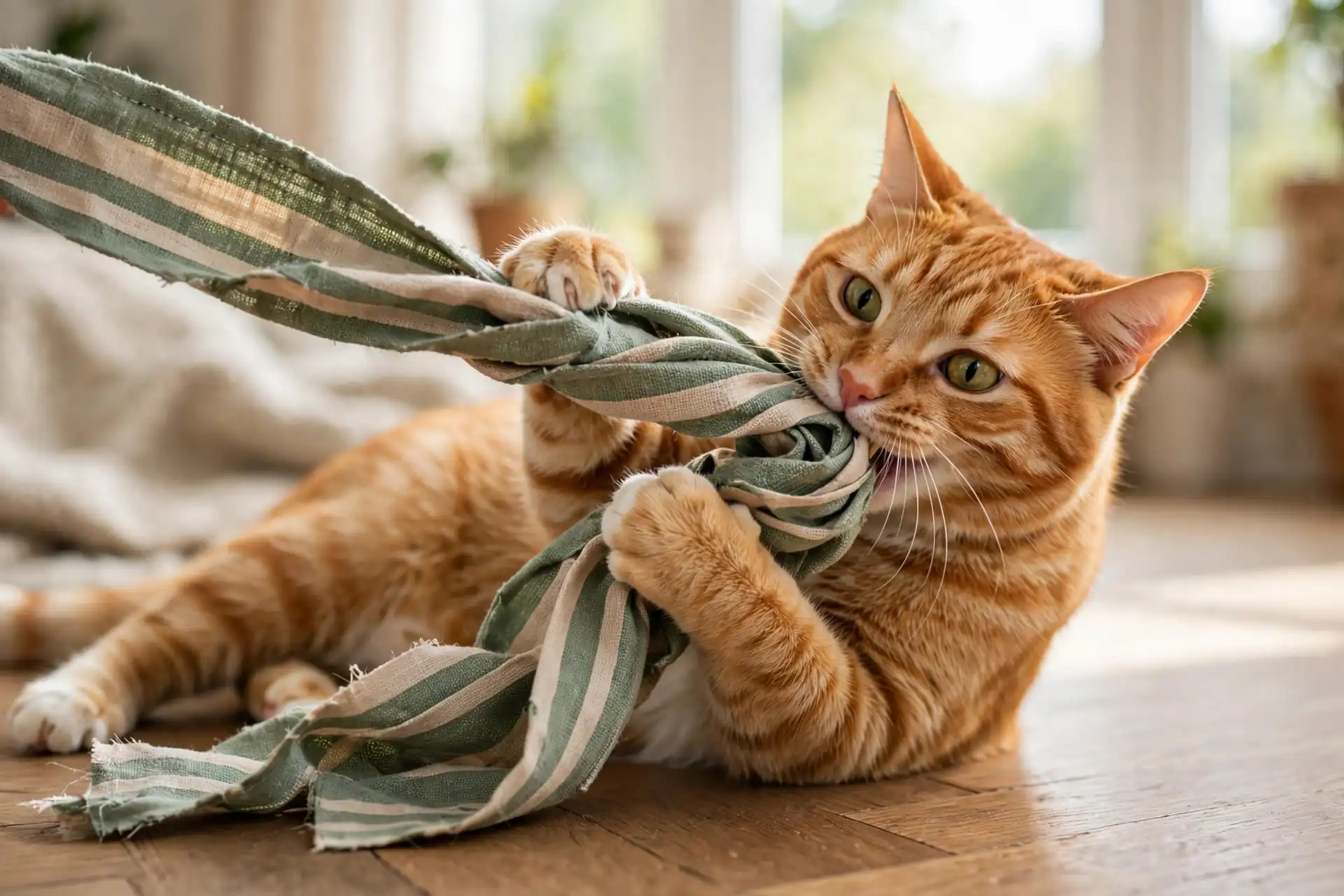
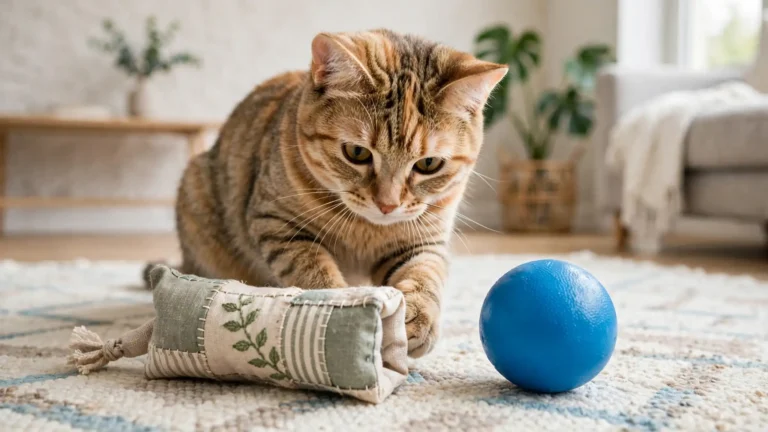
Kicker toys are long, sturdy toys designed for the hind-leg bunny-kick — the wrestling move active cats love most. They take the hardest punishment of any toy type, because the cat grabs with the front paws and kicks with the back legs. Look for a kicker at least as long as the cat’s body, with double-stitched seams, dense filling, and a tough outer fabric. A kicker that is too short gets kicked apart at the ends; a well-made one lasts for months of daily wrestling.
Balls and Rolling Toys
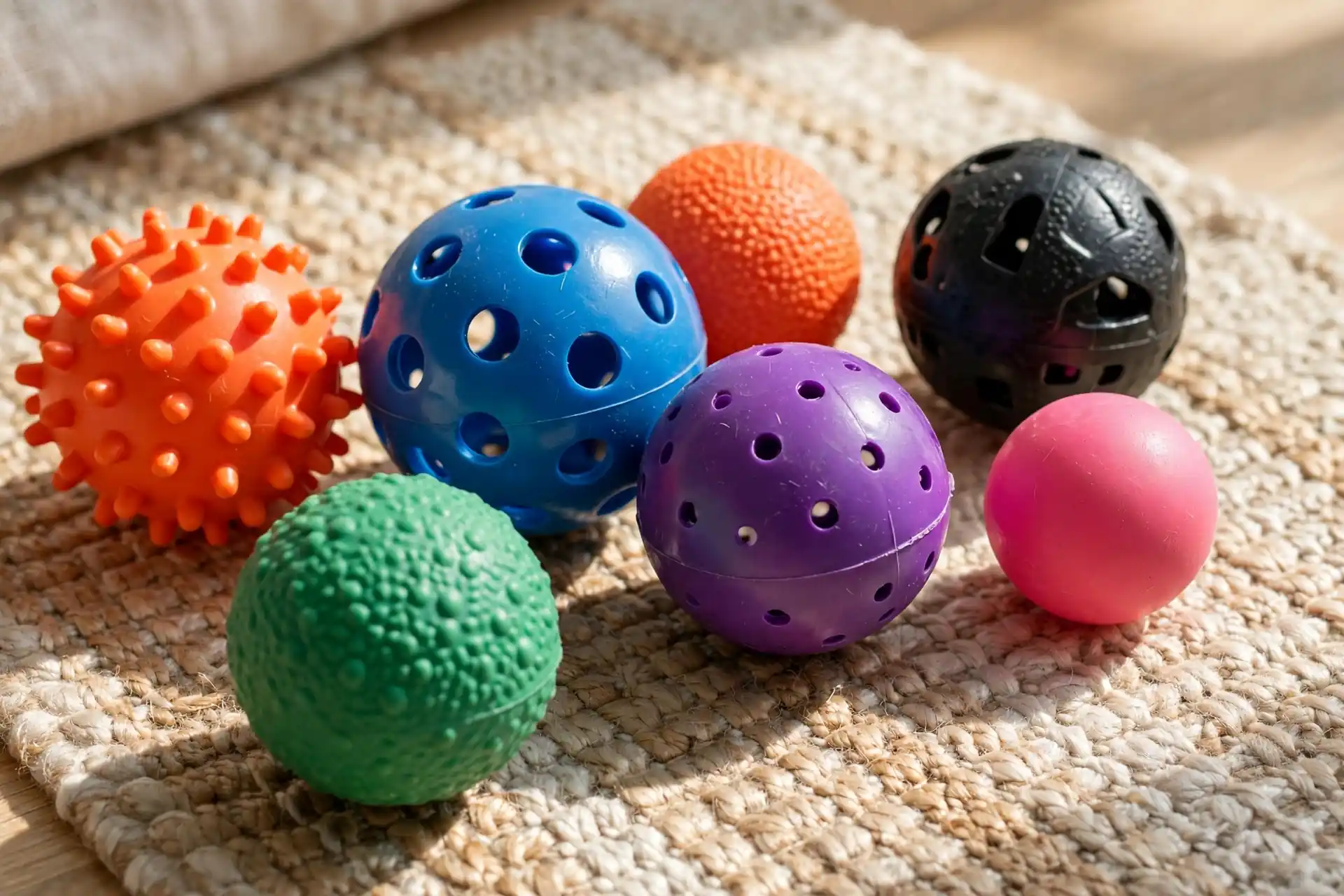
Balls are the workhorses of active play: chased, batted, pounced on, and carried around the house. Rubber balls and hard plastic balls last longest, and a ball with a slightly irregular shape or an internal bell rolls unpredictably, which keeps the cat interested. Avoid very small balls for enthusiastic players — a ball under about an inch across is easy to lose and hard to bat. For the rolling-toy side of the story, see our guide to the best interactive ball toys for indoor cats.
Wand Toys
Wand toys turn rough play into a shared game: the owner moves the wand, and the cat chases, leaps, and pounces. Durability here means a strong rod that flexes without snapping, a sturdy cord that does not fray, and an attachment that stays fixed. Wand toys are interactive by design, so they are also the easiest durable toy to supervise — put the wand away after play, and it never gets chewed to pieces overnight. Compare styles in our guide to the best wand toys for cats.
Tunnels and Crinkle Toys
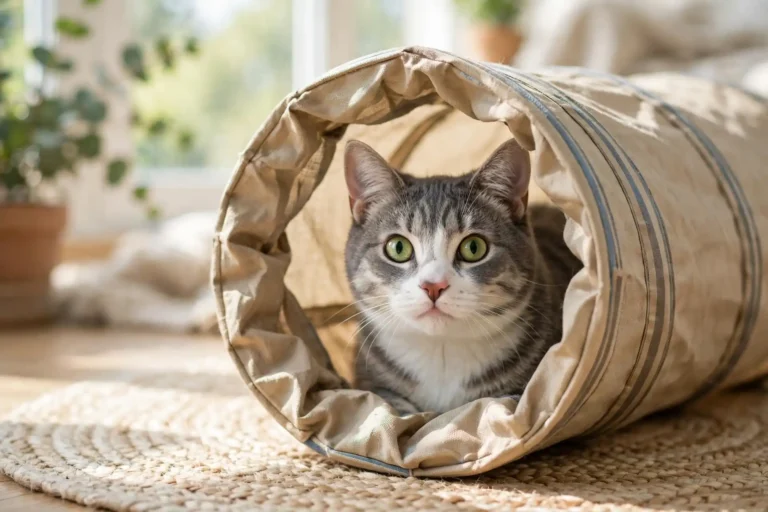
Tunnels give active cats a structure to charge through, hide in, and pounce from — and a well-made tunnel takes a surprising amount of punishment. Look for a strong steel spiral frame that holds its shape, reinforced stitching at the entrances, and fabric that does not tear at the first claw. Crinkle tunnels add a rustling layer that excites many cats; the crinkle material wears out before the fabric, so a tunnel that mixes crinkle and quiet sections lasts longer in practice. See our guide to the best tunnel toys for kittens and adult cats for the full comparison.
Puzzle and Movement Toys
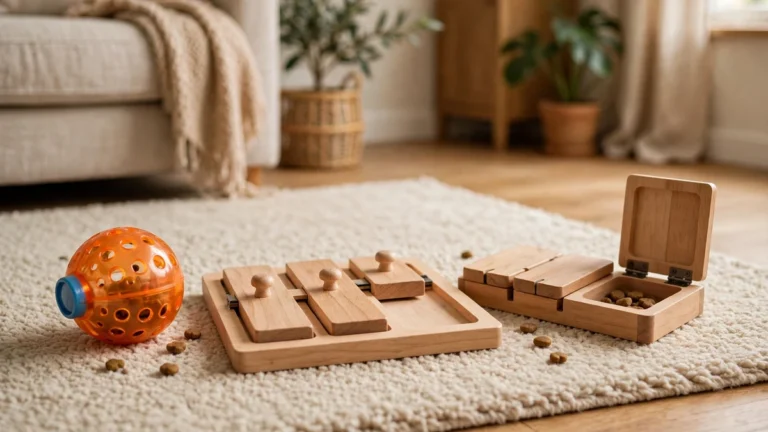
Puzzle-style toys — toys with moving parts, rolling balls, and hidden compartments that invite batting and chasing — suit active cats that like a challenge. Durability means solid construction with no small detachable parts: look for one-piece designs, thick plastic, and parts that move freely without wobbling loose. These toys also tire a cat out mentally, which is useful for high-energy cats that need more than a simple chase. Explore the options in our cat puzzle toys guide.
Matching the Toy to Your Cat’s Play Style
No single toy suits every cat. Active cats fall into a few play styles, and each style points to different durable designs:
- Chasers love speed and movement. Balls, rolling toys, and wand toys suit them best — look for rubber or hard plastic balls and a wand with a strong cord.
- Wrestlers grab, kick, and bunny-kick. Long kicker toys with double-stitched seams and dense filling are made for them; avoid short plush toys that tear at the ends.
- Pouncers stalk and leap from cover. Tunnels and crinkle toys give them a base to hide in and pounce from — a steel-frame tunnel with reinforced entrances holds up best.
- Problem-solvers like a challenge. Puzzle and movement toys with solid, one-piece construction keep them engaged without falling apart.
- Chewers gnaw everything they catch. Natural rubber and hard plastic are the safest bets; avoid thin fabric and loosely attached parts.
Kittens and adult cats play differently, too. A kitten’s play is all about chasing, pouncing, and hiding, and a light, flexible toy suits a young cat still learning its strength. An adult cat plays harder and with more force, so the same toy needs thicker material and stronger seams. For the bigger picture on feline play, start with our best cat toys guide.

Sizes and Strength: Getting the Fit Right
Size is a durability factor in its own right. A toy that is too small for the cat concentrates all the force of play on one tiny seam — and disappears under furniture besides. A toy that is too large is awkward to carry and gets ignored. The practical guide:
- Most plant-filled and plush toys run 3 to 6 inches — large enough to grab and kick, small enough to carry.
- Kicker toys should be at least as long as the cat’s body, so the cat can grip with the front paws and kick with the back legs.
- Balls should be big enough to bat without being swallowed or lost — very small toys, under about an inch across, are best avoided for enthusiastic players.
- Tunnels should be at least 25 cm wide for most adult cats, so a full-grown cat can move through without squeezing.
Heavier cats need the widest, sturdiest versions of every type — when in doubt, size up.

What to Look For Before You Buy
A quick checklist for the shop or the product page:
- Seams: Look for double stitching, especially on kicker and plush toys. Single stitching is the first thing to fail.
- Attachment points: Dangling toys, wand attachments, and crinkle layers should be firmly fixed, not glued. Give them a firm tug before buying.
- Material thickness: Squeeze the toy. Thin, loosely woven fabric tears quickly; dense rubber, thick rope, and heavy-duty fabric hold up.
- Washability: A toy you can wipe clean or wash lasts longer in practice, because a dirty toy gets thrown away before it wears out.
- Replaceable parts: Some wand toys and puzzle toys sell replacement attachments — a good sign that the maker expects the toy to last.
- No small detachable parts: Bells, buttons, and plastic eyes should be firmly fixed or absent. If a part wiggles, it will come off.
- Size for your cat: Match the toy to the cat’s size and strength, not to the cutest design on the shelf.
Limitations and Sensible Precautions
Durable toys are simple, but a few precautions keep play safe and fun:
- Supervise play with any new toy, especially chew toys and toys with small parts, and inspect toys regularly for wear — discard balls with torn coverings, cracked shells, or loose parts.
- Match the toy to the player. Heavy chewers need sturdier designs; tiny, light toys suit gentle batters and kittens.
- Rotate the selection. Put out one or two sturdy toys at a time and swap them every few days. A returning toy often feels new again, and rotation keeps the novelty that makes these toys work.
- Store toys properly. Keep spare toys in a basket or container away from sunlight and moisture, so the materials stay strong between play sessions.
- Do not expect miracles. No toy replaces human interaction — durable toys are at their best as part of a routine that includes daily interactive play with you.
For the differences between powered and manual play, compare automatic vs manual cat toys — and for the classic plant-filled options, see our guide to catnip vs silvervine toys.
Which Durable Toy Should You Try First?
If you are buying your first durable toy, keep it simple: a natural rubber ball and a long, double-stitched kicker toy. The ball covers chasing and batting; the kicker covers wrestling and bunny-kicking. Together they handle most of an active cat’s play, they are easy to clean, and they cost little to replace when they finally wear out.
Once your cat has favourites, add a second type — a sturdy wand toy for interactive sessions, or a steel-frame tunnel for hiding and pouncing. A small set of tough, well-chosen toys beats a large box of flimsy ones every time.

Related Reading on MyPetsMyLove
- Best cat toys guide
- Interactive cat toys guide
- Best tunnel toys for kittens and adult cats
- Pet Products hub page
- MyPetsMyLove homepage
- About Us page
References
- The Humane Society of the United States — cat enrichment and play guidance
- American Association of Feline Practitioners (AAFP) — feline environmental enrichment resources
Frequently Asked Questions
What makes a cat toy durable?
Three things: tough material, strong construction, and the right fit. Natural rubber, hard plastic, sisal rope, and heavy-duty fabric resist teeth and claws; double-stitched seams and reinforced attachment points hold the toy together; and a toy sized for the cat spreads the force of play instead of concentrating it on one weak seam.
Which material lasts longest for active cats?
Natural rubber is the toughest all-rounder: it flexes under teeth instead of tearing, bounces well, and survives repeated washing. Hard plastic suits balls and rolling toys, while sisal rope suits toys a cat grips and kicks. Heavy-duty fabric works for kicker toys when the seams are double-stitched.
Are kicker toys good for active cats?
Yes — kicker toys are made for the wrestling play active cats love most. Choose one at least as long as the cat’s body, with double-stitched seams and dense filling. A kicker that is too short gets kicked apart at the ends.
How do I choose the right toy size for my cat?
Most plush and plant-filled toys run 3 to 6 inches — large enough to grab and kick, small enough to carry. Kicker toys should be at least as long as the cat’s body, balls should be big enough to bat without being lost, and tunnels should be at least 25 cm wide for most adult cats. When in doubt, size up.
How often should I replace my cat’s toys?
Inspect toys regularly for wear and replace any toy with torn coverings, cracked shells, loose parts, or frayed cords. A well-made durable toy can last for months of daily play; a flimsy one may last only days. Rotation — swapping toys every few days — also extends their life.
Should I supervise my cat with new toys?
Yes, especially with a new toy. Supervise the first few play sessions to see how your cat uses it, check the seams and attachment points afterward, and put interactive toys like wands away after play so they do not get chewed overnight.
Conclusion
Durable toys for active cats are not about spending more — they are about choosing well. Tough materials, double-stitched seams, and the right size for your cat’s play style turn a toy that lasts days into one that lasts months. Start with a rubber ball and a long kicker toy, add a sturdy wand or a steel-frame tunnel, and rotate the set to keep play fresh.
Explore more toy ideas in our best cat toys guide, compare play styles in our interactive cat toys guide, browse the Pets Products section, and start from the MyPetsMyLove homepage to keep exploring.
Disclaimer
Disclaimer
MyPetsMyLove dot com is an independent informational website covering pet species breeds characteristics activities positive training bonding grooming and responsible ownership
We are not a veterinary clinic medical provider pet food provider or veterinary nutrition service
We do not provide veterinary diagnosis medical advice treatment food recommendations or nutritional guidance
For pet health medical or food related concerns consult a qualified veterinarian or appropriate professional directly
Independent clinics listed on this website are not owned or operated by MyPetsMyLove unless explicitly stated
Verify third party credentials services fees and availability independently
We do not guarantee third party services or outcomes
To the extent permitted by applicable law we disclaim responsibility for independent third party services
Nothing in this notice excludes liability that cannot legally be excluded
The disclaimer does not make prohibited content acceptable

3 Comments