
Beagle: Origin, Appearance and Distinctive Characteristics
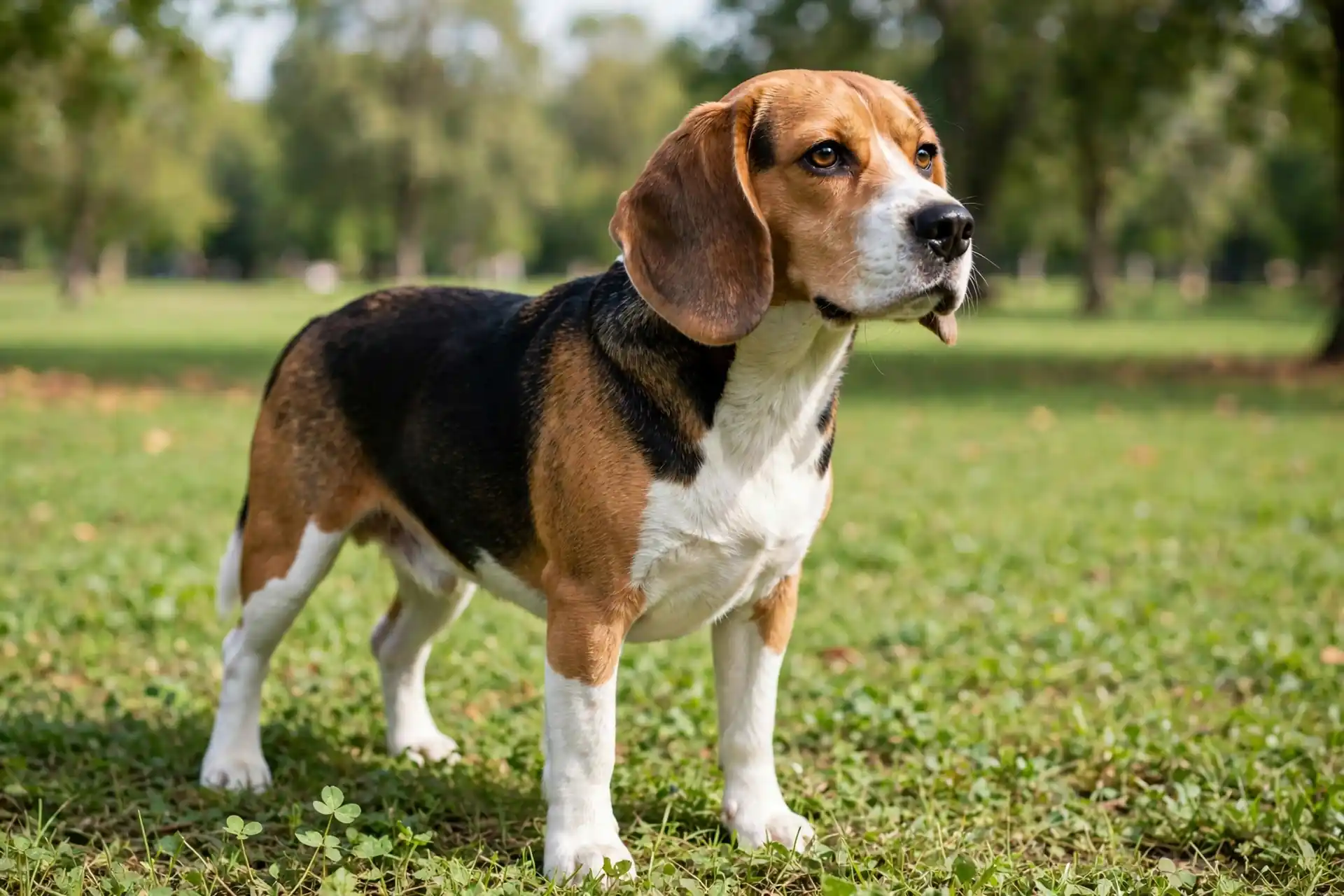
Few dogs are as instantly recognizable as the Beagle. With its tricolor coat, long velvety ears, gentle brown eyes, and compact, sturdy body, it is one of the most familiar breeds in the world — and one of the most cheerful. Behind the friendly face is a serious working dog: a scent hound bred in England to follow hares on foot, with a nose so good that it now works at airports.
This guide explores the Beagle’s fascinating history, explains its appearance and famous sense of smell, describes its sizes and coat types, and shares what makes this small dog’s personality so large.
Origin and History of the Beagle
The Beagle’s roots run back centuries in England, where small hounds were used to hunt hares and rabbits on foot — hunters followed the dogs rather than riding horses, so the dogs were called “foot hounds.” Small scent hounds of a similar type were known in Britain for hundreds of years, and the modern breed began to take shape in the 1830s, when the Reverend Philip Honeywood established a pack in Essex that is widely credited as the foundation of the contemporary Beagle.
The name itself is a small mystery. One widely repeated explanation traces it to the Old French word “beegueule,” meaning “open throat” — a nod to the breed’s ringing voice. Another traces it to a Middle English word for “small.” Either way, the name fits a small hound with a big voice.
Beagles reached America before the Civil War, but the breed was not firmly established there until the 1880s. In 1885, a Beagle named Blunder became the first of the breed to be registered by the American Kennel Club, and the National Beagle Club of America was founded in 1888, becoming the breed’s parent club in the United States. The Beagle Club of England followed in 1890, setting the breed standard on the other side of the Atlantic.
The breed’s popularity soared in the twentieth century — helped, in no small part, by a cartoon dog. Snoopy, the Beagle from Charles Schulz’s Peanuts comic strip, became one of the most famous dogs in the world, and the AKC even gave Snoopy the honorary registration number Beagle-1. The Beagle topped the AKC’s registration rankings in the 1950s, and it has remained one of the most familiar breeds in America ever since. The AKC also chose a Beagle named Bailey as its mascot.
Appearance: The Classic Hound Look
Everything about the Beagle is compact and sturdy. The head is broad with a slightly domed skull, the muzzle is straight and square, and the eyes are large, brown, and set well apart, giving the breed its famously gentle, pleading expression. The ears are the breed’s most distinctive feature after its nose: long, soft, and low-set, they hang close to the cheeks and reach nearly to the tip of the nose when drawn forward.
The tail is another signature. It is carried upright, moderately long, and tipped with white — a detail breeders call the “flag.” The white tip is said to help hunters spot the dog in tall grass, and it is one of the details judges look for in the show ring.

Sizes
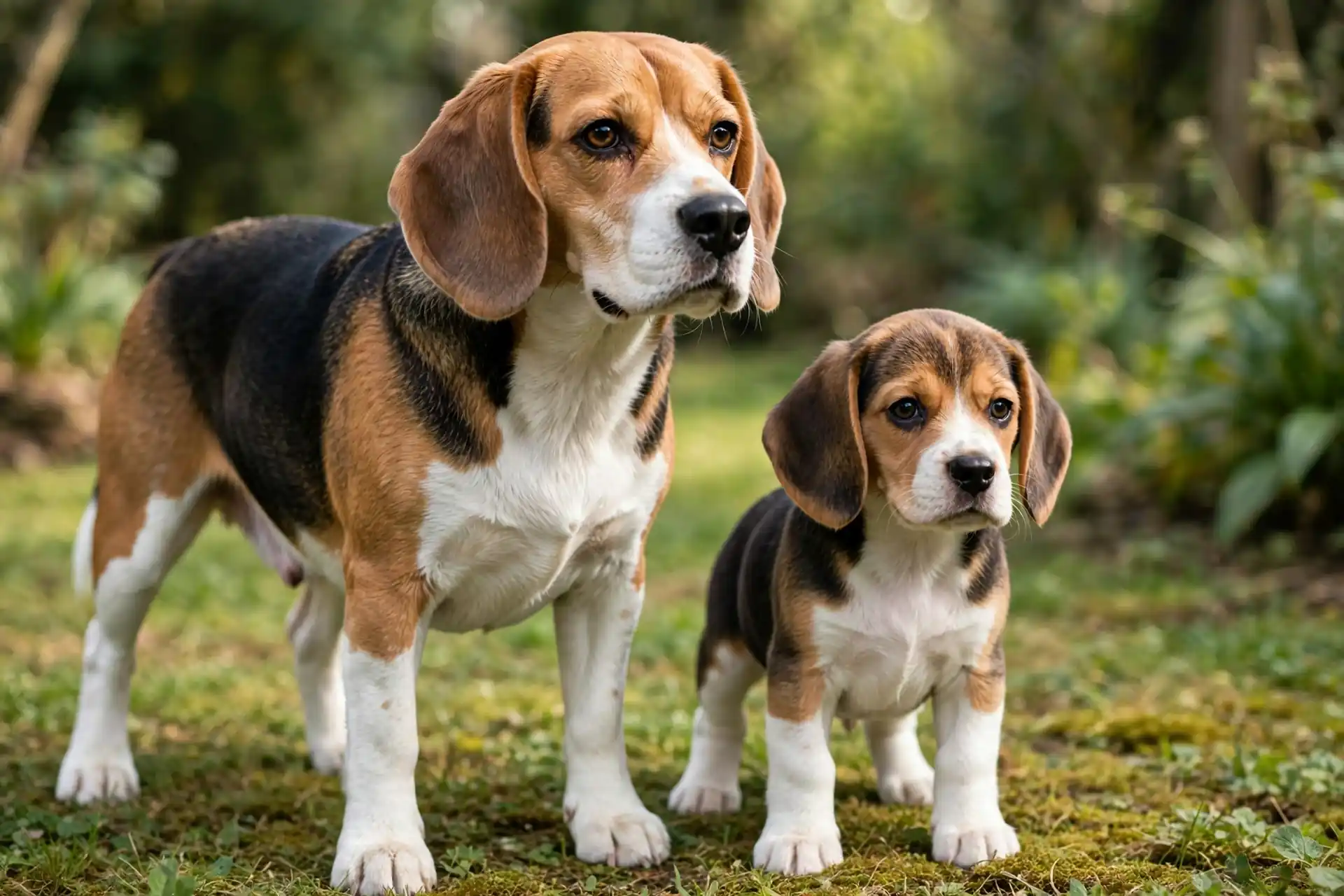
Beagles come in two height varieties, defined by the American Kennel Club standard. The 13-inch variety stands under 13 inches at the shoulder, while the 15-inch variety stands between 13 and 15 inches. The smaller variety usually weighs under 20 pounds, and the larger variety typically weighs between 20 and 30 pounds. Both varieties share the same compact build, the same long ears, and the same merry temperament; the difference is simply how much dog there is.
Coat Types and Colours
The Beagle’s coat is short, dense, and hard — built to shrug off brambles and weather in the field. The classic colour is the tricolor: black, white, and tan in a saddle pattern, with a white chest, legs, and tail tip. Other accepted colours include red and white, lemon and white, and tan and white. The lemon and white variety is born almost entirely white, with the lemon colour developing as the puppy grows.
The Beagle Nose: A Scent Hound’s Greatest Tool
The Beagle is a scent hound, and its nose is its defining gift. Beagles follow scent with total concentration — head down, tail up, moving steadily along a trail that a human nose could never detect. That ability made the breed a superb hare hunter, and in modern times it has given the Beagle a second career: detection work.
The best-known example is the USDA’s Beagle Brigade, a program started by the United States Department of Agriculture in 1984. It began with a single team — one Beagle and one handler — at Los Angeles International Airport, screening luggage for prohibited agricultural products. The program grew from there, and the AKC notes that it has aided in about 75,000 seizures of prohibited items at airports, seaports, and border crossings. The Beagle’s friendly appearance helps, too: a small, cheerful dog draws less alarm from travellers than a larger detection dog, while its nose does the same work.

Personality: Merry, Friendly, and Curious
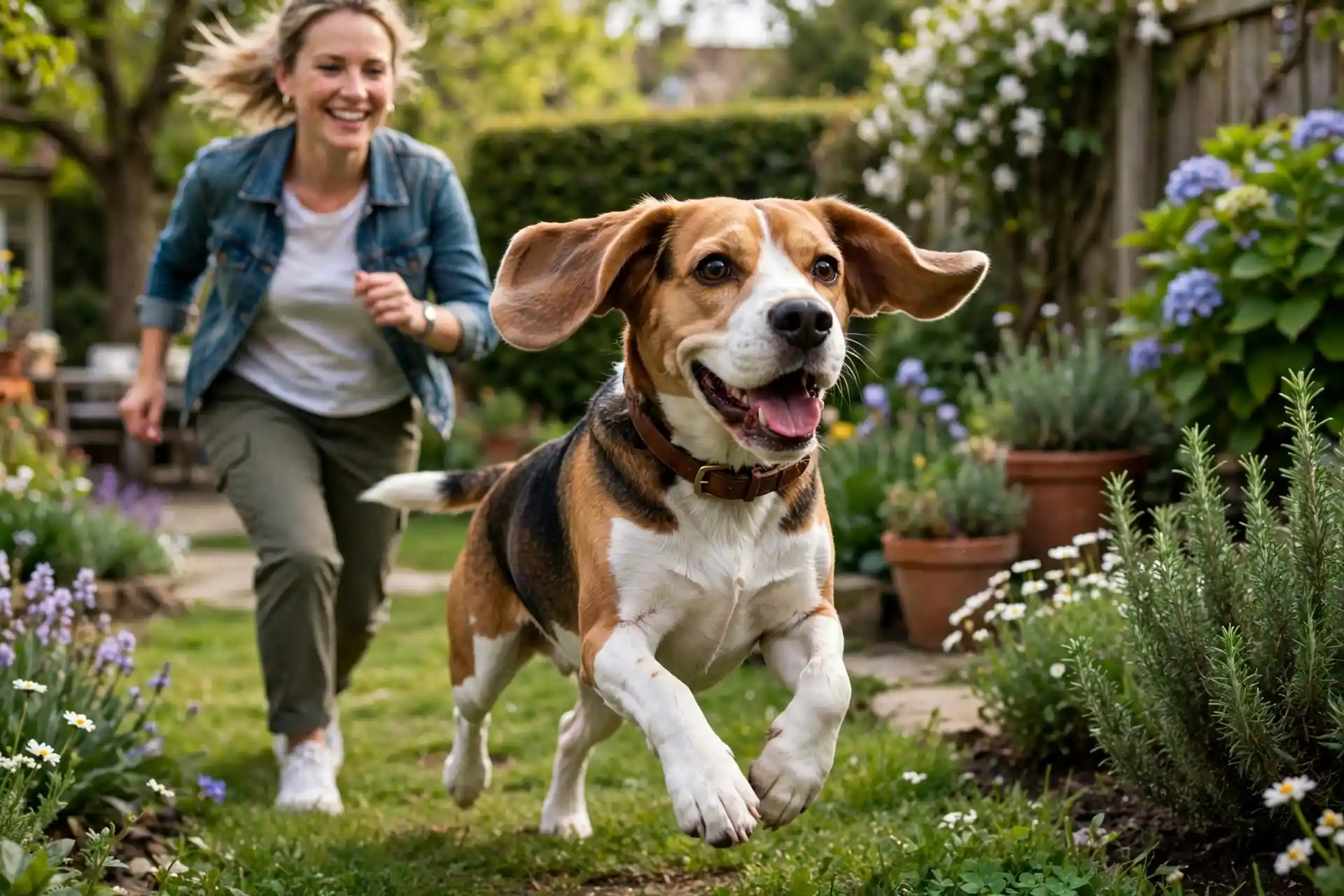
If the Beagle looks cheerful, its personality matches. The American Kennel Club describes the breed as “merry” — and the word is well chosen. Beagles are friendly, curious, and endlessly sociable, with a pack-dog nature that makes them happiest in company. They bond closely with their families, get along well with children, and usually enjoy the company of other dogs.
Beagles are also famously vocal. They have three distinct voices: the standard bark, a baying howl used on the trail, and a mournful howl when bored or lonely. That voice is part of the breed’s charm on a walk and part of its challenge at home — a Beagle left alone for long stretches will often announce its feelings to the neighbourhood. Readers comparing temperaments in our guide to the best dog breeds for first-time owners should know the Beagle asks for company and activity, and repays it with loyalty and comedy in equal measure.
The breed is clever in a scent-driven way. A Beagle’s world is mapped by smell, and it will follow an interesting scent wherever it leads — which is why a secure garden and a lead on walks matter more for this breed than for most. Training works best with patience, consistency, and rewards: Beagles learn quickly when training is fun and rewarding, and they remember every loophole when it is not.
Beagle Puppies: Small, Bold, and Busy
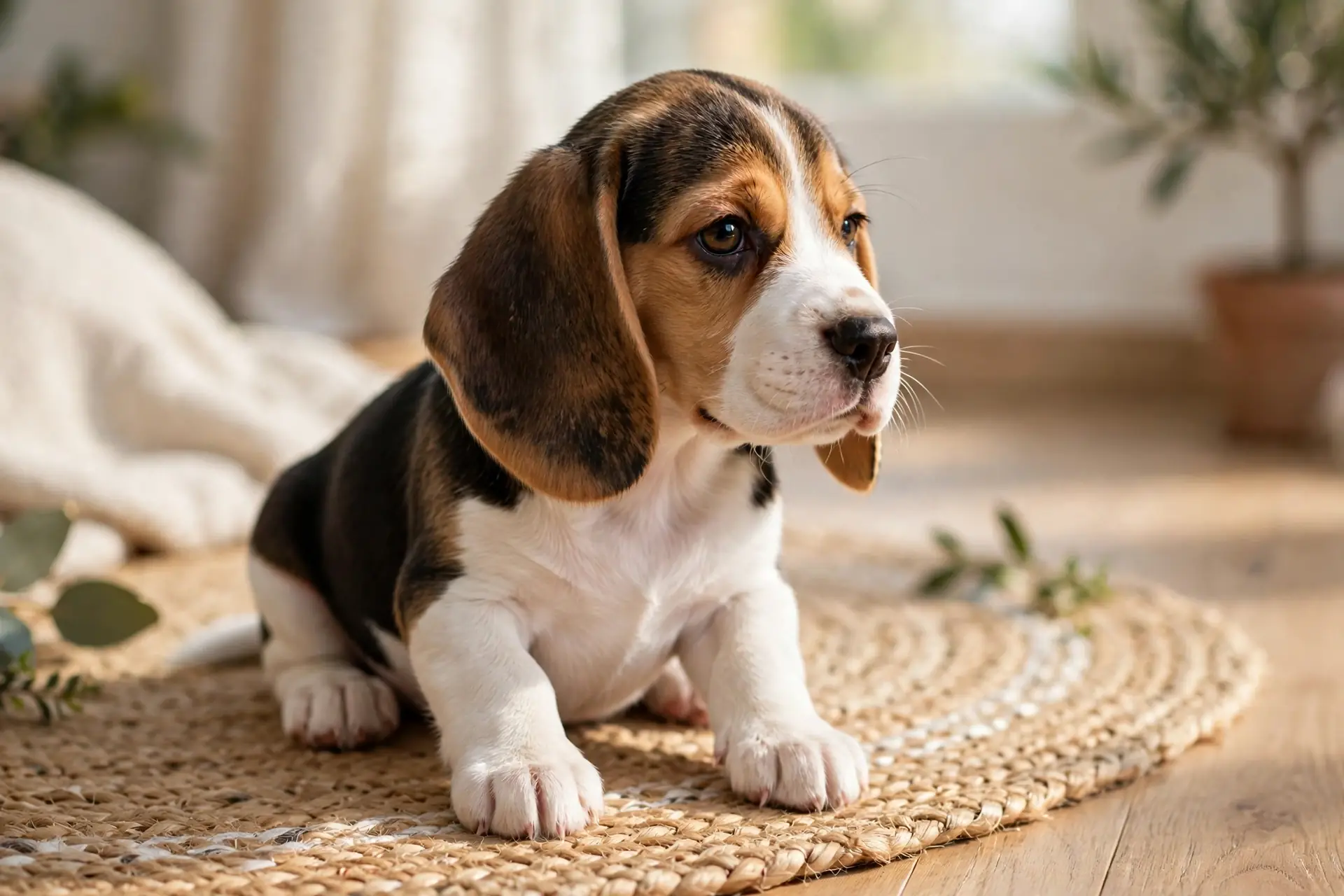
Beagle puppies arrive with oversized ears, big brown eyes, and confidence that far outruns their size. They grow quickly, and they start exploring — and sniffing — almost immediately. Puppies learn fast and bond fast, and they do best in homes that give them gentle, consistent guidance from the start, plenty of play, and safe outlets for their scenting instincts, such as scent games and short walks in new places.
Because the breed is so people-focused, puppies settle best where they are part of daily family life rather than left alone for long stretches. Early socialisation — meeting different people, places, and sounds while young — helps the puppy grow into the confident, well-mannered adult the breed is known for, rather than a nervous or overly vocal one.
Grooming and Everyday Care
The Beagle’s short, dense coat is genuinely low-maintenance. A weekly brushing with a soft brush or grooming mitt keeps it glossy and manages the light shedding. Compared with the heavy grooming of a Poodle, the Beagle asks very little in grooming time.
The ears deserve regular attention as part of an ordinary grooming routine, since their long, hanging shape covers the ear opening. Beyond the coat, the Beagle’s care is straightforward — quality companionship, daily walks and play, and a comfortable spot near its people, which the breed considers its rightful place. Beagles are indoor-oriented dogs that prefer the centre of family life, and they are famous for following their noses — a secure garden and a lead on walks are part of everyday care for this breed.
Beagle vs Other Scent Hounds and Small Breeds: A Quick Comparison
The Beagle is not the only small breed with a big personality, but its scent-hound heritage sets it apart. Here is how it compares with other reader favourites:
| Trait | Beagle | Dachshund | French Bulldog | Labrador Retriever |
|---|---|---|---|---|
| Size | 13–15 in; 20–30 lb | Standard 16–32 lb; miniature up to 11 lb | 16–28 lb | 55–80 lb |
| Coat | Short, dense | Smooth, longhaired, or wirehaired | Short, smooth | Short, dense double coat |
| Energy level | High | Moderate to high | Low to moderate | High |
| Vocality | Very vocal | Loud, alert bark | Quiet | Moderate |
| Best for | Active families, scent games | Owners wanting a bold small dog | Apartment living, calm homes | Families wanting a larger companion |
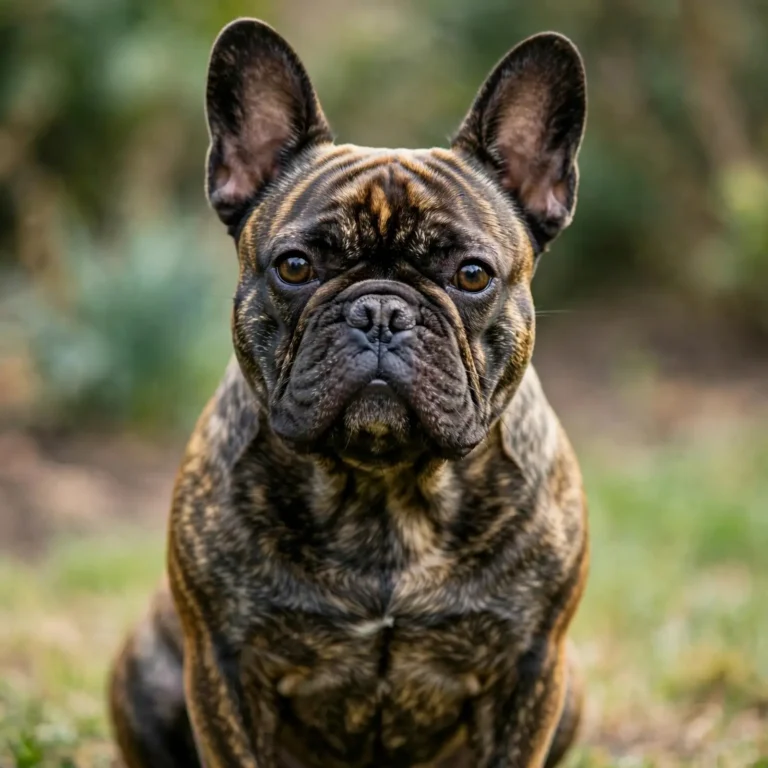
The Dachshund shares the Beagle’s hunting past and bold nature in a longer, lower body. The French Bulldog offers the same compact size with a calmer temperament and a quieter voice. The Labrador matches the Beagle’s friendliness at a much larger size. The Beagle’s combination — a scent hound’s nose in a merry, family-sized package — remains unique to it.
Interesting Facts About Beagles
- A name that is a mystery: The name Beagle may come from the Old French “beegueule,” meaning “open throat,” or from a Middle English word for “small.”
- First registered in 1885: A Beagle named Blunder was the first of the breed registered by the American Kennel Club.
- A club from 1888: The National Beagle Club of America was founded in 1888 and remains the breed’s parent club in the United States.
- The Beagle Brigade: The USDA’s detector-dog program began in 1984 with a single Beagle and handler at Los Angeles International Airport.
- Snoopy’s honour: The AKC gave Snoopy, the cartoon Beagle, the honorary registration number Beagle-1.
- Three voices: Beagles bark, bay on the trail, and howl when bored or lonely.
- A white flag: The tail’s white tip is said to help hunters spot the dog in tall grass.
Living With a Beagle: What to Know
The Beagle is a dog for people who want a small companion with a large personality. It is merry, devoted, and funny, with a scent hound’s curiosity and a pack dog’s love of company. For owners who enjoy an active, characterful dog and can offer consistent guidance, daily play, and plenty of companionship, the Beagle is immensely rewarding.
If you love small breeds with big characters, compare the Beagle with other breeds in our most popular dog breeds guide, browse the Dogs & Puppies section, and start from the MyPetsMyLove homepage to keep exploring.
Related Reading on MyPetsMyLove
- Most popular dog breeds in America
- Best dog breeds for first-time owners
- French Bulldog guide
- Dogs & Puppies hub page
- MyPetsMyLove homepage
- About Us page
References
- American Kennel Club (AKC) — Beagle breed standard, history, and the Beagle Brigade
- Encyclopaedia Britannica — Beagle breed information
Frequently Asked Questions
Where did the Beagle come from?
The Beagle originated in England, where small hounds were used to hunt hares and rabbits on foot. The modern breed began to take shape in the 1830s, when the Reverend Philip Honeywood established a pack in Essex that is widely credited as the foundation of the contemporary Beagle.
What does the name Beagle mean?
The origin of the name is uncertain. One widely repeated explanation traces it to the Old French “beegueule,” meaning “open throat,” a nod to the breed’s ringing voice. Another traces it to a Middle English word for “small.”
What is the difference between the 13-inch and 15-inch Beagle?
Only height. The 13-inch variety stands under 13 inches at the shoulder and usually weighs under 20 pounds, while the 15-inch variety stands between 13 and 15 inches and typically weighs 20 to 30 pounds. Both share the same build, coat, and temperament.
Are Beagles good for first-time owners?
They can be, for owners who are patient and consistent and who can give the breed plenty of company and activity. Beagles are friendly, clever, and devoted, but their scent-driven curiosity and loud voice ask for a secure garden and regular walks. See our guide to the best dog breeds for first-time owners for comparisons.
Why do Beagles have white-tipped tails?
The tail’s white tip, sometimes called the “flag,” is said to help hunters spot the dog in tall grass. It is one of the details judges look for in the show ring.
What is the Beagle Brigade?
The Beagle Brigade is a detector-dog program started by the United States Department of Agriculture in 1984. It began with a single Beagle and handler at Los Angeles International Airport, screening luggage for prohibited agricultural products, and it has since aided in about 75,000 seizures.
Conclusion
The Beagle has fascinated people for centuries — a small hound with a great nose, a merry nature, and a voice that carries across fields. From English hare hunts to American show rings, from the first AKC registration in 1885 to the Beagle Brigade at the nation’s airports, the breed’s journey from working hound to beloved companion is one of the most remarkable stories in the dog world.
If you want a small dog with a hunter’s nose, a comedian’s timing, and a pack dog’s heart, the Beagle is hard to beat. Compare it with other remarkable breeds in our most popular dog breeds guide, explore the Dogs & Puppies section, and start from the MyPetsMyLove homepage to meet more breeds worth knowing.
Disclaimer
Disclaimer
MyPetsMyLove dot com is an independent informational website covering pet species breeds characteristics activities positive training bonding grooming and responsible ownership
We are not a veterinary clinic medical provider pet food provider or veterinary nutrition service
We do not provide veterinary diagnosis medical advice treatment food recommendations or nutritional guidance
For pet health medical or food related concerns consult a qualified veterinarian or appropriate professional directly
Independent clinics listed on this website are not owned or operated by MyPetsMyLove unless explicitly stated
Verify third party credentials services fees and availability independently
We do not guarantee third party services or outcomes
To the extent permitted by applicable law we disclaim responsibility for independent third party services
Nothing in this notice excludes liability that cannot legally be excluded
The disclaimer does not make prohibited content acceptable

3 Comments