Egyptian Mau Cats: Spotted Coat, Green Eyes & History
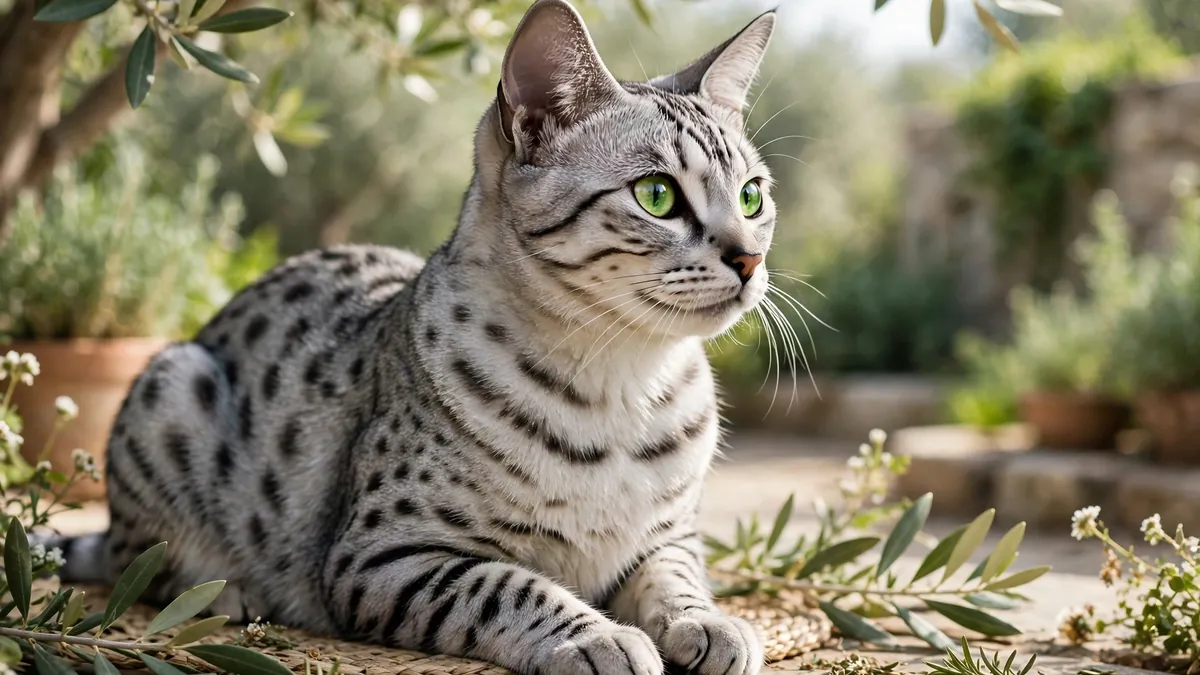
Look closely at an Egyptian Mau cat and the first thing you notice is the pattern. The spots are not neat rows or tidy stripes. They scatter across the coat in different sizes and shapes, as if each cat had been decorated by hand. Then the eyes catch you: large, almond-shaped, and a clear light green that breed standards call gooseberry green. Add a muscular, athletic body that moves with a spring in its step, and you have a cat that looks like it stepped out of an ancient Egyptian painting. This guide separates the ancient associations from the documented modern history, then covers the spotted coat, the green eyes, the personality, the kittens, and what living with this remarkable breed is really like.
Cats of Ancient Egypt
Cats held a special place in ancient Egyptian life, and spotted cats appear in Egyptian art dating back as far as 1550 BC, according to the Cat Fanciers’ Association. Paintings and carvings show slender, spotted cats beside people, hunting in marshes, and sitting beneath chairs. The goddess Bastet, often shown with the head of a cat, became a symbol of home and protection, and cats in general were valued companions in Egyptian households.
It is tempting to draw a straight line from those painted cats to the Egyptian Mau cats of today, and many breed descriptions do exactly that. The resemblance is real: the spotted coat, the elegant build, and the alert expression all echo the cats in the old artwork. Yet the connection should be understood as a tradition and a strong resemblance rather than a proven, unbroken family line. No pedigree records survive from ancient Egypt, and no one can trace a modern Mau, cat by cat, back to a temple or a tomb painting.
What can be said with confidence is that spotted cats lived alongside people in Egypt for a very long time, and that the modern breed was developed from spotted cats of Egyptian origin. The ancient art explains why the breed carries such a powerful name, and why the Mau is often described as one of the oldest-looking breeds among domestic cat breeds.
The Documented History of the Egyptian Mau
The modern story of the Egyptian Mau begins in Italy in the early 1950s, with a Russian princess named Nathalie Troubetskoy. Living in Rome, she saw a spotted cat belonging to the Egyptian ambassador to Italy and was struck by its resemblance to the cats in ancient Egyptian art. With the ambassador’s help, she obtained a spotted cat from Cairo, a female named Baba. Baba was later bred with the ambassador’s cat, and their kittens became the foundation of a breeding program.
Troubetskoy wrote a breed standard and showed her cats in Rome in the mid-1950s. In 1956 she emigrated to the United States, bringing three of her Maus with her. She founded the Fatima cattery in New York, and the cats from that cattery became the ancestors of many of the Egyptian Mau cats in North America today.
Recognition followed step by step. The Cat Fanciers Federation granted the breed championship status in 1968. The Cat Fanciers’ Association accepted the Egyptian Mau for registration in 1970 and granted championship status in 1977, and The International Cat Association granted recognition in 1979. Later imports, including cats brought from Egypt and India in the 1980s, widened the gene pool. Today the Mau is recognized by major registries around the world, and it remains a rare breed compared with the most common cat breeds in American homes.
Appearance of the Egyptian Mau
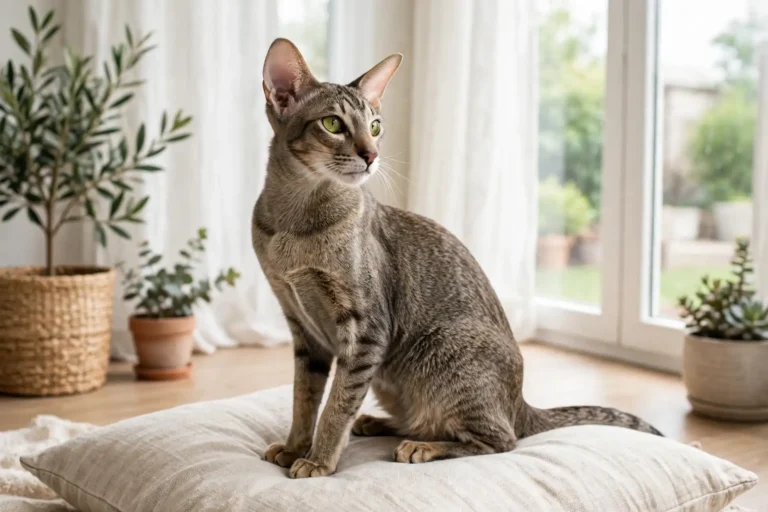
The Egyptian Mau is a small to medium-sized cat with a muscular, athletic build that looks both graceful and strong. The body is well balanced, with hind legs slightly longer than the front legs, which gives the cat a distinctive, springy stance and a smooth, flowing gait. A loose flap of skin along the belly allows the hind legs extra reach when the cat runs and leaps.
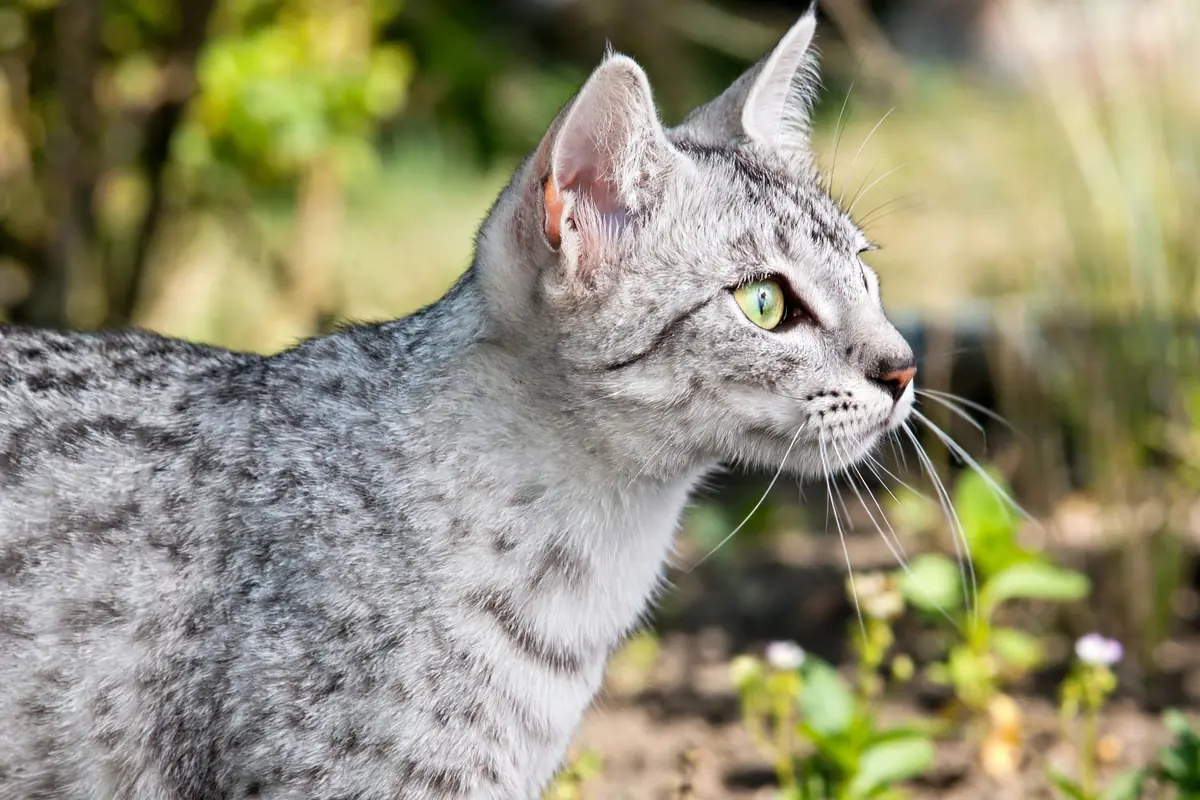
The head is a slightly rounded wedge, with a medium-length muzzle, large ears set well apart, and a gentle curve in profile. The overall impression is one of watchfulness: the Mau looks ready to move, even when it is sitting still.
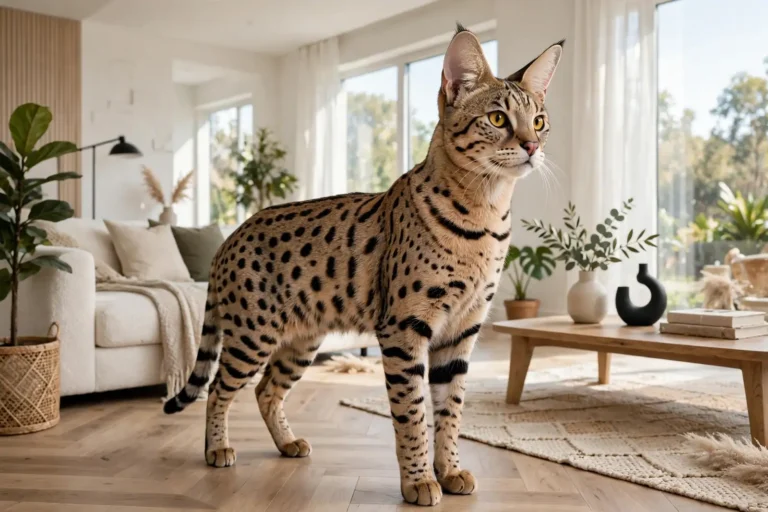
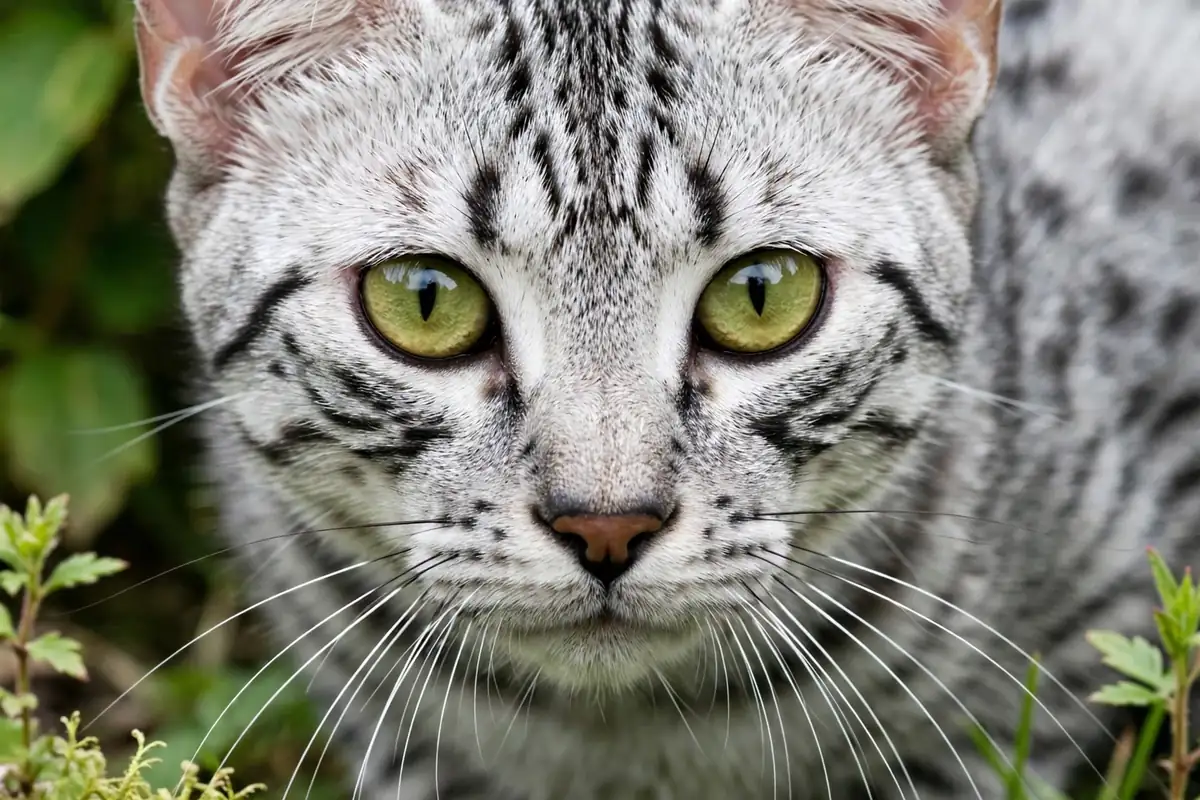
The eyes are the feature most people remember after the spots. They are large, almond-shaped, and set at a slight slant toward the base of the ears, which gives the breed its characteristic expression, sometimes described as a worried look. Adult eye color is gooseberry green, a clear light green that stands out against the spotted coat. Compared with the sleek Siamese cat, the Mau looks more muscular and compact, and compared with the large, wild-looking Savannah cat, it is smaller and more refined.
Coat, Colors, and Spots
The Egyptian Mau coat is the breed’s signature, and both the Cat Fanciers’ Association and The International Cat Association describe the Mau as the only naturally spotted breed of domestic cat. That word, naturally, matters. The spots were not created by crossing a domestic cat with a wild species, as they were in some newer spotted breeds. They occur in the breed itself, on the tips of the hairs, and the same spotting even shows on the skin beneath the coat.
The pattern is random, with spots of different sizes and shapes spread across the body, and the standard calls for good contrast between the spots and the background color. A dark stripe runs along the spine to the tip of the tail, the legs and tail carry bands, and the forehead shows a dark “M” marking, often called the mark of the scarab. Three colors are recognized for championship: silver, bronze, and smoke. Silver Maus have a pale silver background with black spots, bronze Maus a warm golden-brown background with darker spots, and smoke Maus pale silver underfur with black tips. The coat is medium in length with a lustrous sheen: dense and resilient in silver and bronze, finer and silkier in smoke. A gentle brush once a week lifts loose hair and keeps the coat glossy; see our guide to cat grooming at home for a fuller routine.
Temperament and Personality
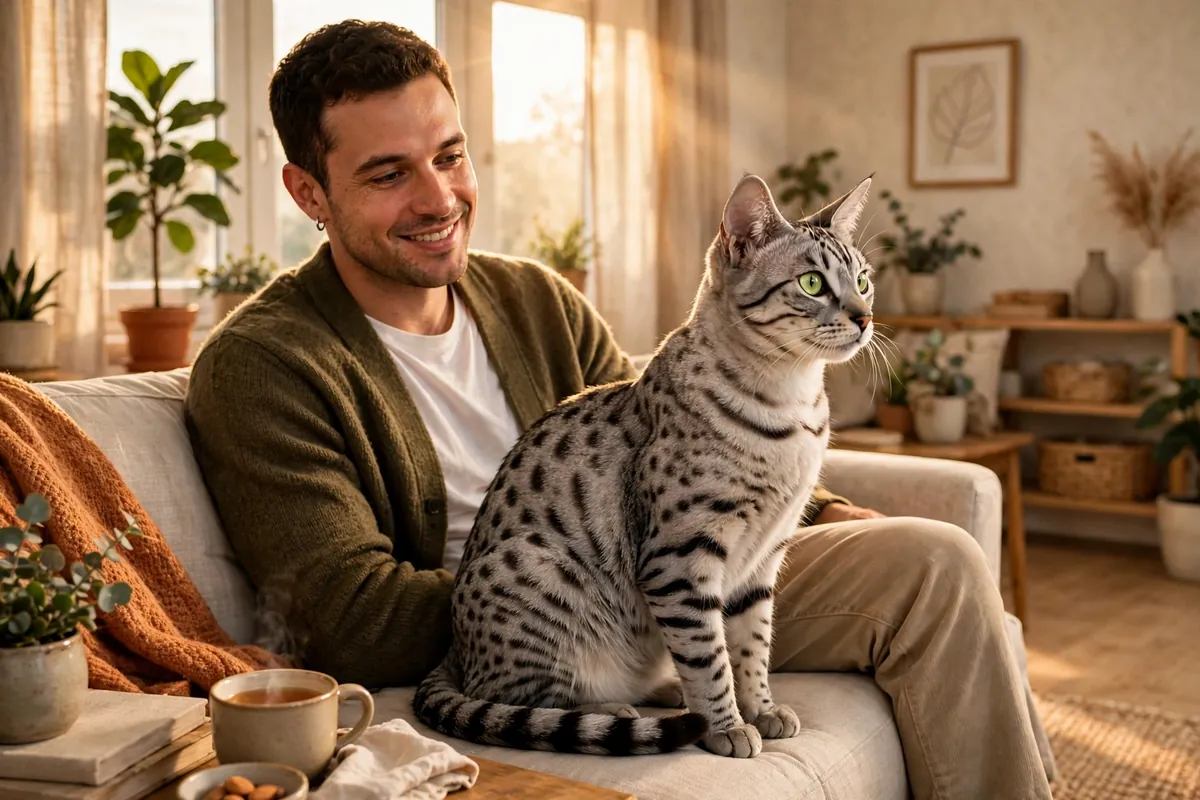
Egyptian Mau cats are loyal, intelligent, and deeply attached to their people, and they often choose one person as a special favorite while remaining friendly with the rest of the household. A Mau will follow its owner from room to room, greet them at the door, and settle close by, not always on a lap, but near enough to stay in touch.
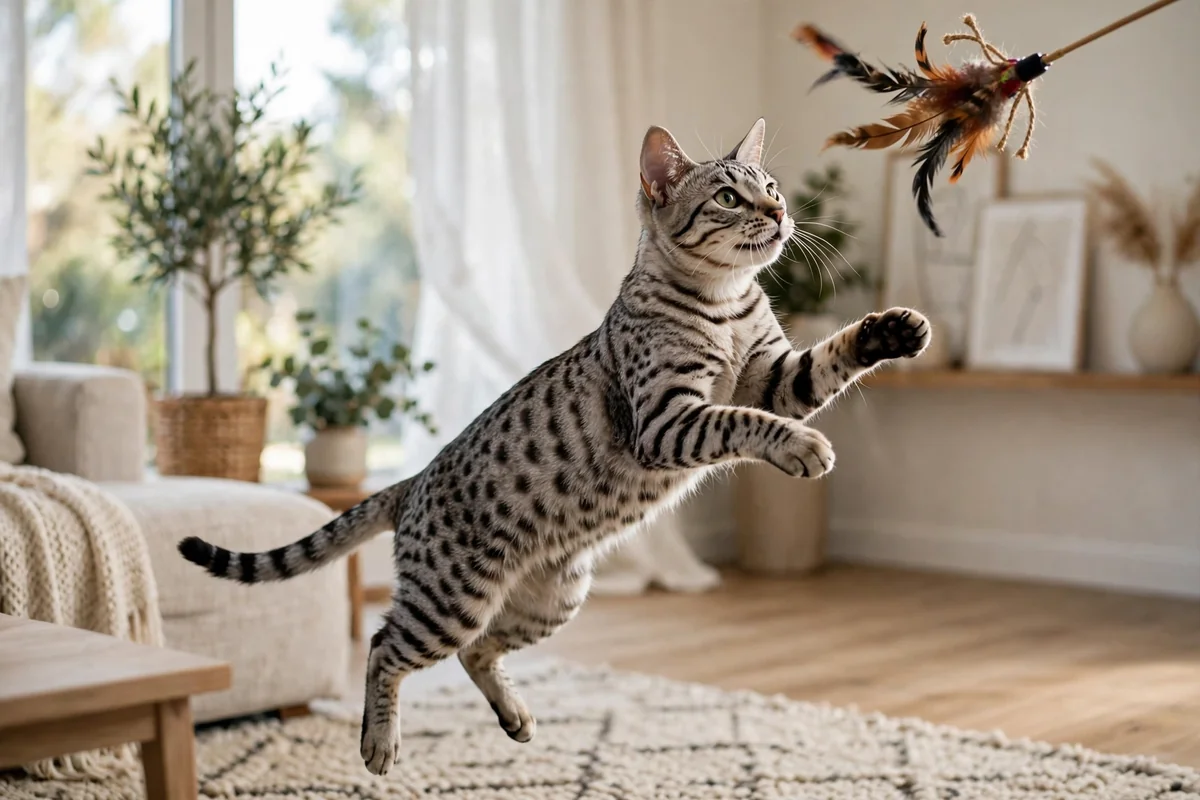
The breed is active and playful, with a quick, athletic style of play. Maus love to run, leap, and chase, and they often enjoy games that involve speed and height, such as chasing a wand toy or racing after a rolling ball. They are also known for a musical voice: many Maus chirp, trill, and chortle, and some will hold a cheerful conversation with their owners.
Maus are usually good with respectful children and with other cats, especially when introductions are gradual and each cat has its own space to retreat to. They can live with friendly dogs, too, though a Mau’s speed and energy suit a calm, cat-friendly dog best. Among the main cat breeds kept in American homes, the Mau stands out as one of the more active and people-focused choices, and readers comparing popular breeds can see where it fits in our guide to the most popular cat breeds in the USA.
Egyptian Mau Kittens
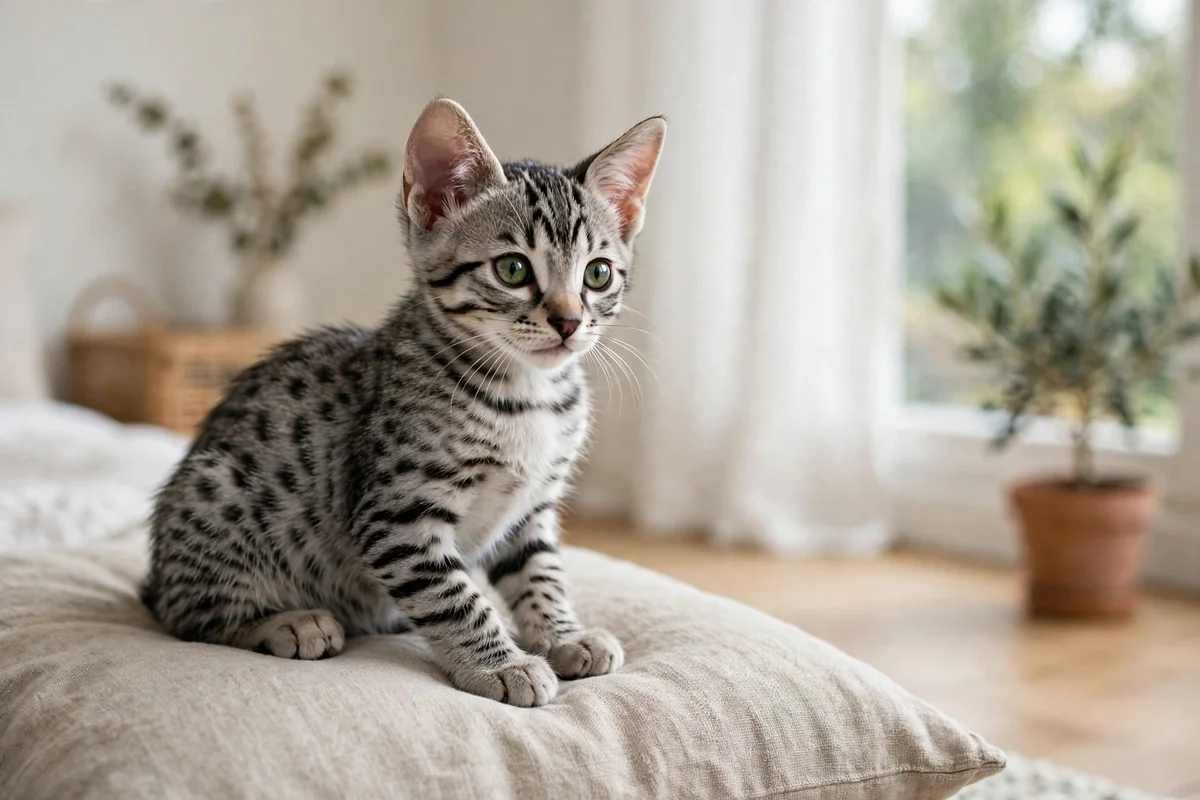
Egyptian Mau kittens are born with their spots already in place, which sets them apart from breeds whose patterns develop slowly over months. The random spotting is there from the start, and it sharpens as the kitten grows. The eyes tell a different story: they start out amber or gold, and the green color develops gradually, often taking a year or more to settle into the clear gooseberry green of the adult.
Young Maus are curious, quick, and full of energy. They explore everything, climb with confidence, and learn fast, especially when play is part of the lesson. Short, gentle play sessions with a wand toy or a small ball suit a kitten best, and a sturdy scratching post gives those busy paws a proper outlet. For ideas, our guide to the best cat toys covers the types cats return to again and again.
Living With an Egyptian Mau
Life with an Egyptian Mau is lively, affectionate, and never dull. This is an indoor companion that wants to be part of the household, whether that means supervising from a high perch, joining a game in the living room, or curling up nearby after a busy play session. A sunny window perch, a tall cat tree, and a scratching post in a room the family uses will cover much of what a Mau asks from its home.
The breed’s energy needs a daily outlet. Short play sessions spread through the day suit a Mau better than one long session, and games that let the cat run, jump, and chase are the most satisfying. Without enough play, a bored Mau may invent its own games, which can mean rearranged cushions and a cat on top of the tallest shelf in the room.
Egyptian Mau vs Other Spotted and Short-Haired Breeds
| Breed | Coat | Spots | Eyes | Temperament |
|---|---|---|---|---|
| Egyptian Mau | Short to medium, dense, lustrous | Random, natural spots | Gooseberry green | Loyal, active, playful, people-focused |
| Bengal | Short, sleek, glittered | Rosettes or spots, bred from wild ancestry | Green, gold, or blue | Active, bold, vocal, very energetic |
| Savannah | Short, coarse, spotted | Bold spots, tall wild look | Green, gold, or brown | Active, confident, dog-like, needs space |
| Abyssinian | Short, fine, ticked | No spots, ticked coat | Green, gold, or amber | Active, curious, independent streak |
| Siamese | Short, fine, pointed | No spots, pointed coat | Blue | Vocal, lively, demanding |
The table shows why the Mau holds a special place among spotted breeds. The Bengal cat and the Savannah both wear striking spots, but their patterns come from recent crossing with wild ancestors, while the Mau’s spots are natural to the breed. The Abyssinian cat shares the Mau’s ancient look and athletic energy, but its coat is ticked rather than spotted.
Interesting Facts About Egyptian Mau Cats
- Naturally spotted: The Mau is the only naturally spotted breed of domestic cat, according to both the CFA and TICA.
- Ancient artwork: Spotted cats resembling the Mau appear in Egyptian art dating back as far as 1550 BC.
- A scarab on the forehead: The dark “M” marking on the forehead is often called the mark of the scarab.
- Mascara lines: Two dark lines run from each eye down the cheek, framing the face.
- Eyes that change: Kittens are born with amber eyes, and the gooseberry green color can take a year or more to settle.
- A princess saved the breed: Nathalie Troubetskoy brought three Maus to the United States in 1956 and founded the Fatima cattery.
- Three colors: Silver, bronze, and smoke are the recognized championship colors.
- A musical voice: Many Maus chirp, trill, and chortle, and some hold cheerful conversations with their owners.
Related Reading on MyPetsMyLove
- Most popular cat breeds in the USA
- Bengal cats guide
- Savannah cats guide
- Cats & Kittens hub page
- MyPetsMyLove homepage
- About Us page
References
- Cat Fanciers’ Association (CFA) — Egyptian Mau breed profile
- The International Cat Association (TICA) — Egyptian Mau breed profile
- The Humane Society of the United States — pet care and enrichment resources
- Encyclopaedia Britannica — cat breeds reference
Frequently Asked Questions
What makes Egyptian Mau cats unique?
Egyptian Mau cats are the only naturally spotted breed of domestic cat, according to both the CFA and TICA. Their random spots occur naturally in the breed, they have gooseberry green eyes, a scarab marking on the forehead, and an athletic build with hind legs slightly longer than the front legs.
Where did Egyptian Mau cats come from?
Spotted cats resembling the Mau appear in Egyptian art dating back as far as 1550 BC. The modern breed was developed from spotted cats of Egyptian origin, beginning with Nathalie Troubetskoy’s breeding program in Italy in the early 1950s and her move to the United States in 1956.
What colors do Egyptian Mau cats come in?
The three recognized championship colors are silver, bronze, and smoke. Silver Maus have a pale silver background with black spots, bronze Maus have a warm golden-brown background with darker spots, and smoke Maus have pale silver underfur with black tips.
Do Egyptian Mau kittens have spots?
Yes. Egyptian Mau kittens are born with their spots already in place, and the pattern sharpens as they grow. Their eyes start out amber or gold, and the gooseberry green color develops gradually, often taking a year or more to settle.
Are Egyptian Mau cats good family companions?
Yes. Egyptian Mau cats are loyal, intelligent, and people-focused, and they usually do well with respectful children, other cats, and friendly dogs when introductions are gradual. They bond closely with their people and like to stay near them.
Are Egyptian Mau cats very active?
Yes. The Mau is an athletic, playful breed that loves to run, leap, and chase. Short play sessions spread through the day suit it best, along with a tall cat tree, a sunny perch, and toys that move in lively, unpredictable ways.
How much grooming does an Egyptian Mau need?
Less than many longer-haired breeds. The short to medium coat needs only a gentle brush once a week to lift loose hair and keep it glossy, with a little extra care during seasonal shedding.
Conclusion
The Egyptian Mau cat brings together an ancient image and a very modern companion: a naturally spotted coat, gooseberry green eyes, a scarab marking on the forehead, and an athletic, loyal nature that fits happily into family life. Whether you first noticed the spots in a museum painting or met a Mau in person, the cat in front of you today is very real — quick, clever, affectionate, and devoted to its people.
Compare the Mau with its spotted cousins in our Bengal cats guide and Savannah cats guide, explore more breeds in the Cats & Kittens section, and start from the MyPetsMyLove homepage to meet more cats worth knowing.
Disclaimer
Disclaimer
MyPetsMyLove dot com is an independent informational website covering pet species breeds characteristics activities positive training bonding grooming and responsible ownership
We are not a veterinary clinic medical provider pet food provider or veterinary nutrition service
We do not provide veterinary diagnosis medical advice treatment food recommendations or nutritional guidance
For pet health medical or food related concerns consult a qualified veterinarian or appropriate professional directly
Independent clinics listed on this website are not owned or operated by MyPetsMyLove unless explicitly stated
Verify third party credentials services fees and availability independently
We do not guarantee third party services or outcomes
To the extent permitted by applicable law we disclaim responsibility for independent third party services
Nothing in this notice excludes liability that cannot legally be excluded
The disclaimer does not make prohibited content acceptable