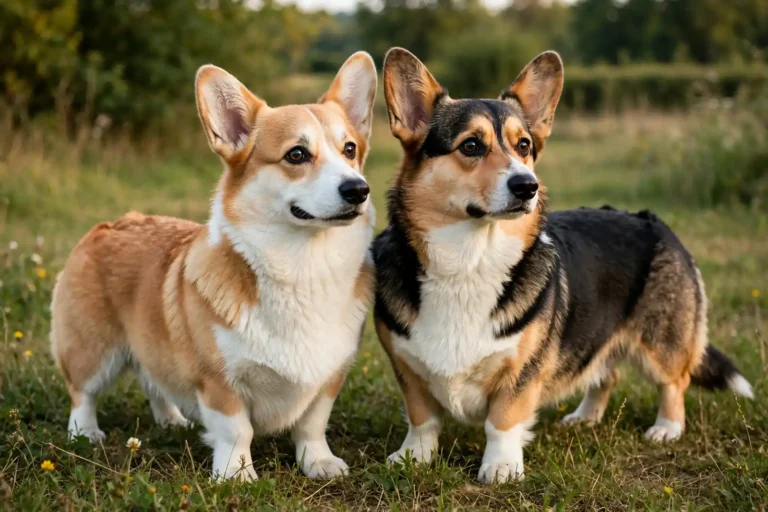
Dog Grooming at Home: Step-by-Step Guide for Your Dog
Your dog just rolled in something — or maybe it is shedding season again — and you are wondering whether you really need a grooming appointment. Here is the good news: most of the regular grooming a dog needs can be done right at home, with a few simple tools and a calm, patient approach. This guide walks you through every step, from brushing and bathing to nail trimming and drying, so you can keep your dog looking great between visits to a professional groomer.
Why Groom Your Dog at Home
Grooming is about far more than a pretty coat. A regular routine keeps loose hair out of your home, keeps the coat smooth and tangle-free, and gives you a quiet chance to spend time together. Most dogs come to enjoy it once they know what to expect, and the attention builds trust.
Home grooming also saves money and time. A full professional groom can be a real expense, and appointments are not always easy to get. Handle the everyday jobs yourself and you only need a professional for the bigger jobs, such as a full haircut.
Perhaps the best reason is that you learn your dog. When you brush and bathe your dog regularly, you notice the small things: a burr caught in the fur, a nail that has grown long, a mat forming behind an ear. Catching those early keeps grooming easy and your dog comfortable.
Before You Begin: Setting Up Your Grooming Spot
Pick one spot in your home for grooming and use it every time — dogs relax when they know the routine. A bathroom works well for bathing, while a quiet corner suits brushing and nail trimming. Lay down a rubber mat or an old towel so your dog has secure footing and does not slip.
Gather everything before you start, so you never leave a wet or half-brushed dog on its own: a brush, a comb, dog shampoo, towels, nail clippers, and a few of your dog’s favorite toys for a play break afterwards. Keep the first sessions short — ten or fifteen minutes is plenty — and always end on a happy note with praise and play.
Choose a time when your dog is calm, such as after a walk, rather than when your dog is full of energy. Speak softly, move slowly, and let your dog sniff the tools before you use them. If your dog gets restless, take a break and try again later — grooming should feel like care, not a chore.
Brushing Your Dog’s Coat
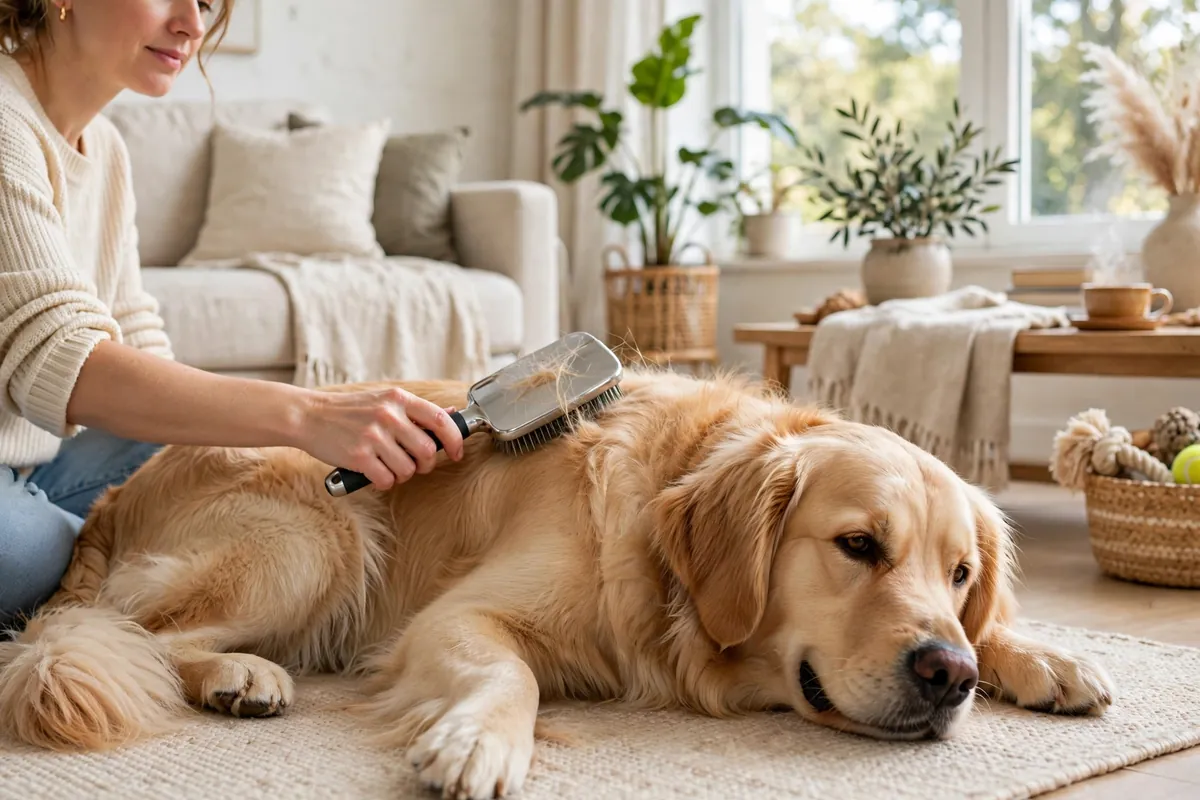
Brushing is the single most useful grooming habit, and it is where most home grooming starts. A good brush removes loose hair, spreads the coat’s natural oils, and stops tangles from turning into mats, and it cuts down on the hair on your furniture and clothes.
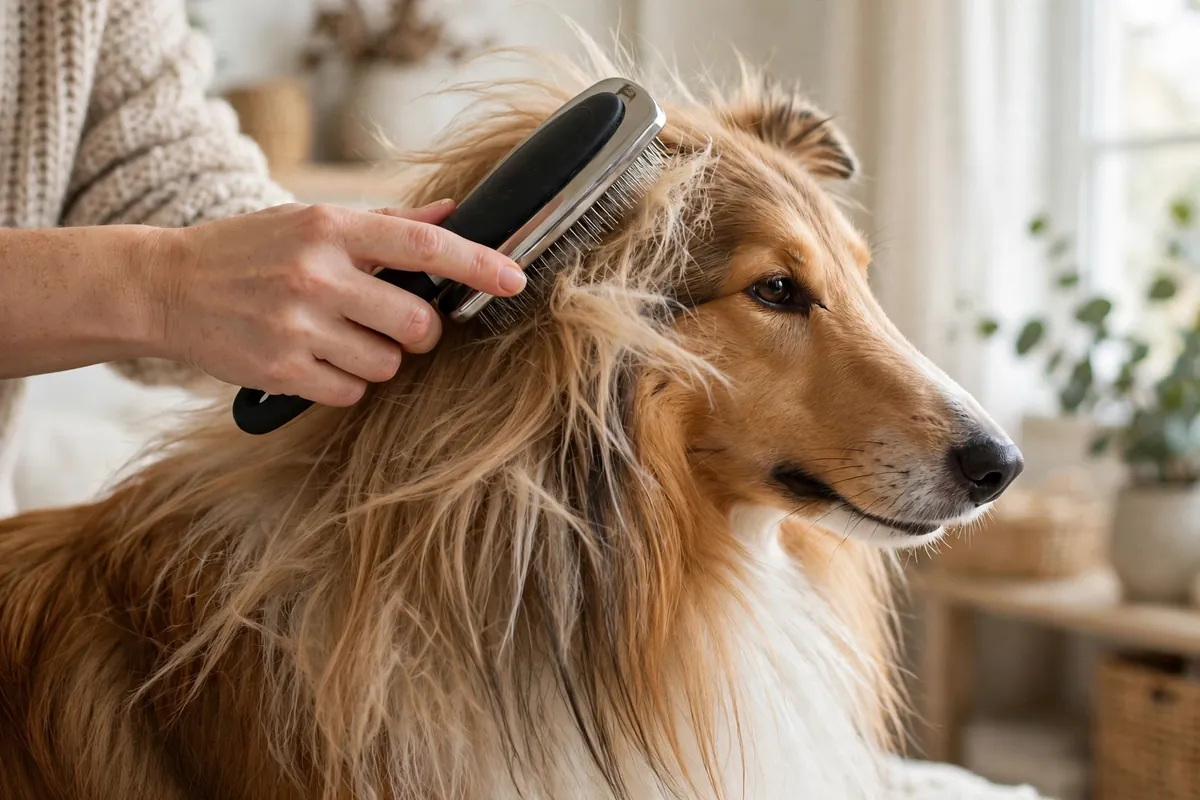
Choose the right brush for your dog’s coat. A slicker brush, with its fine wire pins, suits long and medium coats and works loose tangles gently. A bristle brush suits short coats and smooths the top layer. A wide-toothed comb checks your work — if it slides through easily, the coat is tangle-free.
Brush in the direction the hair grows, using short, gentle strokes. Work through the coat in small sections, from shoulders toward the tail, and pay extra attention to the tangle-prone spots: behind the ears, under the collar, around the legs, and on the belly. If you meet a tangle, hold the base of the hair with your fingers and work it out slowly from the ends inward.
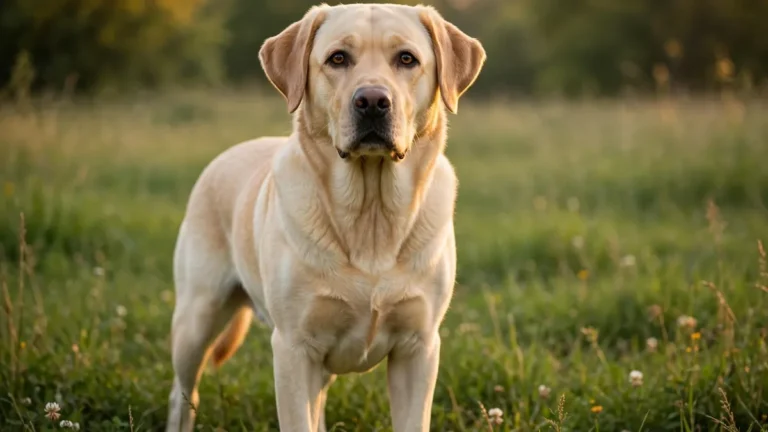
How often you brush depends on the coat. Short-coated dogs, such as the Labrador Retriever, usually need one brushing a week, while long or thick-coated dogs, such as the Golden Retriever, do best with several sessions a week. Among the most common dog breeds in America, coat types vary widely, so let the comb decide — brush more often if tangles keep appearing.
Bathing Your Dog
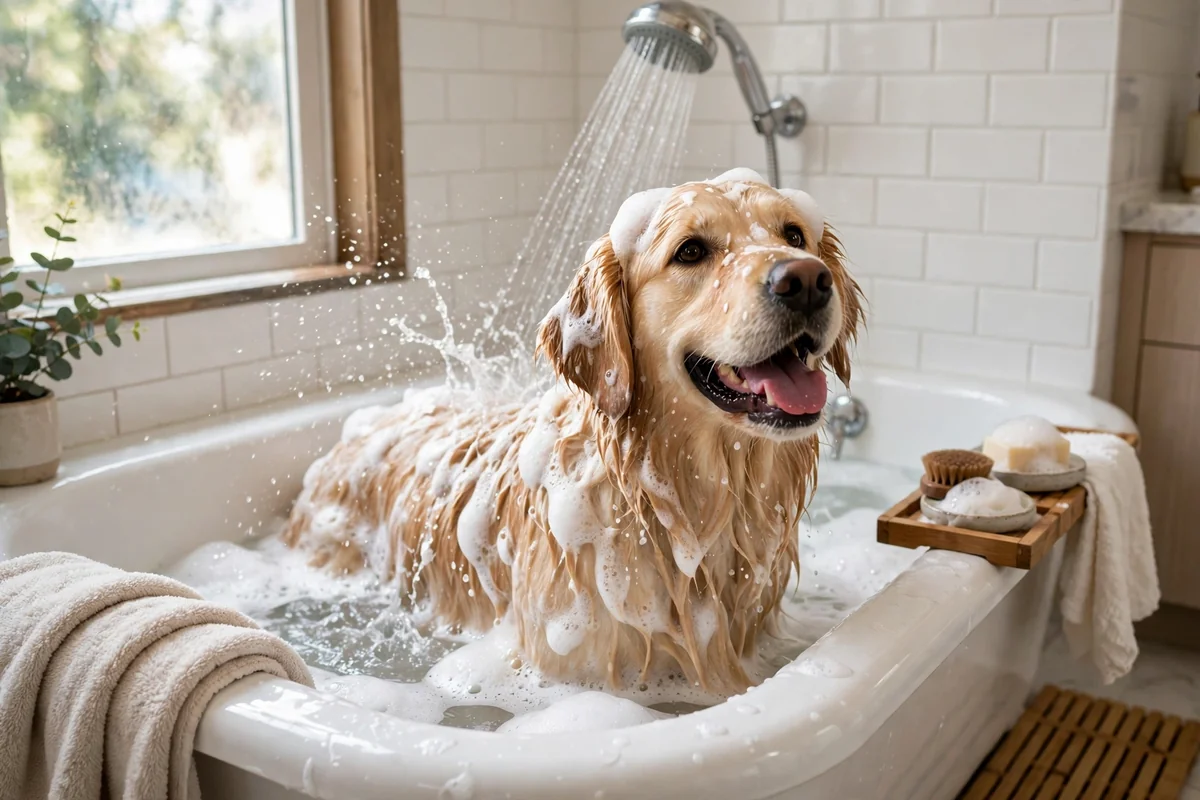
Most dogs only need a bath every month or so, or when they have rolled in something muddy — bathing too often can strip the coat of its natural oils. A quick brush before the bath removes loose hair and loosens tangles that water would only tighten.
Use lukewarm water and a shampoo made for dogs — human shampoo is not made for a dog’s coat, so keep a bottle of dog shampoo in your grooming kit. Wet the coat thoroughly from neck to tail, and keep water away from your dog’s face; a damp cloth is enough for the face and head.
Work the shampoo into a gentle lather and massage it through the coat. Then rinse, rinse, and rinse again — leftover shampoo can leave the coat dull, so keep rinsing until the water runs clear and the coat feels clean rather than slippery. If your dog is nervous in the tub, a rubber mat underfoot and a calm voice help, and a favorite toy waiting on the bath mat gives your dog something to look forward to.
Nail Trimming Basics
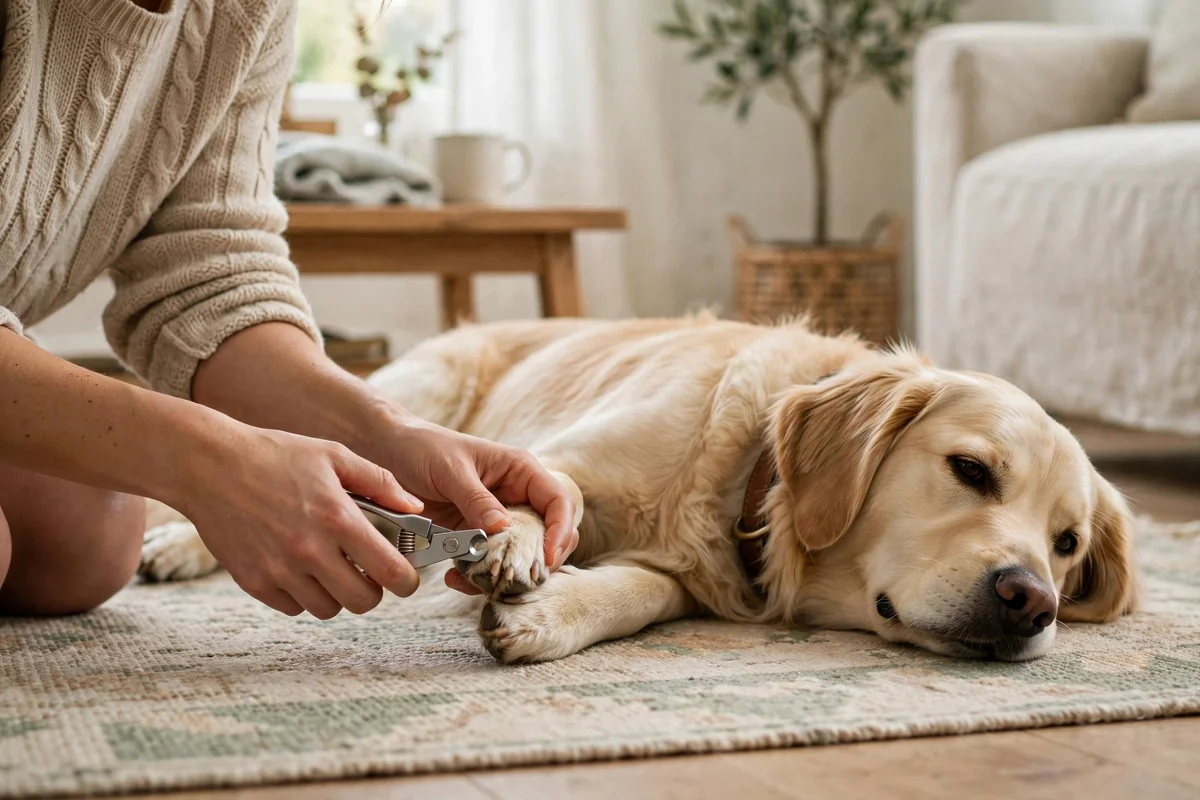
Nail trimming is the step most owners put off, but it is simpler than it looks. Long nails can make walking uncomfortable and catch on carpets, so a quick trim every few weeks keeps your dog moving happily.
Use nail clippers made for dogs, and trim only a tiny bit at a time. Dog nails have a pink centre, called the quick, which you should never cut — so take off just the tip and trim a little more only if the nail is still long. On dark nails, where you cannot see the quick, trim even smaller amounts and stop as soon as the cut surface looks smooth and dry.
Hold your dog’s paw gently but firmly, and work in good light. If your dog pulls away, pause, offer praise, and try the next paw later. Many owners trim one or two nails a day while their dog relaxes on the sofa — that slow approach works just as well as doing all four paws at once. A nail file is a handy finishing touch: a few smooth strokes round off any sharp edges the clippers leave behind.
Paw Care
Paws do a lot of work, so give them a quick check as part of your grooming routine. After walks, wipe each paw with a damp cloth to remove dirt and sand your dog picked up outside. Look between the toes for small stones, burrs, or bits of debris, and lift them out gently.
Keep the fur between the paw pads trimmed short with blunt-tipped scissors, so it does not pick up mud and tangle. A quick paw check takes less than a minute.
Drying Your Dog
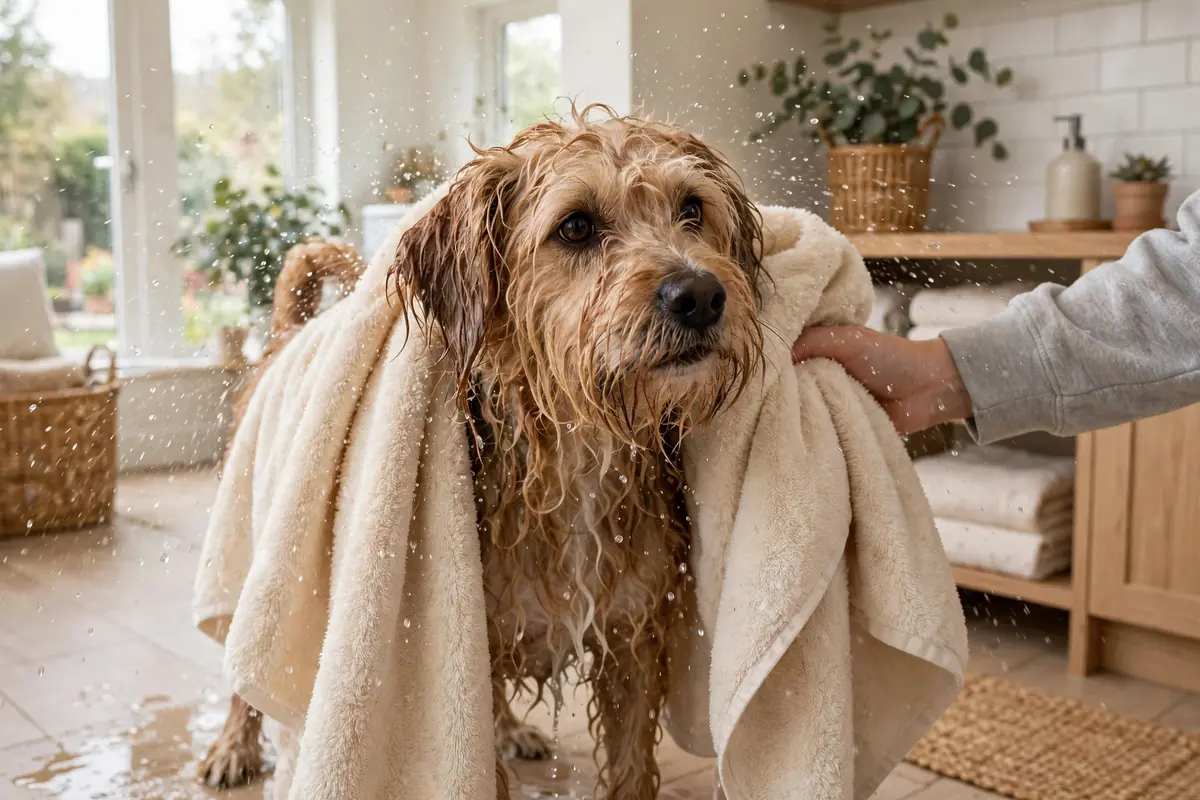
A good dry is just as important as a good wash. Start with a large towel and rub in the direction the hair grows, pressing the towel into the coat rather than scrubbing back and forth. Two towels beat one: the first takes off most of the water, and the second finishes the job.
If your dog tolerates it, a hair dryer on its lowest, coolest setting can speed things up — hold it well away and keep it moving so the air never concentrates in one spot. Many dogs prefer to simply air-dry after a good towel-down, and that is fine on a warm day. Whatever you choose, make sure your dog is fully dry before going outside in cold weather, and give the coat a final brush once it is dry.
Grooming Tools You Need
You do not need a professional kit to groom your dog at home — a small set of good tools covers almost every job, and buying quality once beats replacing cheap tools again and again.
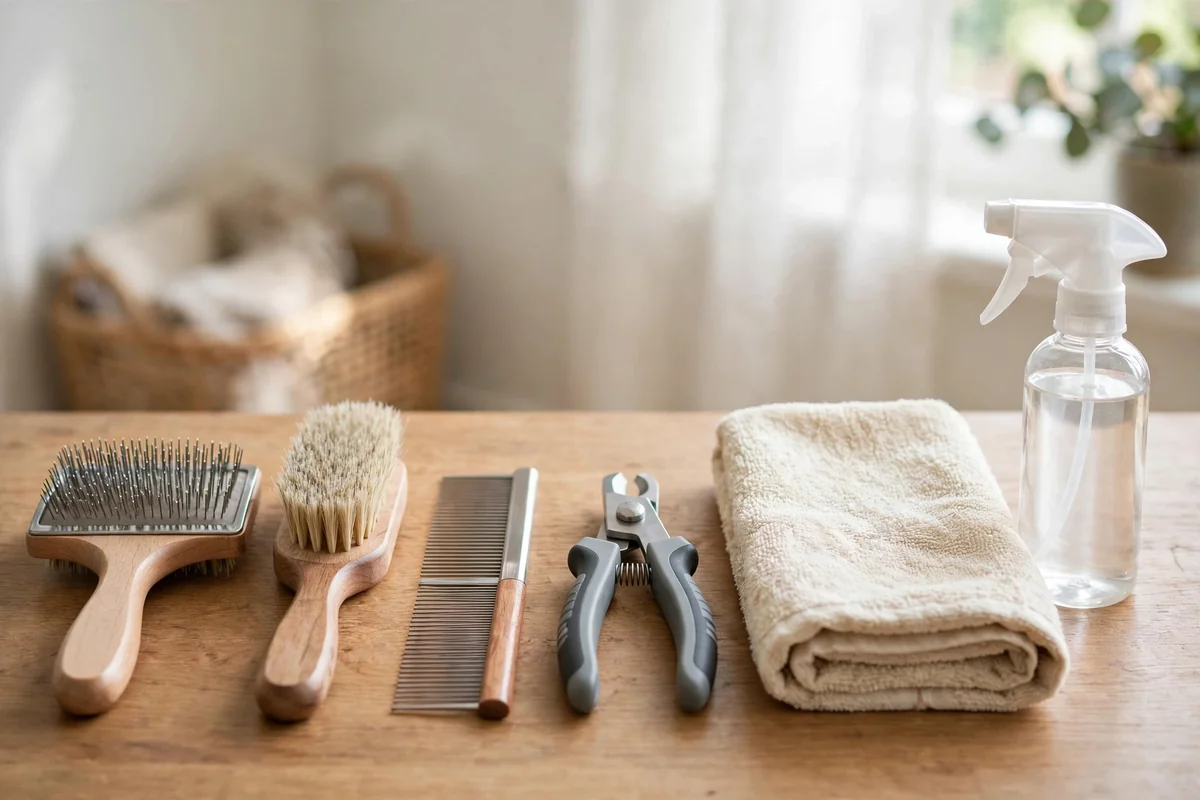
- Slicker brush: Fine wire pins that work through medium and long coats and lift out loose hair.
- Bristle brush: Soft bristles that smooth short coats and add shine.
- Wide-toothed comb: For checking your brushing and easing out small tangles without pulling.
- Dog shampoo: A gentle shampoo made for dogs, kept ready in your grooming kit.
- Nail clippers: Dog-sized clippers with a comfortable grip, plus a nail file.
- Towels: Two large, absorbent towels — one for the first pass, one for finishing.
- Spray bottle: Plain water for dampening a dry, static-prone coat before brushing.
- Rubber mat: Non-slip footing for the bath and for your grooming spot.
Store your tools together in one basket, clean and dry, so your next session starts in seconds. If you travel with your dog, our guide to the best pet carriers and travel gear has ideas for keeping your dog comfortable on the move.
A Simple Grooming Routine
Every dog is different, but a simple schedule keeps grooming from piling up — use this as a starting point and adjust it to your dog’s coat.
| Task | Short coat | Medium coat | Long or thick coat |
|---|---|---|---|
| Brushing | Once a week | 2–3 times a week | 3–4 times a week |
| Bathing | Every 1–2 months | Every 1–2 months | Every 4–6 weeks |
| Nail trimming | Monthly | Monthly | Monthly |
| Paw check | After walks | After walks | After every walk |
| Full brush-out | Once a month | Every two weeks | Every week |
The popular US dog breeds range from short-coated dogs needing little more than a weekly brush to long-coated dogs needing several sessions a week, so let your own dog’s coat set the pace. If tangles appear between sessions, brush more often — if the coat stays smooth and the nails stay short, your routine is working.
Do This, Not That
| Do this | Not that |
|---|---|
| Brush a little and often | Waiting until tangles form |
| Use lukewarm water and dog shampoo | Hot water or human shampoo |
| Trim only the tip of each nail | Cutting deep into the nail |
| Keep sessions short and calm | Rushing through a long session |
| End with praise and play | Ending while your dog is upset |
| Check paws after every walk | Ignoring dirt between the toes |
| Dry your dog fully after a bath | Leaving a wet dog in a cold room |
When to Visit a Professional Groomer
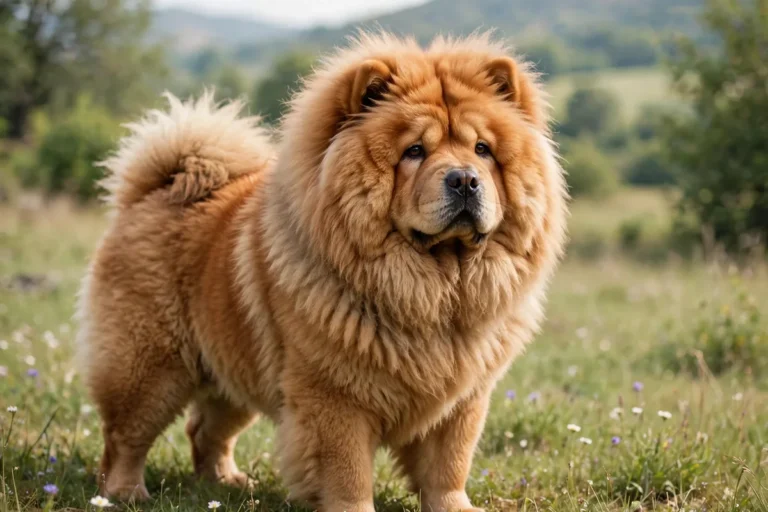
Home grooming covers the everyday jobs, but some things are best left to a professional groomer. A full haircut or a breed-style trim needs skill and sharp tools, and a professional knows how to shape a coat evenly — long-coated breeds, such as the Chow Chow, often need a professional trim to keep their shape. If large, tight mats will not brush out gently, a groomer can remove them safely without pulling.
A professional is also the right call if your dog is very nervous about grooming, or if you are unsure about any part of it. Many groomers are happy to show you how they handle your dog. Think of it as teamwork: you handle the regular brushing, bathing, and nail care, and the groomer handles the bigger jobs a few times a year.
Things to Remember
- Brush little and often: Regular brushing stops tangles.
- Bathe only when needed: A monthly bath suits most dogs.
- Trim nails a little at a time: Take off just the tip.
- Check paws after walks: Wipe them clean and look between the toes.
- Dry fully after a bath: Towel-dry first, then brush the coat smooth.
- Keep it calm: Short, gentle sessions with praise and play.
Related Reading on MyPetsMyLove
- Cat grooming at home guide
- Leash training guide
- Best dog toys guide
- Dogs & Puppies hub page
- MyPetsMyLove homepage
- About Us page
References
- American Kennel Club (AKC) — dog grooming and care resources
- The Humane Society of the United States — pet care resources
- Encyclopaedia Britannica — dog reference
Frequently Asked Questions
How often should I groom my dog at home?
It depends on your dog’s coat. Short-coated dogs usually need brushing once a week, while medium and long-coated dogs do best with two to four brushing sessions a week. Baths are needed about once a month, and nails need trimming every three to four weeks. Use the routine table in this guide as a starting point and adjust it to your dog.
What tools do I need for dog grooming at home?
A slicker brush or bristle brush, a wide-toothed comb, dog shampoo, nail clippers with a nail file, two large towels, a spray bottle of water, and a rubber mat cover almost every home grooming job. Start with this small set and add tools only when a specific job calls for them.
How often should I bathe my dog?
Most dogs need a bath every month or so, or whenever they have rolled in something muddy. Bathing too often can strip the coat of its natural oils, so wait until your dog is genuinely dirty. Always brush before a bath and rinse thoroughly until the water runs clear.
How do I brush my dog’s coat without tangles?
Brush a little and often, working in small sections in the direction the hair grows. Use a slicker brush for long coats and a bristle brush for short coats, and hold the base of any tangle with your fingers while you work it out from the ends inward. Finish with a wide-toothed comb — if it slides through easily, the coat is tangle-free.
How do I trim my dog’s nails at home?
Use clippers made for dogs and trim only a tiny bit at a time, taking off just the tip of each nail. Stop well before the pink centre of the nail, and trim even smaller amounts on dark nails. Work in good light, keep sessions short, and finish with a nail file to smooth any sharp edges.
How can I keep my dog calm during grooming?
Choose a time when your dog is already relaxed, such as after a walk, and groom in the same familiar spot each time. Move slowly, speak softly, and let your dog sniff the tools first. Keep sessions short, take breaks when your dog gets restless, and always end with praise and a favorite toy or a game.
When should I take my dog to a professional groomer?
Visit a professional groomer for a full haircut or breed-style trim, for large tight mats that will not brush out gently, or if your dog is very nervous about grooming. You handle the regular brushing, bathing, and nail care at home, and the groomer handles the bigger jobs a few times a year.
Conclusion
Dog grooming at home is simpler than it looks: a brush, a bath, a nail trim, and a towel-dry, done regularly and calmly, keep your dog clean and comfortable. Start small — one short brushing session today — and build from there. Your dog will soon enjoy the attention, and you will enjoy a cleaner home and a happier dog.
Ready for more? Explore our Golden Retriever guide and Labrador Retriever guide to see how grooming needs differ by breed, browse our best dog toys guide for playtime ideas after grooming, and learn more on the About Us page.
Disclaimer
Disclaimer
MyPetsMyLove dot com is an independent informational website covering pet species breeds characteristics activities positive training bonding grooming and responsible ownership
We are not a veterinary clinic medical provider pet food provider or veterinary nutrition service
We do not provide veterinary diagnosis medical advice treatment food recommendations or nutritional guidance
For pet health medical or food related concerns consult a qualified veterinarian or appropriate professional directly
Independent clinics listed on this website are not owned or operated by MyPetsMyLove unless explicitly stated
Verify third party credentials services fees and availability independently
We do not guarantee third party services or outcomes
To the extent permitted by applicable law we disclaim responsibility for independent third party services
Nothing in this notice excludes liability that cannot legally be excluded
The disclaimer does not make prohibited content acceptable