
Cat Trees vs Cat Towers: Understanding the Differences

Shop for cat climbing furniture and you will meet two names for what looks like the same thing: a cat tree and a cat tower. Both are tall pieces of furniture with platforms, scratching posts, and cosy places to sleep. Both give your cat somewhere to climb, scratch, and look out over the room. So are they the same thing with two names — or is there a real difference?
The honest answer is that the two names overlap a lot: sellers use them loosely, and no official rule separates a cat tree from a cat tower. But in practice the designs do differ — cat trees usually spread out with open platforms and perches, while cat towers go tall and narrow with stacked, enclosed hideaways. This guide explains what each one is, how they differ, and how to choose the right one for your cat and your home.
What Is a Cat Tree?
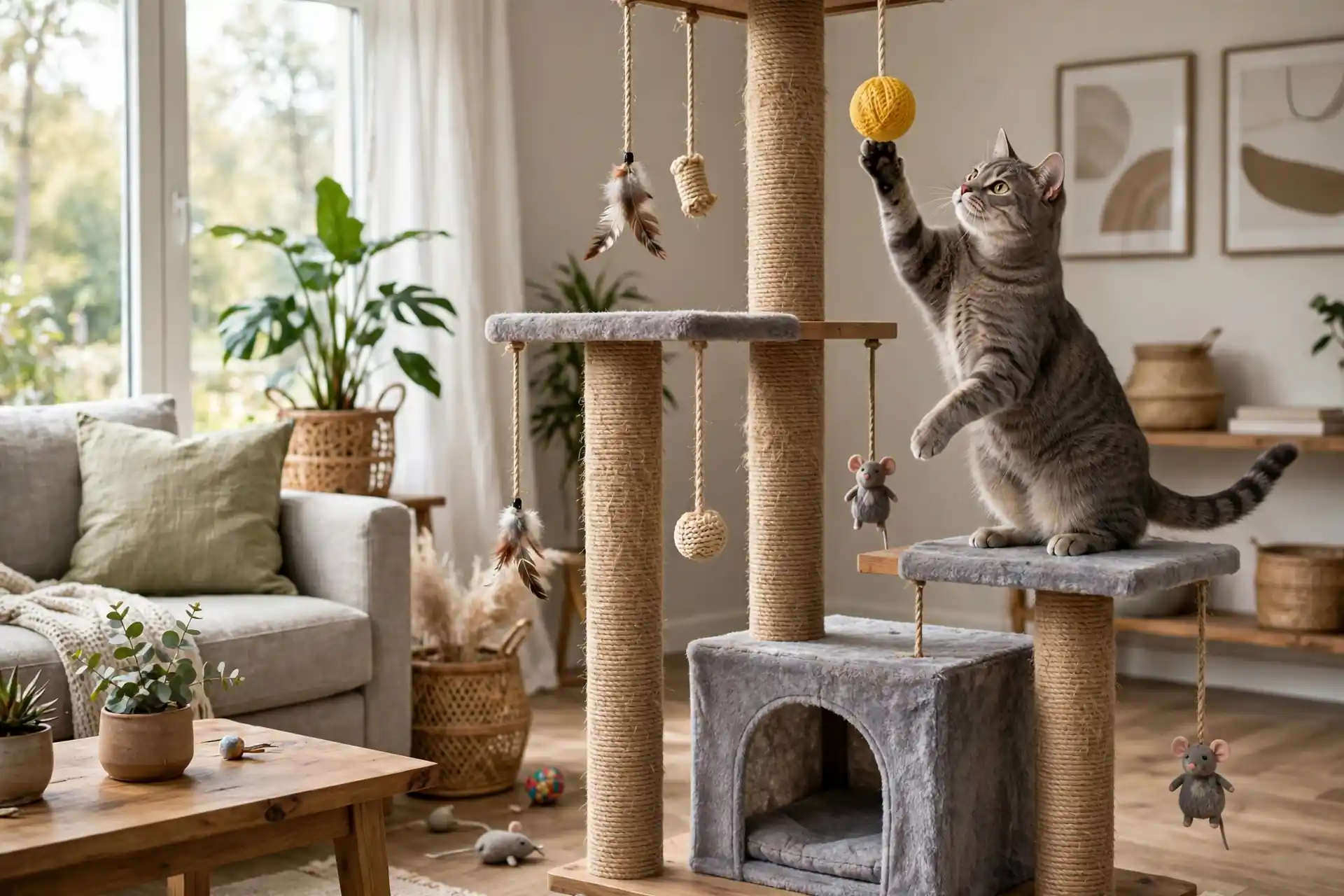
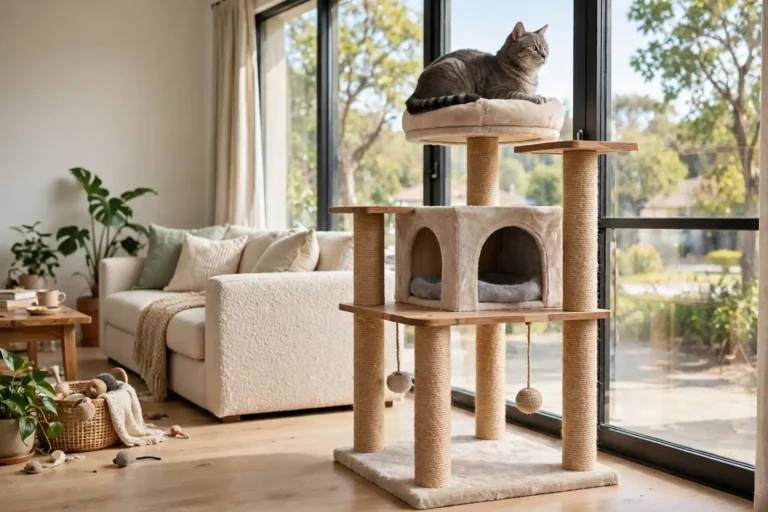
A cat tree is built around climbing and perching: a sturdy base, one or more upright posts wrapped in sisal rope for scratching, and several open platforms at different heights. The top usually has a perch — a flat, often rimmed platform where a cat can sit and watch the room. Many also include a small condo, a hammock, a tunnel, or a dangling toy.
The key word for a cat tree is “open”: the platforms are exposed, the perches face outward, and the whole structure invites the cat to climb up, look around, and jump between levels. Cat trees come in many shapes, from small single-post trees with one perch to large multi-level trees with several platforms, condos, and scratching posts. They are usually wider than they are tall, which gives them a stable footprint.
Cat trees suit cats that like to climb and watch: a confident cat will love the top perch, and a playful cat will enjoy jumping between the open platforms.
What Is a Cat Tower?
A cat tower also stands tall, but its design leans in a different direction: where a cat tree spreads out, a cat tower goes up. Towers are typically tall and narrow, with several enclosed hideaways — called condos — stacked one above the other, connected by platforms, ramps, or holes the cat climbs through.
The key word for a cat tower is “enclosed”: the condos give the cat a private, sheltered place to sleep, and the stacked design packs a lot of resting space into a small floor area. Many towers also have a top perch and a scratching post or two, but the condos are the feature that defines them.
Cat towers suit cats that like to hide and sleep in sheltered spots. A shy cat, or a household with more than one cat, will often get more use from a tower’s condos than from open perches. The tall, narrow shape also suits small rooms.

The Naming Confusion
If the two designs sound clear, the shopping experience is not: you will find “cat trees” that look like towers and “cat towers” that look like trees. There is no standard definition, and sellers use whichever name they think buyers will search for.
Some sellers call any tall piece a tower and any multi-level piece a tree. Others use both names for the same product on different pages, and a few reserve “cat tower” for floor-to-ceiling models. The result is that the name on the box tells you less than the design itself.
The practical way to shop is to ignore the name and look at the design. Count the open platforms and the enclosed condos, and check the height, the width of the base, and the scratching surfaces. A piece with three open perches and one condo is a tree in spirit, whatever the label says; a piece with three stacked condos and one perch is a tower.
Cat Trees vs Cat Towers at a Glance
| Feature | Cat tree | Cat tower |
|---|---|---|
| Typical shape | Wider, spreads out | Taller, narrower |
| Open platforms | Several, the main feature | One or two, usually at the top |
| Enclosed condos | Often one, sometimes none | Several, stacked vertically |
| Scratching posts | One or more sisal posts | Usually one or two |
| Best for | Climbers and watchers | Hiders and nappers |
| Floor space | Needs more room | Small footprint |
| Multi-cat homes | Good, if platforms are separate | Good, if condos are separate |
| Height range | About 60–180 cm | About 120–240 cm |
The heights are typical ranges, not a rule — small trees can be under a metre tall and large towers can reach the ceiling. What matters is the shape and how your cat uses it.
Materials: What Cat Trees and Cat Towers Are Made Of
Most cat trees and cat towers are built from the same materials. The frame is usually pressed wood or solid wood, covered in carpet or plush fabric. Solid wood frames are heavier and more stable, while pressed wood frames are lighter and cheaper. Carpet gives grip for climbing, while plush fabric is softer for sleeping.
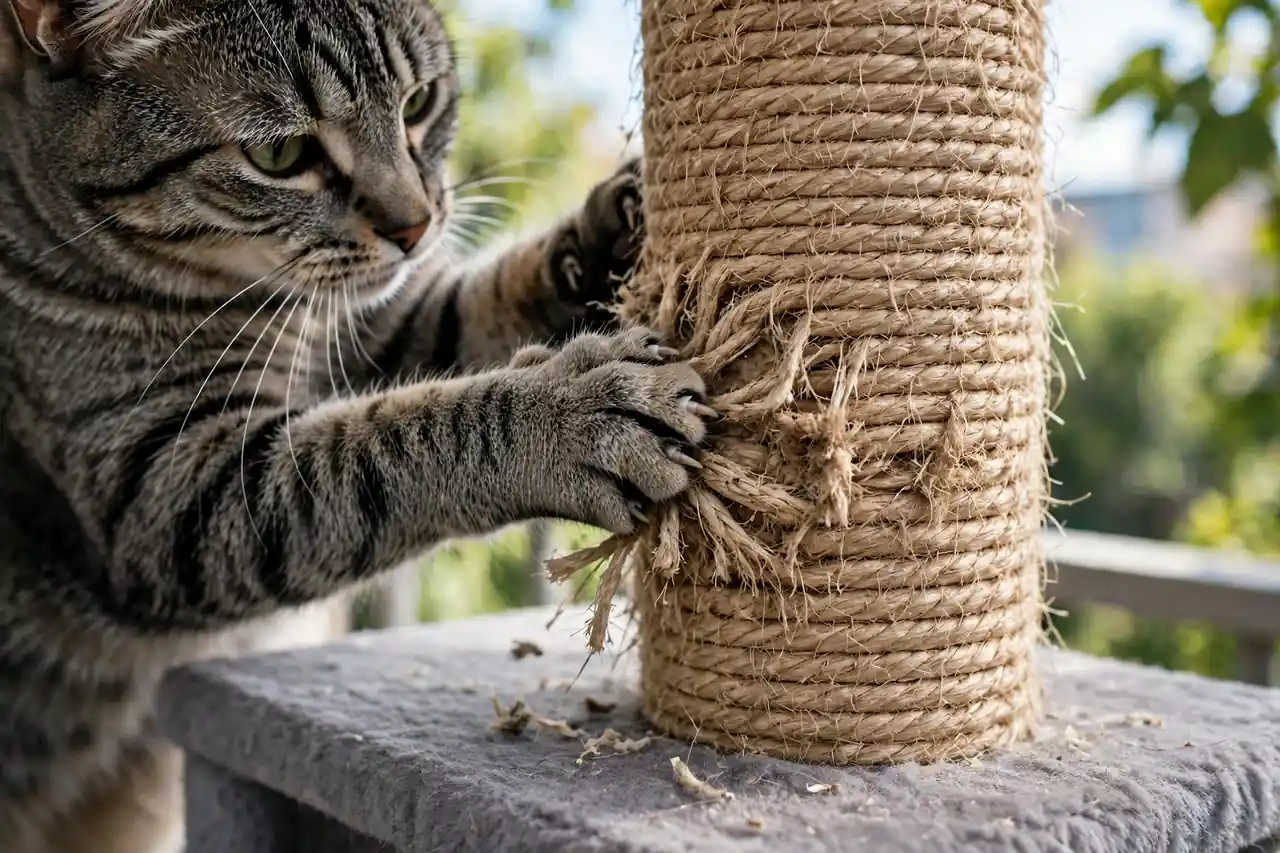
Sisal rope is the standard scratching material: a tough natural fibre wrapped tightly around the upright posts, far harder-wearing than carpet or fabric. Check how much of the post is wrapped — a post wrapped from top to bottom gives a full-length scratching surface, while a short band of sisal wears out quickly.
Some designs use cardboard scratchers, woven fabric, or bare wood. Cardboard is light and cheap but wears out fast. Bare wood looks neat but gives the cat little grip. For most cats, sisal is the best scratching surface, and a tree or tower with generous sisal coverage will last longer and get more use.
Sizes and Heights
Cat trees and cat towers come in three rough size groups. Small designs are under a metre tall, with one or two levels — a good fit for a single cat in a small room. Medium designs are about one to one and a half metres tall, with two or three levels, and they suit most homes. Large designs are over one and a half metres, with four or more levels, and they suit multi-cat homes or keen climbers.
Height matters because cats like to be up high: a perch at window height lets a cat watch the street, and a perch near the ceiling gives a confident cat a lookout over the whole room. But height also affects stability — a tall, narrow piece needs a wide, heavy base, or it will wobble when a cat jumps onto it.
Before you buy, measure the space: the height to the ceiling, the width of the floor area, and the distance to the nearest window. A tree that is too tall will dominate the room, and a tower that is too wide will block the walkway.
Stability and Safety
Stability is the most important feature of any tall cat furniture. A good piece has a wide, heavy base that keeps it steady when a cat leaps onto the top perch, and posts that are thick and firmly fixed, with no wobble when you push the structure gently from the side. If a piece rocks or tips, it is not safe for an active cat.
Wall anchoring helps with tall designs: many large trees and towers come with a strap or bracket that fixes the top to the wall. If yours has no bracket, placing it in a corner gives it extra support.
Check the construction before the cat uses it: look for exposed staples, loose screws, or frayed fabric, and tighten any fixings that feel loose. A well-built piece should feel solid and quiet, with no creaking when the cat climbs it.
Features Worth Comparing
Beyond the basic shape, the features separate a good piece from a poor one:
- Perches: A good perch is wide enough for the cat to lie flat and turn around, with a raised rim so the cat feels secure. Large cats need a perch at least as wide as their body.
- Condos: A good condo is roomy enough for the cat to curl up and stretch, with an entrance wide enough to enter easily. Cats prefer condos with two openings rather than a single small hole.
- Scratching surfaces: Look for full-length sisal posts, tightly wrapped with no loose ends.
- Hammocks: A fabric hammock slung between posts adds a resting level without adding height.
- Dangling toys: A toy on a string gives the cat something to bat at and turns the furniture into a playground. Our guide to the best cat toys covers the types cats enjoy most.
- Ramps and steps: A ramp or steps between levels suits older cats and kittens better than big jumps.

Which One Suits Your Cat?
The right choice depends on your cat, not on the label. Watch how your cat behaves at home and match the design to its habits.
A climber that jumps onto shelves and the back of the sofa will love a cat tree with open perches and high platforms. A hider that sleeps under the bed or inside boxes will prefer a cat tower with enclosed condos. A playful cat will enjoy a tree with dangling toys and several levels to jump between.
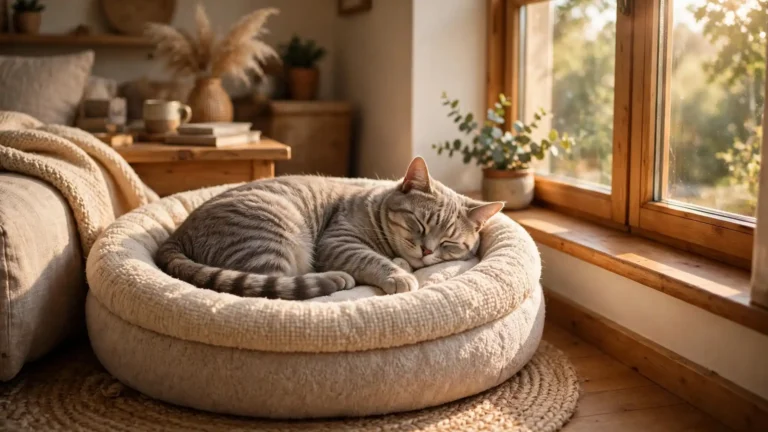
In a multi-cat home, separate spaces matter: two cats sharing one tree need separate perches and separate condos, or they will argue over the best spot. For cats that like to sleep in warm, enclosed spots, our guide to the best cat beds and our comparison of donut vs cave cat beds cover the cosiest options.
Older cats and kittens need an easier climb: look for ramps or steps, lower platforms, and a stable base. A very tall tower with big jumps will frustrate a kitten and tire an older cat, while a medium tree with a gentle climb suits both.
Where to Put It
Placement makes a big difference. Cats like a spot with a view, so a position beside a window is ideal — the cat can watch birds, people, and the street from its perch. A quiet corner suits a shy cat, while a spot near the family’s main living area suits a social cat.
Avoid the middle of a busy walkway, where the cat will be disturbed, or a spot next to a loud appliance. A corner position gives the piece extra stability and the cat a sense of shelter on two sides.
Give the cat time to discover it. Some cats climb a new tree within minutes; others need a few days. Most cats will claim the highest spot on their own once they feel safe.
Care and Cleaning
Cat trees and cat towers need regular cleaning, because they collect fur and dust. Vacuum the platforms and condos once a week, using a brush attachment to reach into corners and seams. Removable cushions can be washed, and plush covers brushed to lift the fur.
Sisal posts wear out over time. When the rope frays or comes loose, it can be replaced — re-wrapping a post is a simple job. Carpeted surfaces wear out more slowly, but once the carpet is thin or torn, the platform loses its grip.
A well-made tree or tower lasts for years with basic care. Check the fixings every few months, tighten any loose screws, and replace worn sisal before it unravels.

Related Reading on MyPetsMyLove
- Best cat beds guide
- Donut vs cave cat beds
- Durable toys for active cats
- Pet Products hub page
- MyPetsMyLove homepage
- About Us page
References
- The Humane Society of the United States — pet care and enrichment resources
- Encyclopaedia Britannica — cat behaviour and enrichment reference
Frequently Asked Questions
What is the difference between a cat tree and a cat tower?
A cat tree is usually a climbing frame with open platforms and perches, while a cat tower is usually a tall, narrow structure with stacked, enclosed hideaways called condos. The names overlap and sellers use them loosely, so the design matters more than the label.
Is a cat tree the same as a cat tower?
Not exactly, but the two terms are often used for the same products. There is no standard definition, so a piece labelled a tower may look like a tree and vice versa. Compare the design — open perches versus enclosed condos — rather than the name.
Which is better for a cat that likes to hide?
A cat tower is usually better for a cat that likes to hide, because its stacked condos give the cat enclosed, private places to sleep. A cat tree suits a cat that likes to climb and watch from open perches.
What size cat tree should I buy?
Small designs under a metre tall suit a single cat in a small room. Medium designs of one to one and a half metres suit most homes. Large designs over one and a half metres suit multi-cat homes or cats that love to climb. Measure the space before you buy.
What material is best for a cat tree?
Solid wood frames are the most stable, and sisal rope is the best scratching surface. Look for full-length sisal wrapping on the posts, carpet or plush platforms for grip, and a wide, heavy base for stability.
How do I keep a tall cat tree stable?
Choose a piece with a wide, heavy base, place it in a corner for extra support, and use a wall bracket if one is supplied. Check the fixings regularly and tighten any loose screws.
Where should I put a cat tree or cat tower?
Beside a window is ideal, because the cat can watch the world from its perch. A quiet corner suits a shy cat, while a spot near the family’s main living area suits a social cat. Avoid busy walkways and loud appliances.
Conclusion
Cat trees vs cat towers comes down to design, not names. A tree spreads out with open platforms and perches for climbers and watchers; a tower goes tall and narrow with stacked condos for hiders and nappers. The sellers may use the two names for the same product, but once you know what to look for — open perches versus enclosed condos, sisal coverage, perch size, and base stability — choosing is simple.
Match the design to your cat’s habits, measure the space, and put it beside a window. Your cat will do the rest. Browse the Pets Products section for more guides, compare sleeping spots in our best cat beds guide, and start from the MyPetsMyLove homepage to discover more about cats and the products that make their lives comfortable.
Disclaimer
Disclaimer
MyPetsMyLove dot com is an independent informational website covering pet species breeds characteristics activities positive training bonding grooming and responsible ownership
We are not a veterinary clinic medical provider pet food provider or veterinary nutrition service
We do not provide veterinary diagnosis medical advice treatment food recommendations or nutritional guidance
For pet health medical or food related concerns consult a qualified veterinarian or appropriate professional directly
Independent clinics listed on this website are not owned or operated by MyPetsMyLove unless explicitly stated
Verify third party credentials services fees and availability independently
We do not guarantee third party services or outcomes
To the extent permitted by applicable law we disclaim responsibility for independent third party services
Nothing in this notice excludes liability that cannot legally be excluded
The disclaimer does not make prohibited content acceptable

2 Comments