Pug: The Complete Breed Guide
Few dogs can make a whole room smile just by walking into it, but the Pug has been doing exactly that for centuries. With its wrinkled forehead, big round eyes, and a tail curled like a cinnamon roll, this small dog carries an expression that seems permanently somewhere between thoughtful and amused. Emperors kept Pugs as treasured companions, Dutch royalty adopted one as a mascot, and today the breed sits comfortably among the most common dog breeds in American homes. This guide traces the Pug’s long journey from imperial China to modern sofas, then covers its appearance, coat, famously charming personality, puppies, grooming routine, and everyday life with one of the world’s oldest companion breeds.
History of the Pug: From Imperial China to Europe
The Pug is an ancient breed, developed in China well over a thousand years ago. Small, flat-faced companion dogs were prized at the imperial court, where Pugs lived as pampered companions to emperors and were treated as treasures of the palace. Chinese breeders shaped the little dog deliberately: a square, compact body, a smooth coat, and the deep forehead wrinkles that were especially valued — tradition says breeders admired wrinkles that resembled characters symbolizing good fortune.
In the 1500s and 1600s, Dutch traders brought Pugs from China to Europe, and the breed’s second career began. The Pug became the official dog of the Dutch House of Orange, a link traditionally explained by the story of Pompey, a Pug said to have alerted Prince William the Silent to approaching soldiers and saved his life. Whether or not every detail of the tale is exact, the association stuck: the Pug became a royal favorite in the Netherlands, then spread to England and across Europe, where it was adored by aristocrats and painted into portraits. Artists captured Pugs at the feet of noblewomen, merchants named businesses after them, and in France the breed became a fashionable companion in the years around the Revolution. Queen Victoria was a devoted Pug owner in the nineteenth century and kept many of them, helping to fix the breed’s place in British life. The Pug reached the United States in the years after the Civil War, gaining American Kennel Club recognition in 1885. Few popular US dog breeds can match that résumé.
Appearance of the Pug
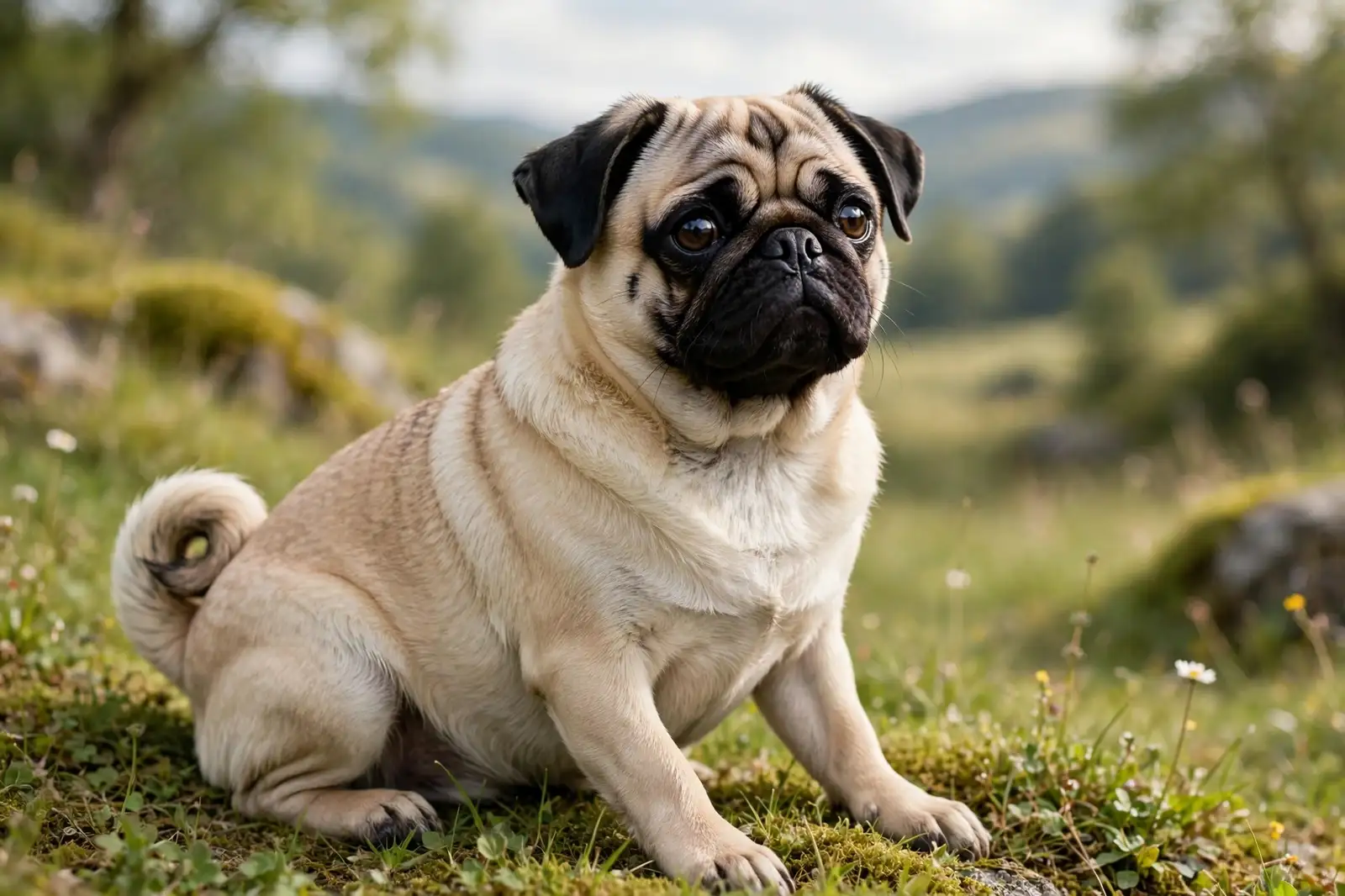
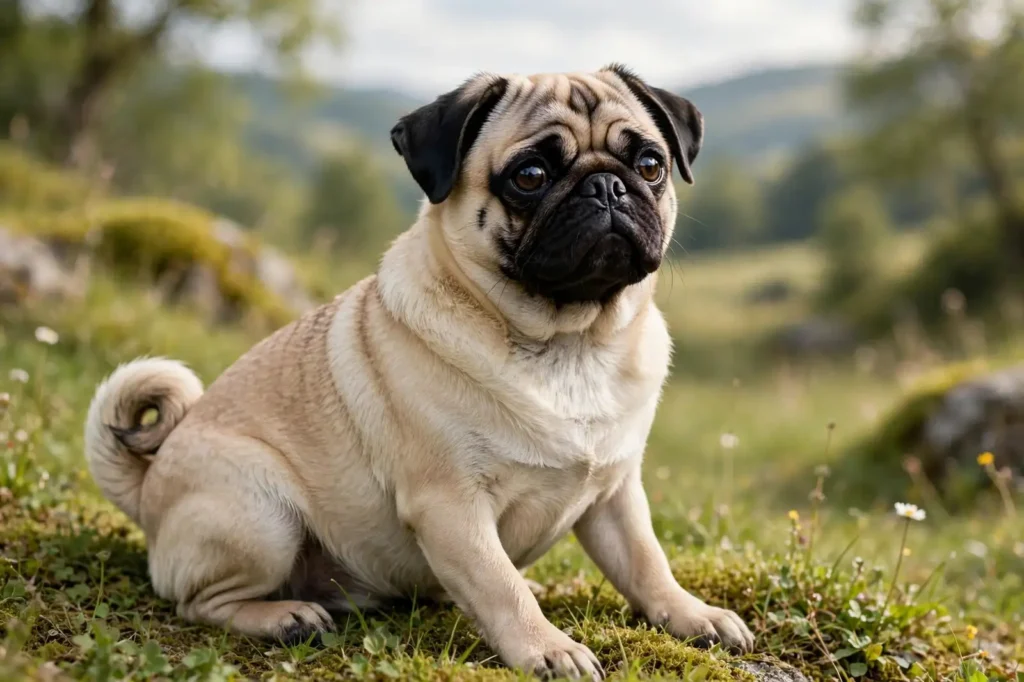
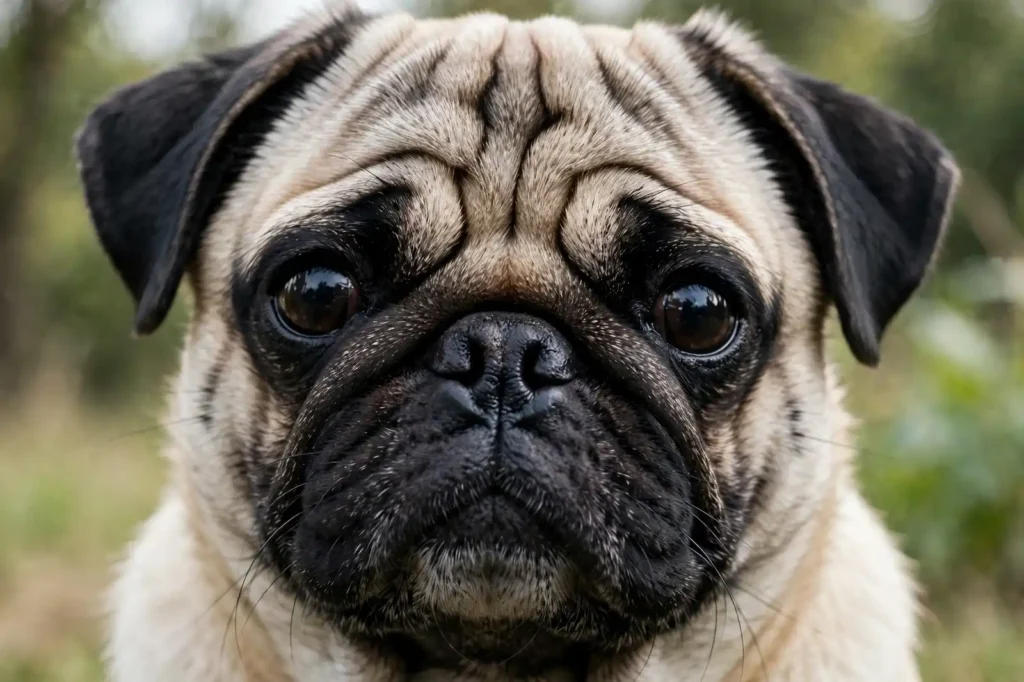
The Pug is a small dog with a surprisingly solid build. The body is square and cobby — short, thick, and muscular — standing on straight, sturdy legs, and most adults weigh roughly 14 to 18 pounds. Nothing about the Pug is long or lean; the whole dog is compact and rounded, which is exactly what its Latin motto, multum in parvo, describes: a lot of dog in a small space.
The head is large and round, with a short muzzle and deep wrinkles across the forehead. The eyes are very large, round, dark, and expressive — a Pug’s pleading look is famous, and owners quickly learn how hard it is to resist. The ears are small, thin, and velvety, carried either folded forward in the button style or in the smaller rose fold, and the black mask across the muzzle is a defining feature on fawn dogs. The tail completes the picture: tightly curled over the hip, with a double curl considered especially typical of the breed. Compared with the leggy Beagle, the Pug is a study in compact curves.
Coat and Colors
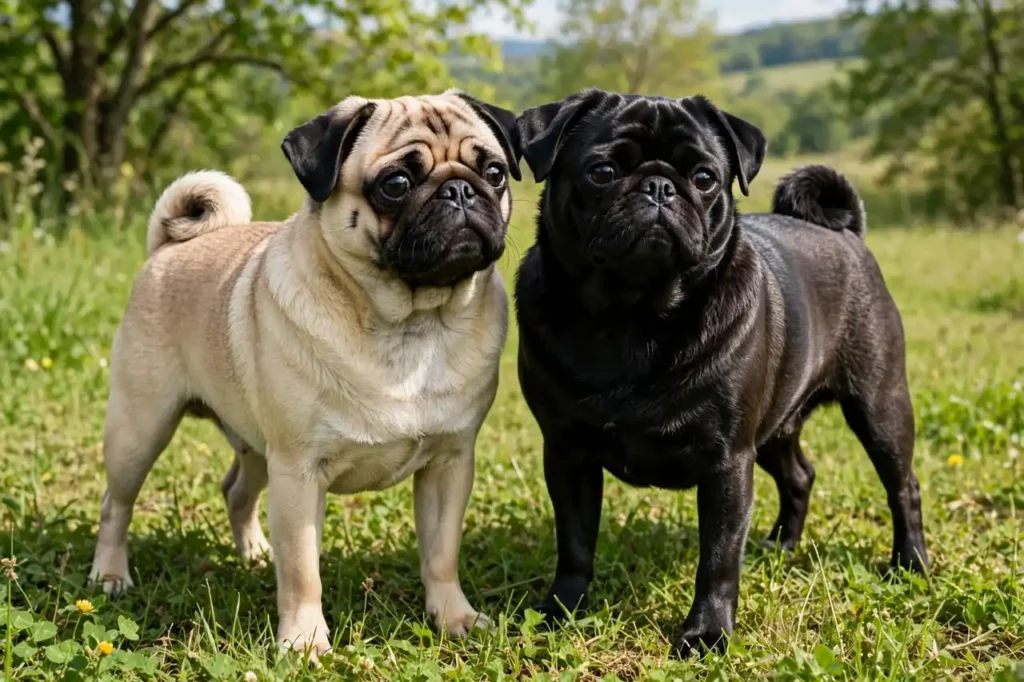
The Pug’s coat is short, smooth, fine, and glossy, lying flat against the body and feeling soft to the touch. There are two classic colors. The first is fawn, which ranges from warm apricot tones to a pale silver-fawn, always paired with the black mask and black ears that frame the face. The second is solid black, sleek and striking, with the wrinkles showing as shadows across the face. A dark line of color, called the trace, sometimes runs along the back of fawn Pugs.
Short does not mean shed-free. Pugs shed steadily through the year, and fawn Pugs, which have a thicker double coat, can surprise new owners with how much loose hair a weekly brush collects. Black Pugs typically have a lighter single coat. Either way, the coat itself is one of the easiest of any breed to maintain — no trimming, no styling, just regular brushing to lift the loose hair before it lands on the furniture.
Temperament and Personality
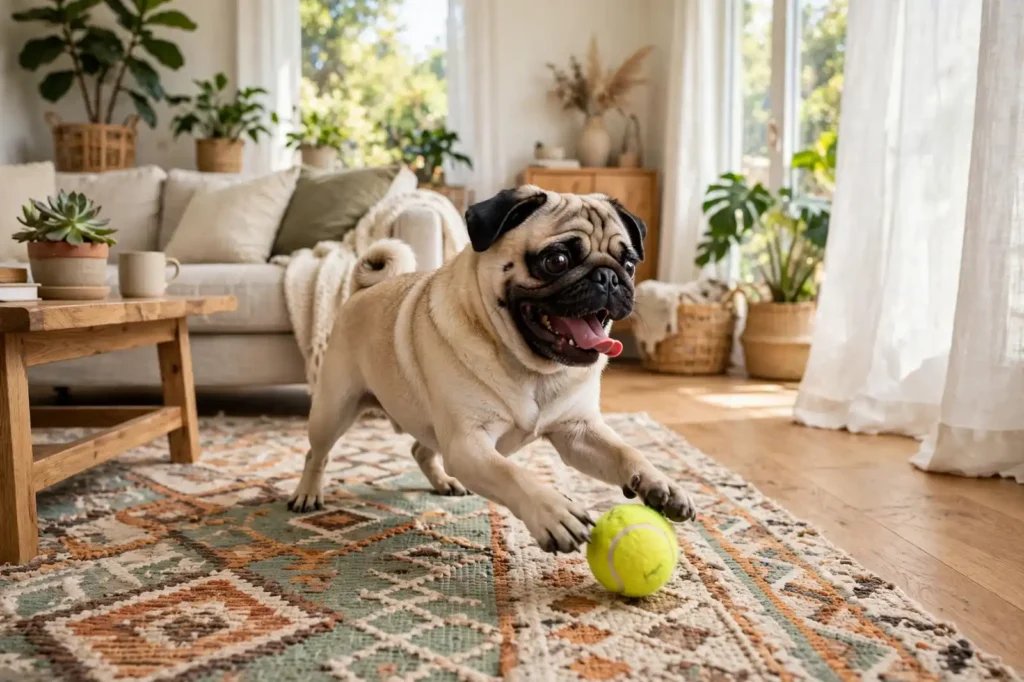
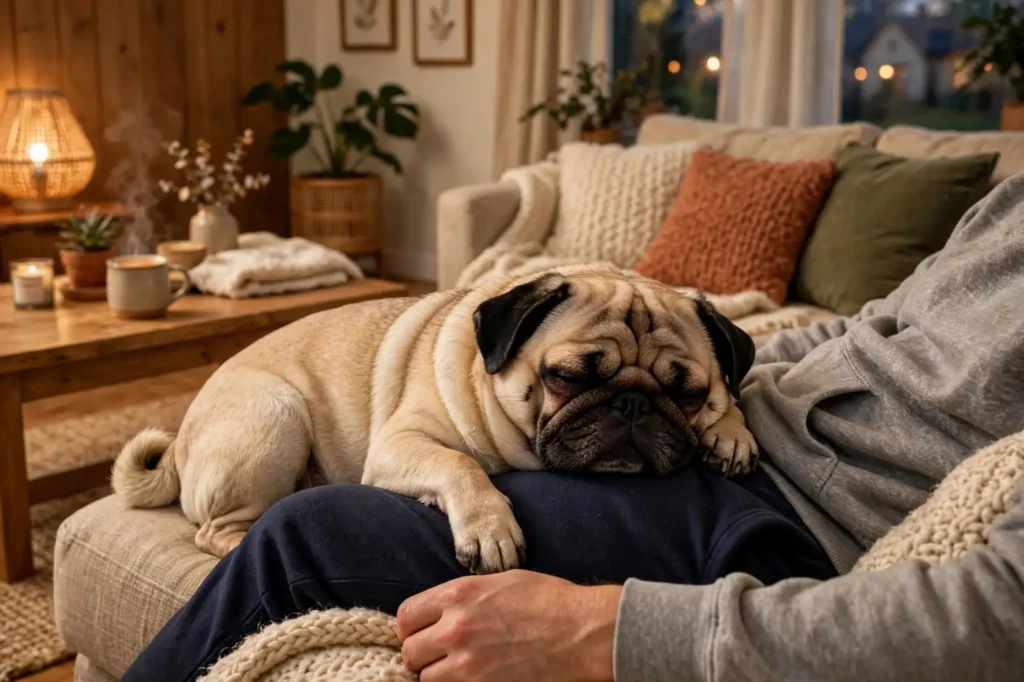
The Pug’s personality explains its two-thousand-year career as a companion. This is a charming, playful, and deeply people-loving breed, bred for one job — company — and still devoted to it. Pugs follow their owners from room to room, claim the warmest lap available, and prefer to be involved in everything the household does. They are famously clownish, with a mischievous sense of fun that keeps families laughing, and they are generally gentle and patient with children and sociable with other dogs.
There is a stubborn streak beneath the charm. A Pug has its own opinions, and training goes best with patient, positive methods, short sessions, and plenty of praise and play as rewards. Pugs are not watchdogs in any serious sense — most greet visitors as new friends — and they are not built for long hikes or intense exercise. What they offer instead is steady, cheerful companionship, which is why the breed appears in so many guides to the most popular dog breeds in America.
Pug Puppies
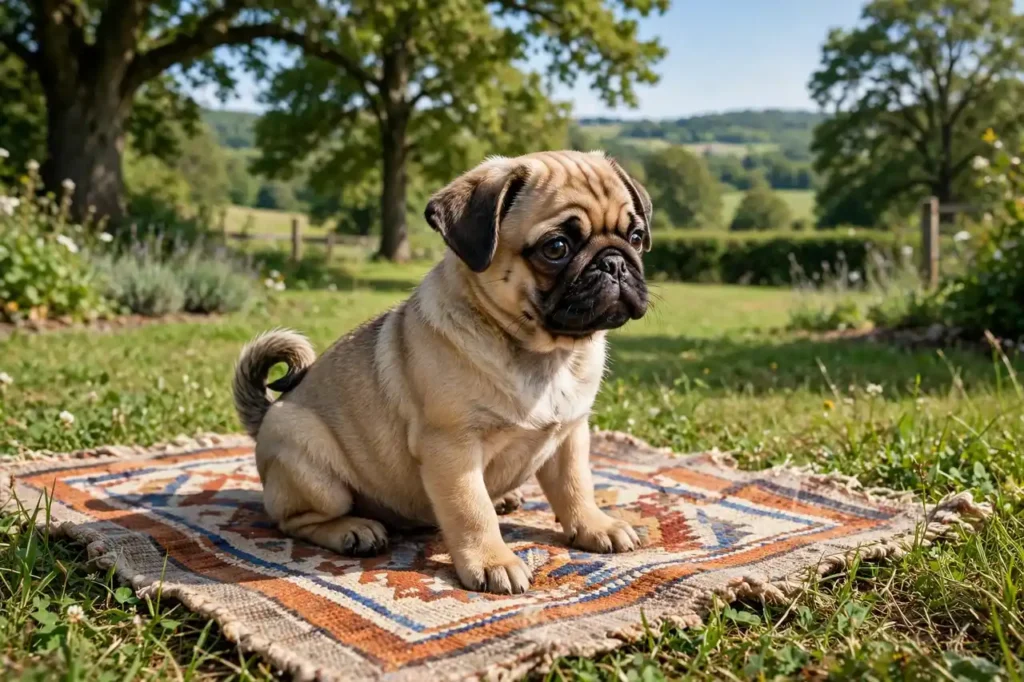
Pug puppies are miniature versions of the adults: round-headed, wrinkled, and already wearing the curled tail, though the wrinkles deepen and the mask darkens as the puppy grows. Fawn puppies are often born with darker coats that lighten over the first months. Young Pugs are playful, curious, and quick to bond, and they learn household routines fastest when training starts early and stays kind and consistent.
The early weeks are the time to build good habits gently. Short, positive training sessions introduce basic commands and house manners, while calm introductions to different people, sounds, and friendly dogs help a puppy grow into the confident, sociable adult the breed is known for. Pug puppies have small bladders and short attention spans, so patience and frequent breaks matter more than long lessons. Anyone comparing small breeds for family life will find the Pug listed among the best dog breeds for first-time owners, largely because of this forgiving, affectionate nature.
Grooming and Everyday Care
A Pug’s grooming routine is simple, but it is a routine — this breed does best with a few minutes of regular care each week. Brushing comes first: a soft brush or grooming mitt used once a week lifts loose hair and keeps the glossy coat looking its best, with a little extra brushing during heavier seasonal shedding.
The famous facial folds need their own small habit. As part of ordinary grooming, the wrinkles on the face and around the nose are gently wiped with a soft, slightly damp cloth to clear away the day’s dust and moisture, then patted dry so the folds stay clean and comfortable. Ears get a quick check and a gentle wipe, nails are trimmed regularly so they stay short and neat, and an occasional bath with a mild dog shampoo keeps the coat fresh. Most Pugs accept all of this happily when it starts young and comes with praise — grooming time doubles as lap time, which is exactly how a Pug thinks it should be.
Living With a Pug
Life with a Pug is life with a small, devoted shadow. The breed suits apartment living well: it is compact, relatively quiet, and content with moderate daily activity — a couple of walks and some indoor play satisfy most Pugs, after which the sofa is the main destination. Pugs thrive on companionship and do best in homes where someone is around for much of the day, since company is not a bonus for this breed but the whole point.
In family life, the Pug’s patience and sociability shine. It usually fits in happily alongside children and other pets, including other dogs, and its sturdy little body handles family life better than more fragile toy breeds. A typical Pug day is simple to arrange: a morning walk, a play session with a favorite toy, a long and serious nap, and as much lap time as the household can provide. Training fits naturally into that rhythm — Pugs respond well to short, cheerful practice woven into daily routines, and their love of praise makes basic commands and house manners satisfying to teach. Compared with the gentle, sporting Labrador Retriever, the Pug asks for far less exercise and space, trading outdoor adventure for indoor devotion. Set against the equally compact French Bulldog, the Pug brings a longer history and a softer, more clownish expression — two small companions with very different pasts.
Pug vs Other Popular Companion Dogs
| Breed | Size | Coat | Ears | Temperament |
|---|---|---|---|---|
| Pug | Small, 14–18 lb | Short, smooth, fawn or black | Small, button or rose | Charming, playful, devoted |
| French Bulldog | Small, under 28 lb | Short, smooth, many colors | Large, upright bat ears | Adaptable, playful, alert |
| Beagle | Small-medium, 20–30 lb | Short, dense, tricolor | Long and floppy | Merry, curious, vocal |
The table highlights the Pug’s niche among popular companion dogs. The French Bulldog shares the compact size and short coat but wears upright bat ears and a more alert air. The Beagle is bigger, louder, and ruled by its nose. The Pug is the softest-edged of the three: the smallest, the most lap-focused, and the one whose expression has been making people laugh the longest.
Interesting Facts About Pugs
- An imperial treasure: Pugs were so valued in imperial China that they lived in luxury as companions to emperors.
- A royal mascot: The breed became the official dog of the Dutch House of Orange in the 1500s.
- A famous motto: The Pug’s Latin motto, multum in parvo, means “a lot in a little” — a perfect summary of the breed.
- Wrinkles with meaning: Chinese breeders prized forehead wrinkles, especially patterns said to resemble the character for “prince.”
- A group name to smile at: A group of Pugs is traditionally called a grumble.
- Queen Victoria’s favorite: The Queen kept many Pugs and helped popularize the breed in Britain.
- An early arrival: The Pug was among the breeds recognized when the American Kennel Club’s registry was young, gaining recognition in 1885.
Related Reading on MyPetsMyLove
- Labrador Retriever guide
- French Bulldog guide
- Beagle guide
- Dogs & Puppies hub page
- MyPetsMyLove homepage
- About Us page
References
- American Kennel Club (AKC) — Pug breed profile
- Encyclopaedia Britannica — Pug reference
- The Humane Society of the United States — pet care and enrichment resources
Frequently Asked Questions
Where do Pug dogs come from?
Pugs were developed in China more than a thousand years ago as companions to emperors. Dutch traders brought them to Europe in the 1500s and 1600s, where the breed became a royal favorite in the Netherlands and England before reaching the United States.
How big does a Pug get?
A Pug is a small but solid dog, usually weighing about 14 to 18 pounds. The body is square and cobby, with a large round head, short muzzle, and a tightly curled tail — a lot of dog in a small space, as the breed’s motto says.
What colors do Pugs come in?
Pugs come in two classic colors: fawn, which ranges from apricot to silver-fawn and always comes with a black mask and ears, and solid black. The coat in both colors is short, smooth, fine, and glossy.
Are Pugs good apartment dogs?
Yes. Pugs are compact, relatively quiet, and satisfied with moderate daily activity, which makes them well suited to apartment living. They thrive on companionship, so they do best in homes where people are around for much of the day.
How much grooming does a Pug need?
The routine is light but regular: a weekly brush to lift loose hair, a gentle wipe of the facial folds with a soft damp cloth as part of ordinary grooming, regular nail trims, and an occasional bath. Starting the routine young helps a Pug enjoy it.
Are Pugs easy to train?
Pugs are intelligent but can be stubborn, so training works best with patient, positive methods. Short, fun sessions with praise and play as rewards suit the breed far better than long drills, and consistency helps house manners stick.
Do Pugs get along with children and other dogs?
Generally, yes. Pugs are sociable, gentle, and playful, and they usually fit happily into family life with children and other dogs. Their sturdy build makes them more robust playmates than many small breeds.
Conclusion
The Pug has spent two thousand years perfecting a single skill: being wonderful company. Behind the wrinkles and the curled tail sits a playful, devoted, endlessly charming dog that asks for little more than a warm home, a weekly brush, and a person to follow. For apartment dwellers and families alike, it is easy to see why this little dog from imperial China remains one of the world’s best-loved companions.
Compare the Pug with the French Bulldog and the Beagle, meet the classic family favorite in our Labrador Retriever guide, and explore more breeds in the Dogs & Puppies section of MyPetsMyLove.
Disclaimer
Disclaimer
MyPetsMyLove dot com is an independent informational website covering pet species breeds characteristics activities positive training bonding grooming and responsible ownership
We are not a veterinary clinic medical provider pet food provider or veterinary nutrition service
We do not provide veterinary diagnosis medical advice treatment food recommendations or nutritional guidance
For pet health medical or food related concerns consult a qualified veterinarian or appropriate professional directly
Independent clinics listed on this website are not owned or operated by MyPetsMyLove unless explicitly stated
Verify third party credentials services fees and availability independently
We do not guarantee third party services or outcomes
To the extent permitted by applicable law we disclaim responsibility for independent third party services
Nothing in this notice excludes liability that cannot legally be excluded
The disclaimer does not make prohibited content acceptable