
Finch Care: The Complete Guide to Happy Pet Finches
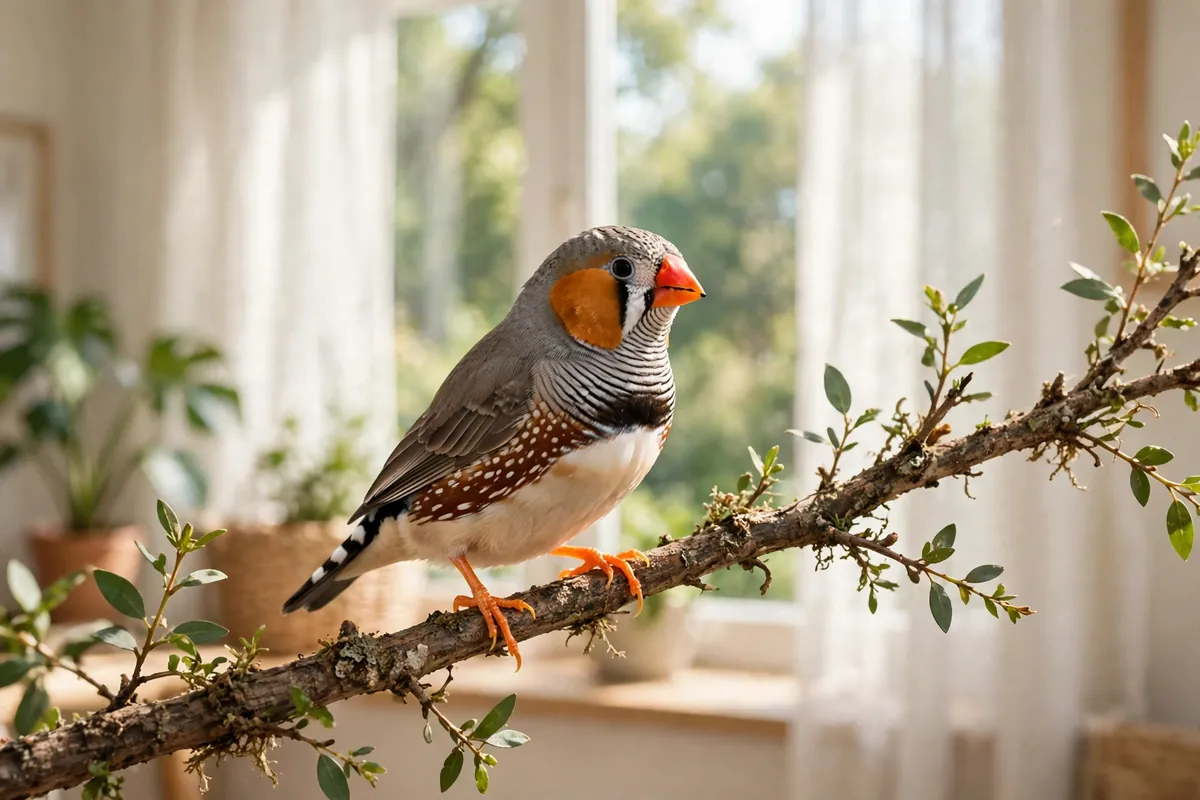
It is six in the morning, and the smallest bird in your home is already awake, hopping from perch to perch and filling the room with a cheerful, chattering song. That is the quiet magic of finches — tiny, bright, endlessly busy birds that ask for very little and give back a whole soundtrack of song. If you are thinking about bringing a finch home, this guide covers finch care from choosing your bird to setting up its cage and enjoying its company for years to come.
Why Finches Make Wonderful Pets
Finches are among the easiest pet birds to keep, and that is a big part of their charm. They do not need handling or training to be happy, they do not demand hours of attention, and they are content in a well-set-up cage while you enjoy watching them. For people who love birds but cannot commit to a large parrot, a finch is an ideal first pet bird.
What finches lack in size, they make up for in personality. They are active, curious, and social, always hopping, fluttering, and exploring. A pair will preen each other, chatter, and build little nests, and watching that daily life is genuinely relaxing — many owners say their finches are the calmest part of their day.
Finches also suit smaller homes: a cage fits in a living room corner, and their soft, musical song makes them good neighbours in apartments.
Choosing Your Finch
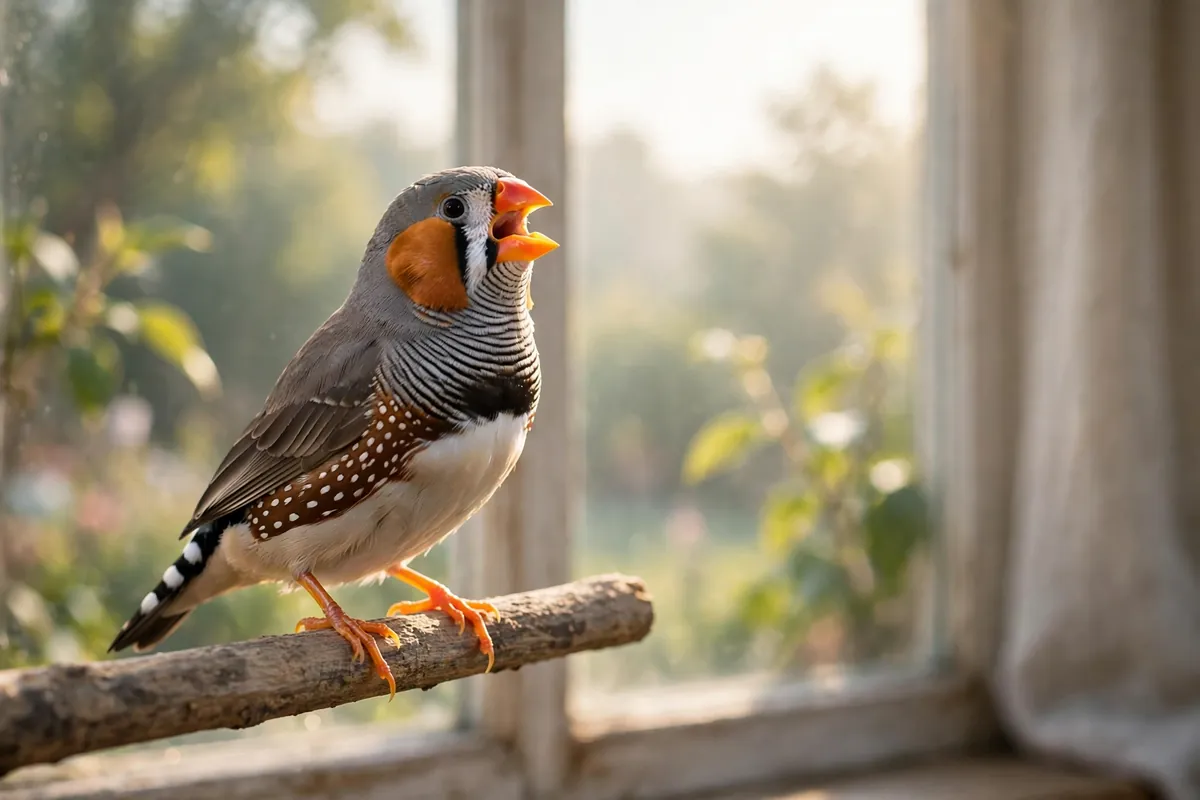
First, decide which kind of finch to bring home. The zebra finch is the most common pet finch in America, and for good reason: hardy, cheerful, and easy to care for, with males that sing a bright, beeping song. The society finch is another excellent beginner choice — calm, gentle, and good with other finches. The Gouldian finch is the showpiece of the family, with rainbow colours that look almost painted on, though it is a little more delicate and better for an owner with some bird experience.
Buy from a reputable breeder or a pet store that specialises in birds, and take your time choosing. A healthy finch is alert and active, with bright eyes, smooth feathers lying flat, and clean feet. Watch it for a few minutes first: it should hop around and show interest in its surroundings. A bird sitting fluffed up and still in a corner, eyes half closed, is not the one to take home.
Plan to bring home at least two finches at the same time so they settle in together. Finches are flock birds, and a lone finch is a lonely finch — companionship is one of the most important parts of finch care, covered in detail below.
Before you bring your birds home, read our guide on 10 things to know before getting a pet to check that a finch fits your home and routine.

The Right Cage
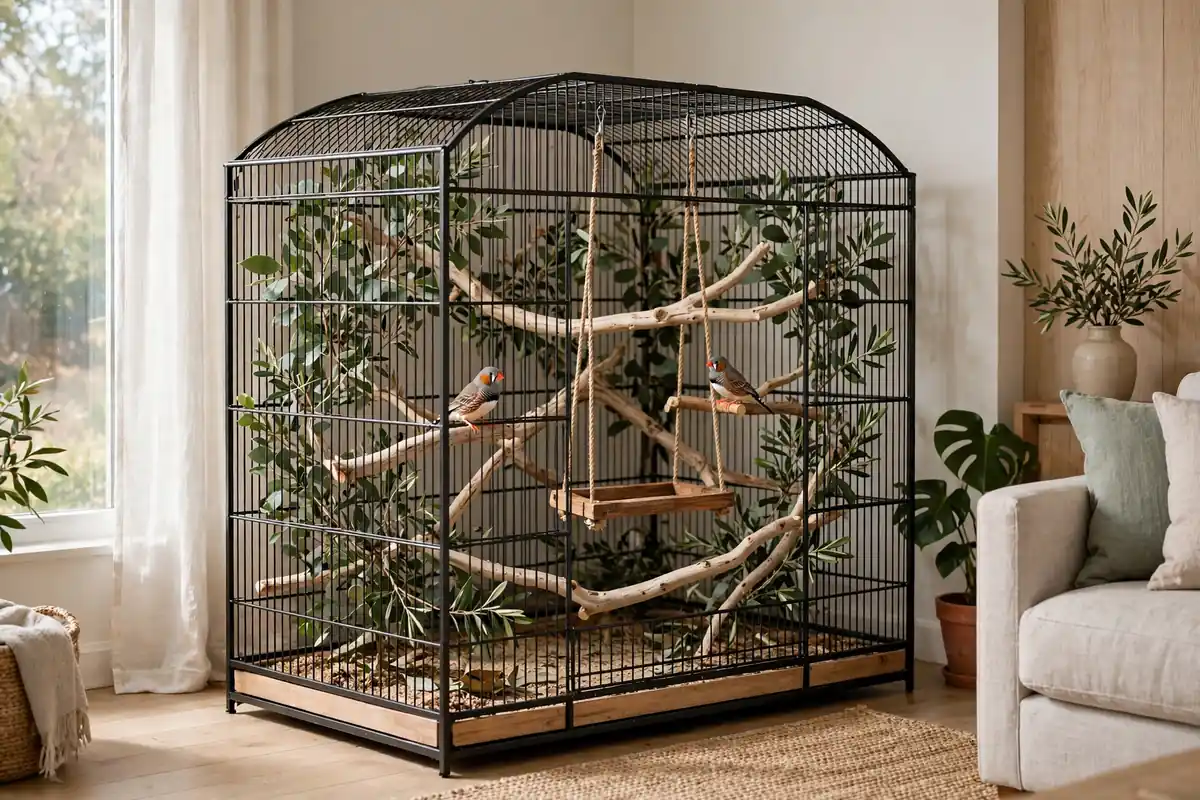
The cage is your finch’s whole world. Finches fly horizontally rather than climbing, so width matters far more than height — choose the widest cage you can fit and afford. Around 30 inches wide is a good starting point for a pair, and bigger is always better.
Bar spacing matters, too: no more than half an inch apart, so a small finch cannot squeeze its head through or escape. Horizontal bars are better than vertical ones, because finches like to grip and hop along them.
Keep the layout simple and open. Finches need clear space to fly from side to side, so avoid filling the cage with accessories — a few perches, a swing, and a bathing dish are enough. Set it on a sturdy stand at about chest height, where the birds can see the room.
A light cage cover is a useful extra for the evening, signalling that the day is ending and helping the birds settle into a regular sleep rhythm.
Where to Place the Cage
Cage placement makes a real difference to how settled your finches feel. Choose a bright spot in a room where the family spends time, so the birds are part of daily life — a living room or home office is ideal.
The spot should also feel safe. Place the cage against a wall rather than in the middle of the room, so the birds are not exposed from every side. Keep it away from draughts, slamming doors, and the kitchen, where fumes and sudden temperature changes can be a problem.
Natural daylight matters, but avoid strong, direct sun where the cage can overheat — gentle morning light and afternoon shade are ideal. In the evening, keep the cage away from bright lights and late-night noise.
Perches, Swings, and Enrichment
Finches spend most of their lives on their feet, so perches deserve attention. Offer several of different thicknesses and materials, placed at different heights and angles. Natural wood branches are best — their varying thickness keeps the birds’ feet exercised.
A swing is almost essential: finches love to sit on a gently rocking swing, and you will often find your birds dozing there. Hang it where it can move without bumping the cage bars.
Enrichment keeps finches curious and active. A few safe toys — small bells, hanging strands of natural fibre, or a small mirror — give the birds something to investigate. Rotate them every couple of weeks so the cage feels fresh, and keep the centre open for a clear flight path.
Finches Are Social Birds
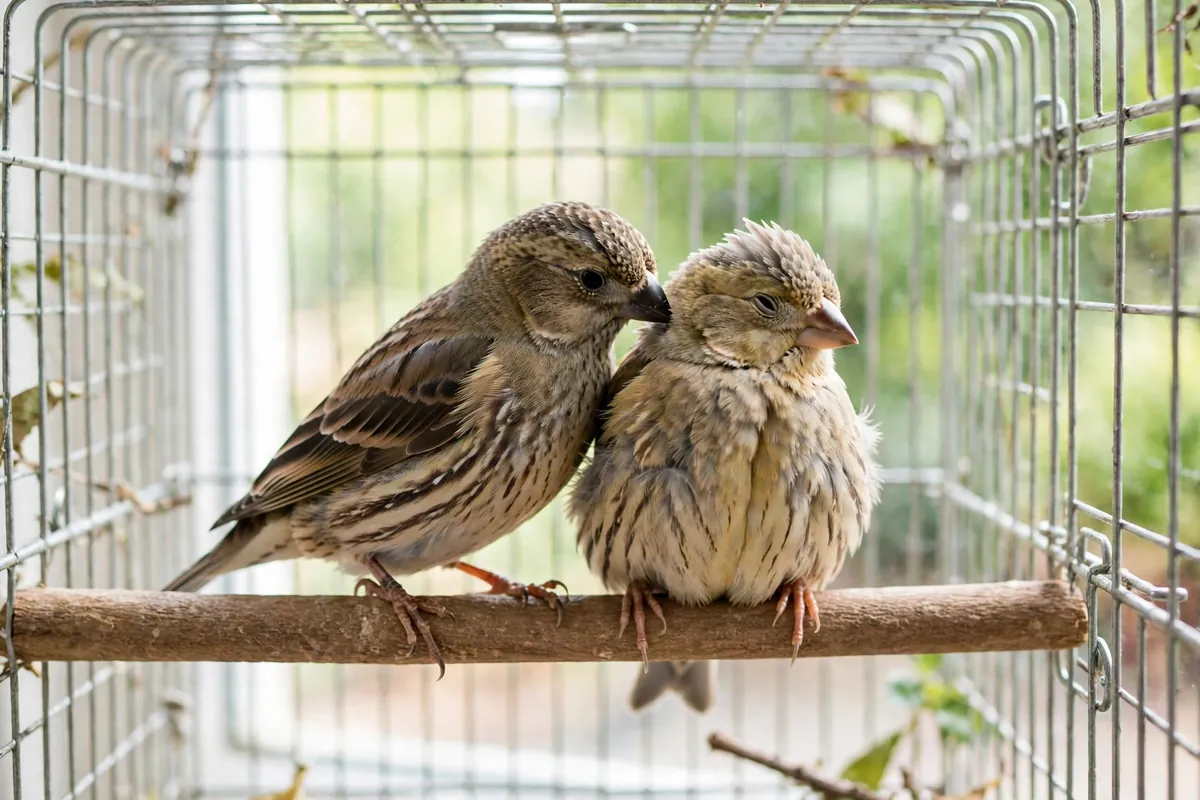
If there is one thing to remember about finch care, it is this: finches need other finches. In the wild they live in large flocks, and that social nature does not disappear in a cage. A finch kept alone will often become quiet and withdrawn, even in a perfect cage.
Keep at least a pair, together from the start. Two males, two females, or a male and female pair all work well, depending on the species. Zebra and society finches are famously easy-going, while Gouldian finches do best with a companion of their own kind.
Watch how your finches interact: healthy companions preen each other’s heads, sit close on the same perch, and chatter back and forth.
If you keep more than one pair, give them a bigger cage so each pair has its own space — crowding causes stress and squabbles, even among friendly finches. Like the budgerigar, another small social pet bird, finches thrive with a companion and room to move.
Your Daily Routine
Finch care fits easily into a normal day, and a short daily routine keeps the birds happy and the cage pleasant. Start the morning by uncovering the cage, greeting your birds, and checking that the water dish is clean and full.
Spend a few minutes watching your finches each day. It is enjoyable, and it is how you learn what normal looks like for your birds — their favourite perches, their usual song, their daily rhythm.
In the evening, offer the bath, tidy the perches, and cover the cage at a regular time. Finches do best with about twelve hours of light and twelve of rest, and a regular bedtime helps them settle.
If you travel, plan ahead: our guide to the best pet carriers and travel gear covers safe transport for small pets, and our guide to travelling with your cat has tips on keeping a pet’s routine steady while you are away.
Bathing: Finches Love Water
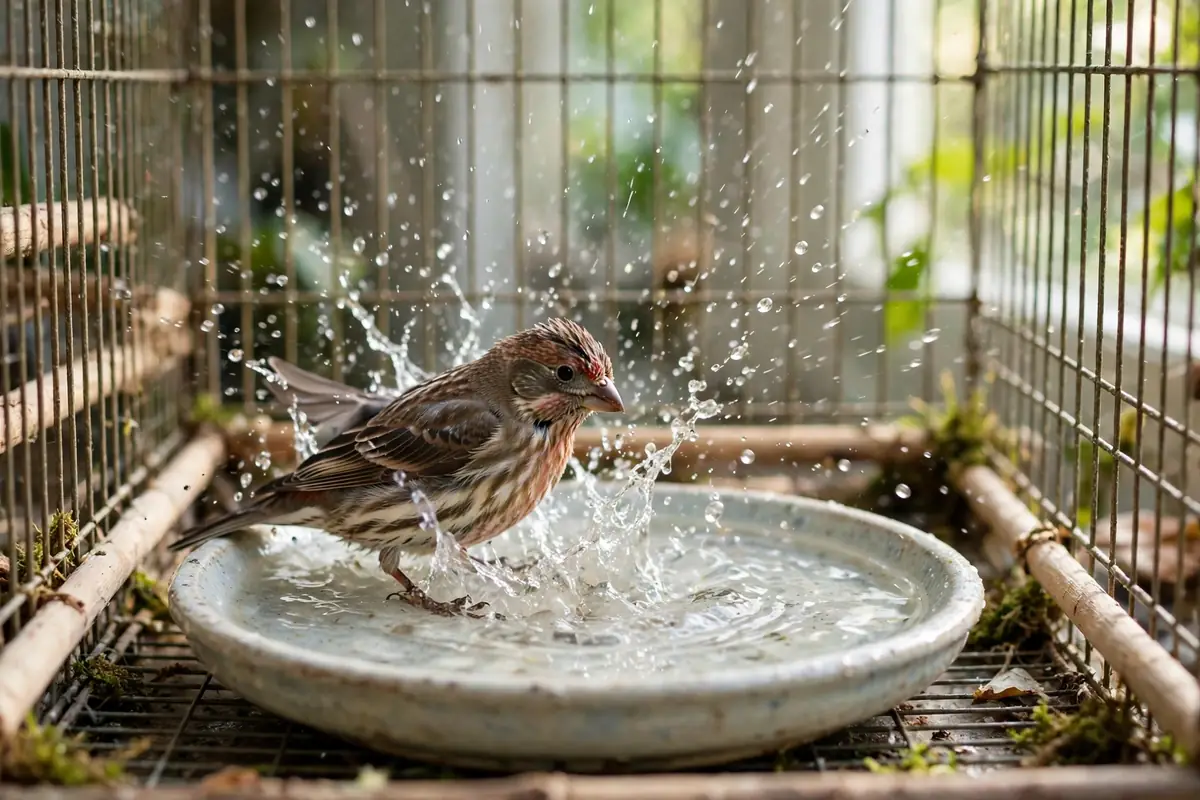
One of the great joys of keeping finches is watching them bathe: most love water and will splash happily in a shallow dish, shaking droplets everywhere. Bathing keeps their feathers in good condition and is a natural part of their daily routine.
Offer a shallow bird bath — a small ceramic dish or clip-on bath — with clean, lukewarm water, just deep enough to stand in. Place it in the cage in the morning so the birds can bathe and dry off during the warm part of the day, and remove it after a couple of hours.
Some finches prefer a gentle misting from a spray bottle instead of a dish — try both to see what your birds prefer. Never force a finch into the water, and never bathe a bird late in the evening when it will not have time to dry off before bedtime.
Song and Sounds
The song is the finch’s gift to its owner. Male zebra finches sing a cheerful, beeping tune, each male developing his own version learned from the males around him. Society finches sing a softer, more rambling song, while Gouldian finches are quieter still. Females of most species do not sing, but they chatter and call, and a pair keeps up a running conversation all day.
Song is also a useful sign of how your birds are feeling. A finch that sings regularly is usually contented, while one that suddenly goes quiet may be unsettled by a change in the room. Keep things calm around the cage and avoid sudden loud noises beside it.
You do not need to teach a finch to sing — males learn from each other, and a young male with an older singer will pick up the tune on his own. If you enjoy bird communication, our guide on how to train a parrot to talk is a fun read on how another popular pet bird learns its sounds, even though finches sing rather than talk.
Keeping the Cage Clean
A clean cage is the foundation of good finch care. Finches are small but busy, and a cage can become messy quickly — a short daily tidy and a deeper weekly clean keep it fresh.
Each day, change the paper lining the cage floor, wipe soiled perches, and wash the water dish. Each week, take the cage apart for a thorough clean: wash the bars, tray, perches, and dishes with warm water and a mild, bird-safe cleaner, rinse well, and let everything dry completely before the birds go back.
Keep the area around the cage tidy, too: a small mat under the cage catches stray feathers, and a quick daily vacuum keeps the room pleasant. Cleaning is also a good moment to check the cage itself — door latches, secure bars, and nothing loose.
Do This, Not That
| Do this | Not that |
|---|---|
| Keep at least a pair of finches | Keeping a single finch alone |
| Choose a wide cage with room to fly | A tall, narrow cage with no flight space |
| Offer perches of different sizes | The same smooth dowel on every perch |
| Place the cage in a bright, lived-in room | Hiding the cage in a quiet, empty room |
| Offer a shallow bath each morning | Bathing a finch late in the evening |
| Clean the cage a little every day | Leaving the cage uncleaned for weeks |
| Watch and listen to your birds daily | Ignoring changes in song or behaviour |
Things to Remember
- Finches need friends: Always keep at least a pair.
- Width beats height: A wide cage with open flight space matters more than a tall one.
- Routine is comfort: Regular light, rest, and a steady rhythm keep finches calm.
- Water is joy: Most finches love a morning bath and will splash happily.
- Song means contentment: A singing finch is usually a happy finch.
- Clean little and often: A quick daily tidy beats a rare big clean.
Related Reading on MyPetsMyLove
- Budgerigar care guide
- How to train a parrot to talk
- 10 things to know before getting a pet
- MyPetsMyLove homepage
- About Us page
References
- The Humane Society of the United States — pet bird care resources
- National Audubon Society — finch and wild bird information
- American Federation of Aviculture — pet bird care and education
- Encyclopaedia Britannica — finch reference
Frequently Asked Questions
What is the best finch for a beginner?
The zebra finch and the society finch are the best choices for a beginner. Both are hardy, cheerful, and easy to care for, and they settle quickly into a home cage. The Gouldian finch is beautiful but a little more delicate, so it suits an owner with some bird experience.
How many finches should I keep together?
Keep at least two finches. Finches are flock birds and need the company of their own kind to stay active and content. A single finch kept alone will often become quiet and withdrawn, even in a well-set-up cage.
How big should a finch cage be?
Choose the widest cage you can fit and afford — around 30 inches wide is a good starting point for a pair of finches. Finches fly horizontally, so width matters far more than height, and the bars should be no more than half an inch apart.
Do finches like to bathe?
Yes, most finches love to bathe. Offer a shallow dish of clean, lukewarm water in the morning and let them splash for a couple of hours, then remove the bath so the cage stays dry. Some finches prefer a gentle misting from a spray bottle instead.
Why is my finch singing?
Male finches sing because they are content and communicating, and each male develops his own version of the song. A finch that sings regularly is usually a happy finch, while a bird that suddenly goes quiet may be unsettled by a change in its surroundings.
Do finches need toys?
Yes, a few safe toys keep finches curious and active. Small bells, hanging natural fibre strands, a swing, and a small mirror are good choices. Rotate the toys every couple of weeks and keep the centre of the cage open for flying.
How often should I clean a finch cage?
Tidy the cage a little every day — change the paper lining, wash the water dish, and wipe soiled perches — and give the whole cage a thorough wash once a week. A clean cage keeps the birds comfortable and the room pleasant.
Conclusion
Finch care is simple, gentle, and deeply rewarding. Choose a healthy pair, give them a wide cage in a bright corner of your home, keep their days steady and their cage clean, and they will fill your home with song and movement for years.
Start today: set up a wide cage with varied perches and a swing, bring home a pair of finches, and offer a shallow bath in the morning. Then explore more pet bird guides, starting with our budgerigar care guide if you are curious about another small pet bird, and learn more about us on the About Us page. Your finches are already singing — all they need is a good home.
Disclaimer
Disclaimer
MyPetsMyLove dot com is an independent informational website covering pet species breeds characteristics activities positive training bonding grooming and responsible ownership
We are not a veterinary clinic medical provider pet food provider or veterinary nutrition service
We do not provide veterinary diagnosis medical advice treatment food recommendations or nutritional guidance
For pet health medical or food related concerns consult a qualified veterinarian or appropriate professional directly
Independent clinics listed on this website are not owned or operated by MyPetsMyLove unless explicitly stated
Verify third party credentials services fees and availability independently
We do not guarantee third party services or outcomes
To the extent permitted by applicable law we disclaim responsibility for independent third party services
Nothing in this notice excludes liability that cannot legally be excluded
The disclaimer does not make prohibited content acceptable

One Comment